It’s easy to forget just how massive Sinead O’Connor was back in the early 1990s. Her remarkable voice, forthright views, striking looks and of course THAT ‘Nothing Compares To U’ video made her a household name on both sides of the Atlantic.
But there’s also no doubt she was one of the most provocative and outspoken pop stars of her generation, then virtually ‘cancelled’ due to her very public stance on the Catholic Church. ‘Nothing Compares’, a superb new documentary from director Kathryn Ferguson, reinstates O’Connor to her rightful place as important artist and fearless trailblazer.
Ferguson nods to Julien Temple’s classic Sex Pistols doc ‘The Filth & The Fury’ by relying on O’Connor and her friends/collaborators to narrate her story off-screen, while using a huge collection of archive material and home movies – much of it previously unseen – to drive the narrative.
There are troubling details about her childhood shot through with some remarkable footage from the Magdalene Laundries. O’Connor escapes Ireland as soon as possible and we cut to the exciting London live music scene of the mid-to-late 1980s with spellbinding archive of her in her pomp, an artist who absolutely has to make music.
Then there’s a fair deal about her early dealings with the industry, and a lot of it isn’t pretty – to say that the male record-company paymasters do not come out of this period well would be a huge understatement. Interview footage of the time shows her to be softly-spoken, polite and intelligent, even during a Gay Byrne chat show in the presence of her parents.
And then we revisit the 18 months or so when O’Connor was virtually persona non grata in the USA, courtesy of her extraordinary appearances on ‘Saturday Night Live’ and the Bob Dylan tribute concert. If you haven’t seen these moments, I won’t spoil them for you, suffice it to say that if Pussy Riot carried them out today they’d be seen as cutting-edge protest/performance art.
A minor criticism of ‘Nothing Compares’ would be that it ends very abruptly – we don’t hear much about O’Connor’s life and career post-1995, but no matter: it leaves recent docs about Bowie and Leonard Cohen in the dust. It’s moving, exciting, important and a must-see.
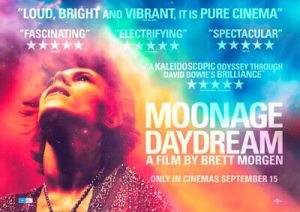
The hype for ‘Moonage Daydream’ is presenting it as a very different kind of David Bowie documentary (and music doc in general), and in some ways that’s true – it’s certainly ‘non-linear’ (which creates a few problems, as we’ll see later) and not yet another retelling of the Bowie story replete with talking heads (David alone ‘narrates’ the movie).
It’s undoubtedly best seen in the cinema, with its striking sound collages, surreal jump cuts and sometimes startling imagery taken from many sources, cult movies (including Canadian curio ‘Universe’, apparently also an influence on Kubrick and Lynch) to Hollywood’s golden age.
Director Brett Morgen is best known for his Kurt Cobain and Rolling Stones documentaries (neither of which your correspondent has seen), and apparently he got complete family approval to sift through countless hours of Bowie’s personal archive – though reportedly David was less than convinced by Morgen’s credentials/pitch when they met in 2007.
But Morgen has certainly got hold of some coups: there’s madly exciting, previously unseen DA Pennebaker footage from the Earls Court and Hammersmith Odeon Ziggy gigs in 1973, including Jeff Beck’s guest spot on ‘Jean Genie/Love Me Do’ – what a thrill to see him trading licks with Mick Ronson.
There’s also some terrific David Hemmings-directed 35mm Earls Court footage from 1978, and you’ll be doing well if you don’t get a lump in the throat during ‘Heroes’ (when is the complete footage finally going to get a proper release?). Then there are tantalising glimpses of Bowie’s many paintings and some intriguing footage from his mid-1970s video experiments. Morgen also borrows large sections of Serious Moonlight tour curio ‘Ricochet’ and ‘The Man Who Fell To Earth’.
But the film really comes into its own with its sound design. Tony Visconti has donated audio stems from Bowie’s studio masters so there are interesting reversions of material like ‘Ashes To Ashes’, ‘DJ’ and ‘Absolute Beginners’. I almost cheered when Dennis Davis’s ‘Sound And Vision’ groove exploded into action and it’s a delight hearing Rob Sabino’s solo’d piano from ‘Modern Love’.
But there are issues with ‘Moonage Daydream’. The frenetic editing sometimes leads to jarring moments. If you were being kind you’d say it was ‘non-linear’, if you weren’t you might say it was completely random. Again, not a problem in itself, given Bowie’s use of cut-up techniques and mistrust of linear narratives by the mid-1990s.
Then there are the obvious omissions/Morgen’s perceived irrelevances. Tin Machine isn’t mentioned by name, nor are there any images of the band. In fact the period of 1989-2005 is scarcely covered, save for some interesting outtakes from Samuel Bayers’ videos from that time, some footage from Bowie’s 50th birthday concert and a section on his marriage to Iman.
There is a fairly lengthy exploration of his family background, suburban upbringing and half-brother Terry Burns, though very little about his early Mod days and art-school contemporaries. And Bowie purists may be troubled (well, I was!) by the use of the Pet Shop Boys remix of ‘Hallo Spaceboy’ rather than the original to kick off the film.
Of course the question is, if you’re a big Bowie fan – and I presume you are if you’ve read this far – do you need to see ‘Moonage Daydream’? I’d say a qualified ‘yes’… But ultimately it’s still like a very expensive-looking YouTube greatest hits, with many bits of familiar interview footage and a lot of previously seen live stuff. But even that is a thrill to see on the big screen with good sound. Is the film pretentious? Of course, but that was never a criticism for Bowie. He even described his collaborations with Brian Eno as ‘the new school of pretension’…
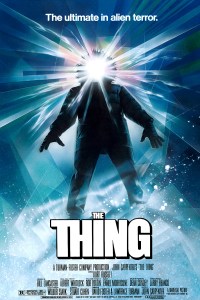
Of course it wasn’t as much of a flop as often thought (budget circa $15 million, US box office circa $20 million) but director John Carpenter was under no illusions as to how the studio (Universal) perceived his ‘Thing’ in the immediate aftermath of its 25 June 1982 release, not helped by the appearance of ‘E.T. The Extra-Terrestrial’ two weeks before.
Come to think of it, has there ever been a less suitable ‘summer movie’ than ‘The Thing’? Carpenter agreed – he reportedly virtually begged Universal to delay its release to Halloween 1982 and change the title to ‘Who Goes There’, to avoid comparisons with ‘E.T.’. They refused.
Then there was the changing nature of horror-film audiences to contend with. After a market-research screening, one teenager apparently approached Carpenter pleading complete ignorance regarding the ending. When the director responded that it was up to their imagination, the co-ed mumbled, ‘Oh, God, I hate that…’
With hindsight, maybe we can also point a finger at the marketing. The standard Hollywood thinking – as per Art Linson’s book ‘What Just Happened’ – was that the marketing people would always blame a film’s poor box office on anything but the marketing, and generally keep their jobs in the event of a bomb. That would definitely not be the case now…
Above is the original poster – hardly a classic of its era, with very little if nothing to do with the film. The below VHS rental cover is surely what they should have gone with, complete with classic tagline and surreal main image.
Still, the movie is as fresh and troubling today as it was 40 years ago (and, watching it for probably around the tenth time recently, moves at a far swifter clip than I’d remembered), and anyone who hasn’t seen it should check it out ASAP, on as big a screen as possible. Happy birthday, Der Thing!
In her book ‘Hooked’, legendary movie critic Pauline Kael said that the only fresh element in American films of the 1980s may have been what comedians (Robin Williams, Steve Martin, Bill Murray et al) brought to them.
Could we say the same about British films of the 1980s? Looking at ‘Supergrass’, ‘Eat The Rich’, ‘Morons From Outer Space’ and, er, Cannon & Ball’s ‘The Boys In Blue’, it would seem not. A shame, and strange in a way that the ‘Comic Strip’ generation couldn’t quite make the transition to the big screen.
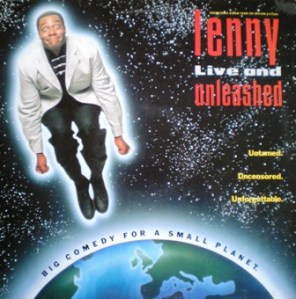
But Lenny Henry – best known as a British TV star in the 1980s – made a damn good fist at the stand-up concert movie with ‘Lenny: Live And Unleashed’, mostly shot at London’s Hackney Empire, taking on the Americans (Eddie Murphy’s ‘Raw’, Richard Pryor’s ‘Live On The Sunset Strip’ etc.) at their own game, complete with a posh credit sequence featuring brilliant impressions of Martin, Murphy and Pryor plus a not-very-funny skit with Robbie Coltrane as the most annoying taxi driver in the world (Why didn’t Lenny fit in another impression there? Couldn’t he have dusted off a De Niro?).
His flashes of surrealism evoke Alexei Sayle and Martin and also it’s clear that by 1989 Lenny had developed into a superb physical actor. He addresses political and racial topics head-on, beginning one skit with the simple statement: ‘We need to see more Black faces on British TV.’
There’s a great celebration of Black music (evidenced also in his appearance on the BBC’s Desert Island Discs just before this was filmed) with homages to Prince and Bobby McFerrin, a good bit on Michael Jackson’s ‘Bad’ tour, and the striking ‘Fred Dread’ section featuring Dennis Bovell’s natty dub soundtrack.
Other character favourites Delbert Wilkins, Deakus and the Teddy Pendergrass-lampooning Theophilus P Wildebeeste (you couldn’t do that sketch these days…) get a lot of stage time – superb portraits, with heart and soul. A new character, ageing blues singer Hound Dog Smith, gets a workout too, featuring an amusing guest spot from Jeff Beck (who also turned up in a few Comic Strip films around this time).
The box-office performance of ‘Lenny: Live And Unleashed’ is hard to uncover but does it have enough appeal to a non-British audience? Judge for yourself (and I must check out Henry’s next foray into the movie world, 1991’s ‘True Identity’, at some point…)…
Robert Altman, director of ‘Gosford Park’, ‘The Player’, ‘Nashville’ and ‘The Long Goodbye’, ‘doing’ Nobel Prize-winning playwright Harold Pinter?
It could have worked. Two shrewder observers of human nature there have seldom been. But Altman’s 1987 take on Pinter’s 1957 debut play ‘The Room’ was a bona fide stinker. A car crash. It doesn’t even warrant a single mention in Michael Billington’s rigorous Pinter biography.
Though a couple of Altman’s ‘80s films are well-regarded now (‘Fool For Love’, ‘Come Back To The Five And Dime, Jimmy Dean, Jimmy Dean’), the great director was mainly forced to scrabble around for one-off deals during this period, probably cursed by the critical mauling handed out to his 1980 version of ‘Popeye’.
‘The Room’ certainly continued Altman’s reputation as a provocateur par excellence. In ‘Altman On Altman’, he claimed it came about when the TV network ABC offered him carte blanche to film any stage play he wanted. His choice of ‘The Room’ amazed, annoyed and confused them, as did his casting of Annie Lennox, Julian Sands and Linda Hunt.
The suits had a point. Hunt, best known for her Oscar-winning role in ‘The Year Of Living Dangerously’, is nothing less than a disaster in the film. Her London accent is appalling and she fudges the key line: ‘That’s this room.’ The emphasis should be on ‘this’, not ‘room’. You wonder why co-star Donald Pleasence didn’t raise any objection.
Lennox’s beauty beguiles but the Eurythmics star doesn’t deliver a classic performance. As for Sands, you only ever expect over-the-top weirdness from him and he doesn’t surprise here, suffice it to say that his Cockney accent is also a travesty.
Pleasence – predictably – is the only actor who emerges with any credibility, his turn a fidgety comic masterpiece. You wonder what he said privately about this mess to Pinter (they were good friends).
Altman shot ‘The Room’ back-to-back with another Pinter play (and equally appalling/must-see) ‘The Dumb Waiter’, starring John Travolta during his career doldrums. They were shown separately during the 1987 holiday season and then released as a double bill under the banner of ‘Basements’.
The lack of critical or commercial success didn’t surprise anyone. But Altman seemed to like it that way. He didn’t get out from under until 1992’s ‘The Player’. It was a long, cold 1980s for the great director.
Steven Spielberg’s ‘Duel’ was one of the first movies that really got to movingtheriver.
I was already a confirmed car and truck fan when it was shown on British terrestrial TV almost exactly 40 years ago, so was glued to the screen from the first minute.
The faceless truck driver scared me, the chases thrilled me, but it was the ending that had the most impact. I just couldn’t get my head around leaving David Mann (Dennis Weaver) literally staring into the abyss after vanquishing his nemesis.
‘Duel’, adapted by the great Richard Matheson from his own short story, premiered on American TV as an ABC Movie Of The Week 50 years ago this month, and was later released as a feature with a few added scenes. It did for trucks what ‘Jaws’ did for sharks and ‘Psycho’ did for showers.
It’s arguably the ultimate road-rage movie – lest we forget, it was inspired by a real duel when Matheson and a friend were harrassed by a truck whilst driving home soon after hearing of JFK’s assassination.
‘Duel’ was filmed in just 13 days mainly around Santa Clarita, north of Los Angeles. Spielberg meticulously mapped/storyboarded every shot, many of which were achieved with the low-angle ‘camera car’ specially built for Peter Yates’ classic 1968 thriller ‘Bullitt’.
Spielberg had earned his big break after working on TV shows such as ‘Columbo’ and ‘Marcus Welby MD’, but had to fight his corner with the ABC executives who wanted him to shoot ‘Duel’ mostly in a studio, using ‘poor man’s process’ (shades of ‘Jaws’, which the suits mostly wanted him to shoot in a tank).
Gregory Peck was the first choice for the role of David Mann – Spielberg heartily approved as it would have meant the movie would get a theatrical release. But when Peck declined the part, the director loved the idea of casting Weaver, mainly based on his manic performance in Orson Welles’ ‘Touch Of Evil’.
The truck is a brilliant baddie, and accordingly it was put into make-up every day, a team of assistants applying oil, muck and dead bugs. It was driven by the great Hollywood stuntman Cary Loftin, while another, Dale Van Sickel, mostly drove the car, though Weaver did some of his own stunts. Like this one:
Comedian Dick Whittington’s initial crank-call sets up the main theme of the film, a theme that both Matheson and Spielberg ratchet up throughout. Is Mann one of Nixon’s ‘silent majority’, a lower-middle-class, hen-pecked schlub who ‘wouldn’t take it any more’?
He is certainly the ultimate everyman, with a fairly snobbish attitude towards the ‘locals’, but we still like him, mainly due to Weaver’s classic performance.
Of course Mann could give up the duel at any minute, turn around and drive home. But he doesn’t. His decision to nail the truck driver is possibly the most terrifying moment in the film (with echoes of Sam Peckinpah’s movie ‘Straw Dogs’).
The school bus scene (one of several added for the feature-length version) is possibly the standout. It’s the coverage and editing – the kids’ mocking faces, the bus driver’s naivety, Weaver’s humourless striving, the contrast between the kids’ innocence and the adult duel operating in a twilight world of petty grudges and micro-aggressions.
(Interestingly, ‘Duel’ is arguably Spielberg’s most ‘adult’ film and thus, for me, avoids the sentimentality and ‘childhood perils’ that plague some of the later films. This excellent – if controversial – article is a potent and worthwhile contribution to the theme.)
The truck, a Peterbilt 281, shot from the ‘Bullitt’ camera car
For such a simple story, Matheson’s plotting is exemplary. We should be able to second-guess Mann’s actions and motives at every step, but we don’t. Weaver/Mann’s voiceover takes us through all potential courses of action.
And then there’s Billy Goldenberg’s brilliant soundtrack. Of course it occasionally hints at Bernard Herrmann but also stakes out its own soundworld with a delicious cocktail of zither, bells, piano, strings, ethnic percussion and harp.
Thankfully there has never been a remake of ‘Duel’ but its influence is everywhere. Spielberg himself continues to view it with great affection and has referenced it in many films, from ‘Jaws’ to ‘1941’.
Finally, back to the ending on the cliff edge. What’s left for Mann? Will he ever recover? What will his punishment be, if any? Will he return to his wife and kids, or ‘drop out’ and join a hippie commune?
Then there are the rumours that the stricken truck is still visible at the bottom of Soledad Canyon. Approach it if you dare. Just don’t end up like David Mann, or the psychopathic trucker for that matter…
Further reading: ‘Steven Spielberg & Duel: The Making Of A Film Career’ by Stephen Awalt
A babysitting uncle (later reprimanded by my mum!) showed my brother and I John Carpenter’s classic 1978 film ‘Halloween’, recorded from TV after its first (edited) UK showing, sometime in 1982 or early 1983.
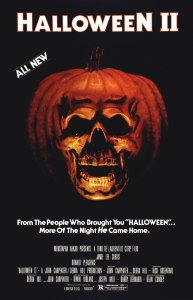
I loved it but it scared the bejesus out of me. Well, I guess everyone’s entitled to one good scare on Halloween. But Rick Rosenthal’s 1981 sequel, released 40 years ago this weekend, was a definite no-no. My parents wouldn’t let my brother and I watch it, though I distinctly remember us creeping along the upstairs corridor and spying on them watching the rented video with friends.
‘Halloween’ has of course been through numerous/confusing sequels and reboots. The new ‘Halloween Kills’ is supposedly a ‘proper’ sequel to the rebooted ‘original’ of 2018 (which I tried to watch recently, but didn’t last beyond the first five minutes…).
But back to John Carpenter’s original 1978 classic. It was a huge hit. Once the money started rolling in, a sequel was on the cards, one that Carpenter was unable to veto due to his original contract (he also allegedly missed out on a huge amount of royalties too).
So he reluctantly hooked up again with Debra Hill to write the screenplay and co-produce. The result was one of the last big ‘slasher’ hits, outside of the endless ‘Friday The 13th’ sequels, earning around $25 million worldwide against a $2.5 million budget. And this was in the days when sequels were not commonplace.
But how does ‘Halloween II’ stand up today? First, the good stuff:
The camerawork
Director of photography Dean Cundey was lured back from the original, passing up the opportunity to work on Spielberg’s ‘Poltergeist’, and his original angles and Panaglide compositions elevate the film way beyond the standard slasher fare.
The hospital setting
It’s a great idea to set the film in a suburban hospital, and gives a claustrophobic sense of isolation, of course a descendant of Carpenter’s ‘Assault On Precinct 13′ (via, originally, Howard Hawks’ ‘Rio Bravo’ and George Romero’s ‘Night Of The Living Dead’).
Continuity
It’s a neat concept to start the film right where the original ‘Halloween’ ended.
Donald Pleasence
Once again he fully embraces the role of Dr Sam Loomis. He takes it seriously and does a stand-up job, complete with a few memorable line readings.
The Chordettes’ ‘Mr Sandman’ intro and end credits
A very creepy choice, possibly influenced by the use of music in ‘The Shining’.
But then there’s the bad stuff:
Lack of Jamie Lee Curtis
She spends most of the movie either in a hospital bed or limping/crawling around (wearing a very odd wig). As good a performance as she gives, the film suffers from her inertia.
Too much dialogue/exposition
There are way too many slow, boring plot/dialogue longeurs.
Lack of engaging/likable characters
As workmanlike as the mostly young cast are, they can’t replicate the natural rapport that existed between Jamie Lee, Nancy Loomis, PJ Soles etc. in the original film.
Dick Warlock as The Shape
The original film mostly used Nick Castle as The Shape, but experienced Hollywood stuntman Warlock got the role here, and he moves way too slowly and stiffly (and the William Shatner mask doesn’t quite fit…). And the closing fire stunt may have won him some brownie points in the industry but looks absurd now.
Gratuitous gore
Carpenter took a look at the first assembly of ‘Halloween II’ and decided it was too long and not scary enough. He shot a few additional scenes, adding some gore and spikes. Sadly this resulted in too many nods to standard slasher movies, and resulted in a lot of dodgy reviews. Carpenter was also fairly disgusted with himself for ‘messing’ with another director’s work – ‘I did something I don’t believe in. I did something I would hate for anybody to do with me. It was an evil thing to do and I didn’t enjoy any of it,’ he told biographer Gilles Boulenger.
Music
Alan Howarth overdubbed onto Carpenter’s original 16-track tapes, adding copious synths and and drum machines – there’s a lot of bluster but unfortunately Howarth adds little to the original soundtrack.
In conclusion: I’d argue it’s a decent-enough sequel, despite the obvious problems. The last 15 minutes offer creeps, shocks and thrills, and the hospital setting works excellently.
Its similarity to (groan) ‘Fifty Shades Of Grey’ and ‘Last Tango In Paris’ – plus rumours of lead actress Kim Basinger’s shabby on-set treatment by director Adrian Lyne and co-star Mickey Rourke – mean that ‘Nine ½ Weeks’ is generally denied a fair shake these days.
So why do I return to it every few years, always finding something new to enjoy (no sniggering at the back there)?
The NYC-set tale of a torrid, co-dependent affair between successful, attractive couple Elizabeth (Basinger) and John (Rourke) was based on Ingeborg Day’s (writing as Elizabeth McNeill) controversial 1978 memoir of the same name.
Despite its risqué subject matter, it’s hardly surprising the film – released 35 years ago today – was given a green light. Lyne was fresh from ‘Flashdance’, an enormous hit, while Basinger (beating off competition for the role from Kathleen Turner, Isabella Rossellini and Teri Garr) and Rourke were red-hot and highly in-demand.
But finally, it’s quite a downbeat, subtle, adult film, revealing layers of meaning with repeated viewings, possibly why I recall it as pretty boring (I was wrong…) when first seeing it with mates during my thrill-seeking late teens.
Essentially it’s about two attractive but somewhat alienated people – we frequently see them both ‘lonely in a crowd’. But repeated viewings of the film show them to be well-rounded, fully-formed characters, not just show-ponies in a second-rate soft-porn movie.
Basinger is the star of the movie, and she’s excellent. The demands of the role and lengths to which she was pushed by both Rourke and Lyne reportedly led her to some psychological trauma and even marital problems for up to a year after the film wrapped, as reported by New York Times writer Nina Darnton. Rourke’s first marriage also reportedly hit the skids during the shoot’s slipstream.
The film was shot in sequence, and Lyne encouraged the leads to stay in character off the set, so that their ‘real’ relationship echoed the screen relationship. Whatever was going on behind the scenes, the results speak for themselves – there’s palpable chemistry between Basinger and Rourke.
Sparks fly when they first meet in that Chinese deli (with a great cameo from Kim Chan, so memorable in Scorsese’s ‘King Of Comedy’) and there are elements of fun and light-heartedness in their relationship which can still raise a smile today.
Though the sexual politics of the movie may disturb these days, it’s interesting to note that the screenplay is credited to two women – Patricia Louisianna Klopp and Sarah Kernochan – alongside the dreaded Zalman King…
Elizabeth is completely ‘in control’ at her workplace, but totally out of control in her personal life. This contrasts with John, a total control freak – at least on the surface – in both facets of his life. So she seems a highly intelligent, though somewhat lonely figure (indeed, loneliness is a big theme of the movie), sometimes even prudish, at least compared to her workmate Molly (played by the excellent Margaret Whitton).
Lyne’s direction and Peter Biziou’s camerawork are impressive with scrupulous attention to detail – every shot is designed to create the utmost visual impact, with recurring motifs and interesting subtexts.
A few years before ‘American Psycho’, the film also offers a truly fetishized view of ‘80s tech – John’s wardrobe, his state-of-the-art hi-fi, the emphasis on surfaces and image. This article sums up the film’s style concerns beautifully.
New York looks wonderful, with resplendent locations like the Chelsea and Algonquin hotels, Spring Street Gallery and Cafe Des Artistes. Lyne shrewdly places non-actors into the mix to give some local color, as he would for his next films ‘Fatal Attraction’ and ‘Jacob’s Ladder’.
There’s a remarkable section where Elizabeth clicks through a succession of modern-art slides, and you can bet that every single one has been placed for a very specific purpose (and brings to mind the use of Francis Bacon’s artwork in ‘Last Tango’).
There are so many quintessential, memorable 1980s moments, most with very shrewd use of music (which lead many rather dunderheaded reviewers to describe the film as a full-length MTV pop video): the food orgy; the striptease to Joe Cocker’s ‘You Can Leave Your Hat On’; the moment when Rourke and Basinger enter underpinned by Corey Hart’s ‘Eurasian Eyes’ (though Rourke reported that the ‘blue stuff’ sprayed into the room to add the perfect visual aura Lyne was after did a terrible number on his throat and eyes for weeks afterwards); the use of Jean-Michel Jarre’s ‘Arpeggiator’, Roger Eno’s ‘Voices’ and Eurythmics’ ‘This City Never Sleeps’.
Rourke has never looked better and his performance is fascinating, very much living up to the ‘Brando for the 1980s’ tag. This film catapulted him into the Hollywood A-list, albeit very briefly (to his great credit, he resisted appearing in a lot of crud – at least for a few years – delaying a follow-up until ‘Angel Heart’).
Elizabeth and John’s final parting – featuring a rather stunning bit of Rourke business when a tearful John finally tries to reveal his ‘true’ self in order to keep hold of Elizabeth – again can’t help but bring ‘Last Tango’ to mind.
Devastated, Elizabeth leaves for the last time. But she’s full of ‘what ifs’ – should she have waited a little longer, given him a chance to atone? Could they have had a chance at a happy, ‘healthy’ relationship?
Out on the street, heartbroken, she looks over her shoulder in yet another beautiful shot, perhaps hoping John will be running after her. Sadly, he is rooted at his apartment, begging her to come back, albeit under his breath, soundtracked by Jack Nitzsche’s beguiling piano/synth theme.
The film’s shoot was long and troubled, and it reportedly went through various versions with some of the more risqué scenes (including one where the couple seem – at John’s behest – to enter into a suicide pact, only for it to be revealed as another one of his ‘tests’) removed after preview screenings.
There were a few other key excisions, apparently including one scene where they lay down the rules of their relationship ‘game’ – which might have helped explain why Elizabeth sticks around for so long in the face of such abusive treatment.
The release date was postponed a few times but when the movie was finally unleashed in the USA during March 1986, it underperformed. But there were a few unexpected celebrants, including Roger Ebert. In extended/uncut form, it found a big audience in Europe, particularly France, going on to gross around $100 million against a $17 million budget. It also became a huge success when released on home video (and was certainly the first-choice rental for a lot of us teens in the late 1980s).
So, forget ‘Fifty Shades’: happy 35th birthday to a fascinating – if potentially ‘troublesome’ – cult classic.
Maybe it was the lockdown popcorn, maybe a great recent piece in Empire magazine initiated by director Edgar Wright, but this time away from the cinema has got me waxing all nostalgic.
Will the big screen ever regain its mojo? The alternative is a crushing thought.
So, if it’s all over – and I hope it’s not – here are some memorable movie moments of the last 40 years (all in London cinemas unless otherwise stated), from the sublime to the shocking (with spoilers…). I hope they inspire some recollections of your own.
Seeing ‘The Exorcist’ at a cinema above a nightclub in Kingston circa 1989, me absolutely terrified as Salt-N-Pepa’s ‘Push It’ was heard pulsating through the floorboards… The entire audience laughing throughout ‘Prince Of Darkness’ (it’s supposed to be a horror movie…) at the Hammersmith ABC circa 1987… A late-night screening of ‘Carrie’ at the Prince Charles circa 2012, the young, hip crowd jumping three feet out of their seats upon the famous finale…
At the same venue circa 1994, a ‘lone white male’ saying very loudly, apropros of nothing: ‘What a f***ing bitch’ as the credits rolled at the end of ‘The Last Seduction’ (it’s a female-fronted, neo-noir)… Almost having an out-of-body experience as Jeff Bridges walked through the plane at the end of ‘Fearless’ at the Prince Charles circa 1994… The ripples of hilarity echoing around the cinema during Michael Wincott’s cracking cameo as Kent in ‘Talk Radio’ at the Riverside Hammersmith circa 1988…
Spooked amongst the drinking/smoking audience during ‘The Blair Witch Project’ at the Notting Hill Coronet in 1998… The quietest, most rapt audience ever for Orson Welles’ ‘The Trial’ at the BFI (formerly NFT) in 2019… Audience hilarity during Hugh Grant’s performance in ‘Bitter Moon’ at the Prince Charles circa 1994… Early cinema revelations seeing ‘Jaws’, ‘Close Encounters Of The Third Kind’, ‘Airplane’ and ‘Raiders Of The Lost Ark’ between 1980-1982… Seeing ‘Rain Man’ two nights in a row at the Richmond Odeon in 1988… The ‘Star Wars’ triple bill at the same venue circa 1985… A Laurel & Hardy all-dayer at The Kings Cross Scala circa 1988… Terrified watching ‘Scream 2’ alone in a huge moviehouse on Times Square, NYC, the only other paying customer deciding to sit directly behind me… Meeting David Lynch – and getting his very odd autograph – after a screening of ‘The Straight Story’ at the NFT in 1999… Seeing ‘Fame’ at a huge, almost completely empty Hammersmith Odeon circa 1983…
Not hearing one line of dialogue during ‘Fletch’ as the assembled teens screamed/laughed/threw food at the screen, Putney Odeon, 1985… Panic and nausea at the finale of ‘The Vanishing’ at a late-night screening at the Ultimate Picture Palace in Oxford circa 1991… Watching JG Ballard and David Cronenberg chatting amiably onstage after the controversial London premiere of ‘Crash’ at the NFT, 1996… Sitting behind a constantly laughing Jimmy Page at a screening of ‘Beware Of Mr Baker’, the Riverside Hammersmith circa 2012… Seeing ‘Heathers’ at the same venue in 1989 and thinking: well, that’s almost the perfect film… Feeling the whole packed house take an inward breath as the body crawled out of the TV set during ‘Ringu’ at the ICA, 1998…and…and…?
What’s the ‘accepted’, untouchable shortlist of ‘successful’ Stephen King screen adaptations? ‘Misery’, ‘The Shawshank Redemption’, ‘It’, ‘Carrie’, ‘Stand By Me’, ‘Salem’s Lot’.
But David Cronenberg’s ‘The Dead Zone’ seldom appears in that top tier. Why? Possibly because it is seemingly part of the early-‘80s big-budget horror era, when the studios were trying to cash in on ‘slasher’ hits like ‘Halloween’ and ‘Friday 13th’ (see also ‘Omen III: The Final Conflict’, ‘Halloween III: Season Of The Witch’, ‘Psycho II’, ‘Christine’).
Cronenberg had just completed sci-fi/horror shocker ‘Videodrome’ when he was invited onto the project by Debra Hill, producer of ‘Halloween’/’The Fog’ and ex-wife of John Carpenter (‘The Dead Zone’ had apparently previously been earmarked for Stanley Donen, director of ‘Singin’ In The Rain’!).
King himself supplied the first draft of the script. According to Cronenberg, it was a ghastly, serial-killer-on-the-loose gore fest. Jeffrey Boam and Cronenberg worked on it and built the story around Johnny Smith, played by Christopher Walken, who develops second sight after five years in a coma following a devastating car crash.
So how does ‘The Dead Zone’ stand up today? Exceptionally well. It’s Cronenberg’s first film about ‘God-fearing’ people, and also his first warm-hearted picture. It takes place in King’s fictional town of Castle Rock, supposedly a combination of various real locations in Maine – all very Norman Rockwell.
These are the first Cronenberg characters we care for (he has described it as ‘a lost-love story’). Brooke Adams, Herbert Lom, Tom Skerritt and Walken are excellent, playing it completely straight, and there’s a terrific, terrifying performance by Martin Sheen as the Jim Jones-like Greg Stillson.
But finally it’s Walken’s film (Cronenberg described his face as the ‘subject of the movie’), another brilliant performance. We totally accept Johnny’s story and want him to succeed. He’s a good man in pain who has lost the love of his life.
The movie is relentlessly downbeat with no ironic escape route. It’s totally Cronenberg’s milieu – a snowy, crisp mise-en-scene (shot in and around Toronto), with a typically great car crash.
He casts his cold, clinical eye over some pretty preposterous material, but it’s stark and chilling, with the director’s customarily-abrasive cutting and editing style. It’s NOT a film for kids…
Importantly, Johnny’s visions are genuinely scary. But is he God or Lucifer? (There may be minor similarities of the film with John Landis’s opening segment of ‘Twilight Zone: The Movie’, released three months before ‘The Dead Zone’). Walken plays with this dichotomy perfectly.
Like King’s ‘Misery’, ‘The Dead Zone’ takes a none too fond look at the ‘great unwashed’, with Johnny getting endless pleading/begging letters from people with ‘lost dogs, lost lives’.
And it’s also unfailingly negative about the US political process during the early 1980s (Boam reportedly delivered his first draft the day of Ronald Reagan’s inauguration).
There’s a lush, superb score by Michael Kamen. Its main five-note motif is almost as memorable as anything John Williams wrote for Spielberg, speaking to Johnny’s tragic dilemma.
Of course there are some bum notes: the poor performances of a few minor characters; a very gratuitous, unpleasant sexual assault/murder scene (apparently not in King’s book); and the constant dilemma of second-guessing his physical contact with others.
What is Johnny withholding from us/the other characters when he shakes their hand or embraces them? Also the film rather lurches from one section to another, with Johnny basically inert and ‘in hiding’ until he is called on to act by the townsfolk.
‘The Dead Zone’ did pretty good business at the box office, earning double its costs and ushering in Cronenberg’s brief flirtation with the mainstream (he was offered – but turned down – ‘Flashdance’, ‘Beverly Hills Cop’ and ‘Top Gun’ during this period): next up was ‘The Fly’, a huge hit.
You could make the case that he was one of the key directors of the 1980s. From the landmark sci-fi/horrors ‘Scanners’, ‘Videodrome’ and ‘The Fly’ to the ice-cold ‘Dead Ringers’, he consistently pushed the envelope.
Further reading: ‘Cronenberg On Cronenberg’ (ed. Chris Rodley)

 It’s easy to forget just how massive Sinead O’Connor was back in the early 1990s. Her remarkable voice, forthright views, striking looks and of course THAT ‘Nothing Compares To U’ video made her a household name on both sides of the Atlantic.
 The hype for ‘Moonage Daydream’ is presenting it as a very different kind of David Bowie documentary (and music doc in general), and in some ways that’s true – it’s certainly ‘non-linear’ (which creates a few problems, as we’ll see later) and not yet another retelling of the Bowie story replete with talking heads (David alone ‘narrates’ the movie).
 Of course it wasn’t as much of a flop as often thought (budget circa $15 million, US box office circa $20 million) but director John Carpenter was under no illusions as to how the studio (Universal) perceived his ‘Thing’ in the immediate aftermath of its 25 June 1982 release, not helped by the appearance of ‘E.T. The Extra-Terrestrial’ two weeks before.
 In her book ‘Hooked’, legendary movie critic Pauline Kael said that the only fresh element in American films of the 1980s may have been what comedians (Robin Williams, Steve Martin, Bill Murray et al) brought to them.
 Robert Altman, director of ‘Gosford Park’, ‘The Player’, ‘Nashville’ and ‘The Long Goodbye’, ‘doing’ Nobel Prize-winning playwright Harold Pinter?
  Steven Spielberg’s ‘Duel’ was one of the first movies that really got to movingtheriver.
 A babysitting uncle (later reprimanded by my mum!) showed my brother and I John Carpenter’s classic 1978 film ‘Halloween’, recorded from TV after its first (edited) UK showing, sometime in 1982 or early 1983.
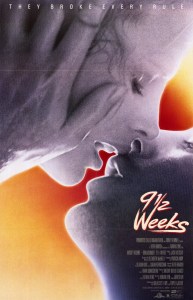 Its similarity to (groan) ‘Fifty Shades Of Grey’ and ‘Last Tango In Paris’ – plus rumours of lead actress Kim Basinger’s shabby on-set treatment by director Adrian Lyne and co-star Mickey Rourke – mean that ‘Nine ½ Weeks’ is generally denied a fair shake these days.

 What’s the ‘accepted’, untouchable shortlist of ‘successful’ Stephen King screen adaptations? ‘Misery’, ‘The Shawshank Redemption’, ‘It’, ‘Carrie’, ‘Stand By Me’, ‘Salem’s Lot’.
 movingtheriver.com