By the release of The Colour Of Spring, there was barely any trace of Talk Talk’s previous synth-pop incarnation. Out went the Duran Duran, in came the Debussy, Traffic and Satie.
Instrumentation was generally centred around acoustic piano, acoustic guitar, Hammond organ, electric bass and drums, with the addition of quirky items like the Variophon, Mellotron, melodica, harp and dobro.
The core unit of singer/co-writer/co-producer/keyboardist Mark Hollis, co-writer/co-producer/keyboardist Tim Friese-Green, bassist Paul Webb and drummer Lee Harris distilled their sound to eliminate all but the essentials.
The opening 16 bars of the majestic, haunting ‘Happiness Is Easy’, a winning combination of man and machine (Lee Harris’s drums and a nifty bit of programming, followed a little later by Martin Ditcham and Morris Pert’s percussives) is surely one of the great album intros of the ‘80s. It hooked this writer immediately back in 1986.
The 1980s were full of albums whose big-name guest spots barely made a mark on the music. Not The Colour Of Spring; the session players are chosen with the precision of a good movie casting director.
‘I Don’t Believe In You’, a left turn into doomy, atmospheric rock, features one of the great guitar solos by Robbie McIntosh. David Rhodes’ deliciously swampy lick, with minor but important amendments, holds ‘Life’s What You Make It’ together.
Double bassist Danny Thompson’s tone is immediately recognisable on ‘Happiness Is Easy’, before ex-Average White Band man Alan Gorrie brings in some light funk for the piece’s second half.
Steve Winwood also adds some tasty Hammond to three tracks, while Friese-Green’s piano on ‘April 5th’ even brings to mind the great Bill Evans. We must also acknowledge James Marsh’s exquisite cover artwork, an auspicious start to his triptych of TT album designs.
Though to my ears The Colour Of Spring tails off around the middle of side two, the album was a hit, reaching #8 in the UK chart and #50 in the US, while ‘Life’s What You Make It’ remains one of the most original singles of the mid-‘80s.
Next stop was the post-rock magnum opus Spirit Of Eden – the retreat from pop would be almost complete.
One of the recurring themes of Randy Newman’s interviews seems to be the question of how long songwriters can maintain high-quality work.
He frequently compares himself to Dylan, Joni Mitchell, Neil Young, Robbie Robertson, Don Henley and Paul Simon, wondering if he’s keeping pace. 1983’s Trouble In Paradise proved that he was certainly keeping up, if not outstripping all of them.
After somewhat of a commercial breakthrough with 1977’s Little Criminals, Randy came seriously unstuck with the 1979 follow-up, Born Again. So a lot was riding on Trouble and it certainly delivered; song for song, it arguably equals Sail Away or Little Criminals.
Randy unleashes a parade of shucksters, hucksters, bigots, junkies and unreliable narrators that would be right at home in a David Mamet play or Coen Brothers movie.
In a neat irony, he also used the cream of the LA session elite (Jeff Porcaro, Jerry Hey, Nathan East, Steve Lukather, various Eagles and Fleetwood Macs) to sugarcoat his short stories; Trouble is one of the best-sounding bad-vibes albums in rock history, alongside Frank Zappa’s Sheik Yerbouti and Steely Dan’s Gaucho.
Randy almost had a second hit single with the deceptively cheery ‘I Love LA’, the Cole Porter-style intro leading into an ironic, ambivalent comment on the American Dream and some of its discontents. ‘Christmas In Cape Town’ is a disturbing portrait of Apartheid-era South Africa apparently written under the influence of Nadine Gordimer’s books.
‘The Blues’ is an amusing duet with Paul Simon poking fun at the plight of the oversensitive singer-songwriter, though Newman has claimed that he regrets writing the song. ‘Mikey’s’ is another amusing portrait of a racist, reactionary douchebag, with our narrator sounding off over a robotic synth-rock backing which seems to be Randy’s pastiche of new-wave rock.
I love the way the narrator comments on the music, bellowing: ‘Didn’t used to be all this ugly music playing all time… Where are we, on the moon? Whatever happened to the old songs? Mikey, whatever happened to the fucking “Duke Of Earl”?’!
The hectoring continues on the hilarious ‘My Life Is Good’, a self-mocking vignette which eavesdrops on the life of an arrogant, rich and famous rock star. Springsteen gets a namecheck and Ernie Watts’ booming impersonation of Clarence Clemons is accompanied by Randy screaming, ‘Blow, big man, blow!’ Pretty weird and pretty funny.
Newman then proves that he’s a master of the gear shift with the inclusion of two devastating ballads, ‘Same Girl’ and ‘Real Emotional Girl’. The former, described by its author as a song about ‘two junkies in love’, is a heartbreaking portrait of lost innocence with a sumptuous string arrangement, indelible melody and sometimes dissonant harmonies. He’s just way ahead of his contemporaries here.
The latter is an uncharacteristically tender portrait of a sensitive, gentle young woman who can’t help but get her heart broken. The middle eight is just sublime. Linda Ronstadt has performed this song from time to time.
‘Miami’, which kicks off side two, is the most musically expansive track on Trouble, featuring a delicious performance from Randy’s favourite drummer Jeff Porcaro, intricate stop-start arrangements and eerie mandolins by Dean Parks.
The two filler tracks on Trouble, ‘Take Me Back’ and ‘There’s A Party At My House’, are buried in the middle of side two, while ‘I’m Different’ is a self-mocking swinger with some lovely close-harmony backing vocals by Jennifer Warnes and Ronstadt.
The closing ‘Song For The Dead’ is a devastating Vietnam War allegory features a mythological (dead?) colonel who has been left behind to say a prayer for his fallen comrades. The song bravely dares to send up a certain kind of American heroism, but still carries a hefty emotional punch.
Trouble In Paradise was not a commercial success, reaching only number 69 on the US album chart. That is a pretty shocking showing from such a major artist and one of the great songwriters.
The failure seemed to chasten Newman – he jumped back into the world of movies, scoring 1984’s ‘The Natural’ and co-writing the screenplay for the Steve Martin/Chevy Chase vehicle ‘The Three Amigos’. Like his friend and frequent collaborator Ry Cooder, it seemed that film work was now funding an increasingly unpopular solo career.
Randy returned as a solo artist in 1987 to make Land Of Dreams, perhaps the only album of his that hasn’t dated well (though he told Paul Zollo in the brilliant book ‘Songwriters On Songwriting‘ that it’s his personal favourite). Then, over a decade later and against all the odds, he released one more near-classic, 1999’s Bad Love, crowning 30 years of songwriting consistency.
He once told the writer Jon Ronson, tongue placed firmly in cheek: ‘My career has been a disappointment to me. I always hoped I’d sell millions of records. There are 40,000 people out there who just love me. But they may be surprised to hear I’ve been aiming beyond them…’
Even as a teenager, I picked up something faintly illicit (and excellent) about this band.
A cool friend of my dad’s stuck ‘Attack Of The Fifty Foot Woman’ on a cassette for me alongside Donald Fagen’s The Nightfly and Bill Withers’ Greatest Hits sometime around the late-’80s.
I loved it, though it would take me a good few years to find out who had recorded it. A lot of detective work was called for – The Tubes weren’t exactly big in the UK.
The band’s earlier career had taken them through glam/punk, Spector-style pop and new-wave rock, but The Completion Backward Principle was the first Tubes album produced by David Foster, a gifted Canadian keyboardist who already had a proven track record as a first-call session player, arranger and songwriter.
He had worked extensively on Earth Wind & Fire’s I Am (co-writing the megahit ‘After The Love Has Gone’), Lee Ritenour’s Rit and Boz Scaggs’ Middle Man.
According to most accounts, as a producer he was a pretty hard taskmaster, demanding absolute perfection. He wasn’t above telling a band member to go home early and calling in a name session player in his place (which he frequently did during the recording of Chicago 17).
But the results speak for themselves. The band had made a quantum leap since 1979’s Todd Rundgren-produced Remote Control. Fee Waybill had turned into a pretty damn good singer.
Drummer Prairie Prince is hardly the subtlest player in the world (Jeff Porcaro was surely waiting in the wings) but he’s every bit the human metronome on these songs and plays a blinder on the brilliant ‘Think About Me’.
Maybe ‘Don’t Wanna Wait Anymore’ and ‘Amnesia’ sound more like Chicago than Devo but they are memorable and interesting with great chord changes, while the fairly risqué ‘Sushi Girl’ could have come from Zappa’s You Are What You Is.
‘Let’s Make Some Noise’ even taps into the kind of pop/funk that Let’s Dance took to the bank a few years later. The album is also beautifully recorded, engineered and mastered, sounding superb on my original vinyl copy.
I also love the cover concept. The band’s corporate attire and conservative ‘message’ were apparently a satirical take on Reagan’s inauguration and the rise of motivational business concepts. But the smarter the clothes, the weirder the content, as the Surrealists proved decades before.
According to this interview with Fee Waybill, The Tubes imploded a few years later after The Completion Backward Principle when David Foster suggested that only he, Waybill and a few outside songwriters should compose singles for the band.
He would appear to have a point, that team having co-written ‘Talk To Ya Later’, the Top 40 hit ‘Don’t Want To Wait Anymore’ and the number 10 hit a few years later, ‘She’s A Beauty’.
Waybill believes they might have become as big as Foreigner or Journey had they taken Foster’s advice, but it wasn’t to be – the rest of the band vetoed the suggestion and Waybill first left in 1985 after the disastrous Rundgren-produced Love Bomb.
However, they have continued to be a successful live band to this day. I loved seeing them in 2000 at the much-missed London Astoria. Talk to ya later…
It Bites go Metal? Nearly. A brave attempt to break the US? Possibly.
Even Kerrang! magazine took notice of this one. Riff-heavy, blues-based rock was making a big comeback on the late-‘80s UK music scene, typified by the success of Thunder, The Quireboys, Gun and Little Angels.
The gifted Cumbrian four-piece came up with a neat twist and produced their heaviest album yet in Eat Me. But they could never completely jettison their penchant for brilliant pop hooks, colourful instrumentation and intricate arrangements.
Francis Dunnery’s guitar playing was leaner, meaner and more direct than before, with a stronger blues flavour; Hendrix and Clapton were touchstones now rather than Holdsworth and Gambale.
The song and performance were paramount. He talked glowingly of David Sylvian and The Blue Nile in interviews. Producer Mack brought the big drum sound and ban on reverb. Dick Nolan expanded the grooves with his new six-string bass.
There were three near-hits (‘Still Too Young To Remember’, ‘Underneath Your Pillow’, ‘Sister Sarah’). Roger Dean provided the album cover concept/graphics/masks, possibly a weird move for a band trying to escape the Prog tag. It was red rag to a bull for the NME who ran a sarcastic mini-interview with Dunnery at the time which barely mentioned the band’s music.
First single ‘Still Too Young To Remember’ was Classic Rock of an early-‘70s vintage, sounding more like Family, Cat Stevens or Free than Genesis or Marillion. Virgin flogged it mercilessly with not one but two re-releases but there was still no sign of a hit.
I remember excitedly rushing out to the buy the 12” version one beautiful spring day in 1989. Its superb B-side ‘Vampires’ features one of Dunnery’s most outrageous guitar solos. Other fine B-sides of the time include ‘Bullet In The Barrell’ and ‘Woman Is An Addict’ which features a killer whole-tone Nolan/Dunnery riff.
As the ’80s turned into the ’90s, It Bites were shaping up to be one of the bigger live draws in British rock – they embarked on three tours in the space of a year, selling out the Hammersmith Odeon and impressing everyone. A glorious night at the old Town And Country Club featured on the ‘Meltdown’ TV show.
They played extensively in Japan and toured the States with Jethro Tull. The feeling in the Virgin camp was that the fourth album would deliver the big hit they were striving for. Too heavy for pop but too pop for metal? Too good for the charts? Suddenly, despite the lack of singles action, it didn’t seem to matter too much.
But the cracks were starting to show – Dunnery was reportedly a barely-functioning alcoholic whose self-loathing tendencies led to sublimely pissed-off guitar solos but more often than not wound up the rest of the band – especially the equally gifted yet far more docile John Beck (Dunnery recently said in a Classic Prog interview that they had very different ‘energy levels’), often leading to some thrillingly edgy onstage duels but also some resentment.
Decamping to Los Angeles to write songs for the fourth album proved a career move too far – Beck, Dalton and Nolan refused to work with Dunnery who was AWOL periodically throughout the sessions. The band splintered and that was that, despite a brief reunion of the original line-up the early noughties.
It’s fascinating to imagine what might have been if they’d been able to hold on a bit longer and harness the creative tension between Beck and Dunnery. The breakup was a sad end to one of the most prodigious groups of musicians in the ‘80s pop pantheon.
The early-’80s was in many ways a pretty bleak period in the UK, temporarily lightened by the Royal Wedding and Ian Botham’s cricket heroics against the Aussies.
It was mainly defined by Thatcher’s unpopular government, the Yorkshire Ripper murders, various terrorist attacks and fears of a nuclear war that were hardly appeased by the terrifying ‘Protect And Survive’ public information films.
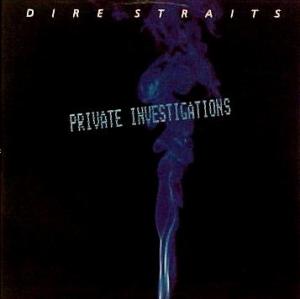
‘Private Investigations’ – though sharing almost nothing with prevailing musical trends of the period – taps superbly into this dark era (Mark Knopfler waited until 1985 to touch upon the Falklands War on Brothers In Arms‘ title track).
But despite its title, these days it’s hard to read the song as anything other than a portrait of a love affair gone wrong. The protagonist is fixated on looking for clues of his paramour’s infidelities, so he goes ‘checking out the reports’ and ‘digging up the dirt’, finding some ‘confidential information in the diary’.
We never found out exactly what he finds but it definitely ain’t good; in this song, to discover the truth of a relationship is a fate worse than death, leaving one ‘scarred for life’ with ‘no compensation’.
The track’s sonic details are thrilling. The sense of drama and use of dynamics leaves other contemporary pop for dust. The stereo spectrum is used as a kind of panaromic field across which various sonic events are ‘placed’ to fit the narrative, including Mike Mainieri’s intricate marimba and subtle bits of percussion.
The result is a kind of mini-movie set to music, best listened to with headphones. Ennio Morricone couldn’t have done it better. You could argue that ‘Private Investigations’ was the catalyst for all Knopfler’s film soundtrack work.
He also demonstrates a mastery of many guitar styles on the track, from the nylon-string acoustic main theme/mini-solos through to the power-chorded interjections towards the end, the latter frequently inspiring some of my uncle’s most spirited air guitar-playing back in the ’80s.
Then Knopfler’s volume-pedal swell perfectly imitates a cat’s nocturnal howl. The last section, with its picked-bass/kick-drum heartbeat and Alan Clark’s chiming piano chords, seems very influenced by the title track of Steely Dan’s TheRoyal Scam.
Check out that glass (window?) breaking and the click of a suitcase opening, or is it the latch of a door being tampered with? The space in the track forces you to focus on these details. It all adds up to something akin to Knopfler’s version of Peter Gabriel’s ‘Intruder’.
Astonishingly, in a slightly edited form, ‘Private Investigations’ reached UK #2 in September 1982 (sitting incongruously in the top 10 alongside ABC, Duran Duran, Dexys, Shalamar and The Kids From Fame!), a sure signifier as to just how much better the charts were back then.
The track’s accompanying album, Love Over Gold, is somewhat of a disappointment in Dire Straits’ discography. But now that the nights are drawing in, it’s always fun to dim the lights and give ‘Private Investigations’ a spin. The game commences…
Sequels are seldom a good idea in the movie business, and thankfully they’re a lot less prevalent in the music game.
But one of the most successful ‘franchises’ of the ’80s was guitarist Lee Ritenour’s Rit/Rit 2 combo, now re-released by Cherry Red on a single CD, and they’re two of the best-sounding albums of the era.
Of course that shouldn’t be a huge surprise when you notice the presence of names such as Humberto Gatica, David Foster, Harvey Mason, Jeff Porcaro, Jerry Hey, Abe Laboriel, Alex Acuna and Greg Philinganes on the song credits, but then again a lot of albums at that time featured all the right ‘names’ but didn’t deliver the goods.
But if1982’s Rit 2 is not quite in the same league as its predecessor, it’s still another classic piece of sumptuously-produced, blissed-out West Coast AOR with touches of jazz and soul, helped by the excellent vocals, keyboards and songwriting of Eric Tagg.
To these ears, it sounds as if Quincy Jones had produced Toto and got a good singer and a few decent songwriters in.’Promises Promises’ is superior disco/funk/rock and wouldn’t sound out of place on Quincy’s The Dude or Jacko’s Thriller.
‘Dreamwalkin’ is kind of the ‘happy’ version of Earth Wind & Fire’s ‘After The Love Has Gone’ and would make a great theme song for a an early-’80s, California-set Chevy Chase/Goldie Hawn vehicle. Ditto ‘Keep It Alive’.
‘Tied Up’ and ‘Voices’ initially seem like standard AOR fare, but reveal their superiority with interesting, layered vocal arrangements and surprising chord changes (and a classic bit of Porcaro drums on the latter).
But the real standout is killer instrumental ‘Road Runner’ featuring Harvey Mason’s incredibly intricate hi-hat work, a spicy Jerry Hey horn arrangement, some tasty Fender Rhodes from Philinganes and a corking set of solos from Ritenour.
Ritenour tried to repeat the formula on ’84’s less successful Banded Together before embarking on a decade of underwhelming instrumental smooth jazz with the occasional high point.
But Rit and Rit 2 are classics of their kind and belong alongside Steely’s Gaucho, Randy Crawford’s Secret Combination, Quincy’s The Dude, Michael Jackson’s Thriller and George Benson’s Give Me The Night as key albums of the era.
Most music fans of a certain age probably had their favourite ‘Walkman albums’, those cassettes that worked perfectly on headphones, revealing intricacies (weird panning effects, funky little motifs, stereo drum kits) rarely noticed when played on normal speakers.
As much as I had loved Joni Mitchell’s music ever since my dad played me ‘Chinese Cafe (Unchained Melody)’ in 1983, I’d never have predicted that the superb Dog Eat Dog – released on 30 October 1985 – would turn into one of my top headphone albums.
A clue, of course, was the presence of Thomas Dolby as co-producer and keyboard player, master of quirky soundscapes and synth textures.
Though initially he might seem a weird choice of collaborator, with hindsight it’s not that much of a surprise that Joni and co-producer/bassist/hubbie Larry Klein should enlist his services.
Joni admitted in contemporary interviews that she ‘could use a hit’. But they didn’t get along particularly well in the studio, Dolby not enamouring himself to her by blithely calling her ‘Joan’ between takes.
But the Englishman contributes a lot to Dog Eat Dog – interesting audio effects like Wayne Shorter’s sampled soprano throughout ‘Lucky Girl’, beats, dub textures here and there (‘Shiny Toys’) and of course the odd spoken word intrusion (maybe it was his idea to use Rod Steiger on ‘Tax Free’?).
One of the key aspects of Dog Eat Dog is Joni’s anger at the state of the world, both lyrically and vocally. Her cover pose says it all – throwing her hands up in the air with indignation and/or helplessness.
As she puts it, the album is a portrait of ‘a culture in decline’. She takes aim at TV evangelists, consumerism, lawyers, yuppies and Reaganites with equal candour, letting fly with an F-bomb on the superb ‘Tax Free’.
The album also features some of Joni’s strongest singing on record. Her melodies are sometimes resplendent too, particularly on the title track and ‘Lucky Girl’.
It’s also interesting to hear her trying out a slightly more minimalist lyric-writing approach on ‘Fiction’ and ‘Tax Free’, marrying her short, sharp lines to Klein’s music.
‘Good Friends’, initially a brooding piano ballad in demo form, kicks the album off in fine style, an AOR classic with more interesting chord changes than the usual and a typically distinctive guest spot from Michael McDonald.
It was a bold though unsuccessful attempt at a hit, far too good for the charts. Joni even sung it live on ‘Wogan’ with a McDonald impersonator!
The elegant, stately ‘Impossible Dreamer’ is described by Joni as ‘a tribute to Martin Luther King, John Lennon, and Robert Kennedy – all those who gave us hope and were killed for it.’ It also features some sparkling soprano sax from Wayne Shorter.
Master drummer Vinnie Colaiuta is mainly reduced to providing drum samples for Dolby, though plays some lovely stuff on ‘Shiny Toys’, the second single from the album and subject to a great 12″ mix by Francis Kevorkian.
The ’80s weren’t particularly easy on Joni and her contemporaries Don Henley, Neil Young, Bob Dylan, Linda Ronstadt and Robbie Robertson.
As she put it, ‘I made four albums for Geffen. For one reason or another, they were viewed as being out of sync with the ’80s. But I was out of sync with the ’80s. Thank God! To be in sync with these times, in my opinion, was to be degenerating both morally and artistically. Materialism became a virtue; greed was hip.’
A lot of people would probably have liked her to carry on making Blue for the rest of the ’70s and ’80s, but she was moving on. Every album was different and this may be the one most in need of critical reassessment.
Putting together my top 15 album list recently had an interesting knock-on effect: I actually spent some time listening to my choices.
Glorious Fool was possibly the one that surprised and pleased me the most (I listened to it on the original WEA cassette which sounds miles better than the CD master for some reason).
The general critical consensus is that John Martyn lost his way in the ‘80s, donning the suit, ditching the acoustic guitar and burying his music in synths, soft saxophones and stodgy productions.
But it’s an overly simplistic view. I would put Glorious Fool and the previous Grace And Danger (not forgetting 1990’s The Apprentice) right up there with any of his fabled ‘70s stuff.
Certainly his compositions were more musically demanding, but John’s lyrics were still pithy and his chords as dark and rich as ever. It’s just that often he was concentrating on his singing a lot more in this period – no bad thing – and so often delegated the main harmonic accompaniment to a keyboard rather than his guitar.
The ‘80s started fairly unpromisingly for John. He was still in turmoil over the breakup with wife Beverley, and the release of his classic Grace And Danger album had been delayed for 18 months, Island Records label boss Chris Blackwell believing it to be terminally uncommercial.
It was finally released in June 1980 to excellent reviews and reasonable sales but it was the straw that broke the camel’s back as far as John’s relationship with Island was concerned.
His new manager Sandy Roberton got him a deal with Warner Bros and also helped put together a cracking new band including ex-Jeff Beck (Blow By Blow) keys player Max Middleton, percussionist Danny Cummings and hotshot young Glaswegian bassist Alan Thomson.
Martyn’s mucker and partner-in-heartbreak Phil Collins also returned on drums and production. John said at the time, ‘I wasn’t married. I thought: let’s go for it, let’s make some money and make a band.’
In June 1981, they all convened at the Townhouse Studios on the Goldhawk Road, Shepherd’s Bush, West London, to commence work on Glorious Fool.
During the recording, John was living in the small apartment above the studio, and would apparently often undertake vocal duties in the wee hours of the morning, slightly the worse for wear and clad only in his dressing gown.
It’s clear that John’s failed marriage is still very much the emotional currency of his songwriting. ‘Pascanel (Get Back Home)’, ‘Hearts And Keys’ and ‘Please Fall In Love With Me’ are crushingly candid in their evocation of the contrasting emotions spawned by a relationship breakdown, everything from pure love and raw lust to rage, despair, envy, pleading and desolation.
The furious ‘Never Say Never’ kicks off with Martyn screaming ‘Shuddup! Close your mouth!’ over Collins’ trademark tom fills. Brilliant. ‘Perfect Hustler’ and ‘Didn’t Do That’ are more comic evocations of lost love, the former featuring Martyn sarcastically taunting his paramour about her suave, Latin-dancing boyfriend, and wondering if he has ‘gold teeth in’!
By contrast, ‘Hold On My Heart’ is an unashamedly soft, romantic love song, the nearest the album comes to an early ’80s Collins or Genesis ballad.
The title track takes a satirical look at the then-newly-elected president Ronald Reagan while ‘Amsterdam’ is a harrowing portrait of a close friend’s funeral in the Dutch capital (after an unrequited obsession with a local prostitute). It features a nasty, brutal groove, sort of John’s version of post-punk, and the haunting refrain: ‘The night the kid left Amsterdam…’ It’s the ‘80s flipside to ‘Solid Air’.
The album ends with the desolate ‘Don’t You Go’, a heartbreaking anti-war folk ballad with John’s moving vocal accompanied only by Collins’ piano and ghostly vocoder.
Another reason for Glorious Fool’s success is the sheer quality of the musicianship. The band can turn on a dime, and Collins has never played better, coming up with three or four classic beats and demonstrating a perfect understanding of what each song requires.
The album was a reasonable success, hitting #25 on the UK charts and staying in the top 100 for seven weeks, and the critics were generally onside. It also made for a very interesting companion piece to Collins’ Face Value, released six months before. You don’t need me to tell you which record sold more copies, but I doubt John lost much sleep over it.
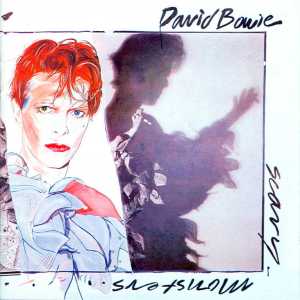
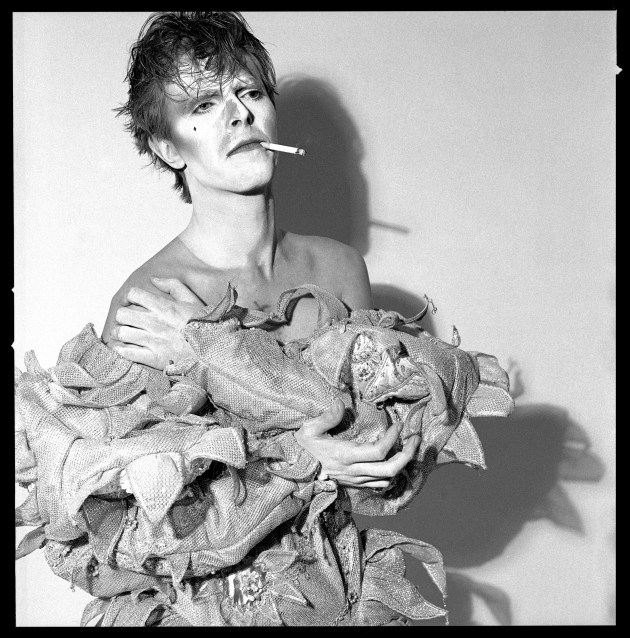
‘Albums of the ’80s’ lists are all the rage these days. Scary Monsters (And Super Creeps) would easily be in the movingtheriver top ten. It might even be in my top one.
It’s a timeless, masterful work which, for me, can only ever be consumed in its totality. It’s also the collection that all subsequent Bowie albums have been measured against. I would put it over and above Low, Ziggy Stardust and Hunky Dory for its sheer consistency.
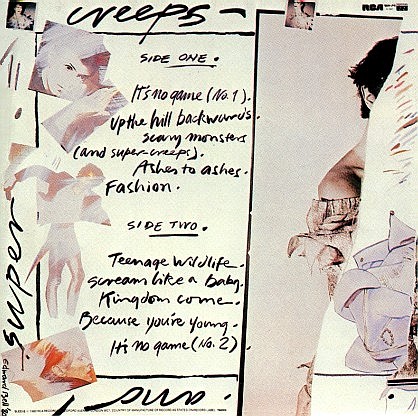
Here’s my case for the defence, track by track:
1. It’s No Game (Part 1)
I’ve previously written about this being one of the great ’80s album intros. Vocally, Bowie channels John Lydon and Peter Hammill to deliver a New York/New Wave anti-fascist tirade that ranks among his great performances. Producer Tony Visconti ‘f***s with the fabric of time’ to create a cavernous, Eventide-drenched mix and guitarist Robert Fripp delivers one of his most unhinged statements. Avant-rock heaven. Adapted from Bowie’s early demo ‘Tired Of My Life‘.
2. Up The Hill Backwards
A brilliant treatise on press intrusion and the wretchedness of celeb culture inspired by Bowie’s ‘dealings’ with the press during his failing marriage, with an ingenious central image of paparazza snapping away at their prey as they shuffle ‘up the hill backwards’. Endlessly catchy with a beautifully-realised unison vocal – the only track in the Bowie canon which doesn’t feature his solo singing.
3. Scary Monsters
Bowie revisits his finest Mockney accent to deliver a bleak, blanked-out, darkly funny tale of semi-stalking. There’s more Phil Spector-style brilliance from Visconti and another Fripp masterclass in balls-out guitar playing. The only minor criticism is that it possibly goes on for about a minute too long.
4. Ashes To Ashes
An instant classic with a very Bowie mix of child-like innocence and creeping malevolence as the hopelessly drug-addicted, world-weary Major Tom drifts off into the ether. Effortlessly superb songcraft with three or four memorable sections, boundary-pushing lyrics (‘Visions of Jap girls in synthesis’!) and a myriad of majestic hooks.
5. Fashion
The lameness of the style wars is in Bowie’s sights this time as he almost mumbles the ironic verse lyrics over a tough New York disco/funk/rock groove. And there’s more barking mad Fripp soloing. Danceable, amusing, timeless. Originally titled ‘Jamaica’ in demo form.
6. Teenage Wildlife
Initially coming across as slightly lumpy and leaden, the track builds and builds in intensity to deliver a powerful message to Bowie’s ‘mythical younger brother’ about keeping a sense of perspective as one gets older. His patented ‘histrionic’ vocal style is superbly realised and drummer Dennis Davis holds it all together with aplomb. Originally titled ‘It Happens Every Day’ in demo form.
7. Scream Like A Baby
Spooky dystopian fable about a future society’s outlawing of homosexuality and other ‘deviant’ behaviour. Bowie’s ingenious stuttering provoked many a schoolyard titter and the weird vocal doppler effects are perfectly realised. Revamped from the Bowie-written/produced ‘I Am A Laser‘ originally recorded by Ava Cherry/The Astronettes.
8. Kingdom Come
A superb cover of a track from Tom Verlaine’s debut album, Phil Spector is the obvious influence again with Davis’s booming, overdubbed tom fills and some anthemic, reverb-drenched backing vocals. Majestic, powerful, intriguing. Verlaine was apparently supposed to play guest guitar throughout the album but bowed out at the eleventh hour.
9. Because You’re Young
An ‘advice’ song to his son, Bowie offers the lessons he has learnt and looks back with great poignancy and not a little sarcasm on his carefree, youthful days. Peter Townshend strums along (apparently he arrived at the studio drunk and ready to party, but was stunned to find Visconti and Bowie sitting quietly at the recording desk like ‘two sober, little old men’!) and Bowie delivers a superb, kaleidoscopic lead/backing vocal combo.
10. It’s No Game (Part Two)
Carlos Alomar’s masterly rhythm guitar anchors this reprise, with Bowie doing his best Iggy croon and offering up images of world poverty, media saturation and dunderheaded political/cultural strategies. We hear the multitrack tape spool off its reels at the very end to close one of the great albums of the ’80s or any other decade.
The late ‘80s was a great period for avant-garde guitar playing with the likes of Vernon Reid, Reeves Gabrels, Adrian Belew, Arto Lindsay, Fred Frith, Dave Fiuczynski, Stevie Salas, Sonny Sharrock, Skip McDonald, Robert Quine, Steve Vai and Bill Frisell laying down some seriously mind-bending tones and textures.
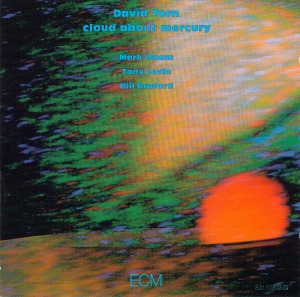
Cloud About Mercury, David Torn’s second ECM solo album, definitely put him into the same league. Though just as influential as many of the aforementioned guitarists, he has never really gained as much of a public profile despite occasional solo albums and stellar sideman work with the likes of David Bowie and David Sylvian.
My dad used to get sent a lot of music for his work and I vaguely remember him passing Cloud About Mercury onto me, knowing I was a big fan of early-’80s King Crimson.
My muso mates and I quickly grew to like the album’s perverse musical concepts and silly song titles. With a superstar avant-rock rhythm section of Bill Bruford and Tony Levin on board, it came on a bit like the follow-up to Crimson’s Three Of A Perfect Pair, but also offered a strikingly original take on jazz/rock.
I recall a contemporary review of Cloud About Mercury in Q magazine which said something like: ‘Torn luxuriates in the silence for a bit…and then goes KRAOOOOOOW!’ But in its louder moments, CAM is definitely one to annoy the neighbours. Torn’s Trans-Trem guitar enables him to create some very novel effects and original lines, with micro-tones and Middle Eastern flavours, and you can really get lost in his ambient loops.
CAM is also a very uncharacteristic ECM album, being much more in-your-face and rockist in its mixing and playing than most of the label’s output. In fact, it’s not really fair to judge it as a ‘jazz’ album at all.
But sometimes Torn seems much happier playing solo or in duet with Isham; his superb rhythm section is underused, and the tunes rely too heavily on one-chord improvisations. Consequently Bruford and Levin sound somewhat muted and can’t quite bring the sort of forward-motion dynamics so crucial to jazz/rock.
Torn toured extensively to promote CAM (but presumably not London or I surely would have been there…) with ex-Japan bass player Mick Karn replacing the unavailable Tony Levin. An excellent decision, both musically and commercially.
The band sounded fantastic and the tunes really came to life. Torn and Isham then accompanied David Sylvian on the ‘In Praise Of Shamen’ world tour which I caught at the Hammersmith Odeon in 1988.
Two quick questions to end, prompted by a discussion with my brother about Torn the other day: why isn’t there any music like this around these days? Or is there?

 By the release of The Colour Of Spring, there was barely any trace of Talk Talk’s previous synth-pop incarnation. Out went the Duran Duran, in came the Debussy, Traffic and Satie.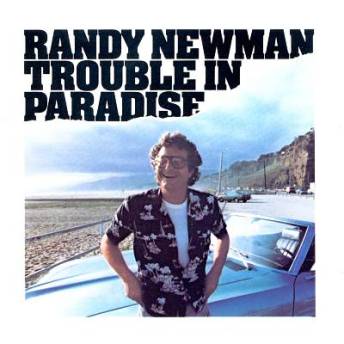


 The early-’80s was in many ways a pretty bleak period in the UK, temporarily lightened by the Royal Wedding and Ian Botham’s cricket heroics against the Aussies.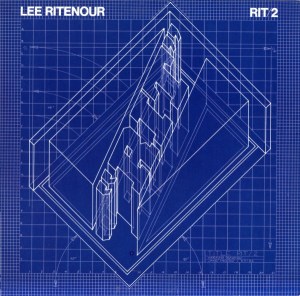
 Most music fans of a certain age probably had their favourite ‘Walkman albums’, those cassettes that worked perfectly on headphones, revealing intricacies (weird panning effects, funky little motifs, stereo drum kits) rarely noticed when played on normal speakers.