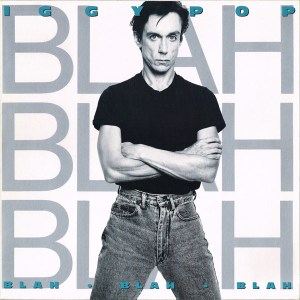
Iggy Pop: Blah-Blah-Blah 30 Years Old Today

iggy

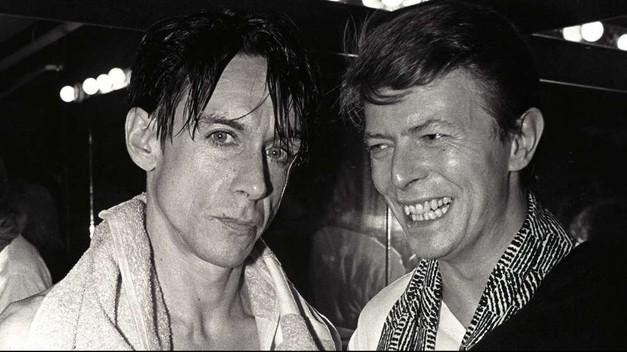
While David Bowie was turning in one of his finest live performances of the 1980s at Live Aid, his good friend Jim Osterberg AKA Iggy Pop was ensconced in LA, writing songs with ex-Sex Pistol Steve Jones.

Bowie’s use of six Iggy lyrics on the Let’s Dance and Tonight albums had given Osterberg enough royalties to buy some much-needed thinking time after a disastrous run of early ’80s solo albums and the termination of his Arista record contract.

Iggy and Jones came up with nine new songs, three of which – ‘Fire Girl’, ‘Winners And Losers’ and ‘Cry For Love’ – would make it onto Blah-Blah-Blah (though they were clearly inferior to the Bowie/Iggy material).

The latter lyric especially had opened up a new vulnerability in Iggy’s writing. He later said: ‘Just expressing that openness frightened me. I didn’t want to admit I was in need of basic affection.’ Yes, Iggy was now singing boy/girl songs – love songs.

Bowie hooked up with Iggy in late 1985 to hear some of the new stuff. He was impressed. He suggested they co-write some more uptempo material and also offered to produce, apparently telling Iggy: ‘I can make this as commercial as hell.’

They disappeared off to David’s holiday home in Mustique with their respective girlfriends, then undertook a lengthy skiing holiday in Gstaad, taking a four-track tape machine with them. Mountain Studios, owned by Queen and scene of the ‘Under Pressure’ recording, was booked for April 1986, and co-producer/tech guru David Richards came onboard for the sessions too.
iggy-and-bowie-1986

Bowie recruited a crack band for Blah-Blah-Blah – Kevin Armstrong played guitar (joined by Steve Jones on one track), fresh from being David’s musical director at Live Aid and doing sessions for Prefab Sprout, Propaganda and Alien Sex Fiend!

Gifted Swiss multi-instrumentalist Erdil Kizilcay, who had worked on the Let’s Dance demos and also epic soundtrack single ‘When The Wind Blows’, played (excellent) bass and shared live drums with the Linn machine borrowed from Queen’s Roger Taylor. Bowie played most of the keyboards.

David was apparently workmanlike and professional in the studio, ticking off daily tasks on a notepad with lots of nervous energy. He was focused on helping his friend to the very best of his ability. ‘He’d be chucking down the coffee and fags, and it would be pretty neurotic and manic around him’, said Armstrong.

But Bowie was also a typically shrewd people-watcher – he apparently wrote the first verse of ‘Shades’ after watching Iggy give his girlfriend Suchi a gift, turning it around to make the guy the grateful, humble recipient.

Blah-Blah-Blah features Iggy’s best singing on record. He has developed a gloriously dark croon and finally has the right material to showcase it. ‘Winners And Losers’ particularly shows off his improved vocal range.

It’s also a very funny album. Bowie and Iggy clearly had a great laugh writing these songs, with some preposterous couplets thrown in, especially on ‘Isolation’ (‘I need some lovin’ like a body needs a soul/I need some lovin’ like a fastball needs control, here I am!‘).

‘Baby It Can’t Fail’ features some of the best opening lines in 1980s rock: ‘You have loved me with energy/Backed up hard work and guts!‘ Iggy’s committed delivery always prompts a smile.

There’s some excellent, genuinely uplifting material in the shape of ‘Shades’, ‘Isolation’ (with gorgeous Bowie backing vocals) and ‘Hideaway’.

The title track is a sample-heavy curio in the style of Sigue Sigue Sputnik’s ‘Love Missile F1-11’ (which Bowie later covered) with amusing ‘geeky’ vocal stylings by Iggy and some wilfully-gormless lyrics (‘Shimon Peres, whatcha gonna do?/I’m from Detroit’ etc etc).

‘Little Miss Emperor’ tellingly quotes Allen Ginsberg and features a classic Bowie piano flourish in the ‘Absolute Beginners’/’Life On Mars’ style. Blah-Blah-Blah even spawned Iggy’s first UK singles chart showing (#10) with ‘Real Wild Child’, a cover of Australian rock’n’roller Johnny O’Keefe’s only hit.

Promotional duties led to a very memorable appearance on the regional British kids’ TV show ‘Number 73’ wherein Iggy decided to simulate sexual relations with an oversized teddy bear.

Apparently Richard Branson heard an early pressing of Blah-Blah-Blah and phoned Iggy personally to invite him to Virgin Records. But he eventually went with A&M and delivered a reasonable hit for the company; the album went gold in Canada and made a decent dent in both the UK and US charts.

So is Blah-Blah-Blah the best Bowie-related album of the ’80s? It’s certainly up there. Older Iggy fans may have been shocked by the ‘poppy’ nature of some of the material, but there’s always an edge.

The album was also arguably an influence on bands like The Mission, Sisters Of Mercy and Miss World with its monolithic drum programming, deep vocals and anthemic songcraft.

To a certain extent, Bowie tried to repeat the formula on his own decidedly patchy Never Let Me Down album, but the news was better for Iggy; he embarked on a ten-month world tour, laying off the booze and drugs for the entirety.

For the band, however, it was a different story – apparently Kevin Armstrong and drummer Gavin Harrison were in a pretty terrible state by the time they got home to London in summer 1987.

But Bowie had done it again – he’d helped kickstart Iggy’s career for the fourth time and delivered probably the commercial apex of his solo work; Blah-Blah-Blah is definitely due a critical reappraisal.

Further reading: ‘Open Up And Bleed’ by Paul Trynka

‘The Complete David Bowie’ by Nicholas Pegg

Terje Rypdal: The Singles Collection

terje

It can’t hurt a record label to have a USP, a recognisable visual concept and/or sound. It has certainly stood Blue Note, Impulse and 4AD in good stead.

When one thinks of ECM, images of fjords, mountains or trees probably come to mind, alongside a certain sonic quality, a kind of rarefied ambience (producer/owner Manfred Eicher and his house engineers’ choice of reverb units are apparently almost as ‘secret’ as Colonel Sanders’ chicken recipe…).

The ECM formula worked for two decades. But then along came Terje Rypdal’s The Singles Collection in 1989 to throw a spanner in the works. Though the title is a joke – there are no ‘singles’ on the album – you wish more pop music was as bold as this collection which explores hard rock, early-’60s-style balladry, techno-fusion and even Prince-influenced funk to exciting and sometimes amusing effect.

The shorter tracks start out sounding a bit like Living In A Box jamming with Jeff Beck, before completely changing gear a minute in and turning into dark, introspective mood pieces with Messiaen chords and ethereal fretless bass.

Rypdal chucks in the whole kitchen sink, as if desperate to avoid a boring listening experience. The ploy works. Yes, this is the ECM album whose first track is titled ‘There Is A Hot Lady In My Bedroom And I Need A Drink’… It’s Lovesexy meets Ligeti.

The Singles Collection was the third album in a row where Rypdal hooked up with The Chasers, a cracking bass and drums team comprising of Bjorn Kjellemyr and Audun Kleive. The latter is thinking more Manu Katche and Stewart Copeland than Jon Christensen on this album, and the music is much better for it (no disrespect to the excellent Jon).

But a vital ingredient is the addition of keyboardist Allan Dangerfield who contributes three compositions and all manner of weird textures, Synclavier drum/sequencer patterns and unhinged, hysterical Hammond organ solos very much in the Prince style.

‘Sprøtt’ (Norwegian for ‘crazy’) sounds like an outtake from Jeff Beck’s Guitar Shop album with its chugging rockabilly rhythms and blistering lead guitar. Luscious noir ballad ‘Mystery Man’ will be familiar to fans of the Michael Mann movie ‘Heat’. If Mann hadn’t bagged it, you can bet David Lynch wouldn’t have been far behind. Maybe Dave can still put the gorgeous, glacial ‘Somehow, Somewhere’ to good use.

Elsewhere, ‘U’n’I’ fuses rockabilly and free-jazz beats with fusion bass, Ligeti chords and Van Halen guitar styles to thrilling effect. ‘Steady’ features some serious funk/rock riffing and another nutty Dangerfield solo. All in all, a striking, fascinating album.

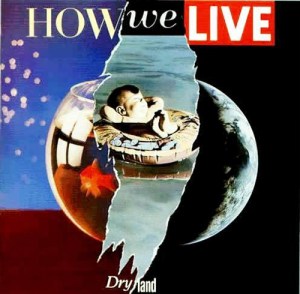
How We Live: Dry Land 30 Years On

How+We+Live+Dry+Land+554632Madchester aside, the late-’80s may be the least-heralded period of British pop, but the era also produced a surprising amount of intelligent, original bands that arguably never got their commercial due: Love And Money, Danny Wilson, The Bible, The Lilac Time, It Bites, Stump…

The list of ‘under-achievers’ is long and varied. But one name often forgotten is How We Live.

Most famous for featuring a pre-Marillion Steve Hogarth on vocals and keyboards, the band emerged from the ashes of new-wave popsters The Europeans to release their one and only album Dry Land in 1987.

Originally appearing on CBS offshoot Portrait Records but now given a shiny new remaster by Esoteric/Cherry Red, the album certainly ticks lots of ‘quality 1980s pop’ boxes: it was recorded at Crescent Studios in Bath with XTC/Peter Gabriel producer David Lord and The The/Deacon Blue engineer Warne Livesey, and features Tears For Fears’ drummer Manny Elias on a few tracks. Peter Gabriel and XTC get a thank-you on the inside cover.

Colin Woore and Steve Hogarth

Colin Woore and Steve Hogarth

Malcolm Dome’s incisive liner notes for this re-release outline the record-company shenanigans which dramatically shortened How We Live’s lifespan, whilst also acknowledging how Hogarth and fellow ex-European Colin Woore’s songwriting was very much informed by the other quality British pop of the time – Talk Talk, David Sylvian, Gabriel, Hue & Cry (Hogarth apparently being a big fan of Pat Kane’s vocals), Kate Bush.

And while it’s tempting to view Dry Land as the prelude to Marillion’s second phase, it’s pretty clear that Hogarth already had an extremely strong presence as a singer, songwriter and keyboard player long before he joined the Brit-prog behemoths.

Dry Land‘s opening 1-2-3 of ‘Working Girl’, ‘All The Time In The World’ and the title track (latter taken into the top 40 by Marillion) is pure dream-pop bliss. The latter benefits from a dramatic string arrangement, missing from the Marillion version, though connoisseurs might rue the big snare-drum sound.

‘Working Girl’ is simply a classic, with a haunting verse and swooning, truly uplifting chorus. How that and ‘All The Time’ didn’t crack the top 40 is still a mystery, though, according to manager Mark Thompson, CBS were spending most of their time and money trying to break Deacon Blue during this period.

Whilst the rest of Dry Land can’t quite maintain the quality of the first three tracks, there are plenty of other pleasures: ‘Games In Germany’ is a fine fusion of late-’80s PiL and Season’s End-era Marillion, a crashing new-wave groove with a fabulous, wrong-footing chorus.

Classy ballad ‘Lost At Sea’ is somewhat reminiscent of David Sylvian’s work of the same period, while ‘In The City’ takes a left turn into jazzy pop with great aplomb; its shimmering synths, swinging groove and catchy trumpet melody bring to mind such late-’80s movie soundtracks as ‘The Big Blue’ and ‘Betty Blue’.

‘India’ is unfortunately a bit more Chris De Burgh than It Bites, though Dave ‘Taif’ Ball’s elegant fretless bass impresses, as it does throughout Dry Land. ‘The Rainbow Room’ is perhaps the most ‘prog’ track on the album, powered along by an intricate keyboard sequence and guitar motif.

Unfortunately Dry Land was a dead end for How We Live – it stalled outside the top 40, and, although there were some big gigs including a Munich show on the same bill as Eurythmics and Tina Turner in front of 100,000 people, they called it a day in late 1987.

Hogarth was enquiring about becoming a milkman when he heard from his publisher that Marillion had been in touch. He was back in business, and remains so to this day. But Dry Land is a fascinating and worthwhile precursor.

Dry Land is out now on Esoteric/Cherry Red.

Story Of A Song: Rolling Stones’ ‘Undercover Of The Night’ (1983)

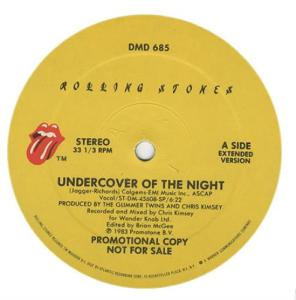
Rolling+Stones+Undercover+Of+The+Night+-+Stoc+141290bSo here it is: The Stones’ last great single.

‘Undercover’ is essentially a one-chord groove with powerful lyrics, stinging guitar licks, a memorable hook and notable video.

Though Mick and Keef share a writing credit, the song was apparently largely a Jagger composition, with Richards later saying: ‘Mick had this one all mapped out. I just played on it. There was a lot more separation in the way we were recording at that time. Mick and I were starting to come to loggerheads…’

Guitarist Ronnie Wood concurred but also had reservations: ‘There was a great acoustic version which is the kind of song it should be. The final, polished version may have been Mick’s vision of the song…’

Reading between the lines, Jagger was clearly keen to bring outside players into an increasingly dysfunctional band situation. Recording took place during the summer of 1983 at Compass Point Studios in Nassau, giving Jagger the opportunity of using some great local players, many of whom light up ‘Undercover Of The Night’.

A raft of percussionists including Sly Dunbar, Martin Ditcham, Moustapha Cisse and Brahms Coundoul accompany drummer Charlie Watts on various instruments including bongos, Simmons drum and even a timpani (there are rumours that a complete different version of the song exists featuring a rhythm section of Sly and Robbie). Producer Chris Kimsey also enters into the spirit of things with an ingenious ‘dub’-style arrangement (or is that the work of Brian McGee, credited as ‘editor’ on the vinyl label?).

Jagger claimed that his lyric was heavily influenced by William Burroughs’ 1981 novel ‘Cities Of The Red Night’. The song is a disturbing vision of Latin America’s Dirty War. This was, after all, an era in which thousands of ‘political prisoners’ were tortured and killed in the ESMA detention camp in Buenos Aires, less than a mile from the stadium where the 1978 football World Cup Final was taking place (according to many reports, the cheers of the fans obscured the screams of suffering prisoners).

Excellent documentary ‘The Shock Doctrine’ claims that many torture techniques used by the Chilean and Argentinian junta (including rape and genital mutilation) may have been ‘learned’ in the US-run School Of The Americas. Jagger manages to crystallise many of these disturbing aspects in a powerful lyric:

Hear the screams of Centre 42
Loud enough to bust your brains out
The opposition’s tongue is cut in two
Keep off the street cos you’re in danger
One hundred thousand disparos
Lost in the jails in South America

Cuddle up baby, cuddle up tight
Cuddle up baby, keep it all out of sight
Undercover of the night

The sex police are out there on the streets
Make sure the pass laws are not broken
The race militia has got itchy fingers
All the way from New York back to Africa

All the young men, they’ve been rounded up
And sent to camps back in the jungle
And people whisper, people double-talk
And once-proud fathers act so humble
All the young girls they have got the blues
They’re heading on back to Centre 42

Down in the bars, the girls are painted blue
Done up in lace, done up in rubber
The johns are jerky little GI Joes
On R&R from Cuba and Russia
The smell of sex, the smell of suicide
All these sweet things I can’t keep inside

Undercover, all out of sight
Undercover of the night

Julien Temple directed the controversial video, shot in Mexico City. As he relayed in the book ‘I Want My MTV’, his dealings with Jagger and Richards gave him a pretty stark insight into the state of their relationship:

‘I wrote an extreme treatment about being in the middle of an urban revolution, and dramatised the notion of Keith and Mick really not liking each other by having Keith kill Mick in the video. I never thought they would do it. Of course they loved it. I went to Paris to meet with the band. Keith was looking particularly unhappy. He was glowering with menace and eventually said, “Come downstairs with me.” My producer and I went down to the men’s room. Keith had a walking stick and suddenly he pulled it apart. The next thing I know he’s holding a swordstick to my throat. He said, “I want to be in the video more than I am.” So we wrote up his part a bit more. That was Keith’s idea of collaboration!’

The video was initially considered too violent for MTV (though they did eventually air an edited version after 9pm) and it was heavily censored when shown on British television, leading to a fractious interview on ‘The Tube’ during which presenter Muriel Gray questioned Jagger and Temple about the extreme content and their motives for making the video.

‘Undercover Of The Night’ was released as the first single from the accompanying Undercover album on 1 November 1983. It got to #9 in the US and #11 in the UK. Not bad. It was their highest chart placing to date.

Neil Young: This Note’s For You

Neil+Young+This+Notes+For+You+507216The general critical consensus maintains that Neil had a rotten ’80s.

He made folk albums, rockabilly albums, synth-rock albums, undercooked Crazy Horse albums and country albums.

But you can’t say he wasn’t prolific, and hey, he’s Neil Young – there’s always something good going on somewhere.

But none of these projects came anywhere near the commercial jackpot, to the extent that his label boss David Geffen sued him for ‘unrepresentative’ product!

But, with the release of 1988’s This Note’s For You, Young was getting back on track. He had returned to the Reprise label of his peak years and was gigging with a hard-hitting ten-piece band The Bluenotes (later changing its name to Ten Men Workin’ after a legal challenge from Harold Melvin) which featured a hot horn section and cracking new drummer Chad Cromwell.

Neil had ten new songs in the can too, veering between two-chord R’n’B stompers and love ballads in the ballpark of his teenage hero Roy Orbison. He was also playing as much if not more lead guitar than he ever had in his solo career, this time in the biting, incisive style of Alberts King and Collins.

Lyrically, the songs were basically about workin’ hard, lookin’ for love, not sellin’ out and havin’ a good time, but with more humour than Bruce or Billy Joel. ‘I’m a married man – respect my happy home!’ he barks on ‘Married Man’.

Neil gave writer Paul Zollo some cool insights into the writing of the song in the book ‘Songwriters On Songwriting’:

‘Oh, I like that song. I think I wrote that in my car. I have a ’54 Caddy limo. I was on my way down from Northern California to play with the Bluenotes. I was on Highway 5. Our driver was listening to tapes and I was playing my guitar…’

Neil’s tremulous voice croons ‘You have changed my life in so many ways’ on ‘Can’t Believe Your Lyin’, and it’s both touching and amusing. ‘Ten Men Workin” and ‘Life In The City’ are driving old-school R’n’B gems while ‘Sunny Inside’ is almost Brian Wilsonesque in its charming naivety.

Then there’s the title track, the standout cut on the album (though it inexplicably fades way too soon). A rum, anti-product-placement protest song which nevertheless manages to mention four big brands (and of course mocks Budweiser’s ‘This Bud’s For You’ campaign), it defiantly has its cake and eats it. It’s also a total blast.

In a delicious irony, the old hippie who had spent most of the ’80s in purgatory made one of the great vids of the decade (winning Video Of The Year at the 1989 Video Music Awards), with notable help from writer Charlie Coffey and legendary director Julien Temple. Temple talked about his motivations for making the video:

‘Beer companies and the like were beginning to take over music. A lot of beer ads were using rock musicians. The line between videos and commercials was blurring. We managed to get banned from MTV and win the Video Of The Year award. That was the peak of my video-making career…’

The clip mostly mocks the series of Michelob beer ads which featured the likes of Genesis, Eric Clapton and Steve Winwood. And it didn’t scrimp on Michael Jackson and Whitney Houston lookalikes.

What’s also notable and totally unprecedented is that Neil decided to use a live take of the song for this video, completely different to the album version. Which major star would have the balls to do that today?

This Note’s For You was not a hit, only reaching #61 in the US album chart. But Neil was laying down a marker for the classic follow-up Freedom. And he had also tapped into something very prescient by focusing on guitar-led soul, blues and R’n’B forms, echoing the resurgence of Clapton, Buddy Guy, John Lee Hooker, Jeff Beck, Albert Collins and Gary Moore, and emergence of hotshots like Jeff Healey and Robert Cray.

Peter Gabriel: So 30 Years Old Today

gabriel

‘At the time of coming back, he had tremendous determination. He said do want to make it! I do want to succeed!” Instead of going along with the idea that he is different, special, unique, precious, So was about him saying, “F**k that! I’m going to allow myself to succeed.”’ Jill Gabriel, quoted in ‘Peter Gabriel’ by Spencer Bright

So was the Peter Gabriel album that put him – albeit very briefly – into The Big League, alongside the likes of Madonna, Michael Jackson, Phil Collins, Prince, Hall and Oates and Springsteen, leaving his ‘art-rock’ contemporaries (Laurie Anderson, Brian Eno, Peter Hammill, Robert Fripp) in the dust.

He opened himself up to mainstream success via more direct lyrics and music. And it worked a treat. So still sounds fantastic today; a near-perfect mix of art and commerce.

photo by Steven Toole

photo by Steven Toole

In interviews, Gabriel has described the ’83/’84’ period as a dark time in his life. He mixed and released an excellent live album and looked for solace in film soundtrack work, producing two fairly inconsequential tracks: ‘Walk Through The Fire’ from ‘Against All Odds’ and ‘Out Out’ from ‘Gremlins’.

Far more substantial was his soundtrack for Alan Parker’s ‘Birdy’, but, most importantly, it was the project that introduced him to So co-producer Daniel Lanois.

Gabriel later credited Lanois and his then wife Jill for steering him back towards more positive thoughts, and much more ‘up’ music and lyrics.

Gabriel came up with 20 new songs by early 1985. Lanois helped him whittle them down to 12, and then six months of pre-production began, focusing on song structures and arrangements. So was mainly recorded at Gabriel’s home studio, Ashcombe House near Bath.

Working at home was intended to save money on big studio fees and also speed up the creative process, but lyric-writing was still a big problem and a lack of words necessitated two missed release deadlines for So: 31st July 1985 and 14th December 1985.

Virgin were patient. Lanois once even nailed him into a back room to force him to come up with some lyrics – Gabriel was not amused, at least not for a few hours. ‘It is the most upset I’ve seen him at the studio,’ guitarist David Rhodes remarked. Lanois had made his point.

Musically, Gabriel very much leaned on tried-and-tested collaborators such as Rhodes and Tony Levin – it’s hard to imagine anyone else playing bass on So. He’s so much part of the music. Check out his ‘drumstick bass’ (later marketed as Funk Fingers!) on ‘Big Time’.

Joni Mitchell’s then husband Larry Klein also plays some lovely fretless on ‘Mercy Street’. French-African newcomer Manu Katche amazed everyone with his drumming, particularly on ‘That Voice Again’ and ‘In Your Eyes’. He had a new twist on Stewart Copeland’s style and also somehow found the time to fit occasional tom-tom flurries into his grooves too.

Migrant Mother by Dorothea Lange

Migrant Mother by Dorothea Lange

‘Red Rain’ opens with some resplendent Copeland hi-hat work, and ends with the kind of piano/vocal coda that Simple Minds excelled at – the influences were now flowing both ways.

‘Don’t Give Up’ was inspired by a BBC TV documentary about the effect of unemployment on British family life, and also the photography of Dorothea Lange, portraying dust-bowl conditions during the Great Depression.

‘Mercy Street’, dedicated to poet Anne Sexton, shows evidence of Lanois’ influence; its opening ambient textures resemble Brian Eno’s ‘Under Stars’ which Lanois co-produced.

Gabriel’s low-octave vocals apparently had to be recorded first thing in the morning for maximum deepness. The song’s Brazilian/African groove predates Paul Simon’s Graceland by six months or so.

‘We Do What We’re Told (Milgram’s 37)’, concerning social psychologist Stanley Milgram’s infamous experiments, was originally recorded for Melt in 1980. While musically very rich and dark (I always think of Kate Bush’s ‘Running Up That Hill’ when I hear that opening minor chord), lyrically it is possibly a little half-baked.

‘Big Time’ is Gabriel’s amusing, self-mocking, Randy Newmanesque satire on success and celebrity – ‘This drive for success is a basic part of human nature and my nature’, he later said.

Musically, it’s a potent mixture of driving Copeland drums, treated rhythm guitar, synth bass, quasi-industrial samples and some great Hammond organ by Simon Clark.

Another much rockier version – featuring Jerry Marotta on drums – was also recorded but scrapped just before the mastering stage.

‘Sledgehammer’ was the last song written and recorded for So. Ironically, it dislodged Genesis’s ‘Invisible Touch’ to become a US number one single in July 1986.

A catalogue of sexual innuendos, it’s one of the weirder hits of the 1980s. Its odd cheerfulness may come from the fact that it’s mainly in a major key, a rarity for an R’n’B-influenced track. David Rhodes’ rhythm guitar part is eccentric and the Farfisa organ bizarre.

The opening sampled bamboo flute was copied by hundreds of keyboard players across the UK (or at least a few in my school). The groundbreaking video for the song, directed by Stephen Johnson (who had used similar techniques for Talking Heads’ ‘Road To Nowhere’ clip), required 100 hours of Gabriel’s time.

Apparently Gabriel was obsessed with the album’s sequencing: he made up endless cassettes featuring just song endings/beginnings, testing all the different permutations.

He always wanted ‘In Your Eyes’ to close So, but was persuaded otherwise when told that its drums and bass wouldn’t hold up very well at the end of a long side of vinyl (though it’s hard to ‘hear’ it anywhere else but at the beginning of side two…). He finally got it where he wanted it on the definitive remastered version.

Gabriel’s only concession to the record company was to name the album something apart from ‘Peter Gabriel’. So seemed suitably off-the-cuff – ‘It had a nice shape but very little meaning’, he later said.

He also decided that a simple cover shot would better suit the directness of the music and lyrics than some of the more disturbing covers of albums past. So‘s design and packaging still look fantastic today.

The album topped the charts on both sides of the Atlantic and by summer 1987 had sold over 5 million copies worldwide. Gabriel promoted the album extensively before embarking on Amnesty’s Human Rights Now! with Sting, Tracy Chapman and Bruce Springsteen in 1988.

He had a lot more than music on his mind – he waited a full six years before releasing the official follow-up to So. The commercial assault had paid off but at what cost to his long-term creativity?

Francis Dunnery: Back To It Bites

francis dunneryIn some ways, it may not be much of a surprise to hear that ex-It Bites vocalist, guitarist and songwriter Francis Dunnery has returned to the music of his old band, one of the great British units of the ‘80s.

He met up with the other three members – keyboardist John Beck, bassist Dick Nolan and drummer Bob Dalton – during a London Union Chapel gig in 2003, and for a while a full-scale reunion looked to be on the cards. But it wasn’t to be.

Then Dunnery recorded various ‘reversions’ of It Bites songs on his 2011 album There’s A Whole New World Out There, and he has frequently performed the old material in concert (check out this amazing version of Once Around The World’s title track from a few years ago). So he’s never exactly been averse to revisiting former glories.

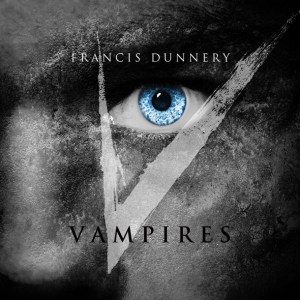
But Vampires is different. It goes the whole hog: he’s re-recorded not just one album but 100 minutes of It Bites classics, singing all the vocal parts himself (with much-improved body and range, though his vocals weren’t exactly shabby in the old days) and enlisting various musicians including ex-Go West drummer Tony Beard to navigate the musical twists and turns.

Two years in the making, the album is also a blast from the past in terms of its audio qualities – it was recorded without EQ or compression, only a small amount of the latter being added at mastering stage.


Francis discusses the new album and the It Bites days in this excellent interview for The Mouth magazine.

He reveals – for the first time, as far as I’m aware – the full story of how the band got signed to Virgin, Dunnery’s period squatting in South London, his relationship with John Beck, his favourite It Bites songs, the band’s split and loads more. It’s a must-listen for any fans.

You can also hear many excerpts from Vampires and make your own mind up about whether his new versions improve on the originals.


Toto/Miles Davis: ‘Don’t Stop Me Now’

Toto-FahrenheitI’ve always had a somewhat ‘troubled’ relationship with Toto’s music, to put it mildly…
Toto IV (1982) was obviously a classic of its kind, Hydra (1979) had its moments and there are other classy tracks dotted around, but I’ve generally thought: David Hungate, David Paich, Jeff Porcaro and Steve Lukather are fantastic musicians who have played on some of the greatest albums of all time – so what are they doing in this band, writing these songs?

But I found a solution of sorts when I came across a track buried at the end of their lacklustre Fahrenheit album from 1986. ‘Don’t Stop Me Now’ is a cracking instrumental with nice chord changes, a great melody, gorgeous bridge, slick playing from co-writers Paich and Lukather and a memorable guest spot from Miles Davis.

Of course Miles was no stranger to the world of Toto and the LA session elite in general. He was tight with Quincy Jones, producer of Michael Jackson’s Thriller, an album that heavily featured Jeff Porcaro, Paich and Lukather.

Miles had also covered Thriller‘s ‘Human Nature’ (co-written by Toto keyboardist Steve Porcaro) on his You’re Under Arrest album the previous year. He was also apparently a big fan of Jeff Porcaro’s painting, not to mention his drumming, so a full-scale Miles/Toto collaboration was surely always on the cards.

But the recording of ‘Don’t Stop Me Now’, which took place at Jeff Porcaro’s home studio in early 1986, wasn’t a walk in the park, as Steve Lukather told George Cole in the excellent ‘Last Miles: The Music of Miles Davis, 1980-1991’:

‘We cut the track and left the melody off – we just left open spaces. When Miles got there, we ran it down together with him and he wasn’t really playing the melody. So we figured, we’re not going to tell Miles Davis what to play, so we said, “Miles, we have a take of this, would you mind just giving it a listen and play whatever you want?” He says, “Okay, I’ll play like that. You like that old shit, right?” So he gets out the Harmon mute and he played it – one take. We’re all stood there completely freaked out – it was unbelievable. At the end, the song just kind of fades out, but he just kept playing the blues. I was sitting there with chicken skin on my arms – it was an unbelievable moment. And that’s how we ended the record, with just Miles blowing. Later on, David Sanborn came down to play on a different tune on the record and he’d heard that we had cut a tune with Miles. He said: “I gotta hear it!”, so we played it and he flipped and said, “Please just let me be on the track!” He doubled the melody and played a couple of flurries. So we got Sanborn, Miles and us on one track – that was pretty cool!’

But Steve Porcaro alluded to the wider issue of including a ‘jazz’ track on a ‘heavy rock’ album when he told George Cole: ‘I don’t know how thrilled the record company or our managers were, but for us working with Miles was a major feather in our cap.’

But that kind of political scene didn’t affect Miles: he loved ‘Don’t Stop Me Now’ and quickly integrated it into his own live set. It remained a staple of his concerts from 1986 right up until 1990, the year before his death. It’s a beautiful piece of work. But while we’re at it, has anyone got a lead sheet of the tune? I want the chords…

Chris Rea: On The Beach 30 Years Old Today

chris rea

Rea has – a little unfairly – never quite been able to escape a slightly dodgy image here in the UK, but, along with George Michael, he was probably the most popular male British singer/songwriter of the late ’80s and early ’90s.

The breakthrough/breakdown was his 1989 single/album ‘The Road To Hell’, so close to the Dire Straits sound as to be almost parody. I preferred the more laidback, distinctive Rea of the mid-’80s.

He started out pushing the glossy AOR and light, folky pop, enjoying a huge US hit with ‘Fool If You Think It’s Over’ in 1978 (later claiming that early producer Gus Dudgeon had blunted the ‘bluesier’ elements of his sound).

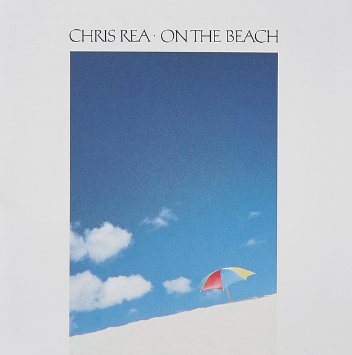
His career seemed to be hitting a cul-de-sac in the early ’80s, but On The Beach was one of the albums that turned things around, the beginning of his commercial era

It taps into the same kind of jazzy, introspective pop/soul sound that the likes of John Martyn, Joni Mitchell and Van Morrison were flirting with in the same period, helped by an excellent band including Fairport Convention/XTC drummer Dave Mattacks, Martin Ditcham on percussion and Max Middleton on keys. Rea also plays an impressive array of instruments himself, including fretless bass and synth.

Listening in one sitting to On The Beach again, the first thing that struck me is its almost relentlessly downbeat vibe. But the opening title track, with its lilting Latin-tinged groove and jazz chords, perfectly introduces the album’s themes of lost innocence and childhood reminiscences.

The moment when Mattacks lays into his fat snare drum for the first time is one of my favourite ’80s drumming moments.

‘Little Blonde Plaits’ is a vehicle for Middleton’s expressive Mini Moog, very redolent of his atmospheric playing on John Martyn’s Glorious Fool. There’s further ethereal jazziness on ‘Just Passing Through’, featuring a really lovely vocal performance and tasty solo guitar from Rea.

‘It’s All Gone’ ups the ante with some subtle Donald Fagen-style synths and excellent lyrics, and the groovy extended outro is close enough for jazz/funk with some empathetic Mattacks drums alongside Middleton’s fine Fender Rhodes solo.

On The Beach was a decent hit in the UK, reaching #11 in the album chart and selling over 300,000 copies. After this, Rea’s music became increasingly rootsy with elements of blues, country and rock’n’roll; he started channelling Dire Straits and ZZ Top rather than John Martyn and consequently enjoyed much more commercial success.

But On The Beach‘s four or five choice tracks are still my favourite Rea moments of the ’80s.

Catching Up With Eddie Van Halen

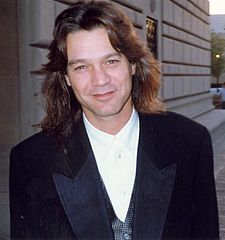
225px-Eddie_Van_Halen_(1993)When I think of ’80s Eddie Van Halen, the image in my mind’s eye is probably not a lot different to any other fan – he’s grinning from ear to ear, cavorting around the stage, playing some of the greatest rock guitar of all time with one of the sweetest tones.

So it’s interesting to see him recently – sober, reflective, brutally honest, fiercely independent – talking about his life and craft onstage at the Smithsonian Museum of American History in Washington DC.

‘Jump’ had always been a favourite of mine and was at the back of my mind when I came across Van Halen’s superb debut album at Harry’s Records in Twickenham (another one that’s bitten the dust), during my first week of sixth-form college in 1989.

I just loved the devil-may-care feel of Eddie’s playing. He was fearless, unconcerned about making mistakes (his dad gave him some advice: if you make a mistake, do it again – with a smile), the same attitude that spurred on Parker, Ornette, Hendrix and Jaco.

I later got heavily into the VH albums Women And Children First, Fair Warning, Diver Down, 1984 and OU812, but the band have been completely off my radar since the early ’90s, when I loved the ‘Poundcake’ single.

Having said that, not living in the States, I’ve completely missed the recent new album and TV appearances featuring David Lee Roth back on vocals. Maybe I need to check in again because I dug this:

Anyway, back to the interview. It’s fascinating hearing Eddie chatting about his life and career, away from all the controversy that has dogged the band over the last few decades.

He talks about building his first guitar, the last album he bought (clue: it was back in 1986 and by an English singer who was once in a very famous progressive rock band…), demonstrates some techniques and talks candidly about his sometimes difficult early life as an immigrant in the USA.

G’wan – give yourself an hour off and enjoy some words from a master.