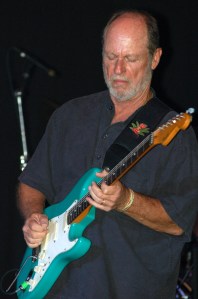
Little Feat provided some of my happiest musical memories of the late ’80s.
Paul Barrere, who has died at the age of 71, was a big part of that. His stinging leads, tasty rhythms, decent vocals and excellent songwriting were a massive part of Little Feat’s middle and later periods – the eras that really grabbed me – and he toured with the band right up until near his death.
Barrere joined Little Feat in time for the release of ’73’s classic Dixie Chicken. As Lowell George’s influence waned in the band’s middle years (and critics mainly derided the band’s embracing of prog, jazz and fusion alongside the blues, country and rock’n’roll), he contributed more and more.
As a teenager, Little Feat’s music fascinated me. There’s an oft-quoted maxim, attributed to Joe Zawinul, about Weather Report’s modus operandi: ‘We always solo and we never solo’. It could also be applied to Little Feat. Nothing was quite as it seemed. Barrere and George’s ensemble guitars meshed with Bill Payne’s keys to make a beguiling brew, sitting atop the brilliant rhythm section of Kenny Gradney (bass), Richie Hayward (drums) and Sam Clayton (congas).
Barrere was born on 3 July, 1948, in Burbank, California, the son of Hollywood actors Paul and Claudia Bryar. He wrote or co-wrote many Feat classics, including ‘Skin It Back’ from Feats Don’t Fail Me Now, ‘All That You Dream’ from The Last Record Album, ‘High Roller’, ‘Keepin’ Up With The Joneses’, ‘Old Folks Boogie’ and ‘Time Loves A Hero’.
Sadly it’s often a great musician’s death that leads one to explore the nooks and crannies of their recorded legacy, and Barrere is no different: he worked with Bob Dylan and unbeknownst to me also recorded three solo albums in the early ’80s.
One can get caught up revisiting the ‘lost’ periods of the truly great artists of the last 50 years – Miles, Neil Young, Bowie, Dylan, Zappa, whoever.
At the moment, it’s Bowie’s late-’80s and early-’90s that particularly intrigue, roughly the period from ‘Intruders At The Palace’ to Tin Machine II.
There was a lot more to the era than Tin Machine. ‘Pretty Pink Rose’, a song Bowie had originally demo’d in early 1988 with members of Bryan Adams’ band (and one later rejected by TM, though one can hear echoes of it in their cover of Roxy Music’s ‘If There Is Something’), generally gets a bum rap but features some classic Bowie moves, like the descending, superbly-sung bridge and ‘secret’ chord also heard in ‘Absolute Beginners’ and ‘Loving The Alien’.
Bowie rang Belew on 4 August 1989 asking him to play guitar and take the role of musical director on the ‘Sound + Vision’ greatest hits tour. But Belew owed Atlantic Records a solo album, the one that eventually became 1990’s Young Lions. Bowie offered to pitch in with ‘Pretty Pink Rose’. Apparently Belew was initially less than enamoured, but grew to love it.
Belew recorded the backing tracks on 11th November 1989 at Royal Recorders near Lake Geneva in Wisconsin, playing all instruments. He achieves a great garage-rock sound with sprightly bass, Leslie-toned rhythm guitars and some mad lead playing courtesy of a Fender Strat wired with a Kahler tremolo arm that he found could be ‘tapped’ on the neck instead of using his finger tips.
Bowie and Belew recorded their duet vocals (at the same mic – apparently Belew was unexpectedly starstruck) on 15 January 1990 at Right Track in NYC (Bowie recorded his spontaneous vocals for ‘Gunman’ on the same day). Apparently a spoken-word intro was later excised, which featured Bowie intoning: ‘She had tits like melons… It was love in the rain’!
‘Pretty Pink Rose’ was released a single in May 1990 but inexplicably missed the top 40 in both the US and UK, despite regular MTV screenings of the Tim Pope-directed video featuring Bowie and Belew hamming it up with ‘Life And Loves Of A She-Devil’ star Julie T Wallace.
Bowie and Belew also played it every night on the ‘Sound + Vision’ tour, augmented by some great chord additions by keyboardist Rick Fox. It’s a cracking song and a lost Bowie classic.
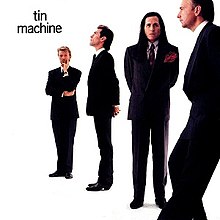
This week marks 30 years since Tin Machine wrapped up their first year of activity with a low-key gig at Moby Dick’s in Sydney, Australia on 4 November 1989.
In the previous 12 months, they’d recorded and released their first album, written and recorded most of the second album, and toured extensively.
Any true Bowie fan must surely like elements of Tin Machine, or at least appreciate the career-reviving value of the band. After all, he was reportedly seriously considering giving up music at the beginning of 1988.
My muso college mates and I had an instant kinship with Tin Machine, particularly picking up on the Jeff Beck and Hendrix influences. Never Let Me Down had completely passed me by, but this felt instinctively like the natural followup to Scary Monsters.
Bowie first hooked up with guitarist Reeves Gabrels, whose wife Sarah had been a press officer on the US leg of his ‘Glass Spider’ tour. But who should join them on bass and drums?
There were mentions of Percy Jones and Terry Bozzio, but they settled on the street-tough Sales brothers, of course previously known to Bowie as the rhythm section on Iggy’s Lust For Life.
Bowie realised what he had signed up for when drummer Hunt apparently strode into the first rehearsal wearing a ‘F*ck You I’m From Texas’ T-shirt.
One of the first things the assembled unit apparently did was make a list of the artists that would inform and influence the band’s sound: Neil Young, The Pixies, Cream, John Coltrane, Sonic Youth, Glenn Branca, Bo Diddley, Sex Pistols, John Lee Hooker, John Lennon.
The debut album was recorded quickly (producer Tim Palmer was apparently barely able to get a decent sound before he realised they were in the middle of a take) and released on 22 May 1989.
How does it sound these days? Pretty damn good. Bowie’s singing is as committed as at any time in his career, and the material is sometimes electrifying.
The Mission/Cult helmer Palmer brings cavernous drums and great guitar layering, finding a most willing participant in Gabrels; ‘Pretty Thing’ in particular delivers a huge wall of sound. Palmer discusses the making of the album in this excellent interview.
Hunt Sales: a rock drummer who swings. He goes double-time if he feels like it. He slows down, he speeds up. You can’t teach this stuff. The music breathes. Gabrels plays brilliantly, consistently coming on like a cross between Adrian Belew and Robert Fripp, but with more of a blues attitude.
Back in 1989, it was also absolutely fascinating watching Bowie sublimate himself into a band situation, albeit very ‘artfully’ (one of Gabrels’ proposals for a band name was The Emperor’s New Clothes).
He was instructed by the Sales brothers not to over-think his lyrics, but rather to lean on his first instincts. Consequently a few tracks aren’t going to win any #MeToo awards but they’re an honest, unfettered portrayal of middle-aged male lust. And why not?
But those tracks are balanced by the tender ‘Amazing’ and politically-charged ‘Crack City’, ‘Video Crimes’ and ‘Under The God’. It’s invigorating hearing David eschewing irony and nihilism in favour of passionate commitment, though he dusts off the old ennui for the brilliant ‘I Can’t Read’.
The album is 20 minutes too long. If it had been shorn of the dire ‘Working Class Hero’, deafening ‘Baby Can Dance’, dreary ‘Bus Stop’, turgid ‘Run’ and silly ‘Sacrifice Yourself’, I’d put Tin Machine up there with Scary Monsters as Bowie’s last great rock album.
It’s also largely forgotten that it was a critical and commercial success, reaching #3 in the UK, selling a million copies and making many writers’ albums of the year. Hilariously, it also made the Melody Maker’s Worst Ever Albums top 20 list in 1998.
Weirdly, Bowie bounced straight into announcing his own solo ‘greatest hits’ tour in December 1989, ostensibly to promote the excellent series of Rykodisc CD reissues which had kicked off with the Sound + Vision box set.
Quite what his TM bandmates thought of this state of affairs isn’t documented, though Gabrels declined to play guitar on the ‘Sound + Vision’ tour (Belew accepted). Gabrels went off to guest on The Mission’s Carved In Sand instead.
The ‘Knight Rider’ star really did precipitate the demolition of the Berlin Wall on 9 November 1989 by singing his #1 hit ‘Looking For Freedom’, wearing a piano scarf/twinkling jacket, clapping on the ‘one’ and ‘three’ and looking/sounding like he may have ‘artificially enhanced’ his performance somewhat…
Don’t believe me? Here’s the evidence! Everybody sing: ‘I been looking for freedom...’
Who are the most self-critical instrumentalists? Surely guitarists.
And in this age of social media, fans have never had a better insight into musicians’ views of their own work.
Steve Khan, Francis Dunnery, Andy Partridge and James Grant often take a pretty dim view of their own stuff. Allan Holdsworth was virtually unable to listen to his own guitar playing on record.
But brilliant guitarist Scott Henderson may trump them all. He emerged as a poster boy of jazz/rock guitar in the mid-to-late ’80s, when, along with Holdsworth and Frank Gambale, he would often appear alongside metal players du jour in the pages of Guitar World or Guitar Player.
A remarkably fluid improviser with a ‘rock’ sound but ‘jazz’ attitude, Henderson’s technical ability was always tempered by a strong blues feeling (distinguishing him from Holdsworth and Gambale).
In 1985, he formed Tribal Tech with ex-Wayne Shorter bassist Gary Willis whilst pursuing a sideman career with Jean-Luc Ponty and Chick Corea (and, later, Weather Report’s Joe Zawinul).
I first heard Scott in my late teens when a very shrewd guitar-playing college acquaintance played me his third album Nomad, recorded in 1988 but not released until early 1990.
I was instantly smitten, picking up on the strong ‘Weather Report with guitar’ vibe – mainly due to Willis’s fretless bass – but quickly realising they had their own thing going on.
Also, like Weather Report, Tribal Tech were also fortunate to have not one but two fine composers in their ranks. Willis’s ‘Tunnel Vision’ may be Nomad‘s standout, but Henderson was extremely modest about his superb, much-transcribed solo, telling his website:
The opening eight bars is good because it’s not me – it’s a melody written by Willis. I start playing after the first eight bars and things get considerably worse… We had a good laugh when a critic who reviewed the album commented on how great the beginning of my solo was. Then the tune was put into one of the new Real Books and that eight-bar melody was mis-labelled as my solo. Willis said to me: ‘Wow, I’m really making you look good…’
The excellent opener ‘Renegade’ was another embarrassment for Henderson:
On every Tribal Tech album, there are amazingly bad playing and production flaws, because we thought we were capable of producing the albums ourselves, and we clearly weren’t. We had little to no experience in the studio and were learning as we went. An experienced producer would have made those records much better, but we couldn’t afford one anyway, so they are what they are. The funniest solo is mine on ‘Renegade’ – I didn’t have any vocabulary for that 6/4 feel, so I’m clearly playing lines meant for 4/4 and they don’t fit the groove at all. It’s one of my most embarrassing solos…
Then there’s Henderson’s superb album-closer ‘Rituals’, showingcasing a heavy Wayne Shorter influence:
The last time I listened to the Tribal Tech version, I thought I’d throw up. I played the melody in a horribly stiff way, with the thinnest tone ever, and the arrangement sounds like we’re trying to be Journey – very dated and funny. Then there’s the pan flute synth sound… Holy sh*t, talk about corny. It’s one of my favorites but it didn’t get the production it needed. The drum sound is pathetic and the keyboards aren’t loud and clear enough. Those are some badass voicings and sometimes they’re buried. It’s not a tune I could play trio because there’s too much going on, but I’d like to re-record it and make it sound like it should…
Whatever. Nomad is a great album, with excellent compositions and playing from everyone involved, including drummer Steve Houghton, percussionist Brad Dutz and keyboard player David Goldblatt.
Pity the poor marketing manager of a 1980s major record label.
Everyone was telling you the future was in PR. The musicians were no longer running the music industry – the suits were. Millions of pounds were sloshing around but a dodgy decision could cost you your job.
Label MDs had read their Dale Carnegies or at least their Peter Yorks. Everyone wanted to hobnob with Branson. And for every proverbial ‘fifth member of the band’ manager like Paul McGuinness or Ed Bicknell, there was a PR like Magenta Devine.
And, as James Grant of Love And Money (more from them below) once told movingtheriver.com, people had breakdowns over this stuff. But is it any wonder when staffers were sending radio programmers and promoters gifts like the following? (All are 100% authentic, and based on extensive research*.)
17. Doobie Brothers dope kit
It included a Doobies logo’d stash pouch, rolling machine and ‘skins’…
16. INXS pyjamas
These sartorial delights were embroidered with the time-honoured phrase ‘I Need You Tonight’. Groan…
15. Prefab Sprout snow globe
This cute little number featured some mini skyscrapers and bore the legend ‘Hey Manhattan!’ Unfortunately it couldn’t hype this Paddy classic into the top 40…
14. 10,000 Maniacs ceramic elephant teapot
A useful mammalian kitchen implement that was sent around to promote the Blind Man’s Zoo album.
13. Simply Red dressing gown
A his’n’hers, terry-towelling dressing gown to promote the Men And Women album. See what they did there?
12. Bob Seger windcheater
It was sleevless, quilted and defiantly macho, as befitting the proletarian singer/songwriter. And it was sent to promote…you guessed it… ‘Against The Wind’!
11. Brothers Johnson zippo cigarette lighter
The funk legends’ PR machine came up with this curio for fans to hoist aloft during ‘Light Up The Night’.
10. WASP bottle of ‘house red’
This disgusting blood-coloured beverage was sent around to promote the Live…In The Raw live album.
9. Billy Bragg teabag
As befitting the socialist icon, a marvellously utilitarian artefact to celebrate the release of the Brewing Up With… album.
8. Kirsty MacColl kite
Yeah?
7. Love And Money road atlas
This hand-bound tome failed to hype ‘Jocelyn Square’ into the top 40, though it remains a great single.
6. Madness pacamac
It was advertising their downbeat single ‘The Sun And The Rain’. And why not?
5. Eurythmics umbrella
To promote…you guessed it…’Here Comes The Rain Again’. Obviously did a pretty good job, to be fair – the single reached #8 in the UK charts.
4. ZZ Top frozen meal
Those naughty boys from Texas sent this around to promote – of course – ‘TV Dinners’.
3. Frankie Goes To Hollywood condom
One of Paul Morley’s better ideas, actually…
2. PiL jigsaw puzzle
A very strange object sent around to promote Johnny and the boys’ 9 album.
Director Robert Altman once said of his classic 1992 satire ‘The Player’: ‘What we show is a very, very soft indictment of Hollywood’.
Revisiting Charles Fleming’s excellent, coruscating ‘High Concept’, one can easily believe it. It is to the ’80s and ’90s movie scene what Peter Biskind’s ‘Easy Riders, Raging Bulls’ was to the ’60s and ’70s.
The main focus of the book is Don Simpson, producer of ‘An Officer And A Gentleman’, ‘Flashdance’, ‘Beverly Hills Cop’, ‘Top Gun’ and ‘Days Of Thunder’. He died in 1996 at the age of just 52.
‘High Concept’ explores this fascinating, contradictory character; an egotistical monster who was also inordinately generous to friends and relatives; a rampant egomaniac and alleged sex pest who was nonetheless haunted by his God-fearing Alaskan upbringing; a producer best known for lowest-common-denominator fodder but described by various people as a creative genius whose 30-page memos to screenwriters became legendary. Many also heralded his uncanny ability to find a screenplay’s crucial flaw.
Both the Simpson character and this book feel incredibly prescient. He comes across as half Trump, half Weinstein. There are endless stories that could have sparked a #MeToo moment had Twitter been around in the late ’80s.
He flourished at a time when corporate skullduggery in the movie business was a given. You could get away with anything as long as the studio was profitable. As Fleming puts it, ‘As long as he didn’t kill anyone he was always going to be welcomed back. If he did kill someone, well, arrangements could be made’ (indeed Stephen Ammerman, a doctor, was found dead at Simpson’s pool house in 1995).
Other people very much in Simpson’s orbit included Heidi Fleiss, OJ Simpson and Kato Kaelin. He was ahead of his time but always went too far. Or, to put it in Simpson-speak, ‘Anything worth doing is worth overdoing. It’s not enough until it’s too much. Because how do you know it’s enough until it’s too much?’ Fad dieting, plastic surgery, Scientology, junk food, kinky sex, prescription drugs, cocaine – they were all meat and drink to him.
Simpson was also always super-competitive, in the classic ‘Wall Street’ style, from day one. Late in his career, he said: ‘Anytime I see someone come into the business who is smart and talented…and likes to go to lunch and dinner…I know he was failed already. He hasn’t got a prayer. Because someone like me is going to run all over him…’
But ‘High Concept’ opens out intriguingly to look beyond Simpson and explore the rampant egos of the entire Planet Hollywood generation, outlining staggering tales of excess involving Demi Moore, Bruce Willis, John Travolta, Arnold Schwarzenegger, Sylvester Stallone, Robert Downey Jr., Julia Roberts and Charlie Sheen. Only Eddie Murphy and Tom Cruise emerge with anything approaching dignity.
Fleming – an experienced, respected movie writer who has contributed to Vanity Fair, LA Times, Variety and Newsweek – writes superbly, with natural elan and a swinging turn of phrase. Along with ‘Indecent Exposure’ and ‘Easy Riders, Raging Bulls’, ‘High Concept’ is the best book I’ve read about the darker side of modern Hollywood.
It’s probably fair to say that Neil had a dodgy old 1980s; at least that’s the critical consensus.
In 1983, he was sued by Geffen for delivering ‘unrepresentative’ albums.
But by 1988, he was back on his original label Reprise (Sinatra’s invention, natch) and had delivered This Note’s For You, ironically just the sort of record that had got him into such trouble at Geffen.
But it was the follow-up Freedom, released 30 years ago this week, that really got Neil back on track.
He retained This Note’s fine rhythm section (drummer Chad Cromwell and bassist Rick Rojas) and co-producer (Niko Bolas) and delivered a dizzyingly diverse selection, by turns sweet and savage, mostly recorded live in the studio.
I don’t particularly dig country, but love ‘Hangin’ On A Limb’ and ‘The Ways Of Love’, simple heartfelt love songs (Linda Ronstadt’s contributions sure help). I don’t dig grunge, but I love ‘Don’t Cry’, ‘Rockin’ In The Free World and the raucous cover of Lieber and Stoller’s ‘On Broadway’.
So how does he do it? I’d cite four major differences between Young and the also-rans – intelligent lyrics, a great drummer, Neil’s sense of space and his lead guitar playing (‘Don’t Cry’ features a few of his most unhinged solos).
Of the former, the album’s title seems to refer to a few tracks’ investigation of freedom in Reagan’s America, especially the scarily prescient ‘Rockin’ (‘There’s a lot of people sayin’ we’d be better off dead/Don’t feel like Satan/But I am to them‘), epic ‘Crime In The City’ and Peckinpahesque ‘Eldorado’. ‘Rockin’ could almost be Young’s ‘Born In The USA’.
The gentler tracks arguably take one back to the feeling of freedom long before Reagan was around. This Note’s For You outtake ‘Someday’ – complete with chain-gang chanting and tubular bells – and the gorgeous ‘Wrecking Ball’ still sound like timeless classics, both romantic and anthemic.
Conversely, ‘Don’t Cry’ gives Lou Reed and Bret Easton Ellis a run for their money, a chilling, blanked-out vision of a love affair gone wrong (with closing gunshot?).
Freedom was a gamechanger for Young, a near-perfect distillation of styles that would see him through the ’90s and beyond. It’s still an absolutely essential work and rightly seen as one of his greatest albums.
Prog fans – perhaps understandably – are not generally known for their benevolence when a favourite band undergoes a personnel change.
Steve Howe has talked publicly about the poor reception Trevor Horn received when the latter made his debut as Yes’s new vocalist during their North American tour of 1980.
Phil Collins still believes some Genesis fans were convinced he was scheming to take Peter Gabriel’s place as the band’s singer.
But Marillion fans seem a far more amiable bunch. When Steve Hogarth was installed as their new frontman in 1989, he seems to have been welcomed pretty much with open arms (if this superb televised gig from only his second UK tour is anything to go by).
Seasons End, (no apostrophe?), released 30 years ago this week, was a weirdly assured debut from Hogarth and easily this writer’s favourite Marillion album (1989 was a bit of a Year Zero for me in terms of the band, the Fish era barely appearing on my radar).
Hogarth’s melodies are fresh and exciting and his vocals always strong. It helped of course that he was a triple threat, a proven singer/songwriter with mid-’80s bands The Europeans and How We Live (though he was apparently eyeing a job as a milkman when the latter wound down in early 1988) and possessing some decent keyboard chops.
His natural magnetism as a frontman didn’t hurt too, and he even brought a few gimmicks to the party, like the magic gloves and musical cricket bat (a tribute to Ian Faith? Ed.).
So how does Seasons End stack up these days? Pretty well. The singles ‘Easter’ (UK #34), ‘The Uninvited Guest’ (UK #53) and ‘Hooks In You’ (UK #30) were distinctive, well-arranged and featured soaring guitar playing from Steve Rothery.
Ian Mosley is that rare rock drummer, solid but expressive, and capable of great subtlety. Keyboardist Mark Kelly had become a superb texturalist too, as demonstrated on the Steve Reich-esque second half of the title track, plus ‘Holloway Girl’ and ‘The Space’.
Marillion, Genesis and It Bites were flying the UK prog/pop flag at this point, and their late-’80s careers make for interesting comparison. As for Seasons End, it did very nicely, touching down at #7 in the UK album chart and ensuring a long, fruitful career for the band’s new line-up.
Another song-by-song study of Bowie’s output is certainly an ambitious undertaking; we already have Nicholas Pegg’s excellent ‘The Complete David Bowie’ and David Buckley’s brief but arresting ‘The Complete Guide To The Songs Of David Bowie’.
But O’Leary is more qualified than most, having run the popular Pushing Ahead Of The Dame website for over 10 years now. And, by and large, ‘Ashes To Ashes’ pulls it off, offering a far more personal, florid take on Bowie’s songs than the aformentioned books.
He makes the decision to discuss the songs not in alphabetical order but, roughly, in the order in which they were ‘conceived’ and/or recorded. While this doesn’t allow for easy reference, an alphabetical title index is included at the back of the book.
The section on Low/”Heroes”/Lodger is excellent, with up-to-date interview material from Tony Visconti and Adrian Belew, and a focus on the city’s geography/history mostly missing from previous Bowie books. And it’s great to see the ‘Baal’ sessions getting the detailed analysis they deserve.
Fascinating items also emerge around Bowie’s late-’80s/early ’90s work, from Never Let Me Down through ‘Pretty Pink Rose’ to The Buddha Of Suburbia, with more detail than usual about the formation of Tin Machine. And it would be hard to find a better study of Bowie’s final two albums, even if they are this writer’s least favourite works of the era.
There are predictable put-downs of Tonight (but an excellent analysis of ‘Loving The Alien’, complete with reading list!), Black Tie White Noise and Tin Machine II. And there are also oft-repeated errors about the Let’s Dance era, like the listing of Tony Thompson’s drum appearances (he didn’t play on ‘Ricochet’ or ‘Shake It’), but a fascinating section on the fact that Bowie was actually more of an actor than a singer when he made that album.
Musical appreciation doesn’t seem the author’s strong point – for example, ‘Always Crashing In The Same Car’ is described as ‘being ‘mostly in E minor, the harmonic murkiness finally resolved with a closing Em chord’. This ignores the fact that the verse’s home key is clearly G major. And he denegrates Hakim’s ‘gated tom fills’ in ‘I Keep Forgettin’, but they’re actually the dreaded Simmons electric drums. But elsewhere there are interesting, original observations, like the comparisons between ‘Modern Love’ and ‘Lust For Life’.
One thing’s for sure – ‘Ashes To Ashes’ takes one back to the music. Revisiting Scary Monsters in particular was very illuminating in light of the book. So even if one can’t avoid O’Leary’s natural aversion to much of this material, it’s a valuable addition to the Bowie bibliography.
The question is, will one reach for ‘Ashes To Ashes’ for quick reference ahead of the Pegg and Buckley works? Only time will tell… (NB – one has definitely reached for the book on many occasions since this first reading, so it’s doing its job…)

 Little Feat provided some of my happiest musical memories of the late ’80s.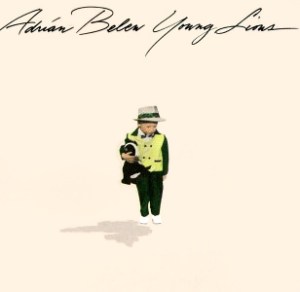

 Pity the poor marketing manager of a 1980s major record label.
  Director Robert Altman once said of his classic 1992 satire ‘The Player’: ‘What we show is a very, very soft indictment of Hollywood’.
 Prog fans – perhaps understandably – are not generally known for their benevolence when a favourite band undergoes a personnel change.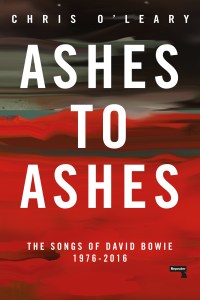
 movingtheriver.com