Jazz/fusion of the late-’80s variety is sure to give any John Peel acolyte nightmares: visions of guys in tracksuit bottoms, trainers and vests, looking like extras from ‘Thirtysomething’, playing absurdly gymnastic jazz/rock based on corny ‘funk’ or Latin vamps, grinning at each other and the audience, using the cheesiest modern gizmos (Simmons electric drums, EWI wind instruments, guitar synths).
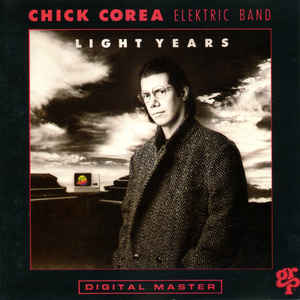
The Chick Corea Elektric Band (Corea: keyboards, Frank Gambale: guitar, John Patitucci: bass, Dave Weckl: drums) probably best epitomised this style. But guess what – revisiting their 1987 album Light Years recently, it emerges as one of the best and least ridiculous projects of Chick’s career.
He reins in the chops and gothic longeurs to produce a collection of really good themes and tight, attractive arrangements (though the three ‘extra’ tracks on the CD/streaming versions are disaster areas). The album is also musical catnip for me, bringing back memories of when I was first getting into jazz and fusion.
The thing is that Chick seems to actually relish including some pentatonic/blues-based harmony on Light Years. Some of his playing wouldn’t seem out of place in the music of Will Downing or Lonnie Liston Smith. There are even a few II-V-I chord changes. ‘Starlight’ and the title track are as catchy and immediate as David Sanborn’s ‘Run For Cover’ or ‘Hideaway’, though Marienthal’s alto tone is a bit too close to Dave’s for comfort. Weckl delivers lesson after lesson in Latin-flavoured funk and rock drumming. Gambale and Patitucci barely break sweat, or rather don’t get any room to show off, but still make a few telling contributions.
‘Time Track’ and ‘View From The Outside’ demonstrate everything that’s good about Light Years – catchy melodies, cool grooves and meticulous, gradually-escalating arrangements. The ridiculously technical last four bars of the former demonstrate some of the killer musical chops that are kept pretty much in the locker throughout the album, only to be brought out when strictly necessary.
I saw them live a couple of times around this time and of course the musicianship was incredible, even if the relentlessly ‘up’ stage presentation now looks pretty embarrassing.
Light Years is obviously good. It’s brutally, clinically good. It’s almost critic-proof. The Elektric Band were the Level 42 of high-octane fusion and this album is their World Machine. Of course it’ll always sound a bit like muzak to some, but that’s quite cool too. The CD’s inlay card features a really weird poem by Chick, kind of an ode to Scientology. It’s worth reading. And actually the album cover is pretty strange too…
Sylvo is not particularly known for his sense of humour, but there was surely an element of black comedy about the release of the ‘Pop Song’ 12-inch single.
It’s hard to read it as anything other than his ironic response to being asked by Virgin Records to come up with something a little more ‘commercial’ to promote the Weatherbox limited-edition box set (a collection that, in the event, didn’t even contain ‘Pop Song’!).
Imagine the ashen faces of the management at Virgin HQ when the needle hit the vinyl. ‘OK, there’ssome kind of groove, but hang on – the synth bass is out of tune, the drums sound like Tupperware boxes and the piano has been flown in from a different song altogether…’
Yes, this was David’s ‘Jugband Blues’. And it was brilliant (the B-sides are well worth tracking down too). Cooked up alongside regular co-producer Steve Nye at Marcus Studios, Fulham, West London, during late summer 1989, ‘Pop Song’ was Sylvian’s bitter farewell to the decade, a vision of late-’80s Britain as a nation of clock-watching factory workers numbed by banal pop music and Sunday supplements. It’s fair to say that it wasn’t your typical feelgood summer single…
Musically, it was Sylvian’s version of ‘pop’ and pretty amusing at that, with some gorgeous ‘found sounds’, deliciously tangential piano work from ECM regular John Taylor and underwater drums/queasy synth bass courtesy of Steve Jansen. Sylvian delivers a great vocal too, full of cool, jazzy phrasing (check out the ‘But the money goes/And the time goes too’ line).
I bought ‘Pop Song’ on the day it came out (30th October 1989), and my memory is that it created quite a stir amongst Sylvian fans. It registered briefly at #83 in the UK singles chart and then promptly disappeared. Was it ever actually played on the radio? One doubts it.
But if ‘Pop Song’ proved a strange detour for Sylvian, life was about to get even stranger – next stop was the Japan ‘reunion’ Rain Tree Crow, of which much more soon.
It was goodbye to Basildon and Braintree, hello to Bel Air and Beverly Hills.
Kershaw had always threatened the big-budget, US-recorded album, and in 1989 he delivered it. And, to no-one’s great surprise, it was an excellent collection, one of the best ‘Brit-Goes-Stateside’ pop records of the decade.
Recorded over four months in LA, The Works – released 30 years ago this week – saw Kershaw put together some of his best material to date with two top-notch drummers (Vinnie Colaiuta and Jeff Porcaro) in tow, the great Jerry Hey on horn arrangements, Paulinho Da Costa on percussion, ex-Zappa keyboardist Peter Wolf producing and backing vocals from Michael McDonald and Siedah Garrett.
And yet it was also the straw that broke the camel’s back, underselling drastically, cutting ties with MCA Records and leading Kershaw into decades of back-room writing and producing. But maybe he was happier that way (and he did write the enormo-hit ‘The One And Only’ for Chesney Hawkes a few years later).
But from August to December 1987, Kershaw was hob-nobbing with Rod Temperton, Quincy Jones and Toto, flirting with the kinds of scenes that he had mocked on ‘Radio Musicola’ and ‘City Of Angels’. Reportedly he didn’t get on very well with Wolf, virtually re-recording the entire album back in London alongside Australian producer Julian Mendelsohn (Level 42’s World Machine).
But hey, the hard work paid off. There’s nothing else in the ’80s pop canon quite like the techno/pop/fusion flash of ‘Don’t Ask Me’, ‘Wounded Knee’ and ‘Cowboys and Indians’, and Colaiuta’s extraordinary drum performances had players rushing to their practice rooms. In particular, the former track has that fill… If only Vinnie had played on a few of the other machine-driven tracks. And Kershaw coaxes Porcaro to play a classic half-time shuffle on the superb ‘Walkabout’.
It’s still hard to believe that ‘One Step Ahead’ and ‘Elisabeth’s Eyes’ (very influenced by Scritti) completely flopped as singles (though I would have gone with ‘Lady On The Phone’). They still sound great today, with brilliant choruses and nice grooves. ‘Burning At Both Ends’ may be the standout of the album, with its Middle-Eastern-flavoured hook and superb Siedah Garrett backup vox. Slightly less impressive are ‘Take My Place’ and ‘One World’; both could be Climie Fisher or Robbie Nevil.
The album disappeared without trace both in the UK and US. As far as solo pop success was concerned, the game was up. But it’s a shame that the kind of intelligent, superbly-played pop heard on The Works was unsustainable by the end of the ‘80s. As Nik so succinctly puts it on his website:
“Los Angeles for four months with producer Peter Wolf. Get to record with some legends: Jerry Hey, Larry Williams, Paulinho Da Costa, Jeff Porcaro, Vinnie Colaiuta. House in Nichols Canyon; Rented Mustang; Earthquake. Constantly bumping heads with Peter. End up finishing album myself in London. More record company upheaval; another MD; another A&R person. Not looking good. European tour with Elton John. Goodbye MCA. Time for a break...”
He liked the ‘minor’ Hitch as much as the ‘major’ Hitch. As a war baby, maybe he relished the director’s trademark mixture of dread and humour. Dad certainly didn’t sneer at ‘Psycho’; in fact, he would have put it firmly in the ‘major’ category.
We probably first watched the film together sometime around 1989. Revisiting it again recently, it struck me as a curiously – and defiantly – ‘modern’ movie.
Even as the ghastliness of America’s modern serial killers was becoming public knowledge towards the end of the 1950s, the kind of seediness ‘Psycho’ portrayed had still not been shown on screen (though David Thomson’s superb book ‘The Moment Of Psycho’ notes that a few figures – James Dean, Jerry Lewis, Elvis, Brando and Jack Nicholson, by way of Roger Corman, were ushering in a new, youthful edginess. Thomson also asks us to imagine Elvis as Norman Bates…).
Hitchcock and screenwriter Joseph Stefano really decided to let American audiences have it with their fairly loyal interpretation of Robert Bloch’s 1959 novel. Thomson describes the film as Hitch’s ‘revenge’ on Hollywood, a Hollywood that had never granted the director an Oscar and whose mixture of humour and dread had never been fully accepted.
These factors also particularly struck me when revisiting ‘Psycho’:
7. Hitchcock/Stefano’s skewering of America’s sacred cows
The family unit, marriage, the home, sanity, the bathroom (never before in an American film had there been the shot of a toilet flushing), heterosexuality, the shower stall. And the way he gleefully starts the movie tracking into a fairly seedy motel room to eavesdrop on a post-coital tryst. It all seems run-of-the-mill now but all of this must have been an incredible shock for contemporary audiences. Hitch wanted to show how modern, urban people were living their lives.
6. Joseph Stefano’s dialogue
Speed-reading Robert Bloch’s novel again, it struck me that screenwriter Stefano deserves huge praise for reworking the dialogue. He puts some pep in its step, fashions some brilliant lines for Norman (the whole mental illness speech during dinner with Marion in his den) and turns the scenes between Norman/Sam Loomis (John Gavin) and Norman/Arbogast (Martin Balsam) into mini masterpieces. He also adds some good, hip stuff featuring the traffic cop (who doesn’t feature in the novel) and car salesman (who does).
5. The shower murder
Hitchcock’s ‘pride’ at the slickness of the first murder scene belies its brutality. If there’s a more shocking death in the movies, I haven’t seen it. A troubling thought: to what extent does Hitchcock/Norman/’Mother’/Bloch/the audience ‘punish’ Marion for stealing (even though at the time of her murder she has made the decision to return the money)? But of course modern audiences would be primed for Janet Leigh’s early exit, since the opening credits say ‘…And Janet Leigh as Marion Crane’. It’s clear now she’s not going to last the whole movie, but audiences in 1960 wouldn’t have twigged.
4. The sexual politics of the first 40 minutes
Marion strikes us as an incredibly ‘modern’ character, strong, determined, troubled, independent, defiantly single (though willing to give Sam a try… Or is she? Why doesn’t she ring him to tell him she’s on her way with the money?). She passes through the first half of the film encountering men in scenes that somehow ‘mirror’ each other – her lover, the creepy, predatory client at work, traffic cop, car salesman, and finally Norman.
3. The concept of ‘doubles’
Of course, Norman ‘is’ Norma Bates, mother and son combined. Then there are the – on first viewing – strange matching shots of characters leaving rooms; first Marion, then ‘Mother’. Then there’s the remarkable physical likeness between Sam Loomis (John Gavin) and Norman (who, of course, in many ways seems far more pleasantly disposed towards Marion than Sam ever is).
2. The brilliance of Anthony Perkins’ performance
Hitchcock apparently instructed Stefano to write for Perkins once the teen heart-throb had signed on very early in proceedings. The novel has Norman as an overweight, alcoholic, 40-year-old schlub, but Perkins’ leading-man looks, disarming smile and gentleness are the movie’s masterstrokes. He delivers a classic performance, possibly influenced by Dennis Weaver’s panic-stricken ‘night man’ in Orson Welles’s ‘Touch Of Evil’.
1. The flatness of the second half
Hitchcock barely seems interested in any characters other than Marion and Norman, fatally unhinging the second half of the movie. It’s pretty boring apart from the above terrific scene between Norman and Arbogast (which apparently earned lengthy applause from the crew), the Arbogast murder, the ‘Mother’ reveal in the basement and the closing Norman/Mother ‘monologue’, featuring more fantastic work from Perkins.
The George Harrison of Level 42, intelligent, erudite but naturally shy, he came up with consistently memorable guitar parts and the occasional exciting solo, whilst never overshadowing his more naturally exuberant bandmates.
His guitar playing probably peaked in the original band’s middle years, and he also wrote the words to many of their biggest hits including ‘Lessons In Love’, ‘It’s Over’, ‘To Be With You Again’ and ‘Heaven In My Hands’.
So Boon contributed much to one of the great bands of the ’80s. When I heard of his sad death this week, I first thought of his raunchy Jeff Beck-meets-Bill Connors solos on their jazz/funk opuses ‘Foundation And Empire’ and ‘Return Of The Handsome Rugged Man’, but then remembered how much his rhythm guitar parts added to the band’s key mid-’80s tracks such as ‘Micro Kid’, ‘Out Of Sight, Out Of Mind’ and ‘The Chinese Way’.
Guitar-wise, his peak was probably the 1984 Level 42 album True Colours, playing some fantastic stuff on ‘A Floating Life’, ‘True Believers’, ‘Hot Water’ and ‘Chant Has Begun’. The former features his heaviest riffs in a Level shirt. He also contributed lyrics to Mark King’s solo album Influences around this time.
Boon was the most reluctant live performer in the band, often afflicted with stage fright and frequently laid low by the bad food and bad sleep that are part and parcel of regular touring.
He jumped ship in 1987, his drummer brother Phil following soon after, and also who knows what kinds of pressures were involved with their elder sibling John managing the band too.
After officially leaving Level 42, Boon kept in touch and provided lyrics for 1988’s Staring At The Sun. He recorded a solo album, 1995’s Tin Man, which showed off his decent singing voice, and also came out of live retirement to guest with the reformed band during a Bristol gig in 2012.
By all accounts, Boon was a great guy, a gentle, self-effacing soul who just happened to be an excellent guitarist and intelligent lyricist.
RIP to one of 1980s pop’s unsung heroes. There’s part of my childhood gone.
Rowland Charles ‘Boon’ Gould (4 March 1955 – 30 April 2019)
If this was John’s final London gig, what a way to go out.
Though the audience’s response was at times reverential and/or strangely undemonstrative, the outpouring of emotion at the conclusion was heartfelt and seemed to come as quite a shock to the performers too.
It’s hard to think of another ‘jazz’ band which has endured for so long with the same personnel as The 4th Dimension. This unit (McLaughlin – guitars, Gary Husband – keyboards/drums, Etienne M’Bappe – bass, Ranjit Barot – drums) has toured the world and elsewhere since 2010, playing a fiery mix of jazz, rock, blues, Indian, old-school R’n’B and industrial.
Tonight was no exception, though there was a much larger dose of spiritual jazz than usual, courtesy of not one but two Pharoah Sanders covers: ‘The Creator Has A Master Plan’ and ‘Light At The Edge Of The World’. You could take or leave the slightly dodgy band singing, but the message of love and understanding was powerful and still relevant.
One can also take or leave John’s guitar tone these days (sometimes one wishes for a far less ‘refined’ sound), but his playing sounded back to its brilliant, fluid, lyrical best tonight, a little like his return to the electric in 1978 after the long acoustic sojourn in Shakti.
And if the mood of the evening’s music was generally uplifting, with new takes on the frenetic modern classic ‘Hijacked’, Mahavishnu favourite ‘Trilogy’ and raunchy ‘Echoes From Then’, ‘Gaza City’ was heartfelt and touching, a lament for a lost place.
Just a few gripes: one occasionally hankered after another soloing foil for John, an L Shankar or Gary Thomas; this music asks a hell of a lot from Husband and Barot. Also, listening to the latter’s ‘hit everything all the time’ ethos (though his konnakol vocal/rhythmic interludes are always fascinating), one realised what a tasteful, selective drummer Dennis Chambers had been during the ’90s organ trio/’Heart Of Things’ era.
John started the evening heralding a slight return not to Great Britain but to ‘Great Brexit’, and ended it with a gentle: ‘You’re all one. Thank you’. A powerful, important concert, especially if we don’t see him on a British stage again.
To some, the advent of the 12” single in the early ’80s was musical sacrilege; to others it was a new dawn, a chance to hear your favourite song in widescreen format, expanded into an epic and not bound by radio conventions.
The 12” came about at an exciting time in music when a few things were colliding: the cult of the ‘star’ producer, club culture, sampling, dub techniques, electronic music moving into the mainstream and an ‘anything goes’ post-punk ethos.
Talented sound designers such as Trevor Horn, Gary Langan, Shep Pettibone, John Potoker, Francois Kevorkian, Alex Sadkin and Steven Stanley were in the right place at the right time. And it probably helped that sales of 12” singles contributed to weekly chart positions, so the stakes were high.
So let’s have a look at some key artefacts of the 12” revolution, a great time in music when anything – well, almost anything – went. A few of these I now prefer to the originals.
21. Paul Young: ‘I’m Gonna Tear Your Playhouse Down’ (1985)
Laurie Latham’s completely mad mix seems entirely designed to annoy the neighbours. A cacophony of metal guitars, Pino Palladino’s floor-shaking, P-funk-influenced bass and bizarre samples. And is that a jazzy riveted cymbal slinking into the mix from time to time?
20. A Guy Called Gerald: ‘Voodoo Ray’ (1989)
A timeless collection of house music tropes which doesn’t ever seem to date. Simplicity is the key, with subtly-shifting riffs.
19. Freeez: ‘Southern Freeez’ (Slipstream mix) (1982)
This one seems impossible to find on the internet or any other compilation album apart from the marvellous Slipstream 2-LP set which came out on Beggars Banquet in 1982. It’s a feast for the eardrums with gorgeous, spacey delays and twinkling Moog lines sprinkled into the mix.
18. Yes: ‘Owner Of A Lonely Heart’ (1983)
Remixer Gary Langan skillfully juggles of all this classic track’s trademark features: Trevor Rabin’s chiming guitar figure, the ethereal backing vocals and those crazy samples. Plus you can really hear Alan White’s drums here – never a chore.
17. Joni Mitchell: ‘Shiny Toys’ (1985)
Joni’s a name you probably wouldn’t expect to see here but remixer Francois Kevorkian had great raw materials to play with – Thomas Dolby’s dub-style treatments, Mike Landau’s lush rhythm guitar, Vinnie Colaiuta’s killer drums and all the silly vocal overdubs.
16. ABC: ‘Poison Arrow’ (1982)
Trevor Horn ups the ante with a cool, extended lounge-jazz intro and lots of little musical motifs, a new bass part and some new guitar solos.
15. Michael Jackson: ‘PYT’ (2017)
I can’t resist including this recent discovery – someone has somehow got hold of the Thriller masters and put together a real classic. It’s even funkier than the original, if that’s possible.
14. Madonna: ‘Open Your Heart (Maxi Extended Version)’ (1986)
Steve Thompson And Michael Barbiero’s exciting mash-up of Motorik sequencers, Jonathan Moffett’s sick drums and Madonna’s strident vocals, all adding up to an ‘I Feel Love’ for the 1980s.
13. Phil Collins/Philip Bailey: ‘Easy Lover’ (1985)
Mixing engineer John Potoker cut his teeth working with Miles Davis and Steely Dan, and his sonic mastery shows through with this stunning reimagining of a somewhat corny single, bringing the originally-submerged drum machine right to the fore and adding loads of top-end. His nickname wasn’t ‘Tokes’ for nothing…
12. Scritti Politti: ‘Hypnotize’ (1985)
Gary Langan was at the controls again for this stunning collision of ’50s B-Movie voices, swooning synths, rhythm guitars and bangin’ machine beats. The only thing missing is some serious low-end.
11. Grandmaster Flash/Melle Mel: ‘White Lines (Don’t Do It)’ (1984)
Sylvia Robinson arguably laid down the groundwork for all future 12” singles with this 1984 classic.
10. Prince & The Revolution: ‘Mountains’ (1986)
If you – like me – are always frustrated when this track fades out on the album/single version, have no fear because this remix carries on for another six minutes in the same vein, and turns into one of the sickest grooves Prince ever committed to vinyl.
9. Peter Gabriel: ‘Sledgehammer’ (1986)
Another entry helmed by John ‘Tokes’ Potoker, this one boosts the top-end again, adds some scary reverbs and focuses on David Rhodes’ guitar, Gabriel’s piano/vocal ad-libs and Manu Katche’s drums to superb effect. I now prefer this version…
8. Eric B & Rakim: ‘Paid In Full (Seven Minutes Of Madness Mix)’ (1988)
Coldcut put together this sonic feast, one of the most sampled 12”s of all time. You’ve probably heard almost everything on this remix 100 times on other tracks.
7. Thompson Twins: ‘Lies’ (1983)
Alex Sadkin brings his Compass Point mastery to this remix, adding a real drummer (Sly Dunbar?) and bass player, and pushing the sequencers and percussion right to the fore.
6. Grace Jones: ‘Slave To The Rhythm’ (1985)
‘Pull Up To The Bumper’ is possibly the more artful Grace remix, but this is included for its irresistible groove, and the fact that I always want the original single to go on for twice as long as it does. Also I love the ‘false’ ending and off-stage shout (Horn?) at 3:40.
5. Donna Summer: ‘Love Is In Control (Dance Version)’ (1982)
You could hardly go wrong with Quincy Jones and Bruce Swedien at the controls, but this remix just brings out the sheer luxurious beauty of this single, and various sections are repeated and amplified to superb effect.
4. Will Powers: ‘Adventures In Success (Dub)’ (1983)
Chris Blackwell’s protegé Steven Stanley was in charge of this fascinating dub, completely dispensing with Lynn Goldsmith’s vocals and delaying the reveal of Sting’s bass for as long as possible.
3. Propaganda: ‘Duel’ (1985)
Included mainly for Steve Lipson’s beatific long guitar solo during the outro, and the fact that it sounds like it could go on forever…
2. Paul Hardcastle: ’19 (Destruction Mix)’ (1985)
A chilling remix which brings out a little more detail of the single version, adding more spoken-word excerpts from the ‘Vietnam Requiem’ documentary and lengthening the funky drum breakdowns.
1. Frankie Goes To Hollywood: ‘Rage Hard’ (1986)
Stephen Lipson and Paul Morley created this insane confection, a kind of Young Person’s Guide To The 12”, featuring Pamela Stephenson introducing all the clichés of the genre, Viv Stanshall-style. Only ZTT can do this. (It seems sacrilege to leave Frankie’s ‘Two Tribes (Annihilation)’ out, but this gets the nod for sheer balls).
It’s sometimes forgotten how much influence Faith No More had on the ‘alternative’ rock scene.
Long before the commercial breakthroughs of Nirvana, Sonic Youth and Red Hot Chili Peppers, they were the first viable, commercial alternative to the hair-metal and retro-rock bands of the mid-’80s.
Adrian Harte’s new biography of the band is a fascinating document of a very strange career. They are certainly not your normal rock outfit; that’s made pretty clear when Harte picks up the story of Faith No More’s two co-founders, keyboard player Roddy Bottum and bassist Billy Gould, a couple of music-mad rich kids ‘enjoying’ a Catholic education at a Jesuit grammar school in Los Angeles.
Inspired by the West Coast and London post-punk scenes (one of their formative gig experiences was seeing a double-header of 23 Skidoo and This Heat at the Battersea Arts Centre, of all places…), they quickly pick up a large local following and garner interest from various labels including Adrian Sherwood’s On-U Sound.
Adding drummer Mike Bordin is a huge catalyst, and he rivals Rush’s Neil Peart as one of the more intelligent skin-bashers in modern rock – he studied English literature at UC Berkeley, reporting: ‘My specialities were Middle English like Chaucer and Edmund Spenser, and I even liked Shakespeare a lot. To graduate, I did a thesis on Richard Wright, the African-American novelist.’ Mick Shrimpton he ain’t.
Vocalist/frontman Chuck Mosley is the next key addition, and he emerges as the great pioneer of the scene. Harte doesn’t shy away from the political/racial issues ignited by recruiting a mixed-race frontman, but happily is more interested in what Mosley brings to the table both musically and lyrically – he reports that the band’s ‘meta’ ideas (encapsulated by the tracks ‘We Care A Lot’ and ‘Introduce Yourself’) are mainly Mosley’s contributions.
We also learn about the roots of rap/rock, Mosley saying that he was ‘trying to imitate David Bowie, but also there was other stuff I didn’t understand, so I would rant and rap over it. I was black and white, so it was my two worlds together.’
The UK was Faith No More’s first major market, but we learn that their Dingwalls debut in early 1988 was almost terminally scuppered when the keyboard roadie locked Bottum’s synth in its case and left the key back at the hotel across town – Roddy had to get the tube to retrieve it, drawing stares with his newly-shaved head and white paper jumpsuit.
After various incidents and misunderstandings, Mosley was sacked from Faith No More after a 24 May 1988 gig at London’s Town & Country Club, and then the band remembered a young kid from Eureka, California, who had thrust his Mr Bungle demo tape into Gould’s hands the year before.
But apparently Mike Patton certainly wasn’t a shoo-in, with the management far keener than the band to recruit him. Gould says: ‘I was scared we were gonna ruin this kid’s life. He was like Justin Bieber.’ Patton was the all-American kid from who’d never been on a plane before. But after he auditioned, adding his lyrics and melodies to ‘From Out Of Nowhere’, they knew they had their man.
Harte’s analysis of Patton’s contribution to the band is excellent and detailed, with particular emphasis on his melodies and lyrics (the latter spawning the beginnings of record-company discontent, producer/Slash Records employee Matt Wallace forcing him to tone down his original words for ‘Underwater Love’).
And who knew that ‘Midlife Crisis’ was a first-rate – if somewhat disturbing – song about co-dependency (‘You’re perfect/Yes it’s true/But without me you’re only you/Your menstruating heart/It ain’t bleeding enough for two‘)?
We learn all about the band’s high-profile – and sometimes hilarious – support gigs with rock behemoths Guns N’ Roses and Metallica, and there’s also a gripping account of the Berlin gig during which Patton announced the falling of the Wall.
If stats are your bag, Harte provides all the impressive info about the band’s record sales and chart placings, and he also expertly accompanies us through the band’s mid-’90s burnout (even as the quality of their records seemed to be increasing), 2009 reunion tour and subsequent comeback album.
‘Small Victories’ is a real page-turner, but with first-rate musical analysis too, and highly recommended to long-time fans of the band and general fans of ’80s/’90s music.
‘File under: Victims Of A Cruel Medical Experiment’.
That was Q magazine’s memorable verdict on What Price Paradise, CC’s 1986 studio album. They had a point – it was producer team Langer & Winstanley’s unfathomable attempt to turn the Liverpudlians into Madness.
But when Steely Dan co-founder/co-songwriter Walter Becker came back onboard for ’89’s Diary Of A Hollow Horse, released 30 years ago today, normal service was resumed. It now sounds like a perfect follow-up to the 1985 classic Flaunt The Imperfection.
Becker was reluctant to record in England so persuaded the band to convene at George Benson’s Lahaina studio in Maui, Hawaii. He brought engineer Roger Nichols along for the sessions too, famous for his painstaking work on Steely Dan’s Aja and Gaucho. Nichols apparently taught all of the band how to scuba dive during their time off.
It’s hard to know what sort of expectations Virgin Records had for this album. What they ended up with is a kind of chamber pop, mainly the sound of a great, super-tight band playing live in the studio. The best tracks frequently evoke Steely Dan’s Katy Lied. The only concessions to ’80s music are the teeniest bit of reverb on the drums and the occasional synth overdub, adding colour in lieu of a horn section.
Becker’s real contribution seems to be on the arrangement side (typified by the tasty modulation for the guitar solo and flute arrangements on the vaguely ‘Deacon Blue’-esque ‘Sweet Charity In Adoration’), and he also brings in great backing singers Maxine Waters, Myrna Matthews and Linda Harmon, saxist Jim Horn, guitarist (and Countdown To Ecstasy engineer) Tim Weston and percussionist Paulinho Da Costa, who presumably used up most of the recording budget but is almost inaudible.
Virgin obviously computed the ‘hits’ as ‘Red Letter Day’ and ‘St Saviour Square’, summarily canning Becker’s versions of the songs and bringing in Mike Thorne to ‘re-produce’ them – the ploy didn’t work – the singles stiffed at #84 and #81 respectively, and they stick out like a sore thumb on the album. You can listen to all of the versions on YouTube.
Hollow Horse also didn’t work commercially, only reaching #58 in the UK album charts. But this was a period when some great pop/rock by the likes of Danny Wilson, It Bites, Love & Money and David Sylvian (all Virgin acts except for one…) also failed to find a big audience.
CC’s album sales diminished as the quality of their work increased – the game was up in terms of major-label support, but amongst fans of quality ’80s pop Hollow Horse has only gained status over the years.
The lads reproduced the album perfectly at London’s Dominion Theatre in spring 1989, a gig whose details elude me apart from the late Kevin Wilkinson’s superb drumming (and ahead-of-its-time, side-on kit placement) and vocalist Gary Daly proudly saying ‘That’s a good one, tha’!’ after ‘Day After Day’.
He had good reason to feel chuffed – Diary Of A Hollow Horse still sounds like a minor classic 30 years on.
A major trope of ’80s or ’80s-set movies, novels and plays was the insane or morally unsound banker, broker or trader.
‘Wall Street’, ‘American Psycho’, ‘9 1/2 Weeks’, ‘Glengarry Glen Ross’, ‘Bonfire Of The Vanities’, ‘The Wolf Of Wall Street’. But in Jon Jost’s ‘All The Vermeers In New York’, actor Stephen Lack, best known for his unique performance in David Cronenberg’s cult classic ‘Scanners’, delivered a nuanced, highly original take on the character.
His middle-aged broker Mark is lonely, strange, poetic, neurotic and in possession of a serious death wish. He’s kind of a Zen Patrick Bateman, without the serial killing.
So it’s just his bad luck when he becomes obsessed with French acting student Anna (Emmanuelle Chalet), whom he believes looks just like the woman in Vermeer’s painting ‘Study Of A Young Girl’.
Stephen Lack in ‘All The Vermeers In New York’
The film – which I managed to record onto VHS during its one and only showing on Channel Four in the mid-1990s – is kind of ‘Eyes Wide Shut’ meets Mike Leigh, a classic New York art-house movie with its quiet bars, art galleries (Mark finds Anna in the Met, in a scene reminiscent of Brian De Palma’s ‘Dressed To Kill’) and plush interiors, but one that also relies on ‘naturalistic’ performances and mostly improvised dialogue.
Jon English’s avant-jazz score is also superb, with more than a hint of Charles Mingus about it. ‘All The Vermeers In New York’ is also weirdly au courant, about the commodification of art and sex, and the all-powerful money-mind.
We only see fragments of the characters’ troubled, conflicted lives – the teenager who worries about the unethical companies her rich daddy is putting her name to, the heroin-addicted artist refused money by his gallery-owning friend, Mark wearily intoning about his lonely apartment looking out on a building that could be ‘street-level Europe’.
Roger Ebert gave ‘All The Vermeers In New York’ a decent review on its release. To some, the film will seem like pretentious twaddle, to others a refreshing voyage into a dream world à la ‘Blow Up’, ‘Dead Ringers’, ‘The Music Of Chance’. movingtheriver revisits it every three years or so and takes something new from it each time.
Director Jost seems to have a very sketchy rep, described online variously as an indie movie pioneer and pretentious waste of space. Yes, ‘All The Vermeers In New York’ probably belongs in an art gallery rather than a movie theatre, but it’s a fascinating ride.

 Jazz/fusion of the late-’80s variety is sure to give any John Peel acolyte nightmares: visions of guys in tracksuit bottoms, trainers and vests, looking like extras from ‘Thirtysomething’, playing absurdly gymnastic jazz/rock based on corny ‘funk’ or Latin vamps, grinning at each other and the audience, using the cheesiest modern gizmos (Simmons electric drums, EWI wind instruments, guitar synths).
 Sylvo is not particularly known for his sense of humour, but there was surely an element of black comedy about the release of the ‘Pop Song’ 12-inch single.

 My dad was a huge Alfred Hitchcock fan.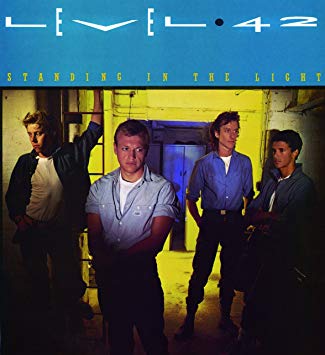
 If this was John’s final London gig, what a way to go out.
 It’s sometimes forgotten how much influence Faith No More had on the ‘alternative’ rock scene.
 A major trope of ’80s or ’80s-set movies, novels and plays was the insane or morally unsound banker, broker or trader.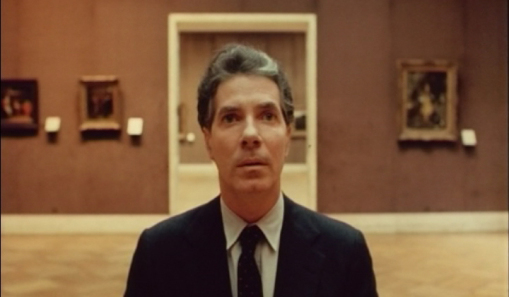
 movingtheriver.com