Essential 1980s Jazz/Rock Albums (Part 1)

1980s jazz/rock generally gets the side-eye these days.

But it wasn’t all the Chick Corea Elektric Band prancing around the stage in tracksuits or pitiful WAVE-style smooth jazz.

The 1970s jazz/rock pioneers were mostly going strong and if some were too tempted by synths and drum machines, the best music was made by sticking pretty rigorously to the tried-and-tested real drums/bass/guitar/keys lineup favoured by Miles, Weather Report, Return To Forever et al.

So here’s a selection of 1980s jazz/rock albums that have consistently gripped movingtheriver, most of which he queued up to buy at the HMV or Virgin Megastore, or found in an Our Price bargain bin. (These are not proggy or funky. So no Herbie, Brecker Brothers, David Sanborn or David Torn, but there are elements of R’n’B/Latin/soul/whatever mixed in with the jazz).

Bireli Lagrene: Foreign Affairs (1988)
Just 21 years old when he recorded it with producer Steve Khan, the French guitarist’s second Blue Note album is a cohesive gem and massive improvement on the debut, with terrific contributions from keyboardist Koono and drummer Dennis Chambers.

Ornette Coleman: Virgin Beauty (1988)
One of the most ‘accessible’ albums of the master’s career, with memorable melodies, a brilliantly expressive bassist (Al McDowell) and some decidedly odd guest appearances from Jerry Garcia.

Tribal Tech (Scott Henderson/Gary Willis): Nomad (1988)
Recorded in April 1988 but not released until early 1990, guitarists were rightly wowed by Henderson’s brilliance, a mixture of Michael Brecker, Allan Holdsworth and Stevie Ray Vaughan, while the rhythm section is groovy and propulsive and both Henderson and Willis’s compositions are excellent. And ‘Tunnel Vision’ may feature the perfect guitar solo…

John McLaughlin: Mahavishnu (1984)
OK there are some question marks in the keyboard and sax departments, and a few mediocre tracks, but Billy Cobham has rarely sounded better and John contributes three or four classic compositions and a few brilliant solos to this reunion album of sorts.

Marc Johnson’s Bass Desires: Second Sight (1987)
Wonderful interplay between guitarists John Scofield and Bill Frisell, plus some classic compositions including Scofield’s surf-rock-meets-jazz ‘Twister’, Frisell’s Monk-like ‘1951’ and Johnson’s moving ‘Hymn For Her’.

Larry Carlton: Last Nite (1987)
Guitarists of all stripes were blown away by Carlton’s playing in the 1980s, and here’s the best evidence, captured live at LA’s Baked Potato club with Alex Acuna, Abe Laboriel and JR Robinson.

Human Chain: Cashin’ In (1988)
This Brit jazz/rock classic, released on EG Records, had elements of the Canterbury sound, West Coast cool jazz, English folk music and 1980s Weather Report, featuring Django Bates’ fantastic keys and French horn and some weirdly impressive guitar and fretless bass from Stuart Hall (who he?). Also injects a healthy dose of much-needed humour to the ’80s jazz world.

Hiram Bullock: Give It What U Got (1988)
All the fun of the fair from this gifted but troubled guitarist: raunchy funk/rock, instrumental Steely Dan, Brecker Brothers horns, classic fusion and an Al Jarreau guest appearance on a Sam Cooke tune, but all shot through with jazz chords and Hiram’s lyrical playing.

Ronald Shannon Jackson: Mandance (1982)
Ornette-style harmolodics and Mingus-like ensemble work meet NYC punk-jazz on the drummer’s intriguing and powerful album, recorded live in the studio, featuring future Living Colour axeman Vernon Reid.

Weather Report: Sportin’ Life (1985)
It was a toss-up between this and Night Passage, both classics, but this gets the nod courtesy of the newly-minted rhythm section of Omar Hakim and Victor Bailey, plus a few classic Wayne Shorter tunes including ‘Face On The Barroom Floor’ which reportedly Joni Mitchell was particularly smitten by.

Wayne Shorter: Atlantis (1985)
Wayne again, fronting this fascinating, complex song-cycle featuring Alex Acuna on drums and Joni’s husband Larry Klein on bass. Takes some time to digest, but like a good wine gets better every year.

Allan Holdsworth: Secrets (1989)
A toss-up between this and Metal Fatigue, this gets in because of his delicious guitar tone and the inspired contributions of drummer Vinnie Colaiuta – ‘City Nights’, ‘Spokes’, ‘Peril Premonition’ and ‘Joshua’ are musical landmarks. Fiery, exciting, unmissable.

Steps Ahead: Modern Times (1984)
Messrs Brecker, Erskine, Mainieri, Gomez and Bernhardt were embracing some new technology but they never let it overshadow the mostly excellent compositions with telling solos, particularly from Brecker.

John Scofield: Still Warm (1985)
Take your pick between this, Blue Matter and Loud Jazz, all fantastic pieces of work, but Still Warm gets the nod courtesy of its dynamite rhythm section (Darryl Jones and Omar Hakim) and arguably John’s best writing of the ’80s.

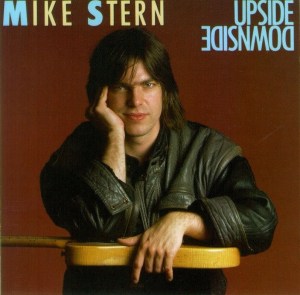
Mike Stern: Upside Downside (1986)
Produced by Hiram Bullock and featuring a crack band including Dave Weckl on drums, it showcases Stern’s finest/fieriest playing on record to date and also one of Jaco Pastorius’s last notable appearances. Still the best Stern solo album and quite extreme in its own way.

(If you’re new to any of these albums and they float your boat, please consider buying physical copies to support the artists.)

Steve Hunt/Tim Miller: Changes

Arguably no guitarist has stepped into Allan Holdsworth’s shoes since the Yorkshireman’s sad death in 2017 – hardly surprising since he was one of the greatest, most original voices on the instrument.

But if anyone can get close to recapturing Holdsworth’s compositional magic, it’s keyboard player Steve Hunt who toured/recorded with the guitarist between 1988 and 1995 and wrote two bona fide Allan classics – ‘Dodgy Boat’ and ‘Joshua’.

Hunt’s new album Changes features guitarist Tim Miller and three key Holdsworth collaborators: drummers Chad Wackerman and Gary Husband, plus bassist Jimmy Johnson. It’s a feast of interesting chord voicings and strong melodic statements. It doesn’t hurt that Miller is clearly a devotee of Holdsworth, a fluid, elegant player with a similar tone and legato approach, but obviously way off the unpredictable, effervescent brilliance of Allan. No shame in that…

This is heavy, intricate, epic music, decidedly nearer the prog/rock end of fusion than the jazz. Opener ‘Falling’ is a superb composition with lots of Holdsworth chord voicings, interesting modulations and a memorable melody. ‘Sevens’ seems inspired by Allan’s ‘The Un Merry Go Round’, with another great melody and beguiling ‘add-9’ modal flavour, plus a classic Husband drum solo also echoing that Holdsworth piece.

The title track is a moving, melancholy solo Hunt piece performed on various synths, while ‘Inverted’ features some ingenious chord voicings and a superb Moog solo from the composer. ‘Emergence’ is catchy with a lovely crisscrossing feel alternating between 4/4 and 6/8 time, while the closing ‘Next’ may be the most Holdsworth-ish melody of the whole album (and foregrounding a strong Joe Zawinul flavour during the solo section).

There are a few minor gripes – Changes has a slightly ‘whooshy’/over-compressed quality, and the drummers occasionally sound similar, never a problem when they shared studios with Holdsworth during the late 1980s and 1990s. And Miller’s two compositions – ‘Aerial Route’ and ‘Chrysalis’ – are less essential, lacking Hunt’s melodic sense, though the former tune has a brilliant Johnson bass solo which explores every inch of the instrument.

But overall this is a really strong, cohesive, consistent album, and this writer’s favourite ‘fusion’ record since John McLaughlin’s Is That So? from 2019. It’s also essential listening for fans of Holdsworth, McLaughlin, Husband and Wackerman.

The Best Album Titles Of The 1980s

We’ve looked at some of the worst album titles of the 1980s – now it’s time for the best.

But what made a memorable/interesting title? Certainly a few themes emerge from the list below.

Some issue instructions to the listener, some pose questions. Most feature common words uncommonly used. A pun can help. A couple are named after books. And a concept doesn’t hurt, especially if accompanied by good album artwork/design. Release the bats…

Adventures In the Land Of The Good Groove (Nile Rodgers)

What’s Bootsy Doin’? (Bootsy Collins)

No Sleep ‘Til Hammersmith (Motorhead)

Climate Of Hunter (Scott Walker)

Rum, Sodomy & The Lash (The Pogues)

Bostin’ Steve Austin (We’ve Got A Fuzzbox And We’re Gonna Use It)

From Langley Park To Memphis (Prefab Sprout)

Are You Glad To Be In America? (James Blood Ulmer)

America – Do You Remember The Love? (James Blood Ulmer)

Metal Fatigue (Allan Holdsworth)

Shockadelica (Jesse Johnson)

Back In The DHSS (Half Man Half Biscuit)

The Slide Area (Ry Cooder)

As The Veneer Of Democracy Starts To Fade (Mark Stewart)

Be Yourself Tonight (Eurythmics)

Sulk (Associates)

Love Stinks (J Geils Band)

Jazz From Hell (Frank Zappa)

Shut Up And Play Yer Guitar (Frank Zappa)

Broadway The Hard Way (Frank Zappa)

Aliens Ate My Buick (Thomas Dolby)

The Golden Age Of Wireless (Thomas Dolby)

Exit Stage Left (Rush)

Some Of My Best Jokes Are Friends (George Clinton)

R’n’B Skeletons In The Closet (George Clinton)

There Goes The Neighbourhood (Joe Walsh)

You Bought It – You Name It (Joe Walsh)

Friendly As A Hand Grenade (Tackhead)

Stop Making Sense (Talking Heads)

Non-Stop Erotic Cabaret (Soft Cell)

Frankenchrist (Dead Kennedys)

This Is What You Want…This Is What You Get (PiL)

Album (PiL)

Twang Bar King (Adrian Belew)

Big Science (Laurie Anderson)

Building The Perfect Beast (Don Henley)

Freaky Styley (Red Hot Chili Peppers)

The Pursuit Of Accidents (Level 42)

The Big Lad In The Windmill (It Bites)

Searching For The Young Soul Rebels (Dexys Midnight Runners)

The Affectionate Punch (Associates)

Empires And Dance (Simple Minds)

For How Much Longer Will We Tolerate Mass Murder (The Pop Group)

Return Of The Giant Slits (Slits)

Your Cassette Pet (Bow Wow Wow)

See Jungle! See Jungle! Go Join Your Gang Yeah, City All Over! Go Ape Crazy! (Bow Wow Wow)

Cupid & Psyche ‘85 (Scritti Politti)

My Life In The Bush Of Ghosts (David Byrne/Brian Eno)

Eat ‘Em And Smile (David Lee Roth)

Other good ‘uns? Let us know below…

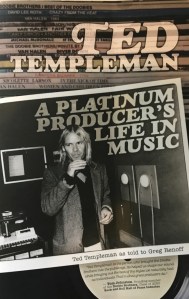
Book Review: A Platinum Producer’s Life In Music by Ted Templeman (as told to Greg Renoff)

You should never judge a person by their name.

movingtheriver assumed Ted Templeman – a favourite producer back in the day courtesy of his work with Van Halen, Little Feat, Doobie Brothers and more – was your typical seasoned/grizzled rock’n’roll journeyman.

But nothing could be further from the truth. Reading his enjoyable memoir (and looking at the cover), he turns out to be a mild-mannered jazz drumming prodigy turned pretty-boy frontman with late-‘60s baroque pop band Harpers Bizarre.

His story takes us from post-war Santa Cruz, California, to the upper echelons of the US music biz during boom time, when Templeman was a house producer for Warner Bros. (alongside Gary Katz, Michael Omartian, Jay Graydon and Lenny Waronker), becoming one of the wealthiest and best respected record execs of his era.

We learn about his youth studying the Cool School jazzers, then his pop band Harpers Bizarre gets signed by Warners and he’s mentored by Waronker, quickly learning what A&R actually means – choosing the right songs for the artist and assessing their commercial strengths and weaknesses. He also witnesses first-hand the weird action around the Doors, Beach Boys and Phil Spector.

But he quickly realises he’s not cut out for fronting a band, and moves on to being Warner Bros’s tape listener, hanging around Frank Sinatra sessions and getting the nod from Waronker to produce his pet project, the Doobie Brothers.

Then there are some fascinating sections on working with Van Morrison – he sees the frustrations of being a co-producer at first hand when they release the ‘wrong’ mix of ‘Tupelo Honey’. But he also sees Morrison’s more humorous side – during the recording of the live album It’s Too Late To Stop Now, Ted, sitting in the mobile studio outside The Rainbow, hears Van frequently saying, ‘Didja get that, Ted?’ into the mic between songs.

Templeman forges a long-term relationship with his engineer Donn Landee and starts working with Little Feat. He sparks a great friendship with their mainman Lowell George and is fascinated to find that he is a model airplane fan. But when pushed, Lowell claims he’s just learning about them so he he can fly in drugs from Mexico. He also learns a lot about drums working in Sunset Sound studio 1 with Richie Hayward.

Then there’s recording Carly Simon on Another Passenger, and her relationship with James Taylor, before Templeman first comes across Van Halen via a concert in Pasadena. They quickly become his second obsession, though he’s deeply unsure about Dave Lee Roth’s vocals and general attitude (the book is full of strikingly honest reflections, and he’s quick to admit when he’s wrong).

The main chunk of the book deals with recording Van Halen, from the classic debut to the painfully laboured 1984. He even confesses to initial scepticism about ‘Jump’, kvetching to Eddie: ‘I signed a heavy metal band’! But he somehow enlists Eddie to guest on rollerskating freak Nicolette Sheridan’s ‘Can’t Get Away From You’.

Templeman eventually becomes a great fan of Lee Roth, though advises him not to leave Van Halen and try to be a movie star (though still ends up producing Crazy From The Heat). He also worries about getting Sammy Hagar into VH, suggesting they change their name to Van Hagar, and refuses to produce 5150.

There’s an amusing meeting with Prince at Sunset Sound and the Purple One’s reaction to Templeman’s suggestion that Quincy Jones produce Purple Rain. And then there’s Allan Holdsworth, a Warner Bros. signing coming via Eddie Van Halen’s recommendation. Eddie and Templeman are contracted to co-produce Road Games, but Holdsworth refuses to allow them in the studio together while he’s recording! A baffled Eddie bows out, and then Holdsworth demands that a few tracks feature vocals against Templeman’s best advice (of course Allan has his own take on the Road Games debacle…).

The mild-mannered Michael McDonald is a regular character in the book, uncharacteristically going ballistic for not getting co-writing credit for Van Halen’s ‘I’ll Wait’. We learn about Aerosmith drummer Joey Kramer’s opinion of Templeman’s work on their comeback album Done With Mirrors, and Eric Clapton’s reaction to being told that his guitar tone sucks.

The last section of the book regards Templeman’s work on the ‘Wayne’s World’ soundtrack and then losing his job at Warners, leading to depression and alcoholism.

It’s one of those rare music books that takes you right into the process of trying to get quality, commercial performances from some of the biggest stars in the music business, and it’s full of good advice about producing/arranging and interesting musical/technical observations.

Sadly though, its message may fall on deaf ears these days when Pro Tools and bedroom recordings are all the rage, musicianship less so, but still it’s a fun, informative look at the peak of the studio scene. Highly recommended.

Bruford: One Of A Kind Revisited

In the late 1980s, some ‘long-lost’ cult tracks took on almost mythical status amongst my musician friends and I.

There was Frank Zappa’s ‘The Black Page’, Rush’s ‘YYZ’ and ‘La Villa Strangiato’, UK’s ‘In The Dead Of Night’ and Bill Bruford’s ‘Five G’ and ‘Travels With Myself And Someone Else’.

Guitarist Allan Holdsworth, who died four years ago today, of course featured on the latter three tracks (he originally came to my attention when It Bites’ Francis Dunnery waxed lyrical about him in a 1989 Guitarist magazine interview).

Pre-YouTube and Spotify, the problem was that you just couldn’t get hold of this stuff (even though it was barely ten years old!). So it was a thrill when I finally tracked down a copy of Bruford’s One Of A Kind album – featuring ‘Five G’ and ‘Travels With Myself’ – sometime in the mid-1990s.

And now this landmark collection has received the posh reissue treatment, as part of a box set or as a double CD set featuring a new stereo remix, carried out by Bruford and Level 42/King Crimson guitarist Jakko Jakszyk, and a DVD containing the remastered original mix and a new surround-sound mix.

You could argue that the album is the most complete work by all of the participants. Recorded at Soho’s Trident Studios, One Of A Kind was released on the cusp of the 1980s and pointed to where all the four members’ music would take them in the new decade.

There’s no quantizing here – it’s music that breathes (check out the ‘bendy’ time on ‘Hells Bells’, ‘Travels’ and the title track) played by empathetic, truly virtuosic musicians. But is it rock, jazz, prog or fusion? Who knows, but it’s some of the greatest British instrumental music of all time.

Bruford stuns with one of the tightest drum sounds on record – whipcrack snare, cutting Rototoms – with great phrasing and ideas, some fantastic tuned percussion (marimba, xylophone) and excellent compositions. Bassist Jeff Berlin is an astonishing talent – logical, inventive, technically perfect but never boring.

Dave Stewart (not to be confused with David A Stewart of Eurythmics) is a revelation, layering superbly with his new Prophet 5 synth and adding some effective solos. The liner notes report Holdsworth returning to the studio after a break, hearing Stewart overdubbing on ‘Travels With Myself’ and finding himself in tears.

For his part, Allan was by all accounts rather unhappy during the recording, but delivers brilliant, moving solos, particularly on ‘Travels’ and ‘Sahara Of Snow Part 2’. He also contributes the excellent composition ‘The Abingdon Chasp’, apparently named for a beloved brand of real ale.

Then there’s the resplendent ‘Fainting In Coils’, complete with the ‘Alice In Wonderland’ excerpts and tricky time signature which sounds completely natural in Bruford’s hands. But how does the new remix sound? First, the good news: the title track, ‘Fainting In Coils’ and ‘Hells Bells’ sound fresh and thrilling; it’s like hearing them for the first time.

But now the bad news: ‘Travels’ inserts some new Stewart solo licks, inaccurately mutes some of his synth pads and then inexplicably mixes his acoustic piano way down and drenches it in muddy reverb (though Holdsworth’s comping is brought forward in the mix).

Then there’s ‘Five G’ – it’s mixed totally dry, with all reverb removed, again with Stewart’s keys too low and Berlin’s bass too high and too ‘middly’. And the packaging? Sid Smith’s liner notes are excellent, with some lovely, previously-unpublished photos from rehearsal rooms and pub gardens (both in Kingston, Surrey!).

But there’s no sign of the tracklisting or song/composer credits on the digipack – you have to search around for the inner pamphlet to find the details printed in the middle, so quick reference while listening is not easy.

Still – even if the remix is patchy (I can’t comment on the surround mix), the whole package is well worth getting. Any excuse to celebrate a classic album and brilliant band, and a rich voyage of discovery if you don’t know this music.

One Of A Kind Expanded & Remixed is available at Burning Shed.

Scott Henderson/Tribal Tech: Nomad 30 Years On

Who are the most self-critical instrumentalists? Surely guitarists.

And in this age of social media, fans have never had a better insight into musicians’ views of their own work.

Steve Khan, Francis Dunnery, Andy Partridge and James Grant often take a pretty dim view of their own stuff. Allan Holdsworth was virtually unable to listen to his own guitar playing on record.

But brilliant guitarist Scott Henderson may trump them all. He emerged as a poster boy of jazz/rock guitar in the mid-to-late ’80s, when, along with Holdsworth and Frank Gambale, he would often appear alongside metal players du jour in the pages of Guitar World or Guitar Player.

A remarkably fluid improviser with a ‘rock’ sound but ‘jazz’ attitude, Henderson’s technical ability was always tempered by a strong blues feeling (distinguishing him from Holdsworth and Gambale).

In 1985, he formed Tribal Tech with ex-Wayne Shorter bassist Gary Willis whilst pursuing a sideman career with Jean-Luc Ponty and Chick Corea (and, later, Weather Report’s Joe Zawinul).

I first heard Scott in my late teens when a very shrewd guitar-playing college acquaintance played me his third album Nomad, recorded in 1988 but not released until early 1990.

I was instantly smitten, picking up on the strong ‘Weather Report with guitar’ vibe – mainly due to Willis’s fretless bass – but quickly realising they had their own thing going on.

Also, like Weather Report, Tribal Tech were also fortunate to have not one but two fine composers in their ranks. Willis’s ‘Tunnel Vision’ may be Nomad‘s standout, but Henderson was extremely modest about his superb, much-transcribed solo, telling his website:

The opening eight bars is good because it’s not me – it’s a melody written by Willis. I start playing after the first eight bars and things get considerably worse… We had a good laugh when a critic who reviewed the album commented on how great the beginning of my solo was. Then the tune was put into one of the new Real Books and that eight-bar melody was mis-labelled as my solo. Willis said to me: ‘Wow, I’m really making you look good…’

The excellent opener ‘Renegade’ was another embarrassment for Henderson:

On every Tribal Tech album, there are amazingly bad playing and production flaws, because we thought we were capable of producing the albums ourselves, and we clearly weren’t. We had little to no experience in the studio and were learning as we went. An experienced producer would have made those records much better, but we couldn’t afford one anyway, so they are what they are. The funniest solo is mine on ‘Renegade’ – I didn’t have any vocabulary for that 6/4 feel, so I’m clearly playing lines meant for 4/4 and they don’t fit the groove at all. It’s one of my most embarrassing solos…

Then there’s Henderson’s superb album-closer ‘Rituals’, showingcasing a heavy Wayne Shorter influence:

The last time I listened to the Tribal Tech version, I thought I’d throw up. I played the melody in a horribly stiff way, with the thinnest tone ever, and the arrangement sounds like we’re trying to be Journey – very dated and funny. Then there’s the pan flute synth sound… Holy sh*t, talk about corny. It’s one of my favorites but it didn’t get the production it needed. The drum sound is pathetic and the keyboards aren’t loud and clear enough. Those are some badass voicings and sometimes they’re buried. It’s not a tune I could play trio because there’s too much going on, but I’d like to re-record it and make it sound like it should…

Whatever. Nomad is a great album, with excellent compositions and playing from everyone involved, including drummer Steve Houghton, percussionist Brad Dutz and keyboard player David Goldblatt.

Great Guitar Solos Of The 1980s (Take Two)

We continue our rundown of classic solos from the 1980s. Check out the first part here.

39. Stone Roses: ‘She Bangs The Drums’ (Guitarist: John Squire)

38. Shakespears Sister: ‘You’re History’ (Guitarist: Stevie Salas)

37. Bireli Lagrene: ‘Rue De Pierre Part 3’
A triumph of solo guitar, and the only acoustic solo in this list, Bireli stunned the cognoscenti with this track from his 1988 Steve Khan-produced album Foreign Affairs.

36. Bros: ‘Chocolate Box’ (Guitarist: Paul Gendler)
Yes, Bros… Gendler had been a fully-paid-up member of New Romantic nearly-men Modern Romance before becoming an in-demand player on the UK scene, and he enlivened this hit with a raunchy, nimble classic.

35. REO Speedwagon: ‘Keep On Loving You’ (Guitarist: Garry Richrath)
Unreconstructed, huge-toned, double-tracked solo which revels in being almost out-of-tune throughout. Its sheer, brilliant in-your-faceness always comes as somewhat of a shock.

34. George Benson: ‘Off Broadway’
Slick, tasty solo from a truly great player. The tune is a Rod Temperton-penned, post-disco beauty from Give Me The Night.

33. Killing Joke: ‘Love Like Blood’ (Guitarist: Geordie)
This is ‘just’ a melody, but it’s a great melody, escalating in volume and intensity.

32. Phil Upchurch: ‘Song For Lenny’ (Guitarists: Phil Upchurch/Lenny Breau)
A couple of superb solos from a great, totally forgotten 1984 Upchurch solo album Companions. Breau stuns with his array of false harmonics and jazzy runs, while Upchurch brings the blues feeling.

31. Frank Zappa: ‘Alien Orifice’
It’s nice to hear Frank blowing over a few changes rather than his usual one or two-chord vamps. And he really gets a nice ‘flowing’ thing going here, right in the middle of one of his densest compositions. Starts at around 1:32:

30. Cameo: ‘A Goodbye’ (Guitarist: Fred Wells)
From the classic album Single Life, this solo goes way over and beyond the call of duty for an ’80s soul ballad. But it’s mainly included for its brilliant final flourish, spitting notes out like John McLaughlin. Who is Fred Wells and where is he now?

29. Rush: ‘YYZ’ (Guitarist: Alex Lifeson)
Hard to do without this flowing, creamy, Strat-toned classic on one of the great rock instrumentals of all time (though inexplicably it lost out to The Police’s ‘Behind My Camel’ at the Grammies…).

28. Kevin Eubanks: ‘That’s What Friends Are For’
A real hidden gem from the almost impossible-to-find Face To Face album, Eubanks lays down a short but beautifully-structured solo on a cool cover version.

27. Steve Miller Band: ‘Abracadabra’
Good fun and totally unpredictable. Also notable for its lovely Spanish-style flurry of triplets in its last two bars.

26. Starship: ‘Nothing’s Gonna Stop Us Now’ (Guitarist: Corrado Rustici)
Cheesy? Maybe a bit, but who cares when it’s this well-structured and performed. Add a great tone, nice string-bending and a lovely phrase at the end and you’ve got a classic.

25. Queen: The Invisible Man (Brian May)
May played a lot of great solos in the late 1980s, mostly on other people’s records (Holly Johnson, Fuzzbox, Living In A Box etc) but this one was just a kind of ‘play as many notes as possible in eight bars’ solo, and it’s a killer.

24. Lee Ritenour: ‘Mr Briefcase’
Rit found the sweet spot on his Ibanez many times in the early ’80s, no more so than on this single that kicked off the classic Rit album. The solo also sounds double-tracked too, no mean feat considering the crazy bunch of 32nd notes at the end of bar 10.

23. Michael Jackson: ‘Wanna Be Startin’ Something’ (Guitarist: David Williams)
Not so much a solo as a suddenly-foregrounded riff, Williams became one of the most in-demand US session players after laying down this classic.

22. Pat Metheny: ‘Yolanda You Learn’
A marvellous, ‘singing’ guitar-synth solo from the First Circle album, rhythmically interesting and reflecting a strong Sonny Rollins influence, also closing with a cool quote from the standard ‘My One And Only Love’.

21. Frank Zappa: ‘Sharleena’ (Guitarist: Dweezil Zappa)
Frank’s son was apparently just 14 years old when he laid down this absurdly fluid cameo.

20. Eric Clapton: ‘Bad Love’
Nice to hear Eric pushing himself for once, delivering a striking solo played right at the top of the neck, demonstrating a mastery of string-bending and precise fingering.

19. Sadao Watanabe: ‘Road Song’ (Guitarist: Carlos Rios)
A classic rock/fusion solo, all the more impressive because it’s apparently double-tracked, from the album Maisha. Rios is still one of the most in-demand session players in Los Angeles (and one of the few leftie fusion players…), probably best known for his work with Gino Vannelli, Chick Corea and Lionel Richie.

18. Prince: ‘Batdance’
It’s the unapologetic volume and raucous tone, almost distorting it’s so hot in the mix.

17. David Sanborn: ‘Let’s Just Say Goodbye’ (Guitarist: Buzz Feiten)
Feiten seems a weirdly unrecognised figure in the guitar fraternity, but he contributed some great stuff to Sanborn’s seminal Voyeur album including this tasty break over a killer Marcus Miller/Steve Gadd groove. There are some lovely moments when Sanborn’s sax cuts in to augment his solo.

16. Paul Simon: ‘Allergies’ (Guitarist: Al Di Meola)
I love hearing ‘jazz’ musicians turning up on ‘pop’ records, and this is a classic of its kind featuring all of Al’s trademark licks in one short, tasty burst. It’s a lot more fun than listening to his solo albums, anyway…

15. Manhattan Transfer: ‘Twilight Zone’ (Guitarist: Jay Graydon)
At a time when he was getting much more into the production game, Graydon still found time to toss off a double-tracked showstopper on this hit single. All in a day’s work for the session genius who of course unleashed the famous solo on Steely Dan’s ‘Peg’. Speaking of which…

14. Steely Dan: ‘Glamour Profession’ (Guitarist: Steve Khan)
A mini masterpiece of precision and invention. Khan is given his head and takes the classic tune OUT in the last three minutes. When the chord changes, he changes.

13. King Crimson: ‘Elephant Talk’ (Guitarists: Adrian Belew/Robert Fripp)
Two great solos for the price of one on this Discipline opener. Fripp supplies the opening horn-like curio, then Belew adds some fire and a bit of famous elephantosity for good measure.

12. Living Colour: ‘Funny Vibe’ (Guitarist: Vernon Reid)
A classic modern blues solo from a modern master, adding excitement and elan to an already burning piece, helped along by Will Calhoun’s cajoling kit work.

11. Steely Dan: ‘Third World Man’ (Guitarist: Larry Carlton)
Another day, another classic Steely guitar solo, this one recorded in 1977 during the Aja sessions but not unleashed for another three years. Again, double-tracked for lasting power, featuring a superb mastery of tone and melody.

10. Wendy & Lisa: ‘Waterfall’ (Guitarist: Wendy Melvoin)
Sadly this is my only female entry in the list (more suggestions please), but it’s a fuzz-toned, anthemic treat, with shades of Santana and McLaughlin.

9. The Police: ‘Driven To Tears’ (Guitarist: Andy Summers)
It’s the random, off-the-cuffness that appeals on this one. Summers sounds a lot more p*ssed off than usual, possibly reeling from yet another Sting jibe.

8. Steve Vai: ‘Call It Sleep’
Just a superb guitar composition from top to tail, but the moment at 1:22 when he stomps on the distortion pedal and rips it up is a great moment of ’80s music.

7. Propaganda: ‘Dream Within A Dream’ (Guitarist: Stephen Lipson)
Lipson modestly provided three or four extremely memorable guitar features during his golden ZTT period (not least Frankie’s ‘Two Tribes’), but this one gets extra points for its infinite reverb and a dynamite fuzztone.

6. Orange Juice: ‘Rip It Up’ (Guitarist: Edwyn Collins)
Just a funny two-fingers-up to the well-made solo, and also a fond homage to Pete Shelley’s famous break on Buzzcock’s ‘Boredom’.

5. Frank Gambale: ‘Credit Reference Blues’
Just wind him and watch him go. It starts slowly, almost wistfully, but then becomes a fire-breathing classic. Still scary after all these years.

4. Dire Straits: ‘Romeo And Juliet’ (Guitarist: Mark Knopfler)
The closing solo is just an oasis of choice phrases and unique tones.

3. Van Halen: ‘One Foot Out The Door’ (Guitarist: Eddie Van Halen)
Of course ‘Beat It’ is the industry standard, and possibly the greatest guitar solo of all time, but I’m going for this curio which closes out the oft-forgotten Fair Warning album. He just blows brilliantly over the changes with a gorgeous tone.

2. Jeff Beck: People Get Ready
The second and last solo is the one, a feast of Jeff-isms. A rare good bit from the rather poor Flash album.

1. Stanley Clarke: ‘Stories To Tell’ (Guitarist: Allan Holdsworth)
No chucking out any old solo for our Allan – this is a brief but fully-formed, perfectly structured, wide-interval classic that is easily the best thing about the tune. He seems to get a bit ‘lost’ in the middle, but then regroups for a stunning closing section over the rapid chord changes.

Allan Holdsworth (1946-2017)

With the sad death of Allan Holdsworth, we have lost another guitar great and one of the UK’s most singular musicians.

There’s an old muso cliché that seems to lend itself to guitarists more than other players – ‘he/she’s a musician who just happens to play the guitar’.

It certainly applies to Allan. He came up with an entirely original soundworld, feted by the likes of Eddie Van Halen, Frank Zappa, Joe Satriani, Steve Vai and John McLaughlin.

From a young age, Holdsworth always revered horn players – particularly Cannonball Adderley, Charlie Parker, Eric Dolphy, John Coltrane and Michael Brecker – above guitarists, but, given a guitar by his father as a teenager, decided to pursue his love of music using that tool. In doing so, he revolutionised the instrument, fashioning a unique legato technique.

The aim was a smooth, soaring sound which lent itself to horn-like improvisation, allowing him to play fiery, exciting solos with huge intervallic leaps. His chord work was underrated and equally innovative, using close-interval voicings and ridiculously large stretches. He came up with an entirely personal series of ‘chord scales’, loathing standard chord shapes and even calling them ‘disgusting’ on his instructional video!

The first time I heard Allan’s playing was his extraordinary solo on Stanley Clarke’s ‘Stories To Tell’ from the album If This Bass Could Only Talk, but it took me a while to identify him since my cassette didn’t list the personnel… To my ears, it was just a remarkable solo; I didn’t even particularly ‘hear’ it as a guitar.

In the late 1980s, as I started reading various American muso mags, Allan’s name popped up frequently – it was time to explore his career in more depth. In the early to mid-1970s, he guested with Soft Machine, Nucleus, Tempest and Gong. Master drummer Tony Williams came calling, and he hot-footed it over to New York for 18 months of recording and touring with the New Lifetime band.

He then joined Bill Bruford in one of the greatest ever fusion units alongside Jeff Berlin and Dave Stewart, then formed prog supergroup UK with Bruford, Eddie Jobson and John Wetton (playing a legendary solo on ‘In The Dead Of Night’). He also forged a brief but fruitful musical relationship with violinst Jean-Luc Ponty.

An early solo album, 1976’s Velvet Darkness, was virtually disowned by Allan despite featuring Narada Michael Walden on drums and Alphonso Johnson on bass. But he spent the 1980s embarking on a far more fruitful solo career.

Endorsed by Eddie Van Halen and Frank Zappa, mainstream success beckoned in the mid-’80s, but a high-profile Warner Bros contract came and went very briefly with only an EP Road Games to show for it.

It didn’t hold him back though; in fact it led to probably his most commercially successful period – Metal Fatigue, Atavachron and Sand were all important statements.

The period between 1988 and 1994 was arguably Allan’s peak – superb solo albums like Secrets, Then!, Hard Hat Area and Wardenclyffe Tower came out and he contributed striking guest spots to albums by Level 42 (Guaranteed), Stanley Clarke and Chad Wackerman (Forty Reasons). He was even lured to share the stage with Level for a month-long Hammersmith Odeon residency in 1990.

Like fellow ex-pats Richard Thompson and Morrissey, he made California his home, moving there in the early 1980s and forging valued musical relationships with Vinnie Colaiuta, Jimmy Johnson and Scott Henderson.

Henderson spoke of his incredible generosity in the studio. Drummer Kirk Covington – who recorded with Allan on the ‘standards’ album None Too Soon – reported that sessions at his home studio were always curtailed at 7pm at which point Allan would hand out pints of his home-brewed cask ale.

The complexity of his style meant that Allan influenced relatively few guitarists, though for my money Henderson and Francis Dunnery adapted some of his techniques to great effect. Fellow Yorkshireman John McLaughlin once said, ‘I’d steal everything Allan was doing if only I could figure out what he was doing!’

I saw Allan several times in concert; at the Bloomsbury Theatre, Jazz Cafe, Ronnie Scott’s, Queen Elizabeth Hall and twice with Level 42 at Hammersmith. He was notoriously self-critical, but to my ears achieved a remarkable consistency in the live context.

A 12-CD career-spanning box set The Man Who Changed Guitar Forever has just been released on Manifesto Records. Allan was also working on a long-awaited new studio album at the time of his death. He spoke about both projects in this recent podcast.

Farewell to a master. We won’t see his like again.

Allan Holdsworth, guitarist and composer, born 6 August 1946, died 15 April 2017

Allan, Chad Wackerman and Jimmy Johnson in concert

The Wackiest Guitar Solos Of The 1980s

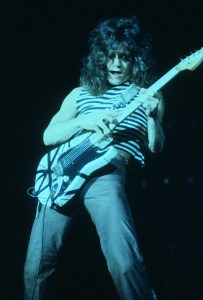
eddie_van_halen_at_the_new_haven_coliseum_2Pop music has always featured its fair share of brilliantly ‘inappropriate’ instrumental solos, from the (uncredited) honking tenor break on Frankie Lymon & The Teenagers’ ‘Why Do Fools Fall In Love’ and Tony Peluso’s brilliant fuzz-guitar feature on The Carpenters’ ‘Goodbye To Love’ to Jeff ‘Skunk’ Baxter’s unreconstructed rampage through Donna Summer’s ‘Hot Stuff’.

And then of course there are the jazz solos that occasionally enhance ‘pop’ material – Sonny Rollins lighting up the Stones’ ‘Waiting On A Friend’, Ronnie Ross’s memorable break on Lou Reed’s ‘Walk On The Wild Side’ and Phil Woods/Wayne Shorter/Pete Christlieb’s tasty leads on some of Steely Dan’s best work.

In the ’80s, there was a lot of demand for the wacky solo, often thrown in to pep up some pretty light/fairly inconsequential material. One in particular really set the benchmark for the decade, and it’s naturally where we start our rundown…

6. Michael Jackson – ‘Beat It’ (Solo by Eddie Van Halen)
Eddie’s shock-and-awe break was a perfect distillation of all his trademark techniques: lightning-fast picking, close-interval tapping routines, whammy-bar divebombs and even a cheeky Jimi Hendrix ‘All Along The Watchtower’ homage.

5. Michael Sembello – ‘Maniac’ (1983)
Sembello, hitherto best known as a very able jazz/R’n’B session player for the likes of Stevie Wonder, David Sanborn and George Duke, unleashed this overblown post-‘Beat It’ solo (starting at 2:50) which sounds like it belongs to a completely different song. Maybe he should have stuck to the jazz and R’n’B…

4. Bros – ‘Chocolate Box’ (Solo by Paul Gendler)
Gendler was a respected UK-based session player (and member of Modern Romance!) before getting the call from the Goss boys. He tosses off a Francis Dunnery-esque, way-too-good-for-the-charts solo at 2:40 on this wafer-thin but very catchy single.

3. Europe – ‘The Final Countdown’ (Solo by John Norum)
This song is obviously crying out for a widdly guitar solo, but Norum’s brilliant Malmsteen-esque playing goes beyond the call of duty even by the standards of a mid-’80s hair-metal band.

2. Al Jarreau – ‘Telepathy’ (Solo by Nile Rodgers)
Nicely set up by Steve Ferrone’s wrongfooting half-bar drum fill, Nile plays all the notes he knows and a few more too in this seriously weird but rather brilliant harmonized/double-tracked break (starting at 2:05) from the L Is For Lover album.

1. Allan Holdsworth – ‘In The Mystery’ (1985)
Jazz/rock guitar genius Holdsworth inexplicably saved some of his wackiest solos for vocal-based, ‘commercial’ material. This one is fairly astonishing and, arguably, totally wasted on the song… (Bassist Jimmy Johnson also deserves a mention for his frenetic, Red-Bull-sponsored performance.)

Bigmouth Strikes Twice: More Classic 1980s Music Quotes

Art_Blakey_1973

Art Blakey

Here’s another selection of choice quotes taken from various 1980s magazines, TV shows, biographies and anthologies that have drifted through my transom in the last few months.

Check out the first instalment here if you missed it.


‘Morrissey’s a precious, miserable bastard. He sings the same song every time he opens his mouth. At least I’ve got two songs: “Love Cats” and “Faith”.’

Robert Smith of The Cure, 1985


‘George Clinton told me how much he liked Around The World In A Day. You know how much more his words mean than those from some mamma-jamma wearing glasses and an alligator shirt behind a typewriter?’

Prince, 1985


‘It would be nice to meet Madonna and squeeze her bum.’

Level 42’s Mark King looks forward to his first US tour, 1986


‘I hope nobody bought houses.’

Slash/Warners executive Bob Biggs upon hearing a preview of Faith No More’s Angel Dust album (OK, this quote is from the early 1990s, but wtf…). The band had bought houses…


‘The musician is like a house, and the music is like a friend that’s always out there knocking on the door, wanting nothing more than to come in. But you’ve got to get your house in order for music to come in. That’s where discipline comes in.’

Robert Fripp, 1984


‘Like the first side. The second side is rubbish. Miles don’t play jazz no more but feels kind of funny about it, so instead of just admitting that his chops aren’t what they used to be, he puts jazz down.’

Branford Marsalis on Miles Davis’s Tutu, 1986


‘Remember the hits? “Labour Of Love” was inspired by Antonio Gramsci, a love song called “Violently” and a tale of kitchen-sink realism about wife battery called “Looking For Linda”. We heard those songs on Radio 1 back to back with Yazz and we’d piss ourselves laughing. We pulled off the trick three times and I always think that lyrically I can pull it off again.’

Hue & Cry’s Pat Kane remembers the good old days, 1995


‘I have to be myself, and if being in rock music forces me to pretend I am an idiot or that I have to wear tight trousers or a wig, then I have to get another job.’

Sting, 1988


‘I heard the title song (‘Storms’) on the radio and the drum sound still makes me want to cry. I love Glyn (Johns, producer) but there were times during that album when I went back to the hotel to cry.’

Nancy Griffith on her 1989 album Storms, 1991


‘I would say that my entire life has been one massive failure. Because I don’t have the tools or wherewithal to accomplish what I want to accomplish.’

Frank Zappa, 1986
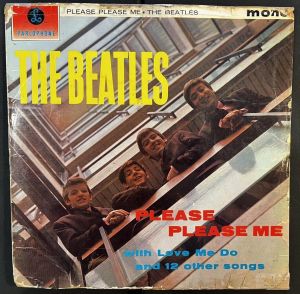
 

‘I went into the old EMI offices many times in the late ’80s and it never occurred to me to look up in reception and see exactly where that iconic photo had been taken. In the ’80s it seemed we had been looking forward.’

David Hepworth on the famous Beatles photo from the cover of Please Please Me


‘I tried the Jesus and Mary Chain but I just couldn’t believe it. It’s awful! It was so sophomoric – like the Velvets without Lou. I just know that they’re kids from Croydon! I just can’t buy it.’

David Bowie, 1987


‘I was surprised how hip it is. There’s a strange thing I don’t understand of people in Boy George outfits dancing to Jimmy McGriff and old Jackie McLean Blue Note records in discos.’

Guitarist John Scofield on the latest English ‘jazz revival’, 1988


‘Songwriting’s a craft, that’s all. I always knew my lyrics were better than anyone else’s anyway. I just edit more than other people, that’s my f***in’ secret. Also I never sleep and that helps too. You’ve got more time that way.’

Shane MacGowan, 1989


‘I hate having my picture taken, I always look like such a dog.’

Kirsty MacColl, 1989


‘I was a patsy. I never made more than $200 a week at the Five Spot.’

Ornette Coleman looks back on his legendary six-month residency during 1959 and 1960, 1985


‘All of us were naive, not just Ornette. We couldn’t even pay our rents. And they were making lots of money off us. That club was jammed every single night we were there.’

Charlie Haden on the same residency, 1985


‘You walk into the record label and they just weren’t as friendly as they used to be. When the record’s not a success, it’s your fault, and so you take on all those feelings. The label doesn’t sit down and talk to you. And they don’t drop you either, because they don’t want to lose you to the competition – just in case you do come up with something good next. And so they just remain sort of not as friendly, no more: “Hey Kevin, how are you?” It’s a head-f*ck, and you just have to work it out yourself.’

Kevin Rowland on the commercial failure of his 1988 solo album The Wanderer


‘Pop stars live the life of Caesar. And we know where the life of Caesar leads: it leads to blankness, it leads to despair. That’s the real message of these rock stars’ lives. To the public, they represent vitality, youth, innocence, joy. But in private life they represent despair and an infatuation with death.’

Albert Goldman, author of ‘The Lives Of John Lennon’ and ‘Elvis’, 1988


‘I remember sitting next to the stage and seeing all those little red lights glowing on the amps while we waited for the guys to come out and give us a real pasting.’

Allan Holdsworth reminisces about early gig-going, 1985


‘I have the best legs in the business. And they’ve got dancing feet at the bottom.’

David Lee Roth, 1982


‘There’s only one woman I have deep respect for in this industry and that’s Chrissie Hynde.’

Annie Lennox, 1986


‘I would have thought that people would be pleased to have a band that could play half decently.’

Francis Dunnery bemoans It Bites’ poor standing with the British music press, 1989


‘Sometimes he would call for Monk out of the clear blue sky. “Thelonious! Come save me from these dumb young motherf*ckers!”‘

Wynton Marsalis on playing with Art Blakey in the early 1980s


‘Prince really wants to be white. I know what that’s like. I tried hard to be white too.’

Daryl Hall, 1985


‘What we do is an alternative to Elton John and Chris Rea and all those old bastards who were there and still are. It’s embarrassing to see these old people like Dire Straits doddering about, they’re hideous.’

Robert Smith, 1989


‘I’ll tell you what I dig. In the Sting movie “Bring On The Night”, Omar Hakim taking off on that tune. Like Tony Williams, Jack DeJohnette. That’s being real free and comfortable. I don’t take my drums seriously, and they do.’

Drummer for the stars Jeff Porcaro, 1989


‘I believe that Bill (Bruford) and Adrian (Belew) thought that Beat was a better album than Discipline. I have no idea how anyone could come to that conclusion.’

Robert Fripp of King Crimson, 2022


‘Thanks for letting me drop by, guys. Hope I didn’t ruin your album.’

Herbie Hancock bids farewell to Simple Minds after playing a synth solo on their 1982 song ‘Hunter And The Hunted’


‘You should have seen us trying to sound like Windham Hill. We’d fall on our butts, man. I learned that you can’t fake it.’

’70s jazz/rock pioneer Larry Coryell on his mid-’80s collaboration with violinist Michal Urbaniak, 1985


‘We weren’t asked but we wouldn’t have done it anyway.’

Robert Smith on Live Aid, 1985


‘The band is getting back together and playing, maybe every six months or every year. If I can do so without it being public knowledge, that would be great. But I can’t do it, obviously. It would be nice to play together just as friends.’

Jimmy Page on Led Zeppelin reunions, 1986


‘I really, really would like to be in Led Zeppelin again. Whether or not time allows that to happen, I don’t know.’

Robert Plant on Led Zeppelin reunions, 1988


‘I’m a Catholic, and I would just ask God to to please help me find my own style. It’s not going to be like Tony or Elvin, so that when you hear me on a record, you know it’s Al Foster on the drums.’

Al Foster on his ‘stomping’ hi-hat technique, 1989


‘I feel I’ve created a field in which other people can discover themselves. I’m disappointed that they don’t create the room for me to discover myself.’

Robert Fripp on his King Crimson bandmates, 1984


‘I find therapy enormously valuable. It’s like car maintenance, send yourself in to be serviced every few thousand miles and, with any luck, it stops major problems developing.’

Peter Gabriel, 1989


‘I went to see this band INXS from Australia. They were on OK band, very much like a version of the Rolling Stones, but not as good. The singer is good and he looks great, but he doesn’t really move. He can’t be expending much energy.’

Mick Jagger, 1988


‘The band was like a fake democracy. Henley and I were making the decisions while at the same time trying to pacify and cajole the others.’

Glenn Frey looks back on The Eagles, 1988


‘(Jeff) Beck’s was a miserable f***ing band, horrible. Beck is a miserable old sod, but I do love him as a guitar player.’

Rod Stewart, 1988


‘I’ve always found it easier to write for other people. I feel terrible inhibited about writing for me. It’s only in the last few years that I’ve resigned myself into believing that I’m a moderately good singer.’

David Bowie, 1988


‘Of my writing partners since John (Lennon), Denny Laine was obviously nowhere near as good. Stevie Wonder is very good, but he’s not a lyricist. Michael Jackson is not as good of a writer as he is a performer. And Eric Stewart was good, but again, not as good as John.’

Paul McCartney, 1988


‘This new Clash compilation, which is meant to have sold a million copies, should be making me a rich man, but someone told me you only get quarter royalties for compilations. The CD wasn’t invented then so that wasn’t in the contract either. So I think I don’t get them royalties either. To tell the truth, I think we’re all a bit skint really.’

Joe Strummer on the legacy of The Clash, 1988


‘Those weird people on the street – every hundreth weirdest one has a Steely Dan record at home. That guy who hijacked a bus today probably has 47 copies of The Royal Scam.’

Walter Becker on Steely Dan’s audience, 1981


‘In 1981, something happened which changed my way of working with music. I woke up on a friend’s sofa in New York and simply understood something I’d known for a while: music was always present, completely with a life of its own, as a friend.’

Robert Fripp, 1984


‘The price of a ticket goes from two dollars to 20 dollars, the act doesn’t do an encore, someone has to stand in a long line, and it’s all my fault.’

Bill Graham on stadium rock, 1988


‘There are a lot of people who didn’t make a commitment and now they’re no longer with us. We lost Otis Redding, Sam Cooke, Jackie Wilson, Jimi Hendrix. I think maybe some of them didn’t know where or when to get off. The important thing is to be here.’

Al Green, 1988


‘Hell, we steal. We’re the robber barons of rock’n’roll.’

Donald Fagen of Steely Dan, 1981


‘After recording it, I flew off to see my manager and I said to him, “You’d better watch who you’re talking to. I’m the guy who wrote “Addicted To Love!”‘

Robert Palmer, 1988


‘I get the fans who write poetry. I have a slight David Sylvian audience, whereas Chris (Lowe) gets the sex audience, the ones who write obscene letters! It’s quite thrilling, actually!’

Neil Tennant of The Pet Shop Boys, 1988


‘It was the Enniskillen bombing that did it. The man whose daughter died beside him under the rubble; he was burning inside but he was so forgiving, so gracious. I thought, Christ, this is what courage is all about – Elton, just shut up and get back to work. After all, once you’ve been exposed naked on the cover of The Sun you ought to be able to face anything…’

Elton John on his 1988 comeback


‘It’s a better product than some others I could mention.’

David Bowie defends the Glass Spider Tour, 1987


‘Back then I thought I’d lost it and I did a bunch of things I was really unhappy with – all in public and on record. But it turned out not to be true. My ability hadn’t deserted me. And it won’t go away. Ever.’

Lou Reed, 1988


‘Michael Jackson’s just trying to cop my sh*t. I was insane years ago…’

Neil Young, 1988


‘I’ve said a lot of things in my time and 90 percent of them are bollocks.’

Paul Weller, 1988


‘We were excellent. Some of the best records of the ’80s are there. For the last six months of Wham!, it was OK to like us, we got a little hip. I cannot think of another band who got it together so much between the first and second albums. On Fantastic, you can tell I don’t think I’m a singer but some vocals on Make It Big are the best I’ve done. Even if we were wankers, you still had to listen.’

George Michael reassesses Wham!, 1998


‘The gig I have as the drummer in King Crimson is one of the few gigs in rock’n’roll where it’s even remotely possible to play anything in 17/16 and stay in a decent hotel.’

Bill Bruford, 1983


‘When I toured with The Rolling Stones, the audience would come up to me after the show and say, “Man, you’re really good, you ought to record.” How do you think that makes me feel after 25 years in the business?’

Bobby Womack, 1984


‘I find politics ruins everything. Music, films, it gets into everything and f*cks it all up. People need more sense of humour. If I ran for President, I’d give everybody Ecstasy.’

Grace Jones, 1985


‘I’m not the most gifted person in the world. When God handed out throats, I got locked out of the room.’

Joe Elliott of Def Leppard, 1988


‘I’m lazy and I don’t practice guitar and piano because I’ve gotten involved with so many other things in my life and I just had to make a sacrifice. Stephen Sondheim encourages me to start playing the piano again. Maybe I will.’

Madonna, 1989


‘Nile (Rodgers) couldn’t afford to spend much time with me. I was slotted in between two Madonna singles! She kept coming in, saying “How’s it going with Nile? When’s he gonna be free?” I said, “He ain’t gonna be free until I’m finished! Piss off!”’

Jeff Beck, 1989


‘I’ve never really understood Madonna’s popularity. But I’ve talked to my brothers and they all want to sleep with her, so she must have something.’

Nick Kamen, 1987


‘They ask you about being a Woman In Rock. The more you think about, the more you have to prove that you’re a Woman In Rock. But if you’re honest, it doesn’t matter whether you’re male or female. That’s the way we work.’

Wendy Melvoin, 1989


‘In Japan, someone told me I was playing punk saxophone. I said, “Call me what you want, just pay me”.’

George Adams, 1985


‘In the past, we’d bump into other musicians and it would be, “Oh, yes, haven’t I heard of you lot? Aren’t you the bass player that does that stuff with your thumb?” But once you’ve knocked them off the number 1 spot in Germany, they’re ringing you up in your hotel and saying, “Hey, howyadoin’? We must get together…”‘

Mark King of Level 42, 1987


‘We played London, we played Ronnie Scott’s, and I noticed that there were a lot punk-rock kids in the audience. After we finished playing, we had to go to the disco and sign autographs, because “Ping Pong”, the thing we made about 30 years ago, is a big hit over there.’

Art Blakey, 1985


‘I believe music – just about everything – sounds better these days. Even a car crash sounds better!’

Miles Davis, 1986


‘It’s a dangerous time for songwriters in that a monkey can make a thing sound good now.’

Randy Newman, 1988

Yoko+Ono+Season+Of+Glass+522787


‘To have those glasses on the cover was important because it was a statement and you have to understand that it was like John wanted you guys to see those glasses.’

Yoko Ono, 1989


‘I’ll f*cking… I’ll go and take on anyone, any white singer who wants to give me a go.’

Matt Goss of Bros, 1989


‘I’ve never said this before but my drums is so professional, man, know what I mean?’

Luke Goss of Bros, 1989


‘I hate parts of my own albums because I know I’m hearing something that doesn’t translate to piano. In fact, I’m being dishonest by playing piano at all.’

Keith Jarrett, 1987


‘When I began to see how Elvis lived, I got such a strong take off of it. It was all so revolting!’

Albert Goldman, 1988


‘The best way to make great art is to have it trivialised by other people as much as possible. That way, you fight and fight and fight.’

Julian Cope, 1989


‘Whatever you’re tops in, people is trying to bring you down, and that’s my philosophy.’

Samantha Fox, 1987


‘Call me fat and I’ll rip your spine out.’

Ian Gillan, 1983


‘Sure I care about my fans. Because fans is money, hahaha. Muh-neee! And who does not care about money? Me, I like muh-neee, haha.’

Chuck Berry, 1988


‘I have this long chain with a ball of middle-classness at the end of it which keeps holding me back and that I keep sort of trying to fight through. I keep trying to find the Duchamp in me.’

David Bowie, 1980


‘People who say, Oh, I don’t know anything about music – they’re the people who really do know about music because it’s only really what it does to you.’

Steve Winwood, 1988


‘I notice that critics and others don’t credit black people with the ability to write ingenious, creative lyrics.’

Nile Rodgers, 1981


‘I’m below the poverty line – I’m on £16 a week. We needed some clothes and our manager said, “I don’t know what you do with your money. I mean, 16 quid!”’

Gary Daly of China Crisis, 1984


‘You take four or five of those rattlesnakes, dry ’em out and put them inside your hollow-box guitar. Lightnin’ Hopkins taught me that trick.’

Albert Collins on his guitar tone, 1988


‘People are bored with Lionel Richie going “I love everybody, peace on earth, we are the world…” F*ck that! People love bastards.’

Terence Trent D’Arby, 1987


‘Epstein dressed The Beatles up as much as he could but you couldn’t take away the fact that they were working-class guys. And they were smart-arses. You took one look at Lennon and you knew he thought the whole thing was a joke.’

Billy Joel, 1987


‘I remember when the guy from Echo & The Bunnymen said I should be given National Service. F*** him...’

Boy George, 1987


‘No-one should care if the Rolling Stones have broken up, should they? People seem to demand that I keep their youthful memories intact in a glass case specifically for them and damn the sacrifices I have to make. Why should I live in the past just for their petty satisfaction?’

Mick Jagger, 1987


‘The industry is just rife with with jealousy and hatred. Everybody in it is a failed bassist.’

Morrissey, 1985


‘I couldn’t stand it – all that exploitation and posturing, the gasping at the mention of your name, the pursuit by photographers and phenomenon-seekers. You get that shot of adrenalin and it’s fight or flight. I chose flight many a time.’

Joni Mitchell, 1988


‘I’m strongly anti-war but defence of hearth and home? Sure, I’ll stick up for that… I’m not a total pacifist, you know? I’ve shot at people. I missed, but I shot at them. I’m sort of glad I missed…’

David Crosby, 1989