Crap Lyrics Of The 1980s (Part Two)

I thought I had unearthed all of the decade’s stinkers in movingtheriver.com’s extensive first round-up.

Boy was I mistaken. And I feel pretty confident that there will be many more to highlight as the weeks, months and years roll by.

So here we go again with some more logic-defying, ill-conceived, harebrained – and sometimes just plain weird – song lyrics of the 1980s. China Crisis obsessives: look away now…

Most of my friends were strangers when I met them
BROS: ‘I Quit’

I watch you crumble/Like a very old wall
BROS: ‘I Owe You Nothing’

‘He’s lost in a maze/Of difficultays’
BILL BRUFORD: ‘Gothic 17’

‘Start your journey/Early or maybe later’
KING: ‘Love And Pride’

Why do you do that poor man thing/Why do you do that poor man/All of my life it’s as sharp as the bigger the punch I’m feeling’
CHINA CRISIS: ‘Bigger The Punch I’m Feeling’

‘Work in my world/Put up for sale/You buy you me/I buy me you’
CHINA CRISIS: ‘The Highest High’

This wreckage I call me/Would like to frame your voice’
GARY NUMAN: ‘This Wreckage’

I was walking in the park/Dreaming of a spark’
MARILLION: ‘Lavender’

‘Take on me/Take me on’
A-HA: ‘Take On Me’

We made our love on wasteland/And through the barricades’
SPANDAU BALLET: ‘Through The Barricades’

All we want is our lives to be free/If we can’t be free then we don’t want to be we’
CURIOSITY KILLED THE CAT: ‘Free’

‘If I was you/If I was you/I wouldn’t treat me the way you do’
EIGHTH WONDER: ‘I’m Not Scared’

Words don’t come easy to me/How can I find a way/To make you see I love you?’
FR DAVID: ‘Words’

‘I’m young and free and single/I just want to mingle with you, lady’
SUNFIRE: ‘Young Free And Single’

Can’t complain/Mustn’t grumble/Help yourself to another piece of apple crumble’
ABC: ‘That Was Then But This Is Now’

Hello, hello, hope you’re feeling fine/Hello, hello, hope you’re feeling mine/Hello, hello, hope you’re feeling time’
NICK HEYWARD: ‘Whistle Down The Wind’

A motivated, liquidated nightmare/Like a baby with a laser on a rocking chair’
IT BITES: ‘Black December’

Here is my heart/Waiting for you/Here is my soul/I eat at chez nous
YES: ‘Love Will Find A Way’

We’re talking away/I don’t know what to say/I’ll say it anyway/Today is another day to find you’
A-HA: ‘Take On Me’

Allan Holdsworth (1946-2017)

With the sad death of Allan Holdsworth, we have lost another guitar great and one of the UK’s most singular musicians.

There’s an old muso cliché that seems to lend itself to guitarists more than other players – ‘he/she’s a musician who just happens to play the guitar’.

It certainly applies to Allan. He came up with an entirely original soundworld, feted by the likes of Eddie Van Halen, Frank Zappa, Joe Satriani, Steve Vai and John McLaughlin.

From a young age, Holdsworth always revered horn players – particularly Cannonball Adderley, Charlie Parker, Eric Dolphy, John Coltrane and Michael Brecker – above guitarists, but, given a guitar by his father as a teenager, decided to pursue his love of music using that tool. In doing so, he revolutionised the instrument, fashioning a unique legato technique.

The aim was a smooth, soaring sound which lent itself to horn-like improvisation, allowing him to play fiery, exciting solos with huge intervallic leaps. His chord work was underrated and equally innovative, using close-interval voicings and ridiculously large stretches. He came up with an entirely personal series of ‘chord scales’, loathing standard chord shapes and even calling them ‘disgusting’ on his instructional video!

The first time I heard Allan’s playing was his extraordinary solo on Stanley Clarke’s ‘Stories To Tell’ from the album If This Bass Could Only Talk, but it took me a while to identify him since my cassette didn’t list the personnel… To my ears, it was just a remarkable solo; I didn’t even particularly ‘hear’ it as a guitar.

In the late 1980s, as I started reading various American muso mags, Allan’s name popped up frequently – it was time to explore his career in more depth. In the early to mid-1970s, he guested with Soft Machine, Nucleus, Tempest and Gong. Master drummer Tony Williams came calling, and he hot-footed it over to New York for 18 months of recording and touring with the New Lifetime band.

He then joined Bill Bruford in one of the greatest ever fusion units alongside Jeff Berlin and Dave Stewart, then formed prog supergroup UK with Bruford, Eddie Jobson and John Wetton (playing a legendary solo on ‘In The Dead Of Night’). He also forged a brief but fruitful musical relationship with violinst Jean-Luc Ponty.

An early solo album, 1976’s Velvet Darkness, was virtually disowned by Allan despite featuring Narada Michael Walden on drums and Alphonso Johnson on bass. But he spent the 1980s embarking on a far more fruitful solo career.

Endorsed by Eddie Van Halen and Frank Zappa, mainstream success beckoned in the mid-’80s, but a high-profile Warner Bros contract came and went very briefly with only an EP Road Games to show for it.

It didn’t hold him back though; in fact it led to probably his most commercially successful period – Metal Fatigue, Atavachron and Sand were all important statements.

The period between 1988 and 1994 was arguably Allan’s peak – superb solo albums like Secrets, Then!, Hard Hat Area and Wardenclyffe Tower came out and he contributed striking guest spots to albums by Level 42 (Guaranteed), Stanley Clarke and Chad Wackerman (Forty Reasons). He was even lured to share the stage with Level for a month-long Hammersmith Odeon residency in 1990.

Like fellow ex-pats Richard Thompson and Morrissey, he made California his home, moving there in the early 1980s and forging valued musical relationships with Vinnie Colaiuta, Jimmy Johnson and Scott Henderson.

Henderson spoke of his incredible generosity in the studio. Drummer Kirk Covington – who recorded with Allan on the ‘standards’ album None Too Soon – reported that sessions at his home studio were always curtailed at 7pm at which point Allan would hand out pints of his home-brewed cask ale.

The complexity of his style meant that Allan influenced relatively few guitarists, though for my money Henderson and Francis Dunnery adapted some of his techniques to great effect. Fellow Yorkshireman John McLaughlin once said, ‘I’d steal everything Allan was doing if only I could figure out what he was doing!’

I saw Allan several times in concert; at the Bloomsbury Theatre, Jazz Cafe, Ronnie Scott’s, Queen Elizabeth Hall and twice with Level 42 at Hammersmith. He was notoriously self-critical, but to my ears achieved a remarkable consistency in the live context.

A 12-CD career-spanning box set The Man Who Changed Guitar Forever has just been released on Manifesto Records. Allan was also working on a long-awaited new studio album at the time of his death. He spoke about both projects in this recent podcast.

Farewell to a master. We won’t see his like again.

Allan Holdsworth, guitarist and composer, born 6 August 1946, died 15 April 2017

Allan, Chad Wackerman and Jimmy Johnson in concert

Bill Bruford’s Earthworks: 30 Years On

earthworks

Some musicians have a unique touch – you can identify them within a few notes.

In Bill Bruford’s case, his snare drum is his main audio imprint. But he also always had a highly-original composing style before his retirement in 2009, and both are very much in evidence on the excellent Earthworks album.

Bruford had spent the mid-’80s winding down Crimson and duetting with ex-Yes keyboardist Patrick Moraz, mostly in spontaneous improvisation mode, but now a new musical approach was called for.

He had based his career on defying expectations and he did it again in 1986, forming a quartet made up two young jazz tyros best known for their work in big-band-extraordinaire Loose Tubes (keys man Django Bates and saxist Iain Ballamy) plus acoustic bassist Mick Hutton.

bruford-inside

Bruford chose well: Bates and Ballamy were excellent and prolific composers too. Also key to this new band was Bruford’s development of a very advanced electric/acoustic kit whereby he could play chords and melodic ideas alongside a ‘standard’ jazz setup.

This approach also chimed well with Bates’ propensity on both acoustic piano and synth. On the latter instrument, he was fast becoming almost as recognisable as Jan Hammer, Joe Zawinul, Chick Corea or George Duke.

All the ingredients add up to one of the key British jazz albums of the ’80s, showcasing a band equally at home playing Weather Report-style fusion, Eastern themes and odd-time prog as they were with ECM-flavoured chamber jazz of the type played by obvious heroes Kenny Wheeler and John Taylor.

Ballamy’s opener ‘Thud’ (inspired by the Rosenhan psychology experiment?) almost has a ska feel – if Madness had tried their hand at quirky instrumental jazz/rock, they might come up with something like this. ‘Pressure’ is possibly the album’s standout, a superb mini-suite featuring some classic odd-time Bruford mischief and lyrical piano playing from Bates.

Ballamy’s ballad ‘It Needn’t End In Tears’ still sounds like a jazz-standard-in-waiting to this writer, though its possibly a bit saccharine for some. Bruford unleashes a fine drum solo on ‘My Heart Declares a Holiday’ while Bates’ ‘Emotional Shirt’ veers humourously between an early hip-hop groove and free-jazz freakout. ‘Bridge Of Inhibition’ fuses Turkish modes with high-speed bebop.

Buoyed by state-of-the-art production (maybe a bit too state-of-the-art) and stylish packaging, Earthworks was a palpable hit by ‘jazz’ standards, selling well and turning up in several ‘best of 1987’ lists. Some critics were of course suspicious of Bruford’s jazz credentials, but he probably couldn’t have cared less; he had always considered himself a jazz drummer anyway and knew he was onto a winner with Bates, Ballamy and Hutton.

The latter wouldn’t last beyond this first album, but Earthworks (the band) would continue to make some excellent music throughout the rest of the ’80s and for two decades beyond that. Bruford had successfully defied expectations yet again.

King Crimson: Discipline 35 Years Old Today

crimson-cover14 April 1981: King Crimson – or Discipline, as they are currently named – are rehearsing new material in deepest Dorset.

But all is not well. Guitarist/de facto leader Robert Fripp is getting seriously ticked off with Bill Bruford’s drumming.

He outlines the pertinent issues in his diary (available to read in the remastered CD’s liner notes):

Bill is really getting to me, so I’m trying to understand how he works:
1. He’s a very busy player and doesn’t enjoy playing sparsely.
2. His parts have lots of fills and major changes of texture.
3. His fills are dramatic ie., they shock.

So Fripp comes up with some suggestions for Bruford:

1. Repeat yourself.
2. Take your time.
3. Leave room.
4. Listen to everybody else.
5. Develop a new set of clichés.
6. Develop a new vocabulary of drum sounds.
7. Listen to the sound of what you play.

Bruford’s autobiography outlines his general attitude to these instructions. But he gamely meets Fripp halfway and adapts his style accordingly, laying off the hi-hats, ride and crash cymbals unless absolutely necessary and adding a set of Octobans, a China cymbal and a few electric drums to his kit.

There are other Fripp stipulations. The music’s high frequencies should be saved for the electric guitar (Fripp was perhaps influenced by the ‘rules’ set by Peter Gabriel for his groundbreaking third album) and the 16th notes usually played by the hi-hat or ride cymbal should also now be the guitarists’ responsibility.

The formula was set. And one of the great albums (and bands) of the ’80s was born.

There was something very exciting in the air around late ’70s/early ’80s rock. The talk was all of ‘village music’ – an African concept wherein each player’s contribution is vital but only a small part of the mighty whole.

Talking Heads’ Remain In Light, Brian Eno/David Byrne’s My Life In The Bush Of Ghosts, David Bowie’s Lodger, Japan’s Tin Drum and Gabriel III showed how ‘world’ influences could integrate with ‘rock’ to thrilling effect, and Discipline fits in very neatly with those albums.

Musical references might come from Mozambique, Java, China, Bali or South Africa, or from the soundworlds of Karlheinz Stockhausen, Glenn Branca, Philip Glass and Steve Reich. Like Talking Heads, King Crimson filtered these influences through a New York art-rock/post-punk perspective but, arguably, no one integrated them more successfully.

Fripp and Bruford recruited Adrian Belew (who chose Crimson over Talking Heads) and Tony Levin in New York. Belew had grown into an incredibly assured vocalist – according to Bruford, he was literally incapable of singing out of tune – and master of unusual guitar textures. His solos featured tones and approaches never heard before.

Levin had already played bass with a plethora of heavyweights including Paul Simon, John Lennon and Gabriel, and had also just turned down an invitation to join Weather Report at the beginning of 1981. He unleashed a new weapon for the Crimson gig – the ten-stringed Chapman Stick, played by tapping or ‘hammering on’ (heard to great effect during the opening of ‘Elephant Talk’).

Back in the mid-’80s, my brother and I used to peruse Discipline‘s liner notes for clues as to the powerful and mysterious music therein. We didn’t have a clue what a ‘Stick’ was, concluding wrongly that it must be the slightly synthetic woodblock sound heard throughout ‘The Sheltering Sky’ and title track (I’m still not sure what that sound is – maybe a ‘triggered’ Bruford hi-hat?).

Tony Levin and Chapman Stick

Tony Levin and Chapman Stick

The band wrote an hour of new material fairly quickly and toured modestly in the UK during April and May 1981, calling themselves Discipline. The album of the same name was recorded over the summer at Island’s Basing Street Studio in Notting Hill (later Trevor Horn’s Sarm complex) with producer Rhett Davies, fresh from helming Roxy Music’s Flesh And Blood.

By September, pleasantly surprised by the quality of music in the can, Fripp was issuing a lengthy (and fairly incomprehensible) press release explaining why the band would henceforth be known as King Crimson.

As Bruford says in his book, ‘For a couple of years at the beginning of the ’80s, we were the right band in the right place at the right time – not to get hits, but to do useful, fascinating and right work.’

He also says that the Crimson drum stool was one of the three best rock gigs in the last few decades of the 20th century, naming the other two as Gabriel and Frank Zappa. Hard to argue with that.

Bigmouth Strikes Twice: More Classic 1980s Music Quotes

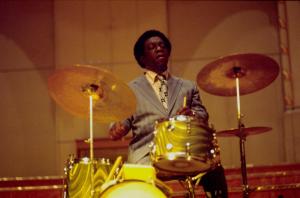
Art_Blakey_1973

Art Blakey

Here’s another selection of choice quotes taken from various 1980s magazines, TV shows, biographies and anthologies that have drifted through my transom in the last few months.

Check out the first instalment here if you missed it.


‘Morrissey’s a precious, miserable bastard. He sings the same song every time he opens his mouth. At least I’ve got two songs: “Love Cats” and “Faith”.’

Robert Smith of The Cure, 1985


‘George Clinton told me how much he liked Around The World In A Day. You know how much more his words mean than those from some mamma-jamma wearing glasses and an alligator shirt behind a typewriter?’

Prince, 1985


‘It would be nice to meet Madonna and squeeze her bum.’

Level 42’s Mark King looks forward to his first US tour, 1986


‘I hope nobody bought houses.’

Slash/Warners executive Bob Biggs upon hearing a preview of Faith No More’s Angel Dust album (OK, this quote is from the early 1990s, but wtf…). The band had bought houses…


‘The musician is like a house, and the music is like a friend that’s always out there knocking on the door, wanting nothing more than to come in. But you’ve got to get your house in order for music to come in. That’s where discipline comes in.’

Robert Fripp, 1984


‘Like the first side. The second side is rubbish. Miles don’t play jazz no more but feels kind of funny about it, so instead of just admitting that his chops aren’t what they used to be, he puts jazz down.’

Branford Marsalis on Miles Davis’s Tutu, 1986


‘Remember the hits? “Labour Of Love” was inspired by Antonio Gramsci, a love song called “Violently” and a tale of kitchen-sink realism about wife battery called “Looking For Linda”. We heard those songs on Radio 1 back to back with Yazz and we’d piss ourselves laughing. We pulled off the trick three times and I always think that lyrically I can pull it off again.’

Hue & Cry’s Pat Kane remembers the good old days, 1995


‘I have to be myself, and if being in rock music forces me to pretend I am an idiot or that I have to wear tight trousers or a wig, then I have to get another job.’

Sting, 1988


‘I heard the title song (‘Storms’) on the radio and the drum sound still makes me want to cry. I love Glyn (Johns, producer) but there were times during that album when I went back to the hotel to cry.’

Nancy Griffith on her 1989 album Storms, 1991


‘I would say that my entire life has been one massive failure. Because I don’t have the tools or wherewithal to accomplish what I want to accomplish.’

Frank Zappa, 1986
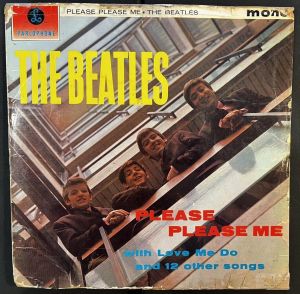
 

‘I went into the old EMI offices many times in the late ’80s and it never occurred to me to look up in reception and see exactly where that iconic photo had been taken. In the ’80s it seemed we had been looking forward.’

David Hepworth on the famous Beatles photo from the cover of Please Please Me


‘I tried the Jesus and Mary Chain but I just couldn’t believe it. It’s awful! It was so sophomoric – like the Velvets without Lou. I just know that they’re kids from Croydon! I just can’t buy it.’

David Bowie, 1987


‘I was surprised how hip it is. There’s a strange thing I don’t understand of people in Boy George outfits dancing to Jimmy McGriff and old Jackie McLean Blue Note records in discos.’

Guitarist John Scofield on the latest English ‘jazz revival’, 1988


‘Songwriting’s a craft, that’s all. I always knew my lyrics were better than anyone else’s anyway. I just edit more than other people, that’s my f***in’ secret. Also I never sleep and that helps too. You’ve got more time that way.’

Shane MacGowan, 1989


‘I hate having my picture taken, I always look like such a dog.’

Kirsty MacColl, 1989


‘I was a patsy. I never made more than $200 a week at the Five Spot.’

Ornette Coleman looks back on his legendary six-month residency during 1959 and 1960, 1985


‘All of us were naive, not just Ornette. We couldn’t even pay our rents. And they were making lots of money off us. That club was jammed every single night we were there.’

Charlie Haden on the same residency, 1985


‘You walk into the record label and they just weren’t as friendly as they used to be. When the record’s not a success, it’s your fault, and so you take on all those feelings. The label doesn’t sit down and talk to you. And they don’t drop you either, because they don’t want to lose you to the competition – just in case you do come up with something good next. And so they just remain sort of not as friendly, no more: “Hey Kevin, how are you?” It’s a head-f*ck, and you just have to work it out yourself.’

Kevin Rowland on the commercial failure of his 1988 solo album The Wanderer


‘Pop stars live the life of Caesar. And we know where the life of Caesar leads: it leads to blankness, it leads to despair. That’s the real message of these rock stars’ lives. To the public, they represent vitality, youth, innocence, joy. But in private life they represent despair and an infatuation with death.’

Albert Goldman, author of ‘The Lives Of John Lennon’ and ‘Elvis’, 1988


‘I remember sitting next to the stage and seeing all those little red lights glowing on the amps while we waited for the guys to come out and give us a real pasting.’

Allan Holdsworth reminisces about early gig-going, 1985


‘I have the best legs in the business. And they’ve got dancing feet at the bottom.’

David Lee Roth, 1982


‘There’s only one woman I have deep respect for in this industry and that’s Chrissie Hynde.’

Annie Lennox, 1986


‘I would have thought that people would be pleased to have a band that could play half decently.’

Francis Dunnery bemoans It Bites’ poor standing with the British music press, 1989


‘Sometimes he would call for Monk out of the clear blue sky. “Thelonious! Come save me from these dumb young motherf*ckers!”‘

Wynton Marsalis on playing with Art Blakey in the early 1980s


‘Prince really wants to be white. I know what that’s like. I tried hard to be white too.’

Daryl Hall, 1985


‘What we do is an alternative to Elton John and Chris Rea and all those old bastards who were there and still are. It’s embarrassing to see these old people like Dire Straits doddering about, they’re hideous.’

Robert Smith, 1989


‘I’ll tell you what I dig. In the Sting movie “Bring On The Night”, Omar Hakim taking off on that tune. Like Tony Williams, Jack DeJohnette. That’s being real free and comfortable. I don’t take my drums seriously, and they do.’

Drummer for the stars Jeff Porcaro, 1989


‘I believe that Bill (Bruford) and Adrian (Belew) thought that Beat was a better album than Discipline. I have no idea how anyone could come to that conclusion.’

Robert Fripp of King Crimson, 2022


‘Thanks for letting me drop by, guys. Hope I didn’t ruin your album.’

Herbie Hancock bids farewell to Simple Minds after playing a synth solo on their 1982 song ‘Hunter And The Hunted’


‘You should have seen us trying to sound like Windham Hill. We’d fall on our butts, man. I learned that you can’t fake it.’

’70s jazz/rock pioneer Larry Coryell on his mid-’80s collaboration with violinist Michal Urbaniak, 1985


‘We weren’t asked but we wouldn’t have done it anyway.’

Robert Smith on Live Aid, 1985


‘The band is getting back together and playing, maybe every six months or every year. If I can do so without it being public knowledge, that would be great. But I can’t do it, obviously. It would be nice to play together just as friends.’

Jimmy Page on Led Zeppelin reunions, 1986


‘I really, really would like to be in Led Zeppelin again. Whether or not time allows that to happen, I don’t know.’

Robert Plant on Led Zeppelin reunions, 1988


‘I’m a Catholic, and I would just ask God to to please help me find my own style. It’s not going to be like Tony or Elvin, so that when you hear me on a record, you know it’s Al Foster on the drums.’

Al Foster on his ‘stomping’ hi-hat technique, 1989


‘I feel I’ve created a field in which other people can discover themselves. I’m disappointed that they don’t create the room for me to discover myself.’

Robert Fripp on his King Crimson bandmates, 1984


‘I find therapy enormously valuable. It’s like car maintenance, send yourself in to be serviced every few thousand miles and, with any luck, it stops major problems developing.’

Peter Gabriel, 1989


‘I went to see this band INXS from Australia. They were on OK band, very much like a version of the Rolling Stones, but not as good. The singer is good and he looks great, but he doesn’t really move. He can’t be expending much energy.’

Mick Jagger, 1988


‘The band was like a fake democracy. Henley and I were making the decisions while at the same time trying to pacify and cajole the others.’

Glenn Frey looks back on The Eagles, 1988


‘(Jeff) Beck’s was a miserable f***ing band, horrible. Beck is a miserable old sod, but I do love him as a guitar player.’

Rod Stewart, 1988


‘I’ve always found it easier to write for other people. I feel terrible inhibited about writing for me. It’s only in the last few years that I’ve resigned myself into believing that I’m a moderately good singer.’

David Bowie, 1988


‘Of my writing partners since John (Lennon), Denny Laine was obviously nowhere near as good. Stevie Wonder is very good, but he’s not a lyricist. Michael Jackson is not as good of a writer as he is a performer. And Eric Stewart was good, but again, not as good as John.’

Paul McCartney, 1988


‘This new Clash compilation, which is meant to have sold a million copies, should be making me a rich man, but someone told me you only get quarter royalties for compilations. The CD wasn’t invented then so that wasn’t in the contract either. So I think I don’t get them royalties either. To tell the truth, I think we’re all a bit skint really.’

Joe Strummer on the legacy of The Clash, 1988


‘Those weird people on the street – every hundreth weirdest one has a Steely Dan record at home. That guy who hijacked a bus today probably has 47 copies of The Royal Scam.’

Walter Becker on Steely Dan’s audience, 1981


‘In 1981, something happened which changed my way of working with music. I woke up on a friend’s sofa in New York and simply understood something I’d known for a while: music was always present, completely with a life of its own, as a friend.’

Robert Fripp, 1984


‘The price of a ticket goes from two dollars to 20 dollars, the act doesn’t do an encore, someone has to stand in a long line, and it’s all my fault.’

Bill Graham on stadium rock, 1988


‘There are a lot of people who didn’t make a commitment and now they’re no longer with us. We lost Otis Redding, Sam Cooke, Jackie Wilson, Jimi Hendrix. I think maybe some of them didn’t know where or when to get off. The important thing is to be here.’

Al Green, 1988


‘Hell, we steal. We’re the robber barons of rock’n’roll.’

Donald Fagen of Steely Dan, 1981


‘After recording it, I flew off to see my manager and I said to him, “You’d better watch who you’re talking to. I’m the guy who wrote “Addicted To Love!”‘

Robert Palmer, 1988


‘I get the fans who write poetry. I have a slight David Sylvian audience, whereas Chris (Lowe) gets the sex audience, the ones who write obscene letters! It’s quite thrilling, actually!’

Neil Tennant of The Pet Shop Boys, 1988


‘It was the Enniskillen bombing that did it. The man whose daughter died beside him under the rubble; he was burning inside but he was so forgiving, so gracious. I thought, Christ, this is what courage is all about – Elton, just shut up and get back to work. After all, once you’ve been exposed naked on the cover of The Sun you ought to be able to face anything…’

Elton John on his 1988 comeback


‘It’s a better product than some others I could mention.’

David Bowie defends the Glass Spider Tour, 1987


‘Back then I thought I’d lost it and I did a bunch of things I was really unhappy with – all in public and on record. But it turned out not to be true. My ability hadn’t deserted me. And it won’t go away. Ever.’

Lou Reed, 1988


‘Michael Jackson’s just trying to cop my sh*t. I was insane years ago…’

Neil Young, 1988


‘I’ve said a lot of things in my time and 90 percent of them are bollocks.’

Paul Weller, 1988


‘We were excellent. Some of the best records of the ’80s are there. For the last six months of Wham!, it was OK to like us, we got a little hip. I cannot think of another band who got it together so much between the first and second albums. On Fantastic, you can tell I don’t think I’m a singer but some vocals on Make It Big are the best I’ve done. Even if we were wankers, you still had to listen.’

George Michael reassesses Wham!, 1998


‘The gig I have as the drummer in King Crimson is one of the few gigs in rock’n’roll where it’s even remotely possible to play anything in 17/16 and stay in a decent hotel.’

Bill Bruford, 1983


‘When I toured with The Rolling Stones, the audience would come up to me after the show and say, “Man, you’re really good, you ought to record.” How do you think that makes me feel after 25 years in the business?’

Bobby Womack, 1984


‘I find politics ruins everything. Music, films, it gets into everything and f*cks it all up. People need more sense of humour. If I ran for President, I’d give everybody Ecstasy.’

Grace Jones, 1985


‘I’m not the most gifted person in the world. When God handed out throats, I got locked out of the room.’

Joe Elliott of Def Leppard, 1988


‘I’m lazy and I don’t practice guitar and piano because I’ve gotten involved with so many other things in my life and I just had to make a sacrifice. Stephen Sondheim encourages me to start playing the piano again. Maybe I will.’

Madonna, 1989


‘Nile (Rodgers) couldn’t afford to spend much time with me. I was slotted in between two Madonna singles! She kept coming in, saying “How’s it going with Nile? When’s he gonna be free?” I said, “He ain’t gonna be free until I’m finished! Piss off!”’

Jeff Beck, 1989


‘I’ve never really understood Madonna’s popularity. But I’ve talked to my brothers and they all want to sleep with her, so she must have something.’

Nick Kamen, 1987


‘They ask you about being a Woman In Rock. The more you think about, the more you have to prove that you’re a Woman In Rock. But if you’re honest, it doesn’t matter whether you’re male or female. That’s the way we work.’

Wendy Melvoin, 1989


‘In Japan, someone told me I was playing punk saxophone. I said, “Call me what you want, just pay me”.’

George Adams, 1985


‘In the past, we’d bump into other musicians and it would be, “Oh, yes, haven’t I heard of you lot? Aren’t you the bass player that does that stuff with your thumb?” But once you’ve knocked them off the number 1 spot in Germany, they’re ringing you up in your hotel and saying, “Hey, howyadoin’? We must get together…”‘

Mark King of Level 42, 1987


‘We played London, we played Ronnie Scott’s, and I noticed that there were a lot punk-rock kids in the audience. After we finished playing, we had to go to the disco and sign autographs, because “Ping Pong”, the thing we made about 30 years ago, is a big hit over there.’

Art Blakey, 1985


‘I believe music – just about everything – sounds better these days. Even a car crash sounds better!’

Miles Davis, 1986


‘It’s a dangerous time for songwriters in that a monkey can make a thing sound good now.’

Randy Newman, 1988
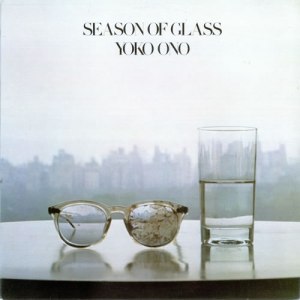
Yoko+Ono+Season+Of+Glass+522787


‘To have those glasses on the cover was important because it was a statement and you have to understand that it was like John wanted you guys to see those glasses.’

Yoko Ono, 1989


‘I’ll f*cking… I’ll go and take on anyone, any white singer who wants to give me a go.’

Matt Goss of Bros, 1989


‘I’ve never said this before but my drums is so professional, man, know what I mean?’

Luke Goss of Bros, 1989


‘I hate parts of my own albums because I know I’m hearing something that doesn’t translate to piano. In fact, I’m being dishonest by playing piano at all.’

Keith Jarrett, 1987


‘When I began to see how Elvis lived, I got such a strong take off of it. It was all so revolting!’

Albert Goldman, 1988


‘The best way to make great art is to have it trivialised by other people as much as possible. That way, you fight and fight and fight.’

Julian Cope, 1989


‘Whatever you’re tops in, people is trying to bring you down, and that’s my philosophy.’

Samantha Fox, 1987


‘Call me fat and I’ll rip your spine out.’

Ian Gillan, 1983


‘Sure I care about my fans. Because fans is money, hahaha. Muh-neee! And who does not care about money? Me, I like muh-neee, haha.’

Chuck Berry, 1988


‘I have this long chain with a ball of middle-classness at the end of it which keeps holding me back and that I keep sort of trying to fight through. I keep trying to find the Duchamp in me.’

David Bowie, 1980


‘People who say, Oh, I don’t know anything about music – they’re the people who really do know about music because it’s only really what it does to you.’

Steve Winwood, 1988


‘I notice that critics and others don’t credit black people with the ability to write ingenious, creative lyrics.’

Nile Rodgers, 1981


‘I’m below the poverty line – I’m on £16 a week. We needed some clothes and our manager said, “I don’t know what you do with your money. I mean, 16 quid!”’

Gary Daly of China Crisis, 1984


‘You take four or five of those rattlesnakes, dry ’em out and put them inside your hollow-box guitar. Lightnin’ Hopkins taught me that trick.’

Albert Collins on his guitar tone, 1988


‘People are bored with Lionel Richie going “I love everybody, peace on earth, we are the world…” F*ck that! People love bastards.’

Terence Trent D’Arby, 1987


‘Epstein dressed The Beatles up as much as he could but you couldn’t take away the fact that they were working-class guys. And they were smart-arses. You took one look at Lennon and you knew he thought the whole thing was a joke.’

Billy Joel, 1987


‘I remember when the guy from Echo & The Bunnymen said I should be given National Service. F*** him...’

Boy George, 1987


‘No-one should care if the Rolling Stones have broken up, should they? People seem to demand that I keep their youthful memories intact in a glass case specifically for them and damn the sacrifices I have to make. Why should I live in the past just for their petty satisfaction?’

Mick Jagger, 1987


‘The industry is just rife with with jealousy and hatred. Everybody in it is a failed bassist.’

Morrissey, 1985


‘I couldn’t stand it – all that exploitation and posturing, the gasping at the mention of your name, the pursuit by photographers and phenomenon-seekers. You get that shot of adrenalin and it’s fight or flight. I chose flight many a time.’

Joni Mitchell, 1988


‘I’m strongly anti-war but defence of hearth and home? Sure, I’ll stick up for that… I’m not a total pacifist, you know? I’ve shot at people. I missed, but I shot at them. I’m sort of glad I missed…’

David Crosby, 1989

RIP Chris Squire (Take Three)

chris sIt’s the beautifully-written piece you’d hope to read from a newly-awarded professor of music, but I thought it well worth quoting Bill Bruford’s tribute to Chris Squire in full (with apologies for tardiness), which I believe first appeared on the Yes website.

‘Really saddened to hear of the death of my old Yes band-mate, Chris Squire. I shall remember him fondly; one of the twin rocks upon which Yes was founded and, I believe, the only member to have been present and correct, Rickenbacker at the ready, on every tour. He and I had a working relationship built around our differences. Despite, or perhaps because of, the old chestnut about creative tension, it seemed, strangely, to work.

He had an approach that contrasted sharply with the somewhat monotonic, immobile bass parts of today. His lines were important; counter-melodic structural components that you were as likely to go away humming as the top line melody; little stand-alone works of art in themselves. Whenever I think of him, which is not infrequently, I think of the over-driven fuzz of the sinewy staccato hits in ‘Close to the Edge’ (6’04” and on) or a couple of minutes later where he sounds like a tuba (8’.00”). While he may have taken a while to arrive at the finished article, it was always worth waiting for.  And then he would sing a different part on top.

An individualist in an age when it was possible to establish individuality, Chris fearlessly staked out a whole protectorate of bass playing in which he was lord and master. I suspect he knew not only that he gave millions of people pleasure with his music, but also that he was fortunate to be able to do so. I offer sincere condolences to his family.

Adios, partner. Bill.’


Story Of A Song: Bill Bruford’s ‘Palewell Park’ (1981)

The 1980s were a pretty good time to be a songwriting drummer; Sheila E, Phil Collins and Don Henley all flourished, and probably a few more too.

Not that master Yes/King Crimson sticksman Bill Bruford had any particular desire to match their commercial standing as the decade got underway. He was quite happy gaining harmonic knowledge (with the assistance of keyboardist Dave Stewart), making sizeable contributions to the percussion community and composing incredible pieces of music like ‘Palewell Park’.

In a way, it was the culmination of his work with the Bruford group which had released three studio albums between 1978 and 1980, two featuring the brilliant Allan Holdsworth on guitar.

Palewell Park, East Sheen, London

Palewell Park, East Sheen, London

This track has a special resonance for me as Palewell Park was a childhood hangout, site of many great cricket, tennis and football games as well as a fair few teenage hijinks. Bruford apparently lived nearby during the piece’s recording at Surrey Sound in Leatherhead (also the studio The Police used for their first two albums) and wanted to write an ode to the area.

Someone on YouTube very aptly described ‘Palewell Park’ as ‘a contemporary piece for piano and bass’. It doesn’t fit comfortably into any genre, but it’s a pretty remarkable composition coming from the pen of a ‘drummer’, and one who doesn’t even feature on his own composition (Stewart played the piano).

Jeff Berlin, Jon Clark, Dave Stewart, Bill Bruford in 1980

Jeff Berlin, Jon Clark, Dave Stewart, Bill Bruford in 1980

The 26-year-old Jeff Berlin lays down one of the great pieces of post-Jaco bass playing. With just a touch of chorus pedal, he sticks to the pretty treacherous melody in the first half and then stretches out to play a fantastic solo over the changes, a total lesson in melody construction, with no gimmicks.

Next up for Bill was a reunion with Robert Fripp and one of the great albums of the ’80s, King Crimson’s Discipline.

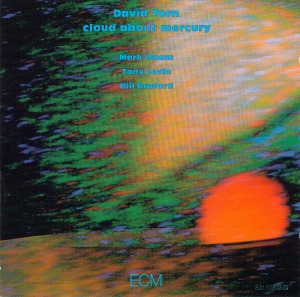
ECM Goes Rock: David Torn’s Cloud About Mercury

Cloud_About_Mercury

The late ‘80s was a great period for avant-garde guitar playing with the likes of Vernon Reid, Reeves Gabrels, Adrian Belew, Arto Lindsay, Fred Frith, Dave Fiuczynski, Stevie Salas, Sonny Sharrock, Skip McDonald, Robert Quine, Steve Vai and Bill Frisell laying down some seriously mind-bending tones and textures.

Cloud About Mercury, David Torn’s second ECM solo album, definitely put him into the same league. Though just as influential as many of the aforementioned guitarists, he has never really gained as much of a public profile despite occasional solo albums and stellar sideman work with the likes of David Bowie and David Sylvian.

My dad used to get sent a lot of music for his work and I vaguely remember him passing Cloud About Mercury onto me, knowing I was a big fan of early-’80s King Crimson.

My muso mates and I quickly grew to like the album’s perverse musical concepts and silly song titles. With a superstar avant-rock rhythm section of Bill Bruford and Tony Levin on board, it came on a bit like the follow-up to Crimson’s Three Of A Perfect Pair, but also offered a strikingly original take on jazz/rock.

I recall a contemporary review of Cloud About Mercury in Q magazine which said something like: ‘Torn luxuriates in the silence for a bit…and then goes KRAOOOOOOW!’ But in its louder moments, CAM is definitely one to annoy the neighbours. Torn’s Trans-Trem guitar enables him to create some very novel effects and original lines, with micro-tones and Middle Eastern flavours, and you can really get lost in his ambient loops.

CAM is also a very uncharacteristic ECM album, being much more in-your-face and rockist in its mixing and playing than most of the label’s output. In fact, it’s not really fair to judge it as a ‘jazz’ album at all.

But sometimes Torn seems much happier playing solo or in duet with Isham; his superb rhythm section is underused, and the tunes rely too heavily on one-chord improvisations. Consequently Bruford and Levin sound somewhat muted and can’t quite bring the sort of forward-motion dynamics so crucial to jazz/rock.

Torn toured extensively to promote CAM (but presumably not London or I surely would have been there…) with ex-Japan bass player Mick Karn replacing the unavailable Tony Levin. An excellent decision, both musically and commercially.

The band sounded fantastic and the tunes really came to life. Torn and Isham then accompanied David Sylvian on the ‘In Praise Of Shamen’ world tour which I caught at the Hammersmith Odeon in 1988.

Two quick questions to end, prompted by a discussion with my brother about Torn the other day: why isn’t there any music like this around these days? Or is there?

Allan Holdsworth: Secrets

Allan_Holdsworth_-_1989_-_Secrets

Some time around the late ’80s, I became a bit disillusioned with the major UK music mags (but continued to love Q).

Their infinite search for ‘coolness’ coincided with my increasing interest in playing bass and guitar, so I started checking out American mags such as Musician, Guitar World and Guitar Player, as well as Guitarist here in the UK.

Their focus seemed to be on the mechanics of/intentions behind making music rather than puking in hotels or haircuts.

I think I first heard guitarist Allan Holdsworth’s name via a Guitar Player cover interview to promote his Secrets album. I hadn’t yet heard a note of his music but his intelligent, exceptionally modest (some would say mordant) approach to playing drew me in, as did his endorsement of sax players (Brecker, Coltrane, Parker) rather than the usual guitar influences.

Also he mentioned that he had been working with drummer Vinnie Colaiuta, another name that I had heard with relation to Frank Zappa but had never really properly investigated. By chance, I came upon Secrets a few months later in a bargain bucket. From the first bar of the opener ‘City Nights’ (a typically nimble salvo around the kit by Vinnie) I was blown away.

Holdsworth’s solo is burning, with loads of notes spraying out everywhere, but it’s also totally devoid of clichés. He repeats the trick all over Secrets, with Vinnie and bassist Jimmy Johnson cajoling him every step of the way.

It’s also refreshing to hear Allan blowing over lots of major chords in ‘Joshua’, the sort of tune which might be a bit soppy in the hands of Metheny or Abercrombie but is transformed into a stunningly fluent series of solos alongside Colaiuta’s brilliantly unhinged accompaniment.

‘Spokes’ is a nicely arranged vehicle for Allan’s nutty synthaxe playing (and some more Vinnie/Jimmy genius) and, on ‘Endomorph’, Holdsworth even comes up with a very moving song inspired by the death of his father with some excellent vocals from Craig Copeland.

Secrets is the one where technology really caught up with his ingenious concepts. All lead guitarists are on an endless search for tone and Allan seems to have found his ideal here. It’s smooth yet fiery and he genuinely achieves the ‘sheets-of-sound’ style of improvising that he so admires in his favourite sax players by utilising incredibly wide intervals (for a guitarist) and legato phrasing.

His playing is as instantly recognisable as Wes, Van Halen or Scofield’s. It’s not easy music, though. But, as he lamented in the interview mentioned above, it’s not that difficult and he always wished it was more popular.

Secrets was the first in a trio of superb solo albums (and some sterling sideman work with Chad Wackerman) which continued with Wardenclyffe Tower in ’92 and Hard Hat Area in ’94, all of which are pretty essential listening if you like his vibe.

Within a year of Secrets coming out, I’d seen Allan live at the Bloomsbury Theatre in London and also checked out his month-long guest spot with Level 42 at Hammersmith Odeon throughout December 1990 (and some brilliant solos on their Guaranteed album). I was becoming a major fan…