Billy Cobham @ 80: Five From The 1980s

The author with Billy Cobham, autumn 2000

Many happy returns to Mr Cobham who turned 80 this week. His drum mastery continues to inspire.

Movingtheriver pretty much learnt to drum by listening to Mr Cobham’s Spectrum, David Sanborn’s (RIP) Hideaway, Steely Dan’s Aja and a few more. His playing was sheer class, something to aim for. There was always an emphasis on technical excellence and good tuning – but the most important thing was the music, the groove.

I was fortunate enough to study with Mr Cobham at the Guildhall School of Music circa 2000. Unforgettable memories.

To celebrate his 80th birthday, here are five key moments from his 1980s. The early part of the decade saw Mr Cobham forge a new life in Switzerland, whilst fronting various bands featuring the likes of Mike Stern, Don Grolnick and Gil Goldstein. Then came the short-lived, controversial tenure in John McLaughlin’s revamped Mahavishnu Orchestra (explored in my book) which nonetheless produced some great music, and then a high-profile return to the solo career via Dave Grusin and Larry Rosen’s GRP Records.

5. Drum Clinic (Part 6), BBC TV, 1982 (?)
Here’s where it all started for movingtheriver. My dad caught it totally by chance on BBC2 and luckily recorded it onto a VHS. It blew the minds of many British drummers including Level 42’s Phil Gould who was reportedly present at the filming.

4. Billy Cobham/Herbie Hancock/Ron Carter: ‘Eye Of The Hurricane’, Lugano, Switzerland, 1983
A period when Billy embarked on various brilliant European collaborations. Still one of the most exciting, propulsive trios I’ve ever heard in acoustic jazz.

3. ‘The Dancer’ (1985)
If memory serves, I was given Mr Cobham’s Warning for my 13th birthday, alongside Joni Mitchell’s Dog Eat Dog and Steely Dan’s The Royal Scam. What a day that was. I still love this album and am glad I kept the vinyl.

2. ‘The Debate’ (1986)
Warning’s followup Power Play didn’t quite have the impact of his GRP debut but Billy’s drums have arguably never been better recorded.

1. Live In Cannes (1989)
A recent find this, worth watching for a rare look at Billy playing timbales (during the first song) and also his fine hookup with percussionist Nippy Noya.

The 20 Worst Cover Versions Of The 1980s

We’ve looked at some of the good covers of the 1980s before – but how about the stinkers?

Reader: I’m pleased to report that finding them was not an easy task. A quick Google survey of ‘worst covers of all time’ will not reveal many from the ’80s (no, Rockwell’s version of ‘Taxman’ really isn’t that bad…).

But the variety of crap covers is worth noting. In the 1980s, anyone was liable to produce a shocker, from the ageing chart regular to the littlest indie.

Some took them to the toppermost of the poppermost – indeed most of the below were big hits. But of course familiarity breeds contempt… Most of these efforts, though, smack of both desperation and a dearth of material. The net result is usually a kind of audio shrug. And hey, there’s also that other reliable, recurring theme – the overproduction of post-1985 offerings…

20. The Mission: ‘Tomorrow Never Knows’ (1987)

19. Midge Ure: ‘The Man Who Sold The World’ (1983)

18. Club Nouveau: ‘Lean On Me’ (1986)
Swing-beat-flavoured travesty of the Bill Withers classic.

17. Tin Machine: ‘Working Class Hero’ (1989)
Pointless cover which is one of several fillers on the ‘difficult’ second side of Bowie’s rather good band debut.

16. The Power Station: ‘Harvest For The World’ (1985)
Interesting to hear Robert Palmer challenge himself range-wise but the limp arrangement removes all majesty from the Isley Brothers original.

15. Simple Minds: ‘Sign O’ The Times’ (1989)
Desperately tries to be hip but comes across as a bit desperate. Kerr’s irritating vocal intrusions don’t help.

14. Aztec Camera: ‘Jump’ (1984)
Why oh why, Roddy? Some grotty Linn drum programming and an insipid vocal on a pointless Van Halen cover which takes away all the fun of the original. Maybe that’s the point.

13. The Communards: ‘Don’t Leave Me This Way’ (1986)
I’m reluctant to diss the brilliant Jimmy Somerville but this cover of a Philly classic just drove one to distraction, not helped by the desperately upbeat video.

12. Yazz: ‘The Only Way Is Up’ (1988)
A ghastly version of Otis Clay’s 1980 post-disco classic which seemed to stay at #1 for an eternity…

11. The Housemartins: ‘Caravan Of Love’ (1986)
The concept is a good one – Isley Jasper Isley’s brilliant original was an electro/gospel mashup crying out for an a cappella – but Paul Heaton’s lead vocals and a very unadventurous arrangement scupper this UK #1 from the start.

10. The Flying Pickets: ‘Only You’ (1983)
Yes, it’s the other a cappella song to hit UK #1, but where to start? How about: out-of-tune vocal stacks (and a very unsubtle use of Fairlight vocals) and a chronically unhip bunch of guys? Oh, and it also came out too soon after the Yazoo original.

9. Pet Shop Boys: ‘Always On My Mind’ (1988)
Effective but gross cover, and of course another UK #1 single. Like gorging on cream cake, there’s a brief rush but then a lingering nausea.

8. Dave Grusin: ‘Thankful ‘N Thoughtful’ (1984)
Sly & The Family Stone’s gospel/funk classic becomes a robotic downer in the hands of the smooth jazz keyboard maestro. Even Marcus Miller’s bass playing can’t save this.

7. Bomb The Bass: ‘Say A Little Prayer’ (1988)
An on-the-nose, in-your-face curio which never convinces. The vocals just set my teeth on edge right from the off. But it still got to #10 in the UK.

6. Bananarama: ‘Venus’ (1987)
See 9.

5. Rick Astley: ‘When I Fall In Love’ (1987)
This was the 1987 Christmas #2 and, to be fair, it was only Rick’s third single. But it was asking a lot of the lad to take on Nat ‘King’ Cole. And whose idea were the horrible fake strings?

4. Kim Wilde: ‘You Keep Me Hangin’ On’ (1986)
See 6 and 9.

3. Gary Numan/Leo Sayer: ‘On Broadway’ (1984)
This is so bad it’s almost good. But only almost. You can’t help but feel sorry for these two gents whose careers had gone properly arse-over-teacup by this point. Numan fans in particular must have been hiding behind the sofa.

2. Band Aid II: ‘Do They Know It’s Christmas’ (1989)
Stock Aitken & Waterman were tasked with updating this one, coming up with a pointlessly-reformatted, boil-in-the-bag cover without any of the original’s musical grace notes, though singer Matt Goss gives a good account of himself.

And…badly-played drum roll…the worst cover of the ’80s is…

1. Thompson Twins: ‘Revolution’ (1985)
The Twins go rawk, with disastrous results. It was also the point where they started to believe the hype – always a bad move. Tom Bailey’s lead vocal is a travesty and it’s also a bum note in Nile Rodgers’ production career.

Donna Summer (1982)

Geffen/Warner Bros. Records, released 19 July 1982

6/10

It’s understandable that Summer was reluctant to take on Billy Strayhorn’s song ‘Lush Life’.

A morning-after portrait of a failed romance, it’s a remarkable composition for a 16-year-old to write, with elliptical lyrics, few repeat sections and a challenging, endlessly-modulating melody line.

Nat ‘King’ Cole, Sarah Vaughan, John Coltrane/Johnny Hartman and Billy Eckstine all performed notable versions (Strayhorn himself apparently loved the latter).

But, coached through by producer Quincy Jones and keyboardists Greg Phillinganes, Herbie Hancock and Dave Grusin, Summer’s vocals are a knockout. Though the track sounds a bit rushed (Phillinganes would surely like another pass at his synth bass part), her work certainly paid off.

‘Lush Life’ closes Donna Summer, released 35 years old today. Classic singles begin the album and end side one: Grammy-nominated ‘Love Is In Control (Finger On The Trigger)’ and an inspired cover of Jon & Vangelis’s ‘State Of Independence’, the latter featuring an amazing array of guest vocalists.

The problem with Donna Summer is that it’s three classics and a lot of filler. Formula-wise, Quincy seems to be preparing for Thriller – there are many songwriters and a variety of styles.

Springsteen contributes the slightly underwhelming ‘Protection’ and elsewhere there’s a bit too much LM-1 drum machine and a few less-than-memorable choruses.

The album didn’t quite deliver the big hit to propel Summer into the ’80s but reached #20 in the US album charts and #13 in the UK.

Angela Bofill: Angel Of The ’80s

angelaThe strand of jazzy soul music developed by artists like Minnie Riperton, Phyllis Hyman, Chaka Khan, Jon Lucien, Al Jarreau, Randy Crawford and Carl Anderson probably reached its commercial apex with Anita Baker’s eight-million-selling 1986 album Rapture.

But perhaps the most underrated singer in that style was Angela Bofill, an ever-present on the US R’n’B charts between 1978 and 1984.

Best known for her sultry ballads and Latin-tinged mid-tempo jazz/soul tracks, I stumbled upon an Angie Best-Of sometime in the early ’90s and have been a fan ever since.

Her voice has a lovely, yearning quality, with power, range, great enunciation and a hint of Whitney Houston about it. But you’ll never hear Bofill’s music on the radio, at least here in the UK, and it’s a shame that she didn’t quite manage that breakthrough pop hit.

Born in the Bronx to a Cuban father and Puerto Rican mother, Bofill studied classical singing at the Manhattan School of Music.

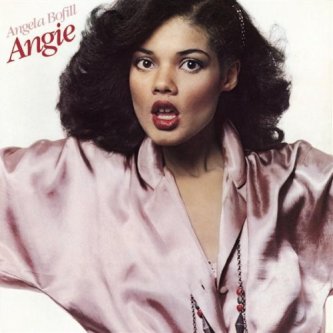
After a tip-off from Latin Jazz flautist Dave Valentin, she was initially mentored by producers Dave Grusin and Larry Rosen, recording her successful first two albums Angie and Angel Of The Night for the fledgling GRP label.

Moving to Arista Records under the supervision of legendary impresario Clive Davis, she worked with some big-name producers throughout the ’80s: George Duke, Narada Michael Walden, Norman Connors and The System (David Frank/Mic Murphy).

Narada particularly seemed a good fit for her, co-writing a few killers such as ‘Tropical Love’ and ‘Too Tough’ and teaming up with future ‘American Idol’ judge Randy Jackson on bass to make a phenomenal rhythm section.

Angela also made a wonderful guest appearance on ‘Where Do We Go’, the standout track from Stanley Clarke’s lacklustre Hideaway album of 1986, and there were also interesting duets with Boz Scaggs and Johnny Mathis around the same time.

But her most impressive material was self-penned. ‘You’re A Special Part Of Me’, ‘Gotta Make It Up To You’, ‘Song For A Rainy Day’ (which she also produced), ‘I Try’ (memorably covered by Will Downing in the early ’90s), ‘Accept Me’, ‘Rainbow Inside My Heart’ and ‘Time To Say Goodbye’ are all stand-outs which demonstrate her fine musicianship as well as vocal skills.

It’s a shame her composing, producing and arranging talents were never properly utilised, though she left us with a few classics nevertheless.

Angela made a comeback in the mid-’90s with Love In Slow Motion, a nice album featuring three superb tunes – ‘All She Wants Is Love’, ‘Soul Of Mine’ and the very Janet Jackson/Jam & Lewis-esque ‘Love Changes’ – which matched anything from her ’80s peak.

She also made a notable appearance at the 1998 Montreux Jazz Festival with Billy Cobham and George Duke.

Unfortunately serious illness befell Angela in 2006. Two strokes have limited her recording and live appearances, but she did make a brief return to the stage in 2012: ‘The Angela Bofill Experience’ featured stories from her life and career, with artists such as Maysa Leak, Phil Perry and Melba Moore performing signature songs.

Since then, things have been quiet, but we send good vibes from London. Angie’s certainly not forgotten in these parts.

[Angela Bofill sadly passed away in 2024.)