Here’s a quandary. If you had to choose one 1980s song to get people on the dancefloor – maybe you’re the last-minute guest DJ at a wedding disco – what would you go for?
The track probably needs a few things going for it:
1. A great intro – a ‘call to arms’.
2. Cross-generational appeal, one for the kiddies and grandparents alike.
3. It has to be a total hit – no cult favourites.
4. Loudness and ‘impact’.
5. It’s probably ‘pop’ and pretty genre-less – no heavy metal or R’n’B.
6. A soundtrack hit might be good – something from a John Hughes joint or ‘Dirty Dancing’?
7. A flavour of the ‘novelty’ hit/one-hit wonder might help.
In his (great) book ‘Nothing Is Real’, David Hepworth comes up with five ultimate floorfiller contenders including two from the 1980s: Brucie’s ‘Dancing In The Dark’ and Madonna’s ‘Open Your Heart’. Both choices strike this correspondent as a little odd. Rather I’d posit the following (feel free to chime in with any omissions):
Michael Jackson: ‘Billie Jean’
Prince: ‘Kiss’
Dexys Midnight Runners: ‘Come On Eileen’
Simple Minds: ‘Don’t You Forget About Me’
Toni Basil: ‘Mickey’
Musical Youth: ‘Pass The Dutchie’
Roxy Music: ‘Same Old Scene’
Cyndi Lauper: ‘Girls Just Wanna Have Fun’
Bill Medley/Jennifer Warnes: ‘(I’ve Had) The Time Of My Life’
De La Soul: ‘Say No Go’
Young MC: ‘Know How’
Wham!: ‘Wake Me Up Before You Go-Go’
Human League: ‘Don’t You Want Me’
ABC: ‘Poison Arrow’
Madonna: ‘Into The Groove’
But the one 1980s track I’d choose to get people onto the dancefloor is…
David Bowie: ‘Let’s Dance’
I’ve rounded up most of these and some others into a playlist. Happy groovin’.
It’s all radio presenter Nick Abbot’s fault. On a recent podcast, he mentioned finding himself with a tear in the eye when listening to David Gilmour’s second guitar solo on Pink Floyd’s ‘Comfortably Numb’ in his car.
But it’s a subject almost totally ignored in print outside of scientific works: music’s effect on the body and mind. If you love it, surely it’s supposed to create a molecular change. The last few years may also have precipitated a more emotional relationship to music than usual, despite the current industry obsession with data and algorithms.
So, hide the onions and pass the sick bag: here are a few tracks from the 1980s that may have occasionally been known to put a lump in this correspondent’s throat, driven by nostalgia, musical excellence, loss of innocence and who knows what else.
21. Captain Sensible: ‘We’re Glad It’s All Over’
20. Bronski Beat: ‘Smalltown Boy’
19. Tina Turner: ‘Private Dancer’
She wants a husband and some kids but somehow the music tells you that the protagonist is never going to get out from under…
18. Johnny Gill: ‘Half Crazy’
17. Keith Jarrett: ‘Spirits 2’
16. The Kids From Fame: ‘Starmaker’
15. Peter Gabriel: ‘Lead A Normal Life’
Hard to think of a piece of music that better expresses loneliness, but there’s compassion too.
14. Christopher Cross: ‘Sailing’
13. Blondie: ‘Atomic’
12. The Pretenders: ‘Hymn To Her’
11. Art Pepper: ‘Our Song’
Gratuitous sax and violins. Recorded 18 months before his death, inspired by meeting his widow Laurie, Pepper seeks redemption for a largely selfish, itinerant life – does he find it? He tries bloody hard.
10. Jaco Pastorius: ‘John & Mary’
9. Pino Donaggio: ‘Blow Out (closing titles)’
The melody maestro’s beautiful theme from Brian De Plasma’s 1981 film starring John Travolta and the director’s then-wife Nancy Allen. A critic once said that her character’s death in the movie is the first one De Palma seems to care about – Donaggio’s music is the reason.
8. Madonna: ‘Oh Father’
7. David Bowie: ‘Absolute Beginners’
It’s the hope, not the despair. Maybe THIS time it’s all going to work out, ‘just like in the films’…
6. David Sanborn: ‘Imogene’
5. Dexter Gordon/Herbie Hancock: ‘Still Time’
The double meaning of Herbie’s title says it all – Dexter’s beautiful soprano playing is fragile yet also somehow ageless.
4. Prefab Sprout: ‘Moving The River’
3. Janet Jackson: ‘Livin’ In A World (They Didn’t Make)’
Just for the sheer beauty of Jam and Lewis’s composition. Janet’s words augment that.
2. Scritti Politti: ‘Oh Patti (Don’t Feel Sorry For Loverboy)’
1. The Police: ‘Driven To Tears’ (only joking – that’s enough tearjerkers… Ed.)
If you’ve got the stomach for it, chime in with your tearjerkers below.
‘Conspiracy theories’: you can’t move for ’em these days, and things aren’t much different here at movingtheriver.com.
The 1980s: a decade when uncredited ‘guest’ performances were many, Emulators and Fairlights ‘appropriated’ the sounds of acoustic instruments, producers demanded rip-offs of other musicians (a popular drummer joke* of the 1980s, with many variations: how many drummers does it take to change a lightbulb? Ten. One to change the bulb, nine to talk about how Steve Gadd would have done it…), hits came with writs and things were never quite what they seemed.
So it’s not surprising that conspiracy theories flourished during the 1980s. Here are some good ones. Bullsh*t or not? YOU decide. Maybe none are as famous as the ‘Paul Is Dead’ saga, but wtf…
8. Kirsty MacColl sings backup vocals on Dire Straits’ ‘Walk Of Life’
Uncredited of course, but these pre-chorus stacks, first heard at 1:19, sound very much like the much-missed vocalist.
7. Donna Summer performed all of Irene Cara’s vocals
Come on, they are interchangeable. Apologies to anyone in Cara’s family or Cara herself but she sounds freakily like Summer on ‘Fame’ and ‘Flashdance (What A Feeling)’.
6. George Michael wrote ‘Round And Round’ for Jaki Graham
In exchange for what? The classic single is just so in George’s ballpark, of course helped by Derek Bramble’s sparkly state-of-1985 production (he gets the songwriting credit too).
5. Adrian Edmondson of ‘The Young Ones’/The Comic Strip/’Bottom’ fame made the spoof 1984 jazz/funk classic ‘F*cking C*unt/Awkward Bastard’
Rumours abound that it’s Ade, or a few members of The Damned. No one is quite sure and no one has ever owned up, but it’s still brilliant.
4. The Dukes Of Stratosphear’s ‘Brainiac’s Daughter’ is actually a Paul McCartney joint
No one has done ‘Happy Macca’ circa 1968 as well as the Dukes, AKA XTC. But was this ACTUALLY a lost Beatles track?
3. John Bonham stuck around long enough to drum on Survivor’s 1982 hit ‘Eye Of The Tiger’
It’s just sounds so much like the Led Zep sticksman, who died in 1980. It’s the feel, and the sound of his kick and snare drums.
2. Level 42’s Mark King played bass on David Bowie’s ‘Tumble And Twirl’
Actually this one is probably ‘true’. He doesn’t get a credit on the album liners but King himself mentioned (in this podcast) doing a few sessions at the Townhouse Studios in Shepherds Bush around spring 1984 with producer/engineer Hugh Padgham so it’s quite probable. In any case it’s certainly right in his ‘Lopsy Lu’/’Heathrow’ comfort zone, and brilliant slap playing.
1. Bob Carolgees played the famous sax melody on George Michael’s ‘Careless Whisper’(That’s enough ‘conspiracy theories’, Ed…)
*Here’s a bonus drummer joke, because I’ve just read and loved it: What does a drummer use for contraception? His/her personality.
I wasn’t sure I was going to write about this but Bowie came to me in a dream a few days ago and said I must! I’m under orders…
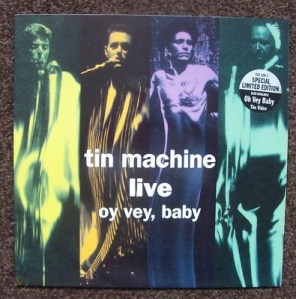
30 years ago this month, on 17 February 1992, Tin Machine played their last ever gig at the NHK Hall in Tokyo. It was the final date of the ‘It’s My Life’ tour.
It had been a period of ups and downs – ups in late October 1991 when Bowie proposed to Iman Abdulmajid in Paris, downs due to the drug problems of one band member (with the initials HS).
Some people never ‘forgave’ Bowie for TM but for many others the band represented his ’80s rehabilitation. I was fascinated from the get-go and for my money it spawned a fair share of classic David (sometimes co-written with Reeves Gabrels) songs: ‘I Can’t Read’, ‘Under The God’, ‘Amazing’, ‘Baby Universal’, ‘You Belong In Rock’n’Roll’, ‘Amlapura’, ‘Shopping For Girls’, ‘Goodbye Mr Ed’.
And it’s doubtful we would have got that brilliant Buddha Of Suburbia/1. Outside/Earthling triptych without TM.
Bowie agreed: ‘Once I had done Tin Machine, nobody could see me any more which was the best thing that ever happened, because I was back using all the artistic pieces that I needed to survive and imbuing myself with the passion that I had in the late seventies.’
True to his word, the band lasted three albums, though Bowie hinted it may have gone on longer had drug problems not reared their ugly heads. But it’s still hard to get hold of the last two records (Tin Machine II, Oy Vey Baby).
Here’s the second, penultimate night at the NHK on 6 February 1992. The sound quality is superb, though the audio cuts out completely around 45 minutes in and doesn’t return.
Gabrels sounds great, Bowie (sporting a ‘Rock Against Racism’ T-shirt) does too and there are some nice bits of ‘amateurism’ including several fudged song openings (Bowie’s guitar tech has very kindly turned down the volume of his 12-string before the start of the gig!). Some of this material was used for the final album Oy Vey Baby.
In the immediate aftermath of Bowie’s fabled appearance in the Broadway production of ‘The Elephant Man’, and despite the commercial success of the Scary Monsters album, at least in the UK, his thoughts were far from music in early 1981.
The sorts of modern nightmares he had sung about on ‘It’s No Game’ were becoming all too real. He was particularly shaken by the death of his friend John Lennon in December 1980.
It was time for a reassessment and reboot. First to go was a proposed world tour, originally pencilled in for summer 1981. Instead, Switzerland seemed as good a place as any to hide out, at least initially.
In July, Bowie was at Montreux’s Mountain Studios, recording his vocals for the ‘Cat People’ movie theme song with co-producer/co-writer Giorgio Moroder.
Queen were in an adjacent room recording the Hot Space album, and, when Bowie popped in to say hello to their drummer Roger Taylor, a long-overdue collaboration was on the cards (Bowie was also keen to bend Freddie Mercury’s ear about Queen’s label EMI, as he was pretty desperate to get off RCA).
It was apparently no walk in the park for either party though: guitarist Brian May recalled that ‘to have his ego mixed with ours made for a very volatile mixture’ while Taylor also confirmed that ‘certain egos were slightly bruised along the way’.
But the blend of personalities and approaches paid off; in a feverish, booze-fuelled few hours, described by engineer/co-producer David Richards as ‘a complete jam session and madness in the studio’, something started happening.
With Bowie running between piano and 12-string guitar (his D-based chordal concept is not dissimilar to David Gilmour’s work on Pink Floyd’s contemporaneous ‘Run Like Hell’), a groove, melody and basic song structure emerged.
Bowie encouraged Mercury to improvise on the microphone – apparently the latter’s wordless ad-libs were only meant as placeholders, to be replaced with real lyrics, but they were left in when no-one could think of anything better.
Bowie reportedly then ‘comped’ both vocal improvisations to give them something to build upon, and then lyrics were considered. The nascent song was initially titled ‘People On Streets’, but Bowie’s push to call it ‘Under Pressure’ led to the emergence of a more focused composition.
It’s a fascinating snapshot of Bowie and Mercury’s vocal styles. Bowie struggles with Queen’s natural tendency to break out the pomp-rock but he reins it back in with the moving, double-tracked ‘This is our last dance’ section.
It’s also instructive to hear his vocal mastery during the section; close listening reveals that he takes short, deep breaths at exactly the same points throughout, demonstrating that the part was meticulously worked out in advance.
It’s also impressive that neither Mercury nor Bowie ever ‘pop’ the microphone in their delivery of the word ‘Pressure’ – no mean feat.
Still, it’s quite a bold song lyrically. There aren’t many #1 singles with lines like ‘It’s the terror of knowing what this world is about/Watching some good friends scream let me out’.
It’s not surprising Bowie’s mind was on the healing nature of love in 1981. It’s possible the song was a reaction to the street uprisings going on throughout the UK during spring and summer. The result is a kind of ‘Heroes’ for the early 1980s. Also it’s possibly a prelude to his involvement with Band Aid/Live Aid later in the decade.
It’s also worth noting that Bowie’s infamous Lord’s Prayer at the 1992 Freddie tribute concert at Wembley Stadium took place soon after his performance of ‘Under Pressure’ in duet with Annie Lennox.
The track was mixed in New York by Queen alone without any input from Bowie, a decision that apparently divided opinion; Taylor considered it ‘one of the best things Queen have ever done’ while Bowie surmised that ‘it was done so quickly that some of it makes me cringe a bit.’ It’s certainly far from a hi-fidelity recording.
EMI were understandably convinced ‘Under Pressure’ was a hit, Bowie and Queen less so. But it entered the UK charts at #8 40 years ago this week, and then summarily knocked The Police’s ‘Every Little Thing She Does Is Magic’ off the top spot on 15 November, staying at #1 for two weeks.
In the US, it reached #29, not particularly impressive but nonetheless Bowie’s best chart placing since ‘Golden Years’ almost six years before.
David Mallet’s clever video used stock/public domain footage to interesting effect, though it was banned by the BBC (though I definitely remember seeing it on telly at the time) for including a few seconds of footage from an IRA bomb in Belfast.
As for Bowie, he quickly moved on to the filming of Alan Clarke’s excellent TV play ‘Baal’ in August 1981, rounding off an interesting year for him.
On a personal level, I recall that November 1981 was exactly the time when the pop music bug really got me. I can remember where I was when I first heard ‘Under Pressure’, and many tracks from that month’s chart hold a special place in my heart to this day.
Here they come, these days about as welcome as turds in a jacuzzi, a collection of white, male, middle-aged ‘rockers’.
Then again, by the time of Live Aid, anyone over 30 was deemed a ‘veteran’, one of the funnier legacies of punk and New Pop.
Let’s survey the ages of some of the ‘ancient’ rock legends who appeared at Wembley Stadium and in Philadelphia on 13 July 1985: Pete Townshend (40), Paul McCartney (43), Freddie Mercury (39), David Bowie (38), Bob Dylan (44), Keith Richards (41), Bryan Ferry (39), Mick Jagger (41), Elton John (37), Brian Wilson (43).
Looking at the output of rock’s ageing alpha males during the ‘80s, angst, anger and lust were apparently the main drivers, alongside an interest in psychoanalysis and politics. Let’s take a look at some of their most coruscating work. For our purposes, we’ll define ‘mid life’ as 30 and above…
Peter Gabriel: ‘And Through The Wire’ (1980)
Upon hearing the early mixes of Peter Gabriel III, the US arm of his record company reportedly wondered if 30-year-old Pete had recently spent time in a mental asylum. But no, he was just letting off some steam, inviting Paul Weller along to supply raucous guitar, and unleashing a newfound, barely-concealed sexual energy: ‘Prowling the water hole/I wait for the kill/Pressure’s building/Overspill/I want you’. Ding-dong!
Richard Thompson: ‘Don’t Tempt Me’ (1988)
The folk/rock guitar/songwriting hero (38 at the time of recording) employed a killer US drums and bass team (Mickey Curry/Tony Levin) to carry off this pile-driving, piss-taking portrait of male jealousy and ‘little man’ syndrome. Note that he’s only ‘halfway’ out of his seat… Superb.
The Police: ‘Mother’ (1983)
Andy Summers (40 at the time of recording) takes some inspiration from Hitchcock’s ‘Psycho’ for this monstrosity, a hysterical, Oedipal blues in 7/4 time, very much inspired by his pal/guitar partner Robert Fripp. It’s quite funny to think that it was a contractually-obliged inclusion on the enormous-selling Synchronicity album, listened to by millions of unsuspecting teenagers before the emergence of the ‘skip’ button.
The Police: ‘Synchronicity II’ (1983)
Sting (31 at the time of recording) filters a Carl Jung concept through the story of family discord, a father’s paranoia and disquiet literally spawning a monster (in a Scottish loch!). Along the way, there’s also a barely concealed hatred for the common sprawl, ‘packed like lemmings into shiny metal boxes’ during the morning commute, and the protagonist’s secretaries who ‘pout and preen like cheap tarts in a red-light street’, while Sting, Summers and Stewart Copeland lay down one of the most aggressive grooves in the band’s history. Scary, strange, midlife stuff.
David Bowie: ‘It’s No Game (Part One)’ (1980)
33-year-old Bowie is jolly well peed off about…everything. There was certainly a lot to be angry about in 1980, and accordingly his Scary Monsters album dealt with some of the fears he felt for his son, from the increasingly bold tabloid press to the ever-present right-wing bully boys. In surely the most histrionic vocal performance of his career, he sounds terrified of the ‘fascists’ and violent revolutions on his TV screen.
Robbie Robertson: ‘Hell’s Half Acre’ (1987)
From the classic self-titled album, Robertson (43) sounds seriously teed off about the legacy of the Vietnam War, and more specifically, The Battle For Cu Chi of 1965/1966 (‘Down on Hell’s half acre/Shakin’ with fever/Rumble in the jungle’). Tony Levin and Manu Katche make for an appropriately barnstorming rhythm section and Robbie’s guitar is almost Clash-like in its viciousness.
Tragically, his half-brother Terry Burns took his own life in January, but then the summer was a very ‘up’ period – he was a wholehearted contributor to Live Aid, promoting the event widely and enjoying the company of his contemporaries and assorted young bucks alike.
He was also relishing getting out of his comfort zone courtesy of key roles in Jim Henson’s ‘Labyrinth’ and Julien Temple’s ‘Absolute Beginners’.
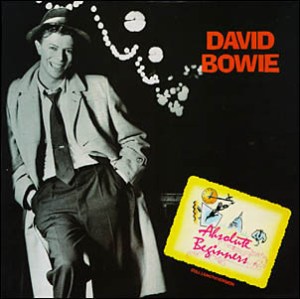
Then summer 1985 spawned one of his greatest singles, the theme song for the latter movie. Like ‘Dancing In The Street’, ‘Absolute Beginners’ was produced by David alongside Madness/Dexys/Costello collaborators Alan Winstanley and Clive Langer.
The backing tracks had been laid down at Abbey Road but the final vocal session took place at London’s West Side Studios (owned by Langer and Winstanley), Olaf Street, near Latimer Road tube station (and very close to Grenfell Tower), on 18 August 1985.
After nailing the song in just a few passes – as was his wont – Bowie found himself in the studio with a bit of time on his hands. Instead of making an early exit, he quickly wrote some rather overwrought lyrics vaguely in the style of Bruce Springsteen and then entertained Langer and Winstanley with a succession of vocal impersonations.
Engineer Mark Saunders thankfully captured these precious moments and has very kindly put them on YouTube for our delectation. So enjoy Bowie’s irresistible takes on Springsteen, Marc Bolan, Tom Waits, Lou Reed, Anthony Newley, Iggy Pop and Neil Young, complete with charming asides (‘That’s it – night-night!’).
It’s a doorway to happier times. DB: miss him, miss him, miss him.
Soldier, released 40 years ago this month, was seen by Iggy’s paymasters Arista as a great opportunity for mainstream acceptance.
The Idiot and Lust For Life were now distant memories, and the label’s new head of A&R Tarquin Gotch and big boss Clive Davis were ‘taking an interest’, in Coen Brothers-speak a la ‘Barton Fink’.
As band (including ex-Pistol Glen Matlock and ex-XTC keyboard man Barry Andrews) and crew assembled at the legendary/infamous Rockfield Studios in south Wales, producer and fellow ex-Stooge James Williamson was feeling the pressure, apparently at times brandishing a bottle of vodka in one hand and loaded pistol in the other.
The Soldier sessions were long and laborious. No-one seemed to be steering the ship. Iggy was bored, brooding in deepest Monmouthshire.
Then, one night, the proverbial saloon doors swung open and David Bowie swanned in with trusty assistant Coco Schwab. The mood changed instantly. Iggy lightened up and the old megawatt smile returned.
Around the dinner table, Bowie told the story of John Bindon, friend of the Krays, one-time Led Zeppelin bodyguard, part-time actor, alleged lover of Princess Margaret and possessor – also allegedly – of an unnaturally large appendage.
Iggy was fired up. Next morning, he and Bowie jumped into the studio and cooked up an ironic rumination on the lure of the criminal world, with some choice quotes lifted almost verbatim from Bowie’s monologue.
Originally titled ‘I Wanna Be A Criminal’, it featured a classic Bowie descending chord sequence, icy synths and a superb vocal from Iggy.
Fellow Arista signings Simple Minds, hard at work recording their album Empires And Dance in the studio next door, were enlisted to provide amusing faux-Cockney backing vocals (you can also hear Bowie over the talkback mic at the song’s outset).
Some of the more libellous words about Bindon and Princess Margaret were later excised (Bowie apparently sidled up to Iggy at New York’s Mudd Club in early 1980 and begged him not to include them) and the song was finally released as ‘Play It Safe’, possibly Iggy’s self-conscious comment on his loss of nerve.
But he still mustered a brilliantly insane ad-lib towards the end:
Rockin’ and reelin’ like Al Capone Slippin’ and slidin’ like Joey Gallo Movin’ and groovin’ with the Son Of Sam Splish splash, I was Jim Jones!
Bowie had once again inspired his friend to create some of his best – if hardly commercial – work, and the best track on Soldier (though I also have a soft spot for ‘I’m A Conservative’).
The album stalled at #62 in the UK chart and made a one-week appearance at #126 in the US, hardly a success in terms of making Iggy a mainstream concern. He stuck around on Arista for one more record, the forgettable Party.
Predictably, it was Bowie who would again inspire Iggy four years later to create his most effective album of the 1980s: Blah-Blah-Blah.
One of the few musical blessings of the last decade was Nile Rodgers’ career reinvention.
But the future had looked pretty bleak at the outset of 2010, with serious illness virtually putting paid to his live career and no new studio product in sight.
Then of course there was a well-received guest spot on Daft Punk’s ‘Get Lucky’ and a glorious concert reboot of the Chic brand, which went from strength to strength as the decade progressed.
So it seems a good time to revisit ‘Le Freak’, Nile’s 2011 memoir (and it accords nicely with my current early-’80s NYC obsession).
The focus on gigging during the last decade has been a distinct volte face for a guitarist/songwriter/producer best known for his studio work with Chic, Diana Ross, Madonna, David Bowie, Sister Sledge, Johnny Mathis and Al Jarreau.
Chic were to disco what Steely Dan were to rock, bringing jazz chords, complex arrangements and subtly subversive lyrics to the top of the charts, but it’s easy to forget how out of fashion they were in the early ’80s, as ‘Le Freak‘ grippingly outlines.
But it’s also that rare thing for a music memoir, arguably at its best when it steers away from the music. Rodgers was born to a 14-year-old jazz-loving mother in late-1950s New York City, and his early life was a jaw-dropping sequence of underage sex, drug addiction and bohemian excess on all levels.
His stepfather Bobby, a heroin-addicted beatnik, nicknamed the asthmatic Rodgers ‘Pud’, short for ‘pudding pie’, and used to reprimand him thus: ‘Pud. Dig yourself.’
Soon, both parents were junkies, and Rodgers turned to TV, movies, truancy and illicit substances, finding his own brotherhood of Puerto Ricans and Italians in Greenwich Village. Rodgers brilliantly captures the flavour of this bohemian underground and black music scene that flourished in the big cities of the US in the ‘60s.
There are tales of studying jazz harmony with legendary pianist Dr Billy Taylor, an early gig with the ‘Sesame Street’ house band and notable cameos from Thelonious Monk, Lenny Bruce, Timothy Leary and Jimi Hendrix. Later his Harlem Apollo debut sees Rodgers being chased around the stage by a crazed Screamin’ Jay Hawkins.
With musical soulmate, bassist Bernard Edwards, he toured the Chitlin’ Circuit playing the soul, jazz and R’n’B hits of the day, returning to New York to see that dance culture was taking over.
Their Big Apple Band quickly became Chic, a black fusion of Roxy Music and KISS, and although Chic quickly became synonymous with the disco movement, their roots in jazz, rock and R’n’B and desire to always include a Deep Hidden Meaning (or DHM) in their lyrics always kept them at some remove from the likes of the Bee Gees.
But things take a turn for the worse when the scene that embraced Chic suddenly implodes and gives way to New Wave, and Nile is brutally candid about his embarrassment that his band (and first solo album) can’t get arrested. Not in David Bowie’s opinion, though, and the extended riff on the making of Let’s Dance is essential reading for any fan of that album.
The passage on the passing of his musical brother Edwards while on tour with a reformed Chic is also moving and perfectly judged, encapsulating Rodgers’ philosophy of music and life.
All in all, ‘Le Freak’ is a fast-moving, well-written, original account of the life of a self-confessed ‘half-hippie, half Black Panther’, and a must for anyone with even a passing interest in black music over the last 50 years.
Rodgers has also intimated that there may be a second volume on the way – yes please. Grace Jones, Mick Jagger, Paul Simon, Jarreau, Mariah Carey, Robert Plant, the B-52s and David Lee Roth are only mentioned in passing, and it would be good to get the full story of Chic’s live renaissance.
One can get caught up revisiting the ‘lost’ periods of the truly great artists of the last 50 years – Miles, Neil Young, Bowie, Dylan, Zappa, whoever.
At the moment, it’s Bowie’s late-’80s and early-’90s that particularly intrigue, roughly the period from ‘Intruders At The Palace’ to Tin Machine II.
There was a lot more to the era than Tin Machine. ‘Pretty Pink Rose’, a song Bowie had originally demo’d in early 1988 with members of Bryan Adams’ band (and one later rejected by TM, though one can hear echoes of it in their cover of Roxy Music’s ‘If There Is Something’), generally gets a bum rap but features some classic Bowie moves, like the descending, superbly-sung bridge and ‘secret’ chord also heard in ‘Absolute Beginners’ and ‘Loving The Alien’.
Bowie rang Belew on 4 August 1989 asking him to play guitar and take the role of musical director on the ‘Sound + Vision’ greatest hits tour. But Belew owed Atlantic Records a solo album, the one that eventually became 1990’s Young Lions. Bowie offered to pitch in with ‘Pretty Pink Rose’. Apparently Belew was initially less than enamoured, but grew to love it.
Belew recorded the backing tracks on 11th November 1989 at Royal Recorders near Lake Geneva in Wisconsin, playing all instruments. He achieves a great garage-rock sound with sprightly bass, Leslie-toned rhythm guitars and some mad lead playing courtesy of a Fender Strat wired with a Kahler tremolo arm that he found could be ‘tapped’ on the neck instead of using his finger tips.
Bowie and Belew recorded their duet vocals (at the same mic – apparently Belew was unexpectedly starstruck) on 15 January 1990 at Right Track in NYC (Bowie recorded his spontaneous vocals for ‘Gunman’ on the same day). Apparently a spoken-word intro was later excised, which featured Bowie intoning: ‘She had tits like melons… It was love in the rain’!
‘Pretty Pink Rose’ was released a single in May 1990 but inexplicably missed the top 40 in both the US and UK, despite regular MTV screenings of the Tim Pope-directed video featuring Bowie and Belew hamming it up with ‘Life And Loves Of A She-Devil’ star Julie T Wallace.
Bowie and Belew also played it every night on the ‘Sound + Vision’ tour, augmented by some great chord additions by keyboardist Rick Fox. It’s a cracking song and a lost Bowie classic.

 Here’s a quandary. If you had to choose one 1980s song to get people on the dancefloor – maybe you’re the last-minute guest DJ at a wedding disco – what would you go for?
 It’s all radio presenter Nick Abbot’s fault. On a recent
 I wasn’t sure I was going to write about this but Bowie came to me in a dream a few days ago and said I must! I’m under orders…
 In the immediate aftermath of Bowie’s fabled appearance in the Broadway production of ‘The Elephant Man’, and despite the commercial success of the Scary Monsters album, at least in the UK, his thoughts were far from music in early 1981.
 Here they come, these days about as welcome as turds in a jacuzzi, a collection of white, male, middle-aged ‘rockers’.
 1985 was a mixed year for DB.
 One of the few musical blessings of the last decade was Nile Rodgers’ career reinvention.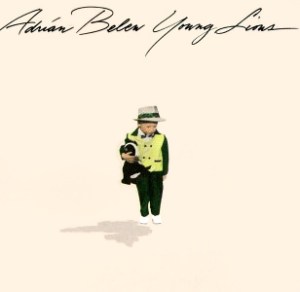
 movingtheriver.com