 The list tries to cover many different genres of music, and different writing styles, and hopefully offers up some relief from the usual ‘classic’ books.
Your correspondent could quite happily take these to a desert island and be OK for a year or two. And most of them would make good stocking fillers.
There’s just one rule: only one book per author is allowed – particularly difficult when it comes to Messrs Carr, Davis, Giddins and MacDonald…
‘The Last Miles’ by George Cole
Cole amazed the music publishing world in 2005 with this extensive look at the last two decades of Miles’ musical life. He spoke to pretty much everyone about exactly what it was like to get the call from Miles and offered the best defence yet of his 1980s output. Essential reading for anyone interested in that decade’s music.
‘XTC Song Stories’ by Neville Farmer
Written in close collaboration with Messrs Partridge, Moulding and Gregory, this was one of the first absolutely essential ‘track by track’ books and offered sundry – often hilarious – insights into the band’s entire catalogue. Worth buying for the chapter on Skylarking alone.
‘A Foreign Place/ Cries And Whispers’ by Anthony Reynolds
Reynolds’ detailed, forensic studies of Japan’s career (and solo projects) were a revelation to this writer. He speaks to all kinds of interesting music biz figures and friends of the band, whilst also getting his hands on fascinating ephemera including studio track sheets, record company memos and rare photos.
‘Songwriters On Songwriting’ by Paul Zollo
Probably best known for its long, intensive interviews with Bob Dylan, Randy Newman, Rickie Lee Jones, Madonna, Leonard Cohen and Paul Simon, this is a fascinating book about the creative process in musical storytelling.
‘The People’s Music’ by Ian MacDonald
This brilliant book brings together the eminent writer’s pieces for various magazines and websites before his tragic death in 2003. The articles on Steely Dan, Nick Drake and Dylan alone are worth the price of admission. Also features his famous takedown of Minimalism (Steve Reich, Philip Glass etc.).
‘George Benson: The Autobiography’
Gripping account of one of jazz’s most successful – and varied – careers. For this writer, it even trumps Miles’s autobiography. Benson was right at the heart of various musical movements, and it’s worth buying for the section on working with Miles alone.
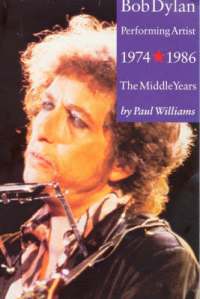
‘Bob Dylan: Performing Artist (1974-1986)’ by Paul Williams
Williams comes up with a very original take on music writing – passionate, incredibly detailed, but never dry or repetitive. He concentrates mainly on Dylan’s live work during the period, explaining exactly why he’s such a fascinating performer. All Williams’ books on Dylan are worth buying but this is particularly intriguing, covering the Rolling Thunder tour and ‘born again’ era.
‘Keith Jarrett’ by Ian Carr
Carr knows exactly which aspects of Jarrett’s remarkable career on which to focus, and even speaks at length to the man himself. His analysis of the music is predictably excellent, touching the parts most writers can’t reach.
‘Rip It Up/Totally Wired’ by Simon Reynolds
The first book is a forensic look at the post-punk era from 1978-1984, complete with fascinating political and cultural references. The second is an unedited collection of interviews, including long chats with Phil Oakey, David Byrne, Mark Stewart, Ari Up and loads more.
‘Visions Of Jazz’ by Gary Giddins
Hard to pick just one book by the fine jazz writer but this survey of the music’s greatest players never fails to offer up fascinating insights and revelations, all shot through with Giddins’ razor-sharp musical analyses.
‘Siren Song’ by Seymour Stein
One of the funniest memoirs this writer has read, an unflinching, scurrilous book about the music man’s life, from the days of payola and early rock’n’roll to the post-punk era and beyond. Required reading for anyone wanting to understand the true nature of the music biz.
‘Jazz And Its Discontents’ by Francis Davis
Davis’s collection of pieces on some of jazz’s ‘outcats’, including Ornette Coleman, Sonny Rollins and Miles. His writing competes with Giddins’ work for sheer readability and the surprise factor.
‘Hitmen’ by Frederic Dannen
A good companion piece to ‘Siren Song’, this is a sometimes scathing, detailed look at the big beasts of the American record industry, from Morris Levy to Walter Yetnikoff.
‘The Ambient Century’ by Mark Prendergast
A fascinating, well-described A-to-Z roundup of artists and composers for whom ‘sound’ was just as important as notes during the 20th century, from Debussy to David Sylvian. Will have you scurrying for the laptop/library to check out the pieces you don’t know. Also serves up potted biographies of Ambience artists as diverse as Toru Takemitsu and Harold Budd. Brian Eno wrote the foreword.
‘Bill Bruford: The Autobiography’
Superbly-written, detailed and unashamedly serious (though not po-faced) memoir from the great Yes, King Crimson, Earthworks and Genesis legend. Food for thought for drummers and non-drummers alike. Gossipy, indepth, engaging.
‘Eminent Hipsters’ by Donald Fagen
Delicious roundup of Fagen’s pet loves (the Boswell Sisters, Henry Mancini, NYC jazz clubs, Ennio Morricone, early jazz DJs etc.) plus a hilariously grumpy tour diary. Unmissable.
‘Coal Black Mornings’ by Brett Anderson
Of course it’s not really a ‘music’ book at all, chiefly a memoir about the Suede singer’s childhood and burgeoning career (and few writers have written so well about a relationship breakup). And suburbia. And failure. It’s also surprisingly well written: ‘The woods and wilderness behind the estate became a kind of lawless playground for all of us kids. Once you stepped beyond the order of the concrete and onto the Wealdland clay you entered an unruly empire of teenage tribes, a kind of “Lord Of The Flies” disorder with air-pistolled gangs and minor violence; a self-regulating world that the local adults rarely bothered to enter.’
‘Born Under The Sign Of Jazz’ by Randy Hultin
She was a highly respected Norwegian jazz writer and photographer who interviewed/hung out with everyone who came through, from Coltrane and Sonny Rollins to Stan Getz and Jarrett. She offers gripping, often moving personal insights and many fine photos.
‘Syd Barrett: A Very Irregular Head’ by Rob Chapman
When this came out in 2010, it immediately retired the sensationalist biographies of Syd that came before it. A humane, well-researched, passionate page-turner, with references from poetry, esoterica and surrealism, and the approval/involvement of Syd’s family.
‘Forces In Motion’ by Graham Lock
Lock hung out with Anthony Braxton during the jazz legend’s 1985 UK tour, interviewing him and his band regularly whilst noting the state of Britain (and jazz). Braxton discusses his fascinating views on science, nutrition, politics and music, and the book’s funny too.
‘Are We Still Rolling?’ by Phill Brown
Brown was the engineer on too many classic albums to mention by Talk Talk, Jeff Beck, Steve Winwood, John Martyn, Roxy Music, Robert Palmer etc. etc. He dished the dirt on all of them in this classic book, whilst also providing lots of technical info for the burgeoning producer/engineer.
‘Bitter Crop‘ by Paul Alexander
A recent discovery this, it surveys the last year of Billie Holiday’s life. These days it’s this writer’s go-to book on Lady Day.
‘Wonderland Avenue‘ by Danny Sugerman
Sugerman was manager of the Doors and Iggy Pop at a very young age, and his hysterical, slightly unhinged (not for nothing was the cover designed by Ralph Steadman) memoir outlines the ramshackle Californian scene of the early 1970s. Still has the power to shock.
‘The Big Note’ by Charles Ulrich
A remarkable bit of research, this book looks at every Frank Zappa album to reveal the musical, literary and philosophical references that writers have long tried – and failed – to uncover.
‘Pressed For All Time’ by Charles Jarrett
Jarrett talks to the producers of classic jazz albums, a veritable list of backroom legends including Bob Thiele, Teo Macero, Joel Dorn, Hal Willner, Tommy LiPuma and Creed Taylor. As close as we’re ever going to get to being in the room.
More to come in Vol. 2 soon. None of the above purchasing links are affiliated to movingtheriver.com