
Tag Archives: liveaid
Book Review: Absolute Beginner by Kevin Armstrong
 Most fans of 1980s pop and rock will have come across the name Kevin Armstrong, guitarist with Iggy Pop, Morrissey, Sinead O’Connor, John Lydon, Propaganda, Tin Machine, Prefab Sprout, Thomas Dolby and Paul McCartney, and famously part of David Bowie’s band at Live Aid.
His enjoyable new memoir ‘Absolute Beginner’ is that rare thing – a book by a British session player who has borne witness to massive egos, occasional artistic triumphs and typical music biz disappointments, all the while trying to get a reasonable guitar sound.
But the book is anything but a polite/completist career overview – Armstrong knows where the bodies are buried and doesn’t hold back on salacious details. He’s also blatantly honest about his own perceived musical shortcomings and mental health issues.
Finally the book comes over as something like a cross between Giles Smith’s ‘Lost In Music’ and Guy Pratt’s ‘My Bass And Other Animals’, with just as many laughs as both.
We learn about his misspent youth in the relatively salubrious environs of Orpington, Kent, nurturing his increasing interest in the guitar and music of David Bowie, Yes, Zappa and Roxy Music (and ponders whether Eno’s squealing synths caused him some hearing loss issues when watching Roxy supporting Alice Cooper). There are superb passages about the power of listening to a great album while studying the sleeve and indulging in ‘mild hallucinogens’.
The punk era sees Armstrong squatting in Brixton, hanging out with The Slits and recording with Local Heroes (on Charlie Gillett’s record label) and The Passions. There’s a whole chapter on collaborating with Thomas Dolby, lots on laying down Steve McQueen with Prefab (fronted by the ‘emotionally fragile’ and ‘shy’ Paddy McAloon) and some hilarious stories about playing in Jonathan Ross’s house band for ‘The Last Resort’.
But the real meat and drink of the book is the fabulous section on Live Aid, particularly illuminating the strange realities of the music industry when he returns alone to his tiny West London flat soon after performing for two billion people. There are also fascinating, funny stories about recording ‘Absolute Beginners’ and ‘Dancing In The Street’.
His dealings with Bowie during the Tin Machine era are also as intriguing as you might expect (as is his story about being ‘let go’ before the release of that band’s debut album, also nixing the rumour that Bowie gave up booze a long time before 1989…), as are those with the mercurial McCartney, the superstitious, over-sensitive Morrissey and bizarre O’Connor.
There are many revelations too around touring with Iggy Pop, as well as some refreshingly honest opinions on some of his bandmates (especially – and surprisingly – drummer Gavin Harrison…) and a fascinating detour into joining a choir led by Eno.
But Armstrong saves most of his bile for his late entrée into the world of TV advertising: ‘Blind optimism and over-confidence drew me inexorably into the seedy and frightening world of production music…a world so steeped in bullshit and doublethink that it beggars belief’!
‘Absolute Beginner’ is one of the most enjoyable music memoirs movingtheriver has read over the last few years. Just when you think you know where it’s going, it delivers yet another zinger. It’s an absolute must for any fans of Bowie, Iggy, Dolby or Prefab, while offering the casual 1980s and 1990s music fan loads of tasty morsels.
Nik Kershaw: Wouldn’t It Be Good @ 40
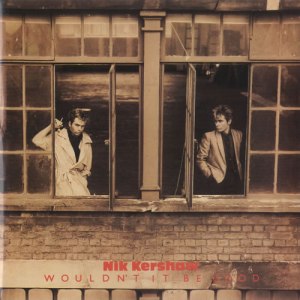 Bristol-born, Ipswich-raised Nik Kershaw had a spiffing 1984 – no other solo artist spent more time on the UK singles charts during the year.
‘Wouldn’t It Be Good’, released 40 years ago this weekend (on the same day as Echo & The Bunnymen’s ‘The Killing Moon’) and reaching #4, was his second single – ‘I Won’t Let The Sun Go Down On Me’ initially flopped in September 1983.
‘Wouldn’t It Be Good’ was predominantly recorded at Sarm East studios on Osborn Street, Aldgate (don’t look for it – it’s not there any more). Peter Collins produced soon after helming Musical Youth’s ‘Pass The Dutchie’ and Tracy Ullman’s solo output (he later worked with Rush, Alice Cooper and Queensryche). The song’s original title was ‘Wouldn’t It Be Nice’ – Collins demanded a better word than ‘nice’.
It’s a great single, the beginning of movingtheriver’s love affair with Kershaw’s music, and its ominous lyrics have the slight whiff of ‘In The Air Tonight’ about them, as well as a subtle social conscience. I also always liked the weird emphases he placed on some words/syllables – ‘You must be JOKING/You don’t know A thing about it/You got no probLEM‘ etc…
I distinctly remember watching him perform the song on ‘Top Of The Pops’ for the first time – who was this tramp on telly, with the snood and fingerless gloves? My parents liked the track too, which was a bit disarming.
The song’s overdriven guitars were layered/overdubbed, Brian May-style (best heard on the 12” remix), and their major-seventh chords create some strange timbres. Its structure is seriously weird too – the second chorus comes right at the end, after a lengthy guitar/horn solo. The delayed gratification is clever and totally outside the norm.
The video was directed by Storm Thorgersen, mostly filmed in a large, disused building opposite Buckingham Palace, apart from a bit at the Mullard Radio Astronomy Observatory in Cambridge. An extremely odd cover version features on the ‘Pretty In Pink’ movie soundtrack. Nik fluffed the words at Live Aid but hardly anyone noticed.
Happy birthday to another classic single from 1984.
Gig Review: Kevin Armstrong @ Pizza Express Holborn, 12 September 2018

DB and Kevin A, 1986 photo by Paul McAlpine
It would be tempting to call Kevin Armstrong the ultimate ‘nearly man’ of 1980s pop – he nearly joined a post-Johnny-Marr Smiths, was nearly a founder member of David Bowie’s Tin Machine, nearly joined Level 42 Mark II, and nearly became Paul McCartney’s right-hand man during the ex-Beatle’s late-decade renaissance.
But that would be unfair on the guitarist; as well as stellar work with Bowie (Live Aid, ‘Absolute Beginners’, ‘Dancing In The Streets’) and Iggy Pop (Blah-Blah-Blah, countless world tours), he has also contributed to classic albums by Prefab Sprout, Thomas Dolby and Morrissey and performed live with Roy Orbison, Sinead O’Connor, Grace Jones, Propaganda and PiL.
This entertaining Pizza Express show was half wonderfully-indiscreet spoken-word memoir and half gig. Decked out in all-black rock-star garb, Armstrong described his initiation into the music world via an obsession with Zappa’s ‘Black Napkins’ and postal-order guitar handbooks, and lamented the current pop scene as ‘just another part of consumer culture’.
He spoke of one life-changing morning in early 1985 when he received the call from legendary (and brilliantly-named) EMI A&R man Hugh Stanley-Clarke: an invitation to Abbey Road to record with ‘Mr X’. Arriving at the famous address, Armstrong was shown upstairs to a tiny demo studio (not the big Beatles-frequenting Studio 1 downstairs) to find a bunch of session players and a smiling, suited Bowie holding an omnichord and uttering the totally superfluous ‘Hi, I’m David!’. Bowie then proceeded to teach the band a song called ‘That’s Motivation’ (from the ‘Absolute Beginners’ soundtrack) two bars at a time – and they then recorded it that way too.
A few days later, Bowie summoned Armstrong to Westside Studios near Ladbroke Grove for the ‘Absolute Beginners’ and ‘Dancing In The Street’ recordings (the former with vocals by Armstrong’s sister, then working behind the till at Dorothy Perkins, responding to Bowie’s request for a ‘shopgirl’ to sing duet with him!). The latter session was of course graced by an absurdly perky Mick Jagger. Apparently Bowie and Jagger spent most of the vocal sessions shouting ‘Let’s ring Maureen!’, their nickname for Elton John.
Armstrong then told great tales of Live Aid, mainly highlighting Bowie’s incredible generosity: fluffing the names of backing vocalists Helena Springs and Tessa Niles during his onstage band introductions (no other solo artist introduced his/her band on the day), according to Armstrong he immediately apologised profusely to the singers as soon as they were offstage.
There were further funny tales of Gil Evans, Iggy and McCartney (who apparently once smoked some unbelievably strong grass with Armstrong, said ‘That’s you stoned!’ to the erstwhile guitarist, then promptly disappeared) and an exceptionally eccentric Grace Jones who allegedly took a distinct liking to Armstrong at a party, taking him by the hand and leading him away for some sexual shenanigans. Who should intervene but Bowie, grabbing Armstrong’s other hand and whispering in the guitarist’s ear: ‘No you don’t. She’ll have you for breakfast, sunshine…’
In the second half of the evening, Armstrong was joined by Iggy bandmates Ben Ellis on bass and Matt Hector on drums to perform songs that he’d played live with all the aforementioned stars. Efficiently sung and superbly played, it nevertheless emphasised the difference between a perennial sessionman and born headliner.
But this was still a hugely enjoyable evening, foregrounding a time when music really was transformative. We await Armstrong’s forthcoming memoir with great anticipation.
Nik Kershaw: The Riddle
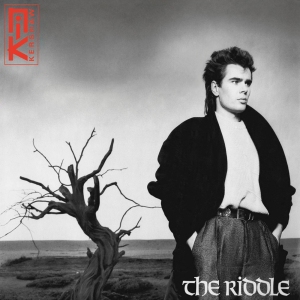 After several years playing guitar in cover bands and fronting East Anglia blue-eyed-soulsters Fusion, Nik Kershaw wrote a few poppy-sounding tracks and suddenly found himself thrust into the solo spotlight.
But he didn’t fool anyone with the snood, fingerless gloves and mullet – it was obvious from the get-go that Nik was a superb musician and songwriter. He had a voice a bit like Stevie Wonder (though my dad rightly identified something Numanoid too), played guitar a bit like Allan Holdsworth and wrote clever, catchy pop songs with prog, metal and funk undercurrents.
He also had some very famous fans in the US including Miles Davis and Herbie Hancock. But his image, dreamed up by some wags in MCA’s marketing department, probably didn’t do him any favours – Smash Hits summed it up perfectly, calling him ‘the thinking man’s Limahl’!
The Riddle is probably his best album. It was recorded pretty quickly to cash in on the unexpected success of his debut Human Racing, though featured a fair amount of post-production courtesy of the excellent Peter Collins who later produced Rush’s Power Windows and had previously worked on Musical Youth’s ‘Pass The Duchie’.
It features a very solid but expressive rhythm section (Elton John sticksman Charlie Morgan and ex-Secret Affair bassist Dennis Smith plus a great guest appearance from Level 42’s Mark King on ‘Easy’). Kershaw’s use of synths was kind of revolutionary, with intriguing sequencer patterns and subtle, almost subliminal pads. He also had invaluable input and some ZTT flash from keyboardist Andy ‘Relax’/’Two Tribes’ Richards throughout the album.
Yes, The Riddle screams the mid-1980s, but every song on it is memorable and has a very distinct flavour. On a songwriting level, Kershaw always knows how to keep things interesting for the listener. ‘Know How’ is a case in point – initially coming across somewhere between Level 42 and Talking Heads, it veers into prog territory with its superb pair of instrumental breakdowns.
Miles apparently recorded a cover of the very pretty ‘Wild Horses’ which has never seen the light of day. Hollywood-baiting ‘City Of Angels’ and eco-themed ‘Roses’ have more than a hint of Steely Dan about them, partly due to the use of the famous Purdie Shuffle, nicely reformatted by Morgan.
‘Wide Boy’ and ‘Don Quixote’ have lots of interesting melodic modulations under their pop sheen. ‘Easy’ is a brilliant band performance and crafty composition with a nutty middle eight, while the closing ballad ‘Save The Whale’ is also musically rich. And though the title track divides opinion, to say the least, check out its two-chords-per-bar middle-eight for a great example of Kershaw’s craft.
The cover photo was taken at Chesil Beach in Dorset. The Riddle peaked at #8 in the UK and went multi-platinum. The lead single was the title track which reached #3 in the UK. ‘Wide Boy’ peaked at #9, ‘Don Quixote’ #10. Three top 10 hits from a sophomore album – pretty damn good.
Nik was massive for approximately 18 months. He played Live Aid in July 1985 but then waited until autumn 1986 to follow up The Riddle – probably a mistake. The screaming girls were growing up fast or moving on to a-ha. He was developing as a musician and songwriter but gaining a much more ‘selective’ appeal, in the words of Spinal Tap’s manager Ian Faith.
Spitting Image: We’re Scared Of Bob
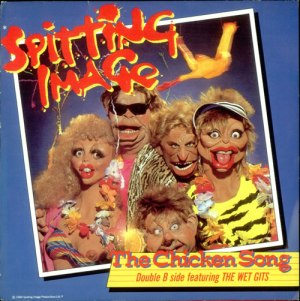 In the ’80s, there was no shortage of pop coverage to inspire conversation in the playground, whether it was Boy George’s first appearance on ‘Top Of The Pops’, Michael Jackson’s ‘Thriller’ video or Matt Bianco being verbally abused live on children’s TV.
Of course it really helped that there were only four terrestrial channels to choose from, breeding a feeling of community and sense of occasion.
But one TV show absolutely guaranteed to get the creative juices flowing and rescue many a depressing Sunday evening was ‘Spitting Image’.
Just a cursory look at a show from its mid-’80s peak leaves one stunned at the craftsmanship and production values on offer, especially as they only had a few days to write, build and shoot each episode. There were some good musical spoofs too, composed by Philip Pope, fresh from UK comedy classic ‘Not The Nine O’Clock News’ and his parody band The Hee Bee Gee Bees, who even managed a few hits in the early ’80s.
‘Spitting Image’ also featured some memorable Phil Collins, ZZ Top and Madonna skits, and they even managed to rope Sting in to re-sing this. But ‘We’re Scared Of Bob’ is full of surprises and surely the best spoof. Its sheer potency is still a shock to the system. You also suspect that Sir Gandalf was watching, so unmissable was the programme in the mid-’80s.
Why isn’t there anything like this around now? Oh, lack of money and talent, probably. A show like ‘Spitting Image’ also highlights the paucity of genuinely interesting musical (and public) figures these days.
Five Great 1980s Madonna Moments
5. Late Night With David Letterman, 1 July 1988
Though her most famous Letterman appearance was probably 1994’s swearfest, here she comes off more like a naughty big sister than an established star. Madonna and Sandra Bernhard laugh off Dave’s temper tantrums and seem to have stepped out of a ’50s B-movie (video removed by YouTube…).
4. Live Aid
This footage from La Ciccone’s Philadelphia appearance on 13 July 1985 gives a great insight into the atmosphere on the day and the adrenalin (and other substances?)-fuelled panic of the artist soundchecks. Live Aid came just a week after Madonna’s pre-fame topless pictures were leaked to the press. Her response was to wear lots of layers and silence the cat-calls with style, humour and an irrepressible joie de vivre.
3. ‘Crazy For You’
My favourite Madonna tracks are ballads (‘This Used To Be My Playground’, ‘Take A Bow’, ‘Something To Remember’, ‘Oh Father’, ‘Promise To Try’) but this is possibly the pick of the bunch. Beautifully arranged by Rob Mounsey, it was transformed from just another song in a so-so movie into a UK #2 and US #1 in March 1985.
2. The 1984 MTV Awards
Imagine the reactions of the Armani-suited execs in the stalls. Madonna and Joni Mitchell have both spoken publicly about the chauvinistic attitudes that prevailed in the music industry of the mid-’80s. This was a brave response.
1. The ‘Desperately Seeking Susan’ club scene
For many people, this was her only decent movie performance, and I wouldn’t argue with that (though I need to see Abel Ferrera’s ‘Snake Eyes’ again…). Roman Polanski paid homage to this scene ten years later in ‘Bitter Moon’, starring Hugh Grant, to similarly comic effect.
Live Aid: 30 Years Ago Today
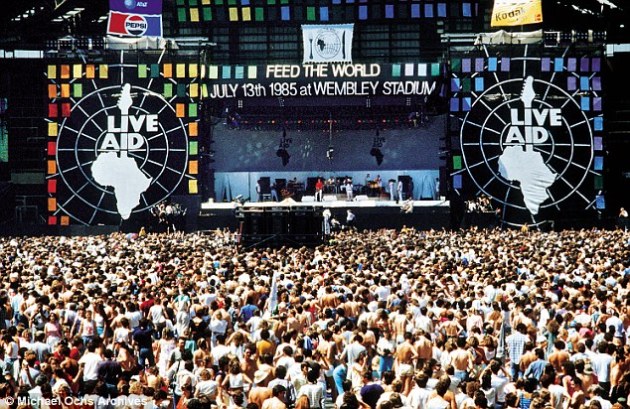 With barely a mention in the media or press, Live Aid turns 30 today.
I was a very excited 12-year-old pop fan on Saturday 13th July, 1985. The weather was hot and sunny and the whole nation seemed united. On the morning of Live Aid, my dad drove us up to the Virgin Megastore on Oxford Street where I bought cassettes of Level 42’s A Physical Presence and Scritti Politti’s Cupid And Psyche ’85 in preparation for the day. The streets were almost deserted. We got home around midday, turned the telly on and settled in for the afternoon.
That was then but this is now, as ABC sang. But how does the music from that day stand up in 2015?
Though many of New Pop’s architects got in on the act, it was the older artists who – for better or worse – made the biggest impact on the day (Queen, Tina Turner, Phil Collins, Status Quo, Dylan, Led Zep, Dire Straits, The Who, Bowie, Jagger). Apart from Led Zep and Dylan’s hilariously dodgy turns, Live Aid reminded people that the oldies were still hungry and could still cut it live, and the event arguably ushered in the mainstream success of Peter Gabriel, Steve Winwood, Eric Clapton and Robbie Robertson.
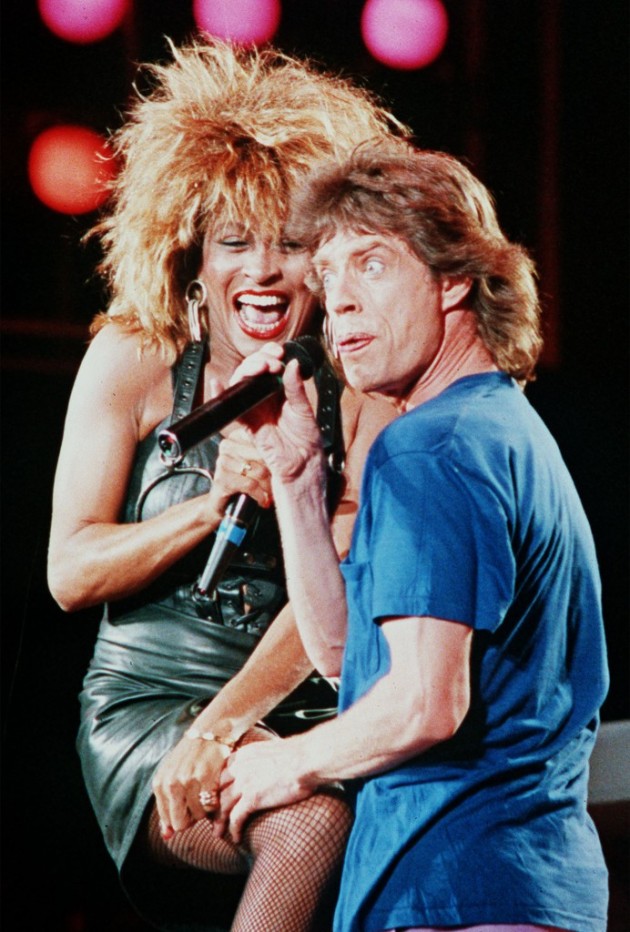
Many of the youngsters fudged it: Spandau were shown up by their lack of musicianship and quality material, Adam Ant chose the wrong songs, Sade were dull, Style Council were shrill and under-rehearsed, Duran were hamstrung by LeBon’s famous vocal boo-boo, Paul Young and Alison Moyet cornily rehashed some very old soul-revue moves and The Thompson Twins sounded out of their depth despite backing from Madonna and Nile Rodgers.
Perhaps surprisingly, U2, Madonna, Howard Jones, George Michael and Nik Kershaw might just have been the best ambassadors of Pure Pop on the day with engaging performances and solid musicianship. Post-punkers such as Sting, Elvis Costello and The Cars were merely functional.
But maybe the biggest disappointment of the day was the lack of black superstars (Prince, Michael Jackson, Stevie, Miles?), female solo artists and Second British Invasion popsters (Culture Club, Eurythmics, Tears For Fears, Frankie Goes To Hollywood).
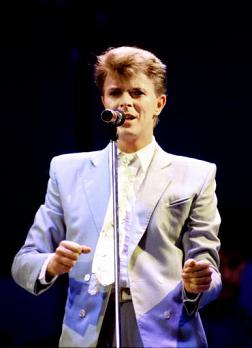
Naysayers claim that most of the acts appeared simply to further their careers. Well, yes, surely that was a factor for the younger artists but it’s a crushingly cynical view. Anyway, did you buy ANY music as a direct result of seeing Live Aid on the box (Queen’s Greatest Hits doesn’t count)?
I just enjoyed it for what it was. Anyway, most of my favourite pop acts didn’t get anywhere near Live Aid (Scritti, Jacko, Propaganda, Level 42, Prefab). It’s hard to really complain when the event has raised over £150 million.
So three cheers to Bob Gandalf, as Joss Stone memorably called Geldof.
Thomas Dolby: The Flat Earth

Circa 1988, my schoolmate Seb stuck a few tracks from The Flat Earth (possibly ‘Screen Kiss’ and ‘Mulu’) at the end of the Lovesexy tape he did for me.
I was smitten – I needed as much music as possible by this guy. I’ve since bought the albums several times on various formats.
On Earth, Dolby deliberately downplays the ‘zany’ image and creates an atmospheric, beautifully arranged, largely introspective collection.
He covers various styles (funk, lounge jazz, synth rock, World), mastering all with an incredible consistency of mood, production and songwriting.
My mates and I also loved his habit of incorporating seemingly-random clips of audio into/between his songs, like the spoken word outbursts from the likes of Robyn Hitchcock.
The title track came from an unused jam originally intended for Malcolm McLaren’s Trevor Horn-produced Duck Rock album. Its lilting South African melody (reminiscent of ‘Obtala’ from Duck Rock) and confessional lyrics signalled a new maturity in Dolby’s style, continuing with the majestic ‘Screen Kiss’ featuring excellent, much imitated fretless bass work from Matthew Seligman.
Techno-rocker ‘White City’ should be covered by someone. Dolby himself masters the art of the cover version with his take on Dan Hicks’s ‘I Scare Myself’ featuring a gorgeous muted trumpet solo by guitarist Kevin Armstrong who, according to Dolby’s liner notes, had never played the instrument before the recording.
And the album closer ‘Hyperactive’ (originally written for Michael Jackson, fact fans) is actually a bit out-of-place on the largely downbeat Earth but it’s a fun, funky, irresistible little pop song, perfect to send you out into the night with a smile.
Dolby is a brilliant painter of pictures with sound, relentlessly using audio fragments to augment melodic and lyrical ideas (check out the extraordinary tree-falling which pops up throughout the title track and also the typewriters which pepper ‘Dissidents’).
But these songs would also work beautifully played with just an acoustic piano accompaniment, as his recent solo tours have demonstrated.
Of course, over here in Blighty, the music press were a bit suspicious of Dolby’s technical mastery and obvious musicianship, though The Flat Earth reached a respectable #14 in the UK album chart, #35 in the US.
Dolby followed up The Flat Earth by playing keyboards with David Bowie at Live Aid (alongside Seligman and Armstrong), forming occasional project Dolby’s Cube with George Clinton, Lene Lovich and the Brecker Brothers and producing both Prefab Sprout’s triumphant Steve McQueen and Joni Mitchell’s underrated Dog Eat Dog.
 movingtheriver.com