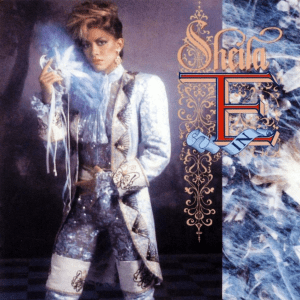
Sheila E In Romance 1600 @ 30

sheila e

The music biz is littered with successful solo artists who were tempted out from behind the drums.

Marvin Gaye, Teddy Pendergrass, Phil Collins, Karen Carpenter, Dave Grohl, Frank Zappa and Iggy Pop all graduated from the engine room to centre stage.

But while Sheila has never been on that level in terms of record sales or cultural impact (though trumps all of them in terms of drumming chops), her transition from sidewoman to frontwoman led to a couple of really infectious, interesting albums in the mid-’80s.

She had an enviable CV long before going solo, including percussion work with Billy Cobham, Herbie Hancock, Marvin, George Duke and Diana Ross.

Prince and Sheila were a similar age and had followed each other’s careers since the late-’70s. When he tasted his first mainstream success and was looking to mentor new artists, she was top of the list.

Their first collaboration was the superb B-side ‘Erotic City’, swiftly followed by Sheila’s debut album The Glamorous Life, a hit.

But its follow-up, Sheila E In Romance 1600, was a far more expansive and experimental piece, even though recording sessions were squeezed in on days off during the Purple Rain Tour between December 1984 and January 1985.

Despite Sheila’s obvious musical pedigree, Romance 1600‘s liner notes and song credits are misleading – this is a Prince album in all but name.

According to biographer Per Nilsen (and as listed at the ASCAP offices), he wrote all the tracks here bar one (kicking Latin/fusion instrumental ‘Merci For The Speed Of A Clown In Summer’) and played all instruments except drums, percussion and sax.

But lucky for us, Romance 1600 was recorded smack-bang in the middle of his golden period and features some of Prince’s finest performances as a musician. His guitar solos on ‘Dear Michelangelo’ and ‘A Love Bizarre’ are simply tremendous, the latter throwing in some ridiculous bass too.

But Sheila also brings out the best in him. There’s much more humour here than on his own albums of the period. She turns in some hilariously hammy vocal performances on ‘Sister Fate’, ‘Toy Box’ and dramatic ballad ‘Bedtime Story’.

Sheila and Prince were having a lot of fun and you can hear the results. Sometimes the rushed nature of the recording shows, though – the mix is very murky and the album is short of a few memorable pop hooks.

Prince’s ‘movie’ concept was in full effect here. He was leaving behind the ‘street’ style of Vanity 6/Purple Rain/The Time and embracing a romantic, ‘Amadeus’-influenced image which also crossed over into The Family project and his Parade album.

Thinking of Romance 1600 as a movie also opened up the album musically, allowing Sheila and Prince to embrace jazz (‘Yellow’), fusion, wacky synth-pop (the title track), Latin and even Third Stream.

Sheila E In Romance 1600 was a reasonable hit, going gold in the US and reaching #50 on the Billboard chart, no doubt helped by the success of the ‘Love Bizarre’ single (US #11). Sheila toured the US for the second time in two years.

She followed up Romance 1600 with a disappointingly bland self-titled album in 1987, which featured far less contribution from Prince. More successfully, she played some fantastic drums on the Sign ‘O’ The Times and Lovesexy tours.

Sondheim Meets Springsteen: Prefab Sprout’s From Langley Park To Memphis

prefab

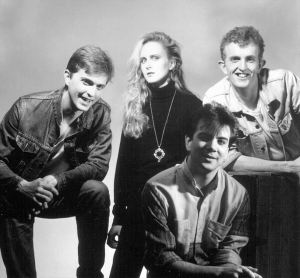
Prefab go Pop. There are big-name guest spots (Stevie Wonder, Pete Townshend), gospel choirs, an orchestra and Deacon Blue’s producer.

The lengthy recording period and increased budget certainly paid off; synths and strings glisten, Paddy McAloon and Wendy Smith sound like they’re singing in the room with you and one can hear every nuance of Neil Conti’s tasty drumming.

Steve McQueen producer Thomas Dolby could only find the time to oversee four out of the ten tracks; of these, only ‘Knock On Wood’ sounds like trademark TD. Apparently, once McAloon learned that Dolby would be unavailable for much of the recording, he flirted with the idea of using a different producer for each song. The notion was quickly abandoned but it reinforced the idea that this would be Paddy’s most collaborative project so far.

At the time of its release, Paddy publicly declared that he hated the sound of records being made in the late ’80s and in response seems to have looked for songwriting inspiration from pre-rock’n’roll forms – Gershwin, Berlin, Cole Porter, Broadway musicals (he also later said that he was slightly obsessed by Barbra Streisand’s The Broadway Album around this time).

Paddy had also by now made big strides in his keyboard playing, writing all but two From Langley Park tracks on piano. Consequently, his melodies are daring and original, but there’s arguably a fair degree of musical ‘schmaltz’ in the arrangements too, particularly on ‘Hey Manhattan’, ‘Nightingales’, ‘Nancy’ and ‘The Venus of the Soup Kitchen’, but it’s Stephen Sondheim schmaltz rather than Disney schmaltz. The wonderful ‘Nightingales’ sounds like the score from some kind of futuristic Broadway musical.

CBS obviously had high hopes for the album and their faith was paid off in the shape of a hit single, ‘King of Rock & Roll’, and one near-hit, ‘Cars And Girls’, though one wonders how McAloon views those now – I’ll wager with a degree of sheepishness. But I remember being extremely excited to see the video for ‘Cars And Girls’ popping up on ‘The Chart Show’.

Listening back after all this time, it’s From Langley‘s minor, more understated tracks that really stand the test of time. ‘Knock On Wood’ and ‘Enchanted’ could have come from Steve McQueen.

The former features a simple, unusually direct lyric from Paddy over a surreal, subtle pot-pourri of percussion and synth effects from Dolby. One wonders what McAloon’s demo sounded like. It’s slight and simple but no worse for that.

‘Nancy’ is gorgeous, a ‘Brief Encounter’esque tale of unrequited romance in the workplace, possibly inspired by McAloon’s relationship with his fellow Sprout (it doesn’t take a huge effort to imagine the word ‘Wendy’ in place of ‘Nancy’).

‘I Remember That’ sees McAloon in full-on crooner mode, emoting over MOR strings and weirdly-stilted gospel backing vocals. Paddy pokes fun at Springsteen’s obsessions on ‘Cars And Girls’, but then hilariously attempts a four-on-the-floor, Springsteenish rocker ‘The Golden Calf’ which doesn’t quite come off.

It’s hard to overstate the weirdness of the closing ‘Venus Of The Soup Kitchen’, a collision of slick Steely Dan drums, wonky Farfisa organ, distinctly-unfunky vocals from the Andrae Crouch singers and some amusing cocktail guitar from McAloon, coming over like a Ken Loach tale told in Broadway-musical style. For better or worse, there’s nothing else remotely like it in the Prefab output.

So, an important, big-selling album for Prefab (reaching #5 in the UK album charts) and another hugely impressive chunk of songwriting from McAloon. He was in a bullish mood, talking to the media about chart placings and competing with Michael Jackson and Prince, and his purple patch led to an even more cogent and powerful piece of work in the extraordinary Jordan The Comeback.

Ray Parker Jr.: Woman Out Of Control/Sex And The Single Man

Years before his huge hit ‘Ghostbusters’, Ray had played guitar on some great albums of the ’70s (Stevie’s Talking Book and Innervisions, Rufus/Chaka Khan’s Rags To Rufus,  Harvey Mason’s Funk In A Mason Jar, Marvin’s I Want You, Leon Ware’s Musical Massage), not to mention sessions with the likes of Boz Scaggs, Barry White, Tina Turner, Herbie Hancock and Bill Withers.
He also enjoyed a few big hits as part of Raydio before going solo in ’82. Either side of ‘Ghostbusters’, he put out two interesting albums which are now released as a good-value two-fer by Cherry Red/Soulmusic.com.

’83’s Woman Out Of Control unleashes a kind of feminist funk with various tracks unashamedly taking the laydeez’ side in the battle of the sexes, creating something pretty original. ‘Electronic Lover’ and ‘Invasion’ also rock the kind of psych-synth-funk sound that Prince and his contemporaries were tapping into at the time.

‘85’s Sex And The Single Man, the post-‘Ghostbusters’ album, ups the stakes with a lot more fuzz-toned lead guitar and also some weird synth-pop fun on ‘Girls Are More Fun’ and ‘I’m A Dog’. ‘One Sided Love Affair’ is an amusingly-shameless ‘Hello’ rewrite and there’s some cracking Cameo-style funk/rock on the title track.

‘Men Have Feelings Too’ demonstrates more of his rhythm-guitar mastery. I was going to say that his playing sounds very Prince-influenced but it’s the other way round; check out this masterclass for the evidence. The albums were only minor hits – apparently Arista boss Clive Davis wasn’t blown away by their modest chart placings and was slow to return Parker Jr.’s call when contract-renewal time came around.

While it’s true that there’s nothing as immediate or hook-laden as ‘Ghostbusters’ on these two records, they’re definitely worth reappraising and make nice companion pieces to Miles Davis’s You’re Under Arrest, Cameo’s She’s Strange, Prince’s Purple Rain and The Time’s Ice Cream Castle. Ray’s still going strong too, playing festivals and turning up on the occasional session.

N.B. Parker Jr. has recently been subject to an out-of-court settlement regarding the similarity of ‘Ghostbusters’ to Huey Lewis And The News’ ‘I Need A New Drug’. Judge for yourself…

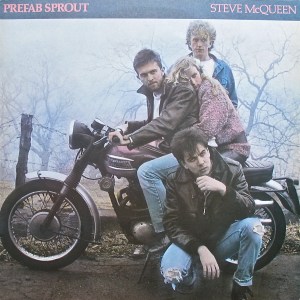
Prefab Sprout: Steve McQueen 30 Years Old Today

prefabSteve McQueen producer Thomas Dolby had taken part in a Radio One ‘Round Table’ singles review programme in early 1984, waxing lyrical about Prefab’s ‘Don’t Sing’.

The Sprouts happened to be listening in and asked their manager Keith Armstrong to ring Dolby the next day. Dolby takes up the story:

‘Keith said, “It so happens we’re actually looking for a producer right now. Are you interested?” I said, “Absolutely.” So they said, “Well, we don’t have many songs on tape to play you, but we’d like to invite you up to Paddy’s (McAloon, Prefab singer/songwriter) house.” I took the train up, spent the day there. He lived on the top of a hill in an old Catholic rectory where his mum had looked after the church. There were crucifixes on the walls. His dad, who’d had a stroke, was ill in bed upstairs. Paddy took me to his room and pulled out this stack of songs. He’d squint at them and strum his way through them. He would write notes for chords and melodies over the top of the lyrics but primarily it was about the poems.’

The songs for Steve McQueen were worked up in rehearsals with Dolby at Nomis Studios in West London in the autumn of 1984, before the recording sessions proper started at Marcus Studios.

The Sprouts apparently found the Big Smoke in turns beguiling and baffling. Taken out for dinner by CBS execs, they were introduced to the dubious pleasures of haute cuisine. According to Dolby, upon being delivered a tiny plate of food, bassist Martin McAloon was once heard to utter, ‘That was for me neck – now what’s for me stomach?’!

Dolby brought out the best in singer Wendy Smith, often using her unique soprano almost as a musical instrument, especially on ‘Moving The River’ and ‘Blueberry Pies’.

Dolby realised that part of his role as producer was to ‘smooth out’ some of the rough edges of Paddy’s remarkable songs:

‘What happened when the band started to arrange those was that there were lots of extra beats here and there, strange chord changes or rhythm changes, or odd lengths of phrases. The musicians tried to sort of accommodate those, but in fact what needed to happen was a few of the rough edges needed to be trimmed off. But at the same time, I didn’t want to throw out the baby with the bath water. I mean, what made them so unique is that they defied logic. So the task, really, at hand, for me, was how to elevate them to a more accessible level, commercially, without homogenizing the essence of the music.That was the first meeting with Paddy. He’s a very interesting guy, very well read but humble.’

The album was mixed at Farmyard Studios in Buckinghamshire. That was where Paddy really became aware of what Dolby had cooked up:

‘It’s taken me decades to try to absorb what it was that Thomas did. I mean, he had a great ear for individual sounds, he wasn’t swayed so much by the things of the day. He had a Fairlight and a PPG Wave and he would use them sparingly, and he had no time for the Yamaha DX7 and the things that everyone else rushed out and bought. He was into synthesis really. He didn’t make a big thing of it… it was just what he did, in addition to having a good sense of structure.’

Dolby talks about Paddy’s vocal style on the album:

‘He can be coaxed into letting rip every now and then. So one of my favourite things about the album is that you get these occasional primal screams. The way he sings “Antiques!”, the opening line. And then later on in “Goodbye Lucille” which is this very sort of lush, soft song, in the chorus he just lets rip at the end with this scream. And I always liked that he did that on that album. In later years he tended to be this sort of breathy crooner, and you hear less of that raw side.’

prefab

Drummer Neil Conti on recording Steve McQueen:

‘When we went in to record the album, there was a very relaxed vibe which I think you can hear in the music. After a rather tense start, when Thomas Dolby, who was used to drum machines, basically tried to get me to play like a machine, things loosened up and we had some hilarious late night jams after coming back from the pub. The track “Horsin’ Around” was recorded after one such rather inebriated sojourn to the boozer and you can hear Martin laughing while I’m counting it off. That track is all over the place, but it was just what the song needed. We couldn’t get it at all before we went to the pub to horse around a bit. I think the relaxed vibe really is one of the keys to why that album sounds good. No clicks, three takes max of each song, very loose and natural.’

Steve McQueen reached #21 on the UK album chart, perhaps a slight disappointment, but the critics generally loved it. It made #4 in NME’s Albums of 1985 poll and was well-received in Europe and the US. Rumours even appeared in the press (some good CBS PR) that Prefab might play at Live Aid. That was never going to happen but half the band did back David Bowie (producer Thomas Dolby, drummer Conti and occasional guitarist Kevin Armstrong).

An extensive UK and European tour followed the album release after which the band quickly recorded Protest Songs in late 1985, though it wouldn’t released for another four years. There was so much more to come from arguably the British band of the decade.

Japan: Oil On Canvas 32 Years On

japan

First of all: the cover. As a teenager, I was instantly intrigued by Frank Auerbach’s artwork, and then the music very definitely lived up to the packaging.

But, though billed as such, it could hardly be called a ‘live’ album. In the recent band biography ‘A Foreign Place’, Jansen reports that the only ‘live’ elements on the album are his drums – everything else was replayed in the studio. Three excellent new all-studio tracks were added too. But Oil On Canvas was released six months after the band’s break-up and proved a near-perfect farewell from one of the key groups of the early ’80s.

The fact that it ended up as Japan’s highest-selling album (shifting over 100,000 in the UK and hitting #5) must have really irked manager Simon Napier-Bell – after year of toil, the band were calling it a day just as they were getting some commercial success (read ‘A Foreign Place’ for a full explanation of the split).

Tin Drum was great but who knows what they might have come up with as a follow-up given the giant strides they had made as musicians, songwriters and arrangers since ’81. Sure enough, within a few months of their split, Duran Duran were taking their sound and image to the bank.

The Oil On Canvas line-up, December 1982: Masami Tsuchiya, Richard Barbieri, David Sylvian, Steve Jansen, Mick Karn. (Photo by Fin Costello/Redferns)

The Oil On Canvas line-up, December 1982: Masami Tsuchiya, Richard Barbieri, David Sylvian, Steve Jansen, Mick Karn. (Photo by Fin Costello/Redferns)

There is so much to enjoy on Oil On Canvas. The Tin Drum tracks have added heft and a bit more air. David Sylvian’s vocals are warmer and more expressive than on the studio albums (though he has since virtually disowned this early singing style), and his Satie-esque title track prefigures the triumphs of his solo career.

‘Ghosts’ is extended with a superb Stockhausen-meets-serialism intro/interlude thrown in while ‘Canton’ becomes a mighty parade of musical colours, with clanging synths, whip-lashing china cymbals and the late great Mick Karn’s increasingly insane bass embellishments.

There has never been a rhythm section quite like Karn and Steve Jansen (drums) and probably never will be again. They revel in open spaces and ‘non-rock’ textures, typified by the deceptively simple and downright spooky ‘Sons Of Pioneers’.

Karn sounded like no one else on fretless bass, exploring Middle Eastern concepts and weird intervals to produce a sound both complex and hilarious. Jansen came up with several of the most ingenious backbeats in pop history while always making them danceable.

Together, they produced classic grooves like ‘Visions Of China’, ‘Cantonese Boy’ and ‘Still Life In Mobile Homes’, and Richard Barbieri’s creative keys playing always emphasises texture and mood over technique. His closing instrumental ‘Temple Of Dawn’ bids a fantastic album farewell first with a chill and then with a brief shot at redemption.

Sylvian escaped to a successful, innovative solo career, Karn also went solo and hooked up with collaborators including Midge Ure, Peter Murphy and, most memorably, Kate Bush. Barbieri and Jansen teamed up regularly in various projects and recorded together as The Dolphin Brothers in 1987 but didn’t enjoy much commercial success. Against all odds, they all got together again at the end of the ’80s for the intriguing Rain Tree Crow project.

Allan Holdsworth: Secrets

Allan_Holdsworth_-_1989_-_Secrets

Some time around the late ’80s, I became a bit disillusioned with the major UK music mags (but continued to love Q).

Their infinite search for ‘coolness’ coincided with my increasing interest in playing bass and guitar, so I started checking out American mags such as Musician, Guitar World and Guitar Player, as well as Guitarist here in the UK.

Their focus seemed to be on the mechanics of/intentions behind making music rather than puking in hotels or haircuts.

I think I first heard guitarist Allan Holdsworth’s name via a Guitar Player cover interview to promote his Secrets album. I hadn’t yet heard a note of his music but his intelligent, exceptionally modest (some would say mordant) approach to playing drew me in, as did his endorsement of sax players (Brecker, Coltrane, Parker) rather than the usual guitar influences.

Also he mentioned that he had been working with drummer Vinnie Colaiuta, another name that I had heard with relation to Frank Zappa but had never really properly investigated. By chance, I came upon Secrets a few months later in a bargain bucket. From the first bar of the opener ‘City Nights’ (a typically nimble salvo around the kit by Vinnie) I was blown away.

Holdsworth’s solo is burning, with loads of notes spraying out everywhere, but it’s also totally devoid of clichés. He repeats the trick all over Secrets, with Vinnie and bassist Jimmy Johnson cajoling him every step of the way.

It’s also refreshing to hear Allan blowing over lots of major chords in ‘Joshua’, the sort of tune which might be a bit soppy in the hands of Metheny or Abercrombie but is transformed into a stunningly fluent series of solos alongside Colaiuta’s brilliantly unhinged accompaniment.

‘Spokes’ is a nicely arranged vehicle for Allan’s nutty synthaxe playing (and some more Vinnie/Jimmy genius) and, on ‘Endomorph’, Holdsworth even comes up with a very moving song inspired by the death of his father with some excellent vocals from Craig Copeland.

Secrets is the one where technology really caught up with his ingenious concepts. All lead guitarists are on an endless search for tone and Allan seems to have found his ideal here. It’s smooth yet fiery and he genuinely achieves the ‘sheets-of-sound’ style of improvising that he so admires in his favourite sax players by utilising incredibly wide intervals (for a guitarist) and legato phrasing.

His playing is as instantly recognisable as Wes, Van Halen or Scofield’s. It’s not easy music, though. But, as he lamented in the interview mentioned above, it’s not that difficult and he always wished it was more popular.

Secrets was the first in a trio of superb solo albums (and some sterling sideman work with Chad Wackerman) which continued with Wardenclyffe Tower in ’92 and Hard Hat Area in ’94, all of which are pretty essential listening if you like his vibe.

Within a year of Secrets coming out, I’d seen Allan live at the Bloomsbury Theatre in London and also checked out his month-long guest spot with Level 42 at Hammersmith Odeon throughout December 1990 (and some brilliant solos on their Guaranteed album). I was becoming a major fan…

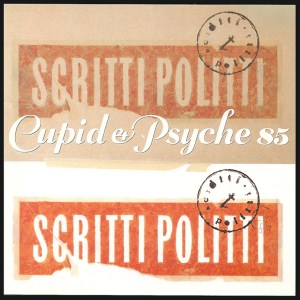
Scritti Politti: Cupid & Psyche 85 @ 30

Listening again to the brilliant Cupid 30 years after its release, one wonders if it sounds dated to modern ears.

Whilst it unabashedly utilised all manner of mid-’80s technology (Fairlight, drum machines, sequencers), its chief components are top-notch songwriting, intelligent lyrics, great grooves and Green’s unique vocals.

Cupid hit movingtheriver at exactly the right age; it was the soundtrack to endless summer evenings, teenage crushes, adolescent musings.

Though Scritti leader/vocalist/co-songwriter Green Gartside left behind his post-punk roots and the ‘indie’ sound of his Rough Trade debut album Songs To Remember to create this major-label debut, Cupid certainly had antecedents.

Green and keyboardist/co-composer David Gamson revered the highly-syncopated R’n’B/electro of The System, Chaka Khan, ZAPP and Michael Jackson, but they added some classic pop songcraft and intricate harmony.

Rough Trade boss Geoff Travis gave Green his blessing and, coupled with manager Bob Last (who also managed Human League and ABC), Green pitched the Americans his fusion of pop and funk. As he told WORD magazine in 2006, ‘The American labels were all tickled pink by these big NME interviews we did and that loosened their wallets. Bob and I were terribly persuasive as to why they should part with vast sums so we could make a record.’

Legendary Aretha/Chaka producer Arif Mardin came on board as did a raft of quality players such as Marcus Miller, Steve Ferrone, David (The System) Frank, Robbie Buchanan, Robert Quine and Paul Jackson Jr.

But Green apparently turned out to be more of a perfectionist than any of them: ‘It took us a great deal of time to get our bits right and my anxiety about singing was pretty acute. I would demand to sing things over and over again and I’m not sure I ever got it better than the first time.’

Cupid featured three classic singles – ‘The Word Girl’, ‘Absolute’ and ‘Wood Beez (Pray Like Aretha Franklin)’, though eventually a total of five tracks were released as A-sides.

The John Potoker remix of ‘Perfect Way’ (far superior to the album version) even became a massive hit in the States, reaching #11 on the Billboard Hot 100 and pushing worldwide sales of the album over the million mark.

While ‘Don’t Work That Hard’ and ‘Lover To Fall’ might be deemed ‘filler’, they easily transcend that label by dint of their sprightly grooves and sheer catchiness.

The beautiful ‘A Little Knowledge’ showed that Green and Gamson were on the same page as Prefab’s Paddy McAloon when it came to sumptuous, intelligent romantic ballads in the mid-’80s, and the track is a great companion piece to ‘When Love Breaks Down’.

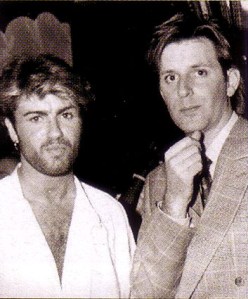
Post-Cupid, Green and Gamson booked and then cancelled a world tour (they were apparently visited in the studio by MTV executives who told them, ‘Just think, you’ll never have to tour again!’), wrote songs for Al Jarreau and Chaka Khan, made friends with Miles (who covered ‘Perfect Way’ on Tutu), hung out with George Michael at various London nightspots, embarked on a year of press in America to cash in on the success of ‘Perfect Way’ and then reluctantly hit the studios of New York and London to record the follow-up Provision.

george michael green gartside

George and Green, London, 1986

A cursory listen to a radio station like Absolute 80s reveals the wide-reaching influence of Cupid on countless late-’80s bands: a-ha, Go West, Climie Fisher, Living In A Box, Pet Shop Boys, Bros and Aztec Camera all tried for those clinical, Swiss-watch-precision arrangements and uplifting pure pop sound, but generally lacked Gamson’s ingenious chord changes and Green’s gift for melody.

Happy birthday to a bona fide ’80s classic.

Wayne Shorter: Atlantis 30 Years Old Today

Wayne-Shorter-Atlantis--Press-K-486376It’s not easy to write about an album that’s so much part of your musical DNA that it haunts you in the middle of the night and yet reveals fresh nuances every time you listen to it.

But first of all, I have to declare an interest – Wayne is one of my all-time musical heroes and has been since I was a teenager when his sax playing and compositions with Weather Report and Miles Davis totally bewitched me.

It wouldn’t be an overstatement to say that it took me 20 years to really appreciate Atlantis, and also to realise that it had to be listened to on CD and listened to loud. The recent remaster, as part of Wayne’s Complete Albums Collection, is the best I’ve ever heard it.

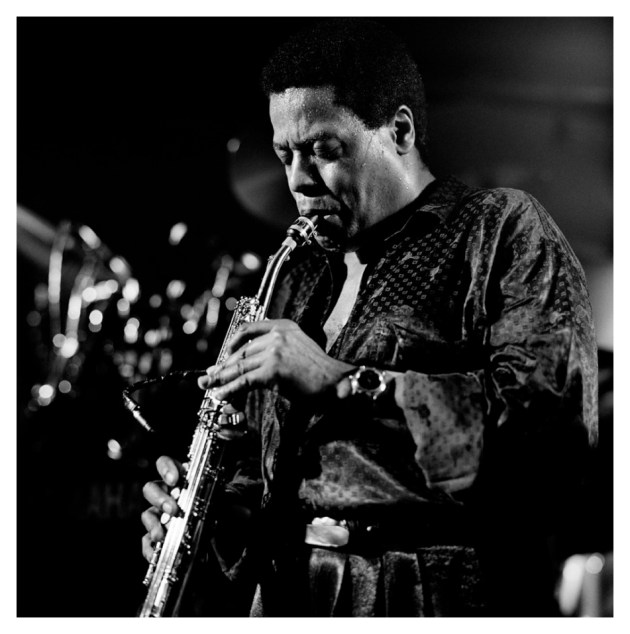
Wayne at The International, Manchester, 1989. Photo by William Ellis

Wayne at The International, Manchester, 1987. Photo by William Ellis

How to describe the magical though totally uncompromising music on Atlantis? It was Wayne’s first solo release after the official split of Weather Report and it’s fair to say it wasn’t the album many fans and critics were expecting.

It surely remains Wayne’s least understood work.  It’s ostensibly an album of through-composed, acoustic ‘fusion’, but that barely covers it. Someone once described it as the soundtrack to an animated children’s book.

Wayne seems to be weaning listeners away from a more bombastic form of jazz/rock towards a new combination of jazz, R’n’B and Third Stream which utilises sophisticated counterpoint and pure composition.

Shorter is the only player who gets any significant solo time. Acoustic piano, flute, vocals and multiple saxes supply the dense, challenging, sometimes dissonant harmonies.

Atlantis could hardly be described as a ‘jazz’ album at all; ensemble work and composition generally override individual expression, and none of the tracks ‘swing’ in a conventional sense. And yet it’s still an utterly melodic set, full of memorable, criss-crossing themes which jostle for your attention. It takes time to work its magic, but work its magic it does.

The phenomenal opener ‘Endangered Species’ (recently massacred by Esperanza Spalding) is somewhat of a  ‘sweetener’ at the top of the album, like Sirens luring sailors to their deaths, as Shorter biographer Michelle Mercer noted.

Many people, me included, struggled to get very far past it since the remainder of Atlantis sounded somewhat prim and precious in comparison. I wanted to hear Zawinul and Jaco’s blistering lines, Omar Hakim’s colourful drumming, some virtuosity.

But when I studied Atlantis more closely, there are many subtle displays of instrumental mastery. Ex-Weather Report drummer Alex Acuna plays a blinder throughout, blazing through the outro of ‘Who Goes There’, Larry Klein’s bass playing is nimble and impressive (try playing along to Wayne’s intricate written lines), Michiko Hill’s piano comping is inventive and Wayne plays some fantastic solos, particularly his Rollins-style tenor on calypso-flavoured ‘Criancas’.

I remember seeing Wayne playing much of this music live to a barely-half-full London Shaw Theatre in late 1985 – it seems that audiences, booking agents and press officers alike were finding his post-Weather Report music a hard sell at this point.

Critics were generally puzzled too, although Robert Palmer noted in the New York Times that ‘it’s not an album one should listen to a few times and then knowledgeably evaluate… It is an album to learn from and live with.’

wayne shorter

But if Atlantis was misunderstood and less than commercially successful on its original release, it seems to be gaining fans in the 30 years since.

A good yardstick is that several compositions from the album are still regularly played by Shorter’s esteemed current quartet, particularly the title track, an eerie, labyrinthine tango.

‘The Three Marias’, a treacherous tune in 6/4 inspired by press reports of three Portuguese woman being arrested for writing obscene literature, has even been the unlikely recipient of a few cover versions, perhaps most notably (though not wholly effectively) by ex-Police guitarist Andy Summers.

Thanks to William Ellis for use of his photo.

(P.S. I’m taking one mark off for ‘Shere Khan The Tiger’ which was far better rendered on Carlos Santana’s 1980 album The Swing Of Delight, a version which featured Herbie Hancock on piano, Ron Carter on bass and Harvey Mason on drums.)

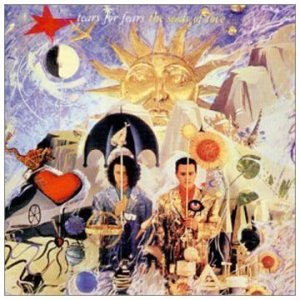
How Not To Follow Up A Hit Album #2: Tears For Fears’ The Seeds Of Love

courtney pine

Tears For Fears’ second album Songs From The Big Chair did the business.

A relatively cheap record to make, it sold millions and elevated the Bath boys into the big league. Early ‘80s technology, boy-band looks and some great hooks had carried TFF through the first two albums but now they felt they had to deliver a polished, ‘musicians’ album’ to match their heroes. Big mistake…

The Seeds Of Love was the result, and with it they tragically o’erreached themselves in the search to emulate their heroes Gabriel, Ferry and Sylvian. Four producers. Nine studios. Over a million pounds in studio costs. Broken marriages. Dozens of session musicians.

A famous Q article outlined the painful, sometimes embarrassing lengths the two protagonists Roland Orzabal and Curt Smith went to to complete Seeds.

Orzabal has said he wanted to make something musicians would love, something ‘world-class’. This over-egged curio shows what happened when pop stars tried to buy credibility in the late-‘80s, undeniably under a fair amount of record company pressure to follow up a monster.

The intro of ‘Woman In Chains’ still retains some Blue Nile-ish power before being obliterated by Phil Collins’ sledgehammer drums and overblown AOR guitars; Gabriel/Joni/Sting drummer Manu Katche plays a blinder on ‘Badman’s Song’ but the melodies barely register.

‘Sowing The Seeds Of Love’ still stands up though as a decent Beatles tribute complete with some lovely woozy drums from Big Chair producer and ex-Ant Chris Hughes and a very cool chord sequence.

‘Standing On The Corner Of The Third World’ is initially very attractive complete with Jon Hassell’s ethno-trumpet and some typically slinky fretless playing from Pino Palladino, but its grand atmosphere and ambience can’t obscure the lack of structure and good ideas.

Swords And Knives’ starts with an interesting piano/voice melody but quickly gets mired in a succession of annoying guitar solos and grandiloquent key changes.

‘Year Of The Knife’ (these boys are really interested in knives…) is a pretty ugly collision of gospel vocals and a sub-‘Broken Wings’ groove. Again, the song runs out of stream after two minutes and tries to cover it up with a fiddly string arrangement and weird avant-metal guitars. Even uber-drummer Simon Phillips sounds uninspired.

The Q article, September 1989

The Q article, September 1989

Orzabal almost achieves a Sylvian-ish level of sophistication on the closing ‘Famous Last Words’ but once again blows it, neglecting to supply a B section or cogent lyrics. Quiet/loud dynamics alone do not a good song make.

The album was a hit, going straight to number one in the UK and selling well in Europe and the States, but was it worth all the effort? Orzabal and Smith were barely on speaking terms and didn’t record together for over a decade after Seeds‘ completion. It was certainly a big and bold farewell to the ’80s from one of the decade’s success stories.

Robben Ford: Talk To Your Daughter

robben ford

Robben is surely guaranteed a place in the pantheon of modern blues guitar greats, and, like his contemporary and good buddy Larry Carlton, he makes guitar playing sound ridiculously easy however complicated the chord changes.

Fagen and Becker had been told about Robben’s prodigious soloing ability over changes, hiring him to play the break on Steely Dan’s altered blues ‘Peg’ in 1977, but he ended up on the cutting room floor (they famously went through six other guitarists before Jay Graydon smashed it at the eleventh hour).

But sometimes Ford’s good looks, cheerful stage persona and sweet sound can obscure his more extreme guitar statements; fusion drum monster Kirk Covington somewhat disparagingly called Robben’s style of music ‘happy blues’ in a recent interview with Drumhead magazine (admittedly after a failed audition for Robben’s band!).

miles robben ford

Robben cut his teeth with the likes of George Harrison, Joni Mitchell and Jimmy Witherspoon, but started off the 1980s playing beautifully at the Montreux Jazz Festival with David Sanborn, Randy Crawford, Al Jarreau et al, contributing three of my favourite ever guitar solos to the Casino Lights live document of that gig.

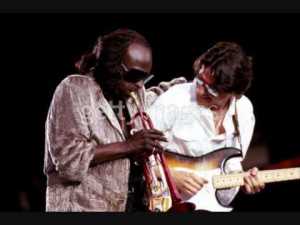
Then, in 1986, the dream sideman gig materialised: he replaced Mike Stern in Miles Davis’s band, gaining a new confidence in his abilities and a renewed love for the blues.

Apparently Miles believed he’d found his perfect guitar player. But Robben didn’t stay long – he left Miles to make his second solo album Talk To Your Daughter for Warner Bros in 1987.

It’s funny to think of Robben playing guitar with Miles just before this recording because sometimes his music could use a bit of Miles’s obliqueness and use of space.

Robben’s voice might not be to everyone’s tastes either, firmly in the Jackson Browne/Michael Franks school, but his guitar solos are always engaging and risk-taking, and a stellar band featuring monster drummer Vinnie Colaiuta, bassist Roscoe Beck and Yellowjackets keyboardist Russell Ferrante makes the music breathe. The album sounds like it was recorded live in the studio too, a big plus especially in the over-produced late-’80s.

The gospel-tinged ‘Revelation’ is worth the price of the album alone, possibly Robben’s finest recorded work to date and the only instrumental here. Robben’s take on ‘Ain’t Got Nothing But The Blues’, co-written by Duke Ellington and best-known as a Mose Allison number, is also superb, a feast of jazz chords and tasteful band accompaniment.

Down-and-dirty blues it ain’t, but Talk To Your Daughter definitely brought something fresh to the party. Other modern guitar greats Scott Henderson, Gary Moore, Frank Gambale and Larry Carlton were listening; within a few years, they’d all reacquaint themselves with the blues in a big way too.