I was a late starter when it comes to Prince, too young to get the sexual/spiritual absolutism of Purple Rain.
The one that really hooked me was 1986’s Parade, but these days I’d cite Around The World In A Day as my favourite Prince album.
It was released just ten months after Purple Rain, a serious statement of intent and a good indication of how prolific he was at the time.
Prince unveiled the first release on his new Paisley Park label at an uncomfortable listening party on 21 February 1985 in the LA offices of Warner Bros attended by 15 to 20 Warners executives, plus Joni Mitchell and Prince’s father, all of whom had to sit on the floor. Apparently the general reaction from the suits was: how the hell are we gonna sell this?
For me, ATWIAD is prime Prince, when he was tapping into jazz, psychedelia and even classical music. But, perhaps surprisingly, the main influence is gospel. Prince screams his way through the morality tales of ‘The Ladder’ and ‘Temptation’ with just as much intensity as Al Green, Bob Dylan or Bobby ‘Blue’ Bland.
I also hear a lot of late-’70s Joni in the more experimental tracks such as the intense ‘Temptation’ and sublime ballad ‘Condition Of The Heart’ – he’s not scared to leave a lot of space for lengthy piano and guitar improvisations. This is the first Prince album where you can add ‘arranger’ to his list of musical gifts.
Much of Around The World In A Day actually predates Purple Rain. The title track, ‘Pop Life’, ‘Temptation’ and ‘Paisley Park’ were all recorded in early ’84, while the other songs were put together during the Purple Rain tour. While the album is credited to ‘Prince And The Revolution’, only ‘America’ and ‘The Ladder’ feature the full band. The rest is a one-man-band operation with guests here and there.
Any album which contains the classic singles ‘Paisley Park’, ‘Raspberry Beret’, ‘Pop Life’, the title track and ‘America’ definitely works. It’s well worth seeking out the 12” version of ‘America’ which runs to 21 minutes with no edits and no ‘remix’ element – just endless grooving. Only ‘Tambourine’ now sounds suspiciously like filler, despite Prince’s spirited impersonation of Sheila E’s drum style.
And we’ve got to mention Doug Henders’ sumptuous cover art. He explained the concept to writer Per Nilsen: ‘Most of the figures are characters in the songs, but some of the people are parts of Prince so they’re all somewhat autobiographical.’
Prince insisted on zero promotion for the album – no singles, no press or TV ads. This was totally unheard of in the mid-1980s. Even so, Around The World In A Day went to #1 in the US album chart on 1 June 1985, just 20 weeks after Purple Rain had completed its 24-week run at the top. It eventually sold over three million copies in the US.
With Purple Rain, Prince had shown Warner Bros that he could mix it with the biggies – Springsteen, Hall and Oates, Madonna and Michael Jackson. But now he was battling to do things his way, beginning with Around The World In A Day.
While this stance produced arguably his best music, it also drove a wedge between him and Warners leading up to the ‘SLAVE’ debacle of 1994/1995. But it was also, thankfully, a battle he won, producing an astonishing output of work between Purple Rain and Batman which rivals any five-year run in pop history.
Since 1987, there have been a number of two-guitar celebrity summits but ex-Bill Evans bassist Marc Johnson’s superb ECM solo albums, ’85’s Bass Desires and Second Sight, both featuring John Scofield and Bill Frisell,quite possibly started off the whole trend.
1987’s Second Sight was considered somewhat of a disappointment on its original release, but for me this is the superior album of the two. I was a major Scofield fan when I bought it in ’87 but didn’t know Frisell’s name at all. Some of the interplay between the two is nothing less than miraculous, although one could hardly think of two more different guitarists in approach.
They leave each other space to play and at times even inadvertently double parts. The ever-reliable Peter Erskine slightly overplayed on the first Bass Desires album but here expertly marshals the material without ever being overbearing, and the compositions are so fresh, memorable and catchy.
Only the opening ‘Crossing The Corpus Callosum’ sounds like a studio jam session, but this is no ordinary jam; Scofield’s emotive bluesy cries dissolve into a fantastically-eerie Frisell ambient soundscape, leading the track inexplicably into David Lynch territory. ‘Small Hands’ and ‘Hymn For Her’ are shimmering, moving ballads, with the guitarists’ approaches meshing beautifully. ‘Sweet Soul’ is a soulful slow swinger full of fantastic Scofield soloing.
‘1951’ is a superb Frisell composition evoking Thelonious Monk’s best work. ‘Thrill Seekers’ simply swings like hell and features a classic Frisell fuzzbox solo. ‘Twister’ is great fun, Scofield’s affectionate ode to surf rock with some very funky bass and guitar interplay and a short drum solo almost as memorable as Ringo’s on Abbey Road.
As far as I know, the band toured Europe but never the UK. Would love to have seen them. The performance below is really special. No wonder Frisell is grinning like a Cheshire cat throughout.
Singles Released:
‘Let’s Dance’ (#1)
‘China Girl’ (#2)
‘Modern Love’ (#2)
‘Cat People (Putting Out Fire)’ (#26)
Bowie on Let’s Dance: ‘At the time, it was not mainstream. It was virtually a new kind of hybrid, using blues-rock guitar against a dance format. There wasn’t anything else that really quite sounded like that at the time. So it only seems commercial in hindsight because it sold so many. It was great in its way, but it put me in a real corner in that it fucked with my integrity! It was a good record, but it was only meant as a one-off project. I had every intention of continuing to do some unusual material after that. But the success of that record really forced me, in a way, to continue the beast. It was my own doing, of course, but I felt, after a few years, that I had gotten stuck…’
The ’80s were positively dripping with fine debut albums but equally cursed with a lot of substandard sophomore efforts.
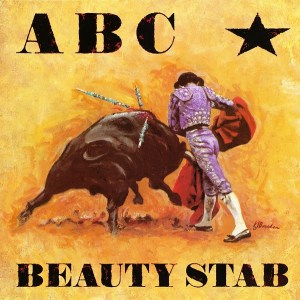
As the music biz cliché goes, you have your whole life to come up with your first album but only six months to make the followup. ABC could hardly have got it more right with their 1982 debut Lexicon Of Love, a ravishing collection of string-drenched, post-disco torch songs, but they came seriously unstuck with Beauty Stab a year later.
Seen as ‘ABC go heavy metal’ by much of the music press at the time of release, these days Beauty Stab just sounds like a pretty tuneless but beautifully-produced rock/pop album with the odd ‘political’ lyric and barmy moment thrown in (the jazz-waltz interludes in ‘Love’s A Dangerous Language’, cacophonous finale to ‘That Was Then’, atonal strings that kidnap ‘Bite The Hand’, Martin Fry’s rhyming couplets throughout…).
Though not exactly heavy metal, the guitar playing is pretty unreconstructed throughout and seems to be searching in vain for some Fripp-style insanity. And the album is thankfully graced with Roxy/Lennon/Sly drummer Andy Newmark, whose playing is lovely, especially on the very Avalonesque ‘If I Ever Thought You’d Be Lonely’. Co-producer and future Art Of Noise member Gary Langan does a great job too, in the main eschewing ‘80s production values in favour of a dry, ballsy mix and some strikingly original touches.
The problem is, for all its undoubted craftsmanship, amusing lyrics and faux grittiness, the album is short on memorable choruses. ‘Hey Citizen’, ‘King Money’ and ‘Power Of Persuasion’ have classic ABC hooks but fail to deliver catchy B-sections.
A quick survey of the track titles and it’s almost impossible to remember a chorus, save the opening ‘That Was Then…’, and that spells trouble. Unsurprisingly the album works best when the guitars simmer down a bit and Fry’s vocals take centre stage, as on ‘By Default By Design’ and fine state-of-the-nation closer ‘United Kingdom’.
Commercially, Beauty Stab was not an outright disaster, reaching #12 in the UK album chart and selling over 100,000 copies, but it was a big disappointment after such a successful debut. Acclaimed music writer Simon Reynolds even went as far as to call it ‘one of the great career-sabotage LPs in pop history’.
In late-1983, Britain was turning its back on back on guitars and kitchen-sink lyrics; glamour and fun were back in, typified by Wham!, Howard Jones, Culture Club, Spandau Ballet, Duran Duran, even Bowie – all of whom cashed in on the vibe and musical exuberance of Lexicon Of Love. At the end of the year, Fry famously burnt his gold suit in protest.
Drummers and bassists: this album’s for you. And it’s for guitarists, percussionists and fans of great music too.
Put simply, Steve Khan’s hard-to-track-down Casa Loco has enthralled me and a whole generation of jazz and jazz/rock aficionados for over 30 years.
The compositions and performances of guitarist/leader Khan, bassist Anthony Jackson, drummer Steve Jordan and ex-Weather Report percussionist/vocalist Manolo Badrena are unique and unforgettable.
The album is also totally unclassifiable – a ‘fusion’ band playing a blazing surf-rock cover tune (‘Penetration’)? An unhinged Puerto Rican percussionist singing in quasi-Spanish but sounding remarkably like Sting?
Casa Loco is full of such beautiful and unpredictable juxtapositions. And it’s also blessed with Jean-Michel Folon’s eye-catching cover art.
I had previously bought Steve’s 1981 album Eyewitness just on the strength of the Folon cover but was immediately blown away by the all-time-great Jordan/Jackson rhythm section, Khan’s enigmatic, inimitable voicings and Badrena’s inspired percussives. But Casa Loco, the 1983 follow-up, cranked everything up a notch.
Steve Khan, the son of Sinatra/Dean Martin/Doris Day lyricist Sammy Cahn, is one of the most respected guitarists of the ‘fusion’ era. He played on not one but four of the great Steely Dan tunes (‘Peg’, ‘Babylon Sisters’, ‘Gaucho’, ‘Glamour Profession’), contributing to the latter one of the finest guitar solos in the band’s oeuvre, though he has mixed views on the painstaking recording process that led to those landmark pieces.
Check out his great interview with Leo Sidran for more on this and also a good overview of his career in general. But Steve is also one of jazz and fusion’s most erudite and honest figures, revealing (almost) all on his excellent website. He knows where the bodies are buried…
Steve, who recently released a well-received solo album Subtext, spoke with great candour and humour to movingtheriver.com from his New York City base.
Doug Epstein
MP: Casa Loco still sounds fantastic over 30 years on – how important was engineer Doug Epstein in the recording process?
SK: On countless levels, Doug Epstein was huge in all of this. At that time, he was the only person, on the technical side of things, who had participated in every single recording of mine. I owe him so much. He was always full of enthusiasm and energy for whatever it might have been that I was doing, and he encouraged me to do more. Knowing the financial difficulties we were having, he was the first one to offer to try to get the executives at Mediasound Studios to give us a break on the recording costs, and everyone there was wonderful to us. Nothing, of course, was ever free, but they tried their best to help. At the recording end of things, Doug was absolutely fearless. I think that most of the problematic issues came from Steve Jordan’s constantly changing, per tune, hybrid kit of drums: a combination of natural drums and Simmons electronic drums. Then there was Manolo’s amazing percussion set-up which included all his natural and supernatural sounds, plus the electronics emanating from the Syn-cussion that he was using back then. To accommodate all of that on 24-tracks, with one track taken for SMPTE code and another one blank just because of the risk, there were really only 22 tracks available. In the end, Doug had to know where each tune was headed in terms of possible overdubs, vocals, etc. He did all of that. But, it has to be noted, that Steve Jordan – where our mixing process was concerned – was hovering over Doug’s shoulder the entire time, and in many ways Steve is totally responsible for being the protector of Anthony’s bass sound and playing, and for his own drums, of course. Steve’s contributions in this regard were indispensable to the overall sound that you have come to know. Steve was present for the mixes on all three of our recordings together. He had a vision and a sound in mind, and he pushed hard for that. In great part, that’s why he has become an excellent producer himself – he has a great ear for these things.
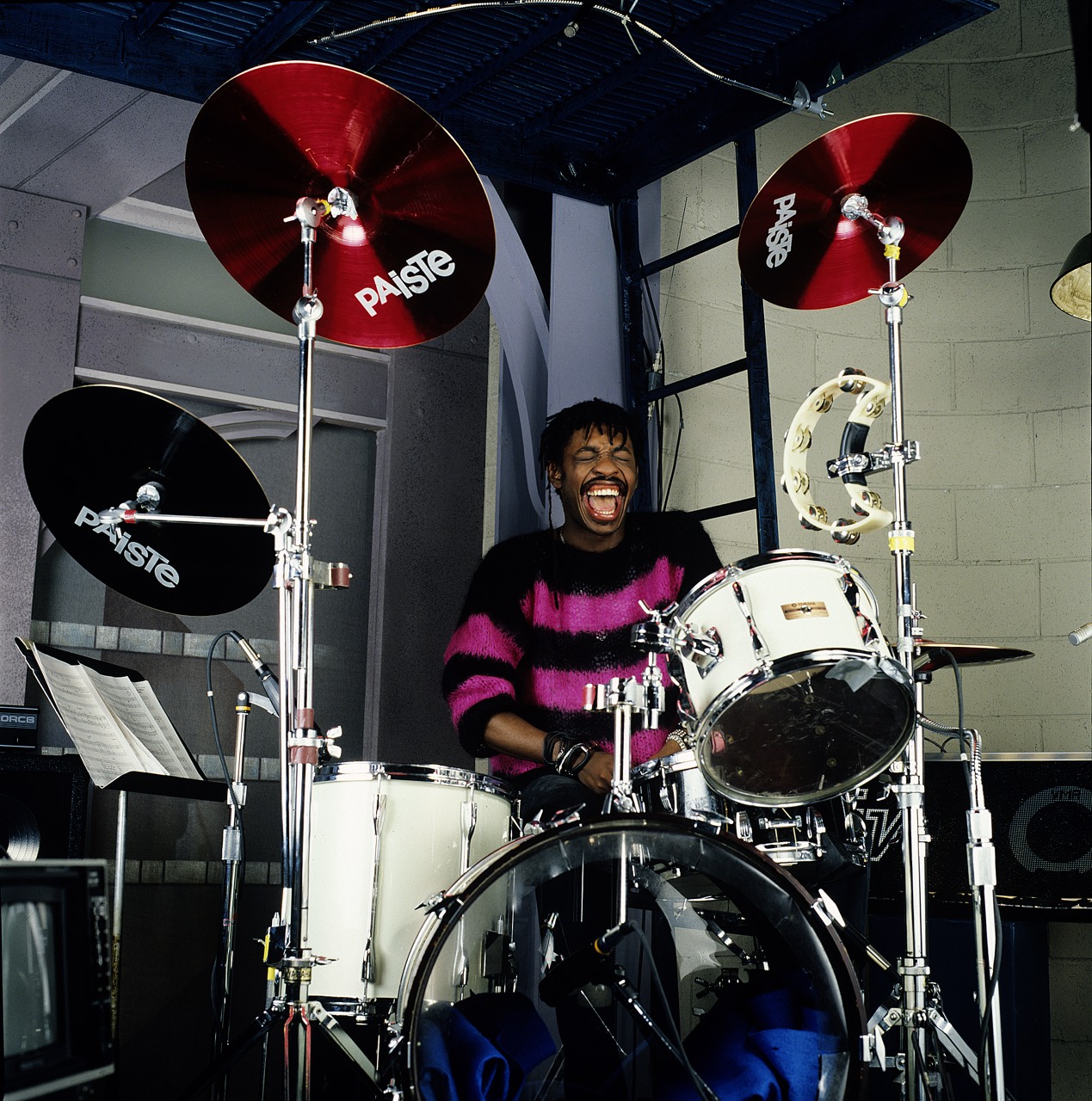
Steve Jordan Photo by Deborah Feingold
There’s a big Police influence on Casa Loco. Who brought that into the band?
I would say that Steve Jordan brought that into the band. I don’t think Anthony had ever heard anything by The Police. The fact that Manolo sounds a bit like Sting at times is just a cosmic accident. It’s not intentional at all. And, of course, 90% of the time Manolo is either singing in Spanish or vocalese, or his own form of gibberish! Recently, the great French jazz journalist Frêdèric Goaty wrote a piece for MUZIQ Magazine about his perceptions of the influence of The Police in contemporary music, and he cited all three of our albums as examples.
Regarding Steve Jordan’s famous drum solo on the title track – how the hell did you and Anthony stay in time when he really starts going out?!
Speaking for myself, it wasn’t easy. Anthony and Steve had a way of stretching the rhythmic boundaries in ways that would often confuse me, and I would get turned around. It was always an exercise in feel and concentration. That day, in the studio, my concentration was at its highest level, because there was no way that I was going to screw something up and ruin Steve Jordan’s incredible drum solo! No f***ing way! It remains one of the great moments on any recording of mine. I think that the complexities of that solo section, which is really a simple Latin tumbao, are demonstrated by the fact that Modern Drummer magazine published a transcription of the drum solo, but with the tumbao completely turned around and written out incorrectly! So, even an educated musician can get screwed-up with that one. I remember once when we were playing at Seventh Avenue South here in New York City, Bob Mintzer, one of the greatest musicians that I’ve ever known, came up to me and said, ‘What the f*** are you guys doing? I can’t ever find one!’ If Bob Mintzer felt that way, I guess there isn’t a much higher compliment. But it was never our intention to play anything that was purposely confusing to anyone.
The structure of ‘Some Sharks’ is incredibly intricate with many repeat signs and tags – were all the guys reading charts while recording this?
At that time, I don’t believe there were any formal charts to any of the tunes. We rehearsed hard and long, and we were prepared. The first lead sheets were done afterwards, I believe. I did them for copyright purposes, nothing more. I remember, when doing that, how astonishing it was to see, on paper, the intricacy of the music that we had created by improvising, and just jamming together pieces of music. It’s possible that I had written out ‘Uncle Roy’ beforehand, but maybe not. It’s hard to remember now. My facualties are not what they once were! But, when I listen to what Steve Jordan contributed to that tune with his unique concepts of beat displacement, it’s remarkable, and when you add in Anthony’s perspective, it makes perfect sense as to why the recordings that we made together between 1981-1983 have influenced bassists and drummers all over the world. Anthony and Steve deserve all of that adoration and more.
‘The Suitcase’ hints at a Discipline-era King Crimson influence – is that accurate?
I have never paid any attention to King Crimson’s music at any time. However, thanks to MTV, I did get to hear ‘Elephant Talk’ and I absolutely loved that tune. I love Adrian Belew and only wish that I could create 5% of the sonic textures that he creates. He is totally unique and brilliant. I admire him a lot.
Why is (great British drummer) Steve Ferrone thanked in the album credits?
To tell you the truth, I have no idea! In those days, we thanked people who stopped by the studio while we were recording, just for their good vibes. It’s also possible that Steve Ferrone lent something, a piece of gear, to Steve Jordan. I just can’t remember. We thanked people who didn’t even exist. For example, at one of our sleep-deprived rehearsals, Steve Jordan was trying to say the name Gore Vidal, and somehow it came out as Gordie Voll, and once he said that, I was rolling on the floor laughing – it was just so silly and funny. So Gordie ended up in the ‘special thanks’ section. I thanked a CNN newswoman, Marcia Ladendorff, who I had a crush on. I thanked an actress that I had a crush on too, Roberta Leighton. I thanked Flippy Hussein, who is not a real person – just a goofy name that the great vibraphonist David Friedman made up one day years before. But most of the names mentioned were people who in some way, shape or form contributed something positive, even if only via their encouragement to the music and the effort to keep going forward.
Jaco
Is there anything else printable you can tell us about Steve Jordan’s crazy house of music (the Casa Loco or ‘crazy house’ of the album title – Ed.) ?
In all honesty, no! Unless someone wants to burn all their bridges behind them, there is a sacred trust that exists between musicians, especially those who are bandmates, or even just work on a special project together. You don’t talk ‘out of school’ about things that you see and hear, sometimes not even after a person has passed away. Those kinds of stories can be hurtful, and even end-up hurting relatives or loved ones. In those days, each of us was going through something difficult in our personal lives, and our behaviour reflected that. Trying to just get together to rehearse for a few hours a couple of days per week was never easy, but we managed. And Steve Jordan’s loft, his home, was a huge part of that. I can only say that all kinds of hysterical shit used to happen there, including people trying to stop by to hang out with us while we were trying to work. Jaco Pastorius was one of them. He used to phone Jordan all the time and beg us to let him come by. We reached a point where we would never answer the phone and never allow anyone in except for the delivery guy who was bringing by Steve Jordan’s breakfast – at 2pm in the afternoon! Does that give you an idea?! No matter what transpired those days were some of the most fun and productive days of my creative life. I have rehearsal cassettes from those times – I used to listen to them every so often – and the constant laughter on those tapes about absolutely nothing is priceless. It was just so damn funny most of the time and exasperating too, at least for me!
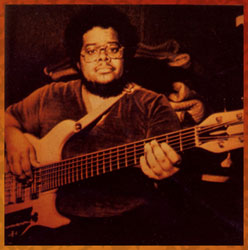
Anthony Jackson photo by David Tan
I was astonished to read that the whole album was recorded in just TWO days, quite amazing when you consider the time spent on other albums of the era (Hello Donald and Walter…). How do you explain that? Was it just a case of getting the goods in the shortest possible time with the meter running?
Well, though it is true that the serious content of Casa Loco was recorded during May 21/22 1983 at Mediasound, I didn’t realize that we were going to need a third day just for Manolo Badrena! I actually thought that we could finish a performance of a piece and then he would simply, right then and there, overdub his vocals. I’m speaking about tunes like the title track, ‘Some Sharks’ and ‘The Suitcase’. But what happened really threw me for a loop, because I did not want to spend the money, other than for mixing, to return to the studio just for Manolo. Thinking this way demonstrated my lack of experience and understanding that recording vocals, by anyone, requires a different kind of care and patience. It is something that you have to plan for. I was too worried about spending money for an extra day in the studio! The great lesson in this is always the same: if you begin by being cheap, you will pay for it later! There is, of course, a most wonderful expression for this very thought in Spanish: ‘Lo barato sale caro!’ If you are unwilling to spend money, you will end-up with a lousy or sub-standard sounding recording, and this is something that I never want to be a part of, because you have to live with the results forever. So as the recording unfolded, during ‘Casa Loco’, ‘Penetration’ and ‘Some Sharks’, Manolo actually just sat there and didn’t play a damn thing while Anthony, Steve and I were performing those tunes. At the time, he just motioned wildly to me that he could not hear himself in the headphones. Mediasound had one of the early systems whereby each musician could make his own headphone mix. Each time this happened, we all tried to work harder with Doug to help Manolo get what he wanted and needed. It was so frustrating to have him there and not have him with us making that music. So, in the end, I had to spend the time and money overdubbing him on those tunes. I was furious about this! In sharp contrast to that, if you just listen to what Manolo contributes to ‘Uncle Roy’ – there is not a sound there that was not performed completely live. It is simply brilliant – no one else could have created textures like that. He’s one of the most unique musicians on this earth but not easy to work with. Years later, I learned that it really wasn’t the damn headphones at all; he had been upset that he wasn’t getting paid for the sessions, as if I was pulling a ‘fast one’ on him and secretly hoarding money somewhere. This is, of course, the furthest thing from the truth. We had a number of band meetings during our rehearsals and I clearly explained to everyone that I was paying for the album out of my own pocket, and that after I had recouped my investment in full, if that ever happened, whatever money there was to be had, we would all split it equally four ways. Period! In other words, we were all going to get rich together, or stay exactly as we were, but together. It was certainly my impression that Manolo understood that. Anthony and Steve were on board, as they always were, and I will never ever forget their selflessness when it came to this music. I love them both and I’m deeply indebted to them, forever, no matter what else has happened.
According to your website, you paid for recording costs entirely out of your own pocket – have you managed to recoup some of this over the years? I hope so…
We’ve addressed a portion of this during my answers to some of the other questions. But, the answer is: No! Absolutely not! I believe that, back then, my total investment in making Casa Loco was $17,500. That might not sound like much in 2015, but it felt like a fortune to me, having to go into my personal savings to do this. But that’s how much it meant to me. It was the second time that I had done that, Evidence (1980) being the first. And, it would not be the last; I have done this seven more times since! In the end, I was given advances from Trio Records (Japan) and eventually from Antilles Records (USA) that totalled $11,000, and that’s all that I have ever seen come back to me from this recording. In short, as it has been with all of my self-financed recordings, I will never ever again see that money come back to me. Do I regret it? Of course not. I am, and will always be, exceptionally proud of those recordings because everyone who participated gave something of themselves to do it. I don’t forget those people, those players! Never!
Circa 1988, my schoolmate Seb stuck a few tracks from The Flat Earth (possibly ‘Screen Kiss’ and ‘Mulu’) at the end of the Lovesexy tape he did for me.
I was smitten – I needed as much music as possible by this guy. I’ve since bought the albums several times on various formats.
On Earth, Dolby deliberately downplays the ‘zany’ image and creates an atmospheric, beautifully arranged, largely introspective collection.
He covers various styles (funk, lounge jazz, synth rock, World), mastering all with an incredible consistency of mood, production and songwriting.
My mates and I also loved his habit of incorporating seemingly-random clips of audio into/between his songs, like the spoken word outbursts from the likes of Robyn Hitchcock.
The title track came from an unused jam originally intended for Malcolm McLaren’s Trevor Horn-produced Duck Rock album. Its lilting South African melody (reminiscent of ‘Obtala’ from Duck Rock) and confessional lyrics signalled a new maturity in Dolby’s style, continuing with the majestic ‘Screen Kiss’ featuring excellent, much imitated fretless bass work from Matthew Seligman.
Techno-rocker ‘White City’ should be covered by someone. Dolby himself masters the art of the cover version with his take on Dan Hicks’s ‘I Scare Myself’ featuring a gorgeous muted trumpet solo by guitarist Kevin Armstrong who, according to Dolby’s liner notes, had never played the instrument before the recording.
And the album closer ‘Hyperactive’ (originally written for Michael Jackson, fact fans) is actually a bit out-of-place on the largely downbeat Earth but it’s a fun, funky, irresistible little pop song, perfect to send you out into the night with a smile.
Dolby is a brilliant painter of pictures with sound, relentlessly using audio fragments to augment melodic and lyrical ideas (check out the extraordinary tree-falling which pops up throughout the title track and also the typewriters which pepper ‘Dissidents’).
But these songs would also work beautifully played with just an acoustic piano accompaniment, as his recent solo tours have demonstrated.
Of course, over here in Blighty, the music press were a bit suspicious of Dolby’s technical mastery and obvious musicianship, though The Flat Earth reached a respectable #14 in the UK album chart, #35 in the US.
Dolby followed up The Flat Earth by playing keyboards with David Bowie at Live Aid (alongside Seligman and Armstrong), forming occasional project Dolby’s Cube with George Clinton, Lene Lovich and the Brecker Brothers and producing both Prefab Sprout’s triumphant Steve McQueen and Joni Mitchell’s underrated Dog Eat Dog.
There’s no telling how a jazz musician will react to a bad review, whether from a critic or fellow player.
Some, like Miles Davis, take a – how shall we put it – stoic view, either refusing to read any press or choosing his writer friends very carefully (Leonard Feather, Quincy Troupe).
But for every naysayer, there’s an aggressor; drum master Tony Williams laid into jazz scribe Stanley Crouch for his less-than-flattering comments on Miles’ electric-era music, while Weather Report famously took Downbeat magazine to task for its one-star slagging of 1978 classic Mr Gone.
Though guitarist Mike Stern had studied at the famous Berklee music school in the mid-‘70s and then landed a top gig with jazz/pop supergroup Blood Sweat & Tears, he wasn’t prepared for bandmate Jaco Pastorius’s succinct review of his guitar playing after a dodgy run through Chick Corea’s ‘Spain’ on tour with BS&T one night – ‘Stern, you know that sh*t wasn’t happening at all! You’ve got to learn faster tempos!’
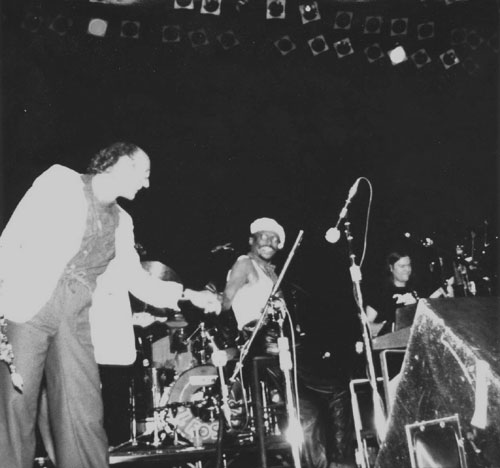
Jaco and Mike, 1980
To his great credit, Stern listened to his friend, learnt the tune note by note and in the process became one of the greatest players of his generation. His slick bebop lines played with a ‘rock’ sound were quite new when he came of age playing with Billy Cobham’s band.
Miles was also listening closely while he was in the early stages of putting together his ‘comeback’ band in early 1981. The story goes that he appeared in the front row of The Bottom Line club in New York City and poached Stern during a break, apparently even calling Cobham off the bandstand in the middle of a tune to issue his intentions!
Stern was then summoned to the Columbia Records studio to record the electrifying half-time strut ‘Fat Time’ (Miles’s nickname for Stern) in one take. The track appeared on the Man With The Horn album and Stern was then invited to go out on the road with Miles.
My dad took me to see Miles at the Hammersmith Odeon in 1982, my first proper gig. I’m sad to say that I don’t recall much about it apart from Miles’s white suit and someone shouting: ‘Turn the trumpet up!’
Dave Liebman, Miles and Mike Stern, 1981. Photo by Julie Coryell
Critics were harsh on Stern, not believing that a chubby, jeans-wearing, long-haired guy playing a white Strat with a fuzzbox could play ‘jazz’, but with hindsight he did a brilliant job of holding down the harmony and delivering powerful, surprising solos in the keyboard-less quintet.
But the demons that haunted some of his early career wouldn’t go away. Stern recently said, ‘I played about two gigs in my life between the ages of 12 and 32 when I was sober’.
Miles even got John Scofield into the band as second guitarist to cover for his increasingly unreliable secret weapon. Stern eventually missed a flight and got the boot, but after a successful spell in rehab returned to play with old friend Michael Brecker and Mike Mainieri’s fusion supergroup Steps Ahead.
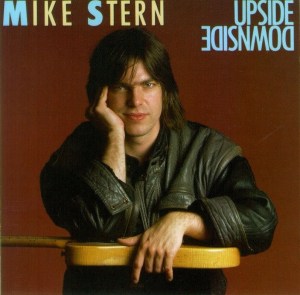
Stern also put together a solo record deal with Atlantic Records and began working on Upside Downside in early 1986 with his late friend and fellow shit-hot guitarist Hiram Bullock in the producer’s chair.
The album is a great excuse for Stern to play the hell out his guitar in a variety of idioms. The uptempo tracks are blessed with typically fiery solos while the ballads beautifully demonstrate Stern’s lyrical side, his Telecaster screaming emotively above Dave Weckl’s subtle drumming and Mark Egan’s springy bass.
Jaco completists will enjoy one of his very last recorded contributions on the raucous ‘Mood Swings’ while saxophonist David Sanborn’s playing on ‘Goodbye Again’ is spine-tingling. But mainly the album is a must for any lover of the guitar. His sound is a little more fluid and widescreen than on recent albums and there’s no-one quite like Stern at the top of his game, a fusion of Charlie Parker and Roy Buchanan.
Mike made two excellent follow-up albums later in the ’80s, Time In Place and Jigsaw, both produced by the fine guitarist Steve Khan. For me, this was Stern’s best era, when his raunchy playing was closer to blues and rock than the lighter Methenyesque jazz and World music vibes of recent times. I also saw him live at the Town and Country Club in 1989, a memorable gig featuring the mind-blowing Dennis Chambers on drums.
In the miasma of soap-opera tie-ins, boy-band debuts, one-hit wonders and Stock, Aitken and Waterman productions that constituted late-’80s pop, Love and Money’s second album Strange Kind Of Love was a breath of fresh air.
Released in December 1988 and produced by legendary Steely Dan helmer Gary Katz, the record was a triumph. James Grant’s literate, dramatic songs of romantic anguish and corporate avarice were built to last.
Musicians had a field day with Grant’s intricate guitar work and the rock-solid grooves courtesy of drum legend Jeff Porcaro and underrated bassist Bobby Paterson. Critics of the time were generally confused but I was sold from the first bar of ‘Hallejulah Man’.
Funkier than the likes of Curiosity Killed The Cat or Hipsway but lyrically just as piquant as The Smiths or The The, Love And Money joined Prefab Sprout, Prince, The Blue Nile, Danny Wilson, David Sylvian, De La Soul, Scritti Politti and Cocteau Twins in my list of late-’80s pop saviours.
I caught up with singer/songwriter/guitarist James Grant to talk Strange Kind Of Love, Jeff Porcaro, Tom Waits, touring with Tina Turner, ‘Top of the Pops’ and ’80s marketing meltdowns.
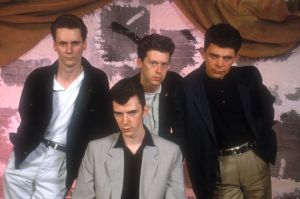
Love And Money 1988
MP: Could you just give us a quick bit of background to Strange Kind Of Love – what were the expectations for album number two and how did you come to work with Gary Katz?
JG: I always felt the first album was disparate and didn’t marry the different influences well. We sounded too desperate to impress. I was also anxious to prove that I was more than just a haircut. For Strange Kind Of Love, I had written the album and we had lived with the songs for a while. The mantra was: the song is king. Meaning that the song would dictate how it was meant to be, what was appropriate and what was not. The desire was to create something timeless and the man to facilitate that was Gary Katz. He had a track record that spoke for itself. He just seemed perfect. We set up a meeting – I flew to New York – and we just hit it off right away. There was a symbiosis, a shared desire to make great records, and we liked each other. We’re still pals to this day.
Lyrically, SKOL focuses mainly on the anguish, pain but also joy of romantic infatuation. Was there a particular relationship that precipitated this or had these songs built up over time?
Yes, there was someone in particular, but obviously there’s poetic license. Songwriters deify those we love. I just happened to think – and still do – that besides knowing you are going to die, being in love is the utmost existential experience there is. I was young, heartbroken and hungry; the right ingredients to make great music! I also had the distinct feeling that great songs contain a truth, perhaps not the literal truth but a truth. I wrote about myself; this tended to get uncomfortably forensic at times for those close to me.
Jeff Porcaro 1988
How much of a contribution did the great Jeff Porcaro make to SKOL‘s arrangements and why is his surname misspelt in the credits? Was there enough budget to get him for rehearsals? His playing seems so integral to the material.
Jeff didn’t make any contribution to the arrangements – that was all planned months before we even met. I have no idea why his name is misspelt. We did the drums over a month in LA. Sometimes we just jammed the thing till we got the right vibe. On other tracks, I had a more concrete idea of what I wanted. For example, on ‘Razorsedge’, I wanted a go-go beat. I just went in with my guitar and told him what I was hearing. He just started playing this incredible, jaw-dropping stuff. Yes, we had the budget. Jeff was a brilliant, phenomenal musician. I felt like I had f***ing boxing gloves on sometimes when we were jamming but he never ever made me feel like that. He was a beautiful guy, great fun to be with and genuinely humble about his achievements and ability.
The four sublime singles from the album just missed out on the UK Top 40 – was that a disappointment? Was there pressure from Phonogram to get that first UK or US hit?
Yes – it was always a disappointment. You try and be stoic and say, ‘That’s not what it was about’, but we were gutted. We so nearly made it with Strange Kind Of Love. I always wanted to do ‘Top of the Pops’. If that’s shallow, then so be it. I grew up watching Slade and Bowie and prancing around in front of my bedroom mirror imitating them – it was my dream to be part of that, just like any kid. There wasn’t pressure from Phonogram as such; they were trying their best with us. It just wasn’t to be. I do believe that if we had had the success, Dogs In the Traffic may not have happened. That’s the Love And Money record I’m most proud of and it’s most representative of who I am. Perhaps that’s why I find it so hard to listen to…
Why is Tom Waits thanked in the album credits? And presumably (Steely Dan singer/co-leader) Donald Fagen is thanked because of the Katz connection?
Because I’m a fan and he was and still is a massive inspiration. It wouldn’t be easy to tell if you were judging this from the record. Donald Fagen played a little something. I’ve always kept that a secret. We didn’t want to make an issue of it or make it something marketable.
Gary Katz
You play some fantastic lead guitar on the album and also some really inventive acoustic/electric textural stuff – did Gary Katz’s experience with the likes of Larry Carlton and Jeff ‘Skunk’ Baxter have any bearing on your playing?
Not really – Gary would have me playing for weeks on end though. I reckon I came on a bit during my time with him. And thank you.
SKOL doesn’t really sound like anyone else from the era and stands up exceptionally well today. At the time of release, some critics rather snootily compared it to Dire Straits and Deacon Blue but were there contemporary artists the band admired or were influenced by?
No, not especially – my tastes have always been very eclectic. In terms of marketing, this always led to problems; ‘Are you guys rock, pop, funk or country?’ ‘Yes…’ I did love Bowie, Talking Heads, Chic, Led Zeppelin and Prince – I can hear certain little things from all of them here and there.
Who is Beatrice Colin? Her voice compliments yours beautifully, especially on ‘Walk The Last Mile’.
She was my girlfriend. She’s an author now.
Who came up with the album cover concept? Studying it again, it’s one of the weirder covers of the ’80s…
Someone in the marketing department at Phonogram saw a photograph like the one on the cover and we decided to recreate it. Though I’ve always believed it to be extremely important, the amount of time and money invested in things like artwork was, by today’s standards, science fiction. We would have months of meetings discussing details. People would have nervous breakdowns!
You toured with and supported various US acts such as BB King and Tina Turner in the late-’80s – any memories that stand out? I loved your playing with Tom Verlaine on The Tube.
The one anecdote that would perhaps stand out is that when we supported Tina Turner, when I introduced the band, I said, ‘Hi, we’re not Tina Turner, she’ll be on a bit later.’ I thought this was amusing. Tina’s management did not. We were kicked off the tour. You’d think we would have been disappointed by such a thing, but – and I’m really proud of this – we did not give a f*ck.
I saw you revisiting SKOL on a memorable night at the Shepherds Bush Empire a few years ago – how do you feel about the album and its place in ’80s music now?
I’m really proud of it. It’s of its time, certainly, but a bit more than that. I think sonically it’s absolutely spot-on – it still sounds fantastic. I always think of the band’s place in the greater scheme of things as awkward. I think, as I said previously, we were difficult to categorise. This seemed to be a huge problem for some people. I never tried to make ‘difficult’ music. I still don’t. I think my tastes are fairly mainstream. Perhaps lyrically things are a bit more challenging at times, but even so, I don’t think they are wilfully arcane or esoteric.
I was a fan of most things jazz/rock as a teenager, scuttling off to HMV or Virgin in central London to buy the latest John McLaughlin, Mike Stern, Steps Ahead, John Scofield, Bireli Lagrene or Miles.
Whilst Pat Metheny was never a favourite, I dug American Garage and 80/81, and always had a soft spot for Lyle Mays’ keyboard playing. His 1987 debut album featured a fantastic band (Bill Frisell, Marc Johnson, Billy Drewes, Alex Acuna and Nana Vasconcelos) and promised a lot for the future.
1988’s Street Dreams didn’t disappoint. It is to some extent a big-budget ‘vanity project’, full of guest appearances and experiments, but it’s all the better for that and virtually impossible to categorise. Recorded exclusively at the Power Station in New York, Street Dreams has the range and ambition of some key pop albums of the era. It also for the most part avoids the new-age sentimentality that Metheny is sometimes prone to.
Street Dreams was a real Walkman album, creating a movie in one’s mind. To this day, I seldom listen to a tune in separation; I have to check out the whole thing in one sitting. ‘Feet First’ sounds like an outtake from Donald Fagen’s Nightfly with the vocals taken off (and features some classic Steve Gadd); ‘August’ and ‘Hangtime’ are superb tone poems featuring tasteful work from Frisell, Johnson and Peter Erskine.
‘Before You Go’ is space-age muzak with sprawling orchestrations out of the Claus Ogerman book, and ‘Possible Straight’ is cracking big-band jazz with some great drumming by Steve Jordan.
The title track is just bonkers and has to be heard to be believed. It takes in elements of prog rock, minimalism (with its Reich-influenced marimba), New Age textures and a playful, Hermeto Pascoal-style Latin workout with Mays’ piano at its most Keith Jarrett-like.
Compared to the sterility of most major-label jazz releases these days, Street Dreams still sounds pretty fresh, even if it is a touch lighter than what passes for jazz/rock in 2015.
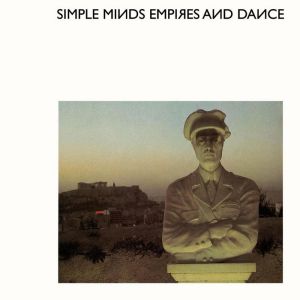
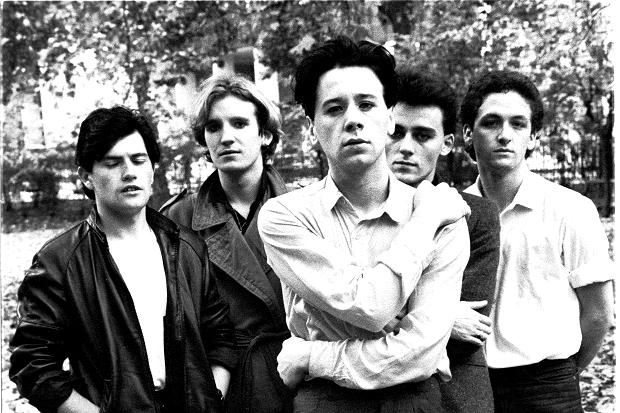
Before their mid-‘80s commercial peak, Simple Minds were an art-rock band par excellence.
They fitted perfectly into the post-punk landscape and on Empires And Dance, their third album, they certainly wore their influences boldly on their sleeve – Kraftwerk, Can, Roxy, Joy Division, Eno, Magazine, Velvet Underground, ‘Lodger’-era Bowie – but combined them exceptionally well.
Musically very strong, with Derek Forbes’ memorable basslines very much to the fore, this uncompromising album combines motorik beats with doomy vocals, Eno-style ambience, jagged post-punk guitar and deliciously sludgy synths.
Jim Kerr’s travelogue lyrics compliment the music perfectly, snapshots of bleak European passport controls, attempted assassinations and wintery landscapes. Producer John Leckie brings his usual spirit of experimentation and lays on the brittle, creeping sense of paranoia.
While the one-chord grooves tire a bit on ‘Today I Died Again’, ‘Celebrate’ and ‘Capital City’, the Euro-funk of ‘I Travel’ and ‘This Fear of Gods’ chills the blood. ‘Twist/Run/Repulsion’ is almost an early example of sampling with its random speech, out-of-phase horn blasts and queasy, looped drums. Kerr channels Bowie’s ‘African Night Flight’ with his high-speed rap (though on the demo he took a different approach).
‘Thirty Frames a Second’ and ‘Constantinople Line’ almost approach the work of Throbbing Gristle and Gary Numan with their garish synth tones and forbidding atmospheres. ‘Kant Kino’, named after a Berlin art-house cinema, pits a slight but very catchy Charlie Burchill guitar melody against amplifier hiss, tape echo and synth drone; Eno would surely approve and the track was possibly an influence on U2’s ‘4th Of July’.
The closer ‘Room’ could almost have come from the first Velvet Underground album (though they could have done with playing to a click track; the song almost doubles in speed by the end…).
Empires And Dance peaked at #41 in the UK album charts. It might have gone higher had Arista Records pressed more than just 7,500 copies at a time. The band couldn’t get off that label fast enough (like Iggy Pop).
But Peter Gabriel became a major fan and took them on tour with him throughout October and November 1980, allegedly paying most of their expenses.
Empires And Dance is very interesting album indeed and a great companion piece to Bowie’s Berlin trilogy, Peter Gabriel III and Talking Heads’ Remain In Light.

 I was a late starter when it comes to Prince, too young to get the sexual/spiritual absolutism of Purple Rain.
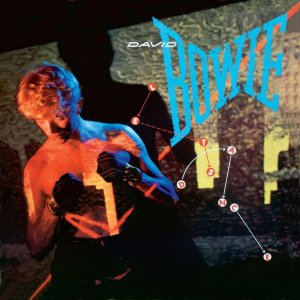 EMI America, released 14 April 1983







 movingtheriver.com