1980s Jazz, Fusion, Soul and Funk Acts I Should Like But Don’t

We’ve looked before at the celebrated 1980s rock and pop acts whose output somehow leaves this writer cold.

But how about the decade’s jazz, soul and fusion artists who always seem to get the props but inexplicably fail to float movingtheriver’s boat?

Rick James
Frequently mentioned in dispatches as a funk pioneer and influence on Prince etc. (and also mentor of Teena Marie?) but for this listener his music is generally coarse and one-dimensional, and his voice nothing to write home about.

Bill Connors
The guitarist made some excellent music for ECM Records in the 1970s both as solo artist and sideman (Jan Garbarek/Stanley Clarke/Return To Forever/Julian Priester etc.) but his 1980s work disappoints. He apparently developed a fixation on Allan Holdsworth’s sound/technique which hampered his progress. Somewhat regrouped in the 1990s and new millennium though.

Kazumi Watanabe
The guitarist employed some fantastic musicians (Jeff Berlin, Steve Jordan, Marcus Miller, Bill Bruford) in the 1980s but, outside of one or two half-decent riffs, seemingly failed to generate much memorable music.

Stanley Jordan
Bassist Anthony Jackson called him a ‘genius’, and he should know, but technical feats notwithstanding (he famously played the guitar exclusively by ‘tapping’ the strings with the fingers of both hands), he seemingly failed to develop his music beyond smoochy smooth jazz during the 1980s.

Chick Corea
Obviously a genius-level musical brain and maker of some memorable material in the 1970s but generally his ‘80s music and stage presentation was a bit embarrassing (though I have a penchant for the Light Years and Eye Of The Beholder albums). A great mentor though (Dave Weckl, John Patitucci, Frank Gambale, Scott Henderson etc.).

Al Di Meola
See above.

Howard Hewett
Owner of some fantastic pipes and a stellar career co-fronting Shalamar, but for this writer his solo career generally seems like over-produced, underwhelming mush, and he doesn’t seem much of a songwriter. (He did an unforgettable take on Marvin Gaye in the 1990s though.)

Narada Michael Walden
One of the great drummers (Jeff Beck, Weather Report, McLaughlin etc.) and producers (Whitney, Aretha etc.) ended the 1980s with a half-decent album (Divine Emotions) but, to these ears, the rest of the decade’s solo career was unmemorable disco/funk…

Brand X
Often touted as a kind of British Weather Report – fugedaboudit. Their musicianship was competent at best and their compositions somehow didn’t stick in the brain, despite the occasional drumming contributions of a Mr P Collins. Bill Bruford did it much better with a far superior bunch of players (Jeff Berlin, Allan Holdsworth, Jon Clark, Dave Stewart). See also: Pierre Moerlen’s Gong.

Pat Metheny
This writer dug his stereo-chorus sound and musical approach at the dawn of the decade (80/81, American Garage, Travels) but, as the 1980s went on, he seemed to embrace a mushy new-age sensibility and indistinct jazz guitar sound that generally underwhelmed. And his stage presentation is one of the least savoury in music history… (Gary Giddins: ‘intoning plush melodies with excessive sobriety, as though the notes were transmitted directly from God…’). Liked his collaborations with Ornette Coleman and Bowie though.

Jean-Luc Ponty
Valued sideman for ’70s behemoths (Zappa, McLaughlin) but his solo career has generally disappointed this writer (but generally not other jazz/rock fans, who inexplicably seem to love his stuff…), outside of the fact that he doesn’t seem to possess a particularly pleasant violin tone with an annoying penchant for the phaser pedal. He employed some superb players in the ‘80s (Scott Henderson, Rayford Griffin, Baron Browne etc.) but never convinced that he’s much of a composer. Always quite liked this though…

The Stanley Clarke Band: Find Out @ 40

Like several other jazz/rock heroes of the 1970s, Stanley had a distinctly dodgy 1980s.

But the decade had a decent beginning (Rocks, Pebbles And Sand), middle (Find Out, released 40 years ago this month) and end (If This Bass Could Only Talk).

Circa 1989, this writer found a vinyl copy of Find Out in a weird (long-gone) record shop on Hammersmith Broadway called Trax, having no idea that it had ever been released.

As it turned out, the album was a fresh (but false) start for Stanley, arguably his best funk/pop record and a last shot at stardom, complete with ingenious ‘Born In The USA’ cover.

His bass playing could still knock your socks off but here it took a back seat to well-crafted, commercial songs plus a few decent instrumentals, all utilising top LA-based players/engineers/songwriters.

The liner notes reveal all. Many of the keyboards were played by Patrick Leonard, who had just finished a stint as musical director for the Jacksons’ Victory tour and was rehearsing for Madonna’s first US tour during the recording. He also had a hand in several compositions.

Stanley had also recruited his best drummer since Simon Phillips: Rayford Griffin. Their duels match anything he did with Steve Gadd and Gerry Brown during the ‘70s, and Griffin brought great grooves and arrangement-smarts too.

Then there was the presence of teenage soul prodigy Robert Brookins, a fine vocalist and keyboard player who had toured extensively with George Duke in 1983. Finally the album sounds great, helped by superstar engineers Chris Brunt, George Massenburg, Mick Guzauski and Tommy Vicari.

It’s full of catchy, easy-on-the-ear pop/soul tracks like ‘Don’t Turn The Lights Out Yet’, ‘Psychedelic’, ‘What If I Should Fall In Love’, the title track and ‘The Sky’s The Limit’. His Springsteen cover pushes the envelope, opening with a nod to John Coltrane’s ‘A Love Supreme’ and turning into a neat mash-up of rock, electro and old-school hip-hop, with mad bass solo thrown in for good measure.

The two synth-heavy instrumentals are a blast and the album closes with a kind of ‘School Days’ for the ‘80s called ‘My Life’, complete with superbly over-the-top Raymond Gomez guitar playing and Griffin drumming, much-imitated by yours truly back in the day.

Sadly Stanley followed up Find Out with the dismal Hideaway and his solo career arguably lost momentum. He mainly moved over to movie soundtracks in the ‘90s though made a partial return to top solo form in the mid-2000s. But if you want to mainline mid-1980s synth-funk heaven, you could do a lot worse than this.

Billy Cobham @ 80: Five From The 1980s

The author with Billy Cobham, autumn 2000

Many happy returns to Mr Cobham who turned 80 this week. His drum mastery continues to inspire.

Movingtheriver pretty much learnt to drum by listening to Mr Cobham’s Spectrum, David Sanborn’s (RIP) Hideaway, Steely Dan’s Aja and a few more. His playing was sheer class, something to aim for. There was always an emphasis on technical excellence and good tuning – but the most important thing was the music, the groove.

I was fortunate enough to study with Mr Cobham at the Guildhall School of Music circa 2000. Unforgettable memories.

To celebrate his 80th birthday, here are five key moments from his 1980s. The early part of the decade saw Mr Cobham forge a new life in Switzerland, whilst fronting various bands featuring the likes of Mike Stern, Don Grolnick and Gil Goldstein. Then came the short-lived, controversial tenure in John McLaughlin’s revamped Mahavishnu Orchestra (explored in my book) which nonetheless produced some great music, and then a high-profile return to the solo career via Dave Grusin and Larry Rosen’s GRP Records.

5. Drum Clinic (Part 6), BBC TV, 1982 (?)
Here’s where it all started for movingtheriver. My dad caught it totally by chance on BBC2 and luckily recorded it onto a VHS. It blew the minds of many British drummers including Level 42’s Phil Gould who was reportedly present at the filming.

4. Billy Cobham/Herbie Hancock/Ron Carter: ‘Eye Of The Hurricane’, Lugano, Switzerland, 1983
A period when Billy embarked on various brilliant European collaborations. Still one of the most exciting, propulsive trios I’ve ever heard in acoustic jazz.

3. ‘The Dancer’ (1985)
If memory serves, I was given Mr Cobham’s Warning for my 13th birthday, alongside Joni Mitchell’s Dog Eat Dog and Steely Dan’s The Royal Scam. What a day that was. I still love this album and am glad I kept the vinyl.

2. ‘The Debate’ (1986)
Warning’s followup Power Play didn’t quite have the impact of his GRP debut but Billy’s drums have arguably never been better recorded.

1. Live In Cannes (1989)
A recent find this, worth watching for a rare look at Billy playing timbales (during the first song) and also his fine hookup with percussionist Nippy Noya.

Level 42: Rockpalast 40 Years On

It’s not surprising that a lot of Level 42 fans cite 1983 as the peak of the band’s career.
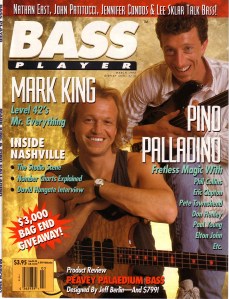
Messrs. King, Lindup, Gould and Gould had just released their first UK top 10 album Standing In The Light (and arguably their greatest single ‘The Sun Goes Down’) but were still very much holding on to their jazz/funk/rock roots, despite Polydor Records wanting more hits and less instrumentals.

The band were also still very much an in-your-face live act in 1983, a year off adding sequencers, drum machines and a much more commercial sheen to their sound. They toured Standing extensively during the autumn, including a dynamite show filmed 40 years ago today in Bochum, Germany, recently released on DVD.

It’s Exhibit A for those who love the early days of the band. And, for Level fans like movingtheriver who only came onboard around 1985, discovering the broadcast was gold dust. Also it’s not every day you see a bass player laying down deliciously funky lines while dancing like Max Wall (at around 4:30 below) and telling the fans to ‘Clap, you sods!’.

It’s interesting though that Mark King himself to this day strongly questions the live potency of the band during this era. In the March 1992 issue of Bass Player magazine, he came out with all guns blazing, discussing their November 1983 ‘Whistle Test On The Road’ appearance at the Brixton Ace (now the Academy):

‘I dug up an old one of us doing a live BBC programme… I thought, “Oh yeah, they were the good old days”. So I put on the video – and it was crap. The audience were fine, the lights were fine, the sound was fine. The band was crap. It was just so unsure, so uncertain…’

So which Level do you prefer? The choice is yours… In any case, it’s exciting to report that they’re currently in the middle of a UK tour celebrating 40 years of ‘The Sun Goes Down’.

Further reading: ‘Level 42: Every Album, Every Song’.

Sweat Band: Jamaica

There must be a huge cache of unreleased material in the George Clinton vaults – we’re probably talking Prince/James Brown/Frank Zappa amounts here.

And will it be Warners, BMG or Universal who get control of his recorded legacy (unless the deal has already been done…)?

As it is, you could probably spend a lifetime listening to his existing work. And just when you think you’ve got a handle on it, new things keep trickling through, like Sweat Band’s self-titled 1980 debut album.

The P-Funk side project, mainly written and performed by Bootsy Collins and Maceo Parker and recorded at United Sound Studios in Detroit, was the first release on Clinton’s short-lived Uncle Jam label, distributed by CBS.

In truth the album is very patchy (not helped by the cover which probably should have made my worst of the 1980s list) and shows the decline also encountered by Parliament/Funkadelic and Bootsy (whose Ultra Wave was released in the same week) around the same period, when funk was getting watered down by disco and commercial R’n’B.

But the track ‘Jamaica’ is brilliant. It’s gone straight into my 1980s Funk playlist with a bullet. It features legendary London music writer Lloyd Bradley (credited as Lloyd Bridges) talking rubbish all over it plus a seriously arse-over-teacup groove, catchy chants, underwater bass and fantastic horns.

And is that an uncredited Harvey Mason on drums? It sure sounds like him. Bring on the Clinton vaults if there’s a lot more like this lying around.

When Thomas Dolby Met George Clinton: 35 Years On

They say you should never meet your heroes – if the summer of 1985 is anything to go by, Thomas Dolby probably knows a thing or two about that.
First there was THAT Grammy Awards performance alongside Stevie Wonder and Herbie Hancock.

Then he contributed production, arranging and keyboard work to Joni Mitchell’s underrated Dog Eat Dog, and, of course, there was his appearance at Live Aid as part of David Bowie’s band.

But arguably Dolby’s most intriguing collaboration of summer 1985 was with P-funk pioneer George Clinton, who was onto his third solo album of the decade.

Just after Live Aid, Clinton invited Dolby out to the Bee Gees’ Criteria Studios in Miami to work on two tracks for Some Of My Best Jokes Are Friends.

Clinton was finding much lyrical inspiration in Reagan’s America, and his latest album was firmly focused on the Nuclear Threat. During a hilarious fishing trip with Dolby off Miami (apparently during which Clinton sat in a swivelling captain’s chair, rolled joints and played rough mixes on a boombox), they came up with a character for Dolby – the Space Limousine Driver! Of course…

Clinton then invited Dolby to perform at a James Brown tribute night for the annual Black Urban Music Conference in Washington DC. Apparently his guest spot during ‘Sex Machine’ (described by Dolby as being ‘like Alec Guinness having a seizure’) made Mr Brown laugh and also gave Dolby some cred with the hardcore P-funk crowd (though sadly it doesn’t seem to be on YouTube…).

Clinton was also apparently thrilled with Dolby’s contributions, and asked if there was any way he could return the favour. Dolby quickly cooked up a new song, recruited the Brecker Brothers and Lene Lovich and retained the formidable bass/drums team of Rodney ‘Skeet’ Curtis and Dennis Chambers from ‘Thrashin’.

They christened the new band Dolby’s Cube and recorded a great one-off single at Battery Studios in London. Sadly, despite a cool video, it didn’t chart.

Dolby’s experiences with George loosened him up, and made him reassess a solo career that he felt thus far had been hamstrung by dodgy business practices and too much emphasis on ‘image’.

His effervescent 1988 album Aliens Ate My Buick was more explicitly influenced by Clinton, who also contributed the song ‘Hot Sauce’ (Francois Kevorkian’s superb remix of ‘May The Cube Be With You’ was also included). The summer of ’85 was certainly a memorable one for all concerned.

Further reading: ‘The Speed Of Sound’ by Thomas Dolby

Prince: Dirty Mind/Controversy

Picture the scene: It’s August 1980 at Warner Bros Records’ Los Angeles HQ. Prince’s manager Steve Fargnoli is playing the suits his charge’s new demos.

Both the artist and his manager want to release these rough recordings as the next album.

Fargnoli hits the play button, and these lyrics crawl out over a peppy – but distinctly lo-fi – new-wave groove:

I was only sixteen but I guess that’s no excuse
My sister was thirty-two, lovely and loose
She don’t wear no underwear
She says it only gets in her hair…

Major labels often – quite rightly – take a lot of flak, but Warner Bros deserves credit for taking on Dirty Mind (released 8 October 1980) and Controversy (released 14 October 1981).

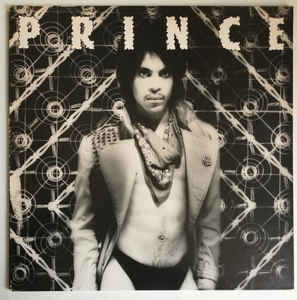
It was a brave move by Prince too, an incredible volte face after it looked like he might be going down a big-budget, soft-rock/disco rabbit hole. Just compare the Prince and Dirty Mind covers: it was definitely one in the eye for Reagan’s new, ultra-conservative regime.

I first heard these albums circa 1988 via a compilation tape made by my schoolfriend Seb. I already knew and loved Parade and Sign O’ The Times but these older songs sounded like they’d been sent down from a different planet. I didn’t pay much attention to lyrics in those days but sensed something very odd going on.

In the Dirty Mind/Controversy era, Prince’s main modus operandi seems to be: shock at all costs. It’s a novel approach, because if he can express himself completely freely, and then deliver such a classic, ‘throwaway’ rock song like ‘When You Were Mine’, you never know what’s going to come next. Cue a long, great career.

Recorded very quickly during summer 1980 at his rather ramshackle home studio in Lake Minnetonka, Minneapolis (the drum kit apparently sat in a puddle of water surrounded by sand bags), Dirty Mind has more in common with the B-52s, Elvis Costello, Blondie and The Cars than it does Earth, Wind & Fire or REO Speedwagon.

It’s nasty, brutish and short. And of course what struck me listening to it again after five or six years, it’s remarkably stripped down compared to a great deal of modern music – hardly surprising when nearly all the noises are made by Prince. Only ‘Head’, ‘Partyup’ and ‘Uptown’ outstay their welcome, underwhelming grooves with slight vocal performances (though the former became a great live track).

My old vinyl version of Controversy sounds absolutely great. Of course it helps that the album’s only 37 minutes long, and also there’s a lot more bottom-end this time. On a decent turntable, various details emerge like the scuzzy synth bass escaping from the left channel during the Lord’s Prayer on the title track (can you guess it’s a Prince album yet?) and some low-octave backing vocals throughout.

It’s also a totally schizophrenic album again, with the title track and ‘Sexuality’ laying down a kind of free-love/free-speech manifesto, two rockabilly tunes (one a message to Reagan), a graphic seduction ballad and synthetic funk tune (‘Private Joy’) which marks Prince’s first use of the Linn LM-1 drum machine.

Weirdly, none of these songs made the PMRC’s Filthy 15 list. But they still sound totally fresh, especially the unclassifiable stuff like ‘Dirty Mind’, ‘Annie Christian’, ‘Jack U Off’, ‘Sexuality’ and ‘Ronnie Talk To Russia’.

Prince toured Dirty Mind and Controversy extensively, and there were three particularly infamous gigs during the period: his London debut at The Lyceum on 2 June 1981 and the two shows supporting The Rolling Stones at the Los Angeles Memorial Coliseum on 9 and 11 October 1981.

Bill Laswell: Baselines Revisited

Bill Laswell has carved out one of the most critic-proof careers in music.

He’s probably best known as the producer of distinctive pop hits (Herbie Hancock’s ‘Rockit’, PiL’s ‘Rise’, Sly & Robbie’s ‘Boops’) and rock/jazz legends in need of a makeover (Mick Jagger’s She’s The Boss, Iggy Pop’s Instinct, Sonny Sharrock’s Ask The Ages, Ronald Shannon Jackson’s Red Warrior).

He was the Miles Davis Estate’s go-to man for reimagining the trumpeter’s 1970s catalogue (Panthalassa) and also hugely important for bringing the P-funk sound into the ’80s and ’90s.

But Laswell is also a highly-original bassist in his own right and was a key figure of the late-’70s/early-’80s Downtown New York scene, featuring in bands like Massacre, Last Exit and Material (though he was pretty disparaging about the ‘scene’, once telling writer Bill Milkowski: ‘There never really was a Downtown community. All that means is that people don’t have enough money to get a better place to live…’).

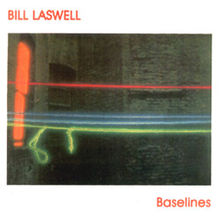
His solo career has been interesting too, latterly showcasing a fusion of ambient, world and dub styles. But it’s his debut album Baselines (released 14 June 1983 on Elektra/Asylum) that really floats my boat. He plays a lot more bass than usual, fusing the soundworlds of Bootsy and Ornette Coleman and doing cool things like sticking objects under the strings or digging out the old Mu-Tron pedal for some memorably funky lines.

To these ears, Baselines is also the project that gave him the perfect vehicle for all his interests – My Life In The Bush Of Ghosts-style found sounds, paranoid funk a la Talking Heads/King Crimson, Afrobeat, early hip-hop, avant-fusion, authentic jazz soloing and even post-punk white noise courtesy of future Chili Peppers/Soundgarden producer Michael Beinhorn.

I wasn’t in New York in 1983 but this album would seem to be a perfect amalgam of all the hippest sh*t that was going down at the time. It’s Laswell’s show, leading from the front on four/six/eight-string fretted and fretless basses and generally keeping the tracks short and sweet. Baselines is also beautifully recorded and produced – it’s easy on the ear despite some abrasive textures.

Shannon Jackson has never sounded better, supplying hilariously scattergun grooves and crunching fills. ‘Upright Man’ still inspires a kind of giggly menace, nearly 40 years on. Who supplies the scary spoken-word part? Whosampled doesn’t reveal, but the smart money’s on Fred Frith (who also plays some amusing violin on country-tinged curio ‘Lowlands’).

Baselines was certainly influential from a bass point of view too – you can bet Jah Wobble, Mick Karn, Stump and Human Chain had well-thumbed copies in their collections. But, to the best of my knowledge, Laswell has never returned to such a bass-led solo project since. A shame. He might have a future there…

TACK>>HEAD: Friendly As A Hand Grenade 30 Years On

Tackhead have always been ahead of their time, but no one could have predicted quite how prescient their 1989 album Friendly As A Hand Grenade would prove.

When Trump became president in 2016, Gee Vaucher’s brilliant cover artwork went viral, though one wonders how many people knew the image’s origins.

In a way that’s a good metaphor for the band’s career. A supergroup of session players, and arguably the ultimate post-punk band in their effortless fusion of hip-hop, P-funk, agit-prop, dub, house, gospel, blues and industrial, Tackhead have never quite hit the mainstream, even while their respective careers flourished with other artists.

And that’s probably exactly how they like it. Tackhead has always been a kind of musical petri dish for each member’s explorations, kind of a funk version of 1980s King Crimson.

Bassist Doug Wimbish, drummer Keith LeBlanc and guitarist Skip McDonald had of course hooked up during their legendary sessions for Sugarhill Records, and vocalist Bernard Fowler was one of the great singers on the ’80s New York scene.

Add London-based mixologist/dub innovator Adrian Sherwood and it was a whole new thang, mixing the latest sampling technology with classic funk-rhythm-section smarts.

And if their second album Friendly, released 30 years ago this weekend, hasn’t dated as well as hoped, that’s more down to its mastering limitations (not enough bottom end) and occasional dearth of quality original material.

But when it works it really works, a thrilling mix of heavy guitar, funk basslines, tasty grooves, soulful vocals and scary samples, usually with a political element.

‘Mind And Movement’ steals a march on Heaven 17’s ‘We Don’t Need This Fascist Groove Thang’, a funky missive against Margaret Thatcher’s late-’80s policing policies. ‘Stealing’ is a grinding, gospel-tinged rail against TV evangelists.

The two ska cameos are pure filler, but side two is much better, kicking off with the classic Tackhead theme tune ‘Airborne Ranger’, and gradually adding in elements of old-school hip-hop and early house.

Friendly was a hit, reaching #3 on the UK Indie album chart and reportedly selling over 100,000 worldwide. The majors smelt a hit; EMI subsidiary SBK came calling with a big advance and huge recording budget (LeBlanc puts it at around £250,000), resulting in the 1990 major-label debut Strange Things, which had some brilliant moments but has been been described by a few band members since as ‘crap’.

Arguably the better follow-up to Friendly was the 1994 Strange Parcels album Disconnection, credited as a ‘A Tackhead Re-Duction’.

Elsewhere, Wimbish went on to great things with Living Colour, McDonald formed the potent Little Axe and Fowler became a key member of the Rolling Stones touring entourage. And they all continued to work with fascinating On-U Sound outliers Mark Stewart and Gary Clail.

But the ‘real’ Tackhead sound has probably never adequately been captured on record  – the gigs were (and are) where it’s at (and highly recommended is their live anthology Power Inc. Volume Three).

There was a memorable March 1989 show at London’s Town & Country Club, and I went to many great gigs in the capital during the early 1990s and beyond. The band’s fans were (and are) an incredibly disparate bunch, from Whirl-Y-Gig crusties to B-boys and musos.

And they’re still with us. Don’t miss them if they come to your town – they’re still doing some of the best stuff out there.

Prince: Batman 30 Years Old Today

At the beginning of 1989, the tabloids were full of rumours that Prince was in dire financial straits.

While that seems unlikely, with hindsight it does seem a curious decision for him to take on a soundtrack gig for such a huge mainstream movie, stepping right into the belly of the Warner Bros. beast.

But then it’s also not much of a surprise that he smashed Batman out of the park. On many levels, it was the perfect project for the time – the movie’s themes appealed to his post-Lovesexy spiritual concerns and also tapped into his own feelings about fatherhood. He explored those themes poignantly on ‘The Future’ and ‘Vicki Waiting’.

Musically, in the main he retreated from Lovesexy‘s album’s dense, complex, band-inspired sounds and went back to a minimalist approach, pushing his guitar right to the fore and making liberal use of samplers and a Fairlight.

But even though ‘The Future’, ‘Electric Chair’, ‘Partyman’, ‘Batdance’ and ‘Lemon Crush’ are essentially one-chord jams, Prince knows exactly how to hold the attention with false endings, escalating riffs, hysterical guitar solos and quirky chord voicings. The net result is a somewhat forbidding but still undeniably funky album.

Also he doesn’t scrimp on the dancefloor classics – put on ‘Partyman’, ‘Trust’ or ‘Batdance’ (a UK #2 and US #1) and to this day you’ll get any party started. Elsewhere, ‘Scandalous’ is a brilliantly-sung, sometimes funny seduction ballad in the tradition of ‘Do Me Baby’ and ‘International Lover’, while ‘The Arms Of Orion’ is a pretty – if somewhat trite – ballad.

The album was a smash hit, selling over a million copies in its first week of release and becoming his first US #1 album since Around The World In A Day. Prince was almost returning to his Purple Rain popularity, no doubt helped by the huge success of the movie.

But this kind of mainstream success was short-lived. Something was eating him up inside – in typical form, he regrouped immediately and took on a deeply personal project, the doomed Graffiti Bridge movie/album. Probably his least-remembered album of the ’80s – and arguably his last classic – Batman is ripe for rediscovery as we reach more end-of-the-decade, spiritual/political uncertainty.