I’m certainly not alone in finding the seaside very evocative of childhood memories and, in turn, musical revelations gone by.
Walking on Devon’s Slapton Sands recently, I was taken back to family holidays at St Margaret’s Bay, a little village atop the famous White Cliffs of Dover on the English Channel.
Armed with my Walkman, I’d take off towards the creepy, deserted air-raid shelters, then scramble up the steep chalk track to enjoy the huge expanse of sea in all directions and the French coast in the distance.
The two tracks most redolent of that time – and two which somehow seem to capture something about the English fascination with all things nautical – are Kate Bush’s ‘And Dream Of Sheep’ and Peter Gabriel/Robert Fripp’s ‘Here Comes The Flood’. They are almost indistinguishable to me and will forever be connected to that coastline and the seaside in general.
Gabriel’s sea song was originally recorded for his 1976 debut album in a bombastic style. But in 1978, he laid down a much gentler, far superior piano/vocal version, to which Fripp later added Frippertronics and a spoken-word segment from his spiritual guide/Gurdjieff-protegee JG Bennett (who also turned up on David Sylvian’s Gone To Earth).
Gabriel’s lyric seems to point towards the inhabitants of an island (England?) joining forces (telepathically?) to save themselves from a pending (apocalyptic?) tsunami. In doing so, the islanders taken on mystical, extra-sensory powers.
There are shades of the Genesis track ‘Supper’s Ready’, with its epic tale of good versus evil, and also elements of the research into ESP that Gabriel was apparently doing at the time.
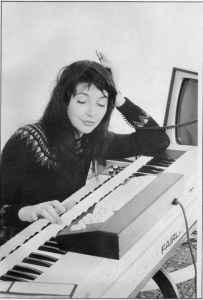
Bush’s sea song kicks off the extraordinary Ninth Wave suite (and uses very similar chords to ‘Here Comes The Flood’: C#min, A and B) taking up the entire second side of her classic 1985 album Hounds Of Love. We are thrust unceremoniously into a psychic association with a female protagonist who finds herself in the middle of the sea after a shipwreck. Echoes of past/present obsessions, loves and losses float to the surface of her mind (including the Radio 4 Shipping Forecast), ostensibly to keep her awake so that she doesn’t drown.
The conclusion of the song cycle suggests that she’s now at peace and in a far more positive state of mind, either in death or safe at shore.
What are the greatest live albums in music history?
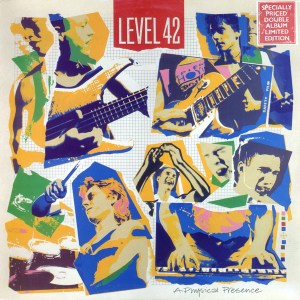
James Brown’s Live At The Apollo. Donny Hathaway’s Live and Bill Withers’ Live At Carnegie Hall might get a mention, but I would make a case for Level’s A Physical Presence too.
Quite simply, this album is the nearest a British band has ever come to the kind of effortless fusion of black music styles achieved by US supergroups such as Weather Report and Earth Wind & Fire. But Level 42 were always a far edgier proposition than those bands, mixing up the funk, world-class musicianship and jazz/rock with an almost punky intensity.
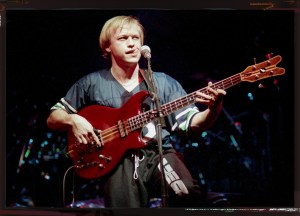
Mark King in 1985
Recorded in March 1985 at such suburban funk meccas as Golddiggers in Chippenham, The Coronet in Woolwich and The Hexagon in Reading, A Physical Presence showed off Level on the cusp of their mainstream pop breakthrough.
But you’d never know it. It’s hard to imagine any other British band before or since attempting the audacious fusion instrumentals ‘Foundation And Empire’ or ’88’.
Police-esque ‘Follow Me’ and driving ‘Chant Has Begun’ hinted at a new rockier direction which was quickly jettisoned when they got back into the studio for World Machine. Mark King’s vocals are punchy, distinct and soulful throughout.
Has there ever been a better British funk/R’n’B rhythm section than Mark King (bass) and Phil Gould (drums)? Bass players beware – this album features a succession of some of the most memorable and inventive B-lines in funk history. Try ‘Eyes Waterfalling’, ‘Kansas City Milkman’ and ‘Turn It On’ for starters.
Phil Gould’s drumming is a perfect combo of groove and chops, whilst somehow also retaining a ‘British’ sound, kind of a mixture of Bill Bruford and Billy Cobham. And keyboardist Mike Lindup gets through so much work that he sometimes sounds like he’s got four hands (with a real Lonnie Liston Smith influence on the Fender Rhodes), and 90% percent of his intricate playing is without the aid of a sequencer.
It’s hard to believe that only 18 months later, after recording commercial breakthroughs World Machine and Running In The Family, the classic Level line-up would splinter for good amidst touring pressures, musical differences and personal issues. But APP is a glorious snapshot of a golden summer and the pinnacle of surely the UK’s greatest ever jazz/funk/pop band.
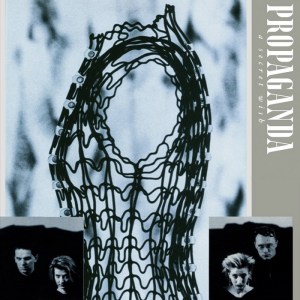
To many fans, A Secret Wish represents the peak of ’80s pop.
The glamorous though mysterious project was a flawed masterpiece but also the beginning of the end for big-budget, endlessly-fussed-over ‘concept’ albums.
It doesn’t really sound much like much else around in mid-’85 (though Pet Shop Boys and a-Ha were definitely listening), nor is it particularly similar to other ZTT releases or Propaganda’s subsequent albums.
A large part of the mystique is provided by Stephen Lipson’s pristine, widescreen production (Trevor Horn only produced ‘Dr Mabuse’), as well as his formidable mixing and guitar work (check out the extended mix of ‘Duel’). Claudia Brucken’s lead vocals are original and Suzanne Freytag’s spoken-word interludes carry unmistakable echoes of Nico (emphasised by their seriously weird ‘Femme Fatale‘ cover from the album sessions).
Yes guitarist Steve Howe contributes a nifty solo to ‘The Murder Of Love’ and David Sylvian has a hand in writing the gripping ‘p:Machinery’. But man of the match is ZTT house keyboardist Peter-John Vettese, purveyor of doomy soundscapes and intriguing chord voicings. Josef K’s post-punk classic ‘Sorry For Laughing’ is reinvented as a Wagnerian synth-pop anthem and there aren’t many more epic album openers than the majestic ‘Dream Within A Dream’.
Paul Morley, ZTT marketing/content man and former husband of Claudia Brucken, has talked about Trevor Horn and David Sylvian’s involvement in A Secret Wish:
‘When Trevor pulled out of producing them, I actually asked David Sylvian. While he was thinking about it, he came up with the ghostly top line of ‘P:Machinery’ – the music, if you like – and a gorgeous watery slowed down version of ‘Duel’, but he decided against producing them, and it stayed within the Sarm (London recording studio owned by ZTT label owners Trevor Horn and Jill Sinclair) pop factory. Actually, another sign of the split between sensibilities at the label: I asked David Sylvian to produce Propaganda and Jill approached Stock Aitken and Waterman!’
A Secret Wish wasn’t a huge hit and surely didn’t make back its sizeable recording costs, reaching just 16 in the UK album chart, but the singles ‘Duel’ and ‘p:Machinery’ both made the top 30.
The band picked up the first-class rhythm section of ex-Simple Minds pair Derek Forbes on bass and Brian McGee on drums (as well as Bowie/Dolby guitarist Kevin Armstrong) and toured the album extensively. I very clearly remember this performance on the BBC music show ‘Whistle Test’ in late 1985. Happy days:
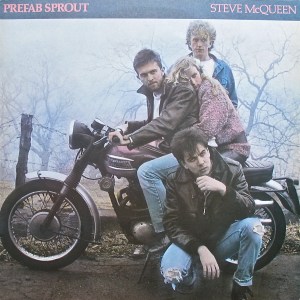
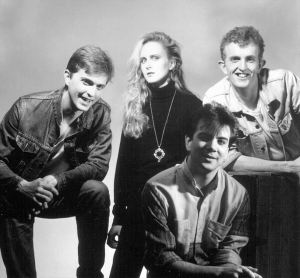
Steve McQueen producer Thomas Dolby had taken part in a Radio One ‘Round Table’ singles review programme in early 1984, waxing lyrical about Prefab’s ‘Don’t Sing’.
The Sprouts happened to be listening in and asked their manager Keith Armstrong to ring Dolby the next day. Dolby takes up the story:
‘Keith said, “It so happens we’re actually looking for a producer right now. Are you interested?” I said, “Absolutely.” So they said, “Well, we don’t have many songs on tape to play you, but we’d like to invite you up to Paddy’s (McAloon, Prefab singer/songwriter) house.” I took the train up, spent the day there. He lived on the top of a hill in an old Catholic rectory where his mum had looked after the church. There were crucifixes on the walls. His dad, who’d had a stroke, was ill in bed upstairs. Paddy took me to his room and pulled out this stack of songs. He’d squint at them and strum his way through them. He would write notes for chords and melodies over the top of the lyrics but primarily it was about the poems.’
The songs for Steve McQueen were worked up in rehearsals with Dolby at Nomis Studios in West London in the autumn of 1984, before the recording sessions proper started at Marcus Studios.
The Sprouts apparently found the Big Smoke in turns beguiling and baffling. Taken out for dinner by CBS execs, they were introduced to the dubious pleasures of haute cuisine. According to Dolby, upon being delivered a tiny plate of food, bassist Martin McAloon was once heard to utter, ‘That was for me neck – now what’s for me stomach?’!
Dolby brought out the best in singer Wendy Smith, often using her unique soprano almost as a musical instrument, especially on ‘Moving The River’ and ‘Blueberry Pies’.
Dolby realised that part of his role as producer was to ‘smooth out’ some of the rough edges of Paddy’s remarkable songs:
‘What happened when the band started to arrange those was that there were lots of extra beats here and there, strange chord changes or rhythm changes, or odd lengths of phrases. The musicians tried to sort of accommodate those, but in fact what needed to happen was a few of the rough edges needed to be trimmed off. But at the same time, I didn’t want to throw out the baby with the bath water. I mean, what made them so unique is that they defied logic. So the task, really, at hand, for me, was how to elevate them to a more accessible level, commercially, without homogenizing the essence of the music.That was the first meeting with Paddy. He’s a very interesting guy, very well read but humble.’
The album was mixed at Farmyard Studios in Buckinghamshire. That was where Paddy really became aware of what Dolby had cooked up:
‘It’s taken me decades to try to absorb what it was that Thomas did. I mean, he had a great ear for individual sounds, he wasn’t swayed so much by the things of the day. He had a Fairlight and a PPG Wave and he would use them sparingly, and he had no time for the Yamaha DX7 and the things that everyone else rushed out and bought. He was into synthesis really. He didn’t make a big thing of it… it was just what he did, in addition to having a good sense of structure.’
Dolby talks about Paddy’s vocal style on the album:
‘He can be coaxed into letting rip every now and then. So one of my favourite things about the album is that you get these occasional primal screams. The way he sings “Antiques!”, the opening line. And then later on in “Goodbye Lucille” which is this very sort of lush, soft song, in the chorus he just lets rip at the end with this scream. And I always liked that he did that on that album. In later years he tended to be this sort of breathy crooner, and you hear less of that raw side.’
Drummer Neil Conti on recording Steve McQueen:
‘When we went in to record the album, there was a very relaxed vibe which I think you can hear in the music. After a rather tense start, when Thomas Dolby, who was used to drum machines, basically tried to get me to play like a machine, things loosened up and we had some hilarious late night jams after coming back from the pub. The track “Horsin’ Around” was recorded after one such rather inebriated sojourn to the boozer and you can hear Martin laughing while I’m counting it off. That track is all over the place, but it was just what the song needed. We couldn’t get it at all before we went to the pub to horse around a bit. I think the relaxed vibe really is one of the keys to why that album sounds good. No clicks, three takes max of each song, very loose and natural.’
Steve McQueen reached #21 on the UK album chart, perhaps a slight disappointment, but the critics generally loved it. It made #4 in NME’s Albums of 1985 poll and was well-received in Europe and the US. Rumours even appeared in the press (some good CBS PR) that Prefab might play at Live Aid. That was never going to happen but half the band did back David Bowie (producer Thomas Dolby, drummer Conti and occasional guitarist Kevin Armstrong).
An extensive UK and European tour followed the album release after which the band quickly recorded Protest Songs in late 1985, though it wouldn’t released for another four years. There was so much more to come from arguably the British band of the decade.
First of all: the cover. As a teenager, I was instantly intrigued by Frank Auerbach’s artwork, and then the music very definitely lived up to the packaging.
But, though billed as such, it could hardly be called a ‘live’ album. In the recent band biography ‘A Foreign Place’, Jansen reports that the only ‘live’ elements on the album are his drums – everything else was replayed in the studio. Three excellent new all-studio tracks were added too. But Oil On Canvas was released six months after the band’s break-up and proved a near-perfect farewell from one of the key groups of the early ’80s.
The fact that it ended up as Japan’s highest-selling album (shifting over 100,000 in the UK and hitting #5) must have really irked manager Simon Napier-Bell – after year of toil, the band were calling it a day just as they were getting some commercial success (read ‘A Foreign Place’ for a full explanation of the split).
Tin Drum was great but who knows what they might have come up with as a follow-up given the giant strides they had made as musicians, songwriters and arrangers since ’81. Sure enough, within a few months of their split, Duran Duran were taking their sound and image to the bank.
The Oil On Canvas line-up, December 1982: Masami Tsuchiya, Richard Barbieri, David Sylvian, Steve Jansen, Mick Karn. (Photo by Fin Costello/Redferns)
There is so much to enjoy on Oil On Canvas. The Tin Drum tracks have added heft and a bit more air. David Sylvian’s vocals are warmer and more expressive than on the studio albums (though he has since virtually disowned this early singing style), and his Satie-esque title track prefigures the triumphs of his solo career.
‘Ghosts’ is extended with a superb Stockhausen-meets-serialism intro/interlude thrown in while ‘Canton’ becomes a mighty parade of musical colours, with clanging synths, whip-lashing china cymbals and the late great Mick Karn’s increasingly insane bass embellishments.
There has never been a rhythm section quite like Karn and Steve Jansen (drums) and probably never will be again. They revel in open spaces and ‘non-rock’ textures, typified by the deceptively simple and downright spooky ‘Sons Of Pioneers’.
Karn sounded like no one else on fretless bass, exploring Middle Eastern concepts and weird intervals to produce a sound both complex and hilarious. Jansen came up with several of the most ingenious backbeats in pop history while always making them danceable.
Together, they produced classic grooves like ‘Visions Of China’, ‘Cantonese Boy’ and ‘Still Life In Mobile Homes’, and Richard Barbieri’s creative keys playing always emphasises texture and mood over technique. His closing instrumental ‘Temple Of Dawn’ bids a fantastic album farewell first with a chill and then with a brief shot at redemption.
Sylvian escaped to a successful, innovative solo career, Karn also went solo and hooked up with collaborators including Midge Ure, Peter Murphy and, most memorably, Kate Bush. Barbieri and Jansen teamed up regularly in various projects and recorded together as The Dolphin Brothers in 1987 but didn’t enjoy much commercial success. Against all odds, they all got together again at the end of the ’80s for the intriguing Rain Tree Crow project.
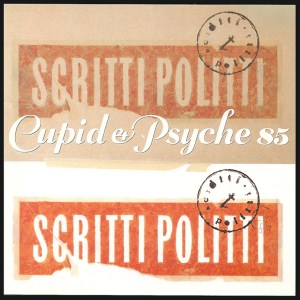
Listening again to the brilliant Cupid 30 years after its release, I wonder if it sounds very dated to modern ears.
Whilst it unabashedly utilised all manner of mid-’80s technology (Fairlight, drum machines, sequencers), I don’t really ‘hear’ those elements any more. All I hear is top-notch songwriting, intriguing and intelligent lyrics, great grooves and Green’s unique vocals.
Cupid hit me at exactly the right age; it was the soundtrack to endless summer evenings, teenage crushes, adolescent musings.
Though Scritti leader/vocalist/co-songwriter Green Gartside left behind his post-punk roots and the ‘indie’ sound of his Rough Trade debut album Songs To Remember to create this major-label debut, Cupid certainly had antecedents: Green and keyboardist/co-composer David Gamson revered the highly-syncopated R’n’B/electro of The System, Chaka Khan, ZAPP and Michael Jackson, but they added some classic pop songcraft and intricate harmony.
Rough Trade boss Geoff Travis gave Green his blessing and, coupled with manager Bob Last (who also managed Human League and ABC), Green pitched the Americans his fusion of pop and funk. As he told WORD magazine in 2006, ‘The American labels were all tickled pink by these big NME interviews we did and that loosened their wallets. Bob and I were terribly persuasive as to why they should part with vast sums so we could make a record.’
Legendary Aretha/Chaka producer Arif Mardin came on board as did a raft of quality players such as Marcus Miller, Steve Ferrone, David (The System) Frank, Robbie Buchanan, Robert Quine and Paul Jackson Jr. But Green apparently turned out to be more of a perfectionist than any of them: ‘It took us a great deal of time to get our bits right and my anxiety about singing was pretty acute. I would demand to sing things over and over again and I’m not sure I ever got it better than the first time.’
Cupid featured three classic singles – ‘The Word Girl’, ‘Absolute’ and ‘Wood Beez (Pray Like Aretha Franklin)’, though eventually a total of five tracks were released as A-sides.
The John Potoker remix of ‘Perfect Way’ (far superior to the album version) even became a massive hit in the States, reaching 11 on the Billboard Hot 100 and pushing worldwide sales of the album over the million mark.
While ‘Don’t Work That Hard’ and ‘Lover To Fall’ might be deemed ‘filler’, they easily transcend that label by dint of their sprightly grooves and sheer catchiness. The beautiful ‘A Little Knowledge’ showed that Green and Gamson were on the same page as Prefab’s Paddy McAloon when it came to sumptuous, intelligent romantic ballads in the mid-’80s, and the track is a great companion piece to ‘When Love Breaks Down’.
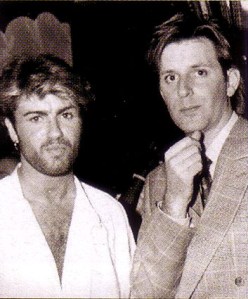
Post-Cupid, Green and Gamson booked and then cancelled a world tour (they were apparently visited in the studio by MTV executives who told them, ‘Just think, you’ll never have to tour again!’), wrote songs for Al Jarreau and Chaka Khan, made friends with Miles (who covered ‘Perfect Way’ on Tutu), hung out with George Michael at various London nightspots, embarked on a year of press in America to cash in on the success of ‘Perfect Way’ and then reluctantly hit the studios of New York and London to record the follow-up Provision.
George and Green, London, 1986
A cursory listen to a radio station like Absolute 80s reveals the wide-reaching influence of Cupid on countless late-’80s bands: a-ha, Go West, Climie Fisher, Living In A Box, Pet Shop Boys, Bros and Aztec Camera all tried for those clinical, Swiss-watch-precision arrangements and uplifting pure pop sound, but generally lacked Gamson’s ingenious chord changes and Green’s gift for melody.
Tears For Fears’ second album Songs From The Big Chair did the business.
A relatively cheap record to make, it sold millions and elevated the Bath boys into the big league. Early ‘80s technology, boy-band looks and some great hooks had carried TFF through the first two albums but now they felt they had to deliver a polished, ‘musicians’ album’ to match their heroes. Big mistake…
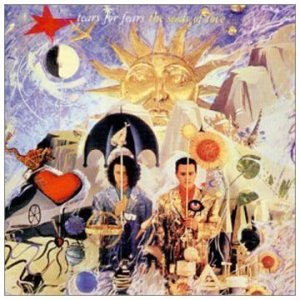
The Seeds Of Lovewas the result, and with it they tragically o’erreached themselves in the search to emulate their heroes Gabriel, Ferry and Sylvian. Four producers. Nine studios. Over a million pounds in studio costs. Broken marriages. Dozens of session musicians.
A famous Q article outlined the painful, sometimes embarrassing lengths the two protagonists Roland Orzabal and Curt Smith went to to complete Seeds.
Orzabal has said he wanted to make something musicians would love, something ‘world-class’. This over-egged curio shows what happened when pop stars tried to buy credibility in the late-‘80s, undeniably under a fair amount of record company pressure to follow up a monster.
The intro of ‘Woman In Chains’ still retains some Blue Nile-ish power before being obliterated by Phil Collins’ sledgehammer drums and overblown AOR guitars; Gabriel/Joni/Sting drummer Manu Katche plays a blinder on ‘Badman’s Song’ but the melodies barely register.
‘Sowing The Seeds Of Love’ still stands up though as a decent Beatles tribute complete with some lovely woozy drums from Big Chair producer and ex-Ant Chris Hughes and a very cool chord sequence.
‘Standing On The Corner Of The Third World’ is initially very attractive complete with Jon Hassell’s ethno-trumpet and some typically slinky fretless playing from Pino Palladino, but its grand atmosphere and ambience can’t obscure the lack of structure and good ideas.
Swords And Knives’ starts with an interesting piano/voice melody but quickly gets mired in a succession of annoying guitar solos and grandiloquent key changes.
‘Year Of The Knife’ (these boys are really interested in knives…) is a pretty ugly collision of gospel vocals and a sub-‘Broken Wings’ groove. Again, the song runs out of stream after two minutes and tries to cover it up with a fiddly string arrangement and weird avant-metal guitars. Even uber-drummer Simon Phillips sounds uninspired.
The Q article, September 1989
Orzabal almost achieves a Sylvian-ish level of sophistication on the closing ‘Famous Last Words’ but once again blows it, neglecting to supply a B section or cogent lyrics. Quiet/loud dynamics alone do not a good song make.
The album was a hit, going straight to number one in the UK and selling well in Europe and the States, but was it worth all the effort? Orzabal and Smith were barely on speaking terms and didn’t record together for over a decade after Seeds‘ completion. It was certainly a big and bold farewell to the ’80s from one of the decade’s success stories.
Walk Of Life (2)
Money For Nothing (4)
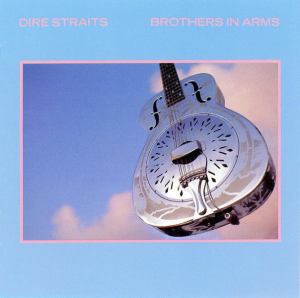
Brothers In Arms (16)
So Far Away (20)
Your Latest Trick (26)
Whilst enjoying Mark Knopfler’s considerable guitar skills and knack for writing cinematic ballads (‘Romeo And Juliet’ and ‘Private Investigations’ would probably make my top 20 songs of the ’80s), Dire Straits’ mega success has generally puzzled me.
Knopfler always seemed a Bob Dylan/Randy Newman/Donald Fagen kind of guy – subtle, intelligent and wry/wary – but Straits’ mostly meat-and-potatoes rock music told another story.
But Brothers In Arms hit at exactly the right time on its release in 1985; its digital sheen, beautifully-crafted songs, tasty drumming (Omar Hakim, except on ‘Walk Of Life’ and ‘Money For Nothing’) and mastery of various styles (ZZ Top-style boogie, roots rock, jazzy pop) created an ’80s perfect storm. It’s so much part of the furniture that it’s almost beyond criticism.
Mark Knopfler at Live Aid, 13 July 1985
Knopfler’s laidback, post-Dylan vocals are a great antidote to all those oversingers of the ’80s (and right up to the present day).
On ‘So Far Away’ and ‘Walk Of Life’, his pitching is not perfect and his phrasing throwaway, but the overall effect is pleasing possibly because it’s such a contrast to the super-slick production and playing.
And he shows himself again to be a brilliant ballad writer – ‘Your Latest Trick’ carries on from where ‘Private Dancer’ and ‘Private Investigations’ left off, a noirish classic featuring a famous sax break by Michael Brecker just as memorable as ‘Careless Whisper’ (for better or worse!).
‘Why Worry’ and the title track (apparently Knopfler’s response to the Falklands War) are timeless epics. I found myself unexpectedly very moved listening again to the latter the other day. In fact, I was surprised how generally downbeat the album was, not having heard it for a good few years.
Brothers In Arms outsold both Michael Jackson releases (Bad and Thriller) to be the UK’s best-selling non-greatest hits album of the ’80s, spending 14 weeks at number one. Surely a big reason for its success was that it was heavily promoted as a digital recording and as such was perfectly suited to the new CD format.
The fact that it was the ‘test CD of choice’ for yuppies on the lookout for new hi-fi equipment must have been a delicious irony for Knopfler and Straits manager Ed Bicknell, given the lyrics to ‘Money For Nothing’. There were even rumours that at the time other artists were struggling to get their albums pressed onto CD due to the overwhelming demand for Brothers In Arms.
In the UK, despite decent chart success (six top 40 singles), China Crisis have always had what you might call an image problem – they’ve never quite been able to shake off an almost imperceptible naffness.
Is it because of their name? Because their first hit was the extremely wimpy ‘Christian’? Because they were neither doomy enough for the post-punk crowd nor cosmopolitan enough for the New Romantics?
Or maybe because they had the dubious honour of being playlisted by Alan Partridge? (Actually, they were played by Partridge’s nemesis Dave Clifton, Ed.)
Steely Dan co-conspirator Walter Becker didn’t think they were too shabby though, apparently requesting a meeting with the Liverpudlians after he heard the nuclear-themed ‘Papua’ from their second album, 1983’s Working With Fire And Steel. He was intrigued by their obtuse lyrics, they liked the cut of his jib and apparently got on like a house on fire.
Becker signed on as producer and was summoned to Parkgate Studios near Battle, Sussex, to begin work on Flaunt The Imperfectionwhich would turn out to be CC’s biggest success to date. Flaunt reached 9 in the album chart and stayed in the UK top 100 for 22 weeks.
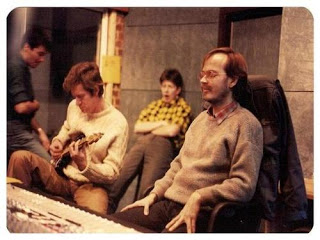
China Crisis and Walter Becker, Parkgate Studios, 1985
With the steady hand of legendary Stones/Sly/Hendrix engineer Phill Brown onboard too, the album featured two infectious top 20 UK hits, ‘Black Man Ray’ and ‘Wake Up (King In A Catholic Style)’.
Well worth checking out too is the ‘Black Man Ray’ B-side ‘Animalistic’ which shows that the lads were also flirting with a variation on Britfunk in their spare time.
Apart from the singles, there are a host of other treats on this album, not least the drumming of the late Kevin Wilkinson. He was a big drumming hero in my teenage years. He’s very close to a British Jeff Porcaro or Carlos Vega, a tasteful groovemaster with a few chops too.
Gazza Johnson’s basslines are catchy and memorable and the songwriting is solid throughout, only ‘Wall Of God’ and ‘Blue Sea’ lacking strong choruses. Then there’s Becker’s top-draw production. He ‘Fagenizes’ Gary Daly’s excellent vocals (usually double-tracked with a touch of delay) and shows off his arranging skills with subtle synth/guitar layering and brooding horns.
In particular, ‘Strength Of Character’, ‘You Did Cut Me’, ‘Bigger The Punch I’m Feeling’ and ‘Gift Of Freedom’ bear his fingerprints, the latter featuring some Gil Evans-esque woodwinds.
China Crisis followed up Flaunt with 1986’s What Price Paradise, a massive misfire wherein producers Clive Langer and Alan Winstanley inexplicably tried to turn them into Madness (If I remember rightly, the Q review of the album ended with the phrase ‘File under: Victim Of A Cruel Medical Experiment’!). But the band reunited with Walter Becker on the excellent Diary Of A Hollow Horse four years later.
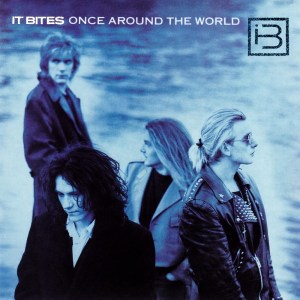
Everyone has their favourite summer music and the brilliant Once Around The World is an album I always turn to at this time of year.
It’s a feast of resplendent chord changes, audacious song structures, good grooves, blistering lead guitar lines and uplifting, unusual melodies.
As a music-mad 15-year-old, this was the album I was really waiting for. I had recently become slightly obsessed by their debut The Big Lad In The Windmill and couldn’t wait to hear what the talented Cumbrian four-piece would come up with next.
For some reason, I didn’t buy OATW on its first week of release, but my schoolmate Jem Godfrey did. I would badger him for details in the playground. Me: ‘Are there any instrumentals on it?’ Jem: ‘No.’ Me: ‘What’s it like then?’ Jem: ‘It’s bloody brilliant, just get it!’
In 1988, the world didn’t need a dose of beautifully-recorded, full-on prog lunacy, but they got it anyway and the UK music scene was all the better for it. There were murmurs of a ‘prog revival’ at the time but It Bites (and to a certain extent Marillion) were streets ahead of the pack because they blended superb musicianship with great hooks and catchy songs.
Hats off to Richard Branson and Virgin for throwing some money at this album because it turned out to be classic prog’s last hurrah. Mainly recorded at The Manor in Oxfordshire (where rumour has it singer/guitarist Francis Dunnery gained access to Richard Branson’s bountiful wine cellar on the band’s first night of recording with disastrous consequences…), OATW is essentially one side of beautifully-produced pop/rock songs (mainly helmed by Virgin prog survivor Steve Hillage), and another of completely brilliant, barmy prog/pop pieces.
The Manor
‘Midnight’ and ‘Kiss Like Judas’ are lean, mean, well-crafted pop/rock songs with good hooks and meaty grooves, but both just missed the UK Top 40.
‘Plastic Dreamer’ fits an unbelievable amount of material into its four minutes, including a vocal harmony section that would make Roy Thomas Baker drool, a stunning guitar solo from Dunnery, some spooky Alice In Wonderland atmospherics and preposterous lyrics (very much inspired by Peter Gabriel’s Genesis output).
They repeat the trick on ‘Hunting The Whale’ and make good use of the Manor swimming pool in the process. The 14-minute title track, whilst owing a few licks and lyric ideas to Genesis’s ‘Supper’s Ready’, is nevertheless astoundingly ambitious and brilliantly realised considering it was recorded in the same year as Kylie’s ‘I Should Be So Lucky’.
(There are other nods to early Genesis throughout the album: the last few minutes of ‘Old Man And The Angel’ brilliantly revisits the rhythm games of ‘The Battle Of Epping Forest’; the main hook of ‘Hunting The Whale’ is very similar to Steve Hackett’s ‘Dancing With The Moonlit Knight’ central riff; the middle-eight of ‘Midnight’ uses Tony Banks’ opening chords to ‘Watcher Of The Skies’.)
They could play all this stuff live too, and with great elan (they played the whole of OATW at the much-missed London Astoria circa May 1988, and I also caught them a few months before that at Brunel University). Their range and ability was simply stunning.
John Beck’s keyboard textures have possibly dated a bit in comparison with what, say, Trevor Horn and David Sylvian were doing with synths at the time (though his voicings and arrangement ideas are always inventive), but people often forget what an amazing rhythm section (Dick Nolan on bass, Bob Dalton on drums) It Bites had.
There’s a ‘swing’ there that suggests that they were always influenced by much more than just progressive rock, and Dunnery’s guitar playing and vocals have incredible bite. Here’s some great footage of them recording the title track:
Though It Bites were turning into a very popular live draw throughout Europe, the album stalled at #43 in the UK – a big surprise and disappointment to the band. The lads’ music subsequently took a heavier direction, but OATW is the standout in their short but excellent career, showing off a brilliant band at its peak.

 I’m certainly not alone in finding the seaside very evocative of childhood memories and, in turn, musical revelations gone by.




 Vertigo/Warner Bros Records, released 13 May 1985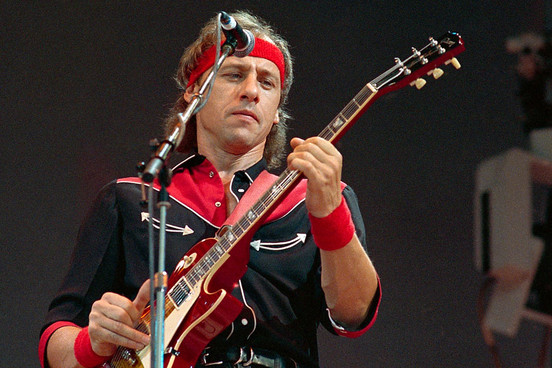


 movingtheriver.com