One can get caught up revisiting the ‘lost’ periods of the truly great artists of the last 50 years – Miles, Neil Young, Bowie, Dylan, Zappa, whoever.
At the moment, it’s Bowie’s late-’80s and early-’90s that particularly intrigue, roughly the period from ‘Intruders At The Palace’ to Tin Machine II.
There was a lot more to the era than Tin Machine though.
Bowie made a demo of ‘Pretty Pink Rose’ in early 1988 with members of Bryan Adams’ band. It was reportedly later rejected by TM, though one can hear echoes of it in their cover of Roxy Music’s ‘If There Is Something’.
But it features some classic Bowie moves, like the descending, superbly-sung bridge and ‘secret’ chord also heard in ‘Absolute Beginners’ and ‘Loving The Alien’.
Bowie rang Belew on 4 August 1989 asking him to play guitar and take the role of musical director on the ‘Sound + Vision’ greatest hits tour.
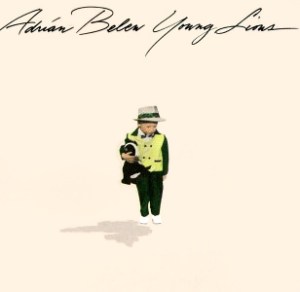
Belew was delighted to accept but reported that he first had to complete a solo album for Atlantic Records, the one that eventually became 1990’s Young Lions.
Bowie offered to donate ‘Pretty Pink Rose’. Apparently Belew was initially less than enamoured, but grew to love it.
Belew recorded the backing tracks on 11 November 1989 at Royal Recorders near Lake Geneva in Wisconsin, playing all instruments.
He achieves a great garage-rock sound with sprightly bass, Leslie-toned rhythm guitars and some mad lead playing courtesy of a Fender Strat wired with a Kahler tremolo arm that he found could be ‘tapped’ on the neck instead of using his finger tips.
Bowie and Belew recorded their duet vocals (at the same mic – apparently Belew was unexpectedly starstruck) on 15 January 1990 at Right Track in NYC (Bowie recorded his spontaneous vocals for ‘Gunman’ on the same day).
Apparently a spoken-word intro was later excised, which featured Bowie intoning: ‘She had tits like melons… It was love in the rain’!
‘Pretty Pink Rose’ was released a single in May 1990 but inexplicably missed the top 40 in both the US and UK, despite regular MTV screenings of the Tim Pope-directed video featuring Bowie and Belew hamming it up with ‘Life And Loves Of A She-Devil’ star Julie T Wallace.
Bowie and Belew also played it every night on the ‘Sound + Vision’ tour, augmented by some great chord additions by keyboardist Rick Fox. It’s a cracking song and a lost Bowie classic.
Prog fans – perhaps understandably – are not generally known for their benevolence when a favourite band undergoes a personnel change.
Steve Howe has talked publicly about the poor reception Trevor Horn received when the latter made his debut as Yes’s new vocalist during their North American tour of 1980.
Phil Collins still believes some Genesis fans were convinced he was scheming to take Peter Gabriel’s place as the band’s singer.
But Marillion fans seem a far more amiable bunch. When Steve Hogarth was installed as their new frontman in 1989, he seems to have been welcomed pretty much with open arms (if this superb televised gig from only his second UK tour is anything to go by).
Seasons End, (no apostrophe?), released 30 years ago this week, was a weirdly assured debut from Hogarth and easily this writer’s favourite Marillion album (1989 was a bit of a Year Zero for me in terms of the band, the Fish era barely appearing on my radar).
Hogarth’s melodies are fresh and exciting and his vocals always strong. It helped of course that he was a triple threat, a proven singer/songwriter with mid-’80s bands The Europeans and How We Live (though he was apparently eyeing a job as a milkman when the latter wound down in early 1988) and possessing some decent keyboard chops.
His natural magnetism as a frontman didn’t hurt too, and he even brought a few gimmicks to the party, like the magic gloves and musical cricket bat (a tribute to Ian Faith? Ed.).
So how does Seasons End stack up these days? Pretty well. The singles ‘Easter’ (UK #34), ‘The Uninvited Guest’ (UK #53) and ‘Hooks In You’ (UK #30) were distinctive, well-arranged and featured soaring guitar playing from Steve Rothery.
Ian Mosley is that rare rock drummer, solid but expressive, and capable of great subtlety. Keyboardist Mark Kelly had become a superb texturalist too, as demonstrated on the Steve Reich-esque second half of the title track, plus ‘Holloway Girl’ and ‘The Space’.
Marillion, Genesis and It Bites were flying the UK prog/pop flag at this point, and their late-’80s careers make for interesting comparison. As for Seasons End, it did very nicely, touching down at #7 in the UK album chart and ensuring a long, fruitful career for the band’s new line-up.
At the beginning of 1989, the tabloids were full of rumours that Prince was in dire financial straits.
While that seems unlikely, with hindsight it does seem a curious decision for him to take on a soundtrack gig for such a huge mainstream movie, stepping right into the belly of the Warner Bros. beast.
But then it’s also not much of a surprise that he smashed Batman out of the park. On many levels, it was the perfect project for the time – the movie’s themes appealed to his post-Lovesexy spiritual concerns and also tapped into his own feelings about fatherhood. He explored those themes poignantly on ‘The Future’ and ‘Vicki Waiting’.
Musically, in the main he retreated from Lovesexy‘s album’s dense, complex, band-inspired sounds and went back to a minimalist approach, pushing his guitar right to the fore and making liberal use of samplers and a Fairlight.
But even though ‘The Future’, ‘Electric Chair’, ‘Partyman’, ‘Batdance’ and ‘Lemon Crush’ are essentially one-chord jams, Prince knows exactly how to hold the attention with false endings, escalating riffs, hysterical guitar solos and quirky chord voicings. The net result is a somewhat forbidding but still undeniably funky album.
Also he doesn’t scrimp on the dancefloor classics – put on ‘Partyman’, ‘Trust’ or ‘Batdance’ (a UK #2 and US #1) and to this day you’ll get any party started. Elsewhere, ‘Scandalous’ is a brilliantly-sung, sometimes funny seduction ballad in the tradition of ‘Do Me Baby’ and ‘International Lover’, while ‘The Arms Of Orion’ is a pretty – if somewhat trite – ballad.
The album was a smash hit, selling over a million copies in its first week of release and becoming his first US #1 album since Around The World In A Day. Prince was almost returning to his Purple Rain popularity, no doubt helped by the huge success of the movie.
But this kind of mainstream success was short-lived. Something was eating him up inside – in typical form, he regrouped immediately and took on a deeply personal project, the doomed Graffiti Bridge movie/album. Probably his least-remembered album of the ’80s – and arguably his last classic – Batman is ripe for rediscovery as we reach more end-of-the-decade, spiritual/political uncertainty.
Sylvo is not particularly known for his sense of humour, but there was surely an element of black comedy about the release of the ‘Pop Song’ 12-inch single.
It’s hard to read it as anything other than his ironic response to being asked by Virgin Records to come up with something a little more ‘commercial’ to promote the Weatherbox limited-edition box set (a collection that, in the event, didn’t even contain ‘Pop Song’!).
Imagine the ashen faces of the management at Virgin HQ when the needle hit the vinyl. ‘OK, there’ssome kind of groove, but hang on – the synth bass is out of tune, the drums sound like Tupperware boxes and the piano has been flown in from a different song altogether…’
Yes, this was David’s ‘Jugband Blues’. And it was brilliant (the B-sides are well worth tracking down too). Cooked up alongside regular co-producer Steve Nye at Marcus Studios, Fulham, West London, during late summer 1989, ‘Pop Song’ was Sylvian’s bitter farewell to the decade, a vision of late-’80s Britain as a nation of clock-watching factory workers numbed by banal pop music and Sunday supplements. It’s fair to say that it wasn’t your typical feelgood summer single…
Musically, it was Sylvian’s version of ‘pop’ and pretty amusing at that, with some gorgeous ‘found sounds’, deliciously tangential piano work from ECM regular John Taylor and underwater drums/queasy synth bass courtesy of Steve Jansen. Sylvian delivers a great vocal too, full of cool, jazzy phrasing (check out the ‘But the money goes/And the time goes too’ line).
I bought ‘Pop Song’ on the day it came out (30th October 1989), and my memory is that it created quite a stir amongst Sylvian fans. It registered briefly at #83 in the UK singles chart and then promptly disappeared. Was it ever actually played on the radio? One doubts it.
But if ‘Pop Song’ proved a strange detour for Sylvian, life was about to get even stranger – next stop was the Japan ‘reunion’ Rain Tree Crow, of which much more soon.
It was goodbye to Basildon and Braintree, hello to Bel Air and Beverly Hills.
Kershaw had always threatened the big-budget, US-recorded album, and in 1989 he delivered it. And, to no-one’s great surprise, it was an excellent collection, one of the best ‘Brit-Goes-Stateside’ pop records of the decade.
Recorded over four months in LA, The Works – released 30 years ago this week – saw Kershaw put together some of his best material to date with two top-notch drummers (Vinnie Colaiuta and Jeff Porcaro) in tow, the great Jerry Hey on horn arrangements, Paulinho Da Costa on percussion, ex-Zappa keyboardist Peter Wolf producing and backing vocals from Michael McDonald and Siedah Garrett.
And yet it was also the straw that broke the camel’s back, underselling drastically, cutting ties with MCA Records and leading Kershaw into decades of back-room writing and producing. But maybe he was happier that way (and he did write the enormo-hit ‘The One And Only’ for Chesney Hawkes a few years later).
But from August to December 1987, Kershaw was hob-nobbing with Rod Temperton, Quincy Jones and Toto, flirting with the kinds of scenes that he had mocked on ‘Radio Musicola’ and ‘City Of Angels’. Reportedly he didn’t get on very well with Wolf, virtually re-recording the entire album back in London alongside Australian producer Julian Mendelsohn (Level 42’s World Machine).
But hey, the hard work paid off. There’s nothing else in the ’80s pop canon quite like the techno/pop/fusion flash of ‘Don’t Ask Me’, ‘Wounded Knee’ and ‘Cowboys and Indians’, and Colaiuta’s extraordinary drum performances had players rushing to their practice rooms. In particular, the former track has that fill… If only Vinnie had played on a few of the other machine-driven tracks. And Kershaw coaxes Porcaro to play a classic half-time shuffle on the superb ‘Walkabout’.
It’s still hard to believe that ‘One Step Ahead’ and ‘Elisabeth’s Eyes’ (very influenced by Scritti) completely flopped as singles (though I would have gone with ‘Lady On The Phone’). They still sound great today, with brilliant choruses and nice grooves. ‘Burning At Both Ends’ may be the standout of the album, with its Middle-Eastern-flavoured hook and superb Siedah Garrett backup vox. Slightly less impressive are ‘Take My Place’ and ‘One World’; both could be Climie Fisher or Robbie Nevil.
The album disappeared without trace both in the UK and US. As far as solo pop success was concerned, the game was up. But it’s a shame that the kind of intelligent, superbly-played pop heard on The Works was unsustainable by the end of the ‘80s. As Nik so succinctly puts it on his website:
“Los Angeles for four months with producer Peter Wolf. Get to record with some legends: Jerry Hey, Larry Williams, Paulinho Da Costa, Jeff Porcaro, Vinnie Colaiuta. House in Nichols Canyon; Rented Mustang; Earthquake. Constantly bumping heads with Peter. End up finishing album myself in London. More record company upheaval; another MD; another A&R person. Not looking good. European tour with Elton John. Goodbye MCA. Time for a break...”
‘File under: Victims Of A Cruel Medical Experiment’.
That was Q magazine’s memorable verdict on What Price Paradise, CC’s 1986 studio album. They had a point – it was producer team Langer & Winstanley’s unfathomable attempt to turn the Liverpudlians into Madness.
But when Steely Dan co-founder/co-songwriter Walter Becker came back onboard for ’89’s Diary Of A Hollow Horse, released 30 years ago today, normal service was resumed. It now sounds like a perfect follow-up to the 1985 classic Flaunt The Imperfection.
Becker was reluctant to record in England so persuaded the band to convene at George Benson’s Lahaina studio in Maui, Hawaii. He brought engineer Roger Nichols along for the sessions too, famous for his painstaking work on Steely Dan’s Aja and Gaucho. Nichols apparently taught all of the band how to scuba dive during their time off.
It’s hard to know what sort of expectations Virgin Records had for this album. What they ended up with is a kind of chamber pop, mainly the sound of a great, super-tight band playing live in the studio. The best tracks frequently evoke Steely Dan’s Katy Lied. The only concessions to ’80s music are the teeniest bit of reverb on the drums and the occasional synth overdub, adding colour in lieu of a horn section.
Becker’s real contribution seems to be on the arrangement side (typified by the tasty modulation for the guitar solo and flute arrangements on the vaguely ‘Deacon Blue’-esque ‘Sweet Charity In Adoration’), and he also brings in great backing singers Maxine Waters, Myrna Matthews and Linda Harmon, saxist Jim Horn, guitarist (and Countdown To Ecstasy engineer) Tim Weston and percussionist Paulinho Da Costa, who presumably used up most of the recording budget but is almost inaudible.
Virgin obviously computed the ‘hits’ as ‘Red Letter Day’ and ‘St Saviour Square’, summarily canning Becker’s versions of the songs and bringing in Mike Thorne to ‘re-produce’ them – the ploy didn’t work – the singles stiffed at #84 and #81 respectively, and they stick out like a sore thumb on the album. You can listen to all of the versions on YouTube.
Hollow Horse also didn’t work commercially, only reaching #58 in the UK album charts. But this was a period when some great pop/rock by the likes of Danny Wilson, It Bites, Love & Money and David Sylvian (all Virgin acts except for one…) also failed to find a big audience.
CC’s album sales diminished as the quality of their work increased – the game was up in terms of major-label support, but amongst fans of quality ’80s pop Hollow Horse has only gained status over the years.
The lads reproduced the album perfectly at London’s Dominion Theatre in spring 1989, a gig whose details elude me apart from the late Kevin Wilkinson’s superb drumming (and ahead-of-its-time, side-on kit placement) and vocalist Gary Daly proudly saying ‘That’s a good one, tha’!’ after ‘Day After Day’.
He had good reason to feel chuffed – Diary Of A Hollow Horse still sounds like a minor classic 30 years on.
Here it is: Madonna’s artistic breakthrough, the first album of hers that was really geared to the CD-buying audience, and a fresh start after the distinctly dodgy years of 1987 and 1988.
Like A Prayer (weird title: didn’t someone in the Warner Bros. marketing department say, ‘Hey, it’s a bit similar to Like A Virgin‘?) was released 30 years ago this week.
It topped the US and UK charts, spawned six hit singles and has sold around 15 million copies to date.
It was a revelation on a few levels – Madonna’s singing voice had more range and richness. Her lyrics were getting personal. There were two songs about her marriage to Sean Penn, and three zoning in on family relationships.
She co-wrote and co-produced all the songs; by all accounts she knew exactly what she wanted and was present at all the tracking sessions, finding ever new ways of inspiring the performances she was after (see below).
She hooked up with co-producer/co-songwriter Pat Leonard to great effect. It was a classic double act – she provided melodies, street smarts and lyrics, he provided the classically-trained piano and arrangement skills. The result was her Sgt Pepper’s, a varied, ambitious, major work.
But how does Like A Prayer stack up these days? Here’s a track-by-track rundown of arguably Madonna’s greatest album.
‘Like A Prayer’: The lead-off single, a US and UK #1, once described by Rolling Stone magazine as ‘as close to art as pop music gets’. It was also highly controversial in its allusions to oral sex and an apparent conflation between religious/sexual ecstasy, not to mention the envelope-pushing video.
‘Express Yourself’: Great feminist party pop/funk tune co-written with Stephen Bray, inspired by Sly And The Family Stone and anchored by JR Robinson’s crisp grooving. Shep Pettibone’s single remix subsequently usurped the album version. David Fincher’s video cost a reported $5 million.
‘Love Song’: This duet with Prince was a curious meeting of pop giants, musically in the Lovesexy/Batman mould but lacking a great hook, though apparently they did initially write it eye to eye, Prince programming drums and Madonna donning a synth. Tapes were then worked on individually and sent back and forth between LA and Minneapolis. Whilst interesting, it’s nearer to a Prince B-side than something really memorable.
‘Til Death Do Us Part’: A coruscating portrait of her marriage breakup to Sean Penn, made even more poignant by its sprightly Scritti-style pop. Bassist Guy Pratt was the recipient of Madonna’s unique production style on this track. ‘What did you think of that?’ she asked him after one take. ‘Um… I think it was OK…’ was his response. ‘Did it make your d*ck hard?’ Madonna shot back!
‘Promise To Try’: A powerful ballad, featuring an uncharacteristically emotional vocal. According to Madonna, it was written completely spontaneously: ‘He (Leonard) just sat down and started playing, and I started singing.’
‘Cherish’: More Scritti-inspired pop fun, all major chords and twinkling synths, looking at happier times with Sean. Jeff Porcaro’s trademark shuffle is his one and only drumming appearance on the album.
‘Dear Jessie’: An inspired take on late-’60s psychedelia, almost like a children’s lullaby. A very cool, unexpected track.
‘Oh Father’: A gorgeous ballad in 6/4 with music by Leonard and lyrics by Madonna, written in a tiny rehearsal studio in the garment district of New York when Madonna was in ‘a very, very dark place’ during her tenure in the David Mamet play ‘Speed-the-Plow’. Madonna: ‘”Oh Father” is not just me dealing with my father. It’s me dealing with all the authority figures in my life’. The song’s intro alone can put a big lump in this writer’s throat. Madonna apparently coaxed the band through the song, telling bassist Pratt and drummer Jonathan Moffett in no uncertain terms where not to play. Apart from string section and guitar overdubs, they got it on the second full take, including Madonna’s live vocal. During the sessions, Moffett also asked her when he should come in. ‘You come in when I do this’, she replied, lifting up her blouse!
‘Keep It Together’: Another Stephen Bray co-write, this Go-Go-inspired ode to family togetherness, featuring some brilliant Randy Jackson bass, became a mainstay of her ‘Blond Ambition’ tour. If you play it loud you can also really hear the superb backing vocals of her regular live duo Niki Haris and Donna DeLory.
‘Pray For Spanish Eyes’: The point where Like A Prayer starts to run out of steam. A corny, soft-rock version compendium of Spanish clichés, complete with castanets and weary acoustic guitar, and a weirdly unmemorable melody.
‘Act Of Contrition’: And here’s the other stinker. Madonna free-associates awkwardly over a reversed version of the title track, with Prince’s backwards guitar track also ladled on to no great consequence.
Further reading: ‘Songwriters On Songwriting’ by Paul Zollo
ZTT Records – under the auspices of Trevor Horn – really used the remix format.
No throwaway, rush-released projects for them. Their remixes were petri dishes for sonic experiments and situationist pranks, many worthwhile and innovative.
And of course several remix albums were released on ZTT – Grace Jones’ Slave To The Rhythm was essentially one song done eight different ways, and there was also a whole Frankie Goes To Hollywood LP dedicated to ‘Two Tribes’ remixes.
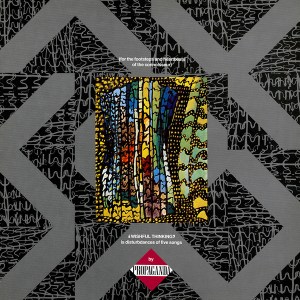
But maybe a lesser-known example is Propaganda’s Wishful Thinking, a reworking of the Düsseldorf unit’s seminal 1985 album A Secret Wish, originally produced by Stephen Lipson (with one track – ‘Dr Mabuse’ – helmed by Horn).
A Secret Wish’s stock seems to keep rising year after year, gaining more fans and sounding better than ever. But Wishful Thinking is a weird project, to say the least.
Co-remixer (alongside former tape op Bob Kraushaar) Paul Morley’s absurd liner notes quote Goethe and boast that the album is the result of ’39 studio hours’, which, by ZTT’s painstaking standards, doesn’t actually sound like much.
But it’s a sometimes thrilling collection just the same, regurgitating many of the original album’s sonic motifs but in a different order and a different place on the stereo spectrum.
‘Machined’ reimagines ‘P-Machinery’ as a mid-tempo minimalist piece, featuring mainly Claudia Brucken’s vocals and gentle drums.
‘Jewelled’ fuses the two versions of ‘Duel’ from the original album, mixing her ‘angry’ vocals with the backing from the ‘pop’ version. It’s pretty funny and genuinely surreal.
‘Loved’ exposes and amplifies Andy Richards’ gorgeous piano and synth from ‘The Murder Of Love’, finally revealing it as the fantastic pop song it is.
The two versions of ‘Dr Mabuse’ bring out Horn’s genius and natural flair for the dynamic, showcasing not one but two brilliant bass vamps and a whole host of other sonic delights (thrillingly, one version is used in the absurd opening credits of John Hughes’s 1987 movie ‘Some Kind Of Wonderful’).
But possibly the best track on Wishful Thinking is the closing ‘Thought’, an excerpt of the band’s version of Throbbing Gristle’s ‘Discipline’.
For anyone still fascinated by A Secret Wish, it’s required listening. The band probably hated it, though Brucken did donate one of her paintings for use on the cover (but then she was married to Morley at the time…).
September’s here again. The leaves brown, the nights draw in; thoughts and ears turn towards Sylvian’s music.
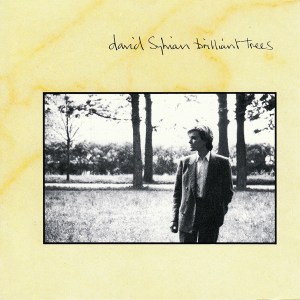
The exquisite Brilliant Trees, released in July 1984, is one of those collections that I must have owned on almost every format over the years, and probably bought a few times on each.
A period of extreme introspection and even depression descended upon Sylvian following the split of Japan in late 1982.
Although his relationship with Mick Karn’s ex Yuka Fujii (who took the photos in the stylish Brilliant Trees album package) was largely thought to be the main catalyst, it still represented for Sylvian a distressing rupture of childhood friendships.
He later claimed that he could barely stay awake during this period, so degraded were his immune system and emotional reserves.
Sylvian gathered co-producer Steve Nye and some of his favourite musicians at Berlin’s Hansa Studios and RAK in London. Influences came from ambient music, NYC avant-funk, John Martyn, Nick Drake and ECM jazz.
His friend/ frequent collaborator Ryuichi Sakamoto and brother Steve Jansen were the main musical cohorts, though ex-Japan keyboard texturalist Richard Barbieri also appeared to great effect.
Brilliant Trees is very much an album of two sides. The opener ‘Pulling Punches’ is a sweetener, an effective but unrepresentative slice of white funk featuring NYC sessioneers Wayne Braithwaite and Ronnie Drayton on bass and guitar. The nearest thing to the Tin Drum sound, there’s nothing remotely like it on the rest of the album.
What a treat to hear Kenny Wheeler and Mark Isham’s flugelhorn/trumpet breaks on the classic singles ‘Ink In The Well’ (UK #36) and ‘Red Guitar’ (UK #17). Side two is a different matter altogether – it’s dark, foreboding, autumnal.
Sylvian and Nye mostly eschew ‘conventional’ solos in favour of ‘found’ sounds courtesy of Holger Czukay’s Dictaphone (see below) or Jon Hassell’s extraordinary conch-like trumpet, both used to especially brilliant effect on ‘Wailing Wall’.
‘Backwater’ begins with a powerful build up of (sampled?) strings (and check out Jansen’s inspired groove, a queasy 6/4 over a very strange programmed shaker pattern), while the almost hymnal title track is beautifully performed by Sylvian and adorned with a gorgeous ethno-jam outro.
Listening 30 years on, what strikes one is the minimalist nature of the whole album. It has dated remarkably well. Many tracks are built around a cyclical Jansen groove, sparse bass, strong Sylvian melody and then tasteful, painterly touches from clean guitar, piano, Dictaphone or synth.
This stunning collection set in motion a superb four-album run of form for Sylvian. Brilliant Trees is an almost-perfect blend of songcraft and the avant-garde at a time when pop was drawing on jazz, ambient and world music to occasionally spectacular – and commercial – effect (the album reached #4 in the UK charts and sold over 100,000 copies). You might say things were never quite the same again.
When Prince appeared on the box the other day, my mum expressed her approval.
I asked why, and without hesitation she offered: ‘He respected and promoted women’. It struck me initially as a weird reason but upon further reflection seemed spot-on.
He wrote many songs from a female perspective in the early ’80s, many of which have never seen the light of day. Then there was Vanity/Apollonia 6 – dubious acts for some, but without too much moral adjustment you could interpret them as ‘women reclaiming their right to enjoy sex’.
Then there were Prince’s striking collaborations with a variety of strong, independent characters: Ingrid Chavez, Sheila E, Sheena Easton, Dale Bozzio, Mavis Staples, Cat Glover, Elisa Fiorillo, Bonnie Raitt, Nona Hendryx, Wendy & Lisa, Susan Rogers and Peggy McCreary.
How many other male ‘pop’ icons can boast such a coterie of female cohorts?
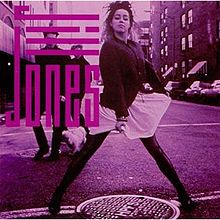
With hindsight, Jill Jones’ 1987 debut album, released on Prince’s Paisley Park Records, is one of the great missed opportunities of his career, and its standout song ‘Violet Blue’ particularly demonstrates why.
The album started in the summer of 1983 during the filming of ‘Purple Rain’ (featuring Jill’s less-than-stellar cameo), when she replaced Prince’s guide vocal on ‘Mia Bocca’. Sadly he didn’t find time to resume work on the record until over two years later.
Consequently, it’s very uneven, with some decent material (‘For Love’, ‘My Man’) mixed in with middling Prince outtakes, covers and B-sides (‘All Day, All Night’, ‘G-Spot’, ‘With You’) and undone by rushed arrangements and drastic changes in tone.
‘Violet Blue’, recorded at LA’s Sunset Sound in October 1986, was the last song put down for the album. Quite simply, it shows what the record could have been, and, frankly, how much Prince (and Jill) had developed between 1983 and 1986.
The vocal intro and accordion breakdown are two cases in point, not to mention the interesting chord progression and superb horn (Eric Leeds) and string (Clare Fischer) arrangements. Jill delivers a knockout vocal too, even throwing in a neat little Nancy Wilson impression via Dinah Washington.
Sadly the Jill Jones album sank without trace. She has recorded intermittently since, contributing a great guest vocal on Ryuichi Sakamoto’s ‘You Do Me’ and playing low-key gigs.

 One can get caught up revisiting the ‘lost’ periods of the truly great artists of the last 50 years – Miles, Neil Young, Bowie, Dylan, Zappa, whoever.
 Prog fans – perhaps understandably – are not generally known for their benevolence when a favourite band undergoes a personnel change.
 Sylvo is not particularly known for his sense of humour, but there was surely an element of black comedy about the release of the ‘Pop Song’ 12-inch single.



 When Prince appeared on the box the other day, my mum expressed her approval.

