When Thomas Dolby Met George Clinton: 35 Years On

They say you should never meet your heroes – if the summer of 1985 is anything to go by, Thomas Dolby probably knows a thing or two about that.

First there was THAT Grammy Awards performance alongside Stevie Wonder and Herbie Hancock.

Then he contributed production, arranging and keyboard work to Joni Mitchell’s underrated Dog Eat Dog, and, of course, there was his appearance at Live Aid as part of David Bowie’s band.

But arguably Dolby’s most intriguing collaboration of summer 1985 was with P-funk pioneer George Clinton, who was onto his third solo album of the decade.

Just after Live Aid, Clinton invited Dolby out to the Bee Gees’ Criteria Studios in Miami to work on two tracks for Some Of My Best Jokes Are Friends.

Clinton was finding much lyrical inspiration in Reagan’s America, and his latest album was firmly focused on the Nuclear Threat. During a hilarious fishing trip with Dolby off Miami (apparently during which Clinton sat in a swivelling captain’s chair, rolled joints and played rough mixes on a boombox), they came up with a character for Dolby – the Space Limousine Driver! Of course…

Clinton then invited Dolby to perform at a James Brown tribute night for the annual Black Urban Music Conference in Washington DC. Apparently his guest spot during ‘Sex Machine’ (described by Dolby as being ‘like Alec Guinness having a seizure’) made Mr Brown laugh and also gave Dolby some cred with the hardcore P-funk crowd (though sadly it doesn’t seem to be on YouTube…).

Clinton was also apparently thrilled with Dolby’s contributions, and asked if there was any way he could return the favour. Dolby quickly cooked up a new song, recruited the Brecker Brothers and Lene Lovich and retained the formidable bass/drums team of Rodney ‘Skeet’ Curtis and Dennis Chambers from ‘Thrashin’.

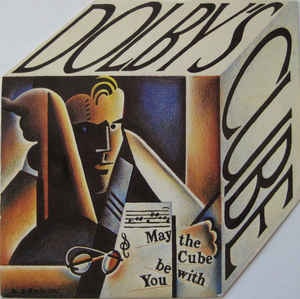
They christened the new band Dolby’s Cube and recorded a great one-off single at Battery Studios in London. Sadly, despite a cool video, it didn’t chart.

Dolby’s experiences with George loosened him up, and made him reassess a solo career that he felt thus far had been hamstrung by dodgy business practices and too much emphasis on ‘image’.

His effervescent 1988 album Aliens Ate My Buick was more explicitly influenced by Clinton, who also contributed the song ‘Hot Sauce’ (Francois Kevorkian’s superb remix of ‘May The Cube Be With You’ was also included). The summer of ’85 was certainly a memorable one for all concerned.

Further reading: ‘The Speed Of Sound’ by Thomas Dolby

Bill Evans: Living In The Crest Of A Wave/The Alternative Man

When people say ‘I hate jazz’, I sometimes wonder if they’re really saying they know a crap composition when they hear one.

Legions of talented jazz sidepeople have been given solo record contracts only to deliver music that proves they can’t write decent tunes.

A case in point is saxophonist and William Hurt-lookalike Bill Evans. He’s had a very solid career but his solo work is distinctly underwhelming.

(And then there’s the name. If you play jazz, you probably need a stage name if you have exactly the same moniker as a bona fide legend from decades gone by – the pianist Bill Evans died in 1980.)

But give Sax Bill some credit – he was an absolutely vital figure in Miles Davis’s 1980s comeback, a good friend and carer of the trumpeter and player of several gritty solos on record (Star People is a good place to start). But by 1983 Bill found himself inexplicably frozen out, barely getting any solo space from Miles.

He got the message and jumped ship to join John McLaughlin in the new Mahavishnu Orchestra and also embark on a solo career which kicked off with 1984’s Living In The Crest Of A Wave, a pretty anodyne collection of new-agey fusion. Let’s call it The Metheny Effect. Many tried and failed to ape that guitarist’s mixture of Ornette Coleman-inspired melodicism, Latin flavours and down-home, Midwestern, open-sky simplicity.

With its folky themes, puny production, emphasis on soprano sax, fretless bass, ride cymbals and an ‘environmental’ bent, LITCOAW could almost have come out on Windham Hill. Only the closing title track works up any kind of energy or interest, when Evans finally busts out the tenor and blows up a storm over Adam Nussbaum’s frenetic jazz/rock groove.

Evans’ followup, 1985’s The Alternative Man, was his first record for the illustrious Blue Note Records and as such should have been a celebration. Unfortunately it was an object lesson in how not to use technology, and just the kind of ‘80s ‘jazz’ album that illustrates what a brilliant job Marcus Miller did on Miles’s Tutu.

Evans in the main stumbles around with ugly Linn Drum patterns, electric drums, blaring synth pads and raucous hair-metal guitar solos, all topped off with some fairly insipid soprano playing. A few tracks and you’ll be wanting to break out the Albert Ayler or David Murray albums, and fast.

The only interest predictably comes with two more open, organic offerings, the excellent ‘Miles Away’ which reunites Evans with his Miles colleagues Al Foster on drums and Miller on bass. And ’Let The Juice Loose’ is fun, a cool bebop head featuring some enjoyably un-PC Strat-mangling from the late great Hiram Bullock.

But hey – some of this music brings back good memories, when I was digging around the Record And Tape Exchange and Our Price for bargains and closely monitoring the personnel on the back of my favourite Miles and McLaughlin albums.

These albums also definitely represent a weird time for ’80s jazz, when established labels were signing all and sundry, fishing around for the next Young Lion or Metheny.

And thankfully a few dodgy early solo records didn’t hurt Evans’ career much, as he’s gone on to be one of the most respected players on the scene.

RIP Q Magazine (October 1986-September 2020)

The first issue – October 1986

Another one bites the dust: a succinct tweet from editor Ted Kessler spawning many emotional replies from scribes of all stripes, and it’s au revoir to one of the most respected music mags of the last 40 years.

Yes, the September issue will be the very last edition of Q. I was surprised how peturbed I was by this news. Without Q in the world, something is amiss.

I guess my dad, broad-minded and well-read music fan that he was, would have bought the very first Macca-adorned edition in October 1986, but I took the baton from there and got every issue (unless Robbie Williams or Noel Gallagher were on the cover) until the late 1990s.

There was a major cull in the early 2000s when I chucked quite a few out, and I have about 30 left. Of course now I wish I had kept them all.

Why did I stop buying Q every month? It was probably the general state of the late-1990s music scene rather than the writing, though I also missed the humour of the David Hepworth/Mark Ellen/Tom Hibbert troika which was the driving force in the early years.

But I kept my hand in right until the end, recalling a brilliant recent issue featuring Suggs, Suede, Status Quo and Mark E Smith.

The final issue – August 2020

Q was initially a perfect alternative to the NME and Melody Maker, a post-Live Aid, CD-age rag designed to cater to the ‘older’ rock/pop fan but actually delivering something subtly subversive.

It foregrounded extended interviews without any PR puffery, and added some much-needed humour and p*ss-taking of the burgeoning celebrity culture.

If you were a bit of a ‘muso’ like me, you got used to ‘your’ band generally getting a critical mauling, but I also discovered some great music via the mag’s review section (David Torn, Bireli Lagrene, Lewis Taylor, Spacek, Love And Money, Danny Wilson, John Abercrombie).

Lots of features stick in the mind – of course Tom Hibbert’s Who The Hell? and the much-imitated Cash For Questions.

And there were loads of memorable interviews: a post-toiletgate George Michael, Bob Geldof jostling with Sting, Macca talking candidly about drugs and Lennon for the first time, Jonathan Richman, Shirley Manson, Madonna in her ‘Blond Ambition’ pomp, Prince during the ‘Slave’ era, Joni Mitchell circa Chalk Mark In A Rainstorm, the Television reunion, JJ Cale, Bowie’s Cash For Questions, Green Gartside in his local East End boozer. There were also brilliant 10th anniversary and 100th anniversary issues.

So RIP Q. Who knows which esteemed music mags are next on the chopping block? Please buy ’em while they’re still around. We’ll miss them when they’re gone. And there won’t be anything to read on plane/train journeys – if they’re still around too.

The Cult Movie Club: 17 Things I Didn’t Know About ‘Caddyshack’

‘Caddyshack’, the cult comedy released 40 years ago this month, has been a favourite since I accidentally came across it on TV sometime in the late 1980s.

It now seems an almost forgotten and/or strangely ‘forbidden’ movie despite some cult status amongst golfers and hardcore fans of National Lampoon and ‘Saturday Night Live.’

With a corking cast of Rodney Dangerfield, Chevy Chase, Bill Murray, Ted Knight and Cindy Morgan, its basic pitch is ‘”Animal House” at a country club’, but for me it’s a funnier movie than John Landis’s 1978 hit.

It’s chaotic, unhinged, poorly structured, hard to follow, mostly improvised and won’t win any woke awards, but many scenes still make me chuckle like a teenager. In particular, Chase and Murray’s monologues and druggy non-sequiturs.

Directed by Harold Ramis (‘Groundhog Day’) and shot at Rolling Hills Country Club (now Grand Oaks) in Florida during September and October 1979 , ‘Caddyshack’ is ostensibly a coming-of-age story concerning amateur caddy Danny Noonan (Michael O’Keefe).

On release, the critical reception was unsurprisingly poor but it did pretty good business ($40 million against a $6 million budget), if proving a bit too weird for any kind of ‘Animal House’ action.

But, like most Hollywood movies of the era, there are a myriad of ‘what ifs’ and surprising revelations around its making. Here are just a few:

17. The bishop struck by lightning after shouting ‘Rat farts!’ (Henry Wilcoxon) was a silent-movie star back in the 1920s, working in several Cecil B DeMille films.

16. ‘Caddyshack’ was Rodney Dangerfield’s movie debut.

15. Bill Murray (Carl Spackler) was the last actor to be cast, and his totally unscripted role was initially only supposed to be a cameo.

14. Ted Knight (Judge Smails) was an Emmy-winning star of the legendary ‘Mary Tyler Moore Show’ TV show in the 1970s.

13. Bill Murray and Chevy Chase (Ty Webb) were sworn enemies during the shoot due to some bad-mouthing in the press after Chevy had left ‘Saturday Night Live’. Their famous improvised scene was a last-minute addition after the studio insisted they appear on screen together.

12. Cinematographer Stevan Larner had previously worked on Terrence Malick’s ‘Badlands’.

11. Recently-departed, legendary composer/arranger Johnny Mandel (‘Theme From M*A*S*H’, Steely Dan’s ‘FM’) wrote the incidental music for the movie.

10. Mickey Rourke was first choice for the Danny Noonan role but turned the producers down at the final hour.

9. ‘Caddyshack’ was Harold Ramis’s directorial debut.

8. Co-writer and National Lampoon legend Doug Kenney died in strange circumstances soon after the film was released.

7. The pitch (‘Animal House’ in a country club) was given the green light by Orion studio bosses before they had seen any kind of story outline or screenplay.

6. The co-writers’ original idea was to make the film all about the teenage caddies (maybe that would have made for better box office… Ed.)

5. Cindy Morgan (Lacey Underall) was a DJ in Chicago before becoming an actress.

4. Bill Murray was actually a greenskeeper as a young man, and his elder brother Ed was a champion caddie.

3. Danny Noonan’s large Irish-Catholic family was based on the Murray family.

2. The whole cast stayed in the same hotel throughout the shoot – and partied heartily.

1. Bill Murray’s shenanigans with the gophers was a last-minute idea – initially there had only been one scene with a fake gopher (the one where Rodney Dangerfield shouts ‘Hey, that kangaroo just stole my ball!’).

Book Review: The Ballad Of Tommy LiPuma by Ben Sidran

What exactly does a record producer do? Of course the role covers a multitude of aspects but generally falls into two categories – the techie or the psychoanalyst.

Tommy LiPuma was definitely in the latter camp, a five-time Grammy winner, label boss (courtesy of his cult imprint Blue Thumb) and bona fide music fan who worked in the upper echelons of the biz for nearly 60 years (he died in 2017).

A cursory look through his credits reveals a natural collaborator with good taste and good ears, via key albums by Bill Evans, Michael Franks, Randy Newman, George Benson, Randy Crawford, Dr John, Antonio Carlos Jobim, Miles Davis (who, along with co-writer Marcus Miller, named the track ‘Tomaas’ after him), Natalie Cole, Diana Krall, Paul McCartney and Willie Nelson.

Ben Sidran’s hugely enjoyable ‘The Ballad Of Tommy LiPuma’ is the first biography of the producer, and it’s hard to think of anyone better qualified to tell his story.

Sidran’s a veteran singer/songwriter and pianist who has recorded over 30 solo albums (including a few for Blue Thumb) and written some key music tomes too, including the superb ‘Talking Jazz’, and he interviewed LiPuma extensively for the book.

The fast-moving, entertaining early sections come over a bit like ‘The Godfather Part II’ rewritten by Lord Buckley. LiPuma’s rite of passage takes him through Mob-riddled Sicily, to grim, industrial Cleveland where shoe-shining and hairdressing seem like his destiny.

But a long period recuperating from injury delivers to him the power of jazz, specifically Charlie Parker and Dizzy Gillespie’s miraculous bebop excursions.

LiPuma thus finds his true calling, and a brief career as a jobbing sax player leads to a short period as promotions man par excellence.

But he quickly realises that production is his true metier, and embarks on a glittering career that takes him from MOR vocal acts (The Sandpipers, Claudine Longet) to classy jazz-related roots and pop projects.

Cue a succession of amusing, fast-moving anecdotes: a fabulous section on the making of George Benson’s Breezin’, an amusing trawl through Rio with a blasted Jobim, a voyage to Planet Miles via the Tutu album, a surreal encounter with Willie Nelson, interesting sections on breaking Michael Franks and Diana Krall and finally all the recent machinations of the Universal Music Group.

‘The Ballad Of Tommy LiPuma’ is warm, witty and resolutely un-PC, initially a portrait of the music biz’s bygone Wild West era featuring an engaging roll call of shysters, hucksters and hipsters, but also encapsulating the whole history of modern recording techniques and philosophies.

It’s a great companion piece to Seymour Stein’s autobiography. There’s a lot about the business, but it’s always shot through with humour and an emphasis that, finally, music is about people.

It’s also a valuable historical document too as it’s hard to believe there’ll be any space for these kinds of hands-on, ‘daddy’ producers in the future.

Thankfully Sidran doesn’t scrimp on the musical detail – there’s a lot of sage advice for aspiring producers and arrangers alike.

Perhaps the key takeaway from the book is music’s healing power. As LiPuma writes to a friend, ‘I might have been on my own at times but I was never alone. When you’re blessed with the love of music, you are never alone.’

‘The Ballad Of Tommy LiPuma’ is published by Nardis Books.

1980s Soul: 14 Lost Classics

It’s highly unlikely that any critics’ poll of the greatest soul albums from the last 70 years would include anything from the 1980s, save possibly for a Diana, Anita Baker, Terence TD or Bobby Womack outlier.

There was the odd huge-selling ‘crossover’ album (Can’t Slow Down, Thriller, Whitney Houston) but arguably the decade didn’t produce a What’s Going On or Songs In The Key Of Life.

Classic soul fans generally became used to poor-to-middling album packages, with the requisite two or three-star reviews and complaints about too many producers and underwhelming material. The greats of the ’60s and ’70s also sometimes struggled to move with the times, getting hamstrung by technology and/or unsuitable collaborators.

But my goodness there were some superb tracks, particularly between 1980 and 1985, an interesting period when Classic Soul drew from Yacht Rock and Jazz/Funk. However, these songs tended to get quickly forgotten and/or ignored. In the late-’80s, ’90s and noughties, enterprising indie labels put together fondly-remembered compilations (Mastercuts, StreetSounds) that brought these tracks back for a small but very enthusiastic audience.

But the beauty of streaming services is that we can compile these beauties to create one sh*t-hot album, so I have, here. This has been my go-to playlist during lockdown. Forget the talent-show wannabees – these vocalists have serious pipes, and the songwriting and arrangements are top-class too. Here’s a small selection of lost classic soul tracks from the 1980s:

14. Johnny Gill: ‘Half Crazy’ (1985)
Co-written by legendary Philly wordsmith Linda Creed (‘Betcha By Golly Wow’, ‘People Make The World Go Round’), this was the lead-off track and first single from Gill’s second album and still sounds like a bona fide soul standard today. It was a long way from New Edition for Johnny, though he was just 18 years old when he recorded it. Scary…

13. Teena Marie: ‘My Dear Mr Gaye’ (1984)
Moving tribute to Marvin from the less-than-excellent album Starchild, featuring a string arrangement by Motown mainman Paul Riser and a groovy change of pace in the middle of the tune.

12. Carl Anderson: ‘Buttercup’ (1985)
Stevie Wonder-penned minor classic from a little-known vocalist who recorded many solo albums before his death in 2004, but was probably best known for his portrayal of Judas Iscariot in the Broadway and film versions of ‘Jesus Christ Superstar’.

11. Gladys Knight & The Pips: ‘Bourgie Bourgie’ (1980)
Just check out co-writer (with Nick Ashford) Valerie Simpson’s gospel-tinged piano playing on this – absolutely fabulous. And Gladys’s super-funky vocals are perfect. It’s adapted from a 1977 Ashford & Simpson instrumental.

10. Odyssey: ‘If You’re Lookin’ For A Way Out’ (1980)
Heartbreaking ballad written by Ralph Kotkov and superbly sung by Lillian Lopez. Made #6 in the UK singles chart.

9. Millie Jackson: ‘This Is It’ (1980)
Now THIS is how you kick off a soul album. A hilarious eight-minute tour-de-force that aims to get men squirming in their seats. Remarkably, it’s also officially a Kenny Loggins/Michael McDonald composition.

8. Chris Jasper: ‘Superbad’ (1987)
Great song from long-time keyboard player of The Isley Brothers. A socially-conscious lyric looking at the value of inner-city education and the kind of tune Stevie should have been producing in the mid-’80s.

7. Diana Ross: ‘Cross My Heart’ (1987)
Superb, catchy song, written by frequent Leonard Cohen collaborator Sharon Robinson, and Diana’s vocals are just gorgeous. From the otherwise fairly uninspired Red Hot Rhythm And Blues album.

6. Leon Ware: ‘Why I Came To California’ (1982)
Cool mixture of soul, jazz/funk and yacht rock, an ode to the West Coast with a top-drawer rhythm section of Chuck Rainey (bass) and James Gadson (drums) and vocals from Manhattan Transfer’s Janis Siegel. But who plays the great sax solo? Seems impossible to find out…

5. SOS Band: ‘Weekend Girl’ (1984)
More evidence that producing/songwriting team Jam & Lewis were going to be arguably THE musical force of the decade, a gorgeous, upwardly-mobile, mature ballad that has the same kind of grandeur as one of Chic’s slow-burners.

4. Patti Labelle: ‘If Only You Knew’ (1983)
Just…wow. Killer ballad co-written by Kenny Gamble and Dexter Wansel which reached #1 on the Billboard R’n’B chart. Super arrangement too, emphasised by the unexpected key change going into the first verse.

3. Bobby Womack: ‘Games’ (1983)
‘You see, I like all kinds of music – no favourites!’, Bobby proclaims at the beginning of this superb track, then demonstrates it with a lovely little nod to Wes Montgomery’s guitar style.

2. Phyllis Hyman: ‘Why Did You Turn Me On’ (1983)
A hint of Rod Temperton about this catchy Narada Michael Walden-penned mid-tempo smoocher, showcasing Hyman’s giant voice to great effect. Sadly the Philly soul legend took her own life in 1995.

1. Terence Trent D’Arby: ‘As Yet Untitled’ (1987)
Ambitious accappella piece from Terence’s classic debut album, with a vocal nod to Sam Cooke but also featuring some stirring sounds purely of his own creation.


The Brecker Brothers: Live And Unreleased

Horn sections – they sure divide opinion, especially in the ‘pop’ realm.

Some people just cannot stand all of that pomp and circumstance, while others get turned on by a hot, punchy chart.

But like ’em or hate ’em, some great records just wouldn’t be the same without the horns: The Teardrop Explodes’ ‘Reward’ for example.

But who are the most-recorded sections of all time? You’d get very short odds on The Brecker Brothers, comprising Michael on tenor and Randy on trumpet, occasionally augmented by David Sanborn on alto too.

They graced hundreds of recordings before Michael’s death in 2007, including Parliament’s ‘Chocolate City’, Todd Rundgren’s ‘Hello It’s Me’ and Dire Straits’ ‘Your Latest Trick’. Under their own name, seven studio albums showcased a really cool sound with funky grooves and intricate harmony, somewhere between Stevie Wonder and Steely Dan.

And now they’ve been given the full-on archive treatment, a new Live And Unreleased album featuring a complete two-hours-plus gig with no edits or overdubs, recorded in Hamburg on 2nd July 1980.

This is a really impressive package, a beautifully-recorded double with extended liner notes by Bill Milkowski and additional, amusing memories from Randy Brecker.

The sh*t-hot band includes Neil Jason on bass (familiar to fans of Roxy Music’s Flesh & Blood and Avalon), Barry Finnerty on guitar (most famous for a short stint with Miles Davis), Mark Gray on keys and Richie Morales on drums.

The material is a mix of BB favourites like ‘Squids’, ‘Sponge’, ‘Some Skunk Funk’, ‘Straphanging’, ‘I Don’t Know Either’ and ‘East River’. Pleasingly, these are pretty faithful to the original studio versions tempo-and-arrangement-wise, but there’s also a big emphasis on extended solos and one-chord vamps.

It’s also clear that, by 1980, Michael was giving Randy a serious run for his money on the composing front – his tunes and sometimes extraordinary solos dominate proceedings, particularly on the sprightly ‘I Don’t Know Either’ and ‘Tee’d Off’.

Finnerty gets a hell of a lot of solo time but is generally pretty characterless compared to other Brecker-approved studio guitarists (Hiram Bullock, Steve Khan), while Gray is excellent but too low in the mix.

Morales is rock-solid but, again, fairly anonymous compared to other Brecker favourites Steve Jordan, Terry Bozzio, Steve Gadd and Harvey Mason (hardly surprising, since they are three of the all-time greats…). Jason, with his big, buoyant, funky sound, is the star of the rhythm section.

As usual, ‘Some Skunk Funk’ makes for fascinating listening – the funk/fusion standard has become a kind of test piece for drummers (Harvey Mason, Billy Cobham and Terry Bozzio all had memorable cracks at it, offering subtly different readings). Morales has a good go here but again lacks the invention and drive of the aforementioned.

So: three-and-a-half stars for the music, five for the package. It’s definitely worth immersing oneself in it on vinyl or CD, helped by Randy’s witty between-song comments.

It’s a really strong live album with some great performances, and exemplifies an interesting period for jazz/rock when good grooves and extended solos took precedence over technical chops. Even if you can’t stand horn sections…

The Cult TV Club: The Joy Of Painting With Bob Ross

Waking up very early in a stuffy Berlin hotel room a few years ago, I flicked on the TV and came across an amiable-looking guy doing some painting in an extremely quiet, small, uncluttered set, with just an easel and palette for company.

He talked through his technical processes almost in a whisper, with a pleasingly down-home manner and vocabulary.

He seemed a gentle, kind soul, not dissimilar to Fred Rogers. I was an immediate fan. This guy was obviously a superb painter, and a knowledgeable and engaging host to boot.

What have been your lockdown TV favourites? Alongside reruns of ‘Cheers’, ‘Columbo’ and 1980s snooker and football classics, you can put me down for Bob Ross’s ‘The Joy Of Painting’.

With America currently catching hell, the show feels like it’s beamed in from a completely different world. When Larry Owens’ Earl Klugh-meets-Dave-Valentin theme music kicks in, Bob o’clock is always Happy Time.

‘The Joy Of Painting’ ran between 1983 and 1994 on PBS, mostly out of Muncie, Indiana (shades of ‘The Hudsucker Proxy’!). It featured Bob doing a superb wet-on-wet painting in real time for just under 30 minutes, with seemingly little or no editing.

He made it look very easy, but what he didn’t tell you is: a) he’d done his 10,000 hours and then some, and b) to paint like this you’ve got to study nature. For hours.

But when’s a painting finished anyway? You may sometimes be shouting ‘Stop!’ at the screen, wondering if Bob has over-egged the pudding, but he never has, and the final result occasionally looks pleasingly like something Mati Klarwein (see right) might have concocted.

Just the sound of Bob’s voice can soothe the weariest of souls, and then there are those recurring phrases: ‘Happy little clouds/trees/bushes… Like so… Titanium white… Shoot… Look at that… No mistakes… Son-of-a-gun… Beat the hell out of it… God bless… Easy as that… Load the brush… Let’s have some fun… Just drop it in…

You could easily just podcast the audio – people probably already do.

But what about Bob? He spent his young life as a master sergeant in the US Air Force, based in Alaska. According to legend, after years of being a ‘mean’ guy getting people to do things they didn’t want to do, when he left the military he made a vow never to raise his voice again.

Many of his paintings are reportedly held by the Smithsonian Museum, and there are classes all over the world that can help you learn the Bob painting method. He died in 1995.

And it turns out that there’s been somewhat of a Bob cult building up recently. Teenagers are discovering ‘The Joy Of Painting’ and there was even a recent BBC radio programme about the mental-health benefits of watching the show.

Makes perfect sense to me. I’ll miss his happy little shows when the current season on BBC Four ends, but you can catch some of them on YouTube.

Hal Willner (1956-2020)

Duke Ellington famously said that there are only two types of music: good and ‘the other kind’.

Hal Willner spent most of his professional life living that maxim. The producer, curator and soundtrack composer, who died aged 64 on 7th April 2020, was way ahead of the game.

His never-boring albums were like cross-genre playlists, 30 years before Spotify.

In his world, it was totally natural to pair Todd Rundgren with Thelonious Monk, Lou Reed with Kurt Weill, The Replacements with Walt Disney, Chuck D with Charles Mingus.

Inspired by his mentor Joel Dorn, Orson Welles’ radio productions and albums like A Love Supreme, Sketches Of Spain, The White Album, Satanic Majesties, Yusef Lateef’s Part Of The Search and Rahsaan Roland Kirk’s Case Of The 3-Sided Stereo Dream, he became fascinated by telling stories with sound.

During the 1980s, Willner was somewhat of a ‘Zelig’ figure on the New York scene. In 1981, he became the long-time musical director of ‘Saturday Night Live’ (while driving a cab during the day) and put together tribute albums to Fellini’s favourite composer (Amacord Nino Rota) and Kurt Weill (Lost In The Stars), the latter beginning a long, fruitful association with Lou Reed.

Then there was That’s The Way I Feel Now (still missing from streaming services… I’m working on it…) from 1984, inspired by Willner’s trip to a Thelonious Monk tribute concert at Carnegie Hall, as he related to writer Howard Mandel: ‘The jazz people playing Monk’s music were making it boring. Monk’s music was never boring. When Oscar Peterson came on, that was it – he had even put Monk down.’

Hal fought back with a brilliant Monk tribute album featuring Was (Not Was), Donald Fagen, Dr John, Todd Rundgren, Elvin Jones, Joe Jackson, Bobby McFerrin and Carla Bley. (Fact fans: Elton John chose the below track as one of his ‘Desert Island Discs’ in 1986, singling out Kenny Kirkland’s superlative piano solo.)

1988’s Stay Awake repeated the trick, a positively psychedelic voyage through the music of Walt Disney’s movies and TV shows.

The stand-outs were legion but included James Taylor, Branford Marsalis and The Roches’ ‘Second Star To The Right’, Sun Ra’s ‘Pink Elephants On Parade’, The Replacements’ ‘Cruella de Vil’, Harry Nilsson’s ‘Zip-A-Dee-Doo-Dah’ and Ringo’s ‘When You Wish Upon A Star’.

Willner was at it again with ‘Night Music’, the much-missed, short-lived TV show fronted by David Sanborn which brought esteemed musical guests in to jam with a crackerjack house band (usually Omar Hakim, Marcus Miller, Hiram Bullock and Don Alias).

It’s quite moving to see often-overlooked greats of American music (Van Dyke Parks, Pharoah Sanders, Elliott Sharp, Sonny Rollins, Slim Gaillard) getting their due and sharing the stage with the likes of Leonard Cohen, Randy Newman, Mark Knopfler, Richard Thompson and John Cale.

So Willner did a superb job, but if only Jools Holland’s invitation to co-host had got lost in the mail…

In the 1990s, Hal worked on Robert Altman’s movie masterpieces ‘Short Cuts’ and ‘Kansas City’, and then came possibly this writer’s favourite album of the decade, Weird Nightmare: Meditations On Mingus, a sprawling, kaleidoscopic audio journey through the jazz great’s work featuring Robbie Robertson, Bill Frisell, Keith Richards, Julius Hemphill, Henry Rollins, Vernon Reid and Elvis Costello. The Kinks’ Ray Davies also directed a superb documentary about the making of the album:

Willner also helmed Marianne Faithfull’s well-received 1987 comeback album Strange Weather. More recently, he curated many special ‘theme’ concerts, including a memorable gig at the Royal Festival Hall in 2012 dedicated to the Freedom Riders of the civil rights movement, featuring Antony Hegarty, Nona Hendryx, Tim Robbins and Eric Mingus. Hal was also instrumental in bringing Reed’s ‘Berlin’ multimedia show to the stage for the first time.

Farewell to a real one-off. Music needs a lot more like him.

Hal Willner (6 April 1956 – 7 April 2020)

Jack Nicholson: 1982

What’s the first image that comes to mind when we think of 1980s Jack?

Leering through the bathroom door in ‘The Shining’, or tearing up the furniture in ‘Batman’ and ‘The Witches Of Eastwick’?

We probably wouldn’t think of a sober, suited-and-booted man about the arts, but that’s exactly what we get in a recently-discovered BBC interview.

It was broadcast on 18 January 1982 during his ‘year off’ after an intensive period of work on ‘Reds’, ‘The Shining’, ‘The Border’ and ‘The Postman Always Rings Twice’, and makes for fascinating viewing.

There’s an element of him being on his ‘best BBC behaviour’, aided by Ian Johnstone’s austere interviewing style, but it demonstrates how Jack could so convincingly pull off the brilliant but troubled classical piano prodigy Bobby Dupea in ‘Five Easy Pieces’ (a part written for him by Carole Eastman, whom he discusses below) and how brilliantly he can ‘dial down’ his IQ to conjure hellraising characters like McMurphy in ‘One Flew Over The Cuckoo’s Nest’.

Next up was his Oscar-winning turn in ‘Terms Of Endearment’ – the year off certainly paid dividends.