Anthony Braxton has one of the largest discographies in music history, encompassing a huge variety of styles and formats: operas, pieces for two pianos, orchestras, solo saxophone, 100 tubas, jazz quartets, ‘found’ objects and many more.
The saxophonist/composer/teacher turned 80 in June, and has also just been inducted into the illustrious DownBeat Hall of Fame.
This writer has long championed ‘Forces In Motion’, Graham Lock’s excellent book about Braxton’s November 1985 tour of England, and a large portion of that tour can now be heard on a thrilling digital box set Quartet (England) 1985, for which Lock has provided new liner notes (he also recorded all the material on a portable cassette player).
The quartet, which comprised Braxton on various reed instruments, Marilyn Crispell on piano, Mark Dresser on double bass and Gerry Hemingway on percussion, was one of Braxton’s most active bands in the ’80s, but didn’t record in the studio until 1991.
Quartet (England) 1985 presents four complete concerts from Sheffield, Leicester, Bristol and Southampton (the London concert was officially recorded and broadcast by BBC radio). The original mono cassette recordings, captured by Lock as references for his book, have been restored by engineer Christopher Trent.
The package also features bonus recordings of the quartet playing John Coltrane’s ‘After the Rain’ and Miles Davis’s ‘Four’, plus soundcheck recordings of ‘All The Things You Are’ and ‘On Green Dolphin Street’. There are also previously unseen photos taken during the tour and a full list of the compositions played (the set was different every night).
Braxton (in borrowed coat), Dresser, Crispell and Hemingway at Stonehenge, 22 November 1985. Photo by Nick White
There’s no getting away from the fact that these are wild and woolly mono recordings, but pleased to report that Trent has done a superb job of cleaning up the tapes and the audio quality doesn’t hamper the listening experience one bit.
The music varies between good and excellent. ‘Free jazz’ barely covers it – the material is actually generally meticulously composed and arranged (featuring memorable, catchy melodies), though there are improvised sections which mainly serve as connecting interludes.
If you want to hear a collision between Sonic Youth, Ornette Coleman and Gyorgy Ligeti, enlist here. It’s a no-cliché zone, guaranteed to annoy the neighbours, and a valuable detox from the mainly safe, secure sounds of today. Quartet (England) 1985 is highly recommended and a fine 40th anniversary celebration of the 1985 tour.
(Postscript: for an impassioned defence of ‘spontaneous improvisation’, check out Stewart Lee’s appearance on the BBC’s ‘Great Lives’ discussing guitarist Derek Bailey.)
We’ve looked before at the celebrated 1980s rock and pop acts whose output somehow leaves this writer cold.
But how about the decade’s jazz, soul and fusion artists who always seem to get the props but inexplicably fail to float movingtheriver’s boat?
Rick James
Frequently mentioned in dispatches as a funk pioneer and influence on Prince etc. (and also mentor of Teena Marie?) but for this listener his music is generally coarse and one-dimensional, and his voice nothing to write home about.
Bill Connors
The guitarist made some excellent music for ECM Records in the 1970s both as solo artist and sideman (Jan Garbarek/Stanley Clarke/Return To Forever/Julian Priester etc.) but his 1980s work disappoints. He apparently developed a fixation on Allan Holdsworth’s sound/technique which hampered his progress. Somewhat regrouped in the 1990s and new millennium though.
Kazumi Watanabe
The guitarist employed some fantastic musicians (Jeff Berlin, Steve Jordan, Marcus Miller, Bill Bruford) in the 1980s but, outside of one or two half-decent riffs, seemingly failed to generate much memorable music.
Stanley Jordan
Bassist Anthony Jackson called him a ‘genius’, and he should know, but technical feats notwithstanding (he famously played the guitar exclusively by ‘tapping’ the strings with the fingers of both hands), he seemingly failed to develop his music beyond smoochy smooth jazz during the 1980s.
Chick Corea
Obviously a genius-level musical brain and maker of some memorable material in the 1970s but generally his ‘80s music and stage presentation was a bit embarrassing (though I have a penchant for the Light Years and Eye Of The Beholderalbums). A great mentor though (Dave Weckl, John Patitucci, Frank Gambale, Scott Henderson etc.).
Al Di Meola
See above.
Howard Hewett
Owner of some fantastic pipes and a stellar career co-fronting Shalamar, but for this writer his solo career generally seems like over-produced, underwhelming mush, and he doesn’t seem much of a songwriter. (He did an unforgettable take on Marvin Gaye in the 1990s though.)
Narada Michael Walden
One of the great drummers (Jeff Beck, Weather Report, McLaughlin etc.) and producers (Whitney, Aretha etc.) ended the 1980s with a half-decent album (Divine Emotions) but, to these ears, the rest of the decade’s solo career was unmemorable disco/funk…
Brand X
Often touted as a kind of British Weather Report – fugedaboudit. Their musicianship was competent at best and their compositions somehow didn’t stick in the brain, despite the occasional drumming contributions of a Mr P Collins. Bill Bruford did it much better with a far superior bunch of players (Jeff Berlin, Allan Holdsworth, Jon Clark, Dave Stewart). See also: Pierre Moerlen’s Gong.
Pat Metheny
This writer dug his stereo-chorus sound and musical approach at the dawn of the decade (80/81, American Garage, Travels) but, as the 1980s went on, he seemed to embrace a mushy new-age sensibility and indistinct jazz guitar sound that generally underwhelmed. And his stage presentation is one of the least savoury in music history… (Gary Giddins: ‘intoning plush melodies with excessive sobriety, as though the notes were transmitted directly from God…’). Liked his collaborations with Ornette Coleman and Bowie though.
Jean-Luc Ponty
Valued sideman for ’70s behemoths (Zappa, McLaughlin) but his solo career has generally disappointed this writer (but generally not other jazz/rock fans, who inexplicably seem to love his stuff…), outside of the fact that he doesn’t seem to possess a particularly pleasant violin tone with an annoying penchant for the phaser pedal. He employed some superb players in the ‘80s (Scott Henderson, Rayford Griffin, Baron Browne etc.) but never convinced that he’s much of a composer. Always quite liked this though…
But now to the music – how does it stand up in 2025?
‘If You Love Somebody Set Them Free’ was a ‘corrective’ for ‘Every Breath You Take’, an anti-surveillance, anti-control relationship song.
Sting’s demo apparently sampled Omar Hakim’s snare from Bowie’s ‘Let’s Dance’, much to the drummer’s amusement. Listen out for Sting’s great rhythm guitar in the middle eight.
It was the lead-off single from the album but only reached #26 in the UK (#3 in the States), despite a superb Godley and Creme video.
‘Love Is The Seventh Wave’ was a last-minute jam (with Sting on bass?) and the album’s second single (missing the top 40 completely), while ‘Shadows In The Rain’ was the first thing the band recorded at Eddy Grant’s studio while waiting for Marsalis to show up.
During the saxist’s overdub, reportedly he wasn’t told anything about the track, just told to start playing. Apparently Sting mumbles ‘A-minor’ when asked by Branford what key the song’s in…
Sting has gone on record as saying that ‘Russians’ was supposed to be an ‘ironic’ song in the Randy Newman/Mose Allison mold, and it was the only decent hit in the UK (#12) when released as a Christmas single in December 1985.
Though particularly well-sung (but with an annoying slap-back echo), it sadly misses with its annoyingly on-the-nose lyrics and Kirkland’s cheapo synth backing.
This song really needed the Trevor Horn, Steve Lipson or even Hugh Padgham treatment, as did ‘We Work The Black Seam’.
But there’s much better stuff elsewhere. ‘Children’s Crusade’ was reportedly a second take, recorded totally live, with Sting replacing his vocals later.
He taught ‘Consider Me Gone’ to the band in the studio. Reportedly they tried a few unsuccessful takes, then Eddy Grant brought in the president of Guyana to say hello. They nailed it immediately afterwards. Sting’s voice is superb here, on the edge of hysteria.
The brief, Thelonious Monk-like title track (also with Sting on bass?) features a mind-bending Kirkland piano solo which amazed me as kid. I didn’t understand its ingenious polyrhythms at all. I do now but it still sounds brilliant.
‘Moon Over Bourbon Street’ (Sting on bass?) is musically heavily influenced by the jazz standard ‘Autumn Leaves’ and lyrically inspired by Anne Rice’s book ‘Interview With A Vampire’.
Kirkland’s synth oboes are a bit naff – couldn’t Sting afford real ones? It missed the top 40 when released as the album’s fourth and final single.
‘Fortress Around The Heart’ marries a stunning chorus to some seriously tricky verse modulations (Rick Beato’s great video runs them down). One can take or leave the rather heavy-handed symbolism of the lyric, guaranteed to wind up the post-punk critics, but at least Sting was stretching.
The album’s third single, ‘Fortress’ also missed the top 40 (Sting has always been a surprisingly unsuccessful solo artist with regard to the UK singles chart).
Ultimately Turtles is a bitty album, evidently put together very quickly. Every song is different and it seems a template for potential future projects (arguably Sting only really got his solo career on track with the followup …Nothing Like The Sun) rather than a confident debut.
The playing is predictably great though. Everyone gets their chance to shine…expect Darryl Jones, who is weirdly anonymous.
Sting was apparently obsessed with the Synclavier digital sampler during 1984 but admirably resisted a machine-tooled, over-produced album.
Still, for someone so keen to distance himself from The Police, maybe it’s odd that he rerecorded a Police song for the album and also named his next album/film after a Police song….
Sting and band did some ‘secret’ gigs at the Theatre Mogador in Paris just before the album release on 17 June 1985, and if memory serves this writer bought it the week it came out. It was one of many exciting buys during that landmark summer of 1985 (see below for more).
Turtles was immediately a big hit, reaching #3 in the UK and #2 in the States. It also earned a Grammy nomination for Album of the Year (admirably, Sting didn’t play any songs from it during his Live Aid appearance in July).
Then, in a turn of events that must have amused him, readers of Rolling Stone magazine voted Sting #2 jazz artist of 1985 (after Wynton Marsalis) and voted Turtles #2 album of the year (after Brothers In Arms).
He was also #2 male singer and #2 songwriter, both behind Springsteen, and #2 bassist, despite the fact that he probably didn’t pick up a bass during 1985…
Then of course there was the ‘Bring On The Night’ tour, album and movie, of which much more soon.
(PS – What a stunning series of album releases during summer/autumn 1985: Boys And Girls, Cupid & Psyche ‘85, Turtles, A Physical Presence, A Secret Wish, Hounds Of Love, Around The World In A Day, Brothers In Arms, Steve McQueen, You’re Under Arrest, Dog Eat Dog etc. etc…)
Summer 1980. Jack Nicholson was in the middle of his busiest period. ‘The Shining’ had just wrapped and he had inked contracts to appear in both ‘Reds’ and ‘The Postman Always Rings Twice’.
But first up was ‘The Border’, one of his least known films but a fascinating watch these days and still relevant. It’s also one of his most serious, intense screen performances, rivalling ‘Five Easy Pieces’, ‘The Pledge’ and ‘The Passenger’.
Nicholson plays a downtrodden Texas border patrolman who, after years of viewing corruption and trapped in an unhappy marriage, decides to do something completely altruistic. When the baby of an underage Mexican girl is kidnapped with threats of being sold/adopted, Jack takes a stand against his spiritually-bankrupt superiors.
It’s possible that Nicholson was attracted to the project due to the involvement of director Tony Richardson, the Brit who helmed John Osborne’s legendary ‘Look Back In Anger’ on both stage and screen, and also the presence of co-stars Warren Oates and Harvey Keitel, with whom Jack does some great sparring.
Shot in El Paso, ‘The Border’ is a terse, angsty, mature movie with moments of dark humour and an interesting companion piece to both John Sayles’ ‘Lone Star’ and Tony Garnett’s ‘Handgun’.
But its third act moves uneasily into action territory – Richardson seems out of his depth here, searching in vain for his inner Peckinpah (and why the 18 certificate? My DVD warns of ‘strong sex, violence and language’, but none of the above feature, outside of one particularly poorly staged gore effect).
Still, apparently it was an interesting shoot, with a blitzed Dennis Hopper arriving to set up a huge prank for Jack involving the president of Mexico, a cadre of cheerleaders and some Hells Angels (see Robert Sellers’ book below for more). Sadly though, Ry Cooder’s soundtrack is rather phoned-in, despite featuring an early version of the classic ‘Across The Borderline’.
‘The Border’ was delayed for a year and crept out in February 1982 to minimal fanfare (though Siskel and Ebert both liked it) and rotten box office. In truth, it feels much more like a movie of the 1970s than the 1980s. But it features yet another gripping performance from Jack during arguably his peak period and it’s well worth a look – if you can find it…
Further reading: ‘Hollywood Hellraisers (Bad Boy Drive)’ by Robert Sellers
At the end of 1984, Sting seemed hellbent on erasing (albeit temporarily) any traces of The Police.
Buoyed by his happy relationship with Trudie Styler, he was falling back in love with music (but not, apparently, the bass guitar) and studying Brecht and Weill.
‘I cry a lot. I’m moved easily by a chord progression,’ he told Musician mag at the time.
He was also developing some solo material. But there was no band.
He moved FAST. In late 1984, he asked his friend, musician and writer Vic Garbarini, to put some feelers out in New York City.
By January 1985, saxophonist Branford Marsalis had been recruited (helped by the fact that Sting had heard that The Police were his favourite band) and some audition workshops were set up, attended by some of the hottest young fusion and funk musicians in the city.
Then, during a dinner break near AIR Studios in Montserrat while working on Dire Straits’ ‘Money For Nothing’, Sting met drummer Omar Hakim for the first time, who was another quick shoo-in (Omar apparently jokingly auditioned with knife and fork at the table).
At New York’s SIR rehearsal studios in January 1985, Sting, sitting in front of his Synclavier, with a Fender Tele at his side, bassist Darryl Jones (who was still playing with Miles Davis), Hakim and keyboardist Kenny Kirkland jammed on Police songs ‘One World’, ‘Demolition Man’ and ‘Driven To Tears’.
Sting then set them to work on a new song, ‘Children’s Crusade’, playing the demo over the studio speakers. He had found his band (Sting also found time to guest on Miles’s ‘One Phone Call’ during this time).
Sting, Marsalis, Hakim, Kirkland and Jones did a few surprise gigs at The Ritz club in New York City in late February. By early March 1985, after an aborted try at Compass Point Studios in Nassau, they were recording Turtles at Eddy Grant’s Blue Wave Studios in Barbados.
Pete Smith was engineering and co-producing, who had impressed Sting while helping record his Synchronicity demos.
But Sting was panicking about his voice, and the fact that he was going right outside his comfort zone. With good reason. This new music, light and drawing on jazz, funk and folk forms, was nothing like The Police. A&M Records were depending on a hit.
There wouldn’t be one note of distorted guitar on the album. It was more in line with Sade or Simply Red (but of course the musicianship was on a different planet to those artists). And the production and arrangements were very minimalist by mid-‘80s standards.
Next time: the album, track by track – and has it stood the test of time?
Like several other jazz/rock heroes of the 1970s, Stanley had a distinctly dodgy 1980s.
But the decade had a decent beginning (Rocks, Pebbles And Sand), middle (Find Out, released 40 years ago this month) and end (If This Bass Could Only Talk).
Circa 1989, this writer found a vinyl copy of Find Out in a weird (long-gone) record shop on Hammersmith Broadway called Trax, having no idea that it had ever been released.
As it turned out, the album was a fresh (but false) start for Stanley, arguably his best funk/pop record and a last shot at stardom, complete with ingenious ‘Born In The USA’ cover.
His bass playing could still knock your socks off but here it took a back seat to well-crafted, commercial songs plus a few decent instrumentals, all utilising top LA-based players/engineers/songwriters.
The liner notes reveal all. Many of the keyboards were played by Patrick Leonard, who had just finished a stint as musical director for the Jacksons’ Victory tour and was rehearsing for Madonna’s first US tour during the recording. He also had a hand in several compositions.
Stanley had also recruited his best drummer since Simon Phillips: Rayford Griffin. Their duels match anything he did with Steve Gadd and Gerry Brown during the ‘70s, and Griffin brought great grooves and arrangement-smarts too.
Then there was the presence of teenage soul prodigy Robert Brookins, a fine vocalist and keyboard player who had toured extensively with George Duke in 1983. Finally the album sounds great, helped by superstar engineers Chris Brunt, George Massenburg, Mick Guzauski and Tommy Vicari.
It’s full of catchy, easy-on-the-ear pop/soul tracks like ‘Don’t Turn The Lights Out Yet’, ‘Psychedelic’, ‘What If I Should Fall In Love’, the title track and ‘The Sky’s The Limit’. His Springsteen cover pushes the envelope, opening with a nod to John Coltrane’s ‘A Love Supreme’ and turning into a neat mash-up of rock, electro and old-school hip-hop, with mad bass solo thrown in for good measure.
The two synth-heavy instrumentals are a blast and the album closes with a kind of ‘School Days’ for the ‘80s called ‘My Life’, complete with superbly over-the-top Raymond Gomez guitar playing and Griffin drumming, much-imitated by yours truly back in the day.
Sadly Stanley followed up Find Out with the dismal Hideaway and his solo career arguably lost momentum. He mainly moved over to movie soundtracks in the ‘90s though made a partial return to top solo form in the mid-2000s. But if you want to mainline mid-1980s synth-funk heaven, you could do a lot worse than this.
Those wanting to understand the mess in which Britain finds itself may get some answers from ‘Shifty’, Adam Curtis’s new BBC documentary series. It’s also a classic bit of 1980s reportage.
A rather po-faced press release announced the launch of the show on iPlayer (it’s also on YouTube) – Curtis has now been ‘moved on’ from terrestrial TV, and has alluded to the ‘freedom’ that streaming platforms give him.
But the new series certainly delivers, not a surprise given his track record of superb, unsettling docs such as ‘The Century Of The Self’, ‘The Mayfair Set’ and ‘HyperNormalisation’.
Using long- forgotten/lost BBC footage mainly shot during the 1980s, ‘Shifty’ traces the death of Britain’s role as a technological superpower, showing how the decimation/privatisation of national industries ushered in an uncertain era when dark, long-dormant secrets bubbled up to the surface, and the tabloid press ran riot.
We see how Thatcherism (read monetarism) was based on a false belief – that money always acts predictably. Meanwhile the privatisation of state industries (a policy invented by the Nazis) handed fortunes to private capitalists, a system which the Tory government knew would lead to industrial ’empires’ and the creation of huge private fortunes. They were essentially buying the support of the financial elites, and this has been convulsive.
Re-editing the work of those brilliant, groundbreaking (uncredited) TV directors and technicians who plied their trade at the dawn of the 1980s, Curtis uncovers the ‘real’ decade.
There are many striking juxtapositions; the death of a commercial airline pilot after a crash on the Isle of Sheppey uncovers tales of wartime mental distress. We see what the Falklands Islands looked like just before the 1982 invasion, a National Front rally in Brixton, the birth of video dating in London, dub sound systems in Birmingham, a pop lookalike competition of 1981 with hilarious Midge Ure. Freemasonry is debated openly on national terrestrial TV.
We see Thatcher during down time, pottering in the kitchen, schmoozing with Jimmy Savile, discussing her wardrobe, teenagers dancing to Bee Gees in Belfast and Hawkwind’s ‘Silver Machine’ in Kent, sex pests calling mental-health helplines, abject poverty in Bradford, the first known personal surveillance camera in North Kent, Sus operations in West London, Princess Di opening the Broadwater Farm Estate just six months before the deadly riots, Dodi Fayed interviewed about his father and producing movies such as ‘Chariots Of Fire’, Stephen Hawking as an undergraduate at Cambridge University.
All in all, ‘Shifty’ is a fascinating look at a mostly forgotten Britain and a great companion piece to Simon Reynolds’ ‘Rip It Up’ book and Steve McQueen’s ‘Small Axe’ films.
Despite its myriad issues, The Beeb is still doing a few things right but it’s a shame the series wasn’t given a cursory showing on terrestrial TV.
You could put forward a pretty good case that John Scofield was THE guitarist of the 1980s.
Probably best known for his incendiary playing in Miles Davis’s band between 1982 and 1985, he also enjoyed a distinguished solo career.
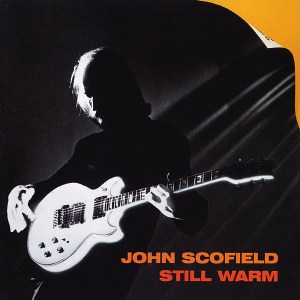
Whilst focusing on straightahead jazz during the early part of the decade, his stellar ‘fusion’ period between 1984 and 1988 – encompassing classic albums Electric Outlet, Still Warm, Blue Matter, Pick Hits Live and Loud Jazz – featured excellent original compositions and formidable players such as David Sanborn, Don Grolnick, Omar Hakim, Darryl Jones, Dennis Chambers, Hiram Bullock and George Duke.
In the meantime Sco was much in demand as a sideman, playing with everyone from Terri Lyne Carrington to Tommy Smith (this playlist gathers some of his greatest music of the 1980s) whilst also teaming up with fellow guitarist Bill Frisell, drummer Peter Erskine and bassist Marc Johnson in the latter’s Bass Desires project that produced two classic albums on ECM Records: Bass Desires and Second Sight.
Immediately recognisable with his chorus/overdrive sound and molten, legato style – always informed by the blues – Scofield’s solo career has since gone from strength, and we now find him ensconced in a highly productive spell on ECM, his latest album being Uncle John’s Band.
movingtheriver caught up with John to talk about his wonderful 1980s as he prepared for a European tour with keyboardist John Medeski – he’s ever the road warrior and seems full of energy and good humour.
MTR: I’d love to know a little about how/when you signed with Gramavision Records, and did you consider other options for your mid-‘80s solo career such as ECM?
JS: I signed with Gramavision shortly before I recorded Electric Outlet. They were very interested and made us a good deal when no one else had contacted me. After I met (ECM founder/producer) Manfred Eicher at the Bass Desires recording session he expressed interest but I had already signed a multi-record contract with Gramavision. After that I stayed with other New York-based companies (Blue Note and Verve) because I met those people here at home and they were major international labels. I’m quite happy now that I’ve found a home at ECM that is aligned with my current musical direction.
Drummer Steve Jordan plays some wonderful stuff on Electric Outlet – was he overdubbed at the end after you’d tracked everything with a drum machine?
Yes, exactly. I had bought a Roland drum machine and used it to make a four-track demo at home with me playing guitars and bass. I recreated that in the studio and had Steve overdub on all the tunes. He was incredible and nailed them so quickly. We’d played together a bit before – he was on my Who’s Who album in 1978.
I’m fascinated by the work you did with saxophonist George Adams during the 1980s, especially More Sightings (1984) – can you tell me how that came about?
I had played with George in New York on gigs with the Gil Evans Orchestra and then did a tour and album as a guest with the George Adams/Don Pullen band. Then George wanted to do the tour with Hannibal Marvin Peterson. They invited me and we ended up recording a live show in Zürich. I loved George’s playing and we were friendly. I even got him to come in to record with Miles for Columbia in 1983, but it seems that that recording session was lost somehow. I believe it was at The Hit Factory on Broadway. When they were putting together some CBS tapes for reissue, I was told by Michael Cuscuna that they didn’t find anything from that session… That’s all I know. It was Miles‘s band but with George on saxophone. (Adams is understood to have guested with Miles’s band in the studio on 16 June 1983 and also in concert at the Avery Fisher Hall in NYC on 26 June 1983, and was also part of the big band which played with Miles at Montreux in 1991 – Ed.)
Is it true that Kenny Kirkland was supposed to play keyboards on Still Warm but didn’t show at the last minute? And please tell me how the fabulous Omar Hakim came to play on the album.
Yes, Kenny was a friend and I was lucky enough to get to play with him a bunch, but somehow he didn’t show up at rehearsal so I asked Don Grolnick. I think Kenny just had his dates mixed up maybe? I’m not sure. It was a real loss that he died so young. Omar and Darryl Jones were playing with Sting at that time and I knew Omar although I had never played with him but I thought that he and Darryl could really lock it in. They sounded fantastic together.
So was Still Warm recorded just after you left Miles?
I think it was before the last tour. The last stuff I did with Miles was later in the summer in Europe and then Japan.
How much rehearsal time did you get with the bands in general for Still/Blue/Loud? Or did you give the band demos to learn in advance? Because a few of these compositions are treacherous, I’m thinking of stuff like ‘Trim’ and ‘Loud Jazz’ – how did Dennis learn them (he famously doesn’t read music – Ed.)?
For Still Warm, I think we probably had one rehearsal, then one in the studio. I think I made demos of the tunes to give everybody, but I can’t remember. By Blue Matter and Loud Jazzwe were a working band. I had been playing some of the Blue Matter songs with a different keyboardist and drummer along with Gary Grainger. Gary recommended Dennis and I guess he learned the songs at rehearsal. Maybe I made demos… I just remember Dennis trying a go-go beat on ‘Blue Matter’ which I hadn’t tried before. I think I wrote that song just before the session and had never played it live. Then we played a week at Fat Tuesday before going into the studio with Dennis and Mitch Forman. For Loud Jazz, we rehearsed but also played the tunes live on tour before the recording.
Regarding producer Steve Swallow’s role, did he select material? The albums have stood the test of time so well because they’re generally free of 1980s production clichés.
Steve has been a friend and mentor to me since the ‘70s. He was interested in production and multi-track recording and I knew he would be great at it. Although he didn’t select the material, he probably helped me with selecting my own tunes. He was really involved in mixing and had suggestions for the arrangements. Because Gramavision had their own studios, we were allowed to mix for many hours and treated mixing more like we would for a pop record. We were really lucky to have the great engineer Joe Ferla, to whom we deferred for many of the mix ideas. Along with Steve, he was responsible for the sound.
Can you tell me a bit more about the tune ‘Gil B643’ – presumably it’s a tribute to Gil Evans? And was the title at all influenced by the movie ‘THX 1138’?
B643 was Gil‘s apartment number! We lived at the same building in Manhattan.
I’d love to know a bit more about ‘Picks And Pans’ and its 6/8 feel, it strikes me that it’s a very influential tune in ‘fusion’ but was it influenced by Joe Zawinul’s ‘The Juggler’ (from Weather Report’s Heavy Weather)?
I liked Joe’s tune but I don’t think I got the beat especially from that…but there were other examples of that kind of beat. Probably lots of them. Maybe it first came from Afro-Cuban music like Mongo Santamaria’s ‘Afro Blue’. Or you can take a jazz waltz and just put a backbeat in there!
Which is your favourite of the two terrific Bass Desires albums and why?
I can’t say that I really have a favourite, but I just remember the chemistry for the first record was really exciting and it was great when we realized we could play together and that the group had a different sound, largely because of Bill Frisell and his unique approach. Also the sound with the two of our styles working together. That’s not to take anything from Marc and Peter, who really contributed so much and brought in material and if it weren’t for Marc having the idea of putting us all together, it would never have happened. I remember we played some gigs together before we went in the studio as well as rehearsing. I think we played a strange cabaret club in New York City. I can’t remember the name of the place and we probably also played a gig in Boston as well before we went into the studio with Manfred Eicher.
How did Dennis Chambers and Gary Grainger come onboard for the Blue Matter band – did you headhunt them, did they audition, or a bit of both?
I was looking for an electric bass player and my friend, the keyboard player Marc Copland, recommended Gary who he had played with in Washington DC. He said Gary could play anything on electric bass and it turned out he was absolutely correct. I then played with Gary in another configuration and he recommended Dennis. Gary and Dennis grew up together in Baltimore and were old friends. I had heard about Dennis with The P-Funk All Stars and was so surprised to learn that he was looking to play more jazz/fusion. Actually, Darryl Jones had played me a great board tape and said, ‘Isn’t this drummer fantastic?’ But we didn’t know who it was. I found out later that it was Dennis so I was a fan already even though I didn’t know it!
Hiram Bullock is an inspired rhythm-guitar choice on Blue Matter – was he a Steve Swallow recommendation?
No, I knew Hiram was great. I knew him from the New York scene and we were friends. I wanted rhythm guitar on that one track and I thought he would do a better job than I did – I think he did.
Was ‘Blue Matter’ influenced by Miles’s ‘Tutu’ (composed by Marcus Miller)?
I just had a generic triplet-ish backbeat in mind. It had no relation to ‘Tutu’ – not at all. ‘Tutu’ sounds a bit like (Burt Bacharach tune) ‘The Look Of Love’, right?!
How did you achieve the final minute of ‘Time Marches On’ where you solo over that ‘drone’ – was it a slowed down tape loop?
No, we just did it in real time.
I’d love to know your favourite guitarists of the 1980s, any genre…
Mainly I liked the jazz guys Wes Montgomery, Jim Hall, George Benson, Pat Martino. But I always loved the blues guys starting with Hendrix and Clapton back in the ’60s, plus Otis Rush, Albert King and BB King. I always admired my contemporaries Metheny, Stern, Frisell, Abercrombie, Mick Goodrick… I went in the fusion direction because of my experience with Miles. If it wasn’t for him, I probably would’ve been just playing bebop and giving guitar lessons!
The only time I saw the Blue Matter band in London was a really weird but brilliant gig in the East End in summer 1987 I think, maybe it was called the Mile End Theatre? Do you remember that? And in general do you have good memories of touring the UK and Europe?
Was that the Half Moon Theatre? I’ll never forget the gig. The late John Cumming brought us to London and I played many gigs subsequently for him. Maybe it was my first one in London as a leader? Not sure? That band was so strong. We really had some success in UK/Europe in those days.
Did Miles ever give you feedback on your 1980s solo career, or did you ever seek it out?!
I know he liked my tunes because I wrote ‘You’re Under Arrest’ for him and gave him a demo of a bunch of other stuff, some of which ended up on my records. He said he was gonna record everything but then when I quit the band in order to go out on tour with Blue Matter, I didn’t get a chance to do any of that with Miles. He had moved on to Tutu. I remember I played him some of Blue Matter for him once and he was really blown away by Dennis’s playing…
Finally, how do you look back on your 1980s career in general? Was it a great era for guitar-based music?
It was an incredible time. It was great because of getting to play with Miles and all the exposure it got me, and then starting my own career, playing funk/jazz with those guys. I was so influenced by Miles and his direction in the ‘80s. But, for me, Weather Report and Herbie’s Head Hunters were the greatest. I think it was a really good era for guitar when you think of Holdsworth, Stern, Metheny, Robben Ford and so many more. And of course the classic rockers like Clapton and Beck were around. Pop music in general had some pretty hot-shot guitar stuff in there, and funk was really everywhere. Thanks to Sly…
Thanks John and good luck on the European tour…
John Scofield at the Cape Town Jazz Festival, 2003. Photo by William Ellis
Bryan Ferry’s one and only UK #1 album to date (and biggest-selling record in the US) was released 40 years ago this month.
The Antony Price/Simon Puxley cover is seductive, the Bob Clearmountain mix is delicious, the grooves are pleasant, there’s an array of great players, and this writer can’t resist playing his vinyl copy every year or so.
So why is Boys And Girls always a strangely underwhelming listen?
Despite its big sales and Ferry’s watertight reputation, it has also failed to garner any posh anniversary write-ups in the monthly music mags and didn’t even make Classic Pop mag’s 2015 readers poll of the 100 best 1980s albums. Maybe it could/should have been Ferry’s Let’s Dance (and one wonders why he didn’t enlist Nile Rodgers to produce?).
Ferry completed the album just as he was mourning the death of his father (reflected in the lyrics to ‘The Chosen One’?) but started work back in summer 1983 with producer/engineer Rhett Davies, veteran of Roxy’s Avalon as well as the classic King Crimson double of Discipline and Beat (Davies left the music business for 20 years soon after working on Boys And Girls…). They devised drum-machine beats and laid down keyboard beds while Ferry outlined vague lyric/melody ideas.
Work mostly took place at The White House on London’s King’s Road (meanwhile, less than a mile away in Stanhope Gardens, David Sylvian was devising his own mid-1980s triptych, arguably a far more successful fusion of pop, white funk, ambient and jazz…), a demo studio owned by Ferry’s manager Mark Fenwick. Musicians were then brought in to overdub onto those eight-track demos – seven studios and 30 musicians/singers are credited!
The songs have various nods to the Avalon era. ‘Windswept’ (named by Ferry in a 2003 interview as one of his six favourite songs, the others being ‘Do The Strand’, ‘Avalon’, ‘In Every Dream Home A Heartache’ and ‘Mother Of Pearl’) seems inspired by B-side ‘Always Unknowing’, ‘Slave To Love’ obviously nods to ‘Avalon’ while ‘Sensation’ is built around a melodic motif embedded in ‘Take A Chance With Me’.
The piecemeal recording process affects the material though – Boys And Girls desperately misses the quirkier aspects of Avalon, with those vital contributions of messrs Manzanera and Mackay (not to mention bassist Alan Spenner).
David Gilmour, Mark Knopfler, David Sanborn, Nile, Marcus Miller and Andy Newmark are vaguely familiar now and then, but other big players are anonymous. Ferry’s patented piano work is almost entirely absent.
‘Slave’ is a case in point (though does feature some of that Ferry piano). Built around one of the hoariest old chord progressions in commercial music (incidentally very similar to the verses of ‘Dance Away’ but without that song’s interesting key change or atmosphere…), Ferry doesn’t bother with a bridge (or what Americans call the ‘pre-chorus’) or interesting chorus, just repeats the verse chords again and adds the chanted vocals.
He generally eschews bridges and modulations on Boys And Girls, sticking mainly to two-chord vamps (Avalon, in contrast, featured several ONE-chord songs, apparently influenced by Miles’s On The Corner and James Brown, but they really worked…).
The title track drearily cycles E-min/B-min, while ‘Stone Woman’ sticks rigidly to a very dull D-min/B-flat. Both songs are mercifully/abruptly cut short, Ferry unable to elevate the material with strong melodies.
Still, the music is beguiling and beautifully-appointed (though side A seems much too long, my stylus really struggling to get through ‘Windswept’) and yes, this time next year movingtheriver will probably be reaching for the vinyl, saying ‘Maybe this time’…

 Anthony Braxton has one of the largest discographies in music history, encompassing a huge variety of styles and formats: operas, pieces for two pianos, orchestras, solo saxophone, 100 tubas, jazz quartets, ‘found’ objects and many more.


 Summer 1980. Jack Nicholson was in the middle of his busiest period. ‘The Shining’ had just wrapped and he had inked contracts to appear in both ‘Reds’ and ‘The Postman Always Rings Twice’.

 Bryan Ferry’s one and only UK #1 album to date (and biggest-selling record in the US) was released 40 years ago this month.
