Francis Dunnery: Back To It Bites

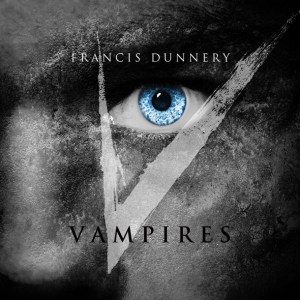
francis dunneryIn some ways, it may not be much of a surprise to hear that ex-It Bites vocalist, guitarist and songwriter Francis Dunnery has returned to the music of his old band, one of the great British units of the ‘80s.

He met up with the other three members – keyboardist John Beck, bassist Dick Nolan and drummer Bob Dalton – during a London Union Chapel gig in 2003, and for a while a full-scale reunion looked to be on the cards. But it wasn’t to be.

Then Dunnery recorded various ‘reversions’ of It Bites songs on his 2011 album There’s A Whole New World Out There, and he has frequently performed the old material in concert (check out this amazing version of Once Around The World’s title track from a few years ago). So he’s never exactly been averse to revisiting former glories.

But Vampires is different. It goes the whole hog: he’s re-recorded not just one album but 100 minutes of It Bites classics, singing all the vocal parts himself (with much-improved body and range, though his vocals weren’t exactly shabby in the old days) and enlisting various musicians including ex-Go West drummer Tony Beard to navigate the musical twists and turns.

Two years in the making, the album is also a blast from the past in terms of its audio qualities – it was recorded without EQ or compression, only a small amount of the latter being added at mastering stage.


Francis discusses the new album and the It Bites days in this excellent interview for The Mouth magazine.

He reveals – for the first time, as far as I’m aware – the full story of how the band got signed to Virgin, Dunnery’s period squatting in South London, his relationship with John Beck, his favourite It Bites songs, the band’s split and loads more. It’s a must-listen for any fans.

You can also hear many excerpts from Vampires and make your own mind up about whether his new versions improve on the originals.


Toto/Miles Davis: ‘Don’t Stop Me Now’

Toto-FahrenheitI’ve always had a somewhat ‘troubled’ relationship with Toto’s music, to put it mildly…

Toto IV (1982) was obviously a classic of its kind, Hydra (1979) had its moments and there are other classy tracks dotted around, but I’ve generally thought: David Hungate, David Paich, Jeff Porcaro and Steve Lukather are fantastic musicians who have played on some of the greatest albums of all time – so what are they doing in this band, writing these songs?

But I found a solution of sorts when I came across a track buried at the end of their lacklustre Fahrenheit album from 1986. ‘Don’t Stop Me Now’ is a cracking instrumental with nice chord changes, a great melody, gorgeous bridge, slick playing from co-writers Paich and Lukather and a memorable guest spot from Miles Davis.

Of course Miles was no stranger to the world of Toto and the LA session elite in general. He was tight with Quincy Jones, producer of Michael Jackson’s Thriller, an album that heavily featured Jeff Porcaro, Paich and Lukather.

Miles had also covered Thriller‘s ‘Human Nature’ (co-written by Toto keyboardist Steve Porcaro) on his You’re Under Arrest album the previous year. He was also apparently a big fan of Jeff Porcaro’s painting, not to mention his drumming, so a full-scale Miles/Toto collaboration was surely always on the cards.

But the recording of ‘Don’t Stop Me Now’, which took place at Jeff Porcaro’s home studio in early 1986, wasn’t a walk in the park, as Steve Lukather told George Cole in the excellent ‘Last Miles: The Music of Miles Davis, 1980-1991’:

‘We cut the track and left the melody off – we just left open spaces. When Miles got there, we ran it down together with him and he wasn’t really playing the melody. So we figured, we’re not going to tell Miles Davis what to play, so we said, “Miles, we have a take of this, would you mind just giving it a listen and play whatever you want?” He says, “Okay, I’ll play like that. You like that old shit, right?” So he gets out the Harmon mute and he played it – one take. We’re all stood there completely freaked out – it was unbelievable. At the end, the song just kind of fades out, but he just kept playing the blues. I was sitting there with chicken skin on my arms – it was an unbelievable moment. And that’s how we ended the record, with just Miles blowing. Later on, David Sanborn came down to play on a different tune on the record and he’d heard that we had cut a tune with Miles. He said: “I gotta hear it!”, so we played it and he flipped and said, “Please just let me be on the track!” He doubled the melody and played a couple of flurries. So we got Sanborn, Miles and us on one track – that was pretty cool!’

But Steve Porcaro alluded to the wider issue of including a ‘jazz’ track on a ‘heavy rock’ album when he told George Cole: ‘I don’t know how thrilled the record company or our managers were, but for us working with Miles was a major feather in our cap.’

But that kind of political scene didn’t affect Miles: he loved ‘Don’t Stop Me Now’ and quickly integrated it into his own live set. It remained a staple of his concerts from 1986 right up until 1990, the year before his death. It’s a beautiful piece of work. But while we’re at it, has anyone got a lead sheet of the tune? I want the chords…

The Robert Cray Band: Bad Influence

Bad-Influence-coverJust one note, and you know it’s Robert Cray.

He has always pretty much stuck to a tried and tested guitar sound: a Strat plugged straight into the amp, no effects apart from a very occasional tremolo pedal, and very, very hard picking.

But, in the process, on Bad Influence (inexplicably missing from streaming platforms at the time of writing…) he plays three or four of the most electrifying guitar solos of the ’80s, proving himself a worthy heir to Albert King and Albert Collins.

And his tough guitar style is a contrast to a fairly sweet, soulful vocals and songwriting which reflect the influence of Al Green and BB King more than Muddy Waters or John Lee Hooker.

Bad Influence was Cray’s second official release, and it was pretty much the one that alerted the wider world outside of blues aficionados to his potential. The Robert Cray Band had built up a formidable live following in the early ’80s, touring relentlessly on the West Coast and in Europe.

With the help of producers Bruce Bromberg and Dennis Walker, they were ready to take that consistency into the studio. And it certainly helps that there are no trinkets of ’80s production present on the album, no synths or dated drum sounds – Bad Influence mostly just sounds like a great band playing live in the studio, with the occasional addition of horns and Hammond organ.

Bad Influence is mainly known for its superb cover versions: Johnny Guitar Watson’s ‘Don’t Touch Me’ and Eddie Floyd’s ‘Got To Make A Comeback’, both slow 6/8 jams, the former angry and biting, the latter sweet and soulful. ‘The Grinder’ is another slowish 6/8 with a killer Cray solo. The CD version also comes with a great cover of the New Orleans R’n’B classic ‘I Got Loaded’.

Then there are the minor-key blues/funk standard ‘Phone Booth’ (featuring not one but two classic guitar solos), later covered by Albert King, and the title track which was subsequently covered by Eric Clapton on August (the two have collaborated many times since).

Also essential are the super-funky ‘So Many Women So Little Time’ and Bo Diddley-esque ‘No Big Deal’. Lyrically, my personal favourite is probably ‘Waiting For The Tide To Turn’, a kind of ‘ironic’ blues about procrastination.

To date, Bad Influence has reportedly shifted over a million copies. Cray’s two follow-ups False Accusations and Strong Persuader sold even more. And he’s very much still going strong at the time of writing.

Magick Moments: Siouxsie and the Banshees In The Early ’80s

Siouxsie_and_the_Banshees-3

Steve Severin, Siouxsie, Budgie

One of the nice things about immersing oneself in ’80s music is rediscovering stuff you’d once dismissed or were too young to really investigate.

I must have been vaguely aware of Siouxsie’s music at some point in the decade, but she didn’t really appear on my radar until I started to get interested in the Sex Pistols around the early ’90s (she was famously in the studio during the Pistols/Bill Grundy ‘swearfest’ and even had the misfortune of being ‘propositioned’ by the semi-sloshed presenter…).

Siouxsie in New York, 1980

Siouxsie in New York, 1980

In these days of twee, over-sharing singer-songwriters and soul-deadening ‘rock’ bands, what is immediately appealing about Siouxsie and the Banshees is their absolute earnestness, the total lack of irony. They mean it, maaaan.

These days, pop bands flirt with magickal images, shamanistic sounds and boundary-pushing lyrics, but the Banshees really were dark and truly an alternative (or reaction?) to shiny, aspirational Thatcherism. The song titles said it all: ‘Halloween’, ‘Nightshift’, ‘Voodoo Dolly’, ‘Arabian Knights’.

They also flew in the face of punk, totally rejecting the ‘DIY’ ethos. As bassist Steve Severin told Simon Reynolds in the excellent ‘Totally Wired: Post-Punk Interviews And Overviews’:

‘I never understood where that do-it-yourself ethic came from. It was so patently obvious that not everybody could do it. You had to have a modicum of talent and an original idea. But for one moment, the floodgates opened and everyone had their five minutes, put their single out, and then disappeared back to what they were destined to do in the first place.’

The Banshees began the decade with three classic albums of their kind: Kaleidoscope, Juju and A Kiss In The Dreamhouse (best album title ever?). It was no accident that they all featured one of the great British guitarists in John McGeoch, master of inventive chord voicings and creative layering.

The era spawned a raft of great singles: ‘Spellbound’, ‘Happy House’, ‘Christine’, ‘Slowdive’, ‘Fireworks’, ‘Israel’, ‘Dear Prudence’. Even as the post-punk era turned into fully-fledged Goth, they always retained a pop sensibility.

By 1982, though, it has to be said that they had also turned into a truly Bacchanalian outfit, with copious drug use, booze breakdowns and all kinds of weird rituals.

McGeoch was sacked after collapsing onstage in Madrid, apparently as a result of an alcohol-induced nervous breakdown. (He re-emerged with The Armoury Show before becoming a member of PiL between ’86 and ’92. He died in 2004.)

The Cure’s Robert Smith filled in on guitar when McGeoch left, as he had at various times between 1979 and 1983 (Polydor Records apparently tried and failed to ‘merge’ The Cure and The Banshees towards the end of this period).

He later said of his tenure in the Banshees: ‘It allowed me to go mad for a period of time. I had no responsibilities. I just had to turn up and play the guitar. Severin and I became good friends. Our friendship was based entirely on altered states. I’ve never felt as bad in all my life as when I was in the Banshees. I reached a point of total collapse in 1983.’

Siouxsie herself has revealed that she was on an LSD jag around ’82 and ’83, particularly inspiring the songs on Dreamhouse. Recently, she told MOJO magazine: ‘I seem to remember “Cocoon” being written whilst I was tripping. I was in a rented flat and if I didn’t have a notebook I used to write on the wallpaper.’

The band’s early ’80s period was also musically very influential. There were those effective, trademark tempo changes – usually a slowish intro that suddenly gathers momentum in the verse. As far as I know, no rock bassist had used a flanger pedal before Severin.

Budgie came up with some arresting tribal rhythms and all their guitarists pretty much wrote the post-punk rulebook. As Robert Smith once said, tongue firmly in cheek: ‘I just used to turn all the effects pedals on – your basic Banshees sound.’ And Siouxsie is always such a powerful vocal presence. You can hear her sound in everyone from the Cocteau Twins and Lush to PJ Harvey and Florence And The Machine.

So here we are. The Royal Albert Hall, 30th September 1983. Siouxsie in her Goth Princess pomp, Robert Smith (who, despite everything, is obviously an excellent guitarist), Steve Severin and Budgie. Wish I’d been there. Were you there (as Shaw Taylor used to say)?

Good Lyrics Of The 1980s

Joni_Mitchell_2004It has to be said, it was a bit easier coming up with good ’80s lyrics than it was to come up with crap ones.

I could probably have chosen three or four crackers from many of the artists featured below, but space permits only one. Maybe it’s not surprising that it was a great decade for lyricists when it was surely one of the most ‘literary’ musical decades to date – it would have to be with people like Bob Dylan, Morrissey, Paddy McAloon, Andy Partridge, Green Gartside, Tracey Thorn, Lloyd Cole, Joni Mitchell, Peter Gabriel and Springsteen around.

So here’s just a sprinkling of my favourites from the ’80s. Let me know yours.

I love you/You pay my rent

PET SHOP BOYS: ‘Rent’


Brother in the codpiece/I’ve seen him on the TV/I think he likes his ladies all sweet and sugary/I’m partial to a pudding/But that’s for second course/The main meal and the hors d’oeuvres must be smothered in hot sauce’

THOMAS DOLBY: ‘Hot Sauce’ (lyrics by George Clinton)


I believe in love/I’ll believe in anything/That’s gonna get me what I want/And get me off my knees’

LLOYD COLE AND THE COMMOTIONS: ‘Forest Fire’


I want you/It’s the stupid details that my heart is breaking for/It’s the way your shoulders shake and what they’re shaking for’

ELVIS COSTELLO: ‘I Want You’


Hey Mikey/Whatever happened to the f***in’ “Duke Of Earl”?’

RANDY NEWMAN: ‘Mikey’s’


If you had that house, car, bottle, jar/Your lovers would look like movie stars’

JONI MITCHELL: ‘The Reoccurring Dream’


‘Lost my shape/Trying to act casual/Can’t stop/I might end up in the hospital’

TALKING HEADS: ‘Crosseyed And Painless’


‘Once there was an angel/An angel and some friends/Who flew around from song to song/Making up the ends’

DANNY WILSON: ‘Never Gonna Be The Same’


Burn down the disco/Hang the blessed DJ’

THE SMITHS: ‘Panic’


‘Now the moon’s gone to hell/And the sun’s riding high/I must bid you farewell/Every man has to die/But it’s written in the starlight/And every line in your palm/We are fools to make war/On our brothers in arms’

DIRE STRAITS: ‘Brothers In Arms’


Out on the road today/I saw a Deadhead sticker on a Cadillac/A little voice inside my head said/Don’t look back, you can never look back…’

DON HENLEY: ‘Boys Of Summer’


‘Hello Johnson/Your mother once gave me a lift back from school/There’s no reason to get so excited/
I’d been playing football with the youngsters/Johnson says don’t dramatise/And you can’t even spell salacious’

PREFAB SPROUT: ‘Horsechimes’


‘I repeat myself when under stress/I repeat myself when under stress/I repeat…’

KING CRIMSON: ‘Indiscipline’


‘Come back Mum and Dad/You’re growing apart/You know that I’m growing up sad/I need some attention/I shoot into the light’

PETER GABRIEL: ‘Family Snapshot’


‘People say that I’m no good/Painting pictures and carving wood/Be a rich man if I could/But the only job I do well is here on the farm/And it’s breaking my back’

XTC: ‘Love On A Farmboy’s Wages’


So long, child/It’s awful dark’

DAVID BOWIE: ‘When The Wind Blows’


I could have been someone/Well so could anyone’

THE POGUES/KIRSTY MACCOLL: ‘Fairytale Of New York’


‘It’s an 18 carat love affair/I don’t know which side I’m on/But my best friend John said not to care’

ASSOCIATES: ’18 CARAT LOVE AFFAIR’

Talk Talk: April 5th

talk talkIt’s that time of year again.

The birds are swaying, the trees are singing (to quote Dylan Moran) and a young man’s fancy turns to music (to misquote Tennyson).

We all have our favourite spring/summer tracks but in my gaff there isn’t an ’80s tune that does the job better than this gem.

Songwriters Mark Hollis and Tim Friese-Green pinpoint April 5th as the date when spring really kicks in, and this deceptively ramshackle, charmingly off-the-cuff track features elegant piano, Hammond organ, wobbly Variophon, Robbie McIntosh dobro, David Roach soprano sax, subtle percussion programming and a killer chord change.

It was probably the highlight of The Colour Of Spring and forerunner to classic TT post-rock albums Spirit Of Eden and Laughing Stock, highlighting improvisation, lots of space and a much more pastoral sound than before. It floats in like a half-remembered childhood dream and then floats away just as rapidly.

Here she comes
Silent in her sound
Here she comes
Fresh upon the ground

Come gentle spring
Come at winter’s end
Gone is the pallor from a promise that’s nature’s gift

Waiting for the colour of spring
Let me breathe
Let me breathe the colour of spring

Here she comes
Laughter in her kiss
Here she comes
Shame upon her lips

Come wanton spring, come
For birth you live
Youth takes its bow before the summer the seasons bring

Waiting for the colour of spring
Let me breathe you

Chris Rea: On The Beach 30 Years Old Today

chris rea

Rea has – a little unfairly – never quite been able to escape a slightly dodgy image here in the UK, but, along with George Michael, he was probably the most popular male British singer/songwriter of the late ’80s and early ’90s.

The breakthrough/breakdown was his 1989 single/album ‘The Road To Hell’, so close to the Dire Straits sound as to be almost parody. I preferred the more laidback, distinctive Rea of the mid-’80s.

He started out pushing the glossy AOR and light, folky pop, enjoying a huge US hit with ‘Fool If You Think It’s Over’ in 1978 (later claiming that early producer Gus Dudgeon had blunted the ‘bluesier’ elements of his sound).

His career seemed to be hitting a cul-de-sac in the early ’80s, but On The Beach was one of the albums that turned things around, the beginning of his commercial era

It taps into the same kind of jazzy, introspective pop/soul sound that the likes of John Martyn, Joni Mitchell and Van Morrison were flirting with in the same period, helped by an excellent band including Fairport Convention/XTC drummer Dave Mattacks, Martin Ditcham on percussion and Max Middleton on keys. Rea also plays an impressive array of instruments himself, including fretless bass and synth.

Listening in one sitting to On The Beach again, the first thing that struck me is its almost relentlessly downbeat vibe. But the opening title track, with its lilting Latin-tinged groove and jazz chords, perfectly introduces the album’s themes of lost innocence and childhood reminiscences.

The moment when Mattacks lays into his fat snare drum for the first time is one of my favourite ’80s drumming moments.

‘Little Blonde Plaits’ is a vehicle for Middleton’s expressive Mini Moog, very redolent of his atmospheric playing on John Martyn’s Glorious Fool. There’s further ethereal jazziness on ‘Just Passing Through’, featuring a really lovely vocal performance and tasty solo guitar from Rea.

‘It’s All Gone’ ups the ante with some subtle Donald Fagen-style synths and excellent lyrics, and the groovy extended outro is close enough for jazz/funk with some empathetic Mattacks drums alongside Middleton’s fine Fender Rhodes solo.

On The Beach was a decent hit in the UK, reaching #11 in the album chart and selling over 300,000 copies. After this, Rea’s music became increasingly rootsy with elements of blues, country and rock’n’roll; he started channelling Dire Straits and ZZ Top rather than John Martyn and consequently enjoyed much more commercial success.

But On The Beach‘s four or five choice tracks are still my favourite Rea moments of the ’80s.

Prince: Parade 30 Years Old Today

princeOn 17 April 1985, just ten days after the end of the Purple Rain tour, Prince walked into LA’s Sunset Sound studios, sat at the drums, taped the lyrics of four new songs onto a music stand, picked up his sticks and instructed engineer Susan Rogers: ‘Don’t stop the tape when I stop playing. Just keep rolling.’

He then played through ‘Christopher Tracy’s Parade’, ‘New Position’, ‘I Wonder U’ and ‘Under The Cherry Moon’ without pausing. This guy worked fast. The recording sessions for Parade had begun.

The album would see Prince continue his extraordinary mid-’80s run of form, surely comparable to Stevie Wonder’s fabled 1972–1976 period. He couldn’t release albums fast enough and the wider world was waking up to just how prolific he really was.

His striking new horns-and-orchestra-driven sound, by turns jazzy, funky and psychedelic, lost him some fans in the States but made him a huge star in Europe. Parade showed off the amazing versatility of Prince (drums, bass, guitar and keyboards) and his main collaborators Wendy (guitar) & Lisa (keyboards).

It’s an anti-boredom album full of glorious contradictions – it features his first instrumental track but still contains four classic dancefloor singles; it’s his densest, most ‘produced’ ’80s album (alongside Lovesexy) and yet features his first all-acoustic track, recorded completely live in the studio; Clare Fischer’s orchestral arrangements are always high in the mix but rub shoulders with the Sunset Sound’s ancient sound effects library; Prince utilises ultramodern tech like a guitar synth and a Fairlight sampler, but the main solo instruments are Eric Leeds’ tenor and baritone sax. And there is zero electric lead guitar, barely 18 months after Purple Rain.

References this time around were The Beatles, ’80s Miles Davis, show tunes and funk-era James Brown. The biggest influence though is late-’70s Joni Mitchell. Parade is the nearest Prince ever got to the kaleidoscope range of her classic albums Don Juan’s Reckless Daughter and Hissing Of The Summer Lawns.

There were also more vocals in Prince’s music than ever before: Wendy, Lisa, Susannah (Wendy’s sister and Prince’s fiancée) and Sheila E all contributed massively to the occasional West Coast/Bangles sound.

By 2 June 1985, nine songs for Parade were in the can, though three would later be left off the final album – the spooky ‘Others Here With Us’, fantastic ‘All My Dreams’ and superfunky ‘Sexual Suicide’. Prince was also now working on not one but two other albums, Jill Jones and Mazarati’s debuts. By late June, he was also scouting locations in the south of France for the upcoming ‘Under The Cherry Moon’ movie. But, true to form, he couldn’t stop recording – he set up a makeshift recording studio in his Antibes hotel suite.

Parade‘s first three tracks – ‘Christopher Tracy’s Parade’, ‘New Position’ and ‘I Wonder U’ – pass by in the blink of an eye, gloriously odd, genuinely psychedelic funk miniatures. Very few have taken on the mantle of this style of music since 1986, though D’Angelo had a good go on the superb Voodoo album.

utcm-1

‘Under The Cherry Moon’ is almost a ’30s-style jazz number featuring asthmatic synths, fantastic piano playing and a daring melody line. I’d like to hear Tom Waits’ cover. If you listen very closely, you can hear the rattle of Prince’s necklace as he lays down the drum track.

‘Girls And Boys’ is a classic one-chord funk tune whose blaring guitar synth adds an engaging weirdness. Saxophonist Eric Leeds makes his mark on Prince’s music for the first time (though had already featured prominently on The Family’s album).

‘Life Can Be So Nice’ features fake harpsichord, sampled flute, piercing cowbell, some intricate acoustic guitar and a heavily-treated kick drum. It’s discordant and thrilling with an envelope-pushing vocal arrangement and some bizarre lyrics. The last minute of the song is a Latin/fusion jam in the Santana or Weather Report vein.

‘Venus De Milo’ is a sumptuous piece of symphonic muzak with some gorgeous trumpet from Matt Blistan (renamed Atlanta Bliss by Prince) while ‘Mountains’ is another classic single, largely penned by Wendy & Lisa. The 12” mix has to be heard. ‘Do U Lie’ is an intoxicating little slice of soft jazz with cocktail guitar, spoken word, strings and accordion.

‘Kiss’ is another effortless classic. It was the first single to be released from Parade, hitting US number one in April ’86, though apparently loathed by the Warner Bros suits. Initially given to the band Mazarati for their debut album, it was reclaimed by Prince when he realised the potential of the track. He kept their backing vocals and gave them some money.

‘Anotherloverholenyohead’, recorded on 16 December 1985, was the last track recorded for Parade. Lisa’s crystalline, densely-voiced piano sounds like it was recorded in a school assembly hall, and there’s more peculiar guitar synth and a few incredible bass runs from Prince. The full-length version made for another classic 12” single. Album-closer ‘Sometimes It Snows In April’ is Joni all the way. Its improvised, rubato prologue is very reminiscent of the opening to Mitchell’s ‘Cotton Avenue’.

Prince delivers an amazing lead vocal but the song needs a stronger chorus (‘Sometimes I feel so bad’) and Wendy & Lisa’s backing vox are extremely rough. The track divides opinion – some find it moving, some mawkish (I’m in the latter camp) – but it was a pretty brave choice to close such an important album.

The Parade sessions also spawned some fantastic B-sides: ‘Alexa De Paris’, ‘Sexual Suicide’, ‘Power Fantastic’, ‘4 The Tears In Your Eyes’, ‘Love Or Money’, ‘All My Dreams’ and the notorious ‘Old Friends 4 Sale’. All are well worth seeking out. Despite the success of ‘Kiss’ in the States, three follow-up singles peaked outside the top 50. Prince believed that Warner Bros’ choice of second single (‘Mountains’) was wrong – it should have been ‘Girls And Boys’.

Parade sold considerably less (1.8 million) in the States than Purple Rain (10 million) and Around The World In A Day (4 million). But in Europe, it was a huge hit. Then came the European tour. A funk revue. Horns, dance routines, backing vocals. Again, virtually no lead guitar. Europe loved him – there were riots in Holland – but the tour didn’t even make the States, which many insiders believe was a big mistake. Instead, there were several separate shows under the banner of the Hit & Run Tour.

But then it was all change: Wendy & Lisa were out of the band, Prince and Susannah had broken off their engagement and ‘Under The Cherry Moon’ had stiffed. But there were still a couple of amazing albums left in the tank before Prince’s ’80s were out.

Crap Lyrics Of The 1980s (Part One)

dynasty_wallpaper_by_mabmeddowsmercuryDuring a 1981 interview, Peter Gabriel said: ‘Many great songs have really appalling lyrics, but no great songs have had appalling music. If you’re going to write lyrics, you might as well make them try and communicate something.’

Sadly, it was a maxim ignored by many of his contemporaries in the ’80s pop pantheon… But these sad wretches have our sympathies; anyone who’s ever tried to pen a song knows the potential pitfalls.

Got a good melody? Great, but you’ve got to sustain the lyrical narrative across the whole song in a cogent way (got that, Coldplay and Keane?). Got some words? Handy, but it can be very tricky to fit a melody to ‘poetic’ ramblings. Basically, for every ‘Talking Scarlet‘, there’s a ‘With Or Without You’.

So join us as we take a trip through a collection of the sometimes inane, occasionally coarse, often totally meaningless ramblings of the 1980s. And don’t forget – sometimes these lexical disaster-areas didn’t detract from the quality of the song at all. But sometimes they did…

Sittin’ on a mountain, looking at the sun/Plastic fantastic lobster telephone’.
THE CULT: ‘Electric’

‘Heart of mine, sewing frenzies of steel to the sky/By night, a child in a harvest of virginal mines’.
IT BITES: ‘Midnight’

‘This morning there was joy in my heart cos I know that I loved you so/Scrambled eggs are so boring, for you’re all, all that I want to know’.
PRINCE: ‘Life Can Be So Nice’

She’s got eyes like saucers, oh you think she’s a dish/She is the blue chip that belongs to the big fish’.
ELVIS COSTELLO: ‘Big Sister’s Clothes’

‘I know that I must do what’s right/As sure as Kilimanjaro rises like Olympus above the Serengeti’.
TOTO: ‘Africa’

‘Only time will tell if we can stand the test of time’.
VAN HALEN: ‘Why Can’t This Be Love’

‘I’m so bad I can suck my own d*ck’.
LL COOL J: ‘Clap Your Hands’

‘Late spring and you’re drifting off to sleep/With your teeth in your mouth’.
REM: ‘You Are The Everything’

‘Let’s go crazy, let’s get nuts/Look for the purple banana til they put us in the truck’.
PRINCE: ‘Let’s Go Crazy’

‘You set my teeth on edge/You think you’re a vegetable, never come out of the fridge/C-c-c-cucumber/ C-c-c-cabbage/C-c-c-cauliflower!’
ECHO & THE BUNNYMEN: ‘Thorn Of Crowns’

‘Where does it go from here/Is it down to the lake I fear/Ay-ya-ya-ya-ya-ya/Ah-ya/Ah-ya-ya-ya-ya-ya’
HAIRCUT ONE HUNDRED: ‘Love Plus One’

‘Oh babe/I wanna put my log in your fireplace’.
KISS: ‘Burn Bitch Burn’

‘A stripping puppet on a liquid stick gets into it pretty thick/A butterfly drinks a turtle’s tears/But how do you know he really needs it?’
ELVIS COSTELLO: ‘Deep Dark Truthful Mirror’

Every second counts when I am with you/I think you are a pig, you should be in a zoo’.
NEW ORDER: ‘Every Second Counts’

Catching Up With Eddie Van Halen

225px-Eddie_Van_Halen_(1993)When I think of ’80s Eddie Van Halen, the image in my mind’s eye is probably not a lot different to any other fan – he’s grinning from ear to ear, cavorting around the stage, playing some of the greatest rock guitar of all time with one of the sweetest tones.

So it’s interesting to see him recently – sober, reflective, brutally honest, fiercely independent – talking about his life and craft onstage at the Smithsonian Museum of American History in Washington DC.

‘Jump’ had always been a favourite of mine and was at the back of my mind when I came across Van Halen’s superb debut album at Harry’s Records in Twickenham (another one that’s bitten the dust), during my first week of sixth-form college in 1989.

I just loved the devil-may-care feel of Eddie’s playing. He was fearless, unconcerned about making mistakes (his dad gave him some advice: if you make a mistake, do it again – with a smile), the same attitude that spurred on Parker, Ornette, Hendrix and Jaco.

I later got heavily into the VH albums Women And Children First, Fair Warning, Diver Down, 1984 and OU812, but the band have been completely off my radar since the early ’90s, when I loved the ‘Poundcake’ single.

Having said that, not living in the States, I’ve completely missed the recent new album and TV appearances featuring David Lee Roth back on vocals. Maybe I need to check in again because I dug this:

Anyway, back to the interview. It’s fascinating hearing Eddie chatting about his life and career, away from all the controversy that has dogged the band over the last few decades.

He talks about building his first guitar, the last album he bought (clue: it was back in 1986 and by an English singer who was once in a very famous progressive rock band…), demonstrates some techniques and talks candidly about his sometimes difficult early life as an immigrant in the USA.

G’wan – give yourself an hour off and enjoy some words from a master.