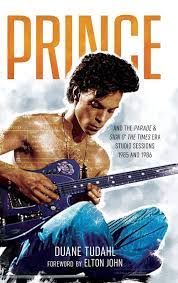
Book Review: Prince And The Parade & Sign ‘O’ The Times Studio Sessions by Duane Tudahl

Could Prince have thrived in this current age of the ‘bedroom’ musician?

On the evidence of Duane Tudahl’s superb new book – documenting every single studio session that produced the classic albums Parade and Sign ‘O’ The Times, plus countless others too – the answer would be a resounding ‘no’.

As Tudahl points out in his wonderful follow-up to ‘The Purple Rain Studio Sessions’, Prince’s genius very much depended on a coterie of talented, fiercely committed back-room staff, particularly Susan Rogers, Peggy ‘Mac’ Leonard, Coke Johnson and David Rivkin (brother of Revolution drummer Bobby), not to mention the constantly-on-call band mainstays Eric Leeds, Matt Blistan, Wendy Melvoin and Lisa Coleman, all of whom are interviewed at great length.

But there’s absolutely no doubt who’s the boss and the book doesn’t shy away from uncomfortable truths about Prince’s methods and manners. However, it’s an embarrassment of riches for the fan and valuable historical document, not to mention a great, gossipy read.

We join the book at the beginning of 1985, smack bang in the middle of the Purple Rain tour. We learn how he quickly tired of its routine and looked ever forward, taking particular inspiration from Sheila E and other collaborators, ducking into studios around the country often straight after a gig, usually recording between 2am and 6am (Sheila’s album Romance 1600 was almost exclusively put together in this fashion).

We also learn that there were three huge equipment trucks on the tour – one that contained reels of tape, one with the stage gear and one that contained only Prince’s instruments, so that he could record anywhere, anytime.

Tudahl tells the whole story of the fascinating Los Angeles night of 28 January 1985, when Prince won three awards at the American Music Awards but then failed to repair to A&M Studios for the ‘We Are The World’ session (he offered a guitar solo to Quincy Jones but was turned down!), instead going out to party at Carlos ‘N Charlie’s Mexican restaurant.

The evening had huge repercussions and began a period of press barracking – he was even lampooned on ‘Saturday Night Live’, with Billy Crystal blacking up and singing ‘I Am The World’. Tudahl has access to a huge number of candid interviewees who provide a kind of making-of guide to other key side projects from the period: St Paul Peterson talks in detail about the recording of The Family and his subsequent fall-out with Prince; Jill Jones describes the painful, hugely drawn-out period working on her underrated 1987 solo record; Eric Leeds describes how the Madhouse albums came about.

Then there are the fascinating details: we learn the full story of how ‘Kiss’ came together, with Prince getting inspiration while playing basketball on the Sunset Sound court; how the expansion of The Revolution in February 1986 was somewhat of a result of Prince’s fascination with ‘twins’, probably inspired by his fiancée Susannah Melvoin’s relationship with her sister Wendy.

We get a real sense of Prince’s incredible progression as a musician, especially through the early days of 1986, and learn all of the relevant details about his collaboration with Miles Davis. We read how the US bombing of Libya on 14 April 1986 affected Prince, inspiring a talk with Jill Jones, the viewing of a film about Nostradamus called ‘The Man Who Saw Tomorrow’ and subsequent removal of some of the more frivolous material on Jill’s album. We also learn how the LA earthquake of 12 July 1986 inspired the classic song ‘The Cross’.

And there are fascinating nuggets about how he saw his own work – he reportedly told Eric Leeds and Susan Rogers on 29 July 1986 that he thought his lyrics to ‘Adonis And Bathsheba’ were possibly his best, though Leeds and Rogers certainly didn’t agree… Both reasoned that Prince protested too much only when he was unsure of himself.

There are also the fascinating machinations of how the Sign ‘O’ The Times album finally came together, after numerous false starts, tracklist changes and the Warner Bros. top brass – led by Lenny Waronker – refusing him a triple album. No detail is spared in the section on the ‘sacking’ of Wendy and Lisa, subsequent hiring of Cat Glover and reformatting of Prince’s live unit.

The period is an absolute whirlwind, and the mind boggles how much all of this studio time cost Prince and Warners. But finally the impression we are left with is that this book gets as close to the ‘real’ Prince as we are ever going to get – it’s not for the faint-hearted fan, but a fascinating, rewarding journey if you can take it.

As someone who regularly worked on a completely one-to-one basis with him, Susan Rogers often had the best seat in the house, and she offers rich insights into his family background and psychology. The section on Prince’s lonely recording session of Christmas Day 1985 will linger long in the memory.

But all of this is only scratching the surface. We haven’t even mentioned the making of ‘Under The Cherry Moon’. It’s another wonderful book and enormous achievement by Tudahl. We await ‘The Lovesexy/Batman Studio Sessions’ with baited breath.

‘Prince And The Parade/Sign ‘O’ The Times Era Studio Sessions’ is published by Rowman & Littlefield.

Author Duane Tudahl discusses the writing of the book in this podcast.
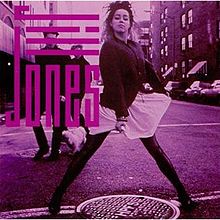
Story Of A Song: Jill Jones’ ‘Violet Blue’ (1987)

When Prince appeared on the box the other day, my mum expressed her approval.
I asked why, and without hesitation she offered: ‘He respected and promoted women’. It struck me initially as a weird reason but upon further reflection seemed spot-on.

He wrote many songs from a female perspective in the early ’80s, many of which have never seen the light of day. Then there was Vanity/Apollonia 6 – dubious acts for some, but without too much moral adjustment you could interpret them as ‘women reclaiming their right to enjoy sex’.

Then there were Prince’s striking collaborations with a variety of strong, independent characters: Ingrid Chavez, Sheila E, Sheena Easton, Dale Bozzio, Mavis Staples, Cat Glover, Elisa Fiorillo, Bonnie Raitt, Nona Hendryx, Wendy & Lisa, Susan Rogers and Peggy McCreary.

How many other male ‘pop’ icons can boast such a coterie of female cohorts?

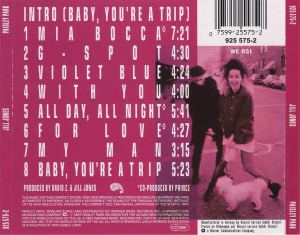
With hindsight, Jill Jones’ 1987 debut album, released on Prince’s Paisley Park Records, is one of the great missed opportunities of his career, and its standout song ‘Violet Blue’ particularly demonstrates why.

The album started in the summer of 1983 during the filming of ‘Purple Rain’ (featuring Jill’s less-than-stellar cameo), when she replaced Prince’s guide vocal on ‘Mia Bocca’. Sadly he didn’t find time to resume work on the record until over two years later.

Consequently, it’s very uneven, with some decent material (‘For Love’, ‘My Man’) mixed in with middling Prince outtakes, covers and B-sides (‘All Day, All Night’, ‘G-Spot’, ‘With You’) and undone by rushed arrangements and drastic changes in tone.

‘Violet Blue’, recorded at LA’s Sunset Sound in October 1986, was the last song put down for the album. Quite simply, it shows what the record could have been, and, frankly, how much Prince (and Jill) had developed between 1983 and 1986.

The vocal intro and accordion breakdown are two cases in point, not to mention the interesting chord progression and superb horn (Eric Leeds) and string (Clare Fischer) arrangements. Jill delivers a knockout vocal too, even throwing in a neat little Nancy Wilson impression via Dinah Washington.

Sadly the Jill Jones album sank without trace. She has recorded intermittently since, contributing a great guest vocal on Ryuichi Sakamoto’s ‘You Do Me’ and playing low-key gigs.

Prince: The Lovesexy Tour @ 30

I haven’t kept many VHS cassettes, but two vids that definitely won’t be hitting the charity shop any time soon are Prince’s ‘Lovesexy Live: Volumes 1 and 2’ (currently unavailable on DVD…).

The Lovesexy tour kicked off 30 years ago this week, on 8 July 1988 at Paris’s Palais Omnisport. The seven-month jaunt, taking in Europe, North America and Japan, was arguably Prince’s greatest ever.

A spectacular in-the-round stage set was designed as a kind of ‘fantasy island’, half a playground and half a dreamscape, with curtains, a mini basketball court, brass bed, swing set and a Ford T-Bird which Prince ‘drove’ around the stage at the start of the show.

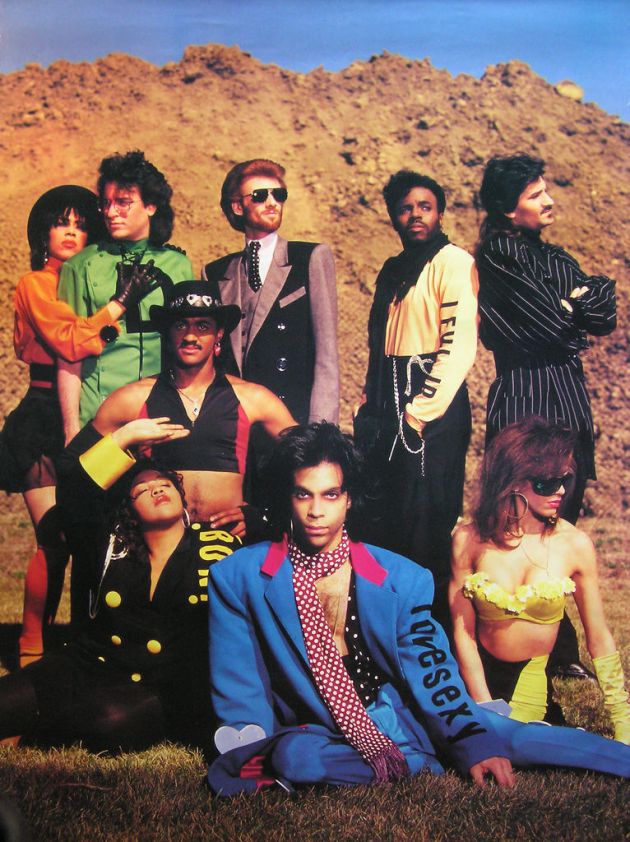
The Lovesexy tour band: left to right, Cat Glover, Dr Fink, Boni Boyer, Miko Weaver, Eric Leeds, Prince, Levi Seacer Jr., Matt Blistan, Sheila E

Taped on the last night of the European tour – 9 September 1988, at the Westfalenhalle in Dortmund, Germany – ‘Lovesexy Live’ still makes for a thrilling watch. Firstly, the music: this band could turn on a dime. It’s hard to imagine any other set of musicians from the era pulling off the ‘Adore’/’Jack U Off’/’Sister’ medley. Prince’s guitar playing is at its best, with creamy, delay-drenched distortion and tight, tasty Telecaster.

And of all the ’80s ‘pop’ acts who incorporated jazz into their work, Prince may be the most successful. In collaboration with his superb horn section (Eric Leeds on saxes, Matt Blistan on trumpet), he often went back to the source: Ellington’s ‘Things Ain’t What They Used To Be’ and Charlie Parker’s ‘Billie’s Bounce’ infiltrate ‘Blues In C/If I Had A Harem’, and Blistan occasionally quotes from ‘It Don’t Mean A Thing (If It Ain’t Got That Swing’). Meanwhile Sheila E brings the Bay Area jazz/rock sound so beloved of Prince. Her solo feature is a highlight of his ’80s live work.

Then there’s the ‘story’. The Lovesexy show is structured like one of those old Warner Bros gangster pictures – in the first half (lucky for us), we see an ‘evil’ Prince, seduced by the sins of the flesh and tempted by drugs, money and criminality, giving him an excuse to dust off Black Album standouts ‘Superfunkicalifragisexy’ and ‘Bob George’.

Then there’s punishment, atonement and spiritual conversion. Yes, y’all, the second half of the show is ‘God stuff’. But if you don’t go along with it, the music is enough of a spiritual experience anyway. Anyway, Prince certainly seems genuinely transported during ‘Anna Stesia’ and ‘I Wish U Heaven’.

Europe couldn’t get enough of the tour. There were no less than seven nights at London’s Wembley Arena and a series of famous after-show gigs, particularly at the Camden Palace on 25 July when Mica Paris was picked out from the crowd to sing ‘Just My Imagination’ and Ron Wood joined Prince onstage for a memorable ‘Miss You’.

Ticket sales were not so good in the States (14 September to 29 November) where apparently Prince struggled to sell out many arenas, despite it being his first major tour there for over three years.

But normal service was resumed when the Japan leg kicked off in early February 1989. The last night of the tour on the 13th was apparently an exceptionally emotional one.

When Prince got home to Minneapolis, he commenced work on the ‘Batman’ soundtrack, another project about the duality of man. It’s not hard to see where his head was at as the ’80s drew to a close.

Prince: Sign ‘O’ The Times 30 Years Old Today

Paisley Park/Warner Bros, released 30 March 1987

Album chart position: #6 (US), #4 (UK)

Singles released: ‘Sign O’ The Times’ (#3 US, #10 UK)
‘If I Was Your Girlfriend’ (#67 US, #20 UK)
‘U Got The Look’ (#2 US, #11 UK)
‘I Could Never Take The Place Of Your Man’ (#10 US, #29 UK)

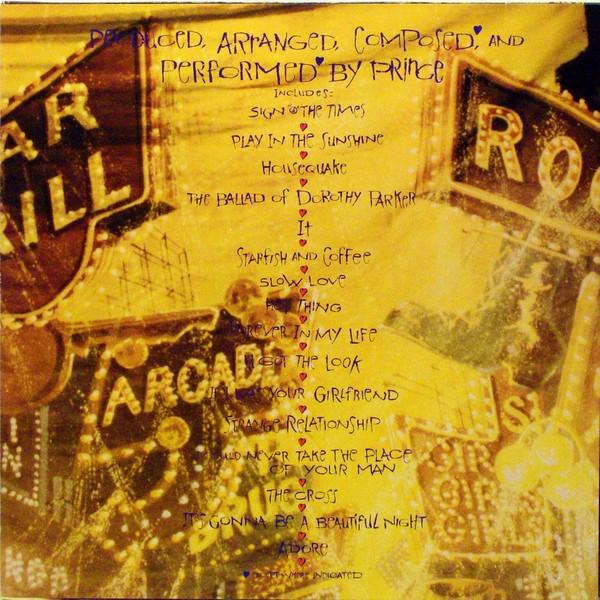
At the time of Sign O’ The Times’ release, the general critical consensus seemed to be that it was a great double album but, shorn of a few tracks, would have made a sensational single album. But what the press probably didn’t know was that Prince had actually intended to release a triple album.

He believed the three-record set Crystal Ball would have been be a huge artistic statement after a relatively disappointing 1986, but the idea scared the hell out of Warner Bros and also his manager Bob Cavallo. Prince was reluctantly forced to back down.

The tracks intended for Crystal Ball but later abandoned for Sign O’ The Times were ‘Rebirth Of The Flesh’, ‘Rockhard In A Funky Place’, ‘The Ball’, ‘Joy In Repetition’, ‘Shockadelica’, and ‘Good Love’ (all hoovered up from two other aborted album projects, Dream Factory and Camille).

But even after Prince removed these, he was still left with a 16-track double album, a brilliant mix of the sacred and profane, and a record which many fans believe was his finest hour.

The famous title track was recorded on 15 July 1986 in a single ten-hour session at LA’s Sunset Sound. Prince was experimenting with a new piece of kit – the Fairlight sampler/synth – but characteristically made the technology swing in a way that no other artist could.

The track also demonstrates his love of space; it’s essentially just a minimalist blues featuring a three-note melody line, some sampled drums/bass and a bit of electric guitar. Listening again on the day after the Westminster Bridge ‘terrorist’ attack of 23 March, the song’s lyric also seems as relevant now as it was in 1987:

Hurricane Annie ripped the ceiling of a church and killed everyone inside
You turn on the telly and every other story is tellin’ you somebody died
Sister killed her baby cos she couldn’t afford to feed it
And we’re sending people to the moon
In September my cousin tried reefer for the very first time
Now he’s doing horse, it’s June

It’s silly, no?
When a rocket ship explodes
And everybody still wants to fly
Some say a man ain’t happy
Until a man truly dies

‘Play In The Sunshine’ and ‘Housequake’ are pure party pop – it’s scarcely believable that Prince alone could generate such a raucous studio atmosphere with only Susannah Melvoin’s backing vocals, a few guests and Eric Leeds’ sax for company. The latter also represents his first recorded attempt at hip-hop (unless you count the brief ‘rap’ in ‘Girls & Boys’), typically supplying something usually missing from the genre: humour.

‘The Ballad Of Dorothy Parker’, recorded in Prince’s Minneapolis home studio on 15th March 1986, may be his most psychedelic recording, the soundtrack to a dream with seemingly-spontaneous musical moments that no one else could have created. He demonstrates his mastery with the LM-1 drum machine and, vocally, sets up a novel ‘Greek chorus’ effect.


‘Forever In My Life’ takes a melody line very similar to Sly And The Family Stone’s ‘Everyday People’ (and maintains Sly’s key of G) but again demonstrates Prince’s remarkable sense of space and also features another extraordinary backing vocal arrangement.

The heartfelt lyric was written when he believed he would settle down with fiancée Susannah Melvoin (twin sister of Wendy) – sadly it wasn’t to be.

‘It’, another bold experiment with the Fairlight, returns to the cold, sexualised world of 1999, while ‘Hot Thing’ is its flipside, a funky, James Brown-inspired one-chord romp with some great Leeds tenor sax.

‘If I Was Your Girlfriend’ (another song about Susannah/Wendy), ‘Strange Relationship’ (another big nod to Sly), ‘It’s Gonna Be A Beautiful Night’, ‘Starfish And Coffee’, ‘U Got The Look’ and ‘I Could Never Take The Place Of Your Man’ are just brilliantly performed, beautifully written pop tunes with dashes of psychedelia and soul.

According to engineer Susan Rogers, Prince was very influenced by Kate Bush’s Hounds Of Love during the recording of SOTT, the track ‘Cloudbusting’ a particular favourite. Other songs showed contemporary influences too – ‘Adore’ was apparently Prince’s response to the popularity of Luther Vandross’s Give Me The Reason and Patti Labelle’s The Winner In You, and it also hugely influenced the neo-soul movement, particularly D’Angelo’s ballad style.

‘U Got The Look’ – the last song recorded for Sign O’ The Times on 21 December 1986 – was apparently inspired by Robert Palmer’s ‘Addicted To Love’.

Sign O’ The Times sold 1.8 million copies in the US, a very similar number to Parade. Some believed the slightly disappointing sales were due to the choice of ‘If I Was Your Girlfriend’ as the second single; it is strange that ‘U Got The Look’ didn’t get the nod. But if Prince’s popularity was levelling out in the States, it was growing across Europe.

Prince: Parade 30 Years Old Today

princeOn 17 April 1985, just ten days after the end of the Purple Rain tour, Prince walked into LA’s Sunset Sound studios, sat at the drums, taped the lyrics of four new songs onto a music stand, picked up his sticks and instructed engineer Susan Rogers: ‘Don’t stop the tape when I stop playing. Just keep rolling.’

He then played through ‘Christopher Tracy’s Parade’, ‘New Position’, ‘I Wonder U’ and ‘Under The Cherry Moon’ without pausing. This guy worked fast. The recording sessions for Parade had begun.

The album would see Prince continue his extraordinary mid-’80s run of form, surely comparable to Stevie Wonder’s fabled 1972–1976 period. He couldn’t release albums fast enough and the wider world was waking up to just how prolific he really was.

His striking new horns-and-orchestra-driven sound, by turns jazzy, funky and psychedelic, lost him some fans in the States but made him a huge star in Europe. Parade showed off the amazing versatility of Prince (drums, bass, guitar and keyboards) and his main collaborators Wendy (guitar) & Lisa (keyboards).

It’s an anti-boredom album full of glorious contradictions – it features his first instrumental track but still contains four classic dancefloor singles; it’s his densest, most ‘produced’ ’80s album (alongside Lovesexy) and yet features his first all-acoustic track, recorded completely live in the studio; Clare Fischer’s orchestral arrangements are always high in the mix but rub shoulders with the Sunset Sound’s ancient sound effects library; Prince utilises ultramodern tech like a guitar synth and a Fairlight sampler, but the main solo instruments are Eric Leeds’ tenor and baritone sax. And there is zero electric lead guitar, barely 18 months after Purple Rain.

References this time around were The Beatles, ’80s Miles Davis, show tunes and funk-era James Brown. The biggest influence though is late-’70s Joni Mitchell. Parade is the nearest Prince ever got to the kaleidoscope range of her classic albums Don Juan’s Reckless Daughter and Hissing Of The Summer Lawns.

There were also more vocals in Prince’s music than ever before: Wendy, Lisa, Susannah (Wendy’s sister and Prince’s fiancée) and Sheila E all contributed massively to the occasional West Coast/Bangles sound.

By 2 June 1985, nine songs for Parade were in the can, though three would later be left off the final album – the spooky ‘Others Here With Us’, fantastic ‘All My Dreams’ and superfunky ‘Sexual Suicide’. Prince was also now working on not one but two other albums, Jill Jones and Mazarati’s debuts. By late June, he was also scouting locations in the south of France for the upcoming ‘Under The Cherry Moon’ movie. But, true to form, he couldn’t stop recording – he set up a makeshift recording studio in his Antibes hotel suite.

Parade‘s first three tracks – ‘Christopher Tracy’s Parade’, ‘New Position’ and ‘I Wonder U’ – pass by in the blink of an eye, gloriously odd, genuinely psychedelic funk miniatures. Very few have taken on the mantle of this style of music since 1986, though D’Angelo had a good go on the superb Voodoo album.

utcm-1

‘Under The Cherry Moon’ is almost a ’30s-style jazz number featuring asthmatic synths, fantastic piano playing and a daring melody line. I’d like to hear Tom Waits’ cover. If you listen very closely, you can hear the rattle of Prince’s necklace as he lays down the drum track.

‘Girls And Boys’ is a classic one-chord funk tune whose blaring guitar synth adds an engaging weirdness. Saxophonist Eric Leeds makes his mark on Prince’s music for the first time (though had already featured prominently on The Family’s album).

‘Life Can Be So Nice’ features fake harpsichord, sampled flute, piercing cowbell, some intricate acoustic guitar and a heavily-treated kick drum. It’s discordant and thrilling with an envelope-pushing vocal arrangement and some bizarre lyrics. The last minute of the song is a Latin/fusion jam in the Santana or Weather Report vein.

‘Venus De Milo’ is a sumptuous piece of symphonic muzak with some gorgeous trumpet from Matt Blistan (renamed Atlanta Bliss by Prince) while ‘Mountains’ is another classic single, largely penned by Wendy & Lisa. The 12” mix has to be heard. ‘Do U Lie’ is an intoxicating little slice of soft jazz with cocktail guitar, spoken word, strings and accordion.

‘Kiss’ is another effortless classic. It was the first single to be released from Parade, hitting US number one in April ’86, though apparently loathed by the Warner Bros suits. Initially given to the band Mazarati for their debut album, it was reclaimed by Prince when he realised the potential of the track. He kept their backing vocals and gave them some money.

‘Anotherloverholenyohead’, recorded on 16 December 1985, was the last track recorded for Parade. Lisa’s crystalline, densely-voiced piano sounds like it was recorded in a school assembly hall, and there’s more peculiar guitar synth and a few incredible bass runs from Prince. The full-length version made for another classic 12” single. Album-closer ‘Sometimes It Snows In April’ is Joni all the way. Its improvised, rubato prologue is very reminiscent of the opening to Mitchell’s ‘Cotton Avenue’.

Prince delivers an amazing lead vocal but the song needs a stronger chorus (‘Sometimes I feel so bad’) and Wendy & Lisa’s backing vox are extremely rough. The track divides opinion – some find it moving, some mawkish (I’m in the latter camp) – but it was a pretty brave choice to close such an important album.

The Parade sessions also spawned some fantastic B-sides: ‘Alexa De Paris’, ‘Sexual Suicide’, ‘Power Fantastic’, ‘4 The Tears In Your Eyes’, ‘Love Or Money’, ‘All My Dreams’ and the notorious ‘Old Friends 4 Sale’. All are well worth seeking out. Despite the success of ‘Kiss’ in the States, three follow-up singles peaked outside the top 50. Prince believed that Warner Bros’ choice of second single (‘Mountains’) was wrong – it should have been ‘Girls And Boys’.

Parade sold considerably less (1.8 million) in the States than Purple Rain (10 million) and Around The World In A Day (4 million). But in Europe, it was a huge hit. Then came the European tour. A funk revue. Horns, dance routines, backing vocals. Again, virtually no lead guitar. Europe loved him – there were riots in Holland – but the tour didn’t even make the States, which many insiders believe was a big mistake. Instead, there were several separate shows under the banner of the Hit & Run Tour.

But then it was all change: Wendy & Lisa were out of the band, Prince and Susannah had broken off their engagement and ‘Under The Cherry Moon’ had stiffed. But there were still a couple of amazing albums left in the tank before Prince’s ’80s were out.

Prince: Around The World In A Day @ 30

Prince-Around-the-World-in-a-DayI was a late starter when it comes to Prince, too young to get the sexual/spiritual absolutism of Purple Rain.

The one that really hooked me was 1986’s Parade, but these days I’d cite Around The World In A Day as my favourite Prince album.

It was released just ten months after Purple Rain, a serious statement of intent and a good indication of how prolific he was at the time.

Prince unveiled the first release on his new Paisley Park label at an uncomfortable listening party on 21 February 1985 in the LA offices of Warner Bros attended by 15 to 20 Warners executives, plus Joni Mitchell and Prince’s father, all of whom had to sit on the floor. Apparently the general reaction from the suits was: how the hell are we gonna sell this?

For me, ATWIAD is prime Prince, when he was tapping into jazz, psychedelia and even classical music. But, perhaps surprisingly, the main influence is gospel. Prince screams his way through the morality tales of ‘The Ladder’ and ‘Temptation’ with just as much intensity as Al Green, Bob Dylan or Bobby ‘Blue’ Bland.

I also hear a lot of late-’70s Joni in the more experimental tracks such as the intense ‘Temptation’ and sublime ballad ‘Condition Of The Heart’ – he’s not scared to leave a lot of space for lengthy piano and guitar improvisations. This is the first Prince album where you can add ‘arranger’ to his list of musical gifts.

Much of Around The World In A Day actually predates Purple Rain. The title track, ‘Pop Life’, ‘Temptation’ and ‘Paisley Park’ were all recorded in early ’84, while the other songs were put together during the Purple Rain tour. While the album is credited to ‘Prince And The Revolution’, only ‘America’ and ‘The Ladder’ feature the full band. The rest is a one-man-band operation with guests here and there.

Any album which contains the classic singles ‘Paisley Park’, ‘Raspberry Beret’, ‘Pop Life’, the title track and ‘America’ definitely works. It’s well worth seeking out the 12” version of ‘America’ which runs to 21 minutes with no edits and no ‘remix’ element – just endless grooving. Only ‘Tambourine’ now sounds suspiciously like filler, despite Prince’s spirited impersonation of Sheila E’s drum style.

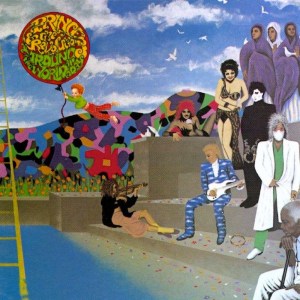
And we’ve got to mention Doug Henders’ sumptuous cover art. He explained the concept to writer Per Nilsen: ‘Most of the figures are characters in the songs, but some of the people are parts of Prince so they’re all somewhat autobiographical.’

Prince insisted on zero promotion for the album – no singles, no press or TV ads. This was totally unheard of in the mid-1980s. Even so, Around The World In A Day went to #1 in the US album chart on 1 June 1985, just 20 weeks after Purple Rain had completed its 24-week run at the top. It eventually sold over three million copies in the US.

With Purple Rain, Prince had shown Warner Bros that he could mix it with the biggies – Springsteen, Hall and Oates, Madonna and Michael Jackson. But now he was battling to do things his way, beginning with Around The World In A Day.

While this stance produced arguably his best music, it also drove a wedge between him and Warners leading up to the ‘SLAVE’ debacle of 1994/1995. But it was also, thankfully, a battle he won, producing an astonishing output of work between Purple Rain and Batman which rivals any five-year run in pop history.

Prince: The Family @ 30

the family

I’ve bought this album (still unavailable on streaming platforms at the time of writing) on almost every format since I found a cassette copy in the early ’90s, back when it was a pretty rare groove.

The Family came out during my favourite Prince period. He was embracing jazz, fusion, psychedelia, classic rock and even modern classical, mainly prompted by his collaboration with the very excellent Wendy and Lisa but also other associates Sheila E, saxists Eric Leeds and Eddie M and string arranger Clare Fischer.

The author with The Family in background, summer 1991

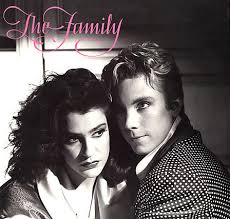
This was my soundtrack to summer ’91. I instantly loved the retro Hollywood glamour of the cover artwork and the way it chimed with the whole Parade/Under The Cherry Moon concept.

The Family slipped out on Paisley Park Records in summer ’85 (just three months after Prince’s Around The World In A Day) to a very low-key critical and commercial reception. These days, the album is known mainly for including an early version of ‘Nothing Compares 2 U’.

But it’s full of far superior fare to that such as the killer opening funk medley, classic near-hit ‘The Screams of Passion’, charming pop of ‘Desire’ and especially instrumentals ‘Yes’ and ‘Susannah’s Pyjamas’ where Prince indulges in some fantastic Sly Stone-meets-Miles bass, guitar and drum grooves. This is the album that led Tutu producer Tommy LiPuma to recommend Prince to Miles as a possible collaborator and it’s easy to hear why.

The Family was put together by Prince when the first incarnation of his massively successful offshoot project The Time split up in the summer of 1984. The band’s keyboardist/vocalist Paul Peterson (renamed St Paul by Prince), drummer Jellybean Johnson and vocalist/dancer Jerome Benton were summoned to Prince’s house along with his then-fiancee (and sister of Wendy) Susannah Melvoin and Leeds.

A band concept was quickly ad-libbed by Prince, who, according to engineer David Rivkin (reported by Per Nilsen in his superb Prince: The First Decade book), issued them with the directive: ‘We gotta go after some of that Duran Duran money!’

the family

But what they ended up with was far from Duran Duran music. Prince wrote all the songs (except ‘River Run Dry’), played all instruments on the basic tracks and sang all the guide vocals.

Peterson and Melvoin painstakingly replaced Prince’s scratch vocals (and apparently took dance and acting lessons!), Leeds added his trademark baritone, tenor and flute and Fischer provided deliciously non-linear string arrangements.

Prince’s ‘no bass’ philosophy (as famously heard on ‘When Doves Cry’ and ‘Kiss’) seems well to the fore on The Family. I still have in my possession a cassette of demos from the album featuring Prince’s phenomenal bass playing on ‘High Fashion’ and ‘Mutiny’, presumably deleted at the last minute.

The Family was released without much fanfare or marketing. After just one gig at First Avenue in Minneapolis (rare footage of which was recently removed from Youtube), the project was put on hold when Prince recruited Melvoin, Benton and Leeds for his Under The Cherry Moon movie.

Peterson was put on a retainer, but, tired of waiting around for Prince to get back from filming in the south of France, served his notice by phone call. According to Per Nilsen, Prince was flabbergasted, believing that The Family’s time wasn’t far away and that St Paul was jumping ship too soon.

And, in a way, he was right – The Family album just won’t go away. At the request of Roots/D’Angelo/Erykah Badu drummer Amir ?uestlove Thomson, a long-time fan, the four-piece minus Prince delivered a mesmerising comeback performance at a pre-Grammys bash in 2007.

And then in 2012 a full-length album Gaslight was released under the new name fDeluxe (with considerable contributions from Wendy and Lisa) and a successful world tour followed (including a great Jazz Cafe gig in London). It proves that this band was much more than a Prince side project and are a pretty formidable funk/soul act in their own right.