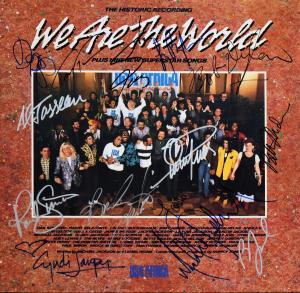
USA For Africa: We Are The World @ 40

Released 40 years ago this month and officially the fastest-selling single in American music history, USA For Africa’s ‘We Are The World’ shifted over 20 million copies and raised a huge amount of money for African famine relief.

Co-written by Michael Jackson and Lionel Richie during a few sessions at the former’s house in Encino, the song divides opinion but only the hardest heart could fail to be moved by its recording (even if one can definitely feel the vibe of some major agent/star power – no arriving in the manager’s battered old car for this lot…).

It brought together a fairly astonishing cast list of the great and good. And, inadvertently, it also arguably represented a last gasp for classic 1980s R’n’B and yacht rock.

The basic track was recorded at Kenny Rogers’ Lion Share Studios on 22 January 1985 with king-of-the-cross-stick John ‘JR’ Robinson on drums, bassist Louis Johnson and pianist Greg Phillinganes, closely monitored by a huge press corps, co-producers Quincy Jones and Michael Omartian and engineer Humberto Gatica. According to Robinson, all the musicians were sight-reading a chart and a click track was used, and they didn’t do more than two takes.

A few days later, Lionel sat down with Quincy and vocal arranger Tom Bahler to prep who would sing which lines (the decision was also made to mainly record vocals live and ‘in the round’ with no or at least very few ‘punch-ins’, unlike ‘Do They Know It’s Christmas’). All the major vocalists were then sent a copy of the basic track featuring Jackson’s guide vocal and with an enclosed letter from Lionel.

The featured singers then assembled at A&M Studios at around 9pm on Monday 28 January, most arriving after the American Music Awards (which Richie hosted). Notable absentees: Madonna (who was apparently bumped in favour of Cyndi Lauper), Prince (check out Duane Tudahl’s superb book for the details), George Benson, Dolly Parton, Donna Summer, Michael McDonald, Pat Benatar, Rod Temperton, Stevie Nicks, Joni Mitchell, Billy Idol? And is it odd that Smokey Robinson didn’t sing a solo line?

The complete footage of the recording session is still fascinating. We see how some of the biggest names in music history found different ways of preparing. Steve Perry waits for his line with eyes shut, looking down, listening intently. Diana Ross does just the opposite.

Bob Geldof gives a stirring pep talk and Stevie Wonder brings in two Ethiopian women to address the singers, moving many to tears. It’s hard not to be touched by Stevie, Kenny Rogers, Dionne Warwick, Diana, Steve Perry, Ray Charles and Cyndi Lauper’s vocals. But Harry Belafonte, Ray Charles, Bob Dylan and Bruce Springsteen seem to get the most respect from the assembled stars.

Other observations: Brucie – who had finished the latest leg of the Born In The USA tour the night before – looking like Judd Nelson in ‘The Breakfast Club’. Al Jarreau struggling throughout. Lionel the team player. Stevie giggling like a naughty schoolkid when Quincy gets annoyed. James Ingram hiding behind Kenny Rogers after a boo-boo.

Paul Simon twice saying to Rogers: ‘Can I help?’ Lauper sharing vocal tips with Kim Carnes. MJ holding hands with Diana and Stevie. Quincy and Stevie rehearsing with Bob Dylan. Stevie and Ray Charles using their braille machine. Quincy reading the score as he conducts the soloists, and his witty asides: ‘Who you gonna call?’ etc.

It looks like they recorded the first half of the song first (up to and including Daryl Hall) and then spent some time on the middle eight with Huey Lewis, Lauper and Carnes.

How does it sound now? Phillinganes’ piano playing is a pleasure to hear, typically tasty and gospel-inflected. But the track is inundated with synths – no less than four players are credited, including David Paich and Steve Porcaro from Toto – and probably why it reminded many of a Pepsi ad.

And it’s odd that the song features no guitar, though Prince offered to play a solo – Quincy reportedly told Prince’s manager Bob Cavallo: ‘I don’t need him to play guitar, we got f*ckin’ guitars’!
10 years of movingtheriver.com & The Future

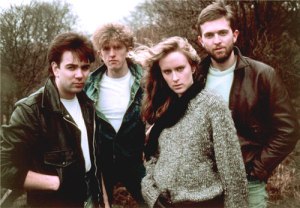
It was ten years to the day that I published my inaugural articles for movingtheriver, pieces on Prefab Sprout, Marcus Miller/Miles Davis, Peter Gabriel , Keith LeBlanc, Prince and Level 42.

The site was a few years in the planning but really only became a reality during an enforced period of reclusion via illness.

Anyone who sets up a project as a labour of love knows how quickly it becomes both a lifeline and passion. Over the past ten years, it’s also been great fun sharing stories and opinions with readers, writers, musicians and bloggers alike.

I’m not sure what the future holds for the site. Substack and YouTube beckon and WordPress has its issues (some of you may have mistakenly been sent a test post by the WP backroom bods recently…).

But the keyword is enjoyment. So hope to see you in ten years…

Nearly the Greatest Pop Albums of the 1980s (The One-Crap-Track Theory)

It’s been a bit of a movingtheriver obsession over the past few weeks as summer finally kicks in and the album format makes a seasonal comeback.
You’re enjoying the music, hailing a ‘classic’ record and then…damn. It’s the track you always skip, the runt of the collection, the song that tarnishes a perfectly good album.

Maybe the band was ‘letting their hair down’ after a few pints in the pub down the road. Maybe it was the drummer/producer/bass player’s vanity track. Maybe it’s the overplayed hit. Maybe the album sequencing isn’t quite right. To be honest, often it’s just something irrational that you can’t quite put your finger on.

For whatever reason, here are movingtheriver’s almost perfect 1980s ‘pop’ albums, and the tracks that just don’t quite sit right:

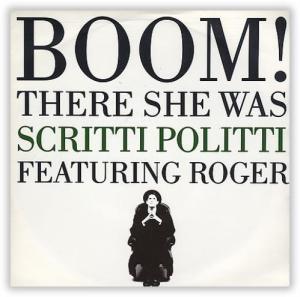
Scritti Politti: Provision (skipped track: ‘Boom! There She Was’)

Prefab Sprout: Steve McQueen (skipped track: ‘Horsin’ Around’)

Prefab Sprout: Protest Songs (skipped track: ‘Tiffany’s’)

Prefab Sprout: From Langley Park To Memphis (skipped track: ‘I Remember That’)

Talking Heads: Remain In Light (skipped track: ‘The Overload’)

Phil Collins: Face Value (skipped track: ‘I’m Not Moving’)

Propaganda: A Secret Wish (skipped track: ‘Jewel’)

Wendy & Lisa: Fruit At The Bottom (skipped track: ‘Tears Of Joy’)

China Crisis: Diary Of A Hollow Horse (skipped track: ‘Age Old Need’)

Danny Wilson: Meet Danny Wilson (skipped track: ‘Nothing Ever Goes To Plan’)

Danny Wilson: Bebop Moptop (skipped track: ‘NYC Shanty’)

Frankie Goes To Hollywood: Liverpool (skipped track: ‘Watching The Wildlife’)

David Bowie: Let’s Dance (skipped track: ‘Cat People’)

Kate Bush: Hounds Of Love (skipped track: ‘Running Up That Hill’)

The Police: Synchronicity (skipped track: ‘Every Breath You Take’, and sometimes ‘Mother’ too…)

Joni Mitchell: Wild Things Run Fast (skipped track: ‘Solid Love’)

Roxy Music: Avalon (skipped track: ‘Take A Chance With Me’, but I love the intro…)

Hue and Cry: Remote (skipped track: the title track)

Prince: Batman (skipped track: ‘Arms Of Orion’)

Swing Out Sister: It’s Better To Travel (skipped track: ‘Breakout’)

Thomas Dolby: The Golden Age Of Wireless (skipped track: ‘Windpower’)

(In the name of balance, I’ve listed my all-thriller/no-filler 1980s albums here. )

Do chime in with the tracks that, for you, muck up otherwise excellent 1980s albums.

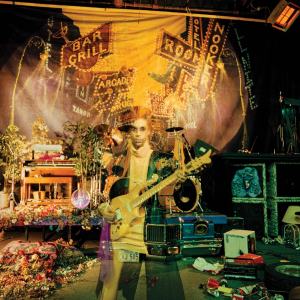
Prince: Sign “O” The Times Revisited

It’s possible that ‘Sign “O” The Times’ (the single) had the same effect on one generation of music lovers as ‘Waterloo Sunset’, ‘Arnold Layne’, ‘Purple Haze’ or ‘Penny Lane/Strawberry Fields’ (all released between March and May 1967) did on another.

Released on 13 March 1987, it’s hard to think of another top 10 single of the 1980s with as much as space in it (and uncharacteristically deep reverb on Prince’s vocals, presumably utilising the famous Sunset Sound echo chamber). Apart from his guitar and voice, it was all performed on a Fairlight synth/sampler.

Adorned with a back cover featuring Cat Glover, the single drew lyrical inspiration from various news items read in The LA Times during the week of Monday 14 July 1986: Reagan’s ‘Star Wars’ program, the AIDS crisis, the investigation into January’s space shuttle disaster and the inner-city drug wars.

Lisa Coleman reports that she heard Prince’s amazing programmed drum groove blasting out of the venue speakers during a soundcheck in Denver in early July 1986.

Famously barred from releasing a three-album set by Warner Bros. – a process outlined in detail in Duane Tudahl’s wonderful recent book – Prince regrouped, quickly creating new material and then making the title track his new double album’s centrepiece.

Sign became the sound of summer 1987 in my corner of west London. Prince had been on my radar before – Parade was a definite sleeper – but this was it. And yet it still seems one of those ‘classic’ albums that gets talked about more than listened to.

So I listened to it. In one sitting. Probably for the first time in about five years. It’s probably even better than I remembered it. Has anyone ever captured a ‘party in the studio’ vibe better than Prince on ‘Housequake’ and ‘Play In The Sunshine’? And usually he only had Susannah Melvoin and engineer Susan Rogers for company. Of course this was in a sense a throwback to classic Little Richard and Chuck Berry, as well as James Brown tracks such as ‘Get Up Offa That Thing’.

He begins each side with groundbreaking tracks for him that took a while to record. We’ve discussed ‘Sign’. Then there was ‘It’, actually his first song exclusively using the Fairlight (apart from his guitar and vocals). Then ‘U Got The Look’, which was drastically sped up at the eleventh hour, ratcheted up a few semitones. Then ‘The Cross’, written and recorded the day after the infamous Los Angeles earthquake of 12 July 1986. Prince’s drums on this track speed up a lot – Rogers reportedly noticed but decided not to point it out.

Rogers also reports that she occasionally badgered Prince about the seemingly ‘lo-fi’ nature of these recordings, but he didn’t budge, and the album benefits from that ‘unfinished’ quality, even if it features a lot less bass than most modern music.

Sign features probably Prince’s greatest music, but we could all debate which tracks could have been left off. I could do without ‘It’, ‘Forever In My Life’, ‘Slow Love’, ‘The Cross’, ‘Adore’ (and would have preferred ‘Power Fantastic’, ‘Dream Factory’, ‘Crucial’, ‘Sexual Suicide’ and ‘Good Love’, but Prince had long jettisoned them by early 1987…).

Also why does the superb album design get short shrift? It’s a key part of the package. Hail photographer Jeff Katz and graphic designer Laura (niece of Tommy) LiPuma.

What Is The Ultimate 1980s Floorfiller?

Here’s a quandary. If you had to choose one 1980s song to get people on the dancefloor – maybe you’re the last-minute guest DJ at a wedding disco – what would you go for?
The track probably needs a few things going for it:

1. A great intro – a ‘call to arms’.

2. Cross-generational appeal, one for the kiddies and grandparents alike.

3. It has to be a total hit – no cult favourites.

4. Loudness and ‘impact’.

5. It’s probably ‘pop’ and pretty genre-less – no heavy metal or R’n’B.

6. A soundtrack hit might be good – something from a John Hughes joint or ‘Dirty Dancing’?

7. A flavour of the ‘novelty’ hit/one-hit wonder might help.

In his (great) book ‘Nothing Is Real’, David Hepworth comes up with five ultimate floorfiller contenders including two from the 1980s: Brucie’s ‘Dancing In The Dark’ and Madonna’s ‘Open Your Heart’. Both choices strike this correspondent as a little odd. Rather I’d posit the following (feel free to chime in with any omissions):

Michael Jackson: ‘Billie Jean’

Prince: ‘Kiss’

Dexys Midnight Runners: ‘Come On Eileen’

Simple Minds: ‘Don’t You Forget About Me’

Toni Basil: ‘Mickey’

Musical Youth: ‘Pass The Dutchie’

Roxy Music: ‘Same Old Scene’

Cyndi Lauper: ‘Girls Just Wanna Have Fun’

Bill Medley/Jennifer Warnes: ‘(I’ve Had) The Time Of My Life’

De La Soul: ‘Say No Go’

Young MC: ‘Know How’

Wham!: ‘Wake Me Up Before You Go-Go’

Human League: ‘Don’t You Want Me’

ABC: ‘Poison Arrow’

Madonna: ‘Into The Groove’

But the one 1980s track I’d choose to get people onto the dancefloor is…

David Bowie: ‘Let’s Dance’

I’ve rounded up most of these and some others into a playlist. Happy groovin’.

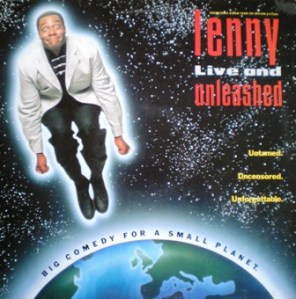
The Cult Movie Club: Lenny Henry Live And Unleashed (1989)

In her book ‘Hooked’, legendary movie critic Pauline Kael said that the only fresh element in American films of the 1980s may have been what comedians (Robin Williams, Steve Martin, Bill Murray et al) brought to them.
Could we say the same about British films of the 1980s? Looking at ‘Supergrass’, ‘Eat The Rich’, ‘Morons From Outer Space’ and, er, Cannon & Ball’s ‘The Boys In Blue’, it would seem not. A shame, and strange in a way that the ‘Comic Strip’ generation couldn’t quite make the transition to the big screen.

But Lenny Henry – best known as a British TV star in the 1980s – made a damn good fist at the stand-up concert movie with ‘Lenny: Live And Unleashed’, mostly shot at London’s Hackney Empire, taking on the Americans (Eddie Murphy’s ‘Raw’, Richard Pryor’s ‘Live On The Sunset Strip’ etc.) at their own game, complete with a posh credit sequence featuring brilliant impressions of Martin, Murphy and Pryor plus a not-very-funny skit with Robbie Coltrane as the most annoying taxi driver in the world (Why didn’t Lenny fit in another impression there? Couldn’t he have dusted off a De Niro?).

His flashes of surrealism evoke Alexei Sayle and Martin and also it’s clear that by 1989 Lenny had developed into a superb physical actor. He addresses political and racial topics head-on, beginning one skit with the simple statement: ‘We need to see more Black faces on British TV.’

There’s a great celebration of Black music (evidenced also in his appearance on the BBC’s Desert Island Discs just before this was filmed) with homages to Prince and Bobby McFerrin, a good bit on Michael Jackson’s ‘Bad’ tour, and the striking ‘Fred Dread’ section featuring Dennis Bovell’s natty dub soundtrack.

Other character favourites Delbert Wilkins, Deakus and the Teddy Pendergrass-lampooning Theophilus P Wildebeeste (you couldn’t do that sketch these days…) get a lot of stage time – superb portraits, with heart and soul. A new character, ageing blues singer Hound Dog Smith, gets a workout too, featuring an amusing guest spot from Jeff Beck (who also turned up in a few Comic Strip films around this time).

The box-office performance of ‘Lenny: Live And Unleashed’ is hard to uncover but does it have enough appeal to a non-British audience? Judge for yourself (and I must check out Henry’s next foray into the movie world, 1991’s ‘True Identity’, at some point…)…

Misheard Lyrics Of The 1980s

Adolescence: a period of chaos and confusion. There was little rhyme or reason to one’s heightened sensibilities, and it didn’t help that 1980s pop songs had such bloody weird lyrics.
Initially, maybe it was a crap hi-fi/radio signal that sent you down the wrong track, or maybe some jackass got in your ear. And, quite often, albums didn’t come with lyric sheets.

Either way, the words were often lost in translation, the meaning – such that it was – got skewed and from that moment on you couldn’t hear a track without factoring in your messed-up version. And it didn’t matter if you loved it or hated it.

Sad to report, to this day, when I hear these songs/lines, I get the lyrics ‘wrong’. And yes, it has to be said, you don’t have to be Dr Freud to see that sex was usually the driver. That’s adolescence for you…

Blondie: ‘Island Of Lost Souls’
Misheard line: ‘I’m f*ckin’ near/Can you help me put my truck in gear’
(Correct line: ‘Oh buccaneer/Can you help me put my truck in gear’)

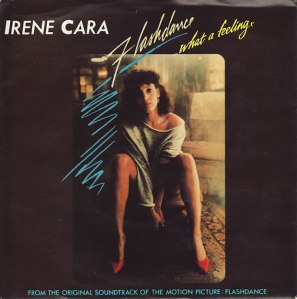
Irene Cara: ‘Flashdance (What A Feeling)’
Misheard line #1: ‘Take your pants down/And make it happen’
(Correct line: ‘Take your passion/And make it happen’)

Misheard line #2: ‘I can have it off/Now I’m dancing for my life’
(Correct line: ‘I can have it all/Now I’m dancing for my life’)

Michael Jackson: ‘Thriller’
Misheard line: ‘And though you f*ck to stay alive/Your body starts to quiver’
(Correct line: ‘And though you fight to stay alive/Your body starts to quiver’)

Prince: ‘Strange Relationship’
Misheard line: ‘But I’ve seen you get a kick out of doing coke’
(Correct line: ‘But I seem to get a kick out of doing you cold’)

Roxy Music: ‘To Turn You On’
Misheard line: ‘With an open book aside/Like Iranian screw’
Correct line: ‘With an open book aside/Like you read in school’)

Level 42: ‘Last Chance’
Misheard line: ‘Driven on by the memory of your fish/Shining for me’
Correct line: ‘Driven on by the memory of your face/Shining for me’

China Crisis: ‘African And White’
Misheard line: ‘Life is a fever in which we ate’
(Correct line: ‘Life is a fever in Israel’)

Fine Young Cannibals: ‘Johnny Come Home’
Misheard line: ‘Waters run in my life/That I must get drunk every night’
Correct line: ‘What is wrong in my life/That I must get drunk every night’)

UB40: ‘Food For Thought’
Misheard line: ‘I’m a prima donna’
(Correct line: ‘Ivory madonna’)

Bryan Adams: ‘Heaven’
Misheard line: ‘Love is all that I need/And I found it there in your shirt’
(Correct line: ‘Love is all that I need/And I found it there in your heart’)

Billy Joel: ‘An Innocent Man’
Misheard line: ‘Some people live with the fear of a touch/And the anger of having dinner poo’
(Correct line: ‘Some people live with the fear of a touch/And the anger of having been a fool’)

Donald Fagen: ‘Ruby Baby’
Misheard line: ‘From the sunny day I met you/Made a bed where I will get you’
(Correct lilne: ‘From the sunny day I met you/Made a bet that I would get you’)

The Blue Nile: ‘The Downtown Lights’
Misheard line: ‘I’m tired of crying on the city’
(Correct line: ‘I’m tired of crying on the stairs’)

Lionel Richie: ‘All Night Long’
Misheard line: ‘Everybody’s seen everybody dance’
(Correct line: ‘Everybody sing/Everybody dance’)

Steely Dan: ‘Glamour Profession’
Misheard line: ‘When it’s all over/We’ll make some colds from my cough’
(Correct line: ‘When it’s all over/We’ll make some calls from my car’)

Boomtown Rats: ‘Banana Republic’
Misheard line: ‘Banana republic/Set to climb’ (To be honest, I didn’t have the faintest idea what Sir Bob was singing… Ed.)
(Correct line: ‘Banana republic/Septic isle’)

It Bites: ‘Calling All The Heroes’
Misheard line: ‘High on a mountain the men looked below/Cucumber pineapple something and Poe’
(Correct line: ‘High on a mountain the men looked below/Cooked up a plan that would outwit their foe’)

The Police: ‘So Lonely’
Misheard line: ‘Simone/Simone’ (There was an Italian bloke at school called Simone…)
(Correct line: ‘So lonely/So lonely’)

Joni Mitchell: ‘Chinese Cafe (Unchained Melody)’
Misheard line: ‘Gone so fast/Like the turn of a peach’
(Correct line: ‘Gone so fast/Like the turn of a page’)

The Beatles: ‘The End’
Misheard line: ‘Matthew/Matthew’
(Correct line: ‘Love you/Love you’)
(That’s enough misheard lyrics, Ed…)

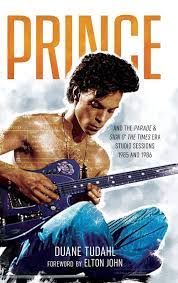
Book Review: Prince And The Parade & Sign ‘O’ The Times Studio Sessions by Duane Tudahl

Could Prince have thrived in this current age of the ‘bedroom’ musician?

On the evidence of Duane Tudahl’s superb new book – documenting every single studio session that produced the classic albums Parade and Sign ‘O’ The Times, plus countless others too – the answer would be a resounding ‘no’.

As Tudahl points out in his wonderful follow-up to ‘The Purple Rain Studio Sessions’, Prince’s genius very much depended on a coterie of talented, fiercely committed back-room staff, particularly Susan Rogers, Peggy ‘Mac’ Leonard, Coke Johnson and David Rivkin (brother of Revolution drummer Bobby), not to mention the constantly-on-call band mainstays Eric Leeds, Matt Blistan, Wendy Melvoin and Lisa Coleman, all of whom are interviewed at great length.

But there’s absolutely no doubt who’s the boss and the book doesn’t shy away from uncomfortable truths about Prince’s methods and manners. However, it’s an embarrassment of riches for the fan and valuable historical document, not to mention a great, gossipy read.

We join the book at the beginning of 1985, smack bang in the middle of the Purple Rain tour. We learn how he quickly tired of its routine and looked ever forward, taking particular inspiration from Sheila E and other collaborators, ducking into studios around the country often straight after a gig, usually recording between 2am and 6am (Sheila’s album Romance 1600 was almost exclusively put together in this fashion).

We also learn that there were three huge equipment trucks on the tour – one that contained reels of tape, one with the stage gear and one that contained only Prince’s instruments, so that he could record anywhere, anytime.

Tudahl tells the whole story of the fascinating Los Angeles night of 28 January 1985, when Prince won three awards at the American Music Awards but then failed to repair to A&M Studios for the ‘We Are The World’ session (he offered a guitar solo to Quincy Jones but was turned down!), instead going out to party at Carlos ‘N Charlie’s Mexican restaurant.

The evening had huge repercussions and began a period of press barracking – he was even lampooned on ‘Saturday Night Live’, with Billy Crystal blacking up and singing ‘I Am The World’. Tudahl has access to a huge number of candid interviewees who provide a kind of making-of guide to other key side projects from the period: St Paul Peterson talks in detail about the recording of The Family and his subsequent fall-out with Prince; Jill Jones describes the painful, hugely drawn-out period working on her underrated 1987 solo record; Eric Leeds describes how the Madhouse albums came about.

Then there are the fascinating details: we learn the full story of how ‘Kiss’ came together, with Prince getting inspiration while playing basketball on the Sunset Sound court; how the expansion of The Revolution in February 1986 was somewhat of a result of Prince’s fascination with ‘twins’, probably inspired by his fiancée Susannah Melvoin’s relationship with her sister Wendy.

We get a real sense of Prince’s incredible progression as a musician, especially through the early days of 1986, and learn all of the relevant details about his collaboration with Miles Davis. We read how the US bombing of Libya on 14 April 1986 affected Prince, inspiring a talk with Jill Jones, the viewing of a film about Nostradamus called ‘The Man Who Saw Tomorrow’ and subsequent removal of some of the more frivolous material on Jill’s album. We also learn how the LA earthquake of 12 July 1986 inspired the classic song ‘The Cross’.

And there are fascinating nuggets about how he saw his own work – he reportedly told Eric Leeds and Susan Rogers on 29 July 1986 that he thought his lyrics to ‘Adonis And Bathsheba’ were possibly his best, though Leeds and Rogers certainly didn’t agree… Both reasoned that Prince protested too much only when he was unsure of himself.

There are also the fascinating machinations of how the Sign ‘O’ The Times album finally came together, after numerous false starts, tracklist changes and the Warner Bros. top brass – led by Lenny Waronker – refusing him a triple album. No detail is spared in the section on the ‘sacking’ of Wendy and Lisa, subsequent hiring of Cat Glover and reformatting of Prince’s live unit.

The period is an absolute whirlwind, and the mind boggles how much all of this studio time cost Prince and Warners. But finally the impression we are left with is that this book gets as close to the ‘real’ Prince as we are ever going to get – it’s not for the faint-hearted fan, but a fascinating, rewarding journey if you can take it.

As someone who regularly worked on a completely one-to-one basis with him, Susan Rogers often had the best seat in the house, and she offers rich insights into his family background and psychology. The section on Prince’s lonely recording session of Christmas Day 1985 will linger long in the memory.

But all of this is only scratching the surface. We haven’t even mentioned the making of ‘Under The Cherry Moon’. It’s another wonderful book and enormous achievement by Tudahl. We await ‘The Lovesexy/Batman Studio Sessions’ with baited breath.

‘Prince And The Parade/Sign ‘O’ The Times Era Studio Sessions’ is published by Rowman & Littlefield.

Author Duane Tudahl discusses the writing of the book in this podcast.

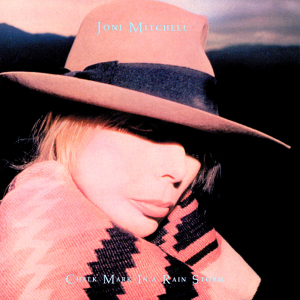
Joni Mitchell: Chalk Mark In A Rainstorm

Intelligent pop was alive and well in summer 1988 with key albums from Prefab Sprout, It Bites, Scritti Politti, Prince, Thomas Dolby…and, would you believe it, Joni.

Chalk Mark In A Rainstorm was a few years in the making after the underperforming (but excellent) Dog Eat Dog, and she was feeling the pressure. ‘I could use a hit’, she confessed to Q magazine in a long interview (they also gave the album a glowing four-star review).

She also granted a long interview to the NME, and was rewarded with her highest charting album (#26) in the UK since Mingus, almost ten years earlier. Stateside, off the back of a stinking, poorly-written Rolling Stone review, it reached a disappointing #45.

Released on 23 March 1988, Chalk Mark is based around a core band of Joni on keys, guitars and vocals, Larry Klein on bass and keys, Mike Landau on guitars and Manu Katche on drums. Larry and Joni co-produce.

There’s a real consistency to the sound, but, with its hermetically sealed nature, it seems almost critic-proof. There’s nothing to compare it too, apart from Joni’s own work.

Reviewers were generally confused by her choice to use the latest synth/sampling technology to illuminate anti-war, anti-advertising, anti-‘toxic crap’ (Joni’s words), pro-Native American songs. Well, that’s what’s known as ‘irony’…

Gorgeous opener and first single ‘My Secret Place’ was mostly recorded at Peter Gabriel’s Ashcombe House studio (he also offered her free studio time to make the demos for the album).

PG guests on vocals (though Joni plays all keyboards, including the memorable piano motif) while Katche delivers a superb, subtly-building performance with hints of Steve Gadd’s famous ’50 Ways To Leave Your Lover’ groove.

As usual, musicians and singers were queuing up to appear on a Joni record. Steve Stevens, Billy idol and Tom Petty combine to memorable effect on ‘Dancin’ Clown’ (apparently one of Bob Dylan’s favourites), while Wendy & Lisa add their gossamer back-ups to sumptuous ‘The Tea Leaf Prophecy (Study War No More)’.

‘The Reoccurring Dream’ is a collage of advertising cliches over richly-chorded Joni vocals. The standout is possibly ‘Beat Of Black Wings’, a furious anti-war song with a stately, orchestral theme in an unusual 6/4 time.

Less effective are the plodding ‘Number One’, ‘Snakes And Ladders’ and ‘Cool Water’, despite some welcome guest vocals by Willie Nelson on the latter. All would probably have been more effective as solo, acoustic songs (she often promoted the album with solo versions of the former).

The album ends with Wayne Shorter’s hearty chuckle after his multi-tracked, soprano sax deluge on ‘A Bird That Whistles’ (apparently Joni’s only instruction to him in the studio was: ‘You’re the bird’!).

Joni was in a group of one in 1988, feeling no particular kinship with the female singer-songwriters making their way towards the end of the decade, the likes of Suzanne Vega, Julia Fordham, Jane Siberry, Mary Margaret O’Hara, Louise Goffin, Toni Childs and Tracy Chapman (the latter beating Joni to a Best Pop Vocal Performance Grammy in 1989).

She was still far ahead of the competition, but also painting herself into a corner. It was the end of an era. The acoustic guitar and ‘folky’ forms would re-emerge in time for the next album Night Ride Home; a logical, commercially-led move, but the end of a fascinating progression of sounds and styles during the ‘80s.

Read a great interview with Joni, Larry Klein, Billy Idol, Tom Petty and Willie Nelson about the making of the album here

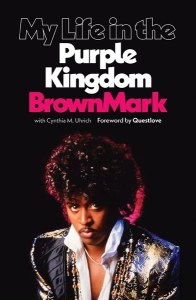
Book Review: My Life In The Purple Kingdom by BrownMark

It’s a time-honoured music-biz story: The Hometown Kid Makes It Big.

Or, to paraphrase Bill Bruford, first you get used to failure, then you get used to success. But BrownMark’s new memoir ‘My Life In The Purple Kingdom’, outlining his five-year stint as bassist with Prince And The Revolution, has a few intriguing twists to the old story.

Firstly, it’s a very timely work, since there’s very little documentation about the Inner Workings of the Purple Rain circus. Then there’s the added intrigue of the book mainly taking place in the huge, often-underestimated Midwestern city of Minneapolis.

The early sections are gripping, a vision of a young man flourishing as a musician, getting by in (racially and economically) difficult conditions, supported by a loving mother and extended family.

Mark documents the Minneapolis music scene of the 1970s very well, tracing his development from young Staple Singers/Ohio Players/Earth, Wind & Fire fan into local music ‘star’, with lots of talk about image creation in the era of Rick James and Controversy-era Prince (‘Only women had clothes that fit the vibe I was looking for, but I didn’t want to dress in drag’…).

Soon Prince has his number, and there’s a long, strange section on his recruitment for The Revolution (spoiler alert: hardcore Prince fans should approach the book with caution…), and a memorable account of the infamous October 1981 gig supporting The Rolling Stones in Los Angeles. There are some excellent photographs, many of which this writer had never seen, and a fine introduction by Questlove, Prince fanatic and esteemed Black Music documentarian.

But ‘My Life In The Purple Kingdom’ is also a cursory tale, a veritable How Not To Succeed In The Music Biz, and it has to be said that Mark sometimes comes across as incredibly naïve, even for a nineteen-year-old.

This speaks to something very strange at the heart of the book. There are missing details that put everything else into doubt – nothing about the status of the offer Mark received from Prince’s management upon joining The Revolution (whisked out of nowhere to join one of the most successful bands of all time, he never discusses terms and then is shocked when ‘cheated’ out of a bonus); nothing about his knowledge of Prince’s music before he joined The Revolution; barely a mention of any Prince songs or interesting musical moments during his time in the band (only Lisa Coleman and Matt Fink get cursory mentions).

The book has a ‘happy’ ending of sorts, ending with Mark’s late-‘80s solo deal with Motown Records, but bizarrely the recent (very successful) Revolution reunion isn’t mentioned. It’s almost as if he wrote it back in 1990, at the height of his bitterness and brain fog. The closing, cursory thanks to Prince almost raises the first proper laugh of the book.

But ‘My Life In The Purple Kingdom’ is an absolute must for 1999 and Purple Rain completists and those wanting to know more about the Minneapolis music scene. It’s an arresting piece of social history, often gripping and definitely original, especially in its early sections.

‘My Life In The Purple Kingdom’ by BrownMark (with Cynthia Uhrich) is published by the University Of Minnesota Press.