Noel Coward famously noted the strange potency of ‘cheap’ music.
There was certainly a lot of cheap, potent music around in the 1980s.
But as the nostalgia industry has grown, so has the dossier of seemingly ‘untouchable’ ’80s pop songs, tracks that are staples of daytime radio but, to many ears, lack distinctive grooves, beguiling melodies or interesting hooks.
If you were being cruel, you might say it’s music for people who don’t really like music. And, weirdly, it mostly comes from established, experienced campaigners who have a lot of other strings to their bow. But we only ever seem to hear one or two of their songs.
Here are those overplayed tracks that always have me reaching for the ‘off’ switch but have retained a weird grip on radio programmers for over 30 years. We consign them to Room 101, here and now, never to be heard again…
Dire Straits: ‘Walk Of Life’/’Money For Nothing’
Yazz: ‘The Only Way Is Up’
King: ‘Love And Pride’
Whitney Houston: ‘I Wanna Dance With Somebody’
Tina Turner: ‘Simply The Best’
The Beautiful South: ‘Song For Whoever’
Spandau Ballet: ‘Through The Barricades’
Dream Academy: Life In A Northern Town
Anything by The Proclaimers
Anything by Texas
Chris Rea: ‘The Road To Hell’
Sade: ‘Your Love Is King’/’Smooth Operator’
Steve Winwood: ‘Higher Love’
Mike And The Mechanics: ‘The Living Years’
Anything by Fleetwood Mac
The Cars: ‘Drive’
Mental As Anything: ‘Live It Up’
Soul 2 Soul: ‘Back To Life’
Anything by U2 apart from ‘Pride (In The Name Of Love’)’ or ‘The Unforgettable Fire’
Cyndi Lauper: ‘Time After Time’
Depeche Mode: ‘Personal Jesus’
Talking Heads: ‘Road To Nowhere’
Tracy Chapman: ‘Fast Car’
Anything by Tom Petty
Simply Red: ‘Holding Back The Years’
Prince: ‘When Doves Cry’
Womack & Womack: ‘Teardrops’
Anything by Duran Duran except ‘Notorious’ or ‘Skin Trade’
Picture the scene: It’s August 1980 at Warner Bros Records’ Los Angeles HQ. Prince’s manager Steve Fargnoli is playing the suits his charge’s new demos.
Both the artist and his manager want to release these rough recordings as the next album.
Fargnoli hits the play button, and these lyrics crawl out over a peppy – but distinctly lo-fi – new-wave groove:
I was only sixteen but I guess that’s no excuse My sister was thirty-two, lovely and loose She don’t wear no underwear She says it only gets in her hair…
Major labels often – quite rightly – take a lot of flak, but Warner Bros deserves credit for taking on Dirty Mind(released 8 October 1980) and Controversy (released 14 October 1981).
It was a brave move by Prince too, an incredible volte face after it looked like he might be going down a big-budget, soft-rock/disco rabbit hole. Just compare the Prince and Dirty Mind covers: it was definitely one in the eye for Reagan’s new, ultra-conservative regime.
I first heard these albums circa 1988 via a compilation tape made by my schoolfriend Seb. I already knew and loved Parade and Sign O’ The Times but these older songs sounded like they’d been sent down from a different planet. I didn’t pay much attention to lyrics in those days but sensed something very odd going on.
In the Dirty Mind/Controversy era, Prince’s main modus operandi seems to be: shock at all costs. It’s a novel approach, because if he can express himself completely freely, and then deliver such a classic, ‘throwaway’ rock song like ‘When You Were Mine’, you never know what’s going to come next. Cue a long, great career.
Recorded very quickly during summer 1980 at his rather ramshackle home studio in Lake Minnetonka, Minneapolis (the drum kit apparently sat in a puddle of water surrounded by sand bags), Dirty Mind has more in common with the B-52s, Elvis Costello, Blondie and The Cars than it does Earth, Wind & Fire or REO Speedwagon.
It’s nasty, brutish and short. And of course what struck me listening to it again after five or six years, it’s remarkably stripped down compared to a great deal of modern music – hardly surprising when nearly all the noises are made by Prince. Only ‘Head’, ‘Partyup’ and ‘Uptown’ outstay their welcome, underwhelming grooves with slight vocal performances (though the former became a great live track).
My old vinyl version of Controversy sounds absolutely great. Of course it helps that the album’s only 37 minutes long, and also there’s a lot more bottom-end this time. On a decent turntable, various details emerge like the scuzzy synth bass escaping from the left channel during the Lord’s Prayer on the title track (can you guess it’s a Prince album yet?) and some low-octave backing vocals throughout.
It’s also a totally schizophrenic album again, with the title track and ‘Sexuality’ laying down a kind of free-love/free-speech manifesto, two rockabilly tunes (one a message to Reagan), a graphic seduction ballad and synthetic funk tune (‘Private Joy’) which marks Prince’s first use of the Linn LM-1 drum machine.
Weirdly, none of these songs made the PMRC’s Filthy 15 list. But they still sound totally fresh, especially the unclassifiable stuff like ‘Dirty Mind’, ‘Annie Christian’, ‘Jack U Off’, ‘Sexuality’ and ‘Ronnie Talk To Russia’.
Prince toured Dirty Mind and Controversy extensively, and there were three particularly infamous gigs during the period: his London debut at The Lyceum on 2 June 1981 and the two shows supporting The Rolling Stones at the Los Angeles Memorial Coliseum on 9 and 11 October 1981.
37. Bireli Lagrene: ‘Rue De Pierre Part 3’
A triumph of solo guitar, and the only acoustic solo in this list, Bireli stunned the cognoscenti with this track from his 1988 Steve Khan-produced album Foreign Affairs.
36. Bros: ‘Chocolate Box’ (Guitarist: Paul Gendler)
Yes, Bros… Gendler had been a fully-paid-up member of New Romantic nearly-men Modern Romance before becoming an in-demand player on the UK scene, and he enlivened this hit with a raunchy, nimble classic.
35. REO Speedwagon: ‘Keep On Loving You’ (Guitarist: Garry Richrath)
Unreconstructed, huge-toned, double-tracked solo which revels in being almost out-of-tune throughout. Its sheer, brilliant in-your-faceness always comes as somewhat of a shock.
34. George Benson: ‘Off Broadway’
Slick, tasty solo from a truly great player. The tune is a Rod Temperton-penned, post-disco beauty from Give Me The Night.
33. Killing Joke: ‘Love Like Blood’ (Guitarist: Geordie)
This is ‘just’ a melody, but it’s a great melody, escalating in volume and intensity.
32. Phil Upchurch: ‘Song For Lenny’ (Guitarists: Phil Upchurch/Lenny Breau)
A couple of superb solos from a great, totally forgotten 1984 Upchurch solo album Companions. Breau stuns with his array of false harmonics and jazzy runs, while Upchurch brings the blues feeling.
31. Frank Zappa: ‘Alien Orifice’
It’s nice to hear Frank blowing over a few changes rather than his usual one or two-chord vamps. And he really gets a nice ‘flowing’ thing going here, right in the middle of one of his densest compositions. Starts at around 1:32:
30. Cameo: ‘A Goodbye’ (Guitarist: Fred Wells)
From the classic album Single Life, this solo goes way over and beyond the call of duty for an ’80s soul ballad. But it’s mainly included for its brilliant final flourish, spitting notes out like John McLaughlin. Who is Fred Wells and where is he now?
29. Rush: ‘YYZ’ (Guitarist: Alex Lifeson)
Hard to do without this flowing, creamy, Strat-toned classic on one of the great rock instrumentals of all time (though inexplicably it lost out to The Police’s ‘Behind My Camel’ at the Grammies…).
28. Kevin Eubanks: ‘That’s What Friends Are For’
A real hidden gem from the almost impossible-to-find Face To Face album, Eubanks lays down a short but beautifully-structured solo on a cool cover version.
27. Steve Miller Band: ‘Abracadabra’
Good fun and totally unpredictable. Also notable for its lovely Spanish-style flurry of triplets in its last two bars.
26. Starship: ‘Nothing’s Gonna Stop Us Now’ (Guitarist: Corrado Rustici)
Cheesy? Maybe a bit, but who cares when it’s this well-structured and performed. Add a great tone, nice string-bending and a lovely phrase at the end and you’ve got a classic.
25. Queen: The Invisible Man (Brian May)
May played a lot of great solos in the late 1980s, mostly on other people’s records (Holly Johnson, Fuzzbox, Living In A Box etc) but this one was just a kind of ‘play as many notes as possible in eight bars’ solo, and it’s a killer.
24. Lee Ritenour: ‘Mr Briefcase’
Rit found the sweet spot on his Ibanez many times in the early ’80s, no more so than on this single that kicked off the classic Rit album. The solo also sounds double-tracked too, no mean feat considering the crazy bunch of 32nd notes at the end of bar 10.
23. Michael Jackson: ‘Wanna Be Startin’ Something’ (Guitarist: David Williams)
Not so much a solo as a suddenly-foregrounded riff, Williams became one of the most in-demand US session players after laying down this classic.
22. Pat Metheny: ‘Yolanda You Learn’
A marvellous, ‘singing’ guitar-synth solo from the First Circle album, rhythmically interesting and reflecting a strong Sonny Rollins influence, also closing with a cool quote from the standard ‘My One And Only Love’.
21. Frank Zappa: ‘Sharleena’ (Guitarist: Dweezil Zappa)
Frank’s son was apparently just 14 years old when he laid down this absurdly fluid cameo.
20. Eric Clapton: ‘Bad Love’
Nice to hear Eric pushing himself for once, delivering a striking solo played right at the top of the neck, demonstrating a mastery of string-bending and precise fingering.
19. Sadao Watanabe: ‘Road Song’ (Guitarist: Carlos Rios)
A classic rock/fusion solo, all the more impressive because it’s apparently double-tracked, from the album Maisha. Rios is still one of the most in-demand session players in Los Angeles (and one of the few leftie fusion players…), probably best known for his work with Gino Vannelli, Chick Corea and Lionel Richie.
18. Prince: ‘Batdance’
It’s the unapologetic volume and raucous tone, almost distorting it’s so hot in the mix.
17. David Sanborn: ‘Let’s Just Say Goodbye’ (Guitarist: Buzz Feiten)
Feiten seems a weirdly unrecognised figure in the guitar fraternity, but he contributed some great stuff to Sanborn’s seminal Voyeur album including this tasty break over a killer Marcus Miller/Steve Gadd groove. There are some lovely moments when Sanborn’s sax cuts in to augment his solo.
16. Paul Simon: ‘Allergies’ (Guitarist: Al Di Meola)
I love hearing ‘jazz’ musicians turning up on ‘pop’ records, and this is a classic of its kind featuring all of Al’s trademark licks in one short, tasty burst. It’s a lot more fun than listening to his solo albums, anyway…
15. Manhattan Transfer: ‘Twilight Zone’ (Guitarist: Jay Graydon)
At a time when he was getting much more into the production game, Graydon still found time to toss off a double-tracked showstopper on this hit single. All in a day’s work for the session genius who of course unleashed the famous solo on Steely Dan’s ‘Peg’. Speaking of which…
14. Steely Dan: ‘Glamour Profession’ (Guitarist: Steve Khan)
A mini masterpiece of precision and invention. Khan is given his head and takes the classic tune OUT in the last three minutes. When the chord changes, he changes.
13. King Crimson: ‘Elephant Talk’ (Guitarists: Adrian Belew/Robert Fripp)
Two great solos for the price of one on this Discipline opener. Fripp supplies the opening horn-like curio, then Belew adds some fire and a bit of famous elephantosity for good measure.
12. Living Colour: ‘Funny Vibe’ (Guitarist: Vernon Reid)
A classic modern blues solo from a modern master, adding excitement and elan to an already burning piece, helped along by Will Calhoun’s cajoling kit work.
11. Steely Dan: ‘Third World Man’ (Guitarist: Larry Carlton)
Another day, another classic Steely guitar solo, this one recorded in 1977 during the Aja sessions but not unleashed for another three years. Again, double-tracked for lasting power, featuring a superb mastery of tone and melody.
10. Wendy & Lisa: ‘Waterfall’ (Guitarist: Wendy Melvoin)
Sadly this is my only female entry in the list (more suggestions please), but it’s a fuzz-toned, anthemic treat, with shades of Santana and McLaughlin.
9. The Police: ‘Driven To Tears’ (Guitarist: Andy Summers)
It’s the random, off-the-cuffness that appeals on this one. Summers sounds a lot more p*ssed off than usual, possibly reeling from yet another Sting jibe.
8. Steve Vai: ‘Call It Sleep’
Just a superb guitar composition from top to tail, but the moment at 1:22 when he stomps on the distortion pedal and rips it up is a great moment of ’80s music.
7. Propaganda: ‘Dream Within A Dream’ (Guitarist: Stephen Lipson)
Lipson modestly provided three or four extremely memorable guitar features during his golden ZTT period (not least Frankie’s ‘Two Tribes’), but this one gets extra points for its infinite reverb and a dynamite fuzztone.
6. Orange Juice: ‘Rip It Up’ (Guitarist: Edwyn Collins)
Just a funny two-fingers-up to the well-made solo, and also a fond homage to Pete Shelley’s famous break on Buzzcock’s ‘Boredom’.
5. Frank Gambale: ‘Credit Reference Blues’
Just wind him and watch him go. It starts slowly, almost wistfully, but then becomes a fire-breathing classic. Still scary after all these years.
4. Dire Straits: ‘Romeo And Juliet’ (Guitarist: Mark Knopfler)
The closing solo is just an oasis of choice phrases and unique tones.
3. Van Halen: ‘One Foot Out The Door’ (Guitarist: Eddie Van Halen)
Of course ‘Beat It’ is the industry standard, and possibly the greatest guitar solo of all time, but I’m going for this curio which closes out the oft-forgotten Fair Warning album. He just blows brilliantly over the changes with a gorgeous tone.
2. Jeff Beck: People Get Ready
The second and last solo is the one, a feast of Jeff-isms. A rare good bit from the rather poor Flash album.
1. Stanley Clarke: ‘Stories To Tell’ (Guitarist: Allan Holdsworth)
No chucking out any old solo for our Allan – this is a brief but fully-formed, perfectly structured, wide-interval classic that is easily the best thing about the tune. He seems to get a bit ‘lost’ in the middle, but then regroups for a stunning closing section over the rapid chord changes.
At the beginning of 1989, the tabloids were full of rumours that Prince was in dire financial straits.
While that seems unlikely, with hindsight it does seem a curious decision for him to take on a soundtrack gig for such a huge mainstream movie, stepping right into the belly of the Warner Bros. beast.
But then it’s also not much of a surprise that he smashed Batman out of the park. On many levels, it was the perfect project for the time – the movie’s themes appealed to his post-Lovesexy spiritual concerns and also tapped into his own feelings about fatherhood. He explored those themes poignantly on ‘The Future’ and ‘Vicki Waiting’.
Musically, in the main he retreated from Lovesexy‘s album’s dense, complex, band-inspired sounds and went back to a minimalist approach, pushing his guitar right to the fore and making liberal use of samplers and a Fairlight.
But even though ‘The Future’, ‘Electric Chair’, ‘Partyman’, ‘Batdance’ and ‘Lemon Crush’ are essentially one-chord jams, Prince knows exactly how to hold the attention with false endings, escalating riffs, hysterical guitar solos and quirky chord voicings. The net result is a somewhat forbidding but still undeniably funky album.
Also he doesn’t scrimp on the dancefloor classics – put on ‘Partyman’, ‘Trust’ or ‘Batdance’ (a UK #2 and US #1) and to this day you’ll get any party started. Elsewhere, ‘Scandalous’ is a brilliantly-sung, sometimes funny seduction ballad in the tradition of ‘Do Me Baby’ and ‘International Lover’, while ‘The Arms Of Orion’ is a pretty – if somewhat trite – ballad.
The album was a smash hit, selling over a million copies in its first week of release and becoming his first US #1 album since Around The World In A Day. Prince was almost returning to his Purple Rain popularity, no doubt helped by the huge success of the movie.
But this kind of mainstream success was short-lived. Something was eating him up inside – in typical form, he regrouped immediately and took on a deeply personal project, the doomed Graffiti Bridge movie/album. Probably his least-remembered album of the ’80s – and arguably his last classic – Batman is ripe for rediscovery as we reach more end-of-the-decade, spiritual/political uncertainty.
To some, the advent of the 12” single in the early ’80s was musical sacrilege; to others it was a new dawn, a chance to hear your favourite song in widescreen format, expanded into an epic and not bound by radio conventions.
The 12” came about at an exciting time in music when a few things were colliding: the cult of the ‘star’ producer, club culture, sampling, dub techniques, electronic music moving into the mainstream and an ‘anything goes’ post-punk ethos.
Talented sound designers such as Trevor Horn, Gary Langan, Shep Pettibone, John Potoker, Francois Kevorkian, Alex Sadkin and Steven Stanley were in the right place at the right time. And it probably helped that sales of 12” singles contributed to weekly chart positions, so the stakes were high.
So let’s have a look at some key artefacts of the 12” revolution, a great time in music when anything – well, almost anything – went. A few of these I now prefer to the originals.
21. Paul Young: ‘I’m Gonna Tear Your Playhouse Down’ (1985)
Laurie Latham’s completely mad mix seems entirely designed to annoy the neighbours. A cacophony of metal guitars, Pino Palladino’s floor-shaking, P-funk-influenced bass and bizarre samples. And is that a jazzy riveted cymbal slinking into the mix from time to time?
20. A Guy Called Gerald: ‘Voodoo Ray’ (1989)
A timeless collection of house music tropes which doesn’t ever seem to date. Simplicity is the key, with subtly-shifting riffs.
19. Freeez: ‘Southern Freeez’ (Slipstream mix) (1982)
This one seems impossible to find on the internet or any other compilation album apart from the marvellous Slipstream 2-LP set which came out on Beggars Banquet in 1982. It’s a feast for the eardrums with gorgeous, spacey delays and twinkling Moog lines sprinkled into the mix.
18. Yes: ‘Owner Of A Lonely Heart’ (1983)
Remixer Gary Langan skillfully juggles of all this classic track’s trademark features: Trevor Rabin’s chiming guitar figure, the ethereal backing vocals and those crazy samples. Plus you can really hear Alan White’s drums here – never a chore.
17. Joni Mitchell: ‘Shiny Toys’ (1985)
Joni’s a name you probably wouldn’t expect to see here but remixer Francois Kevorkian had great raw materials to play with – Thomas Dolby’s dub-style treatments, Mike Landau’s lush rhythm guitar, Vinnie Colaiuta’s killer drums and all the silly vocal overdubs.
16. ABC: ‘Poison Arrow’ (1982)
Trevor Horn ups the ante with a cool, extended lounge-jazz intro and lots of little musical motifs, a new bass part and some new guitar solos.
15. Michael Jackson: ‘PYT’ (2017)
I can’t resist including this recent discovery – someone has somehow got hold of the Thriller masters and put together a real classic. It’s even funkier than the original, if that’s possible.
14. Madonna: ‘Open Your Heart (Maxi Extended Version)’ (1986)
Steve Thompson And Michael Barbiero’s exciting mash-up of Motorik sequencers, Jonathan Moffett’s sick drums and Madonna’s strident vocals, all adding up to an ‘I Feel Love’ for the 1980s.
13. Phil Collins/Philip Bailey: ‘Easy Lover’ (1985)
Mixing engineer John Potoker cut his teeth working with Miles Davis and Steely Dan, and his sonic mastery shows through with this stunning reimagining of a somewhat corny single, bringing the originally-submerged drum machine right to the fore and adding loads of top-end. His nickname wasn’t ‘Tokes’ for nothing…
12. Scritti Politti: ‘Hypnotize’ (1985)
Gary Langan was at the controls again for this stunning collision of ’50s B-Movie voices, swooning synths, rhythm guitars and bangin’ machine beats. The only thing missing is some serious low-end.
11. Grandmaster Flash/Melle Mel: ‘White Lines (Don’t Do It)’ (1984)
Sylvia Robinson arguably laid down the groundwork for all future 12” singles with this 1984 classic.
10. Prince & The Revolution: ‘Mountains’ (1986)
If you – like me – are always frustrated when this track fades out on the album/single version, have no fear because this remix carries on for another six minutes in the same vein, and turns into one of the sickest grooves Prince ever committed to vinyl.
9. Peter Gabriel: ‘Sledgehammer’ (1986)
Another entry helmed by John ‘Tokes’ Potoker, this one boosts the top-end again, adds some scary reverbs and focuses on David Rhodes’ guitar, Gabriel’s piano/vocal ad-libs and Manu Katche’s drums to superb effect. I now prefer this version…
8. Eric B & Rakim: ‘Paid In Full (Seven Minutes Of Madness Mix)’ (1988)
Coldcut put together this sonic feast, one of the most sampled 12”s of all time. You’ve probably heard almost everything on this remix 100 times on other tracks.
7. Thompson Twins: ‘Lies’ (1983)
Alex Sadkin brings his Compass Point mastery to this remix, adding a real drummer (Sly Dunbar?) and bass player, and pushing the sequencers and percussion right to the fore.
6. Grace Jones: ‘Slave To The Rhythm’ (1985)
‘Pull Up To The Bumper’ is possibly the more artful Grace remix, but this is included for its irresistible groove, and the fact that I always want the original single to go on for twice as long as it does. Also I love the ‘false’ ending and off-stage shout (Horn?) at 3:40.
5. Donna Summer: ‘Love Is In Control (Dance Version)’ (1982)
You could hardly go wrong with Quincy Jones and Bruce Swedien at the controls, but this remix just brings out the sheer luxurious beauty of this single, and various sections are repeated and amplified to superb effect.
4. Will Powers: ‘Adventures In Success (Dub)’ (1983)
Chris Blackwell’s protegé Steven Stanley was in charge of this fascinating dub, completely dispensing with Lynn Goldsmith’s vocals and delaying the reveal of Sting’s bass for as long as possible.
3. Propaganda: ‘Duel’ (1985)
Included mainly for Steve Lipson’s beatific long guitar solo during the outro, and the fact that it sounds like it could go on forever…
2. Paul Hardcastle: ’19 (Destruction Mix)’ (1985)
A chilling remix which brings out a little more detail of the single version, adding more spoken-word excerpts from the ‘Vietnam Requiem’ documentary and lengthening the funky drum breakdowns.
1. Frankie Goes To Hollywood: ‘Rage Hard’ (1986)
Stephen Lipson and Paul Morley created this insane confection, a kind of Young Person’s Guide To The 12”, featuring Pamela Stephenson introducing all the clichés of the genre, Viv Stanshall-style. Only ZTT can do this. (It seems sacrilege to leave Frankie’s ‘Two Tribes (Annihilation)’ out, but this gets the nod for sheer balls).
Here it is: Madonna’s artistic breakthrough, the first album of hers that was really geared to the CD-buying audience, and a fresh start after the distinctly dodgy years of 1987 and 1988.
Like A Prayer (weird title: didn’t someone in the Warner Bros. marketing department say, ‘Hey, it’s a bit similar to Like A Virgin‘?) was released 30 years ago this week.
It topped the US and UK charts, spawned six hit singles and has sold around 15 million copies to date.
It was a revelation on a few levels – Madonna’s singing voice had more range and richness. Her lyrics were getting personal. There were two songs about her marriage to Sean Penn, and three zoning in on family relationships.
She co-wrote and co-produced all the songs; by all accounts she knew exactly what she wanted and was present at all the tracking sessions, finding ever new ways of inspiring the performances she was after (see below).
She hooked up with co-producer/co-songwriter Pat Leonard to great effect. It was a classic double act – she provided melodies, street smarts and lyrics, he provided the classically-trained piano and arrangement skills. The result was her Sgt Pepper’s, a varied, ambitious, major work.
But how does Like A Prayer stack up these days? Here’s a track-by-track rundown of arguably Madonna’s greatest album.
‘Like A Prayer’: The lead-off single, a US and UK #1, once described by Rolling Stone magazine as ‘as close to art as pop music gets’. It was also highly controversial in its allusions to oral sex and an apparent conflation between religious/sexual ecstasy, not to mention the envelope-pushing video.
‘Express Yourself’: Great feminist party pop/funk tune co-written with Stephen Bray, inspired by Sly And The Family Stone and anchored by JR Robinson’s crisp grooving. Shep Pettibone’s single remix subsequently usurped the album version. David Fincher’s video cost a reported $5 million.
‘Love Song’: This duet with Prince was a curious meeting of pop giants, musically in the Lovesexy/Batman mould but lacking a great hook, though apparently they did initially write it eye to eye, Prince programming drums and Madonna donning a synth. Tapes were then worked on individually and sent back and forth between LA and Minneapolis. Whilst interesting, it’s nearer to a Prince B-side than something really memorable.
‘Til Death Do Us Part’: A coruscating portrait of her marriage breakup to Sean Penn, made even more poignant by its sprightly Scritti-style pop. Bassist Guy Pratt was the recipient of Madonna’s unique production style on this track. ‘What did you think of that?’ she asked him after one take. ‘Um… I think it was OK…’ was his response. ‘Did it make your d*ck hard?’ Madonna shot back!
‘Promise To Try’: A powerful ballad, featuring an uncharacteristically emotional vocal. According to Madonna, it was written completely spontaneously: ‘He (Leonard) just sat down and started playing, and I started singing.’
‘Cherish’: More Scritti-inspired pop fun, all major chords and twinkling synths, looking at happier times with Sean. Jeff Porcaro’s trademark shuffle is his one and only drumming appearance on the album.
‘Dear Jessie’: An inspired take on late-’60s psychedelia, almost like a children’s lullaby. A very cool, unexpected track.
‘Oh Father’: A gorgeous ballad in 6/4 with music by Leonard and lyrics by Madonna, written in a tiny rehearsal studio in the garment district of New York when Madonna was in ‘a very, very dark place’ during her tenure in the David Mamet play ‘Speed-the-Plow’. Madonna: ‘”Oh Father” is not just me dealing with my father. It’s me dealing with all the authority figures in my life’. The song’s intro alone can put a big lump in this writer’s throat. Madonna apparently coaxed the band through the song, telling bassist Pratt and drummer Jonathan Moffett in no uncertain terms where not to play. Apart from string section and guitar overdubs, they got it on the second full take, including Madonna’s live vocal. During the sessions, Moffett also asked her when he should come in. ‘You come in when I do this’, she replied, lifting up her blouse!
‘Keep It Together’: Another Stephen Bray co-write, this Go-Go-inspired ode to family togetherness, featuring some brilliant Randy Jackson bass, became a mainstay of her ‘Blond Ambition’ tour. If you play it loud you can also really hear the superb backing vocals of her regular live duo Niki Haris and Donna DeLory.
‘Pray For Spanish Eyes’: The point where Like A Prayer starts to run out of steam. A corny, soft-rock version compendium of Spanish clichés, complete with castanets and weary acoustic guitar, and a weirdly unmemorable melody.
‘Act Of Contrition’: And here’s the other stinker. Madonna free-associates awkwardly over a reversed version of the title track, with Prince’s backwards guitar track also ladled on to no great consequence.
Further reading: ‘Songwriters On Songwriting’ by Paul Zollo
There aren’t many titles in the ‘complete studio sessions’ pop library.
Mark Lewisohn and others have done sterling work in this area on the Beatles, and Elvis’s career has been similarly scrutinised.
But the relative lack of material begs the question – do we really want to know everything about our icons’ recording histories?
When it comes to Prince, the answer may be a resounding yes, since his mystique is so bound up with his status as a master multi-instrumentalist, famously with hundreds of unreleased songs in the studio vaults.
So such a book was probably only a matter of time, but fair play to Duane Tudahl for ‘The Purple Rain Studio Sessions’, a mainly fascinating day-to-day diary of Prince’s studio work (at LA’s Sunset Sound and various facilities and warehouses around Minneapolis) when he was recording the songs that made up Purple Rain, Around The World In A Day and key side projects with Sheila E, Jill Jones, Stevie Nicks, The Time and The Family.
The first half of the book is fascinating for three reasons – it outlines the vengeful decline of one band (The Time) and the adrenalized formation of two others (The Revolution and The Family), though you have to be a major fan of the former to enjoy these sections. It also captures Prince at a crucial juncture in his career, when he was going from mid-table journeyman to title contender.
What comes across loud and clear in the second half is the relentless forward motion of Prince’s creative drive – for example, just a week before the start of his Purple Rain tour, he was completing work on both the Around The World In A Day and The Family albums!
We also get a real sense of his famously-short attention span – he curtailed the Purple Rain tour at its absolute peak, bored of the material after only six months.
But the bane of the book is repetition. Too many calendar days are similar – there’s only so much you can say about two weeks of ‘Baby I’m A Star’ overdubs. In Tudahl’s need to flesh out sometimes fairly uneventful studio days, he uses variations on very similar quotes.
But he also gets some great interview material from almost all of the major players, and there are plenty of revelations and interesting theories – he reveals that ‘When Doves Cry’ was written on Tuesday 1st March 1984, two days after Prince lost two Grammy awards to Michael Jackson. Did this double setback prompt some fairly uncharacteristic introspection, spawning his biggest hit?
Prince is also revealed as a major Springsteen fan, bringing the saxophone sound into his music mainly due to Clarence Clemons’ playing with The Boss. Then there’s his little-known charity work, including a touching photo of a gig at a Minneapolis deaf school, and we also get an insight into his fear before the first night of the Purple Rain tour.
There are also interesting comments about Prince’s business deals – Wendy Melvoin: ‘Collaboration with Prince was a reality, but it didn’t pay the bills.’ Her sister Susannah goes as far as to say that Prince would test people’s loyalty by paying terrible money. These are tantalising – if troubling – morsels, never fully explored by Tudahl.
But he gets closer than most to revealing the true Prince, warts and all. Spoiler alert: some of it isn’t pretty. ‘The Purple Rain Studio Sessions’ is a major achievement and a real labour of love. The years of research have certainly paid off.
It’s a vital buy for hardcore Prince fans, but arguably only the second best book on the Minneapolis master – just pipped at the post by Per Nilsen’s ‘Prince: The First Decade’.
‘Prince And The Purple Rain Era Studio Sessions’ by Duane Tudahl is published by Rowman & Littlefield
When Prince appeared on the box the other day, my mum expressed her approval.
I asked why, and without hesitation she offered: ‘He respected and promoted women’. It struck me initially as a weird reason but upon further reflection seemed spot-on.
He wrote many songs from a female perspective in the early ’80s, many of which have never seen the light of day. Then there was Vanity/Apollonia 6 – dubious acts for some, but without too much moral adjustment you could interpret them as ‘women reclaiming their right to enjoy sex’.
Then there were Prince’s striking collaborations with a variety of strong, independent characters: Ingrid Chavez, Sheila E, Sheena Easton, Dale Bozzio, Mavis Staples, Cat Glover, Elisa Fiorillo, Bonnie Raitt, Nona Hendryx, Wendy & Lisa, Susan Rogers and Peggy McCreary.
How many other male ‘pop’ icons can boast such a coterie of female cohorts?
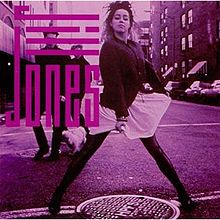
With hindsight, Jill Jones’ 1987 debut album, released on Prince’s Paisley Park Records, is one of the great missed opportunities of his career, and its standout song ‘Violet Blue’ particularly demonstrates why.
The album started in the summer of 1983 during the filming of ‘Purple Rain’ (featuring Jill’s less-than-stellar cameo), when she replaced Prince’s guide vocal on ‘Mia Bocca’. Sadly he didn’t find time to resume work on the record until over two years later.
Consequently, it’s very uneven, with some decent material (‘For Love’, ‘My Man’) mixed in with middling Prince outtakes, covers and B-sides (‘All Day, All Night’, ‘G-Spot’, ‘With You’) and undone by rushed arrangements and drastic changes in tone.
‘Violet Blue’, recorded at LA’s Sunset Sound in October 1986, was the last song put down for the album. Quite simply, it shows what the record could have been, and, frankly, how much Prince (and Jill) had developed between 1983 and 1986.
The vocal intro and accordion breakdown are two cases in point, not to mention the interesting chord progression and superb horn (Eric Leeds) and string (Clare Fischer) arrangements. Jill delivers a knockout vocal too, even throwing in a neat little Nancy Wilson impression via Dinah Washington.
Sadly the Jill Jones album sank without trace. She has recorded intermittently since, contributing a great guest vocal on Ryuichi Sakamoto’s ‘You Do Me’ and playing low-key gigs.
I haven’t kept many VHS cassettes, but two vids that definitely won’t be hitting the charity shop any time soon are Prince’s ‘Lovesexy Live: Volumes 1 and 2’ (currently unavailable on DVD…).
The Lovesexy tour kicked off 30 years ago this week, on 8 July 1988 at Paris’s Palais Omnisport. The seven-month jaunt, taking in Europe, North America and Japan, was arguably Prince’s greatest ever.
A spectacular in-the-round stage set was designed as a kind of ‘fantasy island’, half a playground and half a dreamscape, with curtains, a mini basketball court, brass bed, swing set and a Ford T-Bird which Prince ‘drove’ around the stage at the start of the show.
The Lovesexy tour band: left to right, Cat Glover, Dr Fink, Boni Boyer, Miko Weaver, Eric Leeds, Prince, Levi Seacer Jr., Matt Blistan, Sheila E
Taped on the last night of the European tour – 9 September 1988, at the Westfalenhalle in Dortmund, Germany – ‘Lovesexy Live’ still makes for a thrilling watch. Firstly, the music: this band could turn on a dime. It’s hard to imagine any other set of musicians from the era pulling off the ‘Adore’/’Jack U Off’/’Sister’ medley. Prince’s guitar playing is at its best, with creamy, delay-drenched distortion and tight, tasty Telecaster.
And of all the ’80s ‘pop’ acts who incorporated jazz into their work, Prince may be the most successful. In collaboration with his superb horn section (Eric Leeds on saxes, Matt Blistan on trumpet), he often went back to the source: Ellington’s ‘Things Ain’t What They Used To Be’ and Charlie Parker’s ‘Billie’s Bounce’ infiltrate ‘Blues In C/If I Had A Harem’, and Blistan occasionally quotes from ‘It Don’t Mean A Thing (If It Ain’t Got That Swing’). Meanwhile Sheila E brings the Bay Area jazz/rock sound so beloved of Prince. Her solo feature is a highlight of his ’80s live work.
Then there’s the ‘story’. The Lovesexy show is structured like one of those old Warner Bros gangster pictures – in the first half (lucky for us), we see an ‘evil’ Prince, seduced by the sins of the flesh and tempted by drugs, money and criminality, giving him an excuse to dust off Black Album standouts ‘Superfunkicalifragisexy’ and ‘Bob George’.
Then there’s punishment, atonement and spiritual conversion. Yes, y’all, the second half of the show is ‘God stuff’. But if you don’t go along with it, the music is enough of a spiritual experience anyway. Anyway, Prince certainly seems genuinely transported during ‘Anna Stesia’ and ‘I Wish U Heaven’.
Europe couldn’t get enough of the tour. There were no less than seven nights at London’s Wembley Arena and a series of famous after-show gigs, particularly at the Camden Palace on 25 July when Mica Paris was picked out from the crowd to sing ‘Just My Imagination’ and Ron Wood joined Prince onstage for a memorable ‘Miss You’.
Ticket sales were not so good in the States (14 September to 29 November) where apparently Prince struggled to sell out many arenas, despite it being his first major tour there for over three years.
But normal service was resumed when the Japan leg kicked off in early February 1989. The last night of the tour on the 13th was apparently an exceptionally emotional one.
When Prince got home to Minneapolis, he commenced work on the ‘Batman’ soundtrack, another project about the duality of man. It’s not hard to see where his head was at as the ’80s drew to a close.
Mark King of Level 42, Hammersmith Odeon, 13 November 1985
The London live music scene was buoyant in the 1980s.
There was a gig on pretty much every corner. You could see a Goth band, a pub-rock band, a reggae band, a psychobilly band, a soul band – sometimes all on the same bill.
Places like The Rock Garden in Covent Garden, Swan and King’s Head in Fulham, Clarendon in Hammersmith, Red Lion in Brentford, Astoria in Soho and Mean Fiddler in Harlesden are quite understandably still revered by music fans of a certain age.
There were brilliant nightclubs too: The Bat Cave, Dingwalls, Wag, Blitz, Limelight, Marquee. Let’s be thankful that, as we write, a handful of legendary venues from that era survive (The Half Moon in Putney, Ronnie Scott’s, Roundhouse, Scala, Borderline) and long may they last.
Here are a few gigs that still loom large (all in London unless otherwise stated). I hope they spark some memories of your own. Eagle-eyed readers will notice that I pretty much camped out at the Hammersmith Odeon in the late ’80s – well, it was my local, and it seemed like almost everyone came through that brilliant venue…
9. Frank Zappa @ Wembley Arena, 18 April 1988
Yessir, Frank was in town for the first time in four years. I was a new fan and very excited to see him live. His guitar was insanely loud and very trebly. The reggae version of ‘Stairway To Heaven’ was particularly memorable. Lots of onstage banter and political rhetoric. Lots of old-school hippies in the stalls. What a treat.
8. The New York Jazz Explosion (Roy Ayers/Tom Browne/Lonnie Liston Smith/Jean Carn) @ Hammersmith Odeon, 24 February 1985
I’d never heard of any of these guys when my dad offered me a ticket but I’m bloody glad I went. Lonnie started the show with some prime, instrumental, Rhodes-driven jazz/funk, then Roy played some old favourites and quite a lot from his In The Dark album. I don’t remember much about Jean or Tom but Roy blew me away (I’ve seen him at least five times since). The Odeon was packed and a very raucous crowd made a lot of noise in those glorious days when almost every famous US soul star played there. A real eye-opener.
7. David Sylvian @ Hammersmith Odeon, 30 May 1988
It was pretty much the first sight of David since Japan’s split and there was a genuinely exciting atmosphere in the old venue. Lots of screaming girls and a large Goth contingent. An unsmiling, slight and pale Sylvian silenced them by playing keys for the first few ethereal instrumentals (with hindsight, very reminiscent of Bowie’s ‘Stage’ tour a decade earlier). Fantastic band: David Torn, Mark Isham, Steve Jansen, Ian Maidman, Richard Barbieri.
6. Art Blakey @ Ronnie Scott’s, 26 January 1989
Ronnie’s hosted a lot of the bona fide jazz greats in those days. My dad took me to a see a fair few but catching Bu was a revelation. His sheer presence was memorable and his press rolls made the walls of the club shake. The suited-and-booted band, including top-notch Brit pianist Julian Joseph, were excellent too.
5. It Bites @ Brunel University, ? March 1988
My schoolmate Nigel had played me this band’s debut The Big Lad In The Windmill and I was becoming a massive fan when we got a lift out to darkest North-West London just before the release of their second album Once Around The World. They played in the low-ceilinged students union bar (scene also of The Sex Pistols’ final UK gig in December 1977, trivia fans…) and it became one of the most outstanding pop gigs I saw in the ’80s. A terrifyingly tight band – ‘coming at you like a f***in’ juggernaut’ as singer/guitarist Francis Dunnery said recently – with humour and chops. And a cracking version of ‘New York, New York’ in the middle of ‘Once Around The World’ to boot.
4. Level 42 @ Hammersmith Odeon, 13 November 1985
They were finally making the big pop breakthrough with World Machine but still had one foot in their jazz/funk ‘roots’ – this era was an exciting mix of both approaches. These boys were going places but were still quite naughty/rough’n’ready with it. Sadly this was the peak of the original four-piece band, but it was another brilliant, noisy, sweaty night at the Odeon.
3. John Scofield @ Half Moon Theatre, Docklands Festival, Sept 1988?
This took place at a makeshift venue in the back-end of nowhere within Thatcher’s huge Docklands development. It was a long car ride from West London into a strange wasteland. I had wanted to see this band since Blue Matter had come out a year earlier and accordingly watched drummer Dennis Chambers like a hawk throughout. From memory, he in turn eyeballed me throughout. His playing was pretty mindblowing from 10 yards away.
2. Wendy & Lisa @ Town & Country Club, 25 April 1989
It was a hot, sweaty night at the T&C, and the nearest to seeing Prince in such a small venue (which does a great disservice to Wendy and Lisa’s excellent playing and songwriting, but there you go). There was a genuine star quality to the (almost all-female) band and a very cool clientele – everyone was clocking a peak-fame Sinead O’Connor at the bar. The gig delivered the promise of summer and some cracking music too.
1. Animal Logic @ Town & Country Club, 25 May 1989
Back in the late ’80s, you only really gleaned info about musicians from magazines. When Rhythm – the now-defunkt UK monthly – printed that Stewart Copeland and Stanley Clarke were doing a gig in North London, we just had to be there. It was a surprise to say the least. There had literally been no sign of Copeland in the UK since The Police and the crowd seemed to be entirely composed of their fans – a huge roar erupted when Stewart’s kit was rolled onto the stage. Unfortunately the songs weren’t great but the atmosphere was.

 Noel Coward famously noted the strange potency of ‘cheap’ music.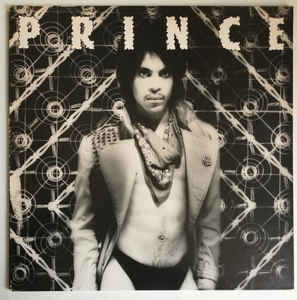


 There aren’t many titles in the ‘complete studio sessions’ pop library.
  When Prince appeared on the box the other day, my mum expressed her approval.


 movingtheriver.com