When Prince appeared on the box the other day, my mum expressed her approval.
I asked why, and without hesitation she offered: ‘He respected and promoted women’. It struck me initially as a weird reason but upon further reflection seemed spot-on.
He wrote many songs from a female perspective in the early ’80s, many of which have never seen the light of day. Then there was Vanity/Apollonia 6 – dubious acts for some, but without too much moral adjustment you could interpret them as ‘women reclaiming their right to enjoy sex’.
Then there were Prince’s striking collaborations with a variety of strong, independent characters: Ingrid Chavez, Sheila E, Sheena Easton, Dale Bozzio, Mavis Staples, Cat Glover, Elisa Fiorillo, Bonnie Raitt, Nona Hendryx, Wendy & Lisa, Susan Rogers and Peggy McCreary.
How many other male ‘pop’ icons can boast such a coterie of female cohorts?
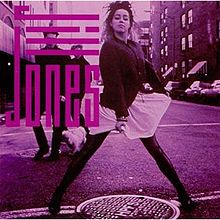
With hindsight, Jill Jones’ 1987 debut album, released on Prince’s Paisley Park Records, is one of the great missed opportunities of his career, and its standout song ‘Violet Blue’ particularly demonstrates why.
The album started in the summer of 1983 during the filming of ‘Purple Rain’ (featuring Jill’s less-than-stellar cameo), when she replaced Prince’s guide vocal on ‘Mia Bocca’. Sadly he didn’t find time to resume work on the record until over two years later.
Consequently, it’s very uneven, with some decent material (‘For Love’, ‘My Man’) mixed in with middling Prince outtakes, covers and B-sides (‘All Day, All Night’, ‘G-Spot’, ‘With You’) and undone by rushed arrangements and drastic changes in tone.
‘Violet Blue’, recorded at LA’s Sunset Sound in October 1986, was the last song put down for the album. Quite simply, it shows what the record could have been, and, frankly, how much Prince (and Jill) had developed between 1983 and 1986.
The vocal intro and accordion breakdown are two cases in point, not to mention the interesting chord progression and superb horn (Eric Leeds) and string (Clare Fischer) arrangements. Jill delivers a knockout vocal too, even throwing in a neat little Nancy Wilson impression via Dinah Washington.
Sadly the Jill Jones album sank without trace. She has recorded intermittently since, contributing a great guest vocal on Ryuichi Sakamoto’s ‘You Do Me’ and playing low-key gigs.
I haven’t kept many VHS cassettes, but two vids that definitely won’t be hitting the charity shop any time soon are Prince’s ‘Lovesexy Live: Volumes 1 and 2’ (currently unavailable on DVD…).
The Lovesexy tour kicked off 30 years ago this week, on 8 July 1988 at Paris’s Palais Omnisport. The seven-month jaunt, taking in Europe, North America and Japan, was arguably Prince’s greatest ever.
A spectacular in-the-round stage set was designed as a kind of ‘fantasy island’, half a playground and half a dreamscape, with curtains, a mini basketball court, brass bed, swing set and a Ford T-Bird which Prince ‘drove’ around the stage at the start of the show.
The Lovesexy tour band: left to right, Cat Glover, Dr Fink, Boni Boyer, Miko Weaver, Eric Leeds, Prince, Levi Seacer Jr., Matt Blistan, Sheila E
Taped on the last night of the European tour – 9 September 1988, at the Westfalenhalle in Dortmund, Germany – ‘Lovesexy Live’ still makes for a thrilling watch. Firstly, the music: this band could turn on a dime. It’s hard to imagine any other set of musicians from the era pulling off the ‘Adore’/’Jack U Off’/’Sister’ medley. Prince’s guitar playing is at its best, with creamy, delay-drenched distortion and tight, tasty Telecaster.
And of all the ’80s ‘pop’ acts who incorporated jazz into their work, Prince may be the most successful. In collaboration with his superb horn section (Eric Leeds on saxes, Matt Blistan on trumpet), he often went back to the source: Ellington’s ‘Things Ain’t What They Used To Be’ and Charlie Parker’s ‘Billie’s Bounce’ infiltrate ‘Blues In C/If I Had A Harem’, and Blistan occasionally quotes from ‘It Don’t Mean A Thing (If It Ain’t Got That Swing’). Meanwhile Sheila E brings the Bay Area jazz/rock sound so beloved of Prince. Her solo feature is a highlight of his ’80s live work.
Then there’s the ‘story’. The Lovesexy show is structured like one of those old Warner Bros gangster pictures – in the first half (lucky for us), we see an ‘evil’ Prince, seduced by the sins of the flesh and tempted by drugs, money and criminality, giving him an excuse to dust off Black Album standouts ‘Superfunkicalifragisexy’ and ‘Bob George’.
Then there’s punishment, atonement and spiritual conversion. Yes, y’all, the second half of the show is ‘God stuff’. But if you don’t go along with it, the music is enough of a spiritual experience anyway. Anyway, Prince certainly seems genuinely transported during ‘Anna Stesia’ and ‘I Wish U Heaven’.
Europe couldn’t get enough of the tour. There were no less than seven nights at London’s Wembley Arena and a series of famous after-show gigs, particularly at the Camden Palace on 25 July when Mica Paris was picked out from the crowd to sing ‘Just My Imagination’ and Ron Wood joined Prince onstage for a memorable ‘Miss You’.
Ticket sales were not so good in the States (14 September to 29 November) where apparently Prince struggled to sell out many arenas, despite it being his first major tour there for over three years.
But normal service was resumed when the Japan leg kicked off in early February 1989. The last night of the tour on the 13th was apparently an exceptionally emotional one.
When Prince got home to Minneapolis, he commenced work on the ‘Batman’ soundtrack, another project about the duality of man. It’s not hard to see where his head was at as the ’80s drew to a close.
Mark King of Level 42, Hammersmith Odeon, 13 November 1985
The London live music scene was buoyant in the 1980s.
There was a gig on pretty much every corner. You could see a Goth band, a pub-rock band, a reggae band, a psychobilly band, a soul band – sometimes all on the same bill.
Places like The Rock Garden in Covent Garden, Swan and King’s Head in Fulham, Clarendon in Hammersmith, Red Lion in Brentford, Astoria in Soho and Mean Fiddler in Harlesden are quite understandably still revered by music fans of a certain age.
There were brilliant nightclubs too: The Bat Cave, Dingwalls, Wag, Blitz, Limelight, Marquee. Let’s be thankful that, as we write, a handful of legendary venues from that era survive (The Half Moon in Putney, Ronnie Scott’s, Roundhouse, Scala, Borderline) and long may they last.
Here are a few gigs that still loom large (all in London unless otherwise stated). I hope they spark some memories of your own. Eagle-eyed readers will notice that I pretty much camped out at the Hammersmith Odeon in the late ’80s – well, it was my local, and it seemed like almost everyone came through that brilliant venue…
9. Frank Zappa @ Wembley Arena, 18 April 1988
Yessir, Frank was in town for the first time in four years. I was a new fan and very excited to see him live. His guitar was insanely loud and very trebly. The reggae version of ‘Stairway To Heaven’ was particularly memorable. Lots of onstage banter and political rhetoric. Lots of old-school hippies in the stalls. What a treat.
8. The New York Jazz Explosion (Roy Ayers/Tom Browne/Lonnie Liston Smith/Jean Carn) @ Hammersmith Odeon, 24 February 1985
I’d never heard of any of these guys when my dad offered me a ticket but I’m bloody glad I went. Lonnie started the show with some prime, instrumental, Rhodes-driven jazz/funk, then Roy played some old favourites and quite a lot from his In The Dark album. I don’t remember much about Jean or Tom but Roy blew me away (I’ve seen him at least five times since). The Odeon was packed and a very raucous crowd made a lot of noise in those glorious days when almost every famous US soul star played there. A real eye-opener.
7. David Sylvian @ Hammersmith Odeon, 30 May 1988
It was pretty much the first sight of David since Japan’s split and there was a genuinely exciting atmosphere in the old venue. Lots of screaming girls and a large Goth contingent. An unsmiling, slight and pale Sylvian silenced them by playing keys for the first few ethereal instrumentals (with hindsight, very reminiscent of Bowie’s ‘Stage’ tour a decade earlier). Fantastic band: David Torn, Mark Isham, Steve Jansen, Ian Maidman, Richard Barbieri.
6. Art Blakey @ Ronnie Scott’s, 26 January 1989
Ronnie’s hosted a lot of the bona fide jazz greats in those days. My dad took me to a see a fair few but catching Bu was a revelation. His sheer presence was memorable and his press rolls made the walls of the club shake. The suited-and-booted band, including top-notch Brit pianist Julian Joseph, were excellent too.
5. It Bites @ Brunel University, ? March 1988
My schoolmate Nigel had played me this band’s debut The Big Lad In The Windmill and I was becoming a massive fan when we got a lift out to darkest North-West London just before the release of their second album Once Around The World. They played in the low-ceilinged students union bar (scene also of The Sex Pistols’ final UK gig in December 1977, trivia fans…) and it became one of the most outstanding pop gigs I saw in the ’80s. A terrifyingly tight band – ‘coming at you like a f***in’ juggernaut’ as singer/guitarist Francis Dunnery said recently – with humour and chops. And a cracking version of ‘New York, New York’ in the middle of ‘Once Around The World’ to boot.
4. Level 42 @ Hammersmith Odeon, 13 November 1985
They were finally making the big pop breakthrough with World Machine but still had one foot in their jazz/funk ‘roots’ – this era was an exciting mix of both approaches. These boys were going places but were still quite naughty/rough’n’ready with it. Sadly this was the peak of the original four-piece band, but it was another brilliant, noisy, sweaty night at the Odeon.
3. John Scofield @ Half Moon Theatre, Docklands Festival, Sept 1988?
This took place at a makeshift venue in the back-end of nowhere within Thatcher’s huge Docklands development. It was a long car ride from West London into a strange wasteland. I had wanted to see this band since Blue Matter had come out a year earlier and accordingly watched drummer Dennis Chambers like a hawk throughout. From memory, he in turn eyeballed me throughout. His playing was pretty mindblowing from 10 yards away.
2. Wendy & Lisa @ Town & Country Club, 25 April 1989
It was a hot, sweaty night at the T&C, and the nearest to seeing Prince in such a small venue (which does a great disservice to Wendy and Lisa’s excellent playing and songwriting, but there you go). There was a genuine star quality to the (almost all-female) band and a very cool clientele – everyone was clocking a peak-fame Sinead O’Connor at the bar. The gig delivered the promise of summer and some cracking music too.
1. Animal Logic @ Town & Country Club, 25 May 1989
Back in the late ’80s, you only really gleaned info about musicians from magazines. When Rhythm – the now-defunkt UK monthly – printed that Stewart Copeland and Stanley Clarke were doing a gig in North London, we just had to be there. It was a surprise to say the least. There had literally been no sign of Copeland in the UK since The Police and the crowd seemed to be entirely composed of their fans – a huge roar erupted when Stewart’s kit was rolled onto the stage. Unfortunately the songs weren’t great but the atmosphere was.
Why is Lovesexy probably Prince’s least-heralded, least-mentioned album of the 1980s? Even Dirty Mind, Controversy and Batman seem to get a better rap these days.
The cover photo said it all – this was Prince’s ‘spiritual rebirth’ album, and you were either in or out.
Lovesexy was also a response to his alleged dabbling with psychedelic drugs (apparently taking place on 1 December 1987) that shook him to his core, and also a response to the highly sexualised, uncharacteristically angry Black Album. He once said, ‘I realised that if I released that album and died, that’s what people would remember me for. I could feel this wind and I knew I was doing the wrong thing…’
So Prince shelved The Black Album – Lovesexy was the speedily-recorded, musically-rich antidote. It’s one of the most challenging albums of Prince’s career but also one of the most rewarding. From the opening synth chords and Ingrid Chavez’s brief ‘poetry’, it’s clear that this is something pretty special. And different.
The horn arrangements are downright loopy throughout. Discordant, dissonant. Instruments are layered to sometimes disconcerting effect. Comparisons to Zappa are not inappropriate. Prince also dials in a lot of his spiritual concerns, with God competing against the Devil (or ‘Spooky Electric’), the purity of the spiritual life competing against the sins of the flesh. With a few jokes.
For many, including saxophonist Eric Leeds, the result was a bit of a mess: ‘I thought it was going to be a great album, but when I heard the final mixes, I was very disappointed. I thought he had completely over-produced the music…’
But the savvy so-and-so that Prince was, he was also careful to throw in three of his most irresistible, ‘throwaway’ pop tunes – ‘Alphabet Street’, ‘Dance On’ and ‘I Wish U Heaven’ – and one of the finest ballads of his career, ‘When 2 R In Love’.
At once scary, profound, silly, funny, romantic and outrageous, Lovesexy still sounds fantastic 30 years on. It was Prince’s first UK #1 album and spawned probably the best tour of his career.
Peaking between 1983 and 1985, the digital funk sound took the base elements from early pioneers James Brown, The Isley Brothers and Sly and the Family Stone and combined them with the new studio technology of the early ’80s.
Producers Quincy Jones, Arif Mardin, Leon Sylvers III (The Whispers, Shalamar), Kashif, Prince and Steve Arrington, and keyboardists/programmers such as David Gamson, David Frank and Robbie Buchanan, instigated a new kind of funk incorporating syncopated synth parts, percussion and intricate rhythm guitar.
The resulting sound is instantly recognisable and an influence on everyone from Beck and Bruno Mars to Daft Punk and Mark Ronson. Here are 11 tracks that still retain the wow factor.
12. D-Train: ‘You’re The One For Me’ (1982)
11. Zapp & Roger: ‘More Bounce To The Ounce’ (1980)
Roger Troutman took the key elements of George Clinton/Bernie Worrell’s P-Funk template (squelchy synth bass, solid drums, clipped rhythm guitar) and stripped them back to their bare essentials, creating this classic single which made the Billboard top 100 in 1980.
10. The System: ‘You Are In My System’ (1982)
Later covered by Robert Palmer, ‘You Are In My System’ was the trademark track by the New York outfit comprising Mic Murphy on vocals and David Frank on keyboards and programming. If the opening minute of this doesn’t make you move, you’re probably dead…
9. Person To Person: ‘High Time’ (1983)
This was former ABC drummer David Palmer’s bid for solo pop stardom after jumping ship from the ‘Lexicon Of Love’ tour. Produced by David Frank, it’s catchy and beautifully arranged but lacks a decent vocalist and didn’t dent the charts on its 1983 single release.
8. The Girls: ‘I’ve Got My Eyes On You’ (1983)
Minneapolis was a hotbed of digital funk in the early ’80s too, not all generated by Prince (but I’d definitely have included ‘DMSR’ or ‘Erotic City’ if they were on YouTube…). This curio, produced by his 1979-1981 touring bassist Andre Cymone, lacks a decent chorus but is still a catchy funk stew all the same. The Girls released their one and only album in 1984.
7. Kashif: ‘Stone Love’ (1983)
This has more than a whiff of Luther’s ‘Never Too Much’ about it, but it was also a major influence on Scritti Politti (see below). Kashif released five studio albums between ’83 and ’89 and worked with Evelyn ‘Champagne’ King (‘Love Come Down’), Whitney Houston and George Benson before his death in 2016.
6. Chic: ‘Believer’ (1983)
The corking title track from their last studio album of the ’80s which received a critical mauling at the time. It sounds pretty fresh these days though maybe lacks the killer pop hooks that categorised their most successful work.
5. Scritti Politti: ‘Wood Beez (Pray Like Aretha Franklin)’ (1984)
Arif Mardin produced this classic single which made #10 in the UK chart in March 1984.
4. Wally Badarou: ‘Chief Inspector’ (1985)
Best known as keyboard player/strategist for Grace Jones and Level 42, Badarou also scored movies (‘Kiss Of The Spiderwoman’) and came up with this classic Afrocentric take on the digital funk sound.
3. Loose Ends: ‘Hanging On A String (Contemplating)’ (1985)
Obviously at the commercial end of the sound, this reached the giddy heights of #13 in the UK singles chart and was all held together by a superb performance by Ron Jennings on guitar.
2. Chaka Khan: ‘I Feel For You’ (1984)
Overfamiliar it may be, but this Prince-penned epic is undeniably the commercial apotheosis of the digital funk sound. The famous opening was apparently a total mistake, producer Arif Mardin getting trigger-happy with the sampler. Chaka was not amused and wanted it erased, but Mardin insisted on keeping it, telling her: ‘Don’t worry, my dear, it will be a hit.’ A hit it was, the only #1 of her career.
1. Beck: ‘Get Real Paid’ (1999)
The Los Angeles pop chameleon revived the sound for his underappreciated 1999 solo album Midnite Vultures.
Los Angeles, October 1986, just after the Japanese leg of the ‘Parade’ tour.
Prince invites his bandmates Wendy Melvoin and Lisa Coleman to dinner (Lisa will later report in her excellent liner notes for the Wendy & Lisa 2013 reissue that she ‘knew something was up’ as soon as they arrived).
To cut a long story short, they are out. The Revolution is no more.
Lisa: ‘We were like Fleetwood Mac and Sly & The Family Stone rolled into one… I thought we were going to make records together for the rest of our lives.’
But Prince wants to take back his freedom and sex up his act again. Struggling for the right words, apparently he says to Wendy and Lisa: ‘I can’t ask you to wear crotchless panties or nippleless bras…’
After a period of introspection, the ladies get together with other former Revolution member Bobby Z to write a few songs. At this stage, they have no intention of releasing the new material as ‘Wendy & Lisa’.
But once they agree to front the band, a record company bidding war ensues. Huge advances are mentioned. They settle on a ‘big but sensible deal’ with Virgin.
Predictably, the suits are less than turned on by the more musicianly moments on the album, but the ladies are unapologetic, saying that they ‘wanted to show off all the colours in our crayon box’.
So much for the history. How does Wendy & Lisa stack up these days? Apart from some fairly unsavoury drum sounds, pretty well.
The singles ‘Sideshow’ and ‘Waterfall’ are probably the weakest tracks, though the latter has a cracking chorus and was apparently deemed a surefire hit by the record company and musician friends.
But it didn’t much business, not helped by its rather humdrum video. The ladies were not particularly keen to start dancing in videos at this stage of their careers – they wanted to be seen as musicians. As Lisa says in the liner notes: ‘I had paid my showbiz dues with The Revolution.’
But the album works brilliantly when it sticks to the ‘cool chord changes over good beats’ remit, when they genuinely do sound like a mashup of ’80s Joni Mitchell and Prince.
‘Honeymoon Express’ exemplifies this approach, nicking Sly Dunbar’s ‘My Jamaican Guy’ beat and adding a sumptuous melody. The vocal harmony in the chorus is sublime.
‘Light’, ‘Everything But You’ and ‘Chance To Grow’ also succeed in a similar vein. Wendy’s multi-instrumental skills (vocals, guitar, bass, sometimes drums) and Lisa’s impressionistic synth parts mesh perfectly.
‘Song About’ sounds eerily like The Carpenters. Ballads ‘The Life’ and ‘Stay’ have become fan favourites, the former also turning up in an improved Trevor Horn-produced reworking on the soundtrack of Michelle Pfeiffer movie ‘Dangerous Minds’.
The instrumental ‘White’, featuring Tom Scott on soprano and a killer bit of drum machine programming by Wendy, is possibly the standout. Test your speakers out with this one, kids.
Wendy & Lisa – perhaps surprisingly – was not a hit. Lacking a breakout single, it didn’t dent the US top 100 and only scraped to #84 in the UK.
Better Wendy & Lisa albums would follow, but this is an ambitious, arresting debut. All the colours in the crayon box indeed.
A warm Seattle evening, just steps away from the iconic Pike Place Market. One of the definitive bands of the ’80s are getting ready to take the stage.
But one member, the lead vocalist, is famously and notably absent. How can they pay tribute without becoming a tribute act?
The Revolution are close to the end of their 29-date North American tour. Reformed with the original line-up, they provided backup for Prince throughout his creative zenith (1980-86).
It’s hard to think of a band who funked as hard in that era. And tonight, that’s what shines through.
The Revolution, 2017: From left, Brown Mark, Dr Fink, Bobby Z, Lisa Coleman, Wendy Melvoin and guest Dez Dickerson
Gone are the ’80s fashions, the side partings, ruffs and glitter (though keyboard player Dr Fink maintains his scrubs and stethoscope). This is not a celebration of the past but rather a testament to how relevant Prince’s music remains today.
In the diverse, 1,100 capacity Showbox crowd, there is no hint of irony or throwback-chic. These people, many of them tattooed with Prince’s ‘symbol’ motif, came to party. And from the opening bars of ‘Computer Blue’, party is what they do.
What follows is a two-hour set of peerless pop classics. There are no overwrought solos, no extended jams. Nothing outstays its welcome or is embellished. Wendy takes lead guitar but keeps true to her original riffs instead of trying to mimic Prince’s soloing.
It’s a joy to hear a band this tight and disciplined. Their use of vintage keyboards and drum machines, at chest- splitting volume, has a transportive effect.
Joined by guest vocalist Stokley Williams, The Revolution power through ‘Uptown’ and ‘DMSR’ until noticeably dropping the energy level (and losing the crowd) with two tracks from Prince’s vault of unreleased songs.
Then it’s back to the dancefloor, tearing through ‘Erotic City’, ‘Let’s Work’ and ‘1999’, until their next break in pace: Wendy and Lisa’s quiet, melancholic and clearly deeply personal tribute to their missing bandleader, ‘Sometimes It Snows In April’.
It’s at this point that you hear the tears from fans who continue to be touched by the passing of their innovative, imaginative hero. For many, this is a moment of quiet reflection, surrounded by like-minded people – a cathartic release for all, including a visibly upset Wendy.
As the show goes on, climaxing with ‘Purple Rain’, the band are overwhelmed by the ecstatic energy of the crowd. It’s not hard to understand how The Revolution, all now in their mid-50s, can keep up with touring such a high-energy show.
The passion of the music, camaraderie of the players and discipline of their act transform the audience into just what they lack: their missing frontman.
Yeau! The headline of Q Magazine’s September 1987 cover feature said it all.
Perrier-quaffing Terence was correctly predicting a phenomenal critical and commercial reaction to his debut album and ready to dish the dirt.
He had done it all on his terms; wrongfooted his record company (who had wanted a slick, current, ‘upwardly-mobile’ soul album) and played the press at their own game. But at what cost?
D’Arby had lived quite a life before becoming a ‘pop star’: he was born in the States, the son of a preacher father and gospel-singing mother, studied journalism in New York, became a half-decent boxer in his late teens, joined the army and was based in Germany throughout most of the ’80s during which time he worked on his music and acquired a manager (a strategy not dissimilar to another ex-army musical maverick, Jimi Hendrix).
Decamping to London in 1985, D’Arby worked on demos with Heaven 17’s Martyn Ware and, after being turned down by several major labels, finally got the nod from CBS.
They pulled off a pre-release masterstroke when D’Arby was block-booked for four weeks running on ‘The Tube’ after a knockout debut live TV performance. To say that there was a buzz about him would be an understatement. The general consensus was: ‘Who the hell is this guy?!’
Hardline still sounds like one of the better debut album of the ’80s or any other decade. From the opening bars of ‘If You All Get To Heaven’, it’s clear that something pretty special and pretty different is going on, though the album inadvertently tapped into the ‘retro-soul’ revival that had built up in the UK over 1986 and 1987 – Ben E King and Percy Sledge had both had number ones in the months before Hardline‘s release, and The Pasadenas, The Christians and various others would bring forth similar grooves in the months to come.
Hardline also reminded critics and audiences alike of some of the great soul vocalists of the ’60s, ’70s and early ’80s – Al Green, Otis Redding, Stevie, Prince, Michael Jackson, James Brown and especially Sam Cooke. All went into the mix but finally D’Arby sounded just like himself.
He peppered ‘Dance Little Sister’ – a track that Prince would have killed for – with some outrageously over-the-top vocals. But, refreshingly, his singing throughout the album ain’t perfect – he’s much more into getting the emotion across and bringing a party vibe to the studio.
‘Sign Your Name’, ‘If You Let Me Stay’ and ‘Wishing Well’ are funky yet accessible (if the latter doesn’t make you move, you’re probably dead), but the a cappella, African-themed ‘As Yet Untitled’ is totally original.
He even takes on Smokey Robinson and emerges unscathed on the closing ‘Who’s Loving You’. He plays a lot of instruments himself and only gets in occasional help when absolutely necessary (including future Skunk Anansie bassist Cass Lewis and Pop Group/PiL drummer Bruce Smith). As such it’s a remarkably cohesive album.
Hardline was a big hit, reaching #1 in the UK, #4 in the US and selling over eight million copies worldwide. D’Arby got the rep of being a ‘difficult’ artist when his follow-up album Neither Fish Nor Flesh missed deadlines and went over budget. Things would probably never be the same again. But we’d always have Hardline.
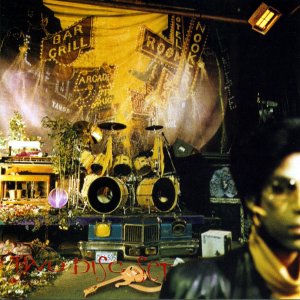
Singles released: ‘Sign O’ The Times’ (#3 US, #10 UK)
‘If I Was Your Girlfriend’ (#67 US, #20 UK)
‘U Got The Look’ (#2 US, #11 UK)
‘I Could Never Take The Place Of Your Man’ (#10 US, #29 UK)
At the time of Sign O’ The Times’release, the general critical consensus seemed to be that it was a great double album but, shorn of a few tracks, would have made a sensational single album. But what the press probably didn’t know was that Prince had actually intended to release a triple album.
He believed the three-record set Crystal Ball would have been be a huge artistic statement after a relatively disappointing 1986, but the idea scared the hell out of Warner Bros and also his manager Bob Cavallo. Prince was reluctantly forced to back down.
The tracks intended for Crystal Ball but later abandoned for Sign O’ The Times were ‘Rebirth Of The Flesh’, ‘Rockhard In A Funky Place’, ‘The Ball’, ‘Joy In Repetition’, ‘Shockadelica’, and ‘Good Love’ (all hoovered up from two other aborted album projects, Dream Factory and Camille).
But even after Prince removed these, he was still left with a 16-track double album, a brilliant mix of the sacred and profane, and a record which many fans believe was his finest hour.
The famous title track was recorded on 15 July 1986 in a single ten-hour session at LA’s Sunset Sound. Prince was experimenting with a new piece of kit – the Fairlight sampler/synth – but characteristically made the technology swing in a way that no other artist could.
The track also demonstrates his love of space; it’s essentially just a minimalist blues featuring a three-note melody line, some sampled drums/bass and a bit of electric guitar. Listening again on the day after the Westminster Bridge ‘terrorist’ attack of 23 March, the song’s lyric also seems as relevant now as it was in 1987:
Hurricane Annie ripped the ceiling of a church and killed everyone inside You turn on the telly and every other story is tellin’ you somebody died Sister killed her baby cos she couldn’t afford to feed it And we’re sending people to the moon In September my cousin tried reefer for the very first time Now he’s doing horse, it’s June
It’s silly, no? When a rocket ship explodes And everybody still wants to fly Some say a man ain’t happy Until a man truly dies
‘Play In The Sunshine’ and ‘Housequake’ are pure party pop – it’s scarcely believable that Prince alone could generate such a raucous studio atmosphere with only Susannah Melvoin’s backing vocals, a few guests and Eric Leeds’ sax for company. The latter also represents his first recorded attempt at hip-hop (unless you count the brief ‘rap’ in ‘Girls & Boys’), typically supplying something usually missing from the genre: humour.
‘The Ballad Of Dorothy Parker’, recorded in Prince’s Minneapolis home studio on 15th March 1986, may be his most psychedelic recording, the soundtrack to a dream with seemingly-spontaneous musical moments that no one else could have created. He demonstrates his mastery with the LM-1 drum machine and, vocally, sets up a novel ‘Greek chorus’ effect.
‘Forever In My Life’ takes a melody line very similar to Sly And The Family Stone’s ‘Everyday People’ (and maintains Sly’s key of G) but again demonstrates Prince’s remarkable sense of space and also features another extraordinary backing vocal arrangement.
The heartfelt lyric was written when he believed he would settle down with fiancée Susannah Melvoin (twin sister of Wendy) – sadly it wasn’t to be.
‘It’, another bold experiment with the Fairlight, returns to the cold, sexualised world of 1999, while ‘Hot Thing’ is its flipside, a funky, James Brown-inspired one-chord romp with some great Leeds tenor sax.
‘If I Was Your Girlfriend’ (another song about Susannah/Wendy), ‘Strange Relationship’ (another big nod to Sly), ‘It’s Gonna Be A Beautiful Night’, ‘Starfish And Coffee’, ‘U Got The Look’ and ‘I Could Never Take The Place Of Your Man’ are just brilliantly performed, beautifully written pop tunes with dashes of psychedelia and soul.
According to engineer Susan Rogers, Prince was very influenced by Kate Bush’s Hounds Of Love during the recording of SOTT, the track ‘Cloudbusting’ a particular favourite. Other songs showed contemporary influences too – ‘Adore’ was apparently Prince’s response to the popularity of Luther Vandross’s Give Me The Reason and Patti Labelle’s The Winner In You, and it also hugely influenced the neo-soul movement, particularly D’Angelo’s ballad style.
‘U Got The Look’ – the last song recorded for Sign O’ The Times on 21 December 1986 – was apparently inspired by Robert Palmer’s ‘Addicted To Love’.
Sign O’ The Times sold 1.8 million copies in the US, a very similar number to Parade. Some believed the slightly disappointing sales were due to the choice of ‘If I Was Your Girlfriend’ as the second single; it is strange that ‘U Got The Look’ didn’t get the nod. But if Prince’s popularity was levelling out in the States, it was growing across Europe.
It can’t hurt a record label to have a USP, a recognisable visual concept and/or sound. It has certainly stood Blue Note, Impulse and 4AD in good stead.
When one thinks of ECM, images of fjords, mountains or trees probably come to mind, alongside a certain sonic quality, a kind of rarefied ambience (producer/owner Manfred Eicher and his house engineers’ choice of reverb units are apparently almost as ‘secret’ as Colonel Sanders’ chicken recipe…).
The ECM formula worked for two decades. But then along came Terje Rypdal’s The Singles Collection in 1989 to throw a spanner in the works. Though the title is a joke – there are no ‘singles’ on the album – you wish more pop music was as bold as this collection which explores hard rock, early-’60s-style balladry, techno-fusion and even Prince-influenced funk to exciting and sometimes amusing effect.
The shorter tracks start out sounding a bit like Living In A Box jamming with Jeff Beck, before completely changing gear a minute in and turning into dark, introspective mood pieces with Messiaen chords and ethereal fretless bass.
Rypdal chucks in the whole kitchen sink, as if desperate to avoid a boring listening experience. The ploy works. Yes, this is the ECM album whose first track is titled ‘There Is A Hot Lady In My Bedroom And I Need A Drink’… It’s Lovesexy meets Ligeti.
The Singles Collection was the third album in a row where Rypdal hooked up with The Chasers, a cracking bass and drums team comprising of Bjorn Kjellemyr and Audun Kleive. The latter is thinking more Manu Katche and Stewart Copeland than Jon Christensen on this album, and the music is much better for it (no disrespect to the excellent Jon).
But a vital ingredient is the addition of keyboardist Allan Dangerfield who contributes three compositions and all manner of weird textures, Synclavier drum/sequencer patterns and unhinged, hysterical Hammond organ solos very much in the Prince style.
‘Sprøtt’ (Norwegian for ‘crazy’) sounds like an outtake from Jeff Beck’s Guitar Shop album with its chugging rockabilly rhythms and blistering lead guitar. Luscious noir ballad ‘Mystery Man’ will be familiar to fans of the Michael Mann movie ‘Heat’. If Mann hadn’t bagged it, you can bet David Lynch wouldn’t have been far behind. Maybe Dave can still put the gorgeous, glacial ‘Somehow, Somewhere’ to good use.
Elsewhere, ‘U’n’I’ fuses rockabilly and free-jazz beats with fusion bass, Ligeti chords and Van Halen guitar styles to thrilling effect. ‘Steady’ features some serious funk/rock riffing and another nutty Dangerfield solo. All in all, a striking, fascinating album.

 When Prince appeared on the box the other day, my mum expressed her approval.


 Peaking between 1983 and 1985, the digital funk sound took the base elements from early pioneers James Brown, The Isley Brothers and Sly and the Family Stone and combined them with the new studio technology of the early ’80s.
 Our guest writer in Seattle: Sebastian Wright.