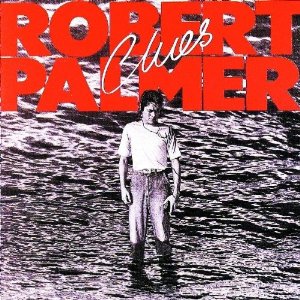
Robert Palmer: Clues 40 Years On

If in 1979 you’d been asked to draft a list of key 1970s artists most likely to go ‘new-wave’, Robert Palmer would surely have been near the bottom.

After all, he spent most of the decade as a kind of sophistifunk Bryan Ferry, with his ‘problematic’ album covers and Little Feat-inspired grooves.

1979’s Secrets had shown glimpses of ‘rock’, but Clues, released 40 years ago this week, went the whole hog. And, along with 1978’s Double Fun, it’s probably his most consistent album and definitely worth a reappraisal.

There are good omens in the liner notes – a Talking Heads guest appearance here, a Gary Numan song there, Compass Point mixmaster general Alex Sadkin (Nightclubbing etc.) on knob-twiddling duties, Free’s Andy Fraser on bass. And Clues delivers big-time, exploding out of the speakers and clocking in at just over half-an-hour (it must sound great on vinyl).

It’s buoyed by two superb singles, ‘Looking For Clues’ and ‘Johnny And Mary’, the former scraping into the UK top 40 (shockingly, Robert only had SIX top 40 singles during the 1980s…). But there are other treats throughout: ‘Sulky Girl’ sounds curiously like Low-era Bowie, with its histrionic vocals, unhinged guitars, processed drums and barrelhouse piano.

The Beatles cover ‘Not A Second Time’ is excellent (with a new second verse), as is the Numan contribution ‘I Dream Of Wires’. When Gary’s synths squelch into action, it’s a great moment, as is the funky fanfare in the middle. And no-one but Palmer could have pulled off the minimalist Township swing of ‘Woke Up Laughing’, featuring a brilliant, polyrhythmic vocal performance.

If Good Drum Sounds are your thing, Sadkin delivers a masterclass here. I’ll be amazed if anyone can point to a better-recorded 1980s kit than on album-closer ‘Found You Now’, played by the excellent Dony Wynn (who he?).

Clues was, perhaps surprisingly, not a big success in the UK, making just #31. Nor did it go down too well in the US, peaking at #59. But it was a big hit in France, Sweden and the Netherlands.

Robert generally gets a bad rap these days, maybe due to those album covers (despite glowing character references in Phill Brown’s ‘Are We Still Rolling’ and Guy Pratt’s ‘My Bass And Other Animals’), and he seldom gets the ‘career overview’ treatment in the rock monthlies.

But he was actually married to the same woman for 28 years (from 1971 to 1999) and had two kids. A private man and music fan through and through, he died of a heart attack in 2003 at the age of just 54.

The 20 Worst Cover Versions Of The 1980s

We’ve looked at some of the good covers of the 1980s before – but how about the stinkers?

Reader: I’m pleased to report that finding them was not an easy task. A quick Google survey of ‘worst covers of all time’ will not reveal many from the ’80s (no, Rockwell’s version of ‘Taxman’ really isn’t that bad…).

But the variety of crap covers is worth noting. In the 1980s, anyone was liable to produce a shocker, from the ageing chart regular to the littlest indie.

Some took them to the toppermost of the poppermost – indeed most of the below were big hits. But of course familiarity breeds contempt… Most of these efforts, though, smack of both desperation and a dearth of material. The net result is usually a kind of audio shrug. And hey, there’s also that other reliable, recurring theme – the overproduction of post-1985 offerings…

20. The Mission: ‘Tomorrow Never Knows’ (1987)

19. Midge Ure: ‘The Man Who Sold The World’ (1983)

18. Club Nouveau: ‘Lean On Me’ (1986)
Swing-beat-flavoured travesty of the Bill Withers classic.

17. Tin Machine: ‘Working Class Hero’ (1989)
Pointless cover which is one of several fillers on the ‘difficult’ second side of Bowie’s rather good band debut.

16. The Power Station: ‘Harvest For The World’ (1985)
Interesting to hear Robert Palmer challenge himself range-wise but the limp arrangement removes all majesty from the Isley Brothers original.

15. Simple Minds: ‘Sign O’ The Times’ (1989)
Desperately tries to be hip but comes across as a bit desperate. Kerr’s irritating vocal intrusions don’t help.

14. Aztec Camera: ‘Jump’ (1984)
Why oh why, Roddy? Some grotty Linn drum programming and an insipid vocal on a pointless Van Halen cover which takes away all the fun of the original. Maybe that’s the point.

13. The Communards: ‘Don’t Leave Me This Way’ (1986)
I’m reluctant to diss the brilliant Jimmy Somerville but this cover of a Philly classic just drove one to distraction, not helped by the desperately upbeat video.

12. Yazz: ‘The Only Way Is Up’ (1988)
A ghastly version of Otis Clay’s 1980 post-disco classic which seemed to stay at #1 for an eternity…

11. The Housemartins: ‘Caravan Of Love’ (1986)
The concept is a good one – Isley Jasper Isley’s brilliant original was an electro/gospel mashup crying out for an a cappella – but Paul Heaton’s lead vocals and a very unadventurous arrangement scupper this UK #1 from the start.

10. The Flying Pickets: ‘Only You’ (1983)
Yes, it’s the other a cappella song to hit UK #1, but where to start? How about: out-of-tune vocal stacks (and a very unsubtle use of Fairlight vocals) and a chronically unhip bunch of guys? Oh, and it also came out too soon after the Yazoo original.

9. Pet Shop Boys: ‘Always On My Mind’ (1988)
Effective but gross cover, and of course another UK #1 single. Like gorging on cream cake, there’s a brief rush but then a lingering nausea.

8. Dave Grusin: ‘Thankful ‘N Thoughtful’ (1984)
Sly & The Family Stone’s gospel/funk classic becomes a robotic downer in the hands of the smooth jazz keyboard maestro. Even Marcus Miller’s bass playing can’t save this.

7. Bomb The Bass: ‘Say A Little Prayer’ (1988)
An on-the-nose, in-your-face curio which never convinces. The vocals just set my teeth on edge right from the off. But it still got to #10 in the UK.

6. Bananarama: ‘Venus’ (1987)
See 9.

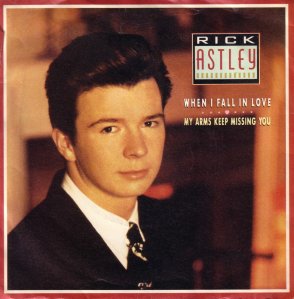
5. Rick Astley: ‘When I Fall In Love’ (1987)
This was the 1987 Christmas #2 and, to be fair, it was only Rick’s third single. But it was asking a lot of the lad to take on Nat ‘King’ Cole. And whose idea were the horrible fake strings?

4. Kim Wilde: ‘You Keep Me Hangin’ On’ (1986)
See 6 and 9.

3. Gary Numan/Leo Sayer: ‘On Broadway’ (1984)
This is so bad it’s almost good. But only almost. You can’t help but feel sorry for these two gents whose careers had gone properly arse-over-teacup by this point. Numan fans in particular must have been hiding behind the sofa.

2. Band Aid II: ‘Do They Know It’s Christmas’ (1989)
Stock Aitken & Waterman were tasked with updating this one, coming up with a pointlessly-reformatted, boil-in-the-bag cover without any of the original’s musical grace notes, though singer Matt Goss gives a good account of himself.

And…badly-played drum roll…the worst cover of the ’80s is…

1. Thompson Twins: ‘Revolution’ (1985)
The Twins go rawk, with disastrous results. It was also the point where they started to believe the hype – always a bad move. Tom Bailey’s lead vocal is a travesty and it’s also a bum note in Nile Rodgers’ production career.

33 Great Cover Versions Of The 1980s

We’ve briefly looked at crap cover versions before (though doubtless there’ll be more to come), but how about good ones from the 1980s?

It was quite easy coming up with a fairly long list. I guess the ultimate test is that at the time most people (including me) didn’t know – or didn’t care – that they were cover versions.

There wasn’t a great deal of looking back in this golden period for pop.

But it did seem as if a lot of ’80s acts had the magic touch, or at least a total lack of fear, making almost everything sound like their own. Punk probably had quite a lot to do with that.

Some of the following choices get in for sheer weirdness but most are genuine artistic achievements. Recurring themes? The Beatles, Motown, Otis Redding. Probably not too much of a surprise there. And 1981 seems a particularly good year for covers.

Anyway, enough of my yakkin’. Let the countdown commence…

33. Bow Wow Wow: ‘I Want Candy’ (1982)

32. David Bowie: ‘Criminal World’ (1983)

31. Ry Cooder: ’13 Question Method’ (1987)
Ry’s brilliant solo take on Chuck Berry from the Get Rhythm album.

30. Propaganda: ‘Sorry For Laughing’ (1985)
The Dusseldorf pop mavericks take on Josef K’s post-punk curio (apparently at Paul Morley’s urging) to produce a sweeping, majestic synth-pop classic.

29. Joan Jett & The Blackhearts: ‘Little Drummer Boy’ (1981)

28. Living Colour: ‘Memories Can’t Wait’ (1988)

27. Sting: ‘Little Wing’ (1987)

26. Randy Crawford/Yellowjackets: ‘Imagine’ (1981)
Who knew this would work? Sensitive and imaginative reading of the Lennon classic, with a classic Robben Ford guitar solo.

25. Lee Ritenour: ‘(You Caught Me) Smilin” (1981)
Gorgeous West-Coast version of Sly Stone’s pop/funk opus. Surely one of the most unlikely covers of the decade, but it works a treat.

24. Luther Vandross: ‘A House Is Not A Home’ (1982)

23. John Martyn: ‘Johnny Too Bad’ (1980)
Originally a reggae track by The Slickers and first released on ‘The Harder They Come’ soundtrack in 1972, Martyn and drummer Phil Collins rearranged it and added some lyrics. It featured on John’s fantastic Grace And Danger album.

22. Soft Cell: ‘Tainted Love’ (1981)
Cracking version of Gloria Jones’ ’60s Northern Soul classic (written by Ed Cobb). A hit all over the world, with pleasingly remedial synth arrangement, instantly recognisable soundworld and classic intro.

21. Grace Jones: ‘Use Me’ (1981)
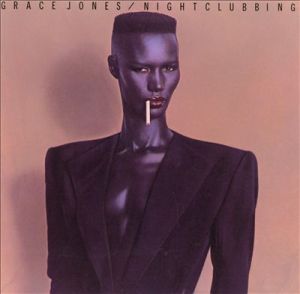
The Nightclubbing album featured a veritable smorgasbord of good cover versions, but this take on Bill Withers scores particularly highly for originality.

20. The Flying Lizards: ‘Sex Machine’ (1981)

19. The Replacements: ‘Cruela De Vil’ (1988)
From the brilliant Hal Willner-helmed Disney tribute album Stay Awake, you’d have been a brave punter to bet a dime on this one working, but work it does.

18. Quincy Jones: ‘Ai No Corrida’ (1981)

17. Donald Fagen: ‘Ruby Baby’ (1982)

16. Stanley Clarke: ‘Born In The USA’ (1985)
Who knows, maybe this could have provided Stanley with a novelty hit if CBS had been quicker off the mark. He references John Coltrane’s ‘A Love Supreme’ in the intro while Rayford Griffin lays down seismic grooves and a funny old-school rap.

15. The Power Station: ‘Get It On’ (1985)
‘If cocaine was a sound…’, as a YouTube wag described it. This near-hysterical rave-up is mainly the sound of a fun late-night jam (Tony Thompson’s drumming being particularly notable). Also check out guitarist Andy Taylor’s little ode to Talking Heads’ ‘Burning Down The House’ throughout.

14. Deborah And The Puerto Ricans: ‘Respect’ (1981)
A one-off solo single from The Flying Lizards’ singer, this Dennis Bovell-produced curio missed the charts but remains a fascinating post-punk artefact.

13. Roxy Music: ‘In The Midnight Hour’ (1980)
Roxy’s first cover version presumably raised some eyebrows but the lads pull it off with some aplomb, aided by Allan Schwartzberg’s tough NYC drum groove – and the fact that Bryan Ferry can’t resist adding some typical weirdness in the first 20 seconds.

12. Ringo Starr & Herb Alpert: ‘When You Wish Upon A Star’ (1988)
Another once-heard-never-forgotten cracker from the aforementioned Stay Awake collection, the album version is preceded by a very menacing Ken Nordine spoken-word intro.

11. Japan: ‘Ain’t That Peculiar’ (1980)
David Sylvian probably hates this but no matter. It’s hard to think of another band pulling it off. Ominous synthscapes from Richard Barbieri, a nice recorder solo by Mick Karn and brilliant ‘where’s-one?’ beat from Steve Jansen.

10. Everything But The Girl: ‘I Don’t Want To Talk About It’ (1988)
It definitely divides opinion, but certainly fits the ‘sounds like they wrote it’ criterion.

9. Bananarama & Fun Boy Three: ‘Really Saying Something’ (1982)
Penned by Motown songsmiths Norman Whitfield, Micky Stevenson and Edward Holland Jr and first performed by The Velvelettes in 1964, it’s hard not to smile when this comes on the radio. I love the way the ladies pronounce ‘strutting’.

8. David Bowie: ‘Kingdom Come’ (1980)
The Dame’s magnificent take on a little-known track from Tom Verlaine’s 1978 debut album.

7. UB40: ‘Red Red Wine’ (1983)
No apologies for including this Neil Diamond-penned perennial. Great bassline, nice groove, lovely Ali Campbell vocal performance.

6. Phil Collins: ‘Tomorrow Never Knows’ (1981)
Phil closed his Face Value album with this oft-forgotten corker, featuring a classic John Giblin bassline (later cribbed by Pearl Jam for the opening of their ‘Once’) and cool Shankar violin.

5. Robert Palmer: ‘Not A Second Time’ (1980)
Robert adds some New Wave grit to this Lennon-penned rocker, and his singing has rarely been better.

4. Siouxsie And The Banshees: ‘Dear Prudence’ (1983)

3. Joan Jett & The Blackhearts: ‘I Love Rock And Roll’ (1982)
First recorded by The Arrows in 1975, this is simply one of the great singles of the 1980s and a huge hit to boot.

2. Hue & Cry: ‘The Man With The Child In His Eyes’ (1988)
It shouldn’t work but it does, courtesy of singer Pat Kane’s excellent tone and phrasing. His trademark ‘na-na-na-na’s help too. I wonder what Kate thought of it.

1. Blondie: ‘The Tide Is High’ (1980)
Written by reggae legend John Holt and first performed by The Paragons in 1966, this was an inspired – if somewhat cheesy – choice for the band. It’s mainly included here for Debbie Harry’s delightfully off-the-cuff vocal, sounding like her first crack at the song.

Great Opening Lines In 1980s Songs

The 1980s produced some fine lyricists. You couldn’t move for decent wordsmithery. But interesting lyrics came from the damndest places. 

What was that Trevor Horn maxim? A good pop song should be like a good story, such that the listener is always asking: what’s going to happen next?

And, like a good story, pretty much every good song starts with an intriguing opening line or two. As the proverbial cigar-munching music-biz mogul might say: ‘You gotta grab ’em from the first bar, kid…’ So here are some great opening lines from 1980s songs, lines that hopefully satisfy Horn’s requirements.

Everything But The Girl: ‘Each And Every One’

‘If you ever feel the time/
To drop me a loving line/
Maybe you should just think twice/
I don’t wait around on your advice’


Associates: ‘Club Country’

‘The fault is/I can find no fault in you’


Wet Wet Wet: ‘Wishing I Was Lucky’

‘I was living in a land of make believe/
When my best friend wrote and told me that there may be a job in the city’


Lou Reed: ‘How Do You Speak To An Angel’

‘A son who is cursed with a harridan mother or a weak simpering father at best/
Is raised to play out the timeless classical motives of filial love and incest’


Steely Dan: ‘Babylon Sisters’

Drive west on Sunset to the sea/
Turn that jungle music down/
Just until we’re out of town’


Associates: ‘Party Fears Two’

I’ll have a shower then call my brother up/
Within the hour I’ll smash another cup’


Joni Mitchell: ‘Chinese Cafe’

‘Caught in the middle/
Carol, we’re middle-class/
We’re middle-aged/

We were wild in the old days/
Birth of rock’n’roll days’


The Smiths: ‘Reel Around The Fountain’

‘It’s time the tale were told/
Of how you took a child and you made him old’


Thomas Dolby: ‘Screen Kiss’

Miller Time in the bar where all the English meet/
She used to drink in the hills/
Only now she drinks in the valleys’


Love And Money: ‘Hallejulah Man’

On the blind side and down the back ways/
The roots of sadness crawl/
When you can’t get what you need/
You feel like taking a torch to it all’


Joy Division: ‘Love Will Tear Us Apart’

When routine bites hard and ambitions are low/
And resentment rides high but emotions won’t grow’


The Teardrop Explodes: ‘Reward’

Bless my cotton socks/I’m in the news’


Tom Waits: ‘Swordfishtrombones’

‘Well, he came home from the war with a party in his head/
And a modified Brougham DeVille and a pair of legs that opened up like butterfly wings’


Prefab Sprout: ‘Moving The River’

‘You surely are a truly gifted kid/
But you’re only as good as the last great thing you did’


Lloyd Cole & The Commotions: ‘Brand New Friend’

Walking in the pouring rain/
Walking with Jesus and Jane/
Jane was in a turtleneck/
I was much happier then’


Siouxsie & The Banshees: ‘Cascade’

Oh the air was shining/
Shining like a wedding ring’


Bob Dylan: ‘Jokerman’

Standing on the waters casting your bread/
While the eyes of the idol with the iron head are glowing/
Distant ships sailing into the mist/
You were born with a snake in both of your fists while a hurricane was blowing’


Robert Palmer: ‘Johnny And Mary’

Johnny’s always running around trying to find certainty/
He needs all the world to confirm that he ain’t lonely’


Prefab Sprout: Talking Scarlet

You hide under the eiderdown/
All you can’t sweep underneath the carpet’


The Human League: ‘Don’t You Want Me’

I was working as a waitress in a cocktail bar/When I met you’


Talking Heads: ‘Crosseyed And Painless’

Lost my shape/
Trying to act casual/
Can’t stop/
Might end up in the hospital’


Scritti Politti: ‘A Little Knowledge’

Now I know to love you/Is not to know you’


The Smiths: ‘Bigmouth Strikes Again’

Sweetness, I was only joking/
When I said I’d like to smash every tooth in your head’

Memorable Gigs Of The 1980s (Part Two)

Check out the first selection of memorable gigs here.

9. David Sanborn Band/Al Jarreau @ Wembley Arena, November 1984
We were sitting high up behind the stage with a great view of two of the great modern American drummers: Steve Gadd (with Sanborn) and Ricky Lawson (with Jarreau). To be honest, my parents and I left in the middle of Al’s set but Sanborn was fantastic with Marcus Miller and Hiram Bullock running amok on the huge Arena stage. The saxophonist was at his commercial peak here and probably could have headlined the show.

8. Marc Almond @ The London Palladium, 12 October 1986
I have no idea why I was at this gig but it was a genuine eye-opener. Almond was long past his pop fame and seemed to be acting out his own private, Berlin-inspired drama. Looking at the footage today, I’m still not sure if it’s brilliant or total sh*te.

7. Miles Davis @ Hammersmith Odeon, 21 April 1982
I remember someone shouting ‘Turn the guitar down!’ Poor Mike Stern wasn’t the critics’ flavour of the month and Miles was obviously exceptionally ill, but the gig was unforgettable. One of my first and very best. I saw Miles three or four times during the ’80s but this was the bomb for sheer atmosphere and occasion.

6. Robert Palmer @ Hammersmith Odeon, 25 September 1988
There really isn’t anyone around these days like the much-missed Robert with his gravelly voice, weirdly cosmopolitan compositions and ever-present smirk. He had a highly-drilled, sh*t-hot band with him at the Hammie Odeon too featuring Frank Blair on bass and Eddie Martinez on guitar. The gig started with a five-minute Dony Wynn drum solo which fair blew the minds of my brother and I.

5. Yes/No People @ Limelight, 9 September 1986
I think this gig was part of what was then known as the Soho Jazz Festival. There was a lively crowd of ‘jazz revival’ hipsters and rare-groove fans – this was my first taste of an underground scene that was quickly building momentum. DJ Baz Fe Jazz kicked off with some Blue Note post-bop (yes, people actually danced to that stuff) and then Yes/No People featured Steve Williamson on sax and the cracking Mondesir brothers (Mark and Mike) rhythm section. The band only lasted a year or so but nearly dented the charts with their ‘Mr Johnson’ single.

4. John McLaughlin/Mahavishnu Orchestra @ Hammersmith Odeon, 12 July 1984
The sign on the door said ‘Billy Cobham will not be appearing’ – heartbreaking to me at the time (McLaughlin apparently dumped Billy just a week before the tour). But Danny Gottlieb sat in with some style and John rattled off some outstanding licks in black shirt and black headband. It was bloody loud too. It was the first time many British fans had seen him since Mahavishnu Mark 1 days and as such there was a big hippie turnout.

3. Bill Withers @ Hammersmith Odeon, 18 September 1988
From memory, Bill spent most of the gig sitting at the front of the stage, talking about his life and career while Pieces Of A Dream accompanied with gentle jazz/funk. Bill wore a sweater and golfing slacks and seemed incredibly old, more Val Doonican than Sly Stone.

2. Weather Report @ Dominion Theatre, 26 June 1984
The duels between keys man Zawinul and drummer Omar Hakim were spellbinding. This was clearly the dog’s b*ll*cks. Well, it was better than Duran Duran anyway. Omar’s huge shades, trash-can cymbal and big grin linger in the memory.

1. Level 42 @ Wembley Arena, 12 January 1989
Level again, but this time for all the wrong reasons. We were in the back row of the dreaded Arena, and the band were flogging their substandard Staring At The Sun album. The audience reaction to the ‘new stuff’ was distinctly subdued. After a contractually-obliged encore of ‘The Chinese Way’, Mark King returned to the stage alone. ‘You ‘ad a good night?’ he bawled. The audience erupted. ‘Well, you can all go and f**k off home then’, deadpanned the thunder-thumbed one. Reply – and further encore – came there none…

Bubbling under:

Mike Stern/Bob Berg Band @ Town & Country Club, November 1989

Will Downing @ Hammersmith Odeon, 20 November 1988

Coltrane Legacy (Alice/Ravi Coltrane, Reggie Workman, Rashid Ali) @ Logan Hall, 10 July 1987

Ry Cooder @ Hammersmith Odeon, 27 May 1982

Bill Frisell @ Town & Country Club, 24 April 1989

Ornette Coleman/Prime Time @ Town & Country Club, 28 August 1988

Were you at any of these concerts? Let us know your memories.

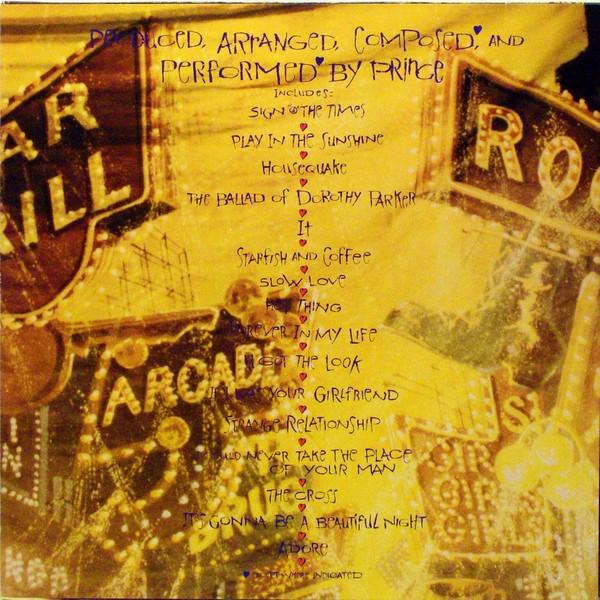
Prince: Sign ‘O’ The Times 30 Years Old Today

Paisley Park/Warner Bros, released 30 March 1987

Album chart position: #6 (US), #4 (UK)

Singles released: ‘Sign O’ The Times’ (#3 US, #10 UK)
‘If I Was Your Girlfriend’ (#67 US, #20 UK)
‘U Got The Look’ (#2 US, #11 UK)
‘I Could Never Take The Place Of Your Man’ (#10 US, #29 UK)

At the time of Sign O’ The Times’ release, the general critical consensus seemed to be that it was a great double album but, shorn of a few tracks, would have made a sensational single album. But what the press probably didn’t know was that Prince had actually intended to release a triple album.

He believed the three-record set Crystal Ball would have been be a huge artistic statement after a relatively disappointing 1986, but the idea scared the hell out of Warner Bros and also his manager Bob Cavallo. Prince was reluctantly forced to back down.

The tracks intended for Crystal Ball but later abandoned for Sign O’ The Times were ‘Rebirth Of The Flesh’, ‘Rockhard In A Funky Place’, ‘The Ball’, ‘Joy In Repetition’, ‘Shockadelica’, and ‘Good Love’ (all hoovered up from two other aborted album projects, Dream Factory and Camille).

But even after Prince removed these, he was still left with a 16-track double album, a brilliant mix of the sacred and profane, and a record which many fans believe was his finest hour.

The famous title track was recorded on 15 July 1986 in a single ten-hour session at LA’s Sunset Sound. Prince was experimenting with a new piece of kit – the Fairlight sampler/synth – but characteristically made the technology swing in a way that no other artist could.

The track also demonstrates his love of space; it’s essentially just a minimalist blues featuring a three-note melody line, some sampled drums/bass and a bit of electric guitar. Listening again on the day after the Westminster Bridge ‘terrorist’ attack of 23 March, the song’s lyric also seems as relevant now as it was in 1987:

Hurricane Annie ripped the ceiling of a church and killed everyone inside
You turn on the telly and every other story is tellin’ you somebody died
Sister killed her baby cos she couldn’t afford to feed it
And we’re sending people to the moon
In September my cousin tried reefer for the very first time
Now he’s doing horse, it’s June

It’s silly, no?
When a rocket ship explodes
And everybody still wants to fly
Some say a man ain’t happy
Until a man truly dies

‘Play In The Sunshine’ and ‘Housequake’ are pure party pop – it’s scarcely believable that Prince alone could generate such a raucous studio atmosphere with only Susannah Melvoin’s backing vocals, a few guests and Eric Leeds’ sax for company. The latter also represents his first recorded attempt at hip-hop (unless you count the brief ‘rap’ in ‘Girls & Boys’), typically supplying something usually missing from the genre: humour.

‘The Ballad Of Dorothy Parker’, recorded in Prince’s Minneapolis home studio on 15th March 1986, may be his most psychedelic recording, the soundtrack to a dream with seemingly-spontaneous musical moments that no one else could have created. He demonstrates his mastery with the LM-1 drum machine and, vocally, sets up a novel ‘Greek chorus’ effect.


‘Forever In My Life’ takes a melody line very similar to Sly And The Family Stone’s ‘Everyday People’ (and maintains Sly’s key of G) but again demonstrates Prince’s remarkable sense of space and also features another extraordinary backing vocal arrangement.

The heartfelt lyric was written when he believed he would settle down with fiancée Susannah Melvoin (twin sister of Wendy) – sadly it wasn’t to be.

‘It’, another bold experiment with the Fairlight, returns to the cold, sexualised world of 1999, while ‘Hot Thing’ is its flipside, a funky, James Brown-inspired one-chord romp with some great Leeds tenor sax.

‘If I Was Your Girlfriend’ (another song about Susannah/Wendy), ‘Strange Relationship’ (another big nod to Sly), ‘It’s Gonna Be A Beautiful Night’, ‘Starfish And Coffee’, ‘U Got The Look’ and ‘I Could Never Take The Place Of Your Man’ are just brilliantly performed, beautifully written pop tunes with dashes of psychedelia and soul.

According to engineer Susan Rogers, Prince was very influenced by Kate Bush’s Hounds Of Love during the recording of SOTT, the track ‘Cloudbusting’ a particular favourite. Other songs showed contemporary influences too – ‘Adore’ was apparently Prince’s response to the popularity of Luther Vandross’s Give Me The Reason and Patti Labelle’s The Winner In You, and it also hugely influenced the neo-soul movement, particularly D’Angelo’s ballad style.

‘U Got The Look’ – the last song recorded for Sign O’ The Times on 21 December 1986 – was apparently inspired by Robert Palmer’s ‘Addicted To Love’.

Sign O’ The Times sold 1.8 million copies in the US, a very similar number to Parade. Some believed the slightly disappointing sales were due to the choice of ‘If I Was Your Girlfriend’ as the second single; it is strange that ‘U Got The Look’ didn’t get the nod. But if Prince’s popularity was levelling out in the States, it was growing across Europe.

Bigmouth Strikes Twice: More Classic 1980s Music Quotes

Art_Blakey_1973

Art Blakey

Here’s another selection of choice quotes taken from various 1980s magazines, TV shows, biographies and anthologies that have drifted through my transom in the last few months.

Check out the first instalment here if you missed it.


‘Morrissey’s a precious, miserable bastard. He sings the same song every time he opens his mouth. At least I’ve got two songs: “Love Cats” and “Faith”.’

Robert Smith of The Cure, 1985


‘George Clinton told me how much he liked Around The World In A Day. You know how much more his words mean than those from some mamma-jamma wearing glasses and an alligator shirt behind a typewriter?’

Prince, 1985


‘It would be nice to meet Madonna and squeeze her bum.’

Level 42’s Mark King looks forward to his first US tour, 1986


‘I hope nobody bought houses.’

Slash/Warners executive Bob Biggs upon hearing a preview of Faith No More’s Angel Dust album (OK, this quote is from the early 1990s, but wtf…). The band had bought houses…


‘The musician is like a house, and the music is like a friend that’s always out there knocking on the door, wanting nothing more than to come in. But you’ve got to get your house in order for music to come in. That’s where discipline comes in.’

Robert Fripp, 1984


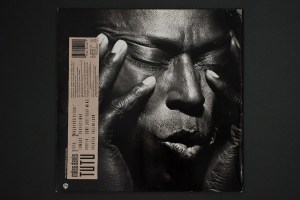
‘Like the first side. The second side is rubbish. Miles don’t play jazz no more but feels kind of funny about it, so instead of just admitting that his chops aren’t what they used to be, he puts jazz down.’

Branford Marsalis on Miles Davis’s Tutu, 1986


‘Remember the hits? “Labour Of Love” was inspired by Antonio Gramsci, a love song called “Violently” and a tale of kitchen-sink realism about wife battery called “Looking For Linda”. We heard those songs on Radio 1 back to back with Yazz and we’d piss ourselves laughing. We pulled off the trick three times and I always think that lyrically I can pull it off again.’

Hue & Cry’s Pat Kane remembers the good old days, 1995


‘I have to be myself, and if being in rock music forces me to pretend I am an idiot or that I have to wear tight trousers or a wig, then I have to get another job.’

Sting, 1988


‘I heard the title song (‘Storms’) on the radio and the drum sound still makes me want to cry. I love Glyn (Johns, producer) but there were times during that album when I went back to the hotel to cry.’

Nancy Griffith on her 1989 album Storms, 1991


‘I would say that my entire life has been one massive failure. Because I don’t have the tools or wherewithal to accomplish what I want to accomplish.’

Frank Zappa, 1986
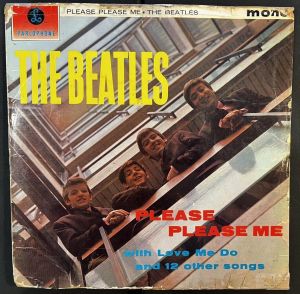
 

‘I went into the old EMI offices many times in the late ’80s and it never occurred to me to look up in reception and see exactly where that iconic photo had been taken. In the ’80s it seemed we had been looking forward.’

David Hepworth on the famous Beatles photo from the cover of Please Please Me


‘I tried the Jesus and Mary Chain but I just couldn’t believe it. It’s awful! It was so sophomoric – like the Velvets without Lou. I just know that they’re kids from Croydon! I just can’t buy it.’

David Bowie, 1987


‘I was surprised how hip it is. There’s a strange thing I don’t understand of people in Boy George outfits dancing to Jimmy McGriff and old Jackie McLean Blue Note records in discos.’

Guitarist John Scofield on the latest English ‘jazz revival’, 1988


‘Songwriting’s a craft, that’s all. I always knew my lyrics were better than anyone else’s anyway. I just edit more than other people, that’s my f***in’ secret. Also I never sleep and that helps too. You’ve got more time that way.’

Shane MacGowan, 1989


‘I hate having my picture taken, I always look like such a dog.’

Kirsty MacColl, 1989


‘I was a patsy. I never made more than $200 a week at the Five Spot.’

Ornette Coleman looks back on his legendary six-month residency during 1959 and 1960, 1985


‘All of us were naive, not just Ornette. We couldn’t even pay our rents. And they were making lots of money off us. That club was jammed every single night we were there.’

Charlie Haden on the same residency, 1985


‘You walk into the record label and they just weren’t as friendly as they used to be. When the record’s not a success, it’s your fault, and so you take on all those feelings. The label doesn’t sit down and talk to you. And they don’t drop you either, because they don’t want to lose you to the competition – just in case you do come up with something good next. And so they just remain sort of not as friendly, no more: “Hey Kevin, how are you?” It’s a head-f*ck, and you just have to work it out yourself.’

Kevin Rowland on the commercial failure of his 1988 solo album The Wanderer


‘Pop stars live the life of Caesar. And we know where the life of Caesar leads: it leads to blankness, it leads to despair. That’s the real message of these rock stars’ lives. To the public, they represent vitality, youth, innocence, joy. But in private life they represent despair and an infatuation with death.’

Albert Goldman, author of ‘The Lives Of John Lennon’ and ‘Elvis’, 1988


‘I remember sitting next to the stage and seeing all those little red lights glowing on the amps while we waited for the guys to come out and give us a real pasting.’

Allan Holdsworth reminisces about early gig-going, 1985


‘I have the best legs in the business. And they’ve got dancing feet at the bottom.’

David Lee Roth, 1982


‘There’s only one woman I have deep respect for in this industry and that’s Chrissie Hynde.’

Annie Lennox, 1986


‘I would have thought that people would be pleased to have a band that could play half decently.’

Francis Dunnery bemoans It Bites’ poor standing with the British music press, 1989


‘Sometimes he would call for Monk out of the clear blue sky. “Thelonious! Come save me from these dumb young motherf*ckers!”‘

Wynton Marsalis on playing with Art Blakey in the early 1980s


‘Prince really wants to be white. I know what that’s like. I tried hard to be white too.’

Daryl Hall, 1985


‘What we do is an alternative to Elton John and Chris Rea and all those old bastards who were there and still are. It’s embarrassing to see these old people like Dire Straits doddering about, they’re hideous.’

Robert Smith, 1989


‘I’ll tell you what I dig. In the Sting movie “Bring On The Night”, Omar Hakim taking off on that tune. Like Tony Williams, Jack DeJohnette. That’s being real free and comfortable. I don’t take my drums seriously, and they do.’

Drummer for the stars Jeff Porcaro, 1989


‘I believe that Bill (Bruford) and Adrian (Belew) thought that Beat was a better album than Discipline. I have no idea how anyone could come to that conclusion.’

Robert Fripp of King Crimson, 2022


‘Thanks for letting me drop by, guys. Hope I didn’t ruin your album.’

Herbie Hancock bids farewell to Simple Minds after playing a synth solo on their 1982 song ‘Hunter And The Hunted’


‘You should have seen us trying to sound like Windham Hill. We’d fall on our butts, man. I learned that you can’t fake it.’

’70s jazz/rock pioneer Larry Coryell on his mid-’80s collaboration with violinist Michal Urbaniak, 1985


‘We weren’t asked but we wouldn’t have done it anyway.’

Robert Smith on Live Aid, 1985


‘The band is getting back together and playing, maybe every six months or every year. If I can do so without it being public knowledge, that would be great. But I can’t do it, obviously. It would be nice to play together just as friends.’

Jimmy Page on Led Zeppelin reunions, 1986


‘I really, really would like to be in Led Zeppelin again. Whether or not time allows that to happen, I don’t know.’

Robert Plant on Led Zeppelin reunions, 1988


‘I’m a Catholic, and I would just ask God to to please help me find my own style. It’s not going to be like Tony or Elvin, so that when you hear me on a record, you know it’s Al Foster on the drums.’

Al Foster on his ‘stomping’ hi-hat technique, 1989


‘I feel I’ve created a field in which other people can discover themselves. I’m disappointed that they don’t create the room for me to discover myself.’

Robert Fripp on his King Crimson bandmates, 1984


‘I find therapy enormously valuable. It’s like car maintenance, send yourself in to be serviced every few thousand miles and, with any luck, it stops major problems developing.’

Peter Gabriel, 1989


‘I went to see this band INXS from Australia. They were on OK band, very much like a version of the Rolling Stones, but not as good. The singer is good and he looks great, but he doesn’t really move. He can’t be expending much energy.’

Mick Jagger, 1988


‘The band was like a fake democracy. Henley and I were making the decisions while at the same time trying to pacify and cajole the others.’

Glenn Frey looks back on The Eagles, 1988


‘(Jeff) Beck’s was a miserable f***ing band, horrible. Beck is a miserable old sod, but I do love him as a guitar player.’

Rod Stewart, 1988


‘I’ve always found it easier to write for other people. I feel terrible inhibited about writing for me. It’s only in the last few years that I’ve resigned myself into believing that I’m a moderately good singer.’

David Bowie, 1988


‘Of my writing partners since John (Lennon), Denny Laine was obviously nowhere near as good. Stevie Wonder is very good, but he’s not a lyricist. Michael Jackson is not as good of a writer as he is a performer. And Eric Stewart was good, but again, not as good as John.’

Paul McCartney, 1988


‘This new Clash compilation, which is meant to have sold a million copies, should be making me a rich man, but someone told me you only get quarter royalties for compilations. The CD wasn’t invented then so that wasn’t in the contract either. So I think I don’t get them royalties either. To tell the truth, I think we’re all a bit skint really.’

Joe Strummer on the legacy of The Clash, 1988


‘Those weird people on the street – every hundreth weirdest one has a Steely Dan record at home. That guy who hijacked a bus today probably has 47 copies of The Royal Scam.’

Walter Becker on Steely Dan’s audience, 1981


‘In 1981, something happened which changed my way of working with music. I woke up on a friend’s sofa in New York and simply understood something I’d known for a while: music was always present, completely with a life of its own, as a friend.’

Robert Fripp, 1984


‘The price of a ticket goes from two dollars to 20 dollars, the act doesn’t do an encore, someone has to stand in a long line, and it’s all my fault.’

Bill Graham on stadium rock, 1988


‘There are a lot of people who didn’t make a commitment and now they’re no longer with us. We lost Otis Redding, Sam Cooke, Jackie Wilson, Jimi Hendrix. I think maybe some of them didn’t know where or when to get off. The important thing is to be here.’

Al Green, 1988


‘Hell, we steal. We’re the robber barons of rock’n’roll.’

Donald Fagen of Steely Dan, 1981


‘After recording it, I flew off to see my manager and I said to him, “You’d better watch who you’re talking to. I’m the guy who wrote “Addicted To Love!”‘

Robert Palmer, 1988


‘I get the fans who write poetry. I have a slight David Sylvian audience, whereas Chris (Lowe) gets the sex audience, the ones who write obscene letters! It’s quite thrilling, actually!’

Neil Tennant of The Pet Shop Boys, 1988


‘It was the Enniskillen bombing that did it. The man whose daughter died beside him under the rubble; he was burning inside but he was so forgiving, so gracious. I thought, Christ, this is what courage is all about – Elton, just shut up and get back to work. After all, once you’ve been exposed naked on the cover of The Sun you ought to be able to face anything…’

Elton John on his 1988 comeback


‘It’s a better product than some others I could mention.’

David Bowie defends the Glass Spider Tour, 1987


‘Back then I thought I’d lost it and I did a bunch of things I was really unhappy with – all in public and on record. But it turned out not to be true. My ability hadn’t deserted me. And it won’t go away. Ever.’

Lou Reed, 1988


‘Michael Jackson’s just trying to cop my sh*t. I was insane years ago…’

Neil Young, 1988


‘I’ve said a lot of things in my time and 90 percent of them are bollocks.’

Paul Weller, 1988


‘We were excellent. Some of the best records of the ’80s are there. For the last six months of Wham!, it was OK to like us, we got a little hip. I cannot think of another band who got it together so much between the first and second albums. On Fantastic, you can tell I don’t think I’m a singer but some vocals on Make It Big are the best I’ve done. Even if we were wankers, you still had to listen.’

George Michael reassesses Wham!, 1998


‘The gig I have as the drummer in King Crimson is one of the few gigs in rock’n’roll where it’s even remotely possible to play anything in 17/16 and stay in a decent hotel.’

Bill Bruford, 1983


‘When I toured with The Rolling Stones, the audience would come up to me after the show and say, “Man, you’re really good, you ought to record.” How do you think that makes me feel after 25 years in the business?’

Bobby Womack, 1984


‘I find politics ruins everything. Music, films, it gets into everything and f*cks it all up. People need more sense of humour. If I ran for President, I’d give everybody Ecstasy.’

Grace Jones, 1985


‘I’m not the most gifted person in the world. When God handed out throats, I got locked out of the room.’

Joe Elliott of Def Leppard, 1988


‘I’m lazy and I don’t practice guitar and piano because I’ve gotten involved with so many other things in my life and I just had to make a sacrifice. Stephen Sondheim encourages me to start playing the piano again. Maybe I will.’

Madonna, 1989


‘Nile (Rodgers) couldn’t afford to spend much time with me. I was slotted in between two Madonna singles! She kept coming in, saying “How’s it going with Nile? When’s he gonna be free?” I said, “He ain’t gonna be free until I’m finished! Piss off!”’

Jeff Beck, 1989


‘I’ve never really understood Madonna’s popularity. But I’ve talked to my brothers and they all want to sleep with her, so she must have something.’

Nick Kamen, 1987


‘They ask you about being a Woman In Rock. The more you think about, the more you have to prove that you’re a Woman In Rock. But if you’re honest, it doesn’t matter whether you’re male or female. That’s the way we work.’

Wendy Melvoin, 1989


‘In Japan, someone told me I was playing punk saxophone. I said, “Call me what you want, just pay me”.’

George Adams, 1985


‘In the past, we’d bump into other musicians and it would be, “Oh, yes, haven’t I heard of you lot? Aren’t you the bass player that does that stuff with your thumb?” But once you’ve knocked them off the number 1 spot in Germany, they’re ringing you up in your hotel and saying, “Hey, howyadoin’? We must get together…”‘

Mark King of Level 42, 1987


‘We played London, we played Ronnie Scott’s, and I noticed that there were a lot punk-rock kids in the audience. After we finished playing, we had to go to the disco and sign autographs, because “Ping Pong”, the thing we made about 30 years ago, is a big hit over there.’

Art Blakey, 1985


‘I believe music – just about everything – sounds better these days. Even a car crash sounds better!’

Miles Davis, 1986


‘It’s a dangerous time for songwriters in that a monkey can make a thing sound good now.’

Randy Newman, 1988

Yoko+Ono+Season+Of+Glass+522787


‘To have those glasses on the cover was important because it was a statement and you have to understand that it was like John wanted you guys to see those glasses.’

Yoko Ono, 1989


‘I’ll f*cking… I’ll go and take on anyone, any white singer who wants to give me a go.’

Matt Goss of Bros, 1989


‘I’ve never said this before but my drums is so professional, man, know what I mean?’

Luke Goss of Bros, 1989


‘I hate parts of my own albums because I know I’m hearing something that doesn’t translate to piano. In fact, I’m being dishonest by playing piano at all.’

Keith Jarrett, 1987


‘When I began to see how Elvis lived, I got such a strong take off of it. It was all so revolting!’

Albert Goldman, 1988


‘The best way to make great art is to have it trivialised by other people as much as possible. That way, you fight and fight and fight.’

Julian Cope, 1989


‘Whatever you’re tops in, people is trying to bring you down, and that’s my philosophy.’

Samantha Fox, 1987


‘Call me fat and I’ll rip your spine out.’

Ian Gillan, 1983


‘Sure I care about my fans. Because fans is money, hahaha. Muh-neee! And who does not care about money? Me, I like muh-neee, haha.’

Chuck Berry, 1988


‘I have this long chain with a ball of middle-classness at the end of it which keeps holding me back and that I keep sort of trying to fight through. I keep trying to find the Duchamp in me.’

David Bowie, 1980


‘People who say, Oh, I don’t know anything about music – they’re the people who really do know about music because it’s only really what it does to you.’

Steve Winwood, 1988


‘I notice that critics and others don’t credit black people with the ability to write ingenious, creative lyrics.’

Nile Rodgers, 1981


‘I’m below the poverty line – I’m on £16 a week. We needed some clothes and our manager said, “I don’t know what you do with your money. I mean, 16 quid!”’

Gary Daly of China Crisis, 1984


‘You take four or five of those rattlesnakes, dry ’em out and put them inside your hollow-box guitar. Lightnin’ Hopkins taught me that trick.’

Albert Collins on his guitar tone, 1988


‘People are bored with Lionel Richie going “I love everybody, peace on earth, we are the world…” F*ck that! People love bastards.’

Terence Trent D’Arby, 1987


‘Epstein dressed The Beatles up as much as he could but you couldn’t take away the fact that they were working-class guys. And they were smart-arses. You took one look at Lennon and you knew he thought the whole thing was a joke.’

Billy Joel, 1987


‘I remember when the guy from Echo & The Bunnymen said I should be given National Service. F*** him...’

Boy George, 1987


‘No-one should care if the Rolling Stones have broken up, should they? People seem to demand that I keep their youthful memories intact in a glass case specifically for them and damn the sacrifices I have to make. Why should I live in the past just for their petty satisfaction?’

Mick Jagger, 1987


‘The industry is just rife with with jealousy and hatred. Everybody in it is a failed bassist.’

Morrissey, 1985


‘I couldn’t stand it – all that exploitation and posturing, the gasping at the mention of your name, the pursuit by photographers and phenomenon-seekers. You get that shot of adrenalin and it’s fight or flight. I chose flight many a time.’

Joni Mitchell, 1988


‘I’m strongly anti-war but defence of hearth and home? Sure, I’ll stick up for that… I’m not a total pacifist, you know? I’ve shot at people. I missed, but I shot at them. I’m sort of glad I missed…’

David Crosby, 1989

Alex Sadkin: Sonic Architect Of The ’80s

Grace_Jones_-_NightclubbingOne of the nice things about putting together this website is finding out about some important – though often unsung – characters who pop up in the credits of many a classic album.

Alex Sadkin is just such a figure. You could probably write a history of 1980s music purely from the perspective of producers. Perhaps it was the decade of the pop producer.

There was certainly a lot of turd-polishing going on, but on the flip side it was a chance for someone to establish their own sound, hopefully in collaboration with a great artist or band.

In the early ’80s, everyone was pretty much using the same fairly limited (but very expressive in the right hands) equipment, so it was a question of being as original as possible.

Though he died at the age of just 38 in July 1987, not many producer/mixer/engineers of the early ’80s had a more distinctive sound than Alex Sadkin.

He worked with James Brown, Grace Jones, Bob Marley, Sly and Robbie, Robert Palmer, Talking Heads, XTC, Thompson Twins, Foreigner, Simply Red and Duran Duran during his short life.

His productions are full of colour and detail, usually featuring multiple percussion parts, kicking bass and drums and a very characteristic, super-crisp snare sound.

Alex’s first gig in the music biz was as a sax player in Las Olas Brass, a popular Florida R’n’B outfit, alongside future bass superstar Jaco Pastorius.

Jaco and Alex had gone to high school together, and Alex later became the house engineer at Criteria Studios in Miami where Jaco recorded the demos for his legendary 1976 debut album.

Sadkin then engineered James Brown’s ‘Get Up Offa That Thing’ and worked on Bob Marley’s Rastaman Vibration album, which brought him to the attention of legendary Island Records owner Chris Blackwell. Sadkin quickly secured a new gig as in-house engineer at Island’s Compass Point Studios in Nassau on the Bahamas.

This was where it really all began for Sadkin – an amazing melting pot of talent passed through the Compass Point doors including Talking Heads, AC/DC, Iron Maiden, Tom Tom Club, B-52’s, Robert Palmer and Will Powers AKA Lynn Goldsmith.

But his first bona fide producer credits were alongside Blackwell on Grace Jones’ stunning trio of early ’80s albums (Warm Leatherette, Nightclubbing, Living My Life).

Sadkin was now a name producer with a trademark sound and considerable rep, and as such started to attract significant attention, sometimes of the negative variety – legendary NME scribe Paul Morley even took agin him for some reason in a review for Thompson Twins’ ‘Hold Me Now’ single. It probably meant Sadkin was doing something right…

Later in the decade, though his work arguably became more anonymous (but then so did a lot of post-1986 pop), Alex’s career went from strength to strength, producing some big albums such as Robbie Nevil’s debut, Simply Red’s big-selling Men And Women and Arcadia’s (admittedly fairly dire) So Red The Rose.

Sadly, Alex Sadkin died in a motorbike accident in Nassau on 25 July 1987 just before he was due to begin working with Ziggy Marley.

He had also just recorded some demos with Jonathan Perkins, later to front underrated early ’90s act Miss World. Robbie Nevil’s song ‘Too Soon’ and Grace Jones’ ‘Well Well Well’ are dedicated to Sadkin’s memory, as is Joe Cocker’s album Unchain My Heart. Gone too soon, indeed.