54 Great Albums Of The 1980s

OK, it’s cards on the table time. Time to ‘address’ the elephant in the room, no more waltzing around it, etc etc…

Regular readers of this site may already have an inkling about my favourite albums of the ’80s, but what the hell – here they are in no particular order (apart from the unimpeachable collection in the #1 spot).

Numbers have been crunched, playlists have been quantified. Only kidding. This is a totally sentimental, unscientific list. My original intention was to narrow it down to only ten but that wasn’t going to happen…

The rules: only one artist per slot, soundtracks are allowed but no best-ofs, and all albums must have a no-skip guarantee. A few things pop out: 1981, 1985 and 1987 strike me as very good years, 1984 and 1986 as pretty barren ones. It wasn’t a great decade for straightahead jazz, soul or funk, at least not in my house, though Alexander O’Neal, Janet Jackson, Cameo and Terence Trent D’Arby nearly made the cut.

And I wish there were more female artists, though Will Powers (Lynn Goldsmith), Wendy & Lisa, Sheila E, Chaka Khan, Rickie Lee Jones, Mary Margaret O’Hara, Donna Summer, Cocteau Twins, Randy Crawford and Madonna came close. Let the countdown commence…

54. Bireli Lagrene: Foreign Affairs (1988)

53. Stanley Clarke: Rocks, Pebbles & Sand (1980)

52. Human Chain: Cashin’ In (1988)

51. The Tubes: The Completion Backward Principle (1981)

50. Terje Rypdal: The Singles Collection (1988)

49. The Blue Nile: Walk Across The Rooftops (1984)

48. David Sanborn: Voyeur (1981)

47. Randy Newman: Trouble In Paradise (1983)

46 De La Soul: Three Feet High And Rising (1989)

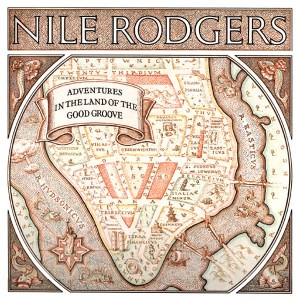
45. Nile Rodgers: Adventures In The Land Of The Good Groove (1983)

44. John Martyn: Glorious Fool (1981)

43. Gabriel Yared: Betty Blue Original Soundtrack (1987)

42. Mike Stern: Upside Downside (1986)

41. Wayne Shorter: Phantom Navigator (1987)

40. Jeff Beck: There And Back (1980)

39. The Robert Cray Band: Bad Influence (1983)

38. Kate Bush: Hounds Of Love (1985)

37. John Scofield: Still Warm (1985)

36. Steve Khan: Casa Loco (1982)

35. Donald Fagen: The Nightfly (1982)

34. It Bites: Once Around The World (1988)

33. Talking Heads: Speaking In Tongues (1983)

32. Michael Jackson: Thriller (1982)

31. Lyle Mays: Street Dreams (1988)

30. David Sylvian: Gone To Earth (1986)

29. Peter Gabriel: III (1980)

28. Roxy Music: Avalon (1982)

27. Grace Jones: Nightclubbing (1981)

26. Prince: Around The World In A Day (1985)

25. Joni Mitchell: Dog Eat Dog (1985)

24. Mark Isham: Vapor Drawings (1983)

23. David Bowie: Scary Monsters  (1980)

22. King Crimson: Discipline (1981)

21. Hue & Cry: Remote (1988)

20. Scritti Politti: Cupid & Psyche 85 (1985)

19. XTC: Skylarking (1985)

18. Prefab Sprout: Steve McQueen (1985)

17. Vladimir Cosma: Diva Original Soundtrack (1982)

16. Lee Ritenour: Rit (1981)

15. Larry Carlton: Friends (1983)

14. Japan: Oil On Canvas (1983)

13. Love And Money: Strange Kind Of Love (1988)

12. Level 42: World Machine (1985)

11. Weather Report: Sportin’ Life (1985)

10. Various Artists: That’s The Way I Feel Now: A Tribute To Thelonious Monk (1984)

9. Thomas Dolby: The Flat Earth (1984)

8. Stump: A Fierce Pancake (1988)

7. China Crisis: Flaunt The Imperfection (1985)

6. Propaganda: A Secret Wish (1985)

5. Danny Wilson: Meet Danny Wilson (1987)

4. Marc Johnson/Bass Desires: Second Sight (1987)

3. Miles Davis & Marcus Miller: Music From Siesta (1987)

2. Valentin Silvestrov: Symphony No.5 (1988)

And the 1980s album I would save if my flat was on fire…

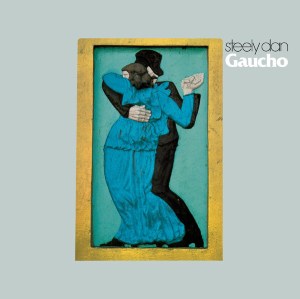
1. Steely Dan: Gaucho (1980)

Walter Becker (1950-2017)

A statement from Donald Fagen:

‘Walter Becker was my friend, my writing partner and my bandmate since we met as students at Bard College in 1967. We started writing nutty little tunes on an upright piano in a small sitting room in the lobby of Ward Manor, a mouldering old mansion on the Hudson River that the college used as a dorm.

We liked a lot of the same things: jazz (from the twenties through the mid-sixties), W.C. Fields, the Marx Brothers, science fiction, Nabokov, Kurt Vonnegut, Thomas Berger, and Robert Altman films come to mind. Also soul music and Chicago blues.

Walter had a very rough childhood — I’ll spare you the details. Luckily, he was smart as a whip, an excellent guitarist and a great songwriter. He was cynical about human nature, including his own, and hysterically funny. Like a lot of kids from fractured families, he had the knack of creative mimicry, reading people’s hidden psychology and transforming what he saw into bubbly, incisive art. He used to write letters (never meant to be sent) in my wife Libby’s singular voice that made the three of us collapse with laughter.

His habits got the best of him by the end of the seventies, and we lost touch for a while. In the eighties, when I was putting together the NY Rock and Soul Review with Libby, we hooked up again, revived the Steely Dan concept and developed another terrific band.

I intend to keep the music we created together alive as long as I can with the Steely Dan band.

Donald Fagen

September 3 2017′

Sounds Like Steely Dan?

They are of course the pop/jazz masters whose harmonic and lyrical sophistication have had the critics purring since 1972.

They’ve also often been described as ‘influential’. But is that true? Does any other music sound remotely like Steely Dan?

In the 1980s, the term ‘Steely Dan-influenced’ was bandied about particularly in relation to British bands of the ‘sophisti-pop’ variety: The Big Dish, Style Council, Everything But The Girl, Curiosity Killed The Cat, Hue & Cry, Sade, Swing Out Sister, even Prefab Sprout and Deacon Blue.

More recently, it’s The High Llamas, Athlete, Mark Ronson, Toy Matinee, The Norwegian Fords, Mayer Hawthorne, State Cows and even Pharrell.

None really sound like Steely. Sure, they show off some slick grooves, jazzy solos and nice chord changes. But they also generally scrimp on the hooks, harmonic sophistication, production values and soulful, distinctive vocals which characterise Becker and Fagen’s oeuvre.

However, there are random tracks over the years – by artists one wouldn’t necessarily have predicted – that have seemingly ‘cracked the code’. Here’s a smattering, not all necessarily from the ’80s. More suggestions welcome if you can think of any.

10. Billy Joel: ‘Zanzibar’
Lush production (Phil Ramone), cool chords, great arrangements, biting Fagenesque vocals, quirky lyrics and nice guitar from Steely regular Steve Khan. Also featuring two kick-ass solos by trumpet/flugelhorn legend Freddie Hubbard.

9. The Stepkids: ‘The Lottery’
Underrated American psych-soulsters deliver jazzy weirdness, a nice groove, oblique lyrics, cool chords, memorable hooks and a distinctly Fagen-like croon from vocalist Tim Walsh.

8. The Tubes: ‘Attack Of The 50ft Woman’
The bridge and backing vocals always remind me of Steely, and I’m sure the boys would also appreciate the ‘50s B-movie lyric concept and ‘easy listening’ middle eight.

7. Danny Wilson: ‘Lorraine Parade’
The Dundonians’ superb debut is full of Dan-ish moments but this (sorry about the sound quality) could almost be an outtake from Katy Lied. See also the B-side ‘Monkey’s Shiny Day’.

6. Frank Gambale: ‘Faster Than An Arrow’
The Aussie guitar master swapped the chops-based fusion for this slick, lushly-chorded, Steely-style shuffle. Gambale sings, plays piano and guitar and also wrote the excellent horn chart.

5. Maxus: ‘Nobody’s Business’
The AOR supergroup came up with this standout in 1981. Jay Gruska’s vocals and Robbie Buchanan’s keys particularly stand out as Steely-like.

4. Cliff Richard: ‘Carrie’
More than a hint of ‘Don’t Take Me Alive’ in the chorus, lovely production and Cliff does a neat Fagen impression throughout. And hey, isn’t that ‘Mike’ McDonald on backup? (No. Ed.) Apparently co-songwriter Terry Britten was a huge Steely fan (as Cliff told this writer during a live radio interview circa 2008).

3. Boz Scaggs: ‘We’re Waiting’
Steely regulars Michael Omartian, Victor Feldman, Jeff Porcaro and Chuck Findley contribute to this enigmatic cracker which could almost be an Aja outtake. The oblique lyrics possibly relate to Hollywood in some way. See also Boz’s ‘Gimme The Goods’ which sounds suspiciously like ‘Kid Charlemagne’.

2. Tina Turner: ‘Private Dancer’
This Mark Knopfler-written gem pulls off the Steely tricks of simple melody/elaborate harmony and a risqué lyrical theme. There’s also more than a touch of ‘FM’ in the intro riff. Knopfler was always a big Dan fan and of course guested on ‘Time Out Of Mind’. See also Dire Straits’ ‘Private Investigations’ whose outro bears more than a passing resemblance to ‘The Royal Scam’.

1. Christopher Cross: ‘I Really Don’t Know Anymore’
From one of the biggest-selling debut albums in US chart history, this features the production/piano skills of Omartian, backing vocals from McDonald and a majestic guitar solo by Dan legend Larry Carlton. See also ‘Minstrel Gigolo’ from the same album.

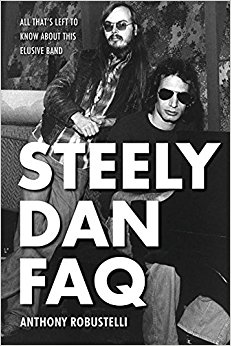
Book Review: Steely Dan FAQ by Anthony Robustelli

The general consensus seems to be that there’s relatively little published analysis of Steely’s work. But is that accurate?

Brian Sweet’s ‘Reelin’ In The Years’ was uncritical but biographically exhaustive; Don Breithaupt’s Aja book was excellent on The Dan’s musical methods; while ‘Revolution In The Head’ author Ian MacDonald wrote briefly but evocatively about Gaucho, included in his gripping ‘The People’s Music’ collection.

And then of course there are the intriguing, sometimes amusing ‘geek’ websites Fever Dreams and The Steely Dan Dictionary.

So it seems there’s actually quite a lot out there, but all the same I was intrigued when ‘Steely Dan FAQ (All That’s Left To Know About This Elusive Band)’ appeared recently. Is there anything left to ‘know’?

The first thing to say about the book is that it’s hard to know exactly which ‘frequently asked questions’ it’s answering – it’s structured more in the style of Omnibus Press’s old ‘Complete Guides’ series, with chapters on individual albums containing summaries of each song.

Then there are some extra sections dealing with Steely’s early days, their concert history, session players and solo projects. But, despite its rigid structure and a lack of any input from the two protagonists, ‘Steely FAQ’ comes up with some nice surprises.

Robustelli is particularly good on Dylan and The Beatles’ influence on Becker and Fagen’s songs. There’s the odd musical detail which hits the spot (during ‘Show Biz Kids’, I’d never noticed that guitarist Rick Derringer references Elliott Randall’s famous ‘Reelin’ In The Years’ solo after the ‘They got the Steely Dan t-shirts’ line) and there are some excellent, rare photos throughout.

Steely in all their scuzzy glory circa 1973. From left: Jim Hodder, Walter Becker, Denny Dias, Jeff ‘Skunk’ Baxter, Donald Fagen

The book is good too on the recent history of the Dan (though musically it’s an era I generally struggle with), with everything you’d ever need to know about the albums and tours since the 1990s.

There’s also a great chapter on cover versions, many of which I’d never heard (including Earl Klugh, The Pointer Sisters, Howard Jones, Dave Valentin, Grover Washington Jr. – approach them at your peril…).

On the minus side, musical/lyrical analysis is often scant and/or inaccurate – Michael Omartian’s solo piano outro on ‘Throw Back The Little Ones’ is described as ‘discordant’; the song ‘Pretzel Logic’ is summarised as ‘their first shuffle’ (what about ‘Reelin’ and ‘Bodhisattva’?) and the tutti line that kicks off ‘Parker’s Band’ is falsely characterised as a ‘dissonant chord’.

It’s weird too that Robustelli doesn’t mention the websites listed above and pretty much ignores their (sometimes) excellent lyrical analysis in his song summaries.

But, in the end, the success of such a book is measured by whether it takes you back to the music with a fresh ear; ‘Steely Dan FAQ’ certainly does that, despite its shortcomings and rather matter-of-fact style. It’s well worth chucking into your holiday bag this summer.

‘Steely Dan FAQ’ is published by Backbeat Books.


Larry Carlton: Last Nite 30 Years On

In a previous piece about Robert Cray, I talked about ‘touch’ guitarists, those whose sounds are almost entirely in their fingers and not dependent on pedals or amps.

Larry Carlton is certainly one of them. He played some of the great guitar of the 1970s with Steely Dan, The Crusaders, Michael Jackson and Joni Mitchell, his sound characterised by a deceptively ‘sweet’ take on the blues, alongside elements of jazz and rock. In the early ’80s, he put out some fine studio albums including Sleepwalk and Friends, but ’87’s Last Nite was his first official live release.


And what an album. In 1987, I was a big fan of his playing with Steely Dan but had never heard any of his solo stuff. A glowing review of Last Nite in Q Magazine sent me scuttling off to my local Our Price. Recorded on 17th February 1986 at the Baked Potato club in North Hollywood, the album is Larry uncut, blowing on a mixture of originals and jazz standards, with no thought of commercial or airplay potential.

It’s hard to think of another guitarist who could cover such a stylistic range so effortlessly. He kills on the slow blues, tears up the fast Texas-style shuffle, delivers deliciously ‘out’ fusion on the title track and swings his ass off on ‘All Blues and ‘So What’, though with a pleasingly piercing tone as opposed to the warm sound favoured by most ‘jazz’ players.

He’s also endlessly melodic, producing memorable phrase after memorable phrase. But don’t be fooled by the beatific expression and cream jacket – he isn’t afraid of throwing in some pretty wacky modal curveballs too.

Another key aspect of Last Nite is Carlton’s band. He uses the cream of the LA studio scene – John ‘JR’ Robinson on drums, Abe Laboriel on bass, Alex Acuna on percussion – and brings them right out of their comfort zone. Apparently they didn’t know ‘So What’ and ‘All Blues’ were on the setlist until Larry called them.

JR in particular is a revelation, sounding like he’s been cooped up in the studio for far too long. And who knew he could swing like he does on the jazz cuts. Keyboard player Terry Trotter also impresses with his rich voicings and empathetic accompaniment.

Sadly, Last Nite turns out to be a bit of an anomaly in Larry’s discography, marking the beginning of an era when he was veering more and more towards a much smoother studio sound. But he’s always ripped it up in the live arena and has spent a lot more time on the road in his later years.

Happy birthday to a true guitar classic.

Story Of A Song: Donald Fagen’s ‘True Companion’ (1981)

Steely Dan’s breakup was officially announced on 17 June 1981 when Donald Fagen gave a scoop to journalist and long-time fan Robert Palmer in the New York Times.

In the interview, Fagen didn’t rule out the possibility that he would one day reunite with Steely co-leader/co-songwriter Walter Becker, but neglected to mention that he had already returned to the studio as a solo artist.

Until a few years ago, I assumed The Nightfly was Fagen’s ’80s debut, but the one-off track ‘True Companion’ preceded it by a year. It was part of the ‘Heavy Metal’ soundtrack, an animated film based on the sex’n’slash fantasy comic book of the same name. Fagen used the song as an excuse to get back into the studio after a few years off.

‘True Companion’ was recorded at Automated Sound in New York and co-produced by Fagen and legendary engineer Elliot Scheiner (Dan helmer Gary Katz was busy producing Eye To Eye’s debut album).

Lyrically, the song seemed to be a ‘Dark Star’-esque meditation on the spiritually-bereft inhabitants of a spaceship, possibly narrated by God, or at least some kind of omniscient being…

Crewmen of the True Companion
I can see you’re tired of action
In this everlasting twilight
Home is just a sad abstraction

Just beyond the troubled skyways
Young men dream of fire and starshine
I’ve been dreaming of my own green world
Far across the reach of space time

Musically, the track showcased some exceptionally dense Fagen vocal harmonies (prefiguring a similar approach on The Nightfly‘s ‘Maxine’), and typically tasty Fender Rhodes playing by Steely regular Don Grolnick.

But the first half of the tune was almost a mini guitar symphony for Steve Khan. I asked Steve for his recollections of recording ‘True Companion’:

During those years, I think that Donald was trying  to find the confidence to move forward with a solo career because, after Gaucho, it seemed that he and Walter were going to need a long, long break! “True Companion” was one of a few experiments Donald recorded just to test the waters, as it were. To be in the studio with old friends and bandmates like Don Grolnick, Will Lee and Steve Jordan and with Elliot Scheiner engineering, nothing could have felt more familiar. Actually, for working with Donald, things went really fast. I would imagine that I played the electric parts first, then overdubbed the solo, and thereafter the acoustic steel-string. With the Les Paul, I know that I was playing REALLY loud in the room, but I did that because I felt that this was the underlying attitude of the song. It was a blend of subtlety and power. So I tried to give it both…

On the ‘Heavy Metal’ soundtrack album, ‘True Companion’ sat incongruously alongside tracks by Black Sabbath, Grand Funk Railroad, Journey, Sammy Hagar and Stevie Nicks, a state of affairs that no doubt tickled Fagen.

But, most importantly, he had taken his first major steps back into the recording studio, and by late summer 1981 was recording The Nightfly. Almost 15 years later, a reunited Steely Dan also played ‘True Companion’ live on their second comeback tour.

Steve Khan’s Backlog: Interview & Album Review

backlog_esccov_hires600Steve Khan, one of jazz’s most underrated and distinctive guitarists, made two fine fusion albums during the 1980s: Eyewitness and Casa Loco.

His unique chord voicings, intriguing melodic sense and subtle use of effects have also illuminated work by The Brecker Brothers, Steely Dan, Billy Cobham and Joe Zawinul.

Khan’s other solo albums across a 40-year career showcase his enormous versatility, from overdubbed guitar tributes to Thelonious Monk (Evidence) and jazz trios (Headline, Let’s Call This) to large fusion ensembles featuring the likes of Steve Gadd, Don Grolnick, Michael Brecker and David Sanborn (The Blue Man, Arrows).

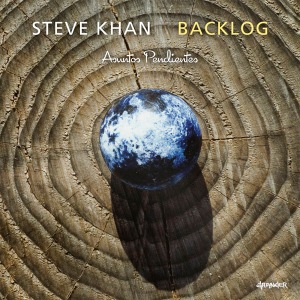
Khan has also become well known as a master-interpreter and reharmoniser of non-guitar jazz compositions by the likes of Andrew Hill, Herbie Hancock, Wayne Shorter, Ornette Coleman, Lee Morgan and Randy Brecker. His new collection Backlogthe third in a Latin Jazz triptych following Parting Shot (2011) and Subtext (2014), continues to plunder the songbooks of his favourite composers.

steve_khan

The album kicks off with the killer one-two of Monk’s ‘Criss Cross’ and Greg Osby’s ‘Concepticus In C’. The former is inspired by the late great pianist Kenny Kirkland’s Latin version which first appeared on his fine 1991 debut album.

Says Khan, ‘It’s a wonderful arrangement and so good that it’s hard to escape its influence. It took me years to find a way to do the tune in a way where I could put my own stamp on it. As everyone already knows, I love Monk’s compositions and have recorded many of them. I happen to feel that Monk’s tunes have a way of fitting into a Latin context, as if they were made to be interpreted in that style.’

The Osby tune was played by Khan during their tenure together in the New Sound Collective band; the guitarist clearly relishes arranging his version of ‘Concepticus’ on Backlog, adding a funky Joe Zawinul flavour to the tasty harmonies and quirky rhythmic concept.

‘Latin Genetics’, composed by Ornette Coleman and first appearing on his In All Languages album, features a fine guest spot from Randy Brecker on trumpet.

On first listening, it seems a light, almost joyous piece of music, but Khan has a different take on it: ‘It’s funny to me that people see this tune as being so happy – I actually see it as a rather dark piece of music, one with many sinister and even humorous qualities.’

Backlog‘s other Coleman cover version is ‘Invisible’, featuring Bob Mintzer on sax, originally recorded in 1958: ‘It comes from one of his earliest albums, Something Else!!!!, featuring an acoustic piano,’ says Khan. ‘Every time I hear this tune, I feel that Ornette’s playing and improvisational concepts are a bit constricted by having the chord changes applied so literally. There seems to be an absence of space. So, in my interpretation, though there are chord changes, both Bob and I play pretty much unaccompanied, and that’s really how I like it.’

Elsewhere on Backlog, Khan reimagines the music of Stevie Wonder, his father Sammy Cahn, Johnny Mandel, Bobby Hutcherson and Andrew Hill.

Clearly a labour of love, Khan wonders whether it will be his final album: ‘When I recorded Parting Shot, for reasons of the health and condition of my left hand, I thought that was going to be the final album. Then when I decided that I felt well enough to record Subtext, I was even more certain that that would be the final album. But, as 2015 unfolded, I came to the simple conclusion that I just do not feel alive unless I am creatively involved in the formation of new music. So, while I can still do it, I had to do everything possible to record. Can I foresee ever being able to self-finance another recording of my own again? I don’t want to utter the word “never” in conjunction with such a thought, but honestly, I really don’t know. With the release of any new piece of work, there is always hope for better days and better times, but this remains to be seen…’

Backlog is out now on ESC/Tone Center.

Read the full interview with Steve at his website.

Bigmouth Strikes Twice: More Classic 1980s Music Quotes

Art_Blakey_1973

Art Blakey

Here’s another selection of choice quotes taken from various 1980s magazines, TV shows, biographies and anthologies that have drifted through my transom in the last few months.

Check out the first instalment here if you missed it.


‘Morrissey’s a precious, miserable bastard. He sings the same song every time he opens his mouth. At least I’ve got two songs: “Love Cats” and “Faith”.’

Robert Smith of The Cure, 1985


‘George Clinton told me how much he liked Around The World In A Day. You know how much more his words mean than those from some mamma-jamma wearing glasses and an alligator shirt behind a typewriter?’

Prince, 1985


‘It would be nice to meet Madonna and squeeze her bum.’

Level 42’s Mark King looks forward to his first US tour, 1986


‘I hope nobody bought houses.’

Slash/Warners executive Bob Biggs upon hearing a preview of Faith No More’s Angel Dust album (OK, this quote is from the early 1990s, but wtf…). The band had bought houses…


‘The musician is like a house, and the music is like a friend that’s always out there knocking on the door, wanting nothing more than to come in. But you’ve got to get your house in order for music to come in. That’s where discipline comes in.’

Robert Fripp, 1984


‘Like the first side. The second side is rubbish. Miles don’t play jazz no more but feels kind of funny about it, so instead of just admitting that his chops aren’t what they used to be, he puts jazz down.’

Branford Marsalis on Miles Davis’s Tutu, 1986


‘Remember the hits? “Labour Of Love” was inspired by Antonio Gramsci, a love song called “Violently” and a tale of kitchen-sink realism about wife battery called “Looking For Linda”. We heard those songs on Radio 1 back to back with Yazz and we’d piss ourselves laughing. We pulled off the trick three times and I always think that lyrically I can pull it off again.’

Hue & Cry’s Pat Kane remembers the good old days, 1995


‘I have to be myself, and if being in rock music forces me to pretend I am an idiot or that I have to wear tight trousers or a wig, then I have to get another job.’

Sting, 1988


‘I heard the title song (‘Storms’) on the radio and the drum sound still makes me want to cry. I love Glyn (Johns, producer) but there were times during that album when I went back to the hotel to cry.’

Nancy Griffith on her 1989 album Storms, 1991


‘I would say that my entire life has been one massive failure. Because I don’t have the tools or wherewithal to accomplish what I want to accomplish.’

Frank Zappa, 1986
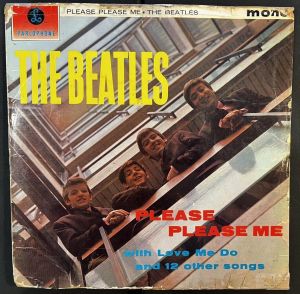
 

‘I went into the old EMI offices many times in the late ’80s and it never occurred to me to look up in reception and see exactly where that iconic photo had been taken. In the ’80s it seemed we had been looking forward.’

David Hepworth on the famous Beatles photo from the cover of Please Please Me


‘I tried the Jesus and Mary Chain but I just couldn’t believe it. It’s awful! It was so sophomoric – like the Velvets without Lou. I just know that they’re kids from Croydon! I just can’t buy it.’

David Bowie, 1987


‘I was surprised how hip it is. There’s a strange thing I don’t understand of people in Boy George outfits dancing to Jimmy McGriff and old Jackie McLean Blue Note records in discos.’

Guitarist John Scofield on the latest English ‘jazz revival’, 1988


‘Songwriting’s a craft, that’s all. I always knew my lyrics were better than anyone else’s anyway. I just edit more than other people, that’s my f***in’ secret. Also I never sleep and that helps too. You’ve got more time that way.’

Shane MacGowan, 1989


‘I hate having my picture taken, I always look like such a dog.’

Kirsty MacColl, 1989


‘I was a patsy. I never made more than $200 a week at the Five Spot.’

Ornette Coleman looks back on his legendary six-month residency during 1959 and 1960, 1985


‘All of us were naive, not just Ornette. We couldn’t even pay our rents. And they were making lots of money off us. That club was jammed every single night we were there.’

Charlie Haden on the same residency, 1985


‘You walk into the record label and they just weren’t as friendly as they used to be. When the record’s not a success, it’s your fault, and so you take on all those feelings. The label doesn’t sit down and talk to you. And they don’t drop you either, because they don’t want to lose you to the competition – just in case you do come up with something good next. And so they just remain sort of not as friendly, no more: “Hey Kevin, how are you?” It’s a head-f*ck, and you just have to work it out yourself.’

Kevin Rowland on the commercial failure of his 1988 solo album The Wanderer


‘Pop stars live the life of Caesar. And we know where the life of Caesar leads: it leads to blankness, it leads to despair. That’s the real message of these rock stars’ lives. To the public, they represent vitality, youth, innocence, joy. But in private life they represent despair and an infatuation with death.’

Albert Goldman, author of ‘The Lives Of John Lennon’ and ‘Elvis’, 1988


‘I remember sitting next to the stage and seeing all those little red lights glowing on the amps while we waited for the guys to come out and give us a real pasting.’

Allan Holdsworth reminisces about early gig-going, 1985


‘I have the best legs in the business. And they’ve got dancing feet at the bottom.’

David Lee Roth, 1982


‘There’s only one woman I have deep respect for in this industry and that’s Chrissie Hynde.’

Annie Lennox, 1986


‘I would have thought that people would be pleased to have a band that could play half decently.’

Francis Dunnery bemoans It Bites’ poor standing with the British music press, 1989


‘Sometimes he would call for Monk out of the clear blue sky. “Thelonious! Come save me from these dumb young motherf*ckers!”‘

Wynton Marsalis on playing with Art Blakey in the early 1980s


‘Prince really wants to be white. I know what that’s like. I tried hard to be white too.’

Daryl Hall, 1985


‘What we do is an alternative to Elton John and Chris Rea and all those old bastards who were there and still are. It’s embarrassing to see these old people like Dire Straits doddering about, they’re hideous.’

Robert Smith, 1989


‘I’ll tell you what I dig. In the Sting movie “Bring On The Night”, Omar Hakim taking off on that tune. Like Tony Williams, Jack DeJohnette. That’s being real free and comfortable. I don’t take my drums seriously, and they do.’

Drummer for the stars Jeff Porcaro, 1989


‘I believe that Bill (Bruford) and Adrian (Belew) thought that Beat was a better album than Discipline. I have no idea how anyone could come to that conclusion.’

Robert Fripp of King Crimson, 2022


‘Thanks for letting me drop by, guys. Hope I didn’t ruin your album.’

Herbie Hancock bids farewell to Simple Minds after playing a synth solo on their 1982 song ‘Hunter And The Hunted’


‘You should have seen us trying to sound like Windham Hill. We’d fall on our butts, man. I learned that you can’t fake it.’

’70s jazz/rock pioneer Larry Coryell on his mid-’80s collaboration with violinist Michal Urbaniak, 1985


‘We weren’t asked but we wouldn’t have done it anyway.’

Robert Smith on Live Aid, 1985


‘The band is getting back together and playing, maybe every six months or every year. If I can do so without it being public knowledge, that would be great. But I can’t do it, obviously. It would be nice to play together just as friends.’

Jimmy Page on Led Zeppelin reunions, 1986


‘I really, really would like to be in Led Zeppelin again. Whether or not time allows that to happen, I don’t know.’

Robert Plant on Led Zeppelin reunions, 1988


‘I’m a Catholic, and I would just ask God to to please help me find my own style. It’s not going to be like Tony or Elvin, so that when you hear me on a record, you know it’s Al Foster on the drums.’

Al Foster on his ‘stomping’ hi-hat technique, 1989


‘I feel I’ve created a field in which other people can discover themselves. I’m disappointed that they don’t create the room for me to discover myself.’

Robert Fripp on his King Crimson bandmates, 1984


‘I find therapy enormously valuable. It’s like car maintenance, send yourself in to be serviced every few thousand miles and, with any luck, it stops major problems developing.’

Peter Gabriel, 1989


‘I went to see this band INXS from Australia. They were on OK band, very much like a version of the Rolling Stones, but not as good. The singer is good and he looks great, but he doesn’t really move. He can’t be expending much energy.’

Mick Jagger, 1988


‘The band was like a fake democracy. Henley and I were making the decisions while at the same time trying to pacify and cajole the others.’

Glenn Frey looks back on The Eagles, 1988


‘(Jeff) Beck’s was a miserable f***ing band, horrible. Beck is a miserable old sod, but I do love him as a guitar player.’

Rod Stewart, 1988


‘I’ve always found it easier to write for other people. I feel terrible inhibited about writing for me. It’s only in the last few years that I’ve resigned myself into believing that I’m a moderately good singer.’

David Bowie, 1988


‘Of my writing partners since John (Lennon), Denny Laine was obviously nowhere near as good. Stevie Wonder is very good, but he’s not a lyricist. Michael Jackson is not as good of a writer as he is a performer. And Eric Stewart was good, but again, not as good as John.’

Paul McCartney, 1988


‘This new Clash compilation, which is meant to have sold a million copies, should be making me a rich man, but someone told me you only get quarter royalties for compilations. The CD wasn’t invented then so that wasn’t in the contract either. So I think I don’t get them royalties either. To tell the truth, I think we’re all a bit skint really.’

Joe Strummer on the legacy of The Clash, 1988


‘Those weird people on the street – every hundreth weirdest one has a Steely Dan record at home. That guy who hijacked a bus today probably has 47 copies of The Royal Scam.’

Walter Becker on Steely Dan’s audience, 1981


‘In 1981, something happened which changed my way of working with music. I woke up on a friend’s sofa in New York and simply understood something I’d known for a while: music was always present, completely with a life of its own, as a friend.’

Robert Fripp, 1984


‘The price of a ticket goes from two dollars to 20 dollars, the act doesn’t do an encore, someone has to stand in a long line, and it’s all my fault.’

Bill Graham on stadium rock, 1988


‘There are a lot of people who didn’t make a commitment and now they’re no longer with us. We lost Otis Redding, Sam Cooke, Jackie Wilson, Jimi Hendrix. I think maybe some of them didn’t know where or when to get off. The important thing is to be here.’

Al Green, 1988


‘Hell, we steal. We’re the robber barons of rock’n’roll.’

Donald Fagen of Steely Dan, 1981


‘After recording it, I flew off to see my manager and I said to him, “You’d better watch who you’re talking to. I’m the guy who wrote “Addicted To Love!”‘

Robert Palmer, 1988


‘I get the fans who write poetry. I have a slight David Sylvian audience, whereas Chris (Lowe) gets the sex audience, the ones who write obscene letters! It’s quite thrilling, actually!’

Neil Tennant of The Pet Shop Boys, 1988


‘It was the Enniskillen bombing that did it. The man whose daughter died beside him under the rubble; he was burning inside but he was so forgiving, so gracious. I thought, Christ, this is what courage is all about – Elton, just shut up and get back to work. After all, once you’ve been exposed naked on the cover of The Sun you ought to be able to face anything…’

Elton John on his 1988 comeback


‘It’s a better product than some others I could mention.’

David Bowie defends the Glass Spider Tour, 1987


‘Back then I thought I’d lost it and I did a bunch of things I was really unhappy with – all in public and on record. But it turned out not to be true. My ability hadn’t deserted me. And it won’t go away. Ever.’

Lou Reed, 1988


‘Michael Jackson’s just trying to cop my sh*t. I was insane years ago…’

Neil Young, 1988


‘I’ve said a lot of things in my time and 90 percent of them are bollocks.’

Paul Weller, 1988


‘We were excellent. Some of the best records of the ’80s are there. For the last six months of Wham!, it was OK to like us, we got a little hip. I cannot think of another band who got it together so much between the first and second albums. On Fantastic, you can tell I don’t think I’m a singer but some vocals on Make It Big are the best I’ve done. Even if we were wankers, you still had to listen.’

George Michael reassesses Wham!, 1998


‘The gig I have as the drummer in King Crimson is one of the few gigs in rock’n’roll where it’s even remotely possible to play anything in 17/16 and stay in a decent hotel.’

Bill Bruford, 1983


‘When I toured with The Rolling Stones, the audience would come up to me after the show and say, “Man, you’re really good, you ought to record.” How do you think that makes me feel after 25 years in the business?’

Bobby Womack, 1984


‘I find politics ruins everything. Music, films, it gets into everything and f*cks it all up. People need more sense of humour. If I ran for President, I’d give everybody Ecstasy.’

Grace Jones, 1985


‘I’m not the most gifted person in the world. When God handed out throats, I got locked out of the room.’

Joe Elliott of Def Leppard, 1988


‘I’m lazy and I don’t practice guitar and piano because I’ve gotten involved with so many other things in my life and I just had to make a sacrifice. Stephen Sondheim encourages me to start playing the piano again. Maybe I will.’

Madonna, 1989


‘Nile (Rodgers) couldn’t afford to spend much time with me. I was slotted in between two Madonna singles! She kept coming in, saying “How’s it going with Nile? When’s he gonna be free?” I said, “He ain’t gonna be free until I’m finished! Piss off!”’

Jeff Beck, 1989


‘I’ve never really understood Madonna’s popularity. But I’ve talked to my brothers and they all want to sleep with her, so she must have something.’

Nick Kamen, 1987


‘They ask you about being a Woman In Rock. The more you think about, the more you have to prove that you’re a Woman In Rock. But if you’re honest, it doesn’t matter whether you’re male or female. That’s the way we work.’

Wendy Melvoin, 1989


‘In Japan, someone told me I was playing punk saxophone. I said, “Call me what you want, just pay me”.’

George Adams, 1985


‘In the past, we’d bump into other musicians and it would be, “Oh, yes, haven’t I heard of you lot? Aren’t you the bass player that does that stuff with your thumb?” But once you’ve knocked them off the number 1 spot in Germany, they’re ringing you up in your hotel and saying, “Hey, howyadoin’? We must get together…”‘

Mark King of Level 42, 1987


‘We played London, we played Ronnie Scott’s, and I noticed that there were a lot punk-rock kids in the audience. After we finished playing, we had to go to the disco and sign autographs, because “Ping Pong”, the thing we made about 30 years ago, is a big hit over there.’

Art Blakey, 1985


‘I believe music – just about everything – sounds better these days. Even a car crash sounds better!’

Miles Davis, 1986


‘It’s a dangerous time for songwriters in that a monkey can make a thing sound good now.’

Randy Newman, 1988
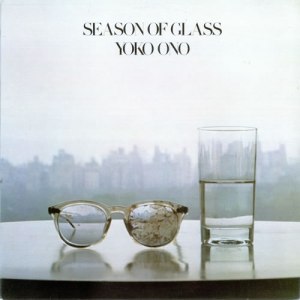
Yoko+Ono+Season+Of+Glass+522787


‘To have those glasses on the cover was important because it was a statement and you have to understand that it was like John wanted you guys to see those glasses.’

Yoko Ono, 1989


‘I’ll f*cking… I’ll go and take on anyone, any white singer who wants to give me a go.’

Matt Goss of Bros, 1989


‘I’ve never said this before but my drums is so professional, man, know what I mean?’

Luke Goss of Bros, 1989


‘I hate parts of my own albums because I know I’m hearing something that doesn’t translate to piano. In fact, I’m being dishonest by playing piano at all.’

Keith Jarrett, 1987


‘When I began to see how Elvis lived, I got such a strong take off of it. It was all so revolting!’

Albert Goldman, 1988


‘The best way to make great art is to have it trivialised by other people as much as possible. That way, you fight and fight and fight.’

Julian Cope, 1989


‘Whatever you’re tops in, people is trying to bring you down, and that’s my philosophy.’

Samantha Fox, 1987


‘Call me fat and I’ll rip your spine out.’

Ian Gillan, 1983


‘Sure I care about my fans. Because fans is money, hahaha. Muh-neee! And who does not care about money? Me, I like muh-neee, haha.’

Chuck Berry, 1988


‘I have this long chain with a ball of middle-classness at the end of it which keeps holding me back and that I keep sort of trying to fight through. I keep trying to find the Duchamp in me.’

David Bowie, 1980


‘People who say, Oh, I don’t know anything about music – they’re the people who really do know about music because it’s only really what it does to you.’

Steve Winwood, 1988


‘I notice that critics and others don’t credit black people with the ability to write ingenious, creative lyrics.’

Nile Rodgers, 1981


‘I’m below the poverty line – I’m on £16 a week. We needed some clothes and our manager said, “I don’t know what you do with your money. I mean, 16 quid!”’

Gary Daly of China Crisis, 1984


‘You take four or five of those rattlesnakes, dry ’em out and put them inside your hollow-box guitar. Lightnin’ Hopkins taught me that trick.’

Albert Collins on his guitar tone, 1988


‘People are bored with Lionel Richie going “I love everybody, peace on earth, we are the world…” F*ck that! People love bastards.’

Terence Trent D’Arby, 1987


‘Epstein dressed The Beatles up as much as he could but you couldn’t take away the fact that they were working-class guys. And they were smart-arses. You took one look at Lennon and you knew he thought the whole thing was a joke.’

Billy Joel, 1987


‘I remember when the guy from Echo & The Bunnymen said I should be given National Service. F*** him...’

Boy George, 1987


‘No-one should care if the Rolling Stones have broken up, should they? People seem to demand that I keep their youthful memories intact in a glass case specifically for them and damn the sacrifices I have to make. Why should I live in the past just for their petty satisfaction?’

Mick Jagger, 1987


‘The industry is just rife with with jealousy and hatred. Everybody in it is a failed bassist.’

Morrissey, 1985


‘I couldn’t stand it – all that exploitation and posturing, the gasping at the mention of your name, the pursuit by photographers and phenomenon-seekers. You get that shot of adrenalin and it’s fight or flight. I chose flight many a time.’

Joni Mitchell, 1988


‘I’m strongly anti-war but defence of hearth and home? Sure, I’ll stick up for that… I’m not a total pacifist, you know? I’ve shot at people. I missed, but I shot at them. I’m sort of glad I missed…’

David Crosby, 1989

Steve Khan: The Eyewitness Trilogy

51jiJqsP8ML._SX425_I’ve just had the absolute pleasure of writing the liner notes for a brand new Steve Khan 2-CD reissue featuring his three classic albums of the early ’80s, Eyewitness, Modern Times and Casa Loco, just released on BGO Records.

It was an honour to work with Steve on this project. He couldn’t have been more generous with his time/memories and hopefully the package does justice to the quality of the music.

Here’s an excerpt from the liner notes, giving some background to the three albums and also the legendary Eyewitness band:

Acclaimed guitarist/composer Steve Khan’s three classic albums of the early ’80s – Eyewitness, Modern Times and Casa Loco – came about seemingly against all the odds. By the end of the 1970s, the jazz/rock boom had come to an end, and the record industry was entering a major post-Punk/post-Disco recession.

Khan’s tenure with Columbia Records – which had produced three well-received solo albums, and a ‘Best Of’ compilation – ended in early 1980. Acts such as Weather Report, John McLaughlin, Return To Forever and Herbie Hancock, all of whom had been signed to Columbia before Khan, were no longer selling the same quantities of records, and the ‘Young Lions’, Neo-Bop boom of the early ’80s was just around the corner.

Khan’s response was to go back to basics. The stripped-down masterpiece Evidence (1980) was a one-man-band project featuring an arsenal of multi-tracked acoustic guitars; the album showcased excellent takes on Lee Morgan, Joe Zawinul, Wayne Shorter and Horace Silver as well as the famous ‘Thelonious Monk Medley’.

The purity of the acoustic guitar sound on the album inspired a new approach to his electric playing too: “In 1981, I was still searching for a direction on the electric guitar, and it led me to go back to the most basic sound, the one I began with when I was 19 years old at UCLA: just plug into an amp with a Gibson, dial in a little reverb, and play!”

The time was also right to move away from classic song-form and branch out into more improvised music-making. “I was ready to surround myself with a totally different group of players in conjunction with a new spirit of making music, something much looser, something not so married to having everything perfectly placed and played. Phone calls were made to three special and very unique players. We got together and the experiment began.”

Drummer Steve Jordan and bassist Anthony Jackson were two of the most in-demand musicians on the New York scene and first-call rhythm section on numerous high-profile sessions including John Scofield’s Who’s Who album. Jackson had also recently joined Khan on the recording of Steely Dan’s Gaucho while Jordan had been busy working with a huge variety of world-class artists as part of David Letterman’s ‘World’s Most Dangerous Band’.

And when Khan hooked up with ex-Weather Report percussionist Manolo Badrena during the recording of Mike Mainieri’s Wanderlust album, the final piece of the jigsaw clicked into place. Khan, Jackson, Jordan and Badrena began to jam regularly at Steve Jordan’s Chelsea loft.

It was quickly clear to Khan that something very significant was happening during those informal get-togethers. “I’m still not certain just what to call what we did”, he says today. “We would begin to play ideas that didn’t seem to have a place in any other musical setting. Here you had four very distinct perspectives on music-making, and four of the most stubborn maniacs one could gather in a room, but somehow it was working. It was magical!”

Khan recorded the sessions on a cheap cassette player and, listening back to them at home, quickly realised that the music should be recorded, “before we actually figured out what it was that we were doing!”

In the experimental era of King Crimson’s Discipline, Japan’s Tin Drum and Peter Gabriel’s Melt, the Eyewitness band began with very basic sounds and concepts but over the course of its existence came to use some fairly unique instrumentation to produce music that was complex but always accessible.

Jordan’s hybrid drum set included a cowbell, a broken splash cymbal, two hi-hats, two snare drums (tuned slightly differently) and a Simmons bass drum. Jackson developed, designed and played a state-of-the-art six-string bass, while Badrena’s constantly-mutating percussion kit included a turtle shell, timbales, congas and eventually Pearl’s Syncussion synthesizer. He also employed a multitude of eerie vocal effects. This clearly was not your standard ‘fusion’ band.

Co-produced by Khan and Doug Epstein, Eyewitness was recorded at Mediasound Studios over a single weekend in November 1981. It has the spontaneity of a great jazz album and the high production values of a contemporary pop album…

To hear the three albums and read the full article, check out the 2-CD reissue.

Steve Khan talks about recording Steely Dan’s ‘Gaucho’

steely

When I was about 12 or 13 years old, I was obsessed with my dad’s very old ABC Records cassette of Steely’s Greatest Hits.

It may have been the opening eight bars of ‘Do It Again’ that did it. I never looked back; they quickly became my favourite ‘band’, and remain so to this day.

I heard Gaucho – which turns 35 today – a few years later, maybe in 1986 or ’87, not even knowing of its existence until then. The album knocked me out. I practiced my drums to it every day.

By all accounts, it was a laborious and very expensive record to make, with various obstacles: whole songs were inadvertently erased (‘The Second Arrangement’) and other classics shelved.

Walter Becker endured a serious injury after being hit by a cab and there was even a lawsuit from Keith Jarrett regarding the similarity between the title track and his 1974 composition ‘Long As You Know You’re Living Yours’.

But it all paid off in the end; Gaucho was sumptuously mixed and mastered with songs that were built to last. Guitarist Steve Khan was a key contributor to Gaucho. Along with Larry Carlton, he would seem the perfect player for their later work, combining a jazz sensibility with a great feeling for the blues and also speedy sight-reading skills.

I was delighted to catch up with Steve from his New York base to talk about his role on the album and the ‘Glamour Profession’ session that led to one of the great guitar solos in the Steely canon.

On getting the call to play on Gaucho:

SK: I had played on almost all the tracks for Gaucho (even though I was erased from some, and some tracks didn’t survive), so I was a pretty healthy part of that recording. As to why they thought of me, who the hell really knows? Donald tends to like players who have a jazz sensibility but who also have a bluesiness or soulfulness about their playing. I guess, in his eyes, I fall into that category of possibilities.  I was the last thing to go on ‘Glamour Profession’, just as I was the last one to go on ‘Third World Man’ as well.

‘Glamour Profession’ lead sheet, prepared by Steve Khan. Click to enlarge

On playing the ‘Glamour Profession’ rhythm parts:

SK: The first thing we did was all the rhythm parts. In a sense that was very simple because they just wanted me to double what some kind of synth had already played – probably sequenced – and with perfect time. At about 3:30 in the track, there’s a little four-bar guitar chorale that Donald wanted me to play, so we wrote out the four voices and I played each voice individually, giving each one a touch of ‘soul’ with a little personal phrasing and vibrato here and there. Then, I think that we returned to doing the rest of the rhythm part. Honestly, I don’t recall if I did the rhythm part on my Telecaster Custom or not – when I listen now, there’s a crispness to the sound which leads me to believe that this was the Tele.

On recording the famous ‘Glamour Profession’ solo:

SK: I used my new Gibson ES-Artist (with active electronics) – which is really a 335 – and after that solo, I never used it again – I sold it back to Manny’s Music! In the end, all the fancy things that they can do to guitars are fine but everything comes down to one’s touch, and I’m mostly speaking about the fingertips on the left-hand. If one has a good touch, the music will translate through virtually any amp. Equipment is just a tool.

glampro2

In concept, the solo represents a lot of linear concepts that I had been working on for years. And only in hindsight, many years later, after the publication of my second theory book ‘PENTATONIC KHANCEPTS‘, I hear these kinds of linear ideas at work. Based upon the chord progressions, it all seemed to work perfectly because, in the end, it is a combination of the angular with a bluesy feeling to it – and that’s what Donald and Walter like – with a touch of harmonic sophistication.  I think that the things that I was working on, a long time ago, in terms of other approaches to changing up the normal jazz/bebop-oriented construction of lines, seemed to be very present on ‘Glamour Profession’. If you apply the Pentatonic Khancepts to those chords, you’ll see/hear exactly what I was doing then, mixed in with a healthy dose of blues too.

The horns and the synth lines were already there, so it becomes like playing through a bit of a minefield because you have to dance around those other linear elements. I did one complete take which I actually liked very much. Then, of course, they asked me to do another one. Because of track space, I couldn’t have done more than three of them. Then, thank goodness, I think that we all felt that the first one had the most ‘meat’ to it, and so we would work from that. Then we went back through it. They kept all the phrases that they loved and asked me to try something else in a number of spots. Whether I wanted to or not, it’s still a job and you do what you are asked to do!

For more on Steve’s contribution to Gaucho and the rest of his career, check out his website and this great interview with Leo Sidran.

For much more about Steely Dan, check out ‘Reeling In The Years’ by Brian Sweet and ‘Aja 33 and 1/3’ by Don Breithaupt.