Book Review: Backtrack by Tessa Niles

Excellent recent documentary ’20 Feet From Stardom’ busted the myth once and for all that backing singers aren’t ‘good’ enough to be solo artists.

In fact, the contrary is often true: they make the artist sound and look better, and there are often a myriad of reasons both professional and personal why they haven’t become headliners in their own right.

Tessa Niles is probably the UK’s most celebrated backing vocalist of the last 35 years, and her excellent new memoir lifts the lid on a distinguished career singing with David Bowie, George Harrison, Elton John, Kylie, Eric Clapton, Steve Winwood, Tina Turner, Pet Shop Boys, Annie Lennox, Gary Numan, The Police, Duran Duran, ABC, Tears For Fears and Robbie Williams.

It’s a real page-turner and ’80s guilty pleasure, a voyage through all the pop fads of the decade (and decades since) and a search for a fruitful work/life balance in the face of demanding touring schedules and family commitments.

We follow Niles’ career from her early days as factory worker, cabaret entertainer and ‘Benny Hill Show’-auditioner to the late-’70s/early-’80s London live music scene, where good, young female singers could make a decent living at the city’s many nightclubs.

She is excellent at painting a picture of this somewhat dodgy state of affairs, when a pre-New Romantic London was anything but swinging and ‘Page 3’ culture was at its peak.

But a shrewd volte face leads Tessa into the burgeoning jazz/funk scene and decent, reliable gigs with Morrissey Mullen and Incognito, plus a chance meeting with US ex-pat arranger and producer Richard Niles.

Though their subsequent marriage gives Tessa her professional surname, it also leads to some conflicts of interest when he helms her commercially-unsuccessful solo debut.

But then Trevor Horn is on the blower and she is whisked into the studio to work on ABC’s ephocal Lexicon Of Love album, the beginning of a long and successful professional relationship with the uber-producer. ‘Date Stamp’ in particular shows Niles’ voice off to great effect.

From here on in, her career goes from strength to strength, but it’s not without its pitfalls: The Police’s long ‘Synchronicity’ world tour plays havoc with her vocal cords due to Sting’s insistence that she (and cohorts Dolette McDonald and Michelle Cobbs) sing in ‘full voice’ throughout, without any vibrato.

There’s also a funny anecdote about what exactly constitutes an audition for Sting.

Then of course there’s Niles’ memorable, electrifying turn alongside David Bowie at Live Aid – it’s amazing that they only had two days’ rehearsal for the ‘little gig’, as Bowie called it.

Elsewhere, there’s lots of good technical stuff about what actually constitutes a decent studio vocal performance – and also what artists and producers demand from a backing vocalist – with wicked anecdotes concerning Tina Turner’s ‘What’s Love Got To Do With It’, Steve Winwood’s ‘Roll With It’, Duran’s ‘Notorious’ and Tears For Fears’ ‘Swords And Knives’. Niles also doesn’t shy away from personal reflections about her family relationships and romances.

There’s far too much Clapton and Robbie Williams for my liking and a decent proofreader wouldn’t have gone amiss, but I devoured ‘Backtrack’ almost in one sitting. A really enjoyable, gossipy read.

‘Backtrack’ is out now on Panoma Press.

Bigmouth Strikes Twice: More Classic 1980s Music Quotes

Art_Blakey_1973

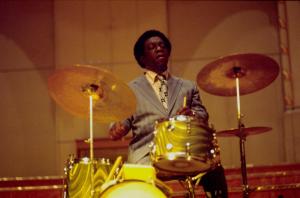
Art Blakey

Here’s another selection of choice quotes taken from various 1980s magazines, TV shows, biographies and anthologies that have drifted through my transom in the last few months.

Check out the first instalment here if you missed it.


‘Morrissey’s a precious, miserable bastard. He sings the same song every time he opens his mouth. At least I’ve got two songs: “Love Cats” and “Faith”.’

Robert Smith of The Cure, 1985


‘George Clinton told me how much he liked Around The World In A Day. You know how much more his words mean than those from some mamma-jamma wearing glasses and an alligator shirt behind a typewriter?’

Prince, 1985


‘It would be nice to meet Madonna and squeeze her bum.’

Level 42’s Mark King looks forward to his first US tour, 1986


‘I hope nobody bought houses.’

Slash/Warners executive Bob Biggs upon hearing a preview of Faith No More’s Angel Dust album (OK, this quote is from the early 1990s, but wtf…). The band had bought houses…


‘The musician is like a house, and the music is like a friend that’s always out there knocking on the door, wanting nothing more than to come in. But you’ve got to get your house in order for music to come in. That’s where discipline comes in.’

Robert Fripp, 1984


‘Like the first side. The second side is rubbish. Miles don’t play jazz no more but feels kind of funny about it, so instead of just admitting that his chops aren’t what they used to be, he puts jazz down.’

Branford Marsalis on Miles Davis’s Tutu, 1986


‘Remember the hits? “Labour Of Love” was inspired by Antonio Gramsci, a love song called “Violently” and a tale of kitchen-sink realism about wife battery called “Looking For Linda”. We heard those songs on Radio 1 back to back with Yazz and we’d piss ourselves laughing. We pulled off the trick three times and I always think that lyrically I can pull it off again.’

Hue & Cry’s Pat Kane remembers the good old days, 1995


‘I have to be myself, and if being in rock music forces me to pretend I am an idiot or that I have to wear tight trousers or a wig, then I have to get another job.’

Sting, 1988


‘I heard the title song (‘Storms’) on the radio and the drum sound still makes me want to cry. I love Glyn (Johns, producer) but there were times during that album when I went back to the hotel to cry.’

Nancy Griffith on her 1989 album Storms, 1991


‘I would say that my entire life has been one massive failure. Because I don’t have the tools or wherewithal to accomplish what I want to accomplish.’

Frank Zappa, 1986
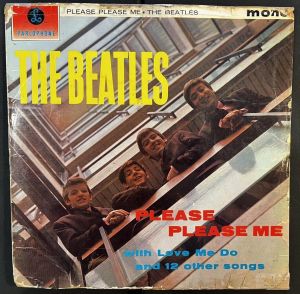
 

‘I went into the old EMI offices many times in the late ’80s and it never occurred to me to look up in reception and see exactly where that iconic photo had been taken. In the ’80s it seemed we had been looking forward.’

David Hepworth on the famous Beatles photo from the cover of Please Please Me


‘I tried the Jesus and Mary Chain but I just couldn’t believe it. It’s awful! It was so sophomoric – like the Velvets without Lou. I just know that they’re kids from Croydon! I just can’t buy it.’

David Bowie, 1987


‘I was surprised how hip it is. There’s a strange thing I don’t understand of people in Boy George outfits dancing to Jimmy McGriff and old Jackie McLean Blue Note records in discos.’

Guitarist John Scofield on the latest English ‘jazz revival’, 1988


‘Songwriting’s a craft, that’s all. I always knew my lyrics were better than anyone else’s anyway. I just edit more than other people, that’s my f***in’ secret. Also I never sleep and that helps too. You’ve got more time that way.’

Shane MacGowan, 1989


‘I hate having my picture taken, I always look like such a dog.’

Kirsty MacColl, 1989


‘I was a patsy. I never made more than $200 a week at the Five Spot.’

Ornette Coleman looks back on his legendary six-month residency during 1959 and 1960, 1985


‘All of us were naive, not just Ornette. We couldn’t even pay our rents. And they were making lots of money off us. That club was jammed every single night we were there.’

Charlie Haden on the same residency, 1985


‘You walk into the record label and they just weren’t as friendly as they used to be. When the record’s not a success, it’s your fault, and so you take on all those feelings. The label doesn’t sit down and talk to you. And they don’t drop you either, because they don’t want to lose you to the competition – just in case you do come up with something good next. And so they just remain sort of not as friendly, no more: “Hey Kevin, how are you?” It’s a head-f*ck, and you just have to work it out yourself.’

Kevin Rowland on the commercial failure of his 1988 solo album The Wanderer


‘Pop stars live the life of Caesar. And we know where the life of Caesar leads: it leads to blankness, it leads to despair. That’s the real message of these rock stars’ lives. To the public, they represent vitality, youth, innocence, joy. But in private life they represent despair and an infatuation with death.’

Albert Goldman, author of ‘The Lives Of John Lennon’ and ‘Elvis’, 1988


‘I remember sitting next to the stage and seeing all those little red lights glowing on the amps while we waited for the guys to come out and give us a real pasting.’

Allan Holdsworth reminisces about early gig-going, 1985


‘I have the best legs in the business. And they’ve got dancing feet at the bottom.’

David Lee Roth, 1982


‘There’s only one woman I have deep respect for in this industry and that’s Chrissie Hynde.’

Annie Lennox, 1986


‘I would have thought that people would be pleased to have a band that could play half decently.’

Francis Dunnery bemoans It Bites’ poor standing with the British music press, 1989


‘Sometimes he would call for Monk out of the clear blue sky. “Thelonious! Come save me from these dumb young motherf*ckers!”‘

Wynton Marsalis on playing with Art Blakey in the early 1980s


‘Prince really wants to be white. I know what that’s like. I tried hard to be white too.’

Daryl Hall, 1985


‘What we do is an alternative to Elton John and Chris Rea and all those old bastards who were there and still are. It’s embarrassing to see these old people like Dire Straits doddering about, they’re hideous.’

Robert Smith, 1989


‘I’ll tell you what I dig. In the Sting movie “Bring On The Night”, Omar Hakim taking off on that tune. Like Tony Williams, Jack DeJohnette. That’s being real free and comfortable. I don’t take my drums seriously, and they do.’

Drummer for the stars Jeff Porcaro, 1989


‘I believe that Bill (Bruford) and Adrian (Belew) thought that Beat was a better album than Discipline. I have no idea how anyone could come to that conclusion.’

Robert Fripp of King Crimson, 2022


‘Thanks for letting me drop by, guys. Hope I didn’t ruin your album.’

Herbie Hancock bids farewell to Simple Minds after playing a synth solo on their 1982 song ‘Hunter And The Hunted’


‘You should have seen us trying to sound like Windham Hill. We’d fall on our butts, man. I learned that you can’t fake it.’

’70s jazz/rock pioneer Larry Coryell on his mid-’80s collaboration with violinist Michal Urbaniak, 1985


‘We weren’t asked but we wouldn’t have done it anyway.’

Robert Smith on Live Aid, 1985


‘The band is getting back together and playing, maybe every six months or every year. If I can do so without it being public knowledge, that would be great. But I can’t do it, obviously. It would be nice to play together just as friends.’

Jimmy Page on Led Zeppelin reunions, 1986


‘I really, really would like to be in Led Zeppelin again. Whether or not time allows that to happen, I don’t know.’

Robert Plant on Led Zeppelin reunions, 1988


‘I’m a Catholic, and I would just ask God to to please help me find my own style. It’s not going to be like Tony or Elvin, so that when you hear me on a record, you know it’s Al Foster on the drums.’

Al Foster on his ‘stomping’ hi-hat technique, 1989


‘I feel I’ve created a field in which other people can discover themselves. I’m disappointed that they don’t create the room for me to discover myself.’

Robert Fripp on his King Crimson bandmates, 1984


‘I find therapy enormously valuable. It’s like car maintenance, send yourself in to be serviced every few thousand miles and, with any luck, it stops major problems developing.’

Peter Gabriel, 1989


‘I went to see this band INXS from Australia. They were on OK band, very much like a version of the Rolling Stones, but not as good. The singer is good and he looks great, but he doesn’t really move. He can’t be expending much energy.’

Mick Jagger, 1988


‘The band was like a fake democracy. Henley and I were making the decisions while at the same time trying to pacify and cajole the others.’

Glenn Frey looks back on The Eagles, 1988


‘(Jeff) Beck’s was a miserable f***ing band, horrible. Beck is a miserable old sod, but I do love him as a guitar player.’

Rod Stewart, 1988


‘I’ve always found it easier to write for other people. I feel terrible inhibited about writing for me. It’s only in the last few years that I’ve resigned myself into believing that I’m a moderately good singer.’

David Bowie, 1988


‘Of my writing partners since John (Lennon), Denny Laine was obviously nowhere near as good. Stevie Wonder is very good, but he’s not a lyricist. Michael Jackson is not as good of a writer as he is a performer. And Eric Stewart was good, but again, not as good as John.’

Paul McCartney, 1988


‘This new Clash compilation, which is meant to have sold a million copies, should be making me a rich man, but someone told me you only get quarter royalties for compilations. The CD wasn’t invented then so that wasn’t in the contract either. So I think I don’t get them royalties either. To tell the truth, I think we’re all a bit skint really.’

Joe Strummer on the legacy of The Clash, 1988


‘Those weird people on the street – every hundreth weirdest one has a Steely Dan record at home. That guy who hijacked a bus today probably has 47 copies of The Royal Scam.’

Walter Becker on Steely Dan’s audience, 1981


‘In 1981, something happened which changed my way of working with music. I woke up on a friend’s sofa in New York and simply understood something I’d known for a while: music was always present, completely with a life of its own, as a friend.’

Robert Fripp, 1984


‘The price of a ticket goes from two dollars to 20 dollars, the act doesn’t do an encore, someone has to stand in a long line, and it’s all my fault.’

Bill Graham on stadium rock, 1988


‘There are a lot of people who didn’t make a commitment and now they’re no longer with us. We lost Otis Redding, Sam Cooke, Jackie Wilson, Jimi Hendrix. I think maybe some of them didn’t know where or when to get off. The important thing is to be here.’

Al Green, 1988


‘Hell, we steal. We’re the robber barons of rock’n’roll.’

Donald Fagen of Steely Dan, 1981


‘After recording it, I flew off to see my manager and I said to him, “You’d better watch who you’re talking to. I’m the guy who wrote “Addicted To Love!”‘

Robert Palmer, 1988


‘I get the fans who write poetry. I have a slight David Sylvian audience, whereas Chris (Lowe) gets the sex audience, the ones who write obscene letters! It’s quite thrilling, actually!’

Neil Tennant of The Pet Shop Boys, 1988


‘It was the Enniskillen bombing that did it. The man whose daughter died beside him under the rubble; he was burning inside but he was so forgiving, so gracious. I thought, Christ, this is what courage is all about – Elton, just shut up and get back to work. After all, once you’ve been exposed naked on the cover of The Sun you ought to be able to face anything…’

Elton John on his 1988 comeback


‘It’s a better product than some others I could mention.’

David Bowie defends the Glass Spider Tour, 1987


‘Back then I thought I’d lost it and I did a bunch of things I was really unhappy with – all in public and on record. But it turned out not to be true. My ability hadn’t deserted me. And it won’t go away. Ever.’

Lou Reed, 1988


‘Michael Jackson’s just trying to cop my sh*t. I was insane years ago…’

Neil Young, 1988


‘I’ve said a lot of things in my time and 90 percent of them are bollocks.’

Paul Weller, 1988


‘We were excellent. Some of the best records of the ’80s are there. For the last six months of Wham!, it was OK to like us, we got a little hip. I cannot think of another band who got it together so much between the first and second albums. On Fantastic, you can tell I don’t think I’m a singer but some vocals on Make It Big are the best I’ve done. Even if we were wankers, you still had to listen.’

George Michael reassesses Wham!, 1998


‘The gig I have as the drummer in King Crimson is one of the few gigs in rock’n’roll where it’s even remotely possible to play anything in 17/16 and stay in a decent hotel.’

Bill Bruford, 1983


‘When I toured with The Rolling Stones, the audience would come up to me after the show and say, “Man, you’re really good, you ought to record.” How do you think that makes me feel after 25 years in the business?’

Bobby Womack, 1984


‘I find politics ruins everything. Music, films, it gets into everything and f*cks it all up. People need more sense of humour. If I ran for President, I’d give everybody Ecstasy.’

Grace Jones, 1985


‘I’m not the most gifted person in the world. When God handed out throats, I got locked out of the room.’

Joe Elliott of Def Leppard, 1988


‘I’m lazy and I don’t practice guitar and piano because I’ve gotten involved with so many other things in my life and I just had to make a sacrifice. Stephen Sondheim encourages me to start playing the piano again. Maybe I will.’

Madonna, 1989


‘Nile (Rodgers) couldn’t afford to spend much time with me. I was slotted in between two Madonna singles! She kept coming in, saying “How’s it going with Nile? When’s he gonna be free?” I said, “He ain’t gonna be free until I’m finished! Piss off!”’

Jeff Beck, 1989


‘I’ve never really understood Madonna’s popularity. But I’ve talked to my brothers and they all want to sleep with her, so she must have something.’

Nick Kamen, 1987


‘They ask you about being a Woman In Rock. The more you think about, the more you have to prove that you’re a Woman In Rock. But if you’re honest, it doesn’t matter whether you’re male or female. That’s the way we work.’

Wendy Melvoin, 1989


‘In Japan, someone told me I was playing punk saxophone. I said, “Call me what you want, just pay me”.’

George Adams, 1985


‘In the past, we’d bump into other musicians and it would be, “Oh, yes, haven’t I heard of you lot? Aren’t you the bass player that does that stuff with your thumb?” But once you’ve knocked them off the number 1 spot in Germany, they’re ringing you up in your hotel and saying, “Hey, howyadoin’? We must get together…”‘

Mark King of Level 42, 1987


‘We played London, we played Ronnie Scott’s, and I noticed that there were a lot punk-rock kids in the audience. After we finished playing, we had to go to the disco and sign autographs, because “Ping Pong”, the thing we made about 30 years ago, is a big hit over there.’

Art Blakey, 1985


‘I believe music – just about everything – sounds better these days. Even a car crash sounds better!’

Miles Davis, 1986


‘It’s a dangerous time for songwriters in that a monkey can make a thing sound good now.’

Randy Newman, 1988
Yoko+Ono+Season+Of+Glass+522787


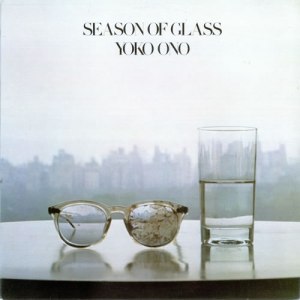
‘To have those glasses on the cover was important because it was a statement and you have to understand that it was like John wanted you guys to see those glasses.’

Yoko Ono, 1989


‘I’ll f*cking… I’ll go and take on anyone, any white singer who wants to give me a go.’

Matt Goss of Bros, 1989


‘I’ve never said this before but my drums is so professional, man, know what I mean?’

Luke Goss of Bros, 1989


‘I hate parts of my own albums because I know I’m hearing something that doesn’t translate to piano. In fact, I’m being dishonest by playing piano at all.’

Keith Jarrett, 1987


‘When I began to see how Elvis lived, I got such a strong take off of it. It was all so revolting!’

Albert Goldman, 1988


‘The best way to make great art is to have it trivialised by other people as much as possible. That way, you fight and fight and fight.’

Julian Cope, 1989


‘Whatever you’re tops in, people is trying to bring you down, and that’s my philosophy.’

Samantha Fox, 1987


‘Call me fat and I’ll rip your spine out.’

Ian Gillan, 1983


‘Sure I care about my fans. Because fans is money, hahaha. Muh-neee! And who does not care about money? Me, I like muh-neee, haha.’

Chuck Berry, 1988


‘I have this long chain with a ball of middle-classness at the end of it which keeps holding me back and that I keep sort of trying to fight through. I keep trying to find the Duchamp in me.’

David Bowie, 1980


‘People who say, Oh, I don’t know anything about music – they’re the people who really do know about music because it’s only really what it does to you.’

Steve Winwood, 1988


‘I notice that critics and others don’t credit black people with the ability to write ingenious, creative lyrics.’

Nile Rodgers, 1981


‘I’m below the poverty line – I’m on £16 a week. We needed some clothes and our manager said, “I don’t know what you do with your money. I mean, 16 quid!”’

Gary Daly of China Crisis, 1984


‘You take four or five of those rattlesnakes, dry ’em out and put them inside your hollow-box guitar. Lightnin’ Hopkins taught me that trick.’

Albert Collins on his guitar tone, 1988


‘People are bored with Lionel Richie going “I love everybody, peace on earth, we are the world…” F*ck that! People love bastards.’

Terence Trent D’Arby, 1987


‘Epstein dressed The Beatles up as much as he could but you couldn’t take away the fact that they were working-class guys. And they were smart-arses. You took one look at Lennon and you knew he thought the whole thing was a joke.’

Billy Joel, 1987


‘I remember when the guy from Echo & The Bunnymen said I should be given National Service. F*** him...’

Boy George, 1987


‘No-one should care if the Rolling Stones have broken up, should they? People seem to demand that I keep their youthful memories intact in a glass case specifically for them and damn the sacrifices I have to make. Why should I live in the past just for their petty satisfaction?’

Mick Jagger, 1987


‘The industry is just rife with with jealousy and hatred. Everybody in it is a failed bassist.’

Morrissey, 1985


‘I couldn’t stand it – all that exploitation and posturing, the gasping at the mention of your name, the pursuit by photographers and phenomenon-seekers. You get that shot of adrenalin and it’s fight or flight. I chose flight many a time.’

Joni Mitchell, 1988


‘I’m strongly anti-war but defence of hearth and home? Sure, I’ll stick up for that… I’m not a total pacifist, you know? I’ve shot at people. I missed, but I shot at them. I’m sort of glad I missed…’

David Crosby, 1989

Spitting Image: We’re Scared Of Bob

In the ’80s, there was no shortage of pop coverage to inspire conversation in the playground, whether it was Boy George’s first appearance on ‘Top Of The Pops’, Michael Jackson’s ‘Thriller’ video or Matt Bianco being verbally abused live on children’s TV.

Of course it really helped that there were only four terrestrial channels to choose from, breeding a feeling of community and sense of occasion.

But one TV show absolutely guaranteed to get the creative juices flowing and rescue many a depressing Sunday evening was ‘Spitting Image’.

Just a cursory look at a show from its mid-’80s peak leaves one stunned at the craftsmanship and production values on offer, especially as they only had a few days to write, build and shoot each episode. There were some good musical spoofs too, composed by Philip Pope, fresh from UK comedy classic ‘Not The Nine O’Clock News’ and his parody band The Hee Bee Gee Bees, who even managed a few hits in the early ’80s.

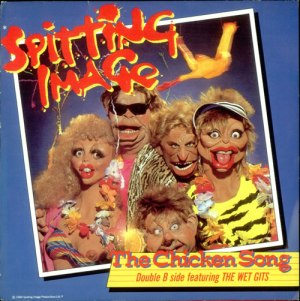
‘Spitting Image’ also featured some memorable Phil Collins, ZZ Top and Madonna skits, and they even managed to rope Sting in to re-sing this. But ‘We’re Scared Of Bob’ is full of surprises and surely the best spoof. Its sheer potency is still a shock to the system. You also suspect that Sir Gandalf was watching, so unmissable was the programme in the mid-’80s.

Why isn’t there anything like this around now? Oh, lack of money and talent, probably. A show like ‘Spitting Image’ also highlights the paucity of genuinely interesting musical (and public) figures these days.

Ladies And Gentlemen, It’s Max…Headroom!

388px-Mhcom_max_headroom_guidetolife_frontYep, it’s M-M-M-M-Max, scourge of celebrities everywhere and purveyor of surreal one-liners, bizarre stream-of-consciousness meanderings and often-quite-obscure music videos.

Max was created in 1985 by Annabel Jankel (sister of Ian Dury-collaborator Chaz), Rocky Morton and George Stone as rather eccentric, attention-grabbing ‘talking head’ to present videos on the burgeoning Channel Four.

Brilliantly played by Matt Frewer, who apparently had to endure over four hours in the make-up chair before each day of filming, Max was born in a one-off drama shown on Channel Four in 1985.

He then returned to front two series of ‘The Max Headroom Show’ in 1985 and 1986. The show then moved to the US for two series shown in ’87 and ’88.

People probably either loved or hated Max but I was an immediate fan. I even bought the book. Large swathes of his monologues are indelibly etched on my memory. Even today, I can’t hear the words ‘Sebastian Coe’ without thinking of Max’s unique delivery.

I also discovered some good music and vids on his shows too, including Peter Gabriel’s live version of ‘I Don’t Remember’, The Redskins’ ‘Bring It Down’, Donald Fagen’s amazing ‘New Frontier’ vid (directed by Jankel and Morton) and Sid Vicious’s terrifying ‘My Way’ (how did that get onto pre-watershed TV?).

Most of the press attention was aimed at the state-of-the-art computer graphics, the incredible make-up job and bizarre speech patterns. But, apart from the music vids, what immediately hooked me was his smarmy, gleeful piss-taking. He was kind of a mixture of Fletch and Johnny Rotten. There was also a touch of Dan Aykroyd/Chevy Chase’s smarmy Weekend Update newsreaders on ‘Saturday Night Live’.

Though the show had three regular writers – David Hanson, Tim John and Paul Owen – Frewer apparently improvised a large part of Max’s ramblings. I always assumed Max’s ‘cool guy’ persona was coming from Steve Martin but Frewer claims that he based Max’s shtick on Ted Knight’s hilariously hammy portrayal of Ted Baxter in ‘The Mary Tyler Moore Show’.

Possibly the sections of the show which have the most relevance now are Max’s interviews with stars like Sting (see below), Boy George and David Byrne. Years before Dennis Pennis, he was hilariously detached, if not downright dismissive of their celebrity status. I loved the way he ridiculed Sting’s new ‘jazz’ direction.

Later on, the tables were turned as Max found himself being interviewed on primetime chat shows by David Letterman and Terry Wogan. He calls Letterman ‘Davey-doo’ throughout and seems to be slowly driving him to distraction.

I had a few episodes on video for many years but chucked them out a while ago – a big mistake, as there’s still no sign of a UK DVD. Long live Max!

Omar Hakim, Drummer Of The ’80s: Seven Of The Best

omarhakim3Of the all-time-great drummers who emerged in the ’80s – a list that would have to include Manu Katche, Dave Weckl, Dennis Chambers and Trilok Gurtu – you could argue that Omar Hakim was the main man. His hip, funky, vibrant style typified all that was good about the music of the era.

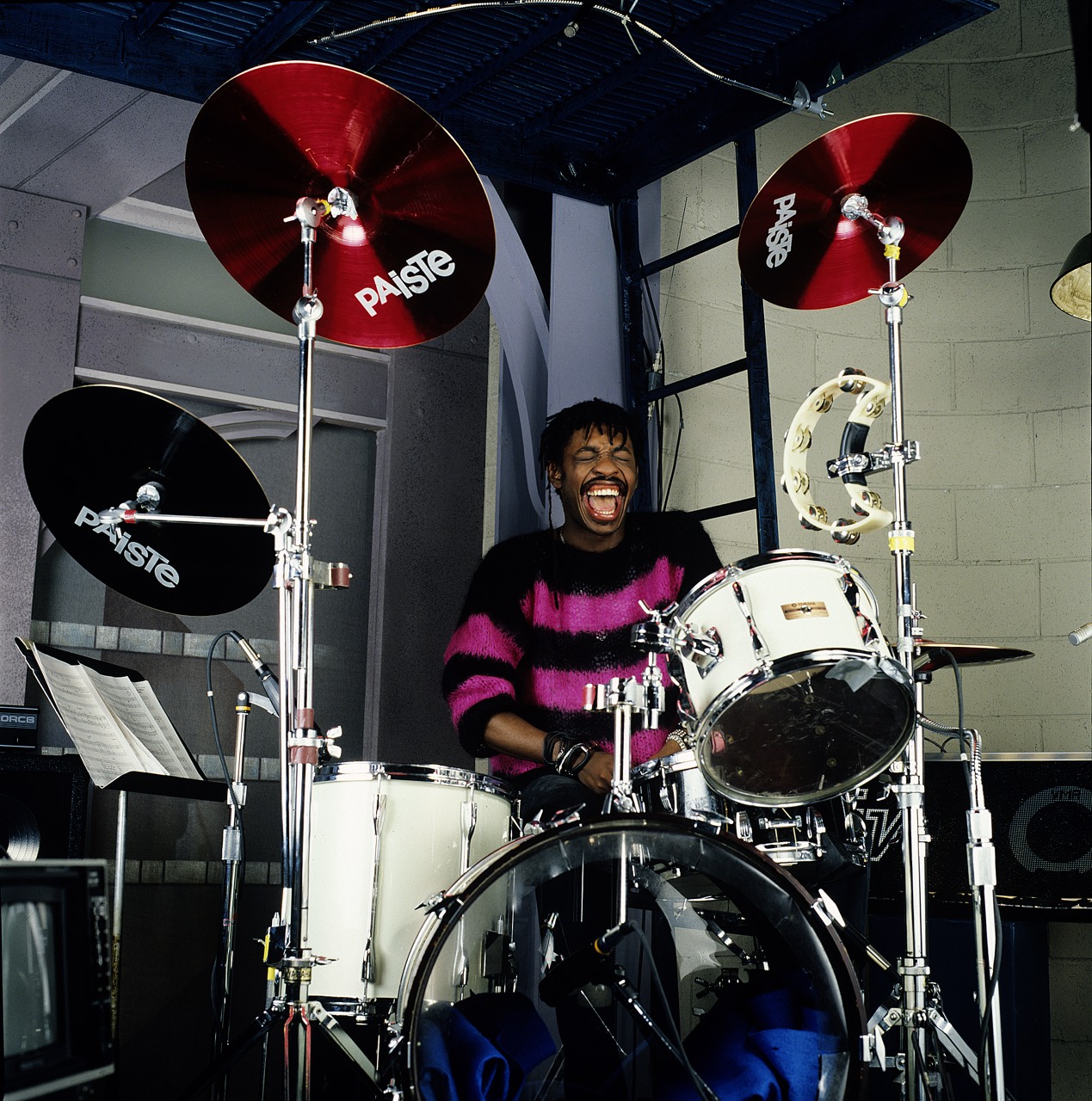
Effortlessly versatile, endlessly creative and always musical, Hakim emerged from the early ’80s New York jazz and fusion scene and quickly became the drummer of choice for David Sanborn, David Bowie, Dire Straits, John Scofield, Weather Report and Sting. He could play everything from straight jazz to heavy rock’n’roll with total ease, great feel and a beautifully light touch.

I first became aware of Omar when he demonstrated his ‘Children’s Crusade’ beat on BBC TV’s ‘Rock School’. I was a major fan from that day on.

Here are seven great Omar performances from the ’80s:

7. Sting: ‘I Burn For You’ (1985)
Drum legend Jeff Porcaro waxed lyrical about this performance which appears in the 1985 film ‘Bring On The Night’. One of Omar’s specialities is soloing over a static vamp, and he really takes it out about as far as it can go here.

6. Dire Straits: ‘So Far Away’ (1985)
Omar can do slick, clean, laidback rock too, as heard on this Brothers In Arms opener. Check out his lovely fills, layered in at the end of each chorus, bringing the playing of Motown star Benny Benjamin into the ’80s.

5. David Sanborn: ‘Rush Hour’ (1982)
Omar dusts off a much-imitated ghost-note-inflected groove for this track from the As We Speak album, possibly influenced by the late great Little Feat sticksman Richie Hayward. Only Hayward could have nailed this with as much panache, drive and subtlety.

4. Weather Report: ‘Db Waltz’ (1984)
Omar pulls out all the stops on this ingenious 3/4 (or is it 6/8?) groove, the centrepiece of the Domino Theory album, falling somewhere between a swing feel and straight feel just the way the old guys used to do it on the R’n’B hits of the ’50s. He also demonstrates some jaw-dropping chops towards the end.

3. Special EFX: ‘Sabariah’ (1988)
The music comes uncomfortably close to smooth jazz on this opening track from the Confidential album but Omar’s grooving is just sublime. The controlled energy explodes from his kit.

2. David Bowie: ‘Neighbourhood Threat’ (1984)
Omar could also play heavy rock with the best of them as demonstrated by this underrated track from Tonight. And not even Jeff Porcaro could have conceived of the floor-shaking fill at 2:14.

1. John Scofield: ‘Techno’ (1985)
The lead-off track from the classic Still Warm album, this perfectly illustrates Omar’s intricate hi-hat playing, as distinctive as Stewart Copeland’s almost a decade before. I dig the way he takes the tune out with some sick china cymbal/snare combinations.

Steve Khan talks about his classic 1983 album ‘Casa Loco’

steve khanDrummers and bassists: this album’s for you. And it’s for guitarists, percussionists and fans of great music too.

Put simply, Steve Khan’s hard-to-track-down Casa Loco has enthralled me and a whole generation of jazz and jazz/rock aficionados for over 30 years.

The compositions and performances of guitarist/leader Khan, bassist Anthony Jackson, drummer Steve Jordan and ex-Weather Report percussionist/vocalist Manolo Badrena are unique and unforgettable.

The album is also totally unclassifiable – a ‘fusion’ band playing a blazing surf-rock cover tune (‘Penetration’)? An unhinged Puerto Rican percussionist singing in quasi-Spanish but sounding remarkably like Sting?

Casa Loco is full of such beautiful and unpredictable juxtapositions. And it’s also blessed with Jean-Michel Folon’s eye-catching cover art.

I had previously bought Steve’s 1981 album Eyewitness just on the strength of the Folon cover but was immediately blown away by the all-time-great Jordan/Jackson rhythm section, Khan’s enigmatic, inimitable voicings and Badrena’s inspired percussives. But Casa Loco, the 1983 follow-up, cranked everything up a notch.

Steve Khan, the son of Sinatra/Dean Martin/Doris Day lyricist Sammy Cahn, is one of the most respected guitarists of the ‘fusion’ era. He played on not one but four of the great Steely Dan tunes (‘Peg’, ‘Babylon Sisters’, ‘Gaucho’, ‘Glamour Profession’), contributing to the latter one of the finest guitar solos in the band’s oeuvre, though he has mixed views on the painstaking recording process that led to those landmark pieces.

Check out his great interview with Leo Sidran for more on this and also a good overview of his career in general. But Steve is also one of jazz and fusion’s most erudite and honest figures, revealing (almost) all on his excellent website. He knows where the bodies are buried…

Steve, who recently released a well-received solo album Subtext, spoke with great candour and humour to movingtheriver.com from his New York City base.

Doug Epstein

Doug Epstein

MP: Casa Loco still sounds fantastic over 30 years on – how important was engineer Doug Epstein in the recording process?

SK: On countless levels, Doug Epstein was huge in all of this. At that time, he was the only person, on the technical side of things, who had participated in every single recording of mine. I owe him so much. He was always full of enthusiasm and energy for whatever it might have been that I was doing, and he encouraged me to do more. Knowing the financial difficulties we were having, he was the first one to offer to try to get the executives at Mediasound Studios to give us a break on the recording costs, and everyone there was wonderful to us. Nothing, of course, was ever free, but they tried their best to help. At the recording end of things, Doug was absolutely fearless. I think that most of the problematic issues came from Steve Jordan’s constantly changing, per tune, hybrid kit of drums: a combination of natural drums and Simmons electronic drums. Then there was Manolo’s amazing percussion set-up which included all his natural and supernatural sounds, plus the electronics emanating from the Syn-cussion that he was using back then. To accommodate all of that on 24-tracks, with one track taken for SMPTE code and another one blank just because of the risk, there were really only 22 tracks available. In the end, Doug had to know where each tune was headed in terms of possible overdubs, vocals, etc. He did all of that. But, it has to be noted, that Steve Jordan – where our mixing process was concerned – was hovering over Doug’s shoulder the entire time, and in many ways Steve is totally responsible for being the protector of Anthony’s bass sound and playing, and for his own drums, of course. Steve’s contributions in this regard were indispensable to the overall sound that you have come to know. Steve was present for the mixes on all three of our recordings together. He had a vision and a sound in mind, and he pushed hard for that. In great part, that’s why he has become an excellent producer himself – he has a great ear for these things.

Steve Jordan Photo by Deborah Feingold

Steve Jordan
Photo by Deborah Feingold

There’s a big Police influence on Casa Loco. Who brought that into the band?

I would say that Steve Jordan brought that into the band. I don’t think Anthony had ever heard anything by The Police. The fact that Manolo sounds a bit like Sting at times is just a cosmic accident. It’s not intentional at all. And, of course, 90% of the time Manolo is either singing in Spanish or vocalese, or his own form of gibberish! Recently, the great French jazz journalist Frêdèric Goaty wrote a piece for MUZIQ Magazine about his perceptions of the influence of The Police in contemporary music, and he cited all three of our albums as examples.

Regarding Steve Jordan’s famous drum solo on the title track – how the hell did you and Anthony stay in time when he really starts going out?!

Speaking for myself, it wasn’t easy. Anthony and Steve had a way of stretching the rhythmic boundaries in ways that would often confuse me, and I would get turned around. It was always an exercise in feel and concentration. That day, in the studio, my concentration was at its highest level, because there was no way that I was going to screw something up and ruin Steve Jordan’s incredible drum solo! No f***ing way! It remains one of the great moments on any recording of mine. I think that the complexities of that solo section, which is really a simple Latin tumbao, are demonstrated by the fact that Modern Drummer magazine published a transcription of the drum solo, but with the tumbao completely turned around and written out incorrectly! So, even an educated musician can get screwed-up with that one. I remember once when we were playing at Seventh Avenue South here in New York City, Bob Mintzer, one of the greatest musicians that I’ve ever known, came up to me and said, ‘What the f*** are you guys doing? I can’t ever find one!’ If Bob Mintzer felt that way, I guess there isn’t a much higher compliment. But it was never our intention to play anything that was purposely confusing to anyone.

The structure of ‘Some Sharks’ is incredibly intricate with many repeat signs and tags – were all the guys reading charts while recording this?

At that time, I don’t believe there were any formal charts to any of the tunes. We rehearsed hard and long, and we were prepared. The first lead sheets were done afterwards, I believe. I did them for copyright purposes, nothing more. I remember, when doing that, how astonishing it was to see, on paper, the intricacy of the music that we had created by improvising, and just jamming together pieces of music. It’s possible that I had written out ‘Uncle Roy’ beforehand, but maybe not. It’s hard to remember now. My facualties are not what they once were! But, when I listen to what Steve Jordan contributed to that tune with his unique concepts of beat displacement, it’s remarkable, and when you add in Anthony’s perspective, it makes perfect sense as to why the recordings that we made together between 1981-1983 have influenced bassists and drummers all over the world. Anthony and Steve deserve all of that adoration and more.

‘The Suitcase’ hints at a Discipline-era King Crimson influence – is that accurate?

I have never paid any attention to King Crimson’s music at any time. However, thanks to MTV, I did get to hear ‘Elephant Talk’ and I absolutely loved that tune. I love Adrian Belew and only wish that I could create 5% of the sonic textures that he creates. He is totally unique and brilliant. I admire him a lot.

Why is (great British drummer) Steve Ferrone thanked in the album credits?

To tell you the truth, I have no idea! In those days, we thanked people who stopped by the studio while we were recording, just for their good vibes. It’s also possible that Steve Ferrone lent something, a piece of gear, to Steve Jordan. I just can’t remember. We thanked people who didn’t even exist. For example, at one of our sleep-deprived rehearsals, Steve Jordan was trying to say the name Gore Vidal, and somehow it came out as Gordie Voll, and once he said that, I was rolling on the floor laughing – it was just so silly and funny. So Gordie ended up in the ‘special thanks’ section. I thanked a CNN newswoman, Marcia Ladendorff, who I had a crush on. I thanked an actress that I had a crush on too, Roberta Leighton. I thanked Flippy Hussein, who is not a real person – just a goofy name that the great vibraphonist David Friedman made up one day years before. But most of the names mentioned were people who in some way, shape or form contributed something positive, even if only via their encouragement to the music and the effort to keep going forward.

Jaco

Jaco

Is there anything else printable you can tell us about Steve Jordan’s crazy house of music (the Casa Loco or ‘crazy house’ of the album title – Ed.) ?

In all honesty, no! Unless someone wants to burn all their bridges behind them, there is a sacred trust that exists between musicians, especially those who are bandmates, or even just work on a special project together. You don’t talk ‘out of school’ about things that you see and hear, sometimes not even after a person has passed away. Those kinds of stories can be hurtful, and even end-up hurting relatives or loved ones. In those days, each of us was going through something difficult in our personal lives, and our behaviour reflected that. Trying to just get together to rehearse for a few hours a couple of days per week was never easy, but we managed. And Steve Jordan’s loft, his home, was a huge part of that. I can only say that all kinds of hysterical shit used to happen there, including people trying to stop by to hang out with us while we were trying to work. Jaco Pastorius was one of them. He used to phone Jordan all the time and beg us to let him come by. We reached a point where we would never answer the phone and never allow anyone in except for the delivery guy who was bringing by Steve Jordan’s breakfast – at 2pm in the afternoon! Does that give you an idea?! No matter what transpired those days were some of the most fun and productive days of my creative life. I have rehearsal cassettes from those times – I used to listen to them every so often – and the constant laughter on those tapes about absolutely nothing is priceless. It was just so damn funny most of the time and exasperating too, at least for me!

Anthony Jackson photo by David Tan

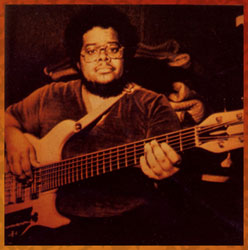
Anthony Jackson
photo by David Tan

I was astonished to read that the whole album was recorded in just TWO days, quite amazing when you consider the time spent on other albums of the era (Hello Donald and Walter…). How do you explain that? Was it just a case of getting the goods in the shortest possible time with the meter running?

Well, though it is true that the serious content of Casa Loco was recorded during May 21/22 1983 at Mediasound, I didn’t realize that we were going to need a third day just for Manolo Badrena! I actually thought that we could finish a performance of a piece and then he would simply, right then and there, overdub his vocals. I’m speaking about tunes like the title track, ‘Some Sharks’ and ‘The Suitcase’. But what happened really threw me for a loop, because I did not want to spend the money, other than for mixing, to return to the studio just for Manolo. Thinking this way demonstrated my lack of experience and understanding that recording vocals, by anyone, requires a different kind of care and patience. It is something that you have to plan for. I was too worried about spending money for an extra day in the studio! The great lesson in this is always the same: if you begin by being cheap, you will pay for it later! There is, of course, a most wonderful expression for this very thought in Spanish: ‘Lo barato sale caro!’ If you are unwilling to spend money, you will end-up with a lousy or sub-standard sounding recording, and this is something that I never want to be a part of, because you have to live with the results forever. So as the recording unfolded, during ‘Casa Loco’, ‘Penetration’ and ‘Some Sharks’, Manolo actually just sat there and didn’t play a damn thing while Anthony, Steve and I were performing those tunes. At the time, he just motioned wildly to me that he could not hear himself in the headphones. Mediasound had one of the early systems whereby each musician could make his own headphone mix. Each time this happened, we all tried to work harder with Doug to help Manolo get what he wanted and needed. It was so frustrating to have him there and not have him with us making that music. So, in the end, I had to spend the time and money overdubbing him on those tunes. I was furious about this! In sharp contrast to that, if you just listen to what Manolo contributes to ‘Uncle Roy’ – there is not a sound there that was not performed completely live. It is simply brilliant – no one else could have created textures like that. He’s one of the most unique musicians on this earth but not easy to work with. Years later, I learned that it really wasn’t the damn headphones at all; he had been upset that he wasn’t getting paid for the sessions, as if I was pulling a ‘fast one’ on him and secretly hoarding money somewhere. This is, of course, the furthest thing from the truth. We had a number of band meetings during our rehearsals and I clearly explained to everyone that I was paying for the album out of my own pocket, and that after I had recouped my investment in full, if that ever happened, whatever money there was to be had, we would all split it equally four ways. Period! In other words, we were all going to get rich together, or stay exactly as we were, but together. It was certainly my impression that Manolo understood that. Anthony and Steve were on board, as they always were, and I will never ever forget their selflessness when it came to this music. I love them both and I’m deeply indebted to them, forever, no matter what else has happened.


According to your website, you paid for recording costs entirely out of your own pocket – have you managed to recoup some of this over the years? I hope so…

We’ve addressed a portion of this during my answers to some of the other questions. But, the answer is: No! Absolutely not! I believe that, back then, my total investment in making Casa Loco was $17,500. That might not sound like much in 2015, but it felt like a fortune to me, having to go into my personal savings to do this. But that’s how much it meant to me. It was the second time that I had done that, Evidence (1980) being the first. And, it would not be the last; I have done this seven more times since! In the end, I was given advances from Trio Records (Japan) and eventually from Antilles Records (USA) that totalled $11,000, and that’s all that I have ever seen come back to me from this recording. In short, as it has been with all of my self-financed recordings, I will never ever again see that money come back to me. Do I regret it? Of course not. I am, and will always be, exceptionally proud of those recordings because everyone who participated gave something of themselves to do it. I don’t forget those people, those players! Never!

Thank you, Steve.