Grace Jones: Nightclubbing 40 Years On

Nightclubbing, which turns 40 this week, would be iconic even if it was only half as good, thanks to Jean-Paul Goude’s fantastic cover painting.

But drop the needle anywhere and it’s an all-time classic, one of the jewels in Island Records’ crown and hugely influential.

Arguably its mashup of new wave, reggae, synth pop, disco and Caribbean flavours blueprinted the sound all the key New Pop acts of 1982/1983 (Talking Heads, Kid Creole, Spandau Ballet, Duran Duran, ABC, The Associates, Simple Minds, Thompson Twins et al) sought.

Some, of course, went route one and employed Nightclubbing co-producer and movingtheriver.com favourite Alex Sadkin. But you might also call Nightclubbing Grace’s covers album – it features not one but six classics, if you count ‘Libertango’ and the Marianne Faithfull’s previously-co-written-but-never-recorded ‘I’ve Done It Again’ (Sting lent her ‘Demolition Man’ before laying it down with The Police).

She revolutionises Flash & The Pan’s ‘Walking In The Rain’ (her androgynous alto freaked me out when I first heard it as kid, there was just no reference point…) and compare her funky, succinct ‘DM’ to The Police’s ponderous, overblown version.

On a good system Nightclubbing‘s sonic details delight: the tambourine commentary throughout ‘Use Me’, Sly Dunbar’s dub-delay cross-sticks on ‘Walking In The Rain’, Grace’s whispered chorus on ‘Art Groupie’. The Compass Point All Stars, particularly man-of-the-match Wally Badarou on keys, are perfectly poised to provide such moments.

But there is a weird quirk – the mastering. The album seems to get quieter as it goes along, at least on the original CD version. ‘Demolition Man’ requires some serious crankage. I’m not sure if subsequent reissues have rectified that.

Nightclubbing was NME’s album of the year for 1981 and it got to #32 on the US Billboard chart, a certified crossover hit. You might even say that the 1980s Proper started here, and it helped make 1981 one of the greatest ever pop years.

And we haven’t even mentioned Grace’s electrifying One-Man-Show that accompanied the album, directed by Goude, taking place at London’s Drury Lane Theatre and New York City’s Savoy. It was surely a huge influence on everyone from Laurie Anderson to Annie Lennox.

Fairport Convention: Sloth (1981)

What is ‘feel’, in terms of musicianship?
It’s something to do with the way the best players always give every note its full value, and never sound rushed.

The term is usually reserved for American musicians. But, to paraphrase jazz saxophonist Joe Harriott, we had a few who could play some aces too.

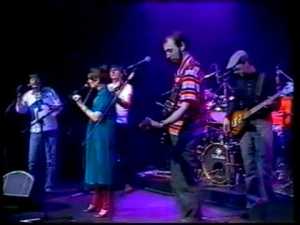
Apparently folk/rock pioneers Fairport Convention had long split up when they reconvened for a one-off Granada TV special in August 1981. They delivered a beguiling version of ‘Sloth’, originally from their 1970 album Full House.

It’s a killer performance from drummer Dave Mattacks, adding to some classic tracks of the 1980s and early 1990s such as Chris Rea’s ‘On The Beach’ and XTC’s ‘Books Are Burning’ (Andy Partridge discussed Mattacks and XTC’s other drummers in this great interview). There’s also a whiff of US players Andy Newmark, Richie Hayward and Jim Keltner, not to mention Ringo.

Despite the slow tempo, the whole performance is kind of raw and ‘post-punk’, with some spikey Richard Thompson solos and excellent, ‘artless’ vocals from Linda. It easily transcends the folk-rock cliches.

Another band this writer needs to investigate further. And, despite the serious faces, maybe it was a relatively happy reunion – Fairport reformed properly four years later.

Talking Heads (1980/1981): Reagan, Ghosts & Listening Winds

For many Americans, 1980 hoped to offer a break from the recent past: the Watergate scandal, defeat in Vietnam, the Iran hostage crisis, a major recession. Disco.

A Presidential Election was also pending in November. At the beginning of the year, Jimmy Carter stood at 62% in the polls, Ronald Reagan at 33.

Reagan promised to return America to a pre-countercultural era, prioritising family values and social order. He courted the Fundamentalist vote; evangelists and motivational speakers suddenly popped up all over the radio.

Something pinged in David Byrne’s head, and he later outlined the febrile atmosphere of early 1980 in Simon Reynolds’ book ‘Totally Wired’: ‘The text was saying “Thou shalt not” but the preacher’s performance was this completely sensual, sexual thing. I thought, “This is great – the whole conflict is embodied right there…”’

Byrne and Brian Eno explored some of these themes on their groundbreaking My Life In The Bush Of Ghosts (named after the 1954 book by Nigerian writer Amos Tutuola) with a particular emphasis on Islam and its contrasts with Christianity.

The project was originally supposed to be a three-way collaboration between Jon Hassell, Eno and Byrne, a fake ‘field work’ complete with ethnography, liner notes and photos, but Hassell dropped out at the eleventh hour. The album is strikingly original, still relevant and sometimes terrifying.

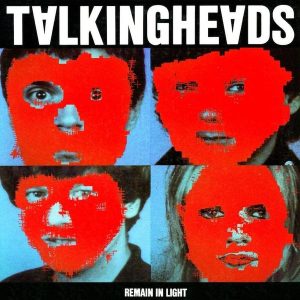
A month before the Presidential Election, on 8 October 1980, Talking Heads released their masterpiece Remain In Light, also a collaboration with Eno. The album’s key tracks, ‘Once In A Lifetime’ and ‘Listening Wind’, went even further than Bush Of Ghosts: the former showed that Byrne had completely assimilated the ‘sensual preacher’ persona, while the latter outlined a young Arab’s act of terror.

Mojique resents the rich ‘foreigners in fancy houses’ turning up in his country, makes a bomb ‘with quivering hands’ and dispatches it to his American enemy. It’s a unique, powerful piece of work, and one wonders whether its inclusion on Remain In Light contributed to the album being their worst-ever seller in the USA.

Reagan was elected on 4 November 1980 with 50.7% of the national vote. His famous Election Eve speech mentioned ‘that shining city on the hill’, invoking both Jesus’s Sermon On The Mount and noted Puritan John Winthrop. But Byrne’s New York had been under the cosh: more murders, robberies, burglaries and subway breakdowns were reported in 1980 than in any other year since records began 49 years earlier.

Reagan was inaugurated on 20 January 1981. My Life In The Bush Of Ghosts was finally released – after several postponements – almost exactly a month later.

Further reading: ‘Life And Death On The New York Dancefloor’ by Tim Lawrence

Prince: Dirty Mind/Controversy

Picture the scene: It’s August 1980 at Warner Bros Records’ Los Angeles HQ. Prince’s manager Steve Fargnoli is playing the suits his charge’s new demos.

Both the artist and his manager want to release these rough recordings as the next album.

Fargnoli hits the play button, and these lyrics crawl out over a peppy – but distinctly lo-fi – new-wave groove:

I was only sixteen but I guess that’s no excuse
My sister was thirty-two, lovely and loose
She don’t wear no underwear
She says it only gets in her hair…

Major labels often – quite rightly – take a lot of flak, but Warner Bros deserves credit for taking on Dirty Mind (released 8 October 1980) and Controversy (released 14 October 1981).

It was a brave move by Prince too, an incredible volte face after it looked like he might be going down a big-budget, soft-rock/disco rabbit hole. Just compare the Prince and Dirty Mind covers: it was definitely one in the eye for Reagan’s new, ultra-conservative regime.

I first heard these albums circa 1988 via a compilation tape made by my schoolfriend Seb. I already knew and loved Parade and Sign O’ The Times but these older songs sounded like they’d been sent down from a different planet. I didn’t pay much attention to lyrics in those days but sensed something very odd going on.

In the Dirty Mind/Controversy era, Prince’s main modus operandi seems to be: shock at all costs. It’s a novel approach, because if he can express himself completely freely, and then deliver such a classic, ‘throwaway’ rock song like ‘When You Were Mine’, you never know what’s going to come next. Cue a long, great career.

Recorded very quickly during summer 1980 at his rather ramshackle home studio in Lake Minnetonka, Minneapolis (the drum kit apparently sat in a puddle of water surrounded by sand bags), Dirty Mind has more in common with the B-52s, Elvis Costello, Blondie and The Cars than it does Earth, Wind & Fire or REO Speedwagon.

It’s nasty, brutish and short. And of course what struck me listening to it again after five or six years, it’s remarkably stripped down compared to a great deal of modern music – hardly surprising when nearly all the noises are made by Prince. Only ‘Head’, ‘Partyup’ and ‘Uptown’ outstay their welcome, underwhelming grooves with slight vocal performances (though the former became a great live track).

My old vinyl version of Controversy sounds absolutely great. Of course it helps that the album’s only 37 minutes long, and also there’s a lot more bottom-end this time. On a decent turntable, various details emerge like the scuzzy synth bass escaping from the left channel during the Lord’s Prayer on the title track (can you guess it’s a Prince album yet?) and some low-octave backing vocals throughout.

It’s also a totally schizophrenic album again, with the title track and ‘Sexuality’ laying down a kind of free-love/free-speech manifesto, two rockabilly tunes (one a message to Reagan), a graphic seduction ballad and synthetic funk tune (‘Private Joy’) which marks Prince’s first use of the Linn LM-1 drum machine.

Weirdly, none of these songs made the PMRC’s Filthy 15 list. But they still sound totally fresh, especially the unclassifiable stuff like ‘Dirty Mind’, ‘Annie Christian’, ‘Jack U Off’, ‘Sexuality’ and ‘Ronnie Talk To Russia’.

Prince toured Dirty Mind and Controversy extensively, and there were three particularly infamous gigs during the period: his London debut at The Lyceum on 2 June 1981 and the two shows supporting The Rolling Stones at the Los Angeles Memorial Coliseum on 9 and 11 October 1981.

Neal Schon & Jan Hammer: Untold Passion/Here To Stay

The great jazz/rock pioneers of the early 1970s generally had a very mixed 1980s.

But when keyboard genius Jan Hammer left the Mahavishnu Orchestra in 1973, no-one could have predicted that he’d become a bona fide pop star just over ten years later.

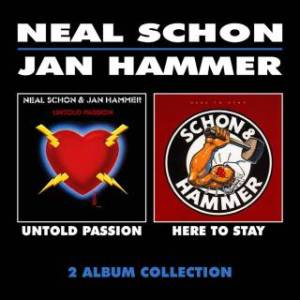
Two fascinating albums – originally on CBS, now re-released as a two-fer by BGO – trace Hammer’s early-1980s journey to ‘Miami Vice’, via a collaboration with Journey/Santana guitarist Neal Schon.

Of course Hammer had spent a few years in the late ’70s touring big venues with Jeff Beck and making ever-rockier solo albums. But Schon was probably a more successful musician than Hammer in 1981, if a more anonymous one – his playing has a lot of chops but isn’t particularly distinctive.

The first Schon/Hammer album, 1981’s Untold Passion, has a pleasingly dry, lo-fi quality, recorded solely at Hammer’s home studio in upstate New York, with the Czech genius also playing some great drums and engineering. The musicianship is exemplary and the sound has a real consistency. Unfortunately the same can’t always be said of the material.

Schon’s Phil Lynott-like vocals have some charm, particularly on the excellent ‘Hooked On Love’ and ‘I’m Talking To You’, but predictably it’s the three instrumentals that really do the business.

‘The Ride’ is a super-catchy Schon composition, while Hammer’s ‘On The Beach’ and the title track look forward to ‘Miami Vice’, the latter with a distinct Giorgio Moroder flavour and some kick-ass solos.

The second album, 1982’s Here To Stay, is less successful, adding a cameo from the other members of Journey and lots of stereotypical 1980s production values, and the duo are obviously making a far more concerted effort to get onto MTV.

They made it with the crunching ‘No More Lies’, and almost grabbed a minor hit too. The hilariously ill-judged video is well worth a look.

Neither Untold Passion nor Here To Stay were big hits – the former stalled at #117 in the US album charts, the latter sunk without trace, but these are really interesting projects for Hammer fans. When they work, they really work, and there are some great instrumental duels between the two virtuosos.

The Cult Movie Club: Modern Romance (1981)

It might seem a bit churlish to say about a guy who’s co-written/directed seven movies and received a Best Supporting Actor Oscar nomination (for ‘Broadcast News’) that it never quite happened for Albert Brooks the way it did for some of his contemporaries.

But somehow he has always seemed too niche for widespread popularity. His always-intelligent, nervy schtick is like a West Coast Woody Allen, but his comic bedfellows are probably Garry Shandling and Larry David rather than Allen and Diane Keaton.

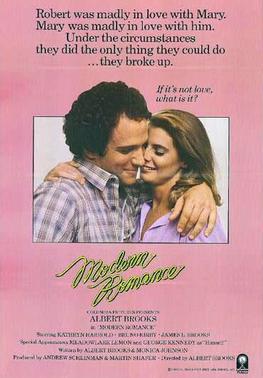
‘Modern Romance’ was Brooks’ superb second film as co-writer/director, and it’s kind of an extended, darker episode of ‘Curb Your Enthusiasm’. I caught it completely by chance on Channel Four in the mid-’90s and am grateful I captured it on VHS because it seems almost impossible to find these days.

The studio apparently loathed it and barely gave it any marketing, but it has only gained in reputation over the years. And reportedly Stanley Kubrick rated it as one of his all-time favourite films, even ringing Brooks to congratulate/commiserate after its tepid box-office reception.

Watching it again, the movie it most reminded me of is ‘Groundhog Day’. Brooks plays Robert Cole, an amiable if somewhat self-serving film editor stuck in a kind of romantic ‘loop’, endlessly playing out his on/off relationship with talented, gorgeous but hard-to-know Mary, portrayed by the excellent Kathryn Harrold.

Kathryn Harrold and Albert Brooks in ‘Modern Romance’

So Robert dumps Mary (yet again) at the beginning of the movie and tries (yet again?) to embrace the new romantic ‘rules’ of the Me Decade, taking up jogging, health supplements and blind dates. But nothing works. He just can’t seem to get comfortable. Why? Is he really meant to be with Mary? Or is it that he just can’t assuage his loneliness and modern ennui? The movie explores the options with amusing, thought-provoking results.

‘Modern Romance’ is full of great secondary characters: Brooks’ brother Bob Einstein (best known as Marty Funkhouser in ‘Curb’) plays a pushy shop assistant, Bruno Kirby is his loyal co-editor, George Kennedy of ‘Naked Gun’ fame is a self-important B-movie actor and there’s a droll, jittery turn by James L Brooks as a suspiciously George Lucas-like director.

James L Brooks, Albert Brooks and Bruno Kirby

Modern Romance’ also makes for a pithy Hollywood pastiche. Robert’s day job consists of editing a cheapo ‘Star Wars’ rip-off, pitting him against bored techies, unpredictable directors and egotistical character actors. The irony, of course, is that we know Robert is capable of much more, but he seems to have some kind of tragic flaw. He’s an ’80s version of Bobby Dupea, Jack Nicholson’s character in ‘Five Easy Pieces’.

The other thing about ‘Modern Romance’ is that it’s very quiet. Compared to modern comedies, it’s positively moribund. Brooks spends a lot of time alone, talking to himself. He makes stoned phone calls, goes jogging, drives around deserted LA locations. There’s very little incidental music but there is a funny segue of heartbreak songs heard on a car radio.

It works as a quirky, neurotic, droll comedy, but ‘Modern Romance’ also lingers in the brain, revealing far more serious concepts. Why can’t Robert leave Mary alone and get on with his life? Or, as the trailer tagline so aptly puts it: if this is not love, what is it?

Nick Mason: Fictitious Sports

Who are the luckiest musicians in rock?

Which players have made the megabucks peddling middling-at-best instrumental skills and generally keeping their heads down? Mick Fleetwood, John McVie, Eric Clapton, Phil Selway, Adam Clayton?

Nick Mason would probably have to be in that list too. But then you wonder if the Pink Floyd sticksman has hidden talents – after all, he’s produced the Damned, Robert Wyatt, Gong and Steve Hillage.

Good musicians seem to really like and respect him and he has always seemed one of rock’s gentlemen.

He was at it again in 1979 when he was offered a ‘vanity’ record deal during some Pink Floyd off-time. He didn’t have any particular plans, so asked esteemed jazz arranger/keyboardist Carla Bley if she could help out.

She had some songs prepared that she’d written for her punk band Penny Cillin And The Burning Sensations. Mason and Bley managed to quickly gather a rock snob’s dream team (Wyatt on vocals, Chris Spedding on guitar, cover designers Hipgnosis, record label Harvest) and record in Bley’s basement (Mason also apparently wanted Yul Brynner to be the singer, but he turned it down…).

It all led to his one and only solo album Fictitious Sports, eventually released in 1981. It’s a fascinating, intermittently brilliant project that borrows from art-pop, prog, new-wave rock and even musical theatre to produce something pretty original (hardly surprising if one delves into Bley’s ouevre with any depth).

On the superb, disquieting ‘I’m A Mineralist’, Wyatt rehearses a Peter Gabriel-style blanked-out vocal and Bley inserts some witty Philip Glass Einstein On The Beach-style tomfoolery and a few general pokes at minimalism.

And she doesn’t scrimp on the silly but menacing lyrics either: ‘Just the thought of ironing gives me spasms of lust’, ‘Mother used to try to meddle in my affairs’, etc…

‘Do Ya’ is a highly original, witty evocation of a crumbling relationship, reminiscent of something from Robert Fripp’s Exposure, with Wyatt sounding like he’s at the end of his tether. It could almost be the soundtrack to one of those Bruce Nauman man/woman video art pieces.

There are loads of other treats littered throughout, and even an odd Floyd/Kate Bush-style symphonic rock piece (‘Hot River’). Mason adroitly leaves the clever stuff to Bley, generally only picking up the sticks during the riff sections.

But it’s the best thing I’ve heard him do, with the exception of Syd-era Floyd. An interesting beginning – and end – to an almost fictitious solo career, and a great set for Robert Wyatt completists.

Story Of A Song: Bucks Fizz’s ‘The Land Of Make Believe’ (1982)

On first listen, ‘The Land Of Make Believe’ would seem to be a frothy, fairly harmless bit of fun built on one of the oldest chord sequences in the book.

But dig a little deeper and it’s a distinctly odd psych/pop classic and one of the weirdest number ones of the 1980s (hitting the top spot 36 years ago this week).

The main reason for that would seem to be the presence of Pete Sinfield on the songwriting credits. Most famous for providing lyrics for prog behemoths King Crimson and ELP, in his bizarre career he has also – thrillingly – co-written Celine Dion’s ‘Think Twice’ and Five Star’s ‘Rain Or Shine’!

In the book ‘1,000 UK Number Ones’, he recalled being tasked by Fizz producer/co-songwriter Andy Hill to come up with the words for ‘The Land Of Make Believe’:

It is 10 times more difficult to write a three-minute hit song with a veneer of integrity than it is to write anything for King Crimson or ELP. But I half-succeeded on “The Land Of Make Believe”. Beneath its ‘tra-la-laas’ is a virulent anti-Thatcher song. Oh yes it is. Something nasty in your garden, waiting, until it can steal your heart…

Portraying Thatcherism as a kind of creeping ‘Invasion Of the Body Snatchers’-style affliction… Well, maybe it’s just about discernible in the lyrics.

But more likely it’s a neat concept on which to hang a lot of disparate references, from Superman to Captain Kidd (apparently a Scottish sailor who was tried and executed for piracy after returning from a voyage to the Indian Ocean) and fairy tales of all kinds.

But I always think of that creepy scene in ‘Salem’s Lot’ when I hear those lines about ‘shadows tapping at your window/Ghostly voices whisper will you come and play’…

The fade-out features a cod nursery rhyme – also penned by Sinfield – which was narrated by Abby Kimber, future Minipop and 11-year-old daughter of Bill Kimber, an executive at RCA Records. Listening as a nine-year-old burgeoning pop fan in early 1982, it used to give me the creeps, and can still send a chill down my spine.

The video was filmed at White City swimming baths in West London. It references ‘The Wizard Of Oz’, ‘Cinderella’ and ‘The Lion, The Witch And The Wardrobe’ and foregrounds some fairly blatant swimwear shots of singer Jay Aston, whose unhappy tenure in Bucks Fizz was outlined in Simon Garfield’s excellent book ‘Expensive Habits’.

Aston also apparently chose the outfits for the video, the female costumes coming from Kahn & Bell on the King’s Road and the male costumes from Boy. Aston later remarked that her and Cheryl Baker’s costumes ‘were ten years ahead of Madonna, with the cone boobs…’

‘The Land Of Make Believe’ subsequently became Bucks Fizz’s biggest-selling single in the UK, outselling even their famous 1981 Eurovision winner ‘Making Your Mind Up’. Not bad for a song that apparently no-one in the group particularly liked.

Don’t have nightmares…

The Cult Movie Club: Southern Comfort (1981)

After the extended prologue, when Ry Cooder’s swampy blues riff slides in over a glorious widescreen shot of the Louisiana bayou, you know you’re watching a classic of its kind.

To this day, co-writer/director Walter Hill claims that the superb ‘Southern Comfort’ doesn’t directly allude to the Vietnam War, but it’s hard to conclude otherwise.

Set in 1973, his film concerns a motley group of weekend National Guardsmen whose sojourn into Cajun country (with the promise of prostitutes at the end of the road) turns into a desperate fight for survival when a foolish prank leaves them at the mercy of some particularly vengeful locals.

Hill prefers to call it a ‘displaced Western’, a film about escalating moral dilemmas in unfamiliar surroundings. That rings true too, but watching it again after ten years or so, I couldn’t help comparing it to John Carpenter’s ‘The Thing’, another all-male classic about creeping, self-defeating paranoia, fudged leadership and dodgy group-think.

‘Southern Comfort’ might also be described as ‘The Warriors’ meets ‘Deliverance’. It’s that good. This is a pre-irony, pre-CGI action movie, where men are men (the sort of men who might get a ‘phone call in a pub….on a landline’), decisions have consequences and vengeance is swift and fairly brutal.

The action sequences are gripping, though never tawdry, and look extremely punishing for the cast – there’s a particularly realistic dog attack and a memorable quicksand incident. Apparently the shoot was long, cold and difficult, with camera tripods frequently sinking into the bayou.

The dialogue is fast and loose – the brain has to be in gear to pick up all the political/ethical nuances that fly by – and the acting styles deceptively ‘naturalistic’. Keith Carradine and Powers Boothe are superb as the reluctant heroes who must overcome their basically apolitical stances to become men of action and moral choice.

Carradine in particular makes for a fascinating action-man (according to Hill, his character is a ‘Southern aristocrat’). The secondary cast of mainly unknowns (the ever-excellent Peter Coyote aside) is also superb. But ‘Southern Comfort’ was a commercial dud on its 1981 release. Maybe, like ‘The Thing’, it’s far too stark a vision. But it certainly it spawned some new movie clichés and looks like an influence on many ’80s movies from ‘Aliens’ to ‘Predator’.

It’s also a fascinating watch these days considering the state of the US – the film’s message seems to be that peace is impossible while there remain so many internal divisions and prejudices.

Story Of A Song: Donald Fagen’s ‘True Companion’ (1981)

Steely Dan’s breakup was officially announced on 17 June 1981 when Donald Fagen gave a scoop to journalist and long-time fan Robert Palmer in the New York Times.

In the interview, Fagen didn’t rule out the possibility that he would one day reunite with Steely co-leader/co-songwriter Walter Becker, but neglected to mention that he had already returned to the studio as a solo artist.

Until a few years ago, I assumed The Nightfly was Fagen’s ’80s debut, but the one-off track ‘True Companion’ preceded it by a year. It was part of the ‘Heavy Metal’ soundtrack, an animated film based on the sex’n’slash fantasy comic book of the same name. Fagen used the song as an excuse to get back into the studio after a few years off.

‘True Companion’ was recorded at Automated Sound in New York and co-produced by Fagen and legendary engineer Elliot Scheiner (Dan helmer Gary Katz was busy producing Eye To Eye’s debut album).

Lyrically, the song seemed to be a ‘Dark Star’-esque meditation on the spiritually-bereft inhabitants of a spaceship, possibly narrated by God, or at least some kind of omniscient being…

Crewmen of the True Companion
I can see you’re tired of action
In this everlasting twilight
Home is just a sad abstraction

Just beyond the troubled skyways
Young men dream of fire and starshine
I’ve been dreaming of my own green world
Far across the reach of space time

Musically, the track showcased some exceptionally dense Fagen vocal harmonies (prefiguring a similar approach on The Nightfly‘s ‘Maxine’), and typically tasty Fender Rhodes playing by Steely regular Don Grolnick.

But the first half of the tune was almost a mini guitar symphony for Steve Khan. I asked Steve for his recollections of recording ‘True Companion’:

During those years, I think that Donald was trying  to find the confidence to move forward with a solo career because, after Gaucho, it seemed that he and Walter were going to need a long, long break! “True Companion” was one of a few experiments Donald recorded just to test the waters, as it were. To be in the studio with old friends and bandmates like Don Grolnick, Will Lee and Steve Jordan and with Elliot Scheiner engineering, nothing could have felt more familiar. Actually, for working with Donald, things went really fast. I would imagine that I played the electric parts first, then overdubbed the solo, and thereafter the acoustic steel-string. With the Les Paul, I know that I was playing REALLY loud in the room, but I did that because I felt that this was the underlying attitude of the song. It was a blend of subtlety and power. So I tried to give it both…

On the ‘Heavy Metal’ soundtrack album, ‘True Companion’ sat incongruously alongside tracks by Black Sabbath, Grand Funk Railroad, Journey, Sammy Hagar and Stevie Nicks, a state of affairs that no doubt tickled Fagen.

But, most importantly, he had taken his first major steps back into the recording studio, and by late summer 1981 was recording The Nightfly. Almost 15 years later, a reunited Steely Dan also played ‘True Companion’ live on their second comeback tour.