The Breakfast Club @ 40: 17 Things You Didn’t Know About The Classic Teen Movie

Despite a few bum notes, ‘The Breakfast Club’ – which premiered 40 years ago this month – remains one of the essential 1980s movies, a must-see for generation after generation of teenagers.

Like or loathe it (some contemporary critics such as Pauline Kael lamented its whinier aspects, while others such as Roger Ebert were surprisingly sympathetic), its superb cast act as if their lives depended on it, and writer/director John Hughes’s attention to detail and comic timing are as spot-on today as they must have seemed in 1985.

But what was going on behind the scenes? Where was the film shot? Which famous actors nearly got cast? Which actors didn’t get along? Movingtheriver has done some digging (with spoilers)…

17. The film was edited by Hollywood royalty Dede Allen, who had worked on ‘The Hustler’, ‘Bonnie & Clyde’, ‘Serpico’, ‘Dog Day Afternoon’ and ‘Reds’ (apparently she was put to work on John Hughes’ original three-hour cut…).

16. Theme song ‘Don’t You Forget About Me’ was written by Keith Forsey after witnessing the scene where Brian (Anthony Michael Hall) asks his fellow detention attendees if they’ll still be friends the next day. Simple Minds turned it into a US #1 but Bryan Ferry was Forsey and Hughes’ first choice – he turned it down, busy mixing Boys & Girls.

15. Hughes wrote the first draft of the film over one weekend.

14. Universal weren’t behind the film, wanting more teenage hi-jinks and nudity a la ‘Porky’s’. They weren’t even sure Hughes should direct.

13. Anthony Michael Hall and Molly Ringwald were just 16 years old during filming – all the other ‘schoolkids’ were well into their 20s.

12. Jodie Foster, Laura Dern and Robin Wright all auditioned for the part of Claire, the prom queen. Molly Ringwald got the role despite initially being cast as Alison, the misfit. Emilio Estevez was initially cast as the ‘bully’ John Bender until Judd Nelson came in at the last minute (Nicolas Cage, John Cusack and Jim Carrey all almost played Bender too). Rick Moranis was due to play Carl the janitor but left the film just before shooting.

11. It was shot between March-May 1984 at Maine North High School in Des Plaines, Illinois, the same abandoned school used for ‘Ferris Bueller’s Day Off’. Most of the film takes place in a library – this was actually a set built in the school gymnasium.

10. The cast rehearsed for three weeks before the cameras rolled. They were running lines and bonding even as sets were being built around them. The film was also shot in sequence, a rarity.

9. Researching his role as Bender, Judd Nelson went ‘undercover’ at a nearby high school with fake ID and formed a real clique of naughty teens.

8. The cast didn’t smoke real pot in the famous ‘truth-telling’ scene – it was oregano.

7. Anthony Michael Hall’s real life mother and sister talk to him in the car at the beginning (and Hughes has a cameo as his dad).

6. Ringwald tried to get Hughes to remove the scene where Bender hides under the desk and looks between her legs, but he refused.

5. Bender’s famous, defiant/celebratory fist-raise at the end was improvised by Judd Nelson.

4. The scene where the characters sit around and explain why they are in detention was all improvised.

3. The original cut was 150 minutes long – they had to lose 53 minutes, including a long dream sequence and a whole character (a sexy gym teacher). Some deleted scenes have appeared on DVDs and on YouTube but many outtakes have never been seen.

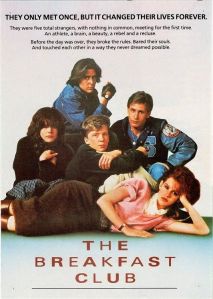
2. The iconic poster photo was taken by Annie Leibovitz and later satirised by ‘Texas Chainsaw Massacre 2’.

1. The budget was just under $1 million! The film made over $51 million during its initial run…
Killing Joke: Love Like Blood @ 40

Look up ‘intense’ in the dictionary and you might just see a photo of Jaz Coleman.

One of the best bits of post-Lockdown ‘normality’ was walking into Fopp in Covent Garden and quite by chance seeing the erstwhile Killing Joke frontman/keyboardist doing a signing session in full make-up.

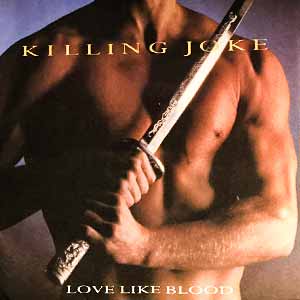
His band’s ‘Love Like Blood’ hit its peak position of #16 in the singles chart 40 years ago this month. It was their sole top 40 single of the 1980s and biggest hit to date, a brilliant highlight of that Goth/ post-punk sound/attitude.

But, in a decade full of literary pop music, the song has an interesting and surprising genesis. Recently, Coleman told Songfacts:

That was inspired by the author Yukio Mishima… It was his views on writing with your blood as an artist that really inspired me. It’s a metaphor for the commitment an artist must take to his art form. When I was reading ‘Spring Snow’, one of Mishima’s novels, I really couldn’t speak for 24 hours after reading that book – it hit me so hard. The song itself was a distillation of everything that we hold dear, and one must aspire to walk and talk what you write about in your songs – actually live it. That’s the other part of art, isn’t it? You can’t just be conceptual, writing songs. It’s the way you live your life as well. It’s as important as the way you play your instruments or the music you create…

Musically, it’s fascinating too, the late great Kevin ‘Geordie’ Walker’s doom-laden guitar (with a very odd tuning), scary keyboards (played by Coleman) and a powerful, influential groove – apparently no click track here. Attendant album Night Time was a hit too, featuring the single ‘Eighties’ which Nirvana ripped off for ‘Come As You Are’.

The real corker though was this live performance of ‘Love Like Blood’ from ‘The Tube’. Makes you hanker for a time when bands really meant it… No mucking about. Audiences too. Like to have been there.


Phil Upchurch: Companions @ 40

There’s a good case that 1984 was Last Call for classic jazz/funk (soon to morph into the dreaded smooth jazz) just before the machines took over and albums like David Sanborn’s A Change Of Heart became de rigeur (but only for a few years – there was an ‘acoustic’ revival in the late 1980s…).

Phil Upchurch’s Companions got in just under the wire. The legendary Chess Records/George Benson sideman (he wrote classic ‘Six To Four’ from Breezin’) had recorded over ten solo albums before 1984, all showing off his significant guitar chops and arrangement smarts.

But Companions (currently not on any streaming platforms – c’mon Universal Music) appeared 40 years ago this month on Paladin, the short-lived British jazz/dance label founded by DJ Paul Murphy and distributed by Virgin. Labelmates included Working Week, Robert Wyatt and Annie Whitehead.

It’s a classic West Coast album and a classic guitar album too, in large part due to the appearance of Lenny Breau (who died in mysterious circumstances on 12 August 1984, just a few days after the recording), famous for his fluid lines and cascading false harmonics, who appears on three tracks and to whom the album is dedicated.

Percussion fans – this album’s for you. Every track features a cornucopia of shakers, cowbells, woodblocks and congas played by Michael Fisher and Steve Forman. Gerald Albright blows a storm on the brilliant ‘Mr T (BA’s Song)’, probably heard by yours truly on Robbie Vincent’s BBC London show back in the day, while Russell Ferrante and Rodney Franklin provide tasty Fender Rhodes and Nathan East some excellent bass.

But, as is normal for mid-1980s fusion albums, there are some dodgy tracks on Companions too – two poor ‘pop’ cover versions (‘Rosanna’ sounds out-of-tune throughout) and an undercooked Jimmy Witherspoon cameo on ‘CC Rider’. Elsewhere there are not-so-great vocals on two tracks by Mike Baker (future drummer/vocalist for Zawinul Syndicate/Whitney Houston?).

But in general Companions is pure comfort music and well worth seeking out, rich with interesting harmony, good grooves and superb guitar playing.

Keith Floyd: The Man On The Telly

What a treat to see that Freeview channel London Live seems to be re-running Keith Floyd’s classic BBC films of the 1980s.
There had been others before him but Floyd is generally regarded as the original modern TV chef. He’s certainly the only one I can watch, though probably wouldn’t be let within a mile of a television studio these days.

But who was this charismatic, erudite, passionate, well-spoken, Withnailesque bloke gently joshing the cameraman (the long-suffering Clive – ‘Stay where you are, old bean!’) and director (David Pritchard), all the while quoting poetry and chucking down the red wine?

He had a colourful past. Floyd was born at his family farm near Reading in 1943 into distinctly less-than-well-off circumstances. He developed a passion for picking fruit and vegetables and attended Wellington School (at the same time as Jeffrey Archer) but left at 16 to develop his writing skills alongside Tom Stoppard at the Bristol Evening News.

Then, on a whim, after seeing the Michael Caine movie ‘Zulu’, he joined the Army. He moved into catering work at the BBC before opening his own successful restaurant in Bristol, where he’d mill around amongst the clientele, reciting First World War poetry and Bob Dylan lyrics.

BBC producer David Pritchard observed Floyd there in 1983 and offered him a TV gig. The rest is history. First there was ‘Floyd On Fish’, then ‘Floyd On France’ and a selection of well-regarded films and series, all shot on film and still looking sumptuous today. Don’t watch if you are hungry…

Floyd was married and divorced four times and fleeced by the vicious British tabloid press of the late 1980s. It’s not surprising he fell out of love with the TV game, outlined in hilarious detail in Tom Hibbert’s ‘Who The Hell’ interview for Q magazine:

‘Celebrity? It’s a heap of sh*t! You get frightened to go out. People you’d like to speak to don’t speak to you because they’re too polite. People you don’t want to speak to hound you to death. Everyone thinks you’re incredibly rich when you’re not. No-one believes you if you say you’re lonely or depressed because…you’re The Man On The Telly.’

Floyd even made a single with The Stranglers’ Hugh Cornwell called ‘Give Geese A Chance’ (apparently no-no’d by Yoko Ono…), with Fuzzbox guesting on the B-side. Between 1989 and 1996, he also ran his own gastropub/B&B – The Maltsters Arms in Devon – still going strong today.

Floyd was probably not an easy man to get along with, and Keith Allen’s excellent TV doc – made just before his death in 2009 – shows the effect his drinking had on lovely daughter Poppy. But in terms of the idiot box, he was a breath of fresh air. And in these nannying, oversensitive days, his brutal honesty, erudition and unabashed debauchery are a delight.

Miles Davis: The Bootleg Series Vol. 7 (That’s What Happened)

The heart always beats a little faster when there’s news of a ‘previously unreleased’ Miles project. And if it’s from the 1980s, even better.

The era is still one the least understood/lauded periods of Miles’s work, despite the stellar efforts of George Cole.

It also has not been served well posthumously, particularly by his final label Warners; in recent years there has been the weirdly undercooked/incomplete Rubberband project, and the appallingly-mastered/incomplete Warners Years box set.

So hopes were high for Sony’s new Bootleg Series 7, which takes in the years 1982 to 1985 and looks at the sessions that made up the (classic) albums Star People, Decoy and You’re Under Arrest. The packaging looks OK:

But what about the music? Before his death, Teo Macero, producer of many epochal Davis albums and also Star People, was very critical of the ‘complete sessions’ boxes that appeared after Miles’s demise. It’s safe to say he would not like this either.

We essentially get a collection of long studio jams, featuring the occasional familiar section – generally the best bit of the jam, expertly filleted by Teo. He really earned his money during this era of Miles music. There are also some alternative versions of You’re Under Arrest material, a few full-length, unedited versions of released tracks and one or two outtakes such as ‘What’s Love Got To Do With It’.

The full, unedited versions of ‘Freaky Deaky’ (Darryl Jones’ first recording with Miles) and ‘Katia’ (before Miles took his razor blade to John McLaughlin’s remarkable solo) are well worth hearing. Marcus Miller plays a brilliant bass solo on ‘Remake Of OBX Ballad’. There’s also a really strange duet featuring trombonist JJ Johnson and Miles on keyboards.

Unlike some of the previous Bootleg Series albums, there’s a lack of interesting studio chatter, which would have enlivened things (though there is the occasional brief Miles interjection). And there are still tracks that refuse to leave the vaults, such as the version of Nik Kershaw’s ‘Wild Horses’.

Disc one just contains too many formless jams, with Mike Stern, Miles and Bill Evans struggling to put together cogent solos (despite Al Foster’s beautiful drumming), and basically the band is crying out for John Scofield’s arrival in autumn 1982. He brings immediate relief, from both a soloing and compositional perspective. The live disc is serviceable and quite well recorded, but certainly not one of the best nights from the 1983 tour.

Essentially, we learn three things from the very uneven Bootleg Series 7: Scofield was a vital addition to Miles’s band and prolonged his career, Miller was Miles’s best bass player of the 1980s and Macero did a great job on Star People. But we probably knew all of that already.

So, basically, it’s another opportunity missed. I’ll stick to the original albums, with one or two exceptions. But you gotta check it out if you’re a fan of Miles’s 1980s music. George Cole covers the box in a lot more detail here.

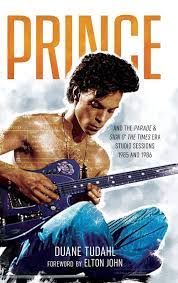
Book Review: Prince And The Parade & Sign ‘O’ The Times Studio Sessions by Duane Tudahl

Could Prince have thrived in this current age of the ‘bedroom’ musician?

On the evidence of Duane Tudahl’s superb new book – documenting every single studio session that produced the classic albums Parade and Sign ‘O’ The Times, plus countless others too – the answer would be a resounding ‘no’.

As Tudahl points out in his wonderful follow-up to ‘The Purple Rain Studio Sessions’, Prince’s genius very much depended on a coterie of talented, fiercely committed back-room staff, particularly Susan Rogers, Peggy ‘Mac’ Leonard, Coke Johnson and David Rivkin (brother of Revolution drummer Bobby), not to mention the constantly-on-call band mainstays Eric Leeds, Matt Blistan, Wendy Melvoin and Lisa Coleman, all of whom are interviewed at great length.

But there’s absolutely no doubt who’s the boss and the book doesn’t shy away from uncomfortable truths about Prince’s methods and manners. However, it’s an embarrassment of riches for the fan and valuable historical document, not to mention a great, gossipy read.

We join the book at the beginning of 1985, smack bang in the middle of the Purple Rain tour. We learn how he quickly tired of its routine and looked ever forward, taking particular inspiration from Sheila E and other collaborators, ducking into studios around the country often straight after a gig, usually recording between 2am and 6am (Sheila’s album Romance 1600 was almost exclusively put together in this fashion).

We also learn that there were three huge equipment trucks on the tour – one that contained reels of tape, one with the stage gear and one that contained only Prince’s instruments, so that he could record anywhere, anytime.

Tudahl tells the whole story of the fascinating Los Angeles night of 28 January 1985, when Prince won three awards at the American Music Awards but then failed to repair to A&M Studios for the ‘We Are The World’ session (he offered a guitar solo to Quincy Jones but was turned down!), instead going out to party at Carlos ‘N Charlie’s Mexican restaurant.

The evening had huge repercussions and began a period of press barracking – he was even lampooned on ‘Saturday Night Live’, with Billy Crystal blacking up and singing ‘I Am The World’. Tudahl has access to a huge number of candid interviewees who provide a kind of making-of guide to other key side projects from the period: St Paul Peterson talks in detail about the recording of The Family and his subsequent fall-out with Prince; Jill Jones describes the painful, hugely drawn-out period working on her underrated 1987 solo record; Eric Leeds describes how the Madhouse albums came about.

Then there are the fascinating details: we learn the full story of how ‘Kiss’ came together, with Prince getting inspiration while playing basketball on the Sunset Sound court; how the expansion of The Revolution in February 1986 was somewhat of a result of Prince’s fascination with ‘twins’, probably inspired by his fiancée Susannah Melvoin’s relationship with her sister Wendy.

We get a real sense of Prince’s incredible progression as a musician, especially through the early days of 1986, and learn all of the relevant details about his collaboration with Miles Davis. We read how the US bombing of Libya on 14 April 1986 affected Prince, inspiring a talk with Jill Jones, the viewing of a film about Nostradamus called ‘The Man Who Saw Tomorrow’ and subsequent removal of some of the more frivolous material on Jill’s album. We also learn how the LA earthquake of 12 July 1986 inspired the classic song ‘The Cross’.

And there are fascinating nuggets about how he saw his own work – he reportedly told Eric Leeds and Susan Rogers on 29 July 1986 that he thought his lyrics to ‘Adonis And Bathsheba’ were possibly his best, though Leeds and Rogers certainly didn’t agree… Both reasoned that Prince protested too much only when he was unsure of himself.

There are also the fascinating machinations of how the Sign ‘O’ The Times album finally came together, after numerous false starts, tracklist changes and the Warner Bros. top brass – led by Lenny Waronker – refusing him a triple album. No detail is spared in the section on the ‘sacking’ of Wendy and Lisa, subsequent hiring of Cat Glover and reformatting of Prince’s live unit.

The period is an absolute whirlwind, and the mind boggles how much all of this studio time cost Prince and Warners. But finally the impression we are left with is that this book gets as close to the ‘real’ Prince as we are ever going to get – it’s not for the faint-hearted fan, but a fascinating, rewarding journey if you can take it.

As someone who regularly worked on a completely one-to-one basis with him, Susan Rogers often had the best seat in the house, and she offers rich insights into his family background and psychology. The section on Prince’s lonely recording session of Christmas Day 1985 will linger long in the memory.

But all of this is only scratching the surface. We haven’t even mentioned the making of ‘Under The Cherry Moon’. It’s another wonderful book and enormous achievement by Tudahl. We await ‘The Lovesexy/Batman Studio Sessions’ with baited breath.

‘Prince And The Parade/Sign ‘O’ The Times Era Studio Sessions’ is published by Rowman & Littlefield.

Author Duane Tudahl discusses the writing of the book in this podcast.

David Bowie Impersonates Marc Bolan: 18 August 1985

1985 was a mixed year for DB.

Tragically, his half-brother Terry Burns took his own life in January, but then the summer was a very ‘up’ period – he was a wholehearted contributor to Live Aid, promoting the event widely and enjoying the company of his contemporaries and assorted young bucks alike.

He was also relishing getting out of his comfort zone courtesy of key roles in Jim Henson’s ‘Labyrinth’ and Julien Temple’s ‘Absolute Beginners’.

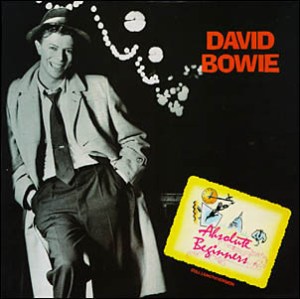
Then summer 1985 spawned one of his greatest singles, the theme song for the latter movie. Like ‘Dancing In The Street’, ‘Absolute Beginners’ was produced by David alongside Madness/Dexys/Costello collaborators Alan Winstanley and Clive Langer.

The backing tracks had been laid down at Abbey Road but the final vocal session took place at London’s West Side Studios (owned by Langer and Winstanley), Olaf Street, near Latimer Road tube station (and very close to Grenfell Tower), on 18 August 1985.

After nailing the song in just a few passes – as was his wont – Bowie found himself in the studio with a bit of time on his hands. Instead of making an early exit, he quickly wrote some rather overwrought lyrics vaguely in the style of Bruce Springsteen and then entertained Langer and Winstanley with a succession of vocal impersonations.

Engineer Mark Saunders thankfully captured these precious moments and has very kindly put them on YouTube for our delectation. So enjoy Bowie’s irresistible takes on Springsteen, Marc Bolan, Tom Waits, Lou Reed, Anthony Newley, Iggy Pop and Neil Young, complete with charming asides (‘That’s it – night-night!’).

It’s a doorway to happier times. DB: miss him, miss him, miss him.

When Thomas Dolby Met George Clinton: 35 Years On

They say you should never meet your heroes – if the summer of 1985 is anything to go by, Thomas Dolby probably knows a thing or two about that.
First there was THAT Grammy Awards performance alongside Stevie Wonder and Herbie Hancock.

Then he contributed production, arranging and keyboard work to Joni Mitchell’s underrated Dog Eat Dog, and, of course, there was his appearance at Live Aid as part of David Bowie’s band.

But arguably Dolby’s most intriguing collaboration of summer 1985 was with P-funk pioneer George Clinton, who was onto his third solo album of the decade.

Just after Live Aid, Clinton invited Dolby out to the Bee Gees’ Criteria Studios in Miami to work on two tracks for Some Of My Best Jokes Are Friends.

Clinton was finding much lyrical inspiration in Reagan’s America, and his latest album was firmly focused on the Nuclear Threat. During a hilarious fishing trip with Dolby off Miami (apparently during which Clinton sat in a swivelling captain’s chair, rolled joints and played rough mixes on a boombox), they came up with a character for Dolby – the Space Limousine Driver! Of course…

Clinton then invited Dolby to perform at a James Brown tribute night for the annual Black Urban Music Conference in Washington DC. Apparently his guest spot during ‘Sex Machine’ (described by Dolby as being ‘like Alec Guinness having a seizure’) made Mr Brown laugh and also gave Dolby some cred with the hardcore P-funk crowd (though sadly it doesn’t seem to be on YouTube…).

Clinton was also apparently thrilled with Dolby’s contributions, and asked if there was any way he could return the favour. Dolby quickly cooked up a new song, recruited the Brecker Brothers and Lene Lovich and retained the formidable bass/drums team of Rodney ‘Skeet’ Curtis and Dennis Chambers from ‘Thrashin’.

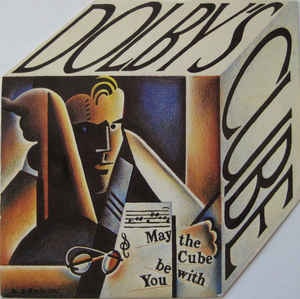
They christened the new band Dolby’s Cube and recorded a great one-off single at Battery Studios in London. Sadly, despite a cool video, it didn’t chart.

Dolby’s experiences with George loosened him up, and made him reassess a solo career that he felt thus far had been hamstrung by dodgy business practices and too much emphasis on ‘image’.

His effervescent 1988 album Aliens Ate My Buick was more explicitly influenced by Clinton, who also contributed the song ‘Hot Sauce’ (Francois Kevorkian’s superb remix of ‘May The Cube Be With You’ was also included). The summer of ’85 was certainly a memorable one for all concerned.

Further reading: ‘The Speed Of Sound’ by Thomas Dolby

Bill Evans: Living In The Crest Of A Wave/The Alternative Man

When people say ‘I hate jazz’, I sometimes wonder if they’re really saying they know a crap composition when they hear one.

Legions of talented jazz sidepeople have been given solo record contracts only to deliver music that proves they can’t write decent tunes.

A case in point is saxophonist and William Hurt-lookalike Bill Evans. He’s had a very solid career but his solo work is distinctly underwhelming.

(And then there’s the name. If you play jazz, you probably need a stage name if you have exactly the same moniker as a bona fide legend from decades gone by – the pianist Bill Evans died in 1980.)

But give Sax Bill some credit – he was an absolutely vital figure in Miles Davis’s 1980s comeback, a good friend and carer of the trumpeter and player of several gritty solos on record (Star People is a good place to start). But by 1983 Bill found himself inexplicably frozen out, barely getting any solo space from Miles.

He got the message and jumped ship to join John McLaughlin in the new Mahavishnu Orchestra and also embark on a solo career which kicked off with 1984’s Living In The Crest Of A Wave, a pretty anodyne collection of new-agey fusion. Let’s call it The Metheny Effect. Many tried and failed to ape that guitarist’s mixture of Ornette Coleman-inspired melodicism, Latin flavours and down-home, Midwestern, open-sky simplicity.

With its folky themes, puny production, emphasis on soprano sax, fretless bass, ride cymbals and an ‘environmental’ bent, LITCOAW could almost have come out on Windham Hill. Only the closing title track works up any kind of energy or interest, when Evans finally busts out the tenor and blows up a storm over Adam Nussbaum’s frenetic jazz/rock groove.

Evans’ followup, 1985’s The Alternative Man, was his first record for the illustrious Blue Note Records and as such should have been a celebration. Unfortunately it was an object lesson in how not to use technology, and just the kind of ‘80s ‘jazz’ album that illustrates what a brilliant job Marcus Miller did on Miles’s Tutu.

Evans in the main stumbles around with ugly Linn Drum patterns, electric drums, blaring synth pads and raucous hair-metal guitar solos, all topped off with some fairly insipid soprano playing. A few tracks and you’ll be wanting to break out the Albert Ayler or David Murray albums, and fast.

The only interest predictably comes with two more open, organic offerings, the excellent ‘Miles Away’ which reunites Evans with his Miles colleagues Al Foster on drums and Miller on bass. And ’Let The Juice Loose’ is fun, a cool bebop head featuring some enjoyably un-PC Strat-mangling from the late great Hiram Bullock.

But hey – some of this music brings back good memories, when I was digging around the Record And Tape Exchange and Our Price for bargains and closely monitoring the personnel on the back of my favourite Miles and McLaughlin albums.

These albums also definitely represent a weird time for ’80s jazz, when established labels were signing all and sundry, fishing around for the next Young Lion or Metheny.

And thankfully a few dodgy early solo records didn’t hurt Evans’ career much, as he’s gone on to be one of the most respected players on the scene.

Propaganda: Wishful Thinking

ZTT Records – under the auspices of Trevor Horn – really used the remix format.

No throwaway, rush-released projects for them. Their remixes were petri dishes for sonic experiments and situationist pranks, many worthwhile and innovative.

And of course several remix albums were released on ZTT – Grace Jones’ Slave To The Rhythm was essentially one song done eight different ways, and there was also a whole Frankie Goes To Hollywood LP dedicated to ‘Two Tribes’ remixes.

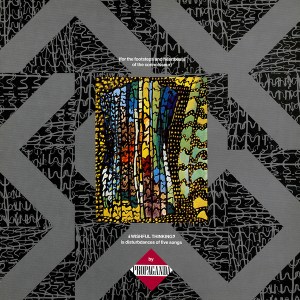
But maybe a lesser-known example is Propaganda’s Wishful Thinking, a reworking of the Düsseldorf unit’s seminal 1985 album A Secret Wish, originally produced by Stephen Lipson (with one track – ‘Dr Mabuse’ –  helmed by Horn). A Secret Wish’s stock seems to keep rising year after year, gaining more fans and sounding better than ever. But Wishful Thinking is a weird project, to say the least.

Co-remixer (alongside former tape op Bob Kraushaar) Paul Morley’s absurd liner notes quote Goethe and boast that the album is the result of ’39 studio hours’, which, by ZTT’s painstaking standards, doesn’t actually sound like much.

But it’s a thrilling, epic collection just the same, regurgitating many of the original album’s sonic motifs but in a different order and a different place on the stereo spectrum. ‘Machined’ reimagines ‘P-Machinery’ as a mid-tempo minimalist piece, featuring mainly Claudia Brucken’s vocals and gentle drums.

‘Jewelled’ fuses the two versions of ‘Duel’ from the original album, mixing her ‘angry’ vocals with the backing from the ‘pop’ version. It’s pretty funny and genuinely surreal. Hidden elements embedded in the original mix are subtly revealed, like Lipson’s chiming guitars on ‘Laughing’. ‘Loving’ exposes and amplifies Andy Richards’ gorgeous piano and synth from ‘The Murder Of Love’, finally revealing it as the fantastic pop song it is.

The two versions of ‘Dr Mabuse’ bring out Horn’s genius and natural flair for the dynamic, showcasing not one but two brilliant bass vamps and a whole host of other sonic delights (thrillingly, one version is used in the absurd opening credits of John Hughes’s 1987 movie ‘Some Kind Of Wonderful’).

But possibly the best track on Wishful Thinking is the closing ‘Thought’, an excerpt of the band’s version of Throbbing Gristle’s ‘Discipline’. All in all, it’s an epic, exciting hour of music, and a real one-off. For anyone still fascinated by A Secret Wish, as this writer is, it’s required listening. The band probably hated it, though Brucken did donate one of her paintings for use on the cover (but then she was married to Morley at the time…).