Neil Young: This Note’s For You

Neil+Young+This+Notes+For+You+507216The general critical consensus maintains that Neil had a rotten ’80s.

He made folk albums, rockabilly albums, synth-rock albums, undercooked Crazy Horse albums and country albums.

But you can’t say he wasn’t prolific, and hey, he’s Neil Young – there’s always something good going on somewhere.

But none of these projects came anywhere near the commercial jackpot, to the extent that his label boss David Geffen sued him for ‘unrepresentative’ product!

But, with the release of 1988’s This Note’s For You, Young was getting back on track. He had returned to the Reprise label of his peak years and was gigging with a hard-hitting ten-piece band The Bluenotes (later changing its name to Ten Men Workin’ after a legal challenge from Harold Melvin) which featured a hot horn section and cracking new drummer Chad Cromwell.

Neil had ten new songs in the can too, veering between two-chord R’n’B stompers and love ballads in the ballpark of his teenage hero Roy Orbison. He was also playing as much if not more lead guitar than he ever had in his solo career, this time in the biting, incisive style of Alberts King and Collins.

Lyrically, the songs were basically about workin’ hard, lookin’ for love, not sellin’ out and havin’ a good time, but with more humour than Bruce or Billy Joel. ‘I’m a married man – respect my happy home!’ he barks on ‘Married Man’.

Neil gave writer Paul Zollo some cool insights into the writing of the song in the book ‘Songwriters On Songwriting’:

‘Oh, I like that song. I think I wrote that in my car. I have a ’54 Caddy limo. I was on my way down from Northern California to play with the Bluenotes. I was on Highway 5. Our driver was listening to tapes and I was playing my guitar…’

Neil’s tremulous voice croons ‘You have changed my life in so many ways’ on ‘Can’t Believe Your Lyin’, and it’s both touching and amusing. ‘Ten Men Workin” and ‘Life In The City’ are driving old-school R’n’B gems while ‘Sunny Inside’ is almost Brian Wilsonesque in its charming naivety.

Then there’s the title track, the standout cut on the album (though it inexplicably fades way too soon). A rum, anti-product-placement protest song which nevertheless manages to mention four big brands (and of course mocks Budweiser’s ‘This Bud’s For You’ campaign), it defiantly has its cake and eats it. It’s also a total blast.

In a delicious irony, the old hippie who had spent most of the ’80s in purgatory made one of the great vids of the decade (winning Video Of The Year at the 1989 Video Music Awards), with notable help from writer Charlie Coffey and legendary director Julien Temple. Temple talked about his motivations for making the video:

‘Beer companies and the like were beginning to take over music. A lot of beer ads were using rock musicians. The line between videos and commercials was blurring. We managed to get banned from MTV and win the Video Of The Year award. That was the peak of my video-making career…’

The clip mostly mocks the series of Michelob beer ads which featured the likes of Genesis, Eric Clapton and Steve Winwood. And it didn’t scrimp on Michael Jackson and Whitney Houston lookalikes.

What’s also notable and totally unprecedented is that Neil decided to use a live take of the song for this video, completely different to the album version. Which major star would have the balls to do that today?

This Note’s For You was not a hit, only reaching #61 in the US album chart. But Neil was laying down a marker for the classic follow-up Freedom. And he had also tapped into something very prescient by focusing on guitar-led soul, blues and R’n’B forms, echoing the resurgence of Clapton, Buddy Guy, John Lee Hooker, Jeff Beck, Albert Collins and Gary Moore, and emergence of hotshots like Jeff Healey and Robert Cray.

Peter Gabriel: So 30 Years Old Today

gabriel

‘At the time of coming back, he had tremendous determination. He said do want to make it! I do want to succeed!” Instead of going along with the idea that he is different, special, unique, precious, So was about him saying, “F**k that! I’m going to allow myself to succeed.”’ Jill Gabriel, quoted in ‘Peter Gabriel’ by Spencer Bright

So was the Peter Gabriel album that put him – albeit very briefly – into The Big League, alongside the likes of Madonna, Michael Jackson, Phil Collins, Prince, Hall and Oates and Springsteen, leaving his ‘art-rock’ contemporaries (Laurie Anderson, Brian Eno, Peter Hammill, Robert Fripp) in the dust.

He opened himself up to mainstream success via more direct lyrics and music. And it worked a treat. So still sounds fantastic today; a near-perfect mix of art and commerce.

photo by Steven Toole

photo by Steven Toole

In interviews, Gabriel has described the ’83/’84’ period as a dark time in his life. He mixed and released an excellent live album and looked for solace in film soundtrack work, producing two fairly inconsequential tracks: ‘Walk Through The Fire’ from ‘Against All Odds’ and ‘Out Out’ from ‘Gremlins’.

Far more substantial was his soundtrack for Alan Parker’s ‘Birdy’, but, most importantly, it was the project that introduced him to So co-producer Daniel Lanois.

Gabriel later credited Lanois and his then wife Jill for steering him back towards more positive thoughts, and much more ‘up’ music and lyrics.

Gabriel came up with 20 new songs by early 1985. Lanois helped him whittle them down to 12, and then six months of pre-production began, focusing on song structures and arrangements. So was mainly recorded at Gabriel’s home studio, Ashcombe House near Bath.

Working at home was intended to save money on big studio fees and also speed up the creative process, but lyric-writing was still a big problem and a lack of words necessitated two missed release deadlines for So: 31st July 1985 and 14th December 1985.

Virgin were patient. Lanois once even nailed him into a back room to force him to come up with some lyrics – Gabriel was not amused, at least not for a few hours. ‘It is the most upset I’ve seen him at the studio,’ guitarist David Rhodes remarked. Lanois had made his point.

Musically, Gabriel very much leaned on tried-and-tested collaborators such as Rhodes and Tony Levin – it’s hard to imagine anyone else playing bass on So. He’s so much part of the music. Check out his ‘drumstick bass’ (later marketed as Funk Fingers!) on ‘Big Time’.

Joni Mitchell’s then husband Larry Klein also plays some lovely fretless on ‘Mercy Street’. French-African newcomer Manu Katche amazed everyone with his drumming, particularly on ‘That Voice Again’ and ‘In Your Eyes’. He had a new twist on Stewart Copeland’s style and also somehow found the time to fit occasional tom-tom flurries into his grooves too.

Migrant Mother by Dorothea Lange

Migrant Mother by Dorothea Lange

‘Red Rain’ opens with some resplendent Copeland hi-hat work, and ends with the kind of piano/vocal coda that Simple Minds excelled at – the influences were now flowing both ways.

‘Don’t Give Up’ was inspired by a BBC TV documentary about the effect of unemployment on British family life, and also the photography of Dorothea Lange, portraying dust-bowl conditions during the Great Depression.

‘Mercy Street’, dedicated to poet Anne Sexton, shows evidence of Lanois’ influence; its opening ambient textures resemble Brian Eno’s ‘Under Stars’ which Lanois co-produced.

Gabriel’s low-octave vocals apparently had to be recorded first thing in the morning for maximum deepness. The song’s Brazilian/African groove predates Paul Simon’s Graceland by six months or so.

‘We Do What We’re Told (Milgram’s 37)’, concerning social psychologist Stanley Milgram’s infamous experiments, was originally recorded for Melt in 1980. While musically very rich and dark (I always think of Kate Bush’s ‘Running Up That Hill’ when I hear that opening minor chord), lyrically it is possibly a little half-baked.

‘Big Time’ is Gabriel’s amusing, self-mocking, Randy Newmanesque satire on success and celebrity – ‘This drive for success is a basic part of human nature and my nature’, he later said.

Musically, it’s a potent mixture of driving Copeland drums, treated rhythm guitar, synth bass, quasi-industrial samples and some great Hammond organ by Simon Clark.

Another much rockier version – featuring Jerry Marotta on drums – was also recorded but scrapped just before the mastering stage.

‘Sledgehammer’ was the last song written and recorded for So. Ironically, it dislodged Genesis’s ‘Invisible Touch’ to become a US number one single in July 1986.

A catalogue of sexual innuendos, it’s one of the weirder hits of the 1980s. Its odd cheerfulness may come from the fact that it’s mainly in a major key, a rarity for an R’n’B-influenced track. David Rhodes’ rhythm guitar part is eccentric and the Farfisa organ bizarre.

The opening sampled bamboo flute was copied by hundreds of keyboard players across the UK (or at least a few in my school). The groundbreaking video for the song, directed by Stephen Johnson (who had used similar techniques for Talking Heads’ ‘Road To Nowhere’ clip), required 100 hours of Gabriel’s time.

Apparently Gabriel was obsessed with the album’s sequencing: he made up endless cassettes featuring just song endings/beginnings, testing all the different permutations.

He always wanted ‘In Your Eyes’ to close So, but was persuaded otherwise when told that its drums and bass wouldn’t hold up very well at the end of a long side of vinyl (though it’s hard to ‘hear’ it anywhere else but at the beginning of side two…). He finally got it where he wanted it on the definitive remastered version.

Gabriel’s only concession to the record company was to name the album something apart from ‘Peter Gabriel’. So seemed suitably off-the-cuff – ‘It had a nice shape but very little meaning’, he later said.

He also decided that a simple cover shot would better suit the directness of the music and lyrics than some of the more disturbing covers of albums past. So‘s design and packaging still look fantastic today.

The album topped the charts on both sides of the Atlantic and by summer 1987 had sold over 5 million copies worldwide. Gabriel promoted the album extensively before embarking on Amnesty’s Human Rights Now! with Sting, Tracy Chapman and Bruce Springsteen in 1988.

He had a lot more than music on his mind – he waited a full six years before releasing the official follow-up to So. The commercial assault had paid off but at what cost to his long-term creativity?

Francis Dunnery: Back To It Bites

francis dunneryIn some ways, it may not be much of a surprise to hear that ex-It Bites vocalist, guitarist and songwriter Francis Dunnery has returned to the music of his old band, one of the great British units of the ‘80s.

He met up with the other three members – keyboardist John Beck, bassist Dick Nolan and drummer Bob Dalton – during a London Union Chapel gig in 2003, and for a while a full-scale reunion looked to be on the cards. But it wasn’t to be.

Then Dunnery recorded various ‘reversions’ of It Bites songs on his 2011 album There’s A Whole New World Out There, and he has frequently performed the old material in concert (check out this amazing version of Once Around The World’s title track from a few years ago). So he’s never exactly been averse to revisiting former glories.

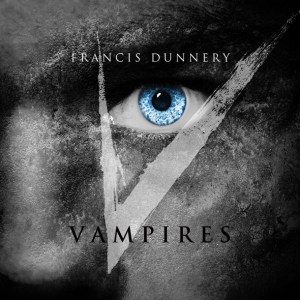
But Vampires is different. It goes the whole hog: he’s re-recorded not just one album but 100 minutes of It Bites classics, singing all the vocal parts himself (with much-improved body and range, though his vocals weren’t exactly shabby in the old days) and enlisting various musicians including ex-Go West drummer Tony Beard to navigate the musical twists and turns.

Two years in the making, the album is also a blast from the past in terms of its audio qualities – it was recorded without EQ or compression, only a small amount of the latter being added at mastering stage.


Francis discusses the new album and the It Bites days in this excellent interview for The Mouth magazine.

He reveals – for the first time, as far as I’m aware – the full story of how the band got signed to Virgin, Dunnery’s period squatting in South London, his relationship with John Beck, his favourite It Bites songs, the band’s split and loads more. It’s a must-listen for any fans.

You can also hear many excerpts from Vampires and make your own mind up about whether his new versions improve on the originals.


Toto/Miles Davis: ‘Don’t Stop Me Now’

Toto-FahrenheitI’ve always had a somewhat ‘troubled’ relationship with Toto’s music, to put it mildly…
Toto IV (1982) was obviously a classic of its kind, Hydra (1979) had its moments and there are other classy tracks dotted around, but I’ve generally thought: David Hungate, David Paich, Jeff Porcaro and Steve Lukather are fantastic musicians who have played on some of the greatest albums of all time – so what are they doing in this band, writing these songs?

But I found a solution of sorts when I came across a track buried at the end of their lacklustre Fahrenheit album from 1986. ‘Don’t Stop Me Now’ is a cracking instrumental with nice chord changes, a great melody, gorgeous bridge, slick playing from co-writers Paich and Lukather and a memorable guest spot from Miles Davis.

Of course Miles was no stranger to the world of Toto and the LA session elite in general. He was tight with Quincy Jones, producer of Michael Jackson’s Thriller, an album that heavily featured Jeff Porcaro, Paich and Lukather.

Miles had also covered Thriller‘s ‘Human Nature’ (co-written by Toto keyboardist Steve Porcaro) on his You’re Under Arrest album the previous year. He was also apparently a big fan of Jeff Porcaro’s painting, not to mention his drumming, so a full-scale Miles/Toto collaboration was surely always on the cards.

But the recording of ‘Don’t Stop Me Now’, which took place at Jeff Porcaro’s home studio in early 1986, wasn’t a walk in the park, as Steve Lukather told George Cole in the excellent ‘Last Miles: The Music of Miles Davis, 1980-1991’:

‘We cut the track and left the melody off – we just left open spaces. When Miles got there, we ran it down together with him and he wasn’t really playing the melody. So we figured, we’re not going to tell Miles Davis what to play, so we said, “Miles, we have a take of this, would you mind just giving it a listen and play whatever you want?” He says, “Okay, I’ll play like that. You like that old shit, right?” So he gets out the Harmon mute and he played it – one take. We’re all stood there completely freaked out – it was unbelievable. At the end, the song just kind of fades out, but he just kept playing the blues. I was sitting there with chicken skin on my arms – it was an unbelievable moment. And that’s how we ended the record, with just Miles blowing. Later on, David Sanborn came down to play on a different tune on the record and he’d heard that we had cut a tune with Miles. He said: “I gotta hear it!”, so we played it and he flipped and said, “Please just let me be on the track!” He doubled the melody and played a couple of flurries. So we got Sanborn, Miles and us on one track – that was pretty cool!’

But Steve Porcaro alluded to the wider issue of including a ‘jazz’ track on a ‘heavy rock’ album when he told George Cole: ‘I don’t know how thrilled the record company or our managers were, but for us working with Miles was a major feather in our cap.’

But that kind of political scene didn’t affect Miles: he loved ‘Don’t Stop Me Now’ and quickly integrated it into his own live set. It remained a staple of his concerts from 1986 right up until 1990, the year before his death. It’s a beautiful piece of work. But while we’re at it, has anyone got a lead sheet of the tune? I want the chords…

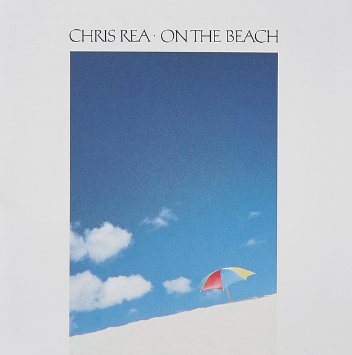
Chris Rea: On The Beach 30 Years Old Today

chris rea

Rea has – a little unfairly – never quite been able to escape a slightly dodgy image here in the UK, but, along with George Michael, he was probably the most popular male British singer/songwriter of the late ’80s and early ’90s.

The breakthrough/breakdown was his 1989 single/album ‘The Road To Hell’, so close to the Dire Straits sound as to be almost parody. I preferred the more laidback, distinctive Rea of the mid-’80s.

He started out pushing the glossy AOR and light, folky pop, enjoying a huge US hit with ‘Fool If You Think It’s Over’ in 1978 (later claiming that early producer Gus Dudgeon had blunted the ‘bluesier’ elements of his sound).

His career seemed to be hitting a cul-de-sac in the early ’80s, but On The Beach was one of the albums that turned things around, the beginning of his commercial era

It taps into the same kind of jazzy, introspective pop/soul sound that the likes of John Martyn, Joni Mitchell and Van Morrison were flirting with in the same period, helped by an excellent band including Fairport Convention/XTC drummer Dave Mattacks, Martin Ditcham on percussion and Max Middleton on keys. Rea also plays an impressive array of instruments himself, including fretless bass and synth.

Listening in one sitting to On The Beach again, the first thing that struck me is its almost relentlessly downbeat vibe. But the opening title track, with its lilting Latin-tinged groove and jazz chords, perfectly introduces the album’s themes of lost innocence and childhood reminiscences.

The moment when Mattacks lays into his fat snare drum for the first time is one of my favourite ’80s drumming moments.

‘Little Blonde Plaits’ is a vehicle for Middleton’s expressive Mini Moog, very redolent of his atmospheric playing on John Martyn’s Glorious Fool. There’s further ethereal jazziness on ‘Just Passing Through’, featuring a really lovely vocal performance and tasty solo guitar from Rea.

‘It’s All Gone’ ups the ante with some subtle Donald Fagen-style synths and excellent lyrics, and the groovy extended outro is close enough for jazz/funk with some empathetic Mattacks drums alongside Middleton’s fine Fender Rhodes solo.

On The Beach was a decent hit in the UK, reaching #11 in the album chart and selling over 300,000 copies. After this, Rea’s music became increasingly rootsy with elements of blues, country and rock’n’roll; he started channelling Dire Straits and ZZ Top rather than John Martyn and consequently enjoyed much more commercial success.

But On The Beach‘s four or five choice tracks are still my favourite Rea moments of the ’80s.

Catching Up With Eddie Van Halen

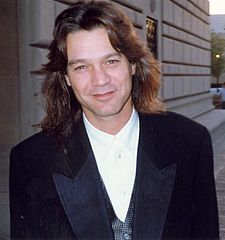
225px-Eddie_Van_Halen_(1993)When I think of ’80s Eddie Van Halen, the image in my mind’s eye is probably not a lot different to any other fan – he’s grinning from ear to ear, cavorting around the stage, playing some of the greatest rock guitar of all time with one of the sweetest tones.
So it’s interesting to see him recently – sober, reflective, brutally honest, fiercely independent – talking about his life and craft onstage at the Smithsonian Museum of American History in Washington DC.

‘Jump’ had always been a favourite of mine and was at the back of my mind when I came across Van Halen’s superb debut album at Harry’s Records in Twickenham (another one that’s bitten the dust), during my first week of sixth-form college in 1989.

I just loved the devil-may-care feel of Eddie’s playing. He was fearless, unconcerned about making mistakes (his dad gave him some advice: if you make a mistake, do it again – with a smile), the same attitude that spurred on Parker, Ornette, Hendrix and Jaco.

I later got heavily into the VH albums Women And Children First, Fair Warning, Diver Down, 1984 and OU812, but the band have been completely off my radar since the early ’90s, when I loved the ‘Poundcake’ single.

Having said that, not living in the States, I’ve completely missed the recent new album and TV appearances featuring David Lee Roth back on vocals. Maybe I need to check in again because I dug this:

Anyway, back to the interview. It’s fascinating hearing Eddie chatting about his life and career, away from all the controversy that has dogged the band over the last few decades.

He talks about building his first guitar, the last album he bought (clue: it was back in 1986 and by an English singer who was once in a very famous progressive rock band…), demonstrates some techniques and talks candidly about his sometimes difficult early life as an immigrant in the USA.

G’wan – give yourself an hour off and enjoy some words from a master.

Talk Talk: The Colour Of Spring 30 Years Old Today

talk talkBy the release of The Colour Of Spring, there was barely any trace of Talk Talk’s previous synth-pop incarnation. Out went the Duran Duran, in came the Debussy, Traffic and Satie.

Instrumentation was generally centred around acoustic piano, acoustic guitar, Hammond organ, electric bass and drums, with the addition of quirky items like the Variophon, Mellotron, melodica, harp and dobro.

The core unit of singer/co-writer/co-producer/keyboardist Mark Hollis, co-writer/co-producer/keyboardist Tim Friese-Green, bassist Paul Webb and drummer Lee Harris distilled their sound to eliminate all but the essentials.

The opening 16 bars of the majestic, haunting ‘Happiness Is Easy’, a winning combination of man and machine (Lee Harris’s drums and a nifty bit of programming, followed a little later by Martin Ditcham and Morris Pert’s percussives) is surely one of the great album intros of the ‘80s. It hooked this writer immediately back in 1986.

The 1980s were full of albums whose big-name guest spots barely made a mark on the music. Not The Colour Of Spring; the session players are chosen with the precision of a good movie casting director.

‘I Don’t Believe In You’, a left turn into doomy, atmospheric rock, features one of the great guitar solos by Robbie McIntosh. David Rhodes’ deliciously swampy lick, with minor but important amendments, holds ‘Life’s What You Make It’ together.

Double bassist Danny Thompson’s tone is immediately recognisable on ‘Happiness Is Easy’, before ex-Average White Band man Alan Gorrie brings in some light funk for the piece’s second half.

Steve Winwood also adds some tasty Hammond to three tracks, while Friese-Green’s piano on ‘April 5th’ even brings to mind the great Bill Evans. We must also acknowledge James Marsh’s exquisite cover artwork, an auspicious start to his triptych of TT album designs.

Though to my ears The Colour Of Spring tails off around the middle of side two, the album was a hit, reaching #8 in the UK chart and #50 in the US, while ‘Life’s What You Make It’ remains one of the most original singles of the mid-‘80s.

Next stop was the post-rock magnum opus Spirit Of Eden – the retreat from pop would be almost complete.

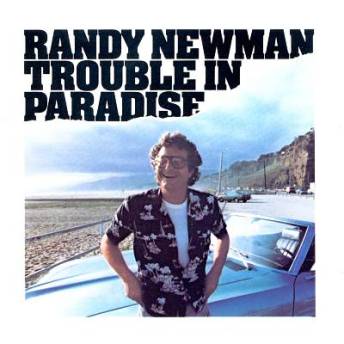
Randy Newman: Trouble In Paradise

randy newman

One of the recurring themes of Randy Newman’s interviews seems to be the question of how long songwriters can maintain high-quality work.

He frequently compares himself to Dylan, Joni Mitchell, Neil Young, Robbie Robertson, Don Henley and Paul Simon, wondering if he’s keeping pace. 1983’s Trouble In Paradise proved that he was certainly keeping up, if not outstripping all of them.

After somewhat of a commercial breakthrough with 1977’s Little Criminals, Randy came seriously unstuck with the 1979 follow-up, Born Again. So a lot was riding on Trouble and it certainly delivered; song for song, it arguably equals Sail Away or Little Criminals.


Randy unleashes a parade of shucksters, hucksters, bigots, junkies and unreliable narrators that would be right at home in a David Mamet play or Coen Brothers movie.

In a neat irony, he also used the cream of the LA session elite (Jeff Porcaro, Jerry Hey, Nathan East, Steve Lukather, various Eagles and Fleetwood Macs) to sugarcoat his short stories; Trouble is one of the best-sounding bad-vibes albums in rock history, alongside Frank Zappa’s Sheik Yerbouti and Steely Dan’s Gaucho.

Randy almost had a second hit single with the deceptively cheery ‘I Love LA’, the Cole Porter-style intro leading into an ironic, ambivalent comment on the American Dream and some of its discontents. ‘Christmas In Cape Town’ is a disturbing portrait of Apartheid-era South Africa apparently written under the influence of Nadine Gordimer’s books.

‘The Blues’ is an amusing duet with Paul Simon poking fun at the plight of the oversensitive singer-songwriter, though Newman has claimed that he regrets writing the song. ‘Mikey’s’ is another amusing portrait of a racist, reactionary douchebag, with our narrator sounding off over a robotic synth-rock backing which seems to be Randy’s pastiche of new-wave rock.

I love the way the narrator comments on the music, bellowing: ‘Didn’t used to be all this ugly music playing all time… Where are we, on the moon? Whatever happened to the old songs? Mikey, whatever happened to the fucking “Duke Of Earl”?’!

The hectoring continues on the hilarious ‘My Life Is Good’, a self-mocking vignette which eavesdrops on the life of an arrogant, rich and famous rock star. Springsteen gets a namecheck and Ernie Watts’ booming impersonation of Clarence Clemons is accompanied by Randy screaming, ‘Blow, big man, blow!’ Pretty weird and pretty funny.

Newman then proves that he’s a master of the gear shift with the inclusion of two devastating ballads, ‘Same Girl’ and ‘Real Emotional Girl’. The former, described by its author as a song about ‘two junkies in love’, is a heartbreaking portrait of lost innocence with a sumptuous string arrangement, indelible melody and sometimes dissonant harmonies. He’s just way ahead of his contemporaries here.

The latter is an uncharacteristically tender portrait of a sensitive, gentle young woman who can’t help but get her heart broken. The middle eight is just sublime. Linda Ronstadt has performed this song from time to time.

‘Miami’, which kicks off side two, is the most musically expansive track on Trouble, featuring a delicious performance from Randy’s favourite drummer Jeff Porcaro, intricate stop-start arrangements and eerie mandolins by Dean Parks.

The two filler tracks on Trouble, ‘Take Me Back’ and ‘There’s A Party At My House’, are buried in the middle of side two, while ‘I’m Different’ is a self-mocking swinger with some lovely close-harmony backing vocals by Jennifer Warnes and Ronstadt.

The closing ‘Song For The Dead’ is a devastating Vietnam War allegory features a mythological (dead?) colonel who has been left behind to say a prayer for his fallen comrades. The song bravely dares to send up a certain kind of American heroism, but still carries a hefty emotional punch.

Trouble In Paradise was not a commercial success, reaching only number 69 on the US album chart. That is a pretty shocking showing from such a major artist and one of the great songwriters.

The failure seemed to chasten Newman – he jumped back into the world of movies, scoring 1984’s ‘The Natural’ and co-writing the screenplay for the Steve Martin/Chevy Chase vehicle ‘The Three Amigos’. Like his friend and frequent collaborator Ry Cooder, it seemed that film work was now funding an increasingly unpopular solo career.

Randy returned as a solo artist in 1987 to make Land Of Dreams, perhaps the only album of his that hasn’t dated well (though he told Paul Zollo in the brilliant book ‘Songwriters On Songwriting‘ that it’s his personal favourite). Then, over a decade later and against all the odds, he released one more near-classic, 1999’s Bad Love, crowning 30 years of songwriting consistency.

He once told the writer Jon Ronson, tongue placed firmly in cheek: ‘My career has been a disappointment to me. I always hoped I’d sell millions of records. There are 40,000 people out there who just love me. But they may be surprised to hear I’ve been aiming beyond them…’

The Tubes: The Completion Backward Principle

tubesEven as a teenager, I picked up something faintly illicit (and excellent) about this band.

A cool friend of my dad’s stuck ‘Attack Of The Fifty Foot Woman’ on a cassette for me alongside Donald Fagen’s The Nightfly and Bill Withers’ Greatest Hits sometime around the late-’80s.

I loved it, though it would take me a good few years to find out who had recorded it. A lot of detective work was called for – The Tubes weren’t exactly big in the UK.

The band’s earlier career had taken them through glam/punk, Spector-style pop and new-wave rock, but The Completion Backward Principle was the first Tubes album produced by David Foster, a gifted Canadian keyboardist who already had a proven track record as a first-call session player, arranger and songwriter.

He had worked extensively on Earth Wind & Fire’s I Am (co-writing the megahit ‘After The Love Has Gone’), Lee Ritenour’s Rit and Boz Scaggs’ Middle Man.

According to most accounts, as a producer he was a pretty hard taskmaster, demanding absolute perfection. He wasn’t above telling a band member to go home early and calling in a name session player in his place (which he frequently did during the recording of Chicago 17).

But the results speak for themselves. The band had made a quantum leap since 1979’s Todd Rundgren-produced Remote Control. Fee Waybill had turned into a pretty damn good singer.

Drummer Prairie Prince is hardly the subtlest player in the world (Jeff Porcaro was surely waiting in the wings) but he’s every bit the human metronome on these songs and plays a blinder on the brilliant ‘Think About Me’.

Maybe ‘Don’t Wanna Wait Anymore’ and ‘Amnesia’ sound more like Chicago than Devo but they are memorable and interesting with great chord changes, while the fairly risqué ‘Sushi Girl’ could have come from Zappa’s You Are What You Is.

‘Let’s Make Some Noise’ even taps into the kind of pop/funk that Let’s Dance took to the bank a few years later. The album is also beautifully recorded, engineered and mastered, sounding superb on my original vinyl copy.

I also love the cover concept. The band’s corporate attire and conservative ‘message’ were apparently a satirical take on Reagan’s inauguration and the rise of motivational business concepts. But the smarter the clothes, the weirder the content, as the Surrealists proved decades before.

According to this interview with Fee Waybill, The Tubes imploded a few years later after The Completion Backward Principle when David Foster suggested that only he, Waybill and a few outside songwriters should compose singles for the band.

He would appear to have a point, that team having co-written ‘Talk To Ya Later’, the Top 40 hit ‘Don’t Want To Wait Anymore’ and the number 10 hit a few years later, ‘She’s A Beauty’.

Waybill believes they might have become as big as Foreigner or Journey had they taken Foster’s advice, but it wasn’t to be – the rest of the band vetoed the suggestion and Waybill first left in 1985 after the disastrous Rundgren-produced Love Bomb.

However, they have continued to be a successful live band to this day. I loved seeing them in 2000 at the much-missed London Astoria. Talk to ya later…

It Bites: Eat Me In St Louis

eat-me-in-st-louis-527b870be5b7f

It Bites go Metal? Nearly. A brave attempt to break the US? Possibly.

Even Kerrang! magazine took notice of this one. Riff-heavy, blues-based rock was making a big comeback on the late-‘80s UK music scene, typified by the success of Thunder, The Quireboys, Gun and Little Angels.

The gifted Cumbrian four-piece came up with a neat twist and produced their heaviest album yet in Eat Me. But they could never completely jettison their penchant for brilliant pop hooks, colourful instrumentation and intricate arrangements.


Francis Dunnery’s guitar playing was leaner, meaner and more direct than before, with a stronger blues flavour; Hendrix and Clapton were touchstones now rather than Holdsworth and Gambale.

The song and performance were paramount. He talked glowingly of David Sylvian and The Blue Nile in interviews. Producer Mack brought the big drum sound and ban on reverb. Dick Nolan expanded the grooves with his new six-string bass.

There were three near-hits (‘Still Too Young To Remember’, ‘Underneath Your Pillow’, ‘Sister Sarah’). Roger Dean provided the album cover concept/graphics/masks, possibly a weird move for a band trying to escape the Prog tag. It was red rag to a bull for the NME who ran a sarcastic mini-interview with Dunnery at the time which barely mentioned the band’s music.

First single ‘Still Too Young To Remember’ was Classic Rock of an early-‘70s vintage, sounding more like Family, Cat Stevens or Free than Genesis or Marillion. Virgin flogged it mercilessly with not one but two re-releases but there was still no sign of a hit.

I remember excitedly rushing out to the buy the 12” version one beautiful spring day in 1989. Its superb B-side ‘Vampires’ features one of Dunnery’s most outrageous guitar solos. Other fine B-sides of the time include ‘Bullet In The Barrell’ and ‘Woman Is An Addict’ which features a killer whole-tone Nolan/Dunnery riff.

As the ’80s turned into the ’90s, It Bites were shaping up to be one of the bigger live draws in British rock – they embarked on three tours in the space of a year, selling out the Hammersmith Odeon and impressing everyone. A glorious night at the old Town And Country Club featured on the ‘Meltdown’ TV show.

They played extensively in Japan and toured the States with Jethro Tull. The feeling in the Virgin camp was that the fourth album would deliver the big hit they were striving for. Too heavy for pop but too pop for metal? Too good for the charts? Suddenly, despite the lack of singles action, it didn’t seem to matter too much.

But the cracks were starting to show – Dunnery was reportedly a barely-functioning alcoholic whose self-loathing tendencies led to sublimely pissed-off guitar solos but more often than not wound up the rest of the band – especially the equally gifted yet far more docile John Beck (Dunnery recently said in a Classic Prog interview that they had very different ‘energy levels’), often leading to some thrillingly edgy onstage duels but also some resentment.

Decamping to Los Angeles to write songs for the fourth album proved a career move too far – Beck, Dalton and Nolan refused to work with Dunnery who was AWOL periodically throughout the sessions. The band splintered and that was that, despite a brief reunion of the original line-up the early noughties.

It’s fascinating to imagine what might have been if they’d been able to hold on a bit longer and harness the creative tension between Beck and Dunnery. The breakup was a sad end to one of the most prodigious groups of musicians in the ‘80s pop pantheon.