Good Names/Bad Names

Are band names important? Discuss.

Arguably, a good (or at least memorable) name has never been as important as now, if only to catch the eye amongst endless streaming lists.

Many excellent acts of the 1980s certainly had very bad names (I’ve lost count of the times people have asked: ‘Why are they called Prefab Sprout?’), but a lot hit the jackpot too.

So, in the spirit of much-missed WORD magazine, let’s round up the good, bad and ugly monikers of the ’80s:

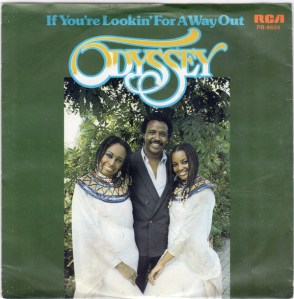
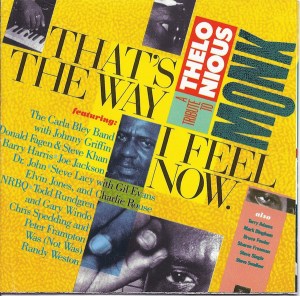
Good Things with Good Names: Scritti Politti, Talking Heads, Jamaladeen Tacuma, Half Man Half Biscuit, Stump, Fields Of The Nephilim, Virgin Prunes, The Screaming Blue Messiahs, Magnus Pyke, Los Lobos, De La Soul, Arvo Part, Shut Up ‘N Play Yer Guitar, Valentin Silvestrov, Public Enemy, LL Cool J, Tone Loc, Derek B, Monie Love, Gaye Bikers On Acid, Betty Boo, They Might Be Giants, ‘The Citadel Of Chaos’, ‘The Forest Of Doom’, ‘Codename Icarus’, Chevy Chase, Kim Basinger, Adrian Belew, Trevor Horn, Mike Patton, We’ve Got A Fuzzbox And We’re Gonna Use It, The Slits, Tackhead, Boo Hewerdine, ‘Slave To The Rhythm’, Robbie Shakespeare, Green Gartside, Paddy McAloon, Donna Summer, Terence Trent D’Arby, Echo And The Bunnymen, 808 State, All About Eve, Killing Joke, Steve Vai, Dweezil Zappa, Ben Volpeliere-Pierrot, Skylarking, Cleo Rocos, ‘Variations On The Carlos Santana Secret Chord Progression’, Hipsway, Loose Tubes, Cocteau Twins, ‘In-A-Gadda-Stravinsky’, Desperately Seeking Fusion, Shelleyan Orphan

Good Things with Bad Names: Prefab Sprout, The The, Yngwie Malmsteen, Dire Straits, Adam Ant, Boy George, Bow Wow Wow, Talk Talk, The Thompson Twins, A Guy Called Gerald, Herb Alpert, Faith No More, Dan Aykroyd, Cosey Fanni Tutti, Throbbing Gristle, It Bites, The Bible, Frankie Goes To Hollywood, Danny Wilson, Tears For Fears, Red Hot Chili Peppers, Living Colour, 24-7 Spyz, Bucks Fizz, Wham!, The Dream Of The Blue Turtles, Anvil, A Certain Ratio, 23 Skidoo, Deacon Blue, Curiosity Killed The Cat, The Hooters, John Cougar Mellencamp, Bryan Adams, Luther Vandross, Steve Stevens, Ozric Tentacles, The Teardrop Explodes

Bad Things with Good Names: Zodiac Mindwarp And The Love Reaction, Butthole Surfers, New Model Army, Twisted Sister

Bad Things with Bad Names: Jane’s Addiction, Johnny Hates Jazz, Then Jerico, The Blow Monkeys, Cactus World News, Pee-Wee Herman, Ned’s Atomic Dustbin, Pop Will Eat Itself, Jesus Jones, Yazz And The Plastic Population, Diesel Park West, Insane Clown Posse, Milli Vanilli, Vanilla Ice, Kajagoogoo, Enuff Z’Nuff, Kenny G, Dr And The Medics, Del Amitri, Bruce Hornsby And The Range, Sigue Sigue Sputnik, Megadeth, Duran Duran, Spandau Ballet, U2, Mike And The Mechanics, Inspiral Carpets, James

Frank Zappa: ‘I Don’t Wanna Get Drafted’ 40 Years On

Recently, I was pleased and very surprised to hear a youngish (30s?) sales assistant playing Zappa’s Apostrophe while guarding the till at a local charity bookshop.

A quick and enjoyable conversation led us to agree that of all the major music figures who emerged during the ’60s and ’70s, FZ may be the least respected/understood these days.

You’ll seldom see a major piece about him in the heritage rock magazines, and the family estate keep a close eye on such, but if you do, it’ll probably focus on the ‘golden’ era – i.e. the late 1960s.

Many were turned off by Zappa’s unapologetic, un-PC lyrical stance as the ’70s turned into the ’80s. But his musical intelligence is beyond question and pretty much unprecedented in the ‘rock’ era.

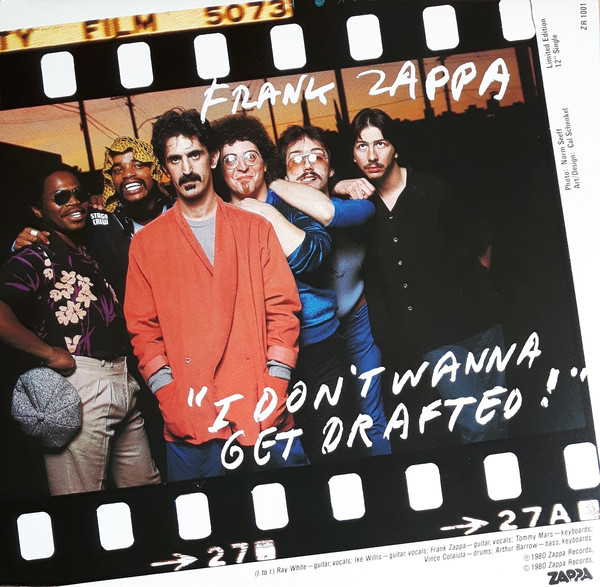
Frank kicked off the decade with the release of the stand-alone ‘I Don’t Wanna Get Drafted’ single, recorded on 16 and 17 February 1980 at Ocean Way in Los Angeles and released 40 years ago this month. A satirical comment on the draft policy of the Carter administration, it was the first product issued on his own Barking Pumpkin label – and reached #3 in the Swedish singles chart!

The single kicked off an incredibly busy decade for FZ. Two major albums – Francesco Zappa and Thing-Fish – were even released on the same day in 1984. Then there were the two albums of guitar solos (one triple and one double), three major orchestral works and hundreds of instrumental pieces for the Synclavier. Not forgetting many other studio/live albums, compilations, and two books, ‘Them Or Us’ and ‘The Real Frank Zappa Book’, though both contained some previously-published material.

In the live arena, Zappa embarked on major tours in 1980, 1981, 1982, 1984 and 1988. Now that he, Miles Davis and Joe Zawinul are gone, it’s hard to imagine that any other major artist will ever again play such virtuosic, challenging music in front of large crowds, whilst also blooding young musicians in the process. Author Ben Watson memorably described FZ’s final 1988 tour as ‘the wildest and most speculative music…heard in rock arenas since the days of Cream, Hendrix and the Mothers Of Invention’.

One of the only pleasures of lockdown has been discovering some ’80s FZ works I hadn’t heard (Francesco Zappa, London Symphony Orchestra Vols. 1 and 2) via Charles Ulrich’s excellent book ‘The Big Note’.

What struck me again is the lack of sentimentality in his music (off the top of my head, only three ’80s tracks feature those major-seventh chords: ‘I Don’t Wanna Get Drafted’, ‘Jumbo Go Away’ and ‘Jesus Thinks You’re A Jerk’), something else that seems to drive ‘rock’ critics crazy.

It ain’t all good, but the best of Zappa’s ’80s output is absolutely superb, and it really pays to have a root around in his discography. I’ve tried to separate the wheat from the chaff here. There’ll never be anyone like FZ again.

London Lockdown Circa 1980: ‘Babylon’ & ‘Breaking Glass’

One of the few positives of this lockdown may be investigating your local area more than usual, courtesy of the ‘permitted’ (approved by UK government) daily walks.

And if London is your manor, the mostly-silent, near-empty streets may just take you back to the city of your youth, when car ownership was relatively rare and there was plenty of room to kick a football or swing a cricket bat – mainly for sporting purposes, you understand.

Joking aside, London felt pretty edgy at the turn of the ’80s. Youth subcultures fought each other, and the police fought them. Some parts of the city had barely moved on from the Victorian era. There were great swathes of wasteland, still reeling from World War 2 bombs. Tube trains and stations were often deserted and you might even get a slap (there didn’t seem to be many knives around) if you wandered into the ‘wrong’ neighbourhood (hello Gary Bates…). This great bit of archive TV from 1982 sums up the era very well:

It was a London also accurately captured by feature films like ‘The Long Good Friday’, ‘Babylon’, ‘The Clash: Rude Boy’, ‘DOA’, ‘The Great Rock’n’Roll Swindle’ and ‘Breaking Glass’, all released 40 years ago. ‘Babylon’ was illuminated by sumptuous photography by legendary Brit cinematographer Chris Menges (‘Kes’, ‘The Mission’, ‘The Killing Fields’), capturing rundown, turn-of-the-decade Lewisham, south-east London, site of a notorious August 1977 battle between the National Front and 10,000 protestors.

All of these films accurately capture the energy of inner-city life during the late-’70s and early-’80s, and the pressures of young people living at the sharp end of recession, racism and unemployment. Also ever-present is the constant theme of music-business skullduggery and police brutality. But it’s all shot through with healthy doses of humour and humanity, particularly throughout ‘Babylon’.

For all the benefits of ‘gentrification’ and the corporate restructuring of the capital, true Londoners of a certain age probably feel a tinge of nostalgia about the time when they seemed to own the streets, when there were many secrets to be found in the city’s nooks and crannies – for better or worse.

Jeff Beck @ The Royal Albert Hall: 1983 v 2004

Legendary producer/engineer Glyn Johns has worked with many of the biggies (The Beatles, Led Zep, The Stones, The Who), but arguably his most important task was putting together the Action for Research into Multiple Sclerosis (ARMS) concerts on Ronnie Lane’s behalf.

For the London iteration – taking place at the Royal Albert Hall on 20 September 1983 – Johns opened his address book and assembled a tremendous lineup of Brit greats: Jimmy Page, Eric Clapton, Jeff Beck, Steve Winwood, John Paul Jones, Andy Fairweather-Low, Bill Wyman, Kenney Jones, Charlie Watts.

The whole concert is worth watching and occasionally superb (check out Clapton’s versions of ‘Lay Down Sally’ and ‘Cocaine’), but Beck’s set is particularly fascinating. It was three years since his (superb) last studio album There And Back and he hadn’t played a major gig for almost that long.

A clearly under-rehearsed band did their best with the RAH’s famously dodgy ‘rock’ sound (despite Beck’s gorgeous stereo delay, if you’re listening on headphones/speakers), not helped by drummer Simon Phillips being set up about 20 yards behind the rest of the group!

But it’s a great success, mainly through the musicians’ sheer force of will and Beck’s outrageous playing (check out his solo on ‘Led Boots’). The Tony Hymas/Fernando Sanders/Phillips rhythm section is terrific, and there’s even a funny version of ‘Hi Ho Silver Lining’ featuring Beck’s reluctant vocals alongside Winwood and Fairthweather-Low.

Just over 20 years later, on 24 June 2004, Beck was back at the Albert Hall for his 60th birthday gig, and I had a good seat. His live outings were much more common at this point; recently he’d played Hyde Park and also celebrated 40 years in the music biz at the Royal Festival Hall with John McLaughlin and The White Stripes.

But this concert was particularly notable for featuring enigmatic keyboard genius Jan Hammer, one-time Mahavishnu member and chief collaborator with Beck on Wired and There And Back. Making up the numbers were the phenomenal Mondesir brothers: Mike on bass, Mark on drums.

Beck hardly seemed to have aged. Wearing black jeans and black vest, he stalked the stage like a born showman, exchanging grins and winks with Hammer, occasionally punching the air to emphasise a musical flourish.

However, things started a little uncertainly; ‘Freeway Jam’ and ‘Star Cycle seemed leaden. But by the time Beck roared into ‘Big Block’, the energy level of the band had gone up two or three notches.

Old favourites ‘Goodbye Pork Pie Hat’, ‘Where Were You’ and ‘Blue Wind’ seemed to mean little to the Albert Hall audience but the long-hairs reacted more positively to Beck’s most recent work from albums like You Had It Coming and Who Else?.

There were some unintentionally amusing Tap-esque moments too, like the big-screen footage of Jeff’s souped-up hot rods during ‘Big Block’ and the cloud of dry ice which almost engulfed him during ‘Goodbye Pork Pie Hat’.

For the encore, Ronnie Wood sauntered on to play a charmingly ramshackle version of The Meters’ ‘Cissy Strut’. Two old rockers from Surrey playing a funky New Orleans anthem? That’s the majesty of fusion!

So, while they’re still around, let’s cherish El Becko and the best of British. (And I can’t believe this is the first time I’ve featured Jeff – one of my all-time musical heroes – on this website. Better late than never.)

Story Of A Song: Prefab Sprout’s ‘Nightingales’ (1988)

Prefab Sprout’s 1988 album From Langley Park To Memphis was their pop breakthrough, reaching #5 in the UK charts, and is probably most casual fans’ favourite.

But let’s take a close look at the fifth track, the epic ‘Nightingales’. Featuring Stevie Wonder on harmonica and released as the fourth single from From Langley Park in November 1988, it remains one of Prefab’s most beguiling songs.

Written by Paddy McAloon under the influence of Barbra Streisand’s Broadway Album, it’s a stellar piece of work by any standards; melody, harmony and lyric are inextricably linked, as if the song had always existed and was just plucked out of the air.

Thought follows thought, musical idea follows musical idea completely naturally, without any songwriter ‘tricks’ such as looped chord sequences or vamps.

It’s fair to say that by the time of From Langley Park’s recording, McAloon was becoming a proficient pianist; eight of ten songs on the album were written on keyboards, including ‘Nightingales’.

Its harmonic concept, with an emphasis on major-seventh chords (including an audacious jump from F#m7 to Cmaj7 in bars four and five of the chorus) and triads superimposed over apparently unrelated root notes, possibly reveals a Brian Wilson influence, but the final effect is more Stephen Sondheim than ‘Surf’s Up’.

‘Nightingales’ also has no apparent antecedents in the 1980s pop firmament, though, at a stretch, approaches one of Green Gartside and David Gamson’s gossamer Scritti Politti ballads.

In a year when Acid House and the ‘Madchester’ sound were gestating and Stock Aitken Waterman ruled the charts, McAloon delivered something unabashedly romantic and somewhat old-fashioned; the opening line (‘Tell me do, something true‘) and general tenor of the lyric are more akin to ‘Daisy Bell’ than anything by the Stone Roses (and Paddy made no secret of his general distaste for late-’80s pop).

The song’s protagonist analyses his love affair, asking his paramour whether their love is fleeting like a ‘firework show’ or whether it’s a lasting, valuable entity. They agree that such questions are unhelpful and/or irrelevant – the key is to live in the moment.

‘Nightingales’ was co-produced by Jon Kelly and McAloon. By 1987, London-born Kelly was an experienced, highly-regarded producer and engineer, probably best known as one of Kate Bush’s key early collaborators on the classic 1980 album Never For Ever.

He had also worked on successful albums by Chris Rea (Dancing With Strangers) and Paul McCartney (Ram) and just produced Deacon Blue’s debut album Raintown, the latter definitely influenced by Prefab.

Double and triple-tracked keyboard parts dominate ‘Nightingales’, played by McAloon and legendary British session player Wix, AKA Paul Wickens. They closely follow the chord voicings of McAloon’s original acoustic piano demo, echoed on this lovely live version from 2000:

By the time of the first chorus, sampled sleigh bells and silky Synclavier drums are added to the mix alongside McAloon’s rather incongruous but effective (sampled?) banjo. Robin Smith’s widescreen string arrangement becomes increasingly prominent throughout the track; particularly notable is a flurry of ascending, almost celestial notes in three distinct phases beginning at 2:14 (and check out the rustle of fake locusts at 4:26!).

Stevie Wonder had long been a hero of McAloon’s, the album Journey Through The Secret Life Of Plants being a particular favourite. Mentioning as much to Prefab manager Keith Armstrong one day, Paddy half-joked that a Stevie harmonica solo on ‘Nightingales’ would really bring the track to life.

Armstrong stunned McAloon by informing him that he was a good friend of Wonder’s operations manager Keith Harris and would put in a good word for the band (it’s also worth noting that Wonder played some sublime harmonica on Thomas Dolby’s ‘Don’t Turn Away’ a year before the recording of ‘Nightingales’ – perhaps Thomas gave the band a good reference…).

Wonder’s harmonica solo for ‘Nightingales’ was recorded in a very rushed session during September 1987 at Westside Studios in Notting Hill, West London. He apparently learnt the song quickly, disappearing into a corner of the studio with a rough mix on his Walkman, and then recorded two takes in the lower octave and two in the higher. The released solo is a composite of the four.

Richard Moakes was the young engineer tasked with capturing Wonder’s solo on tape. According to McAloon:

He (Moakes) looked at me and said, ‘Oh God, I’m a bit worried I won’t know how to get his sound’. I said, ‘Well, look, we’ll just see what happens’. And of course you put the microphone on him and you turn the fader up and he sounds like Stevie Wonder. You don’t do anything. Unless you’re doing something really silly, you’ll get it and it will be identifiable. So I thought, OK, when you play a guitar, don’t blame an engineer if you don’t know what you’re doing…

New York mix engineer Michael Brauer cooked up the 12” version of ‘Nightingales’. He made some drastic changes from the 7” single, placing the sleigh bells right at the front of the mix, reinstating some of Wendy Smith’s stacked backing vocals originally left on the cutting room floor, stripping McAloon’s lead vocal of its reverb (though adding a lot more to the snare drum) and leaving more space for Smith’s string arrangement and McAloon’s banjo.

A video was also made, though it’s almost impossible to track down these days.

18 Great Goals From The 1980s

So it looks like the football season is ending with barely a whimper, and we may not see any pro tennis or cricket at all this summer.

Time to indulge in a little nostalgia. Here are some memorable goals of the 1980s, in no particular order, a decade during which this writer cared passionately about the game (favourite players: Glenn Hoddle, Bryan Robson, Ray Houghton, Matt Le Tissier, Gordon Davies, Steve ‘Headband’ Foster).

Ray Wilkins and Jimmy Case’s strikes have special significance, as I was present at the games, and I certainly would have been watching Ricky Villa, Steve MacKenzie and Norman Whiteside’s wondergoals live on the TV. But all of the below still deliver a frisson of excitement.

18. Graeme Souness: Liverpool v Luton Town, 5 February 1982

17. Ricky Villa: Spurs v Wolves, April 1981

16. Terry McDermott: Liverpool v Spurs, 1980

15. Jan Molby: Liverpool v Manchester United, 26 November 1985

14. Ray Wilkins: Manchester United v Brighton, 21 May 1983

13. John Barnes: England v Brazil, 10 June 1984

12. George Best: San Jose Earthquakes v Fort Lauderdale Strikers, June 1981

11. Norman Whiteside: Manchester United v Everton, 18 May 1985

10. Jimmy Case: Brighton v Sheffield Wednesday, 16 April 1983 (at 1:40 below)

9. Diego Maradona: Argentina v England, 22 June 1986

8. Marco Van Basten: Holland v Soviet Union, 25 June 1988

7. Ricky Villa: Tottenham Hotspur v Manchester City, 14 May 1981

6. Glenn Hoddle: Tottenham Hotspur v Watford, 24 September 1983

5. Justin Fashanu: Norwich City v Liverpool, 9 February 1980

4. Cyrille Regis: West Bromwich Albion v Norwich, 13 February 1982

3. Graeme Sharp: Everton v Liverpool, 20 October 1984

2. Steve MacKenzie: Manchester City v Tottenham Hotspur, 14 May 1981

1. Kenny Dalglish: Scotland v Belgium, 15 December 1982

Any great 1980s goals missing from the list? Get in touch below.

Lou Reed: Best Of The 1980s

Lou’s gallows humour has been giving me a lift recently, a tonic for these troubled times.

There’s just something very apt about his cast of characters ‘that just squeak by’, with no hope of salvation.

His marriage of rock’n’roll music with the language of Burroughs, Ginsberg, Chandler and Tennessee Williams also seems totally timeless, and it’s barely believable that we’re approaching seven years since his death.

The predictable critical narrative is that Reed had a dodgy 1980s, not releasing a decent album until New York. But I’d throw in ’82’s The Blue Mask and ’84’s New Sensations too; by my reckoning, his only dog of the decade is 1986’s Mistrial.

Here’s a selection of the good stuff, often featuring such quality players as Robert Quine, Fernando Sanders, Fred Maher and L Shankar. He put a lot out there, addressing jealousy, addiction, violence, ecological issues. A cliché though it may be, it’s hard to imagine anyone getting away with some of this these days.

Check out the playlist here and lyrics below. Keep calm and listen to Lou…

‘The Power Of Positive Drinking’ (1980)

Some like wine and some like hops
But what I really love is my scotch
It’s the power, the power of positive drinking

Some people ruin their drinks with ice
And then they ask you for advice
They tell you, I’ve never told anyone else before

They say, candy is dandy but liquor makes quipsters
And I don’t like mixers, sippers or sob sisters
You know, you have to be real careful where you sit down in a bar these days

And then some people drink to unleash their libidos
And other people drink to prop up their egos
It’s my burden, man
People say I have the kind of face you can trust

Some people say alcohol makes you less lucid
And I think that’s true if you’re kind of stupid
I’m not the kind that gets himself burned twice

And some say liquor kills the cells in your head
And for that matter so does getting out of bed
When I exit, I’ll go out gracefully, shot in my hand

The pow-pow-pow-pow-power of positive drinking


‘Average Guy’ (1982)

I ain’t no Christian or no born-again saint
I ain’t no cowboy or a Marxist DA
I ain’t no criminal or Reverend Cripple from the right
I am just your average guy, trying to do what’s right

I’m just your average guy, an average guy
I’m average looking and I’m average inside

I’m an average lover and I live in an average place
You wouldn’t know me if you met me face to face

I worry about money and taxes and such
I worry that my liver’s big and it hurts to the touch
I worry about my health and bowels
And the crimewaves in the street

I’m really just your average guy
Trying to stand on his own two feet
Average looks, average taste, average height, average waist
Average in everything I do
My temperature is 98.2


‘Turn To Me’ (1984)

If you gave up major vices
You’re between a hard place and a wall
And your car breaks down in traffic on the street

Remember, I’m the one who loves you
You can always give me a call
Turn to me, turn to me, turn to me

If you father is freebasing and your mother turning tricks
That’s still no reason that you should have a rip
Remember, I’m the one who loves you
You can always give me a call
Turn to me, turn to me, turn to me

When your teeth are ground down to the bone
And there’s nothing between your legs
And some friend died of something that you can’t pronounce

Remember, I’m the one who loves you
You can always give me a call
Turn to me, turn to me, turn to me

You can’t pay your rent
Your boss is an idiot
Your apartment has no heat
Your wife says maybe it’s time to have a child

Remember, I’m the one who loves you
You can always give me a call
Turn to me, turn to me, turn to me

When it’s all too much
You turn the TV set on and light a cigarette
Then a public service announcement comes creeping on
You see a lung corroding or a fatal heart attack
Turn to me, turn to me, turn to me


‘Doin’ The Things We Want To’ (1984)

The other night we went to see Sam’s play
Doin’ the things that we want to
It was very physical, it held you to the stage
Doin’ the things that he want to
The guy’s a cowboy from some rodeo
Doin’ the things that we want to
The girl had once loved him, but now she want to go
Doin’ the things that we want to
The man was bullish, the woman was a tease
Doin’ the things that we want to
They fought with their words, their bodies and their deeds
Doin’ the things that we want to
When they finished fighting, they excited the stage
Doin’ the things that we want to
I was firmly struck by the way they had behaved
Doin’ the things that we want to …
It reminds me of the movies Marty made about New York
Doin’ the things that we want to
Those frank and brutal movies that are so brilliant
Doin’ the things that we want to
‘Fool For Love’ meet ‘The Raging Bull’
Doin’ the things that we want to
They’re very inspirational, I love the things they do
Doin’ the things that we want to
There’s not much you hear on the radio today
Doin’ the things that we want to
But you still can see a movie or a play
Doin’ the things that we want to
Here’s to Travis Bickle and here’s to Johnny Boy
Doin’ the things that we want to
Growing up in the mean streets of New York
Doin’ the things that we want to
I wrote this song ’cause I’d like to shake your hand
Doin’ the things that we want to
In a way you guys are the best friends I ever had
Doin’ the things that we want to

Jamel v. Mid-Music Crisis

You’ve heard of a midlife crisis, but is there such a thing as a mid-music crisis?

A time when music has lost its shine and you’ve heard it all before? The new stuff sounds derivative and you’ve forgotten exactly why you took to your old favourites?

An antidote may be at hand, in the shape of Jamel_AKA_Jamal (Jamel Griffin), a YouTuber and music fan from South Central Los Angeles. Born in 1980, he was brought up mainly on hip-hop but also a kind of shared American music heritage, so he’s familiar with ‘classic rock’ staples of the last 50 years without necessarily being able to identify bands or artists.

On his YouTube channel, he’s been seeking viewer recommendations for ‘reaction’ videos (put simply, he films his reactions to hearing a ‘new’ track, and responds in real time). As far as I can make out, thus far the tunes have mainly been of a rockist bent (Rush, ZZ Top, Mr Bungle, Living Colour, Doobie Brothers), but then I came across his take on Steely Dan.

His spontaneous reactions reveal a shrewd interpretation of the lyrics and a rare appreciation for the music. He also reminds me exactly why I loved the band in the first place, bringing the joy and soul of a true fan. With added humour. I’m now bingeing on his excellent Steely vids, but it all started here:

Huey Lewis & The News: Weather

It’s not easy to make happy music.

But there was a lot of it about in the 1980s, and Huey Lewis And The News were hugely successful purveyors of the uplifting single, particularly during their mid-decade peak when ‘The Power Of Love’, ‘Hip To Be Square’ and ‘Stuck With You’ were seldom off the airwaves.

Does anybody in the world actually dislike this band (Patrick Bateman is a particular fan, of course… Ed.)?

Huey has a great set of pipes and they always deliver a reliable fusion of roots music: blues, R’n’B, rock’n’roll, doo-wop and country, with some pop and soul hooks thrown in too.

New album Weather is their first for ten years. Huey has had hearing problems due to a recent onset of Meniere’s Disease, about which he’s reliably sanguine, recently telling Classic Pop magazine: ‘Things could always be worse. After all, I’m deaf, not dead…’

Weather is only 26 minutes long. It’s intended as a followup of sorts to their most popular album Sports. Geddit? Sports and weather… These are simple songs, well played and well written, with decent melodies, bridges, middle-eights and nice guitar or sax solos.

And this time ’80s mixmaster general Bob Clearmountain (Simple Minds, Bryan Adams, Hall & Oates) is on hand to deliver a rich, punchy sound, with everything in exactly its right place.

‘While We’re Young’ is a witty R’n’B song about ageing. You can almost imagine Donald Fagen doing it. ‘Her Love Is Killing Me’ is out of the Robert Cray school. The Blues Brothers would have done a great version.

‘Hurry Back’ features a classic Texas shuffle and some decidedly Stevie Ray-style lead guitar. It won’t win any #woke points for its one-night-stand theme – but who cares.

The funky ‘Remind Me Why I Love You Again’ also scores highly on the un-PC scale to amusing effect, Huey complaining that his resolutely modern squeeze refuses to cook or clean.

There’s even a cover of Eugene Church’s 1958 doo-wop standard ‘Pretty Girls Everywhere’, complete with ‘boogalee-woogalee’ backing vox. And gentle C’n’W closer ‘One Of The Boys’ is touchingly faux-naive about Huey’s place in the world: ‘Yes I’m playing with my friends/Until the music ends‘.

Weather is not cool, certainly not hip, but effortlessly enjoyable. Somehow Huey Lewis And The News still sound like the best bar band you’ve ever heard in your life.

The Cult Movie Club: John Carpenter’s ‘The Fog’ 40 Years On

What with ‘The Lighthouse’ and ‘Bait’, you can’t move for nautically-themed movies at the moment.

But it’s arguable whether either are as effective as John Carpenter’s ‘The Fog’, released 40 years ago today.

But then I’m biased: aside from Carpenter’s ‘Halloween’ and ‘American Werewolf In London’, it was one of the first scary movies I was allowed to watch in my teenage years, and subsequently inspired a dodgy short horror novel of my own (‘The Ghost Of The Drowned Sailor’…).

Revisiting it this week for the first time in ages, it delivered all sorts of treats though these days is scarcely mentioned alongside ‘Halloween’, ‘Assault On Precinct 13’ and ‘The Thing’ in the list of bona fide Carpenter classics.

Shot mainly in coastal California around Point Reyes, Bodega Bay and Inverness, ‘The Fog’ was a brave move on Carpenter and producer/co-writer Debra Hill’s part, following up ‘Halloween’ by mostly eschewing the slasher format (it’s interesting to note that both ‘The Shining’ and ‘Friday The 13th’ were released two months later, in May 1980) in favour of a seemingly old-fashioned ghost story inspired by a trip to Stonehenge and the writings of Edgar Allan Poe.

This attempt at a different kind of movie caused problems when Carpenter’s original cut was deemed too moody and not supplying the requisite scares for post-‘Halloween’ sensibilities.

Many scenes were re-shot and some new ones added just a few months before release, including the opening ghost story, ‘Close Encounters’-style scene-setting and top-of-the-lighthouse finale. The music and sound effects were also reworked.

Watching the 2002 DVD edition, the first thing I noticed is the gorgeous lighting and camerawork. Its sharp, crisp colours and composition are a great testament to the lab technicians (heralded by Carpenter on his DVD commentary) and director of photographer Dean Cundey, who has since gone on to be one of the premier DPs in Hollywood.

The impressive miniature/model work, widescreen lenses and evocative coastal locations give a lot of bang for relatively little buck (‘The Fog’ was eventually brought in at just over $1 million). ‘The Fog’ also benefits from an excellent central performance from Adrienne Barbeau as the Hawksian, Bacall-voiced DJ Stevie Wayne (and spinner of Steely Dan-approved big-band and light jazz/fusion tunes).

She and co-writer Debra Hill manage to root the hokum in a credible, sympathetic, rounded character. It’s also great fun to see Janet Leigh appearing in the same movie as her daughter Jamie Lee Curtis, and Nancy Loomis delivers her usual amusingly insouciant line readings.

Effects man extraordinaire Rob Bottin features as head ghost Blake, heading up a very rock’n’roll-looking bunch of ghouls, though arguably the movie would have benefitted from a little less ‘show’ and a little more ‘tell’ in the last 20 minutes. Seeing Blake in plain sight at the end is always a bit of a disappointment, despite the glowing red eyes.

But editors Charles Bornstein and Tommy Lee Wallace deserve much credit for building tension in the last third with shrewd, snappy cutting (sometimes seamlessly between studio/location shots). Carpenter’s excellent soundtrack cribs a little from Michel Legrand’s famous score for ‘The Go-Between’ but has some marvellous sections, particularly during Barbeau’s ‘look for the fog’ closing speech (obviously very influenced by a similar ending to Howard Hawks’ ‘The Thing’).

‘The Fog’ was a hit (despite Siskel and Ebert’s stinking review, see below), earning around $20 million against its $1 million budget. It was a lot of fun to revisit it again, and looks like just the low-budget horror classic I always remembered it to be, with more imagination and storytelling elan than 99% of other genre offerings.

Happy birthday to a true cult classic. Now, what’s that sound? Who’s rapping on my door at this hour? Goddamn kids… They won’t like finding me at home…