Miles Davis: Tutu 30 Years Old Today

miles tutu1985 was a year of upheaval for Miles Davis.

Though he had recorded the very successful You’re Under Arrest and was in some of his best trumpet lip of the ’80s, his relationship with Columbia Records was at an all-time low.

For one, the label’s other star trumpeter Wynton Marsalis was at his peak of popularity, and, as far as Miles was concerned, Columbia boss Dr George Butler only had eyes for Wynton.

Then Miles felt that Columbia had procrastinated over releasing his cover of the Cyndi Lauper song ‘Time After Time‘ as a single. At the time, with typical mordant humour, Miles said, ‘He (George Butler) ignored it because he’s so busy with Wynton Marsalis. He heard us do it at the Montreux Jazz Festival last year and said “We gotta do it! We gotta do it!” I said, “George, I told you man. We already did it!” And he still didn’t release it…’

And the final nail in the coffin seemed to be Columbia’s unwillingness to put any financial clout behind Miles’s stunning collaboration with Danish trumpeter/composer Palle Mikkelborg, Aura, recorded at the beginning of 1985. For unknown reasons, the music didn’t see the light of day until 1989.

Again, in contemporary interviews, Miles rounded up the usual suspects: ‘I wanted $1400 for a digital remix and Columbia wouldn’t pay it. And then George Butler calls me up. He says to me, “Why don’t you call Wynton?” I say, “Why?” He says, “Cos it’s his birthday!” That’s why I left Columbia.’

Later reports had Miles carrying out Butler’s request, barking ‘Happy Birthday!’ to Marsalis and then slamming down the phone.

Miles officially became a Warner Bros. artist in autumn 1985. House producer Tommy LiPuma was delighted to get him – but what to do with him? Miles first took his touring band into the studio and embarked on a kind of You’re Under Arrest part two, covering tunes by Mr Mister, Nik Kershaw and Maze.

But this project was quickly abandoned, and Miles contacted various musicians including Prince (who supplied the rather humdrum ‘Can I Play With U’, later replaced by Marcus Miller’s ‘Full Nelson’), George Duke, Bill Laswell, Paul Buckmaster and Toto’s Steve Porcaro. He was desperate for new music and a new direction.

But he finally settled on an old contact, Randy Hall, the young Chicago multi-instrumentalist who had worked on his comeback album The Man With The Horn back in 1981.

Around a dozen tracks were completed between October and December 1985 in what was now known as the Rubber Band project. However, again for unknown reasons, the project was shelved, LiPuma quoted as saying, ‘I didn’t hear anything. To me, it didn’t sound like nothing was going on.’

Other collaborators were quickly suggested and then discarded including keyboardists Lyle Mays and Thomas Dolby. So Miles went back to George Duke. Their paths had crossed many times over the years, particularly when Duke was playing keyboards with Cannonball Adderley in the early ’70s.

As Duke remembers, ‘When Miles called, I initially thought it was a prank, one of my friends impersonating him. So I didn’t do anything, and a week later he called again. I said, “Who is this?” and he started swearing at me, “Mother****er, write me a song!”‘

It seems finally that George Duke’s demo of ‘Backyard Ritual‘ was deemed a direction worth pursuing by Miles and LiPuma. A strong, drum-heavy track put together by Duke using a Synclavier digital sampler with a simple but memorable main motif, he never intended it to be used as a final version, highlighted by the rather cheesy sampled alto sax solo.

But Miles eventually used almost the whole demo for Tutu, embellishing it only with some slithering percussion by Steve Reid and Paulinho Da Costa and of course his own pristine trumpet playing.

Miles’s take on it was that he respected a quality arrangement, demo or not: ‘A guy like George Duke, he writes a composition, it’s all there. All you have to do is play on it and respect that man’s composition’, he told writer and musician Ben Sidran.

And Duke revealed that he had even played a ‘sampled’ trumpet solo on the original demo, which tickled Miles. Duke: ‘He said to me, “You think that’s the way I play trumpet?” And I said, “That’s the way it sounds to me!”‘

At the beginning of 1986, Marcus Miller phoned Tommy LiPuma out of the blue. The bassist and composer had of course played in Miles’s comeback band from 1981 to 1983.

He had since made two solo albums and worked with a huge variety of artists, from Luther Vandross and Aretha Franklin to Bryan Ferry and Carly Simon, and was aware that Miles had migrated to Warner Bros and wondered if he was looking for new songs.

LiPuma sent him the ‘Backyard Ritual’ demo; Miller was instantly inspired: ‘I thought, “Wow, if Miles is willing to use drum machines and stuff, let me show my take on that.” I wasn’t directly musically influenced by George’s track but it gave me a direction.’

Miller wrote and recorded demos for ‘Tutu‘, ‘Portia‘ and ‘Splatch‘ back-to-back, playing all the instruments himself. Previewing the tracks with Miles and LiPuma in LA in March 1986, he got an immediate green light to turn this into an album project – this was the direction they had been looking for.

Miller began recording the final versions of the three tunes immediately with the help of keyboardist and programmer Adam Holzman.

There’s been a lot of speculation as to why none of Miles’s touring band were invited to play on the Tutu sessions, with opinions differing as to who made the decision. Miller insists, ‘I wasn’t party to the decision not to use the live band but Tommy didn’t push me in any direction. He let me do my thing.’

Miles seemed to resign himself to the convenience of the situation, saying, ‘Rather than get myself, the working band and Tommy into all kinds of hassles by trying to bring my band in the studio to record music I might like, but Tommy doesn’t, we do it this way.’

Consequently, although some choice session players appear on the album, such as drummer Omar Hakim and the aforementioned Paulinho Da Costa, as well as some of Miller’s trusted friends and collaborators like keyboardist Bernard Wright, synth programmer Jason Miles and electric violinist Michal Urbaniak, there’s a unified sound to Tutu that comes directly from Miller’s contributions on fretted and fretless basses, keyboards, drum programming and occasional live drums.

His soprano sax acts as Miles’s main instrumental foil on the album, particularly evident on the call-and-response phrases in ‘Tomaas’.

Once the backing tracks had been laid down, LiPuma and Miller documented Miles’s trumpet playing as spontaneously as possible without resorting to too many ‘comp’d’ takes (final versions made up of several performances).

Apart from this being a necessity as Miles didn’t like to do more than two takes, it was also an intelligent arrangement idea serving as a contrast to the painstaking and meticulous piecing together of the backing tracks.

According to legend, Miles’s solos on the title track and ‘Portia’ are complete takes from beginning to end. Miller found himself performing on soprano sax at the same mic as Miles during the recording of ‘Portia’. He called it ‘one of the most tense experiences I’d ever had’.

But, by most accounts, Miles was a receptive and willing participant in the creative process, once telling Miller, ‘Come on, man, I don’t mind a little bit of direction! You wrote the tunes. Tell me where you want me to play.’ Again, Miles demonstrates his total respect for the composer.

Miles was also reportedly responsible for the inclusion of one of the more controversial cuts on the album, the Scritti Politti cover tune ‘Perfect Way‘. Miles apparently cajoled Miller into recording the song, believing it had the potential to be the new ‘Time After Time’, and even wanted to call the album ‘Perfect Way’ until just before release.

But Miller expressed reservations about replicating Scritti’s legendary ‘Swiss watch’ arrangements, and with good reason – the Tutu version does sound rather laboured and weedy compared to the original. But Miles remained a big Scritti fan and two years later made a memorable guest appearance on their ‘Oh Patti’ single.

So has Tutu stood the test of time? The title track, ‘Portia’ and ‘Tomaas’ would surely be right at home on any Miles best-of, with their majestic themes, engaging harmonies, slinky grooves and strong trumpet playing.

‘Full Nelson‘ remains a great tribute to Prince’s sound circa Parade and Sign Of The Times, while ‘Don’t Lose Your Mind‘ is a classy approximation of Sly and Robbie‘s mid-’80s collaborations. But ‘Perfect Way’, ‘Backyard Ritual’ and ‘Splatch’ unfortunately now sound suspiciously like beautifully-produced filler.

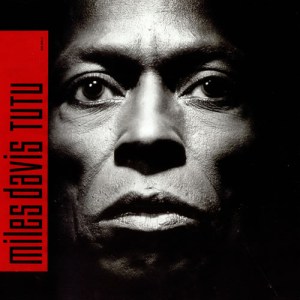
But, taken as a whole, Tutu is a very important album whose success was helped immeasurably by Irving Penn‘s striking cover portrait. It crystallised Miles’s interest in funk, soul and R’n’B more successfully than Decoy or You’re Under Arrest, whilst retaining a crucial ‘jazz’ flavour.

It was also a statement of political intent and black pride, significantly referencing both Archbishop Desmond Tutu and Nelson Mandela in its song titles. And – perhaps most crucially – it was a hit, introducing a whole new generation to Miles’ unique trumpet sound.

For much more on Tutu and Miles’s ’80s work, check out George Cole’s great book ‘The Last Miles’ and also Paul Tingen’s ‘Miles Beyond’.
Bigmouth Strikes Twice: More Classic 1980s Music Quotes

Art_Blakey_1973

Art Blakey

Here’s another selection of choice quotes taken from various 1980s magazines, TV shows, biographies and anthologies that have drifted through my transom in the last few months.

Check out the first instalment here if you missed it.


‘Morrissey’s a precious, miserable bastard. He sings the same song every time he opens his mouth. At least I’ve got two songs: “Love Cats” and “Faith”.’

Robert Smith of The Cure, 1985


‘George Clinton told me how much he liked Around The World In A Day. You know how much more his words mean than those from some mamma-jamma wearing glasses and an alligator shirt behind a typewriter?’

Prince, 1985


‘It would be nice to meet Madonna and squeeze her bum.’

Level 42’s Mark King looks forward to his first US tour, 1986


‘I hope nobody bought houses.’

Slash/Warners executive Bob Biggs upon hearing a preview of Faith No More’s Angel Dust album (OK, this quote is from the early 1990s, but wtf…). The band had bought houses…


‘The musician is like a house, and the music is like a friend that’s always out there knocking on the door, wanting nothing more than to come in. But you’ve got to get your house in order for music to come in. That’s where discipline comes in.’

Robert Fripp, 1984


‘Like the first side. The second side is rubbish. Miles don’t play jazz no more but feels kind of funny about it, so instead of just admitting that his chops aren’t what they used to be, he puts jazz down.’

Branford Marsalis on Miles Davis’s Tutu, 1986


‘Remember the hits? “Labour Of Love” was inspired by Antonio Gramsci, a love song called “Violently” and a tale of kitchen-sink realism about wife battery called “Looking For Linda”. We heard those songs on Radio 1 back to back with Yazz and we’d piss ourselves laughing. We pulled off the trick three times and I always think that lyrically I can pull it off again.’

Hue & Cry’s Pat Kane remembers the good old days, 1995


‘I have to be myself, and if being in rock music forces me to pretend I am an idiot or that I have to wear tight trousers or a wig, then I have to get another job.’

Sting, 1988


‘I heard the title song (‘Storms’) on the radio and the drum sound still makes me want to cry. I love Glyn (Johns, producer) but there were times during that album when I went back to the hotel to cry.’

Nancy Griffith on her 1989 album Storms, 1991


‘I would say that my entire life has been one massive failure. Because I don’t have the tools or wherewithal to accomplish what I want to accomplish.’

Frank Zappa, 1986


‘I went into the old EMI offices many times in the late ’80s and it never occurred to me to look up in reception and see exactly where that iconic photo had been taken. In the ’80s it seemed we had been looking forward.’

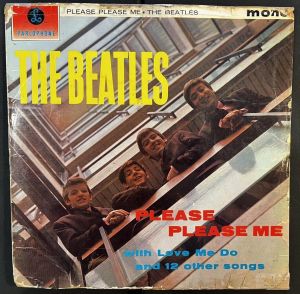
David Hepworth on the famous Beatles photo from the cover of Please Please Me


‘I tried the Jesus and Mary Chain but I just couldn’t believe it. It’s awful! It was so sophomoric – like the Velvets without Lou. I just know that they’re kids from Croydon! I just can’t buy it.’

David Bowie, 1987


‘I was surprised how hip it is. There’s a strange thing I don’t understand of people in Boy George outfits dancing to Jimmy McGriff and old Jackie McLean Blue Note records in discos.’

Guitarist John Scofield on the latest English ‘jazz revival’, 1988


‘Songwriting’s a craft, that’s all. I always knew my lyrics were better than anyone else’s anyway. I just edit more than other people, that’s my f***in’ secret. Also I never sleep and that helps too. You’ve got more time that way.’

Shane MacGowan, 1989


‘I hate having my picture taken, I always look like such a dog.’

Kirsty MacColl, 1989


‘I was a patsy. I never made more than $200 a week at the Five Spot.’

Ornette Coleman looks back on his legendary six-month residency during 1959 and 1960, 1985


‘All of us were naive, not just Ornette. We couldn’t even pay our rents. And they were making lots of money off us. That club was jammed every single night we were there.’

Charlie Haden on the same residency, 1985


‘You walk into the record label and they just weren’t as friendly as they used to be. When the record’s not a success, it’s your fault, and so you take on all those feelings. The label doesn’t sit down and talk to you. And they don’t drop you either, because they don’t want to lose you to the competition – just in case you do come up with something good next. And so they just remain sort of not as friendly, no more: “Hey Kevin, how are you?” It’s a head-f*ck, and you just have to work it out yourself.’

Kevin Rowland on the commercial failure of his 1988 solo album The Wanderer


‘Pop stars live the life of Caesar. And we know where the life of Caesar leads: it leads to blankness, it leads to despair. That’s the real message of these rock stars’ lives. To the public, they represent vitality, youth, innocence, joy. But in private life they represent despair and an infatuation with death.’

Albert Goldman, author of ‘The Lives Of John Lennon’ and ‘Elvis’, 1988


‘I remember sitting next to the stage and seeing all those little red lights glowing on the amps while we waited for the guys to come out and give us a real pasting.’

Allan Holdsworth reminisces about early gig-going, 1985


‘I have the best legs in the business. And they’ve got dancing feet at the bottom.’

David Lee Roth, 1982


‘There’s only one woman I have deep respect for in this industry and that’s Chrissie Hynde.’

Annie Lennox, 1986


‘I would have thought that people would be pleased to have a band that could play half decently.’

Francis Dunnery bemoans It Bites’ poor standing with the British music press, 1989


‘Sometimes he would call for Monk out of the clear blue sky. “Thelonious! Come save me from these dumb young motherf*ckers!”‘

Wynton Marsalis on playing with Art Blakey in the early 1980s


‘Prince really wants to be white. I know what that’s like. I tried hard to be white too.’

Daryl Hall, 1985


‘What we do is an alternative to Elton John and Chris Rea and all those old bastards who were there and still are. It’s embarrassing to see these old people like Dire Straits doddering about, they’re hideous.’

Robert Smith, 1989


‘I’ll tell you what I dig. In the Sting movie “Bring On The Night”, Omar Hakim taking off on that tune. Like Tony Williams, Jack DeJohnette. That’s being real free and comfortable. I don’t take my drums seriously, and they do.’

Drummer for the stars Jeff Porcaro, 1989


‘I believe that Bill (Bruford) and Adrian (Belew) thought that Beat was a better album than Discipline. I have no idea how anyone could come to that conclusion.’

Robert Fripp of King Crimson, 2022


‘Thanks for letting me drop by, guys. Hope I didn’t ruin your album.’

Herbie Hancock bids farewell to Simple Minds after playing a synth solo on their 1982 song ‘Hunter And The Hunted’


‘You should have seen us trying to sound like Windham Hill. We’d fall on our butts, man. I learned that you can’t fake it.’

’70s jazz/rock pioneer Larry Coryell on his mid-’80s collaboration with violinist Michal Urbaniak, 1985


‘We weren’t asked but we wouldn’t have done it anyway.’

Robert Smith on Live Aid, 1985


‘The band is getting back together and playing, maybe every six months or every year. If I can do so without it being public knowledge, that would be great. But I can’t do it, obviously. It would be nice to play together just as friends.’

Jimmy Page on Led Zeppelin reunions, 1986


‘I really, really would like to be in Led Zeppelin again. Whether or not time allows that to happen, I don’t know.’

Robert Plant on Led Zeppelin reunions, 1988


‘I’m a Catholic, and I would just ask God to to please help me find my own style. It’s not going to be like Tony or Elvin, so that when you hear me on a record, you know it’s Al Foster on the drums.’

Al Foster on his ‘stomping’ hi-hat technique, 1989


‘I feel I’ve created a field in which other people can discover themselves. I’m disappointed that they don’t create the room for me to discover myself.’

Robert Fripp on his King Crimson bandmates, 1984


‘I find therapy enormously valuable. It’s like car maintenance, send yourself in to be serviced every few thousand miles and, with any luck, it stops major problems developing.’

Peter Gabriel, 1989


‘I went to see this band INXS from Australia. They were on OK band, very much like a version of the Rolling Stones, but not as good. The singer is good and he looks great, but he doesn’t really move. He can’t be expending much energy.’

Mick Jagger, 1988


‘The band was like a fake democracy. Henley and I were making the decisions while at the same time trying to pacify and cajole the others.’

Glenn Frey looks back on The Eagles, 1988


‘(Jeff) Beck’s was a miserable f***ing band, horrible. Beck is a miserable old sod, but I do love him as a guitar player.’

Rod Stewart, 1988


‘I’ve always found it easier to write for other people. I feel terrible inhibited about writing for me. It’s only in the last few years that I’ve resigned myself into believing that I’m a moderately good singer.’

David Bowie, 1988


‘Of my writing partners since John (Lennon), Denny Laine was obviously nowhere near as good. Stevie Wonder is very good, but he’s not a lyricist. Michael Jackson is not as good of a writer as he is a performer. And Eric Stewart was good, but again, not as good as John.’

Paul McCartney, 1988


‘This new Clash compilation, which is meant to have sold a million copies, should be making me a rich man, but someone told me you only get quarter royalties for compilations. The CD wasn’t invented then so that wasn’t in the contract either. So I think I don’t get them royalties either. To tell the truth, I think we’re all a bit skint really.’

Joe Strummer on the legacy of The Clash, 1988


‘Those weird people on the street – every hundreth weirdest one has a Steely Dan record at home. That guy who hijacked a bus today probably has 47 copies of The Royal Scam.’

Walter Becker on Steely Dan’s audience, 1981


‘In 1981, something happened which changed my way of working with music. I woke up on a friend’s sofa in New York and simply understood something I’d known for a while: music was always present, completely with a life of its own, as a friend.’

Robert Fripp, 1984


‘The price of a ticket goes from two dollars to 20 dollars, the act doesn’t do an encore, someone has to stand in a long line, and it’s all my fault.’

Bill Graham on stadium rock, 1988


‘There are a lot of people who didn’t make a commitment and now they’re no longer with us. We lost Otis Redding, Sam Cooke, Jackie Wilson, Jimi Hendrix. I think maybe some of them didn’t know where or when to get off. The important thing is to be here.’

Al Green, 1988


‘Hell, we steal. We’re the robber barons of rock’n’roll.’

Donald Fagen of Steely Dan, 1981


‘After recording it, I flew off to see my manager and I said to him, “You’d better watch who you’re talking to. I’m the guy who wrote “Addicted To Love!”‘

Robert Palmer, 1988


‘I get the fans who write poetry. I have a slight David Sylvian audience, whereas Chris (Lowe) gets the sex audience, the ones who write obscene letters! It’s quite thrilling, actually!’

Neil Tennant of The Pet Shop Boys, 1988


‘It was the Enniskillen bombing that did it. The man whose daughter died beside him under the rubble; he was burning inside but he was so forgiving, so gracious. I thought, Christ, this is what courage is all about – Elton, just shut up and get back to work. After all, once you’ve been exposed naked on the cover of The Sun you ought to be able to face anything…’

Elton John on his 1988 comeback


‘It’s a better product than some others I could mention.’

David Bowie defends the Glass Spider Tour, 1987


‘Back then I thought I’d lost it and I did a bunch of things I was really unhappy with – all in public and on record. But it turned out not to be true. My ability hadn’t deserted me. And it won’t go away. Ever.’

Lou Reed, 1988


‘Michael Jackson’s just trying to cop my sh*t. I was insane years ago…’

Neil Young, 1988


‘I’ve said a lot of things in my time and 90 percent of them are bollocks.’

Paul Weller, 1988


‘We were excellent. Some of the best records of the ’80s are there. For the last six months of Wham!, it was OK to like us, we got a little hip. I cannot think of another band who got it together so much between the first and second albums. On Fantastic, you can tell I don’t think I’m a singer but some vocals on Make It Big are the best I’ve done. Even if we were wankers, you still had to listen.’

George Michael reassesses Wham!, 1998


‘The gig I have as the drummer in King Crimson is one of the few gigs in rock’n’roll where it’s even remotely possible to play anything in 17/16 and stay in a decent hotel.’

Bill Bruford, 1983


‘When I toured with The Rolling Stones, the audience would come up to me after the show and say, “Man, you’re really good, you ought to record.” How do you think that makes me feel after 25 years in the business?’

Bobby Womack, 1984


‘I find politics ruins everything. Music, films, it gets into everything and f*cks it all up. People need more sense of humour. If I ran for President, I’d give everybody Ecstasy.’

Grace Jones, 1985


‘I’m not the most gifted person in the world. When God handed out throats, I got locked out of the room.’

Joe Elliott of Def Leppard, 1988


‘I’m lazy and I don’t practice guitar and piano because I’ve gotten involved with so many other things in my life and I just had to make a sacrifice. Stephen Sondheim encourages me to start playing the piano again. Maybe I will.’

Madonna, 1989


‘Nile (Rodgers) couldn’t afford to spend much time with me. I was slotted in between two Madonna singles! She kept coming in, saying “How’s it going with Nile? When’s he gonna be free?” I said, “He ain’t gonna be free until I’m finished! Piss off!”’

Jeff Beck, 1989


‘I’ve never really understood Madonna’s popularity. But I’ve talked to my brothers and they all want to sleep with her, so she must have something.’

Nick Kamen, 1987


‘They ask you about being a Woman In Rock. The more you think about, the more you have to prove that you’re a Woman In Rock. But if you’re honest, it doesn’t matter whether you’re male or female. That’s the way we work.’

Wendy Melvoin, 1989


‘In Japan, someone told me I was playing punk saxophone. I said, “Call me what you want, just pay me”.’

George Adams, 1985


‘In the past, we’d bump into other musicians and it would be, “Oh, yes, haven’t I heard of you lot? Aren’t you the bass player that does that stuff with your thumb?” But once you’ve knocked them off the number 1 spot in Germany, they’re ringing you up in your hotel and saying, “Hey, howyadoin’? We must get together…”‘

Mark King of Level 42, 1987


‘We played London, we played Ronnie Scott’s, and I noticed that there were a lot punk-rock kids in the audience. After we finished playing, we had to go to the disco and sign autographs, because “Ping Pong”, the thing we made about 30 years ago, is a big hit over there.’

Art Blakey, 1985


‘I believe music – just about everything – sounds better these days. Even a car crash sounds better!’

Miles Davis, 1986


‘It’s a dangerous time for songwriters in that a monkey can make a thing sound good now.’

Randy Newman, 1988

Yoko+Ono+Season+Of+Glass+522787


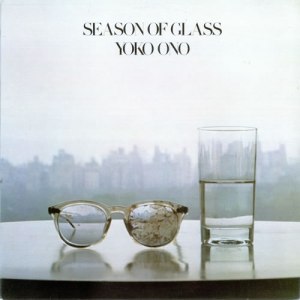
‘To have those glasses on the cover was important because it was a statement and you have to understand that it was like John wanted you guys to see those glasses.’

Yoko Ono, 1989


‘I’ll f*cking… I’ll go and take on anyone, any white singer who wants to give me a go.’

Matt Goss of Bros, 1989


‘I’ve never said this before but my drums is so professional, man, know what I mean?’

Luke Goss of Bros, 1989


‘I hate parts of my own albums because I know I’m hearing something that doesn’t translate to piano. In fact, I’m being dishonest by playing piano at all.’

Keith Jarrett, 1987


‘When I began to see how Elvis lived, I got such a strong take off of it. It was all so revolting!’

Albert Goldman, 1988


‘The best way to make great art is to have it trivialised by other people as much as possible. That way, you fight and fight and fight.’

Julian Cope, 1989


‘Whatever you’re tops in, people is trying to bring you down, and that’s my philosophy.’

Samantha Fox, 1987


‘Call me fat and I’ll rip your spine out.’

Ian Gillan, 1983


‘Sure I care about my fans. Because fans is money, hahaha. Muh-neee! And who does not care about money? Me, I like muh-neee, haha.’

Chuck Berry, 1988


‘I have this long chain with a ball of middle-classness at the end of it which keeps holding me back and that I keep sort of trying to fight through. I keep trying to find the Duchamp in me.’

David Bowie, 1980


‘People who say, Oh, I don’t know anything about music – they’re the people who really do know about music because it’s only really what it does to you.’

Steve Winwood, 1988


‘I notice that critics and others don’t credit black people with the ability to write ingenious, creative lyrics.’

Nile Rodgers, 1981


‘I’m below the poverty line – I’m on £16 a week. We needed some clothes and our manager said, “I don’t know what you do with your money. I mean, 16 quid!”’

Gary Daly of China Crisis, 1984


‘You take four or five of those rattlesnakes, dry ’em out and put them inside your hollow-box guitar. Lightnin’ Hopkins taught me that trick.’

Albert Collins on his guitar tone, 1988


‘People are bored with Lionel Richie going “I love everybody, peace on earth, we are the world…” F*ck that! People love bastards.’

Terence Trent D’Arby, 1987


‘Epstein dressed The Beatles up as much as he could but you couldn’t take away the fact that they were working-class guys. And they were smart-arses. You took one look at Lennon and you knew he thought the whole thing was a joke.’

Billy Joel, 1987


‘I remember when the guy from Echo & The Bunnymen said I should be given National Service. F*** him...’

Boy George, 1987


‘No-one should care if the Rolling Stones have broken up, should they? People seem to demand that I keep their youthful memories intact in a glass case specifically for them and damn the sacrifices I have to make. Why should I live in the past just for their petty satisfaction?’

Mick Jagger, 1987


‘The industry is just rife with with jealousy and hatred. Everybody in it is a failed bassist.’

Morrissey, 1985


‘I couldn’t stand it – all that exploitation and posturing, the gasping at the mention of your name, the pursuit by photographers and phenomenon-seekers. You get that shot of adrenalin and it’s fight or flight. I chose flight many a time.’

Joni Mitchell, 1988


‘I’m strongly anti-war but defence of hearth and home? Sure, I’ll stick up for that… I’m not a total pacifist, you know? I’ve shot at people. I missed, but I shot at them. I’m sort of glad I missed…’

David Crosby, 1989

Six Great ’80s YouTube ‘Shreds’

SWING IN DEAUVILLE 1992

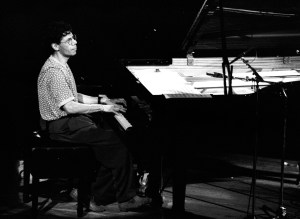
Chick Corea – look away now…

YouTube ‘shreds’ didn’t take off on social media the way trolling and cat videos did.

OK, they are a bit ‘niche’, probably only of interest to a select few musos. But these musical parodies take on a quality all of their own, producing a surreal, appealingly-amateurish mash-up of cheap synths, terrible guitar sounds and fake drums.

There is some intelligence behind them too – it’s not easy to sound this bad. You need talent. These clips also bring home just how great the targets of their ridicule really are.

But hey – some possibly need taking down a peg or two…

6. a-ha play ‘Take On Me’
I like the badly-played synths, Morten’s off-mic asides and the unexpectedly-early chorus. Also the drummer’s Herculean efforts juxtaposed with the tinny, inconsequential sounds he is producing.

5. The Chick Corea Elektric Band play…something
This band were always one of the more unsavoury fusion units of the late-’80s. Their freakily-flawless musicianship, cheesy synth sounds and ‘zany’ stage performances are ripe for a bit of a pisstake.

4. USA For Africa play ‘We Are The World’
This one gets in for sheer oddness. It sounds like it’s been overdubbed by people whose first language is not English. Chinese? French? Kenny Rogers, Tina Turner and Billy Joel always get me.

3. Miles Davis plays ‘Tutu’
Sorry Miles, but I like the way this classic piece is re-imagined as a kind of remedial reggae/world music/’50s rock jam. Don Alias’s ‘tinging’ ride cymbal gets me every time.

2. Dire Straits play ‘Money For Nothing’
This is ‘Money For Nothing’ played by a bunch of teenagers who have just been given a few cheap synths, a crap guitar and an old bass for Christmas. I particularly dig John Illsley’s backing vocals.

1. Chick Corea duets with Herbie Hancock
Why not some more Chick? There’s something about his smug performance style that lends itself to these clips. And of course the fact that he has made so much tasteless music for someone so near to genius…

Toto/Miles Davis: ‘Don’t Stop Me Now’

Toto-FahrenheitI’ve always had a somewhat ‘troubled’ relationship with Toto’s music, to put it mildly…

Toto IV (1982) was obviously a classic of its kind, Hydra (1979) had its moments and there are other classy tracks dotted around, but I’ve generally thought: David Hungate, David Paich, Jeff Porcaro and Steve Lukather are fantastic musicians who have played on some of the greatest albums of all time – so what are they doing in this band, writing these songs?

But I found a solution of sorts when I came across a track buried at the end of their lacklustre Fahrenheit album from 1986. ‘Don’t Stop Me Now’ is a cracking instrumental with nice chord changes, a great melody, gorgeous bridge, slick playing from co-writers Paich and Lukather and a memorable guest spot from Miles Davis.

Of course Miles was no stranger to the world of Toto and the LA session elite in general. He was tight with Quincy Jones, producer of Michael Jackson’s Thriller, an album that heavily featured Jeff Porcaro, Paich and Lukather.

Miles had also covered Thriller‘s ‘Human Nature’ (co-written by Toto keyboardist Steve Porcaro) on his You’re Under Arrest album the previous year. He was also apparently a big fan of Jeff Porcaro’s painting, not to mention his drumming, so a full-scale Miles/Toto collaboration was surely always on the cards.

But the recording of ‘Don’t Stop Me Now’, which took place at Jeff Porcaro’s home studio in early 1986, wasn’t a walk in the park, as Steve Lukather told George Cole in the excellent ‘Last Miles: The Music of Miles Davis, 1980-1991’:

‘We cut the track and left the melody off – we just left open spaces. When Miles got there, we ran it down together with him and he wasn’t really playing the melody. So we figured, we’re not going to tell Miles Davis what to play, so we said, “Miles, we have a take of this, would you mind just giving it a listen and play whatever you want?” He says, “Okay, I’ll play like that. You like that old shit, right?” So he gets out the Harmon mute and he played it – one take. We’re all stood there completely freaked out – it was unbelievable. At the end, the song just kind of fades out, but he just kept playing the blues. I was sitting there with chicken skin on my arms – it was an unbelievable moment. And that’s how we ended the record, with just Miles blowing. Later on, David Sanborn came down to play on a different tune on the record and he’d heard that we had cut a tune with Miles. He said: “I gotta hear it!”, so we played it and he flipped and said, “Please just let me be on the track!” He doubled the melody and played a couple of flurries. So we got Sanborn, Miles and us on one track – that was pretty cool!’

But Steve Porcaro alluded to the wider issue of including a ‘jazz’ track on a ‘heavy rock’ album when he told George Cole: ‘I don’t know how thrilled the record company or our managers were, but for us working with Miles was a major feather in our cap.’

But that kind of political scene didn’t affect Miles: he loved ‘Don’t Stop Me Now’ and quickly integrated it into his own live set. It remained a staple of his concerts from 1986 right up until 1990, the year before his death. It’s a beautiful piece of work. But while we’re at it, has anyone got a lead sheet of the tune? I want the chords…

Miles Davis: You’re Under Arrest 30 Years Old Today

miles

As a teenage jazz/fusion fan and burgeoning muso, 1983’s Star People caught my ear but it was You’re Under Arrest that really captured my imagination and made me a Miles fan for life.

Everything about the package was designed to be provocative, from the garish cover design to the in-your-face but always funky music. It’s a far more colourful and multi-layered listen than the previous year’s Decoy, partly because Miles was going public with his views on police intimidation, racism and the nuclear threat for the first time (and also getting involved with the anti-apartheid movement on the Sun City project).

In the era of ‘We Are The World’, even Miles was demonstrating that he had a social conscience, but he used gallows humour and an uncanny ear for a gorgeous melody to make his points.

Between 1981 and 1984, the primary musical style of Miles’s comeback had been so-called ‘chromatic funk’, a hard-driving, minimalist style consisting mainly of one-chord vamps, heavy bass lines, frantic Latin percussion and fleet-fingered melodic heads, usually played by sax and guitar in unison (and more often than not based on transcribed John Scofield guitar solos).

But in early 1984, Miles took his band into New York’s Record Plant studios to record a whole host of pop and AOR tunes, including ‘Wild Horses’ by Nik Kershaw, Tina Turner’s ‘What’s Love Got To Do With It’, Dionne Warwick’s’ ‘Deja Vu’, Michael Jackson’s ‘Human Nature’ and Cyndi Lauper’s ‘Time After Time’.

Though of course Miles was by no means new to recording pop songs, it’s doubtful whether any of these were anywhere near the calibre of ‘My Funny Valentine’ or ‘It’s Only A Paper Moon’. Various 1985 band members have since expressed their dissatisfaction Miles’s ‘pop’ direction and it’s telling that only ‘Time After Time’ and ‘Human Nature’ made the cut for You’re Under Arrest (and, to be fair, became centrepieces of his live gigs until the end of his life). The other covers are yet to see the light of day.

By all accounts, the album eventually came together very quickly and just under the wire; Miles took his band into the studio and re-recorded much of the 1984 material over a very short period in January 1985, later saying that the tempos had been wrong on the original takes and that they didn’t have enough punch.

The opening ‘One Phone Call/Street Scenes’, with its sound effects, darkly-comic spoken-word shenanigans (‘Smokin’ that marijaroney’!) and fleet funk, is the kind of thing you might expect from Prince or George Clinton, but not the most famous jazz artist in the world. The track was surely a big influence on Prince’s Madhouse project and also B-sides such as ‘Movie Star’.

John McLaughlin delivers an exciting modal guitar blowout on ‘Katia’ (named after his then wife the pianist Katia Lebeque) finding endless lines to play over the one-chord vamp. Despite the dated Simmons drums and synthesized horn blasts, the track is still gripping and dramatic after all these years.

Ditto the title track, the ultimate take on ‘chromatic funk’. The ‘Jean Pierre/And Then There Were None’ medley is also arresting with its eerie sound effects and childlike celeste. Listen out for Miles’ mordant closing remark too, intended either for Reagan or recording engineer Ron Lorman (or both?).

The only tracks I really can’t take are the two ballads, ‘Time After Time’ and ‘Human Nature’. Although the latter became a really powerful live number, Miles’s playing is fairly underwhelming and the arrangements don’t add anything to the originals. But, in general, You’re Under Arrest is a really strong album and quite a stunning statement from a 59-year-old ‘jazz’ musician.

Watching footage of Miles playing live in 1985 shows what an extraordinary presence he still was – stalking the stage, sometimes whispering into his bandmates’ ears, sometimes throwing mock-right-hooks towards the camera lens – coupled with possibly his best trumpet chops during the last decade of his life.

Ray Parker Jr.: Woman Out Of Control/Sex And The Single Man

Years before his huge hit ‘Ghostbusters’, Ray had played guitar on some great albums of the ’70s (Stevie’s Talking Book and Innervisions, Rufus/Chaka Khan’s Rags To Rufus,  Harvey Mason’s Funk In A Mason Jar, Marvin’s I Want You, Leon Ware’s Musical Massage), not to mention sessions with the likes of Boz Scaggs, Barry White, Tina Turner, Herbie Hancock and Bill Withers.
He also enjoyed a few big hits as part of Raydio before going solo in ’82. Either side of ‘Ghostbusters’, he put out two interesting albums which are now released as a good-value two-fer by Cherry Red/Soulmusic.com.

’83’s Woman Out Of Control unleashes a kind of feminist funk with various tracks unashamedly taking the laydeez’ side in the battle of the sexes, creating something pretty original. ‘Electronic Lover’ and ‘Invasion’ also rock the kind of psych-synth-funk sound that Prince and his contemporaries were tapping into at the time.

85’s Sex And The Single Man, the post-‘Ghostbusters’ album, ups the stakes with a lot more fuzz-toned lead guitar and also some weird synth-pop fun on ‘Girls Are More Fun’ and ‘I’m A Dog’. ‘One Sided Love Affair’ is an amusingly-shameless ‘Hello’ rewrite and there’s some cracking Cameo-style funk/rock on the title track.

‘Men Have Feelings Too’ demonstrates more of his rhythm-guitar mastery. I was going to say that his playing sounds very Prince-influenced but it’s the other way round; check out this masterclass for the evidence. The albums were only minor hits – apparently Arista boss Clive Davis wasn’t blown away by their modest chart placings and was slow to return Parker Jr.’s call when contract-renewal time came around.

While it’s true that there’s nothing as immediate or hook-laden as ‘Ghostbusters’ on these two records, they’re definitely worth reappraising and make nice companion pieces to Miles Davis’s You’re Under Arrest, Cameo’s She’s Strange, Prince’s Purple Rain and The Time’s Ice Cream Castle. Ray’s still going strong too, playing festivals and turning up on the occasional session.

N.B. Parker Jr. has recently been subject to an out-of-court settlement regarding the similarity of ‘Ghostbusters’ to Huey Lewis And The News’ ‘I Need A New Drug’. Judge for yourself…

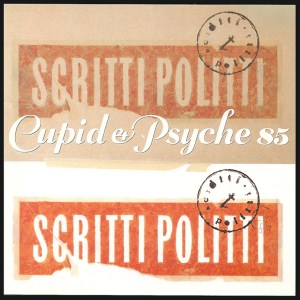
Scritti Politti: Cupid & Psyche 85 30 Years Old Today

Listening again to the brilliant Cupid 30 years after its release, I wonder if it sounds very dated to modern ears.

Whilst it unabashedly utilised all manner of mid-’80s technology (Fairlight, drum machines, sequencers), I don’t really ‘hear’ those elements any more. All I hear is top-notch songwriting, intriguing and intelligent lyrics, great grooves and Green’s unique vocals.

Cupid hit me at exactly the right age; it was the soundtrack to endless summer evenings, teenage crushes, adolescent musings.

Though Scritti leader/vocalist/co-songwriter Green Gartside left behind his post-punk roots and the ‘indie’ sound of his Rough Trade debut album Songs To Remember to create this major-label debut, Cupid certainly had antecedents: Green and keyboardist/co-composer David Gamson revered the highly-syncopated R’n’B/electro of The System, Chaka Khan, ZAPP and Michael Jackson, but they added some classic pop songcraft and intricate harmony.

Rough Trade boss Geoff Travis gave Green his blessing and, coupled with manager Bob Last (who also managed Human League and ABC), Green pitched the Americans his fusion of pop and funk. As he told WORD magazine in 2006, ‘The American labels were all tickled pink by these big NME interviews we did and that loosened their wallets. Bob and I were terribly persuasive as to why they should part with vast sums so we could make a record.’

Legendary Aretha/Chaka producer Arif Mardin came on board as did a raft of quality players such as Marcus Miller, Steve Ferrone, David (The System) Frank, Robbie Buchanan, Robert Quine and Paul Jackson Jr. But Green apparently turned out to be more of a perfectionist than any of them: ‘It took us a great deal of time to get our bits right and my anxiety about singing was pretty acute. I would demand to sing things over and over again and I’m not sure I ever got it better than the first time.’

Cupid featured three classic singles – ‘The Word Girl’, ‘Absolute’ and ‘Wood Beez (Pray Like Aretha Franklin)’, though eventually a total of five tracks were released as A-sides.

The John Potoker remix of ‘Perfect Way’ (far superior to the album version) even became a massive hit in the States, reaching 11 on the Billboard Hot 100 and pushing worldwide sales of the album over the million mark.

While ‘Don’t Work That Hard’ and ‘Lover To Fall’ might be deemed ‘filler’, they easily transcend that label by dint of their sprightly grooves and sheer catchiness. The beautiful ‘A Little Knowledge’ showed that Green and Gamson were on the same page as Prefab’s Paddy McAloon when it came to sumptuous, intelligent romantic ballads in the mid-’80s, and the track is a great companion piece to ‘When Love Breaks Down’.

Post-Cupid, Green and Gamson booked and then cancelled a world tour (they were apparently visited in the studio by MTV executives who told them, ‘Just think, you’ll never have to tour again!’), wrote songs for Al Jarreau and Chaka Khan, made friends with Miles (who covered ‘Perfect Way’ on Tutu), hung out with George Michael at various London nightspots, embarked on a year of press in America to cash in on the success of ‘Perfect Way’ and then reluctantly hit the studios of New York and London to record the follow-up Provision.

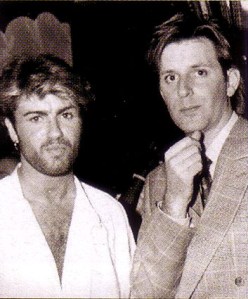
george michael green gartside

George and Green, London, 1986

A cursory listen to a radio station like Absolute 80s reveals the wide-reaching influence of Cupid on countless late-’80s bands: a-ha, Go West, Climie Fisher, Living In A Box, Pet Shop Boys, Bros and Aztec Camera all tried for those clinical, Swiss-watch-precision arrangements and uplifting pure pop sound, but generally lacked Gamson’s ingenious chord changes and Green’s gift for melody.

Happy birthday to a bona fide ’80s classic.

Robben Ford: Talk To Your Daughter

robben ford

Robben is surely guaranteed a place in the pantheon of modern blues guitar greats, and, like his contemporary and good buddy Larry Carlton, he makes guitar playing sound ridiculously easy however complicated the chord changes.

Fagen and Becker had been told about Robben’s prodigious soloing ability over changes, hiring him to play the break on Steely Dan’s altered blues ‘Peg’ in 1977, but he ended up on the cutting room floor (they famously went through six other guitarists before Jay Graydon smashed it at the eleventh hour).

But sometimes Ford’s good looks, cheerful stage persona and sweet sound can obscure his more extreme guitar statements; fusion drum monster Kirk Covington somewhat disparagingly called Robben’s style of music ‘happy blues’ in a recent interview with Drumhead magazine (admittedly after a failed audition for Robben’s band!).

miles robben ford

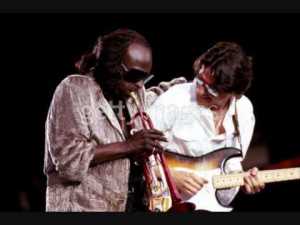
Robben cut his teeth with the likes of George Harrison, Joni Mitchell and Jimmy Witherspoon, but started off the 1980s playing beautifully at the Montreux Jazz Festival with David Sanborn, Randy Crawford, Al Jarreau et al, contributing three of my favourite ever guitar solos to the Casino Lights live document of that gig.

Then, in 1986, the dream sideman gig materialised: he replaced Mike Stern in Miles Davis’s band, gaining a new confidence in his abilities and a renewed love for the blues.

Apparently Miles believed he’d found his perfect guitar player. But Robben didn’t stay long – he left Miles to make his second solo album Talk To Your Daughter for Warner Bros in 1987.

It’s funny to think of Robben playing guitar with Miles just before this recording because sometimes his music could use a bit of Miles’s obliqueness and use of space.

Robben’s voice might not be to everyone’s tastes either, firmly in the Jackson Browne/Michael Franks school, but his guitar solos are always engaging and risk-taking, and a stellar band featuring monster drummer Vinnie Colaiuta, bassist Roscoe Beck and Yellowjackets keyboardist Russell Ferrante makes the music breathe. The album sounds like it was recorded live in the studio too, a big plus especially in the over-produced late-’80s.

The gospel-tinged ‘Revelation’ is worth the price of the album alone, possibly Robben’s finest recorded work to date and the only instrumental here. Robben’s take on ‘Ain’t Got Nothing But The Blues’, co-written by Duke Ellington and best-known as a Mose Allison number, is also superb, a feast of jazz chords and tasteful band accompaniment.

Down-and-dirty blues it ain’t, but Talk To Your Daughter definitely brought something fresh to the party. Other modern guitar greats Scott Henderson, Gary Moore, Frank Gambale and Larry Carlton were listening; within a few years, they’d all reacquaint themselves with the blues in a big way too.

Mike Stern: Upside Downside

mike stern

There’s no telling how a jazz musician will react to a bad review, whether from a critic or fellow player.

Some, like Miles Davis, take a – how shall we put it – stoic view, either refusing to read any press or choosing his writer friends very carefully (Leonard Feather, Quincy Troupe).

But for every naysayer, there’s an aggressor; drum master Tony Williams laid into jazz scribe Stanley Crouch for his less-than-flattering comments on Miles’ electric-era music, while Weather Report famously took Downbeat magazine to task for its one-star slagging of 1978 classic Mr Gone.

Though guitarist Mike Stern had studied at the famous Berklee music school in the mid-‘70s and then landed a top gig with jazz/pop supergroup Blood Sweat & Tears, he wasn’t prepared for bandmate Jaco Pastorius’s succinct review of his guitar playing after a dodgy run through Chick Corea’s ‘Spain’ on tour with BS&T one night – ‘Stern, you know that sh*t wasn’t happening at all! You’ve got to learn faster tempos!’

Jaco and Mike, 1980

Jaco and Mike, 1980

To his great credit, Stern listened to his friend, learnt the tune note by note and in the process became one of the greatest players of his generation. His slick bebop lines played with a ‘rock’ sound were quite new when he came of age playing with Billy Cobham’s band.

Miles was also listening closely while he was in the early stages of putting together his ‘comeback’ band in early 1981. The story goes that he appeared in the front row of The Bottom Line club in New York City and poached Stern during a break, apparently even calling Cobham off the bandstand in the middle of a tune to issue his intentions!

Stern was then summoned to the Columbia Records studio to record the electrifying half-time strut ‘Fat Time’ (Miles’s nickname for Stern) in one take. The track appeared on the Man With The Horn album and Stern was then invited to go out on the road with Miles.

My dad took me to see Miles at the Hammersmith Odeon in 1982, my first proper gig. I’m sad to say that I don’t recall much about it apart from Miles’s white suit and someone shouting: ‘Turn the trumpet up!’

Dave Liebman, Miles and Mike Stern, 1981. Photo by Julie Coryell

Dave Liebman, Miles and Mike Stern, 1981. Photo by Julie Coryell

Critics were harsh on Stern, not believing that a chubby, jeans-wearing, long-haired guy playing a white Strat with a fuzzbox could play ‘jazz’, but with hindsight he did a brilliant job of holding down the harmony and delivering powerful, surprising solos in the keyboard-less quintet.

But the demons that haunted some of his early career wouldn’t go away. Stern recently said, ‘I played about two gigs in my life between the ages of 12 and 32 when I was sober’.

Miles even got John Scofield into the band as second guitarist to cover for his increasingly unreliable secret weapon. Stern eventually missed a flight and got the boot, but after a successful spell in rehab returned to play with old friend Michael Brecker and Mike Mainieri’s fusion supergroup Steps Ahead.

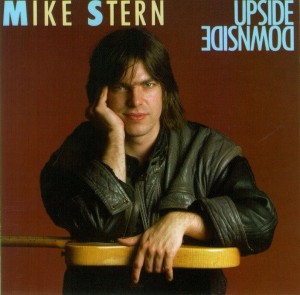
Stern also put together a solo record deal with Atlantic Records and began working on Upside Downside in early 1986 with his late friend and fellow shit-hot guitarist Hiram Bullock in the producer’s chair.

The album is a great excuse for Stern to play the hell out his guitar in a variety of idioms. The uptempo tracks are blessed with typically fiery solos while the ballads beautifully demonstrate Stern’s lyrical side, his Telecaster screaming emotively above Dave Weckl’s subtle drumming and Mark Egan’s springy bass.

Jaco completists will enjoy one of his very last recorded contributions on the raucous ‘Mood Swings’ while saxophonist David Sanborn’s playing on ‘Goodbye Again’ is spine-tingling. But mainly the album is a must for any lover of the guitar. His sound is a little more fluid and widescreen than on recent albums and there’s no-one quite like Stern at the top of his game, a fusion of Charlie Parker and Roy Buchanan.

Mike made two excellent follow-up albums later in the ’80s, Time In Place and Jigsaw, both produced by the fine guitarist Steve Khan. For me, this was Stern’s best era, when his raunchy playing was closer to blues and rock than the lighter Methenyesque jazz and World music vibes of recent times. I also saw him live at the Town and Country Club in 1989, a memorable gig featuring the mind-blowing Dennis Chambers on drums.

Further reading: ‘The Extraordinary And Tragic Life Of Jaco Pastorius’ by Bill Milkowski

Miles Davis & Marcus Miller: Siesta

miles_davis__marcus_miller-music_from_siesta_a

I came across this gem in a big crate of reduced cassettes in the old Our Price shop in Richmond town centre.

I was a huge fan of Miles and Marcus’s ’80s work but Siesta had somehow passed me by. It was hardly reviewed anywhere despite the fact that it was the official follow-up to Tutu, possibly because it was ‘just’ a movie soundtrack and – even worse – the soundtrack to a really terrible movie.

But it quickly became the soundtrack to my summer of 1988 along with Prefab Sprout’s From Langley Park to Memphis, Prince’s Lovesexy, Thomas Dolby’s Aliens Ate My Buick and Scritti Politti’s Provision. Its Spanish-tinged melancholia, beautiful playing by Miles and stunning bass/keyboard work and production by Miller drew me in immediately.

Miles’s stock was rising high at the beginning of 1987. He was healthy, enjoying critical and commercial success with Tutu and playing to packed concert halls. The question was, how would he follow Tutu? A film soundtrack was definitely not the predictable option.

Of course, Davis was no stranger to the world of movie scoring, even though his famous Ascenseur Pour L’échafaud (Lift to the Scaffold) soundtrack was mostly improvised in just two days, and his music for Jack Johnson was similarly spontaneous though subject to detailed post-production work by Teo Macero.

But when Davis got a call from the producers of Siesta after their request to use Sketches Of Spain on the film’s soundtrack was turned down, he turned to the trusted Miller for help. Miller was also on a roll at the beginning of ’87. Fresh from co-producing and co-composing Tutu, his career was branching out in all directions.

He hadn’t done any soundtrack work before and embraced the project, thrilled to work with Miles again and rightly sensing that the movie’s Spanish elements might open up some dramatic musical possibilities. But the clock was ticking, the budget was tight and time was of the essence.

Siesta is a fascinating companion piece to Tutu and it features some of the most arresting and spontaneous Miles trumpet playing from the last decade of his life. Indeed, some Davis-watchers such as critic Paul Tingen reckon it’s the pinnacle of Miller and Miles’s ’80s collaborations.

Miles sounds fit and strong, investing the material with both power and pathos, consistently providing a sound that someone once described as ‘a little boy looking for his mummy’. Apparently when Miller played the elegiac ‘Los Feliz‘ to an assembled cast and crew, several people broke down in tears.

Miles solos at length with glorious open horn on several tracks. The dramatic, flamenco-tinged ‘Conchita‘ was used by American ice skater Nancy Kerrigan for her 1992 Olympic routine – she got a bronze medal.

The ghost of Sketches of Spain/Miles Ahead arranger Gil Evans looms large and the album is dedicated to him, ‘The Master’. One can only imagine how ‘Los Feliz’, ‘Siesta’ or ‘Lost In Madrid‘ might have sounded with Evans’ full orchestral backing and arranging, but Miller and main collaborator Jason Miles consistently find just the right musical ingredients with gorgeous piano voicings, subtle synths and fretless bass.

As George Cole pointed out in his great book ‘The Last Miles‘, only Michel Legrand, Gil Evans and Miller’s names have shared a Miles Davis album cover, and that really proves how highly Miles rated Miller’s efforts. According to Miller, there is much more Siesta music residing in the Warner Bros vaults – here’s hoping the album gets the ‘Special Edition’ treatment soon.