Roxy Music: Flesh + Blood 40 Years On

Couldn’t let 2020 squeak by without celebrating 40 years of Flesh + Blood.

As a young whippersnapper, along with Sgt. Pepper’s, it was probably the first LP I enjoyed all the way through. But these days it’s often mentioned as an afterthought to Avalon and the early albums (maybe Peter Saville’s cover rankles?).

It featured not one but three classic singles (‘Oh Yeah’, ‘Same Old Scene’, ‘Over You’), two distinctive cover versions, and was arguably one of the most influential collections of the 1980s.

It also perfectly compliments such contemporary new-wave/disco work from Blondie, Duran Duran and Japan (also sharing with those acts a reliance on the Roland CR-78 rhythm box, heard prominently in the intro of the below).

Flesh + Blood is the last Roxy studio album where Andy Mackay (sax) and Phil Manzanera (guitar) were major players if not songwriters (all tracks were written by Ferry apart from the covers, though Manzanera had a hand in ‘Over You’, ‘No Strange Delight’ and ‘Running Wild’). Both add memorable solos and nice ensemble work throughout.

It’s also a classic early-’80s bass album: reliably excellent Alan Spenner and Neil Jason joined new boy Gary Tibbs, fresh from his acting role in Hazel O’Connor’s ‘Breaking Glass’ movie and about to become one of Adam’s Ants.

The great Andy Newmark piled in on drums, having just completed work on Lennon/Ono’s Double Fantasy, alongside fellow NYC sessionman Allan Schwartzberg (who plays a blinder on ‘Same Old Scene’).

Londoner Rhett Davies was on board as co-producer, fresh from groundbreaking work with Brian Eno (both are apparent influences on the psychedelic/ambient outros to ‘My Only Love’ and ‘Eight Miles High’, and atmospheric overdubbing throughout), working with the band at his favourite Basing Street Studios (later Sarm West) in London’s Notting Hill. There were also occasional sessions at Manzanera’s Gallery Studios in Chertsey, Surrey.

Burgeoning star NYC mixing engineer Bob Clearmountain took time off his work with Chic to add some hefty bottom-end and fat drums at the fabled Power Station studios. Bob Ludwig’s ‘definitive’ 1999 CD remaster is one of the loudest, bassiest re-releases of the last few decades (but not a patch on the original cassette!).

But basically Flesh + Blood is very much Ferry’s show, layering Yamaha CP-80 piano (in his trademark ‘no thirds’ style) and synths to great effect, and even adding some amusingly sleazy guitar on the title track. He also sings superbly, delivering a particularly impassioned performance on ‘Running Wild’.

Even when he veers slightly out of tune, as on ‘Rain Rain Rain’, it’s an artful, conscious move (unlike these days…), a la Dylan or Bowie. His lyrics are generally fascinating – dreamlike, elliptical, odes to unrequited love and possibly one or two illicit substances.

Flesh + Blood was a big hit in the UK, reaching #1 on two separate occasions between May and September 1980. But surprisingly it didn’t quite work in the States, just scraping into the top 40, possibly not helped by a stinking review in Rolling Stone (‘…such a shockingly bad Roxy record that it provokes a certain fascination…’!).

But Ferry could see a path ahead, and would repeat the winning formula (drum machine + piano + painstaking overdubs + much-pondered-over lyrics/melody lines) for the rest of the decade. Rhett Davies had his work cut out – he moved on to work with Robert Fripp on the classic King Crimson reunion album Discipline.

Book Review: Kick It (A Social History Of The Drum Kit) by Matt Brennan

What’s your favourite drummer joke?

One attributed to legendary London saxophonist/club owner Ronnie Scott particularly sticks in the memory:

‘Dad, I want to be a drummer when I grow up.’

‘Well, make your mind up, son. You can’t do both.’

Though Matt Brennan’s excellent ‘Kick It: A Social History Of The Drum Kit’ commences with a raft of such jibes, it does so only to make a point and might even put pay to them forever. The book puts skin-spankers right at the forefront of modern music and is surely the best PR job for the profession yet to emerge.

Though ostensibly an ‘academic’ work, ‘Kick It’ is anything but stodgy or overly-analytical – rather, it’s an enjoyable, fast-paced, truly internationalist voyage through the evolution of the drum kit and status/profession of the drummer, from slave ships to the modern-day, multi-tasking, technology-savvy ‘beat-maker’, via Congo Square, the swing/bebop revolutions of the 1930s/1940s and advent of the studio player in the 1960s.

‘Kick It’ unflinchingly outlines how racial and cultural stereotypes initially hampered the status of the percussionist in modern industrial societies, but also brilliantly describes the vital role of the multi-faceted, ambidextrous drummer in vaudeville, minstrel and music-hall traditions (drummers were called upon to supply everything from rainfall to thundercracks during live performance).

Accordingly, Brennan also shows how drummers’ demands accelerated technological developments both in kit/cymbal construction and recording techniques, and also how German, Turkish and British manufacturers were arguably just as important as the American companies.

Brennan outlines the careers and styles of such legends as Gene Krupa (who put the tom-tom on the map), Kenny Clarke (who brought the ride cymbal and kick drum into play) and Earl Palmer, who served as a link between ‘jazz’ and ‘pop’ players, ‘swinging’ his rock grooves on records by Fats Domino and Chuck Berry even as pianists and guitarists were moving towards ‘straight eights’.

Brennan also looks at the issue of sexism in the percussion industry, with particular focus on the tragic career of gifted drummer Karen Carpenter.

Later Brennan makes fascinating parallels in the careers and playing styles of first Ringo Starr and Charlie Watts, then, in a moving section, Keith Moon and John Bonham (the latter two dying at the depressingly young age of 32 – Brennan fascinatingly explores how both may have suffered from feelings of inferiority and insecurity, not helped by the attitudes of their bandmates).

‘Kick It’ moves intriguingly into the 1980s, looking at the careers of Billy Cobham, Bill Bruford, Phil Collins, Neil Peart and Steve Gadd, exploring how recording techniques and drum machines revolutionised percussion sounds, and finally comes right up to the present to investigate how sampling and programming have given drummers a whole new lease of life in the streaming era.

A tremendous achievement – both a history lesson and exciting story to boot – ‘Kick It’ had this drummer newly inspired, rushing to his kit with some gusto and not a little pride.

Players will find a host of fascinating photos and stories – the book may also have you questioning everything you ever assumed about the traditional kit – while the general music fan will find an intriguing, fast-paced history of modern music.

Don’t let ‘em ever tell you you’re ‘just’ a drummer…

‘Kick It’ is published by the Oxford University Press.

The Worst Album Covers Of The 1980s

Is there some sort of secret visual formula for successful albums, a design format that almost forces people to part with their moolah, encouraging buyers of all generations/social demographics?

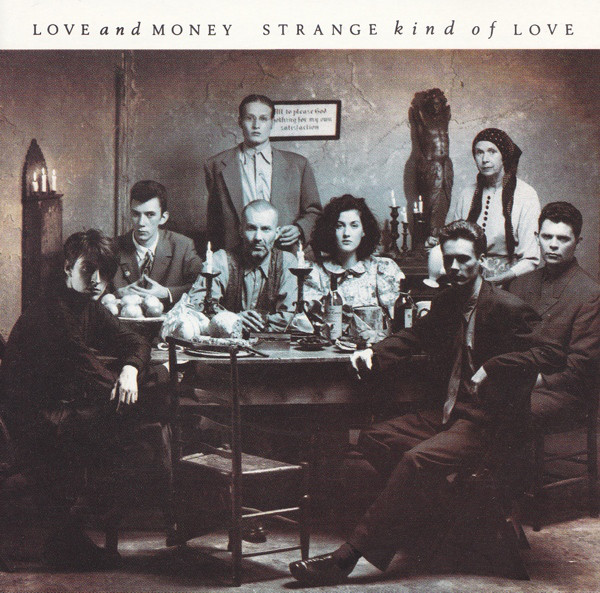
Can a terrible album have brilliant artwork? Can a brilliant album have terrible artwork (how about the Love And Money entry below? Ed…)?

So many questions. Someone somewhere must have researched which colours and designs have proved the most successful in terms of sales. But hell, it’s hard to believe that any of the below would have been cooked up in any kind of corporate brainstorming or focus-group session.

Here’s a motley selection of the 1980s’ most ill-advised album covers, in no particular order. Some are crushingly sexist, some boring, some ugly, some shocking, some just plain weird. And yes, a few are so bad they’re almost good…

20. Sparks: Angst In My Pants (1982)

19. Spandau Ballet: Parade (1984)

18. Wishbone Ash: Raw To The Bone (1985)

17. Ratt: Out Of The Cellar (1984)

16. Poison: Open Up And Say…Ahh! (1984)

15. Eurythmics: Sweet Dreams (Are Made Of This) (1983)

14. Paul McCartney: McCartney II (1980)

13. Millie Jackson: Back To The S**t! (1985)

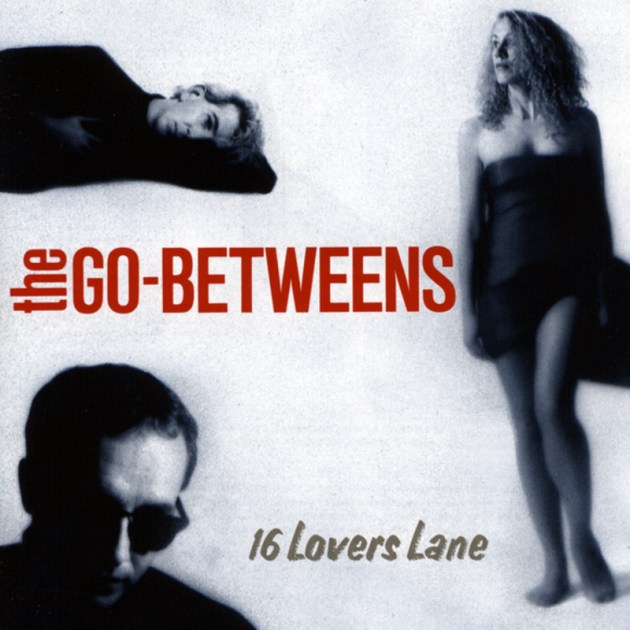
12. The Go-Betweens: 16 Lovers Lane (1988)

11. Ted Nugent: Scream Dream (1980)

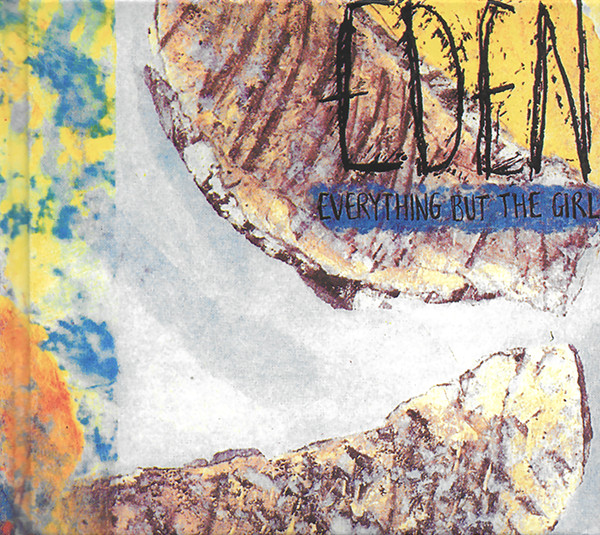
10. Everything But The Girl: Eden (1984)

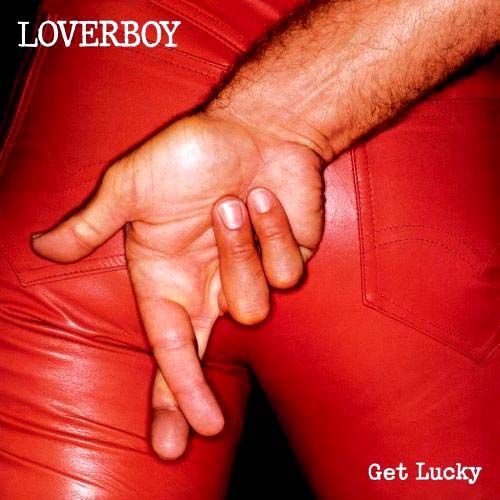
9. Loverboy: Get Lucky (1981)

8. OMD: Architecture & Morality (1981)

7. Snatch: If The Party’s In Your Mouth, We’re Comin’ (1985)

6. Jeff Beck: There And Back (1980)

5. Scorpions: Animal Magnetism (1980)

4. David Hasselhoff: Night Rocker (1985)

3. Love And Money: Strange Kind Of Love (1988)

2. The The: Infected (1985)

1. Dexys Midnight Runners: Don’t Stand Me Down (1985)

Can’t see your worst album cover of the ’80s? If so, pile in below…

Talking Heads (1980/1981): Reagan, Ghosts & Listening Winds

For many Americans, 1980 hoped to offer a break from the recent past: the Watergate scandal, defeat in Vietnam, the Iran hostage crisis, a major recession. Disco.

A Presidential Election was also pending in November. At the beginning of the year, Jimmy Carter stood at 62% in the polls, Ronald Reagan at 33.

Reagan promised to return America to a pre-countercultural era, prioritising family values and social order. He courted the Fundamentalist vote; evangelists and motivational speakers suddenly popped up all over the radio.

Something pinged in David Byrne’s head, and he later outlined the febrile atmosphere of early 1980 in Simon Reynolds’ book ‘Totally Wired’: ‘The text was saying “Thou shalt not” but the preacher’s performance was this completely sensual, sexual thing. I thought, “This is great – the whole conflict is embodied right there…”’

Byrne and Brian Eno explored some of these themes on their groundbreaking My Life In The Bush Of Ghosts (named after the 1954 book by Nigerian writer Amos Tutuola) with a particular emphasis on Islam and its contrasts with Christianity.

The project was originally supposed to be a three-way collaboration between Jon Hassell, Eno and Byrne, a fake ‘field work’ complete with ethnography, liner notes and photos, but Hassell dropped out at the eleventh hour. The album is strikingly original, still relevant and sometimes terrifying.

A month before the Presidential Election, on 8 October 1980, Talking Heads released their masterpiece Remain In Light, also a collaboration with Eno. The album’s key tracks, ‘Once In A Lifetime’ and ‘Listening Wind’, went even further than Bush Of Ghosts: the former showed that Byrne had completely assimilated the ‘sensual preacher’ persona, while the latter outlined a young Arab’s act of terror.

Mojique resents the rich ‘foreigners in fancy houses’ turning up in his country, makes a bomb ‘with quivering hands’ and dispatches it to his American enemy. It’s a unique, powerful piece of work, and one wonders whether its inclusion on Remain In Light contributed to the album being their worst-ever seller in the USA.

Reagan was elected on 4 November 1980 with 50.7% of the national vote. His famous Election Eve speech mentioned ‘that shining city on the hill’, invoking both Jesus’s Sermon On The Mount and noted Puritan John Winthrop. But Byrne’s New York had been under the cosh: more murders, robberies, burglaries and subway breakdowns were reported in 1980 than in any other year since records began 49 years earlier.

Reagan was inaugurated on 20 January 1981. My Life In The Bush Of Ghosts was finally released – after several postponements – almost exactly a month later.

Further reading: ‘Life And Death On The New York Dancefloor’ by Tim Lawrence

The Yacht Rock Revolution (1980-1983)

Say ‘fusion’ to most music fans and it’s the classic early-‘70s jazz/rock of Miles or The Mahavishnu Orchestra that would probably come to mind.

But a decade later another kind of fusion was taking place, a mainly-American sound that drew on influences from R’n’B, jazz, pop, funk, AOR and MOR.

Yacht Rock was upwardly-mobile, multi-layered, widescreen, moneyed, beautifully-produced music, usually involving a string section, Fender Rhodes and/or horns, generally West Coast-originated, driven by the lush production style of the time and effortless brilliance of the musicians involved.

The Yacht House Band generally centred around a few key members of the band Toto: Jeff Porcaro on drums, David Paich on keyboards and Steve Lukather on guitar. You’d also have to factor in guitarists Jay Graydon, Lee Ritenour and Larry Carlton, keyboard players David Foster, Michael Omartian, Robbie Buchanan and Greg Phillinganes, drummers John ‘JR’ Robinson and Steve Gadd, bassists Louis Johnson and Abe Laboriel, percussionist Paulinho Da Costa, horn arranger Jerry Hey, string arranger Johnny Mandel and a whole host more.

These were the greatest ‘rock’ musicians in the world, brought up on The Beatles, Beach Boys, Hendrix, Miles, McLaughlin and James Brown, making up their parts on the spot with the studio meter running, embellishing the basic chord changes with their own unique feel and voicings and bringing to life jazz-influenced compositions by some of the great songwriters of that or any other era: Kenny Loggins, Burt Bacharach, Michael McDonald, Carole Bayer Sager, Rod Temperton, Fagen and Becker, David Foster, Jay Graydon et al.

All kinds of singers got sucked into this vibe, dialling down the operatics and dialling up the melody and behind-the-beat phrasing: George Benson, Patti Labelle, Michael Franks, Randy Crawford, The Four Tops, Michael Jackson, Manhattan Transfer, Leon Ware, Lionel Richie.

Even a few Brits got onboard – George Michael’s ‘Careless Whisper’ and Cliff Richard’s ‘Carrie’ are great stabs at the sound.

With a few notable exceptions, it was all over by 1984. The technology started running the show. Everyone was looking for the right drum machine, budgets were slashed and the great session musicians moved into production and songwriting. Stanley Clarke/George Duke’s heroic ‘Atlanta’ was somewhat of a finale for this kind of music; it’s quite affecting in a way.

Of course this stuff is way too laidback for some, the sound of clock-watching session musicians producing aural cotton candy, too close to muzak for comfort. It would be totally understandable to reach for the Throbbing Gristle after a while. But if it’s your bag you can really get lost in it – it’s pure comfort music, and brilliant for headphones.

Here’s a selection of the finest 1980s Yacht Rock artefacts for your listening pleasure. Ahoy there mateys, and wishing you a smooth sail.

This article is dedicated to James Quentin Broad.

Harold Pinter @ 90, The Caretaker @ 60

Playwright, actor, activist and poet Harold Pinter, who died on Christmas Eve 2008, would have been 90 years old today.

I couldn’t let 2020 pass without marking that fact and celebrating the 60th anniversary of ‘The Caretaker’.

When I started my English Literature ‘A’ Level at the end of the 1980s, theatre had barely appeared on my radar. I’d seen some Shakespeare, Webster, Sheridan, maybe a bit of Alan Ayckbourn, Willy Russell and John Godber, mostly on school trips. Nothing really hit home.

But then my excellent teacher Hugh Epstein introduced us to ‘The Caretaker’. Needless to say, it was like no other play I’d read before. This was the language of the West London streets that I knew. The play’s themes covered familiar territory too.

Pinter’s legendary, hilarious piss-taking was evident from early on – mainly courtesy of the Mick character – but there was something else coming through loud and clear, something heroic, empathetic, charitable, even noble. I was gripped and it began a love affair with Pinter’s work that has lasted almost 30 years.

‘The Caretaker’ premiered on 27 April 1960 at The Arts Theatre in London, and starred Donald Pleasence, Alan Bates and Peter Woodthorpe. It was a big hit, Pinter’s breakthrough play after a difficult experience with ‘The Birthday Party’. An excellent movie, starring Pleasence, Bates and Robert Shaw, was made in 1963, shot in Hackney and adapted by Pinter himself:

There are so many other great London Pinter memories, many involving his acting performances in his own plays: ‘No Man’s Land’ at The Almeida, ‘The Collection’ and ‘The Hothouse’ at the Richmond Theatre. Also Ian Holm in ‘Moonlight’ at The Comedy Theatre and Michael Gambon’s turn as Davies in ‘The Caretaker’ at the same venue.

Of course he wasn’t only a playwright, actor and poet. A cursory look at his public appearances now – especially those in the last 20 years of his life, when he received the Nobel Prize In Literature and spoke passionately at various rallies – suggests that there are very few public figures around these days with his kind of gravitas. He was known to be prickly – aren’t we all – but also exceptionally generous, as he was to this writer.

He’s much missed. Happy birthday Harold. And enormous thanks to Hugh Epstein who brought ‘The Caretaker’ to life.

Further reading: George Cole’s Betrayed: The Story Of Harold Pinter’s Betrayal

Mark Batty’s About Pinter

Michael Billington’s The Life And Work Of Harold Pinter

Robert Palmer: Clues 40 Years On

If in 1979 you’d been asked to draft a list of key 1970s artists most likely to go ‘new-wave’, Robert Palmer would surely have been near the bottom.

After all, he spent most of the decade as a kind of sophistifunk Bryan Ferry, with his ‘problematic’ album covers and Little Feat-inspired grooves.

1979’s Secrets had shown glimpses of ‘rock’, but Clues, released 40 years ago this week, went the whole hog. And, along with 1978’s Double Fun, it’s probably his most consistent album and definitely worth a reappraisal.

There are good omens in the liner notes – a Talking Heads guest appearance here, a Gary Numan song there, Compass Point mixmaster general Alex Sadkin (Nightclubbing etc.) on knob-twiddling duties, Free’s Andy Fraser on bass. And Clues delivers big-time, exploding out of the speakers and clocking in at just over half-an-hour (it must sound great on vinyl).

It’s buoyed by two superb singles, ‘Looking For Clues’ and ‘Johnny And Mary’, the former scraping into the UK top 40 (shockingly, Robert only had SIX top 40 singles during the 1980s…). But there are other treats throughout: ‘Sulky Girl’ sounds curiously like Low-era Bowie, with its histrionic vocals, unhinged guitars, processed drums and barrelhouse piano.

The Beatles cover ‘Not A Second Time’ is excellent (with a new second verse), as is the Numan contribution ‘I Dream Of Wires’. When Gary’s synths squelch into action, it’s a great moment, as is the funky fanfare in the middle. And no-one but Palmer could have pulled off the minimalist Township swing of ‘Woke Up Laughing’, featuring a brilliant, polyrhythmic vocal performance.

If Good Drum Sounds are your thing, Sadkin delivers a masterclass here. I’ll be amazed if anyone can point to a better-recorded 1980s kit than on album-closer ‘Found You Now’, played by the excellent Dony Wynn (who he?).

Clues was, perhaps surprisingly, not a big success in the UK, making just #31. Nor did it go down too well in the US, peaking at #59. But it was a big hit in France, Sweden and the Netherlands.

Robert generally gets a bad rap these days, maybe due to those album covers (despite glowing character references in Phill Brown’s ‘Are We Still Rolling’ and Guy Pratt’s ‘My Bass And Other Animals’), and he seldom gets the ‘career overview’ treatment in the rock monthlies.

But he was actually married to the same woman for 28 years (from 1971 to 1999) and had two kids. A private man and music fan through and through, he died of a heart attack in 2003 at the age of just 54.

Book Review: My Life In The Purple Kingdom by BrownMark

It’s a time-honoured music-biz story: The Hometown Kid Makes It Big.

Or, to paraphrase Bill Bruford, first you get used to failure, then you get used to success. But BrownMark’s new memoir ‘My Life In The Purple Kingdom’, outlining his five-year stint as bassist with Prince And The Revolution, has a few intriguing twists to the old story.

Firstly, it’s a very timely work, since there’s very little documentation about the Inner Workings of the Purple Rain circus. Then there’s the added intrigue of the book mainly taking place in the huge, often-underestimated Midwestern city of Minneapolis.

The early sections are gripping, a vision of a young man flourishing as a musician, getting by in (racially and economically) difficult conditions, supported by a loving mother and extended family.

Mark documents the Minneapolis music scene of the 1970s very well, tracing his development from young Staple Singers/Ohio Players/Earth, Wind & Fire fan into local music ‘star’, with lots of talk about image creation in the era of Rick James and Controversy-era Prince (‘Only women had clothes that fit the vibe I was looking for, but I didn’t want to dress in drag’…).

Soon Prince has his number, and there’s a long, strange section on his recruitment for The Revolution (spoiler alert: hardcore Prince fans should approach the book with caution…), and a memorable account of the infamous October 1981 gig supporting The Rolling Stones in Los Angeles. There are some excellent photographs, many of which this writer had never seen, and a fine introduction by Questlove, Prince fanatic and esteemed Black Music documentarian.

But ‘My Life In The Purple Kingdom’ is also a cursory tale, a veritable How Not To Succeed In The Music Biz, and it has to be said that Mark sometimes comes across as incredibly naïve, even for a nineteen-year-old.

This speaks to something very strange at the heart of the book. There are missing details that put everything else into doubt – nothing about the status of the offer Mark received from Prince’s management upon joining The Revolution (whisked out of nowhere to join one of the most successful bands of all time, he never discusses terms and then is shocked when ‘cheated’ out of a bonus); nothing about his knowledge of Prince’s music before he joined The Revolution; barely a mention of any Prince songs or interesting musical moments during his time in the band (only Lisa Coleman and Matt Fink get cursory mentions).

The book has a ‘happy’ ending of sorts, ending with Mark’s late-‘80s solo deal with Motown Records, but bizarrely the recent (very successful) Revolution reunion isn’t mentioned. It’s almost as if he wrote it back in 1990, at the height of his bitterness and brain fog. The closing, cursory thanks to Prince almost raises the first proper laugh of the book.

But ‘My Life In The Purple Kingdom’ is an absolute must for 1999 and Purple Rain completists and those wanting to know more about the Minneapolis music scene. It’s an arresting piece of social history, often gripping and definitely original, especially in its early sections.

‘My Life In The Purple Kingdom’ by BrownMark (with Cynthia Uhrich) is published by the University Of Minnesota Press.

Brett Anderson’s ‘Track Seven’ Theory: A Special movingtheriver.com Report

Brett, yesterday

All music fans love a theory.

And what with all this talk of Q’s sad demise, movingtheriver has been ruminating on the magazine’s great articles past, including an interview with Brett Anderson in which the Suede head honcho posited his theory that track seven of an album is always the best track.

This was red rag to a bull for movingtheriver. But was Brett on to something? Or does he just have some kind of weird, ritualistic interest in the number seven? In a world exclusive, we investigate some movingtheriver-approved, ‘critic-proof’ albums of the 1980s to test his theory.

In the words of Ian Dury, this is what we find…

1980: Talking Heads’ Remain In Light
Track seven: ‘Listening Wind’

1981: Human League’s Dare
Track seven: ‘I Am The Law’

1982: Roxy Music’s Avalon
Track seven: ‘Take A Chance With Me’

1983: Michael Jackson’s Thriller
Track seven: ‘Human Nature’

1984: Prince’s Purple Rain
Track seven: ‘I Would Die 4 U’

1985: Kate Bush’s Hounds Of Love
Track seven: ‘Under Ice’

1986: Paul Simon’s Graceland
Track seven: ‘Under African Skies’

1987: David Sylvian’s Secrets Of The Beehive
Track seven: ‘Mother And Child’

1988: Prefab Sprout’s From Langley Park To Memphis
Track seven: ‘Knock On Wood’

1989: The Blue Nile: Hats
Track seven: ‘Saturday Night’

So how do the track sevens stack up? It has to be said, most do seem to have something ‘Suede-like’ about them, something wistful, melancholic, or, in the case of the Talking Heads, Human League and Kate Bush tracks, positively menacing. Brett would probably approve.

But are they the ‘best’ tracks from their respective albums? No. You could possibly make a case for ‘Human Nature’ and ‘Saturday Night’* but you’d certainly be going out on a limb.

So there you have it. Obviously Mr A was talking out of his a*se. Next time: Peter Andrex’s ‘track four’ theory. B*llshit or not? YOU be the judge…

*Er… Wait. Wasn’t one of Suede’s best singles also entitled ‘Saturday Night’? Whoa, daddy…

(Other examples/alternative theories always welcome…)

‘Rockschool’ Revisited

The early 1980s was a pretty good period to start out as a musician.

If your ears were open and you had a half-decent hi-fi/radio, there were some truly inspirational players around and a host of different styles vying for your attention.

But the burgeoning muso couldn’t quickly get onto YouTube or download an app to learn a new skill or technique. Music education also wasn’t exactly in a great place, if the drum lessons at my comprehensive school were anything to go by…

You could see great homegrown bands and big-name American sessioneers playing live on ‘The Tube’, fork out an extortionate sum for the dreaded instructional video, or go to a live clinic (I gave up pretty quickly on these after seeing a guy called Lloyd Ryan, who supposedly ‘taught’ Phil Collins how to drum, even though Phil’s name is spelt incorrectly on his website…).

So you generally had to make your own fun (cue the violins…); jam with friends, play live whenever you could, and grab whatever bits of technical info that were passed around.

‘Rockschool’ was a bold attempt by the Beeb to bring modern music education right into the home. First airing on 1st November 1983, it featured a studio band (Deirdre Cartwright on guitar, Henry Thomas on bass, Geoff Nicholls on drums) breaking down basic contemporary arrangements, styles and instrumentation.

A US version also started in 1985, featuring the UK band and hosted rather excellently by Herbie Hancock. And then season two, broadcast in late 1987, brought in keyboard player Alastair Gavin. That was the series that really hooked my muso pals and I (and check out the brilliant, none-more-’80s intro music below).

But even back then we were dubious as to how proficient the studio band actually were. They certainly paled in comparison to the great US players of the decade.

But they were engaging, knowledgeable presenters and it was just a great way of seeing some musical heroes like Omar Hakim, Bootsy, Jan Hammer, Larry Graham, Andy Summers, Tony Banks and Allan Holdsworth demonstrating their craft.

Could you bring back ‘Rockschool’ now? It seems unlikely given the relatively solipsistic nature of ‘rock’ music education these days. YouTube is chock-a-block with technically brilliant players, but the general musicianship of bands has probably never been worse. Here come those violins again…