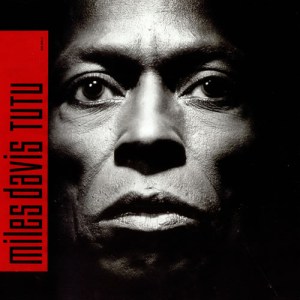
Miles Davis: Tutu 30 Years Old Today

miles tutu1985 was a year of upheaval for Miles Davis.

Though he had recorded the very successful You’re Under Arrest and was in some of his best trumpet lip of the ’80s, his relationship with Columbia Records was at an all-time low.

For one, the label’s other star trumpeter Wynton Marsalis was at his peak of popularity, and, as far as Miles was concerned, Columbia boss Dr George Butler only had eyes for Wynton.

Then Miles felt that Columbia had procrastinated over releasing his cover of the Cyndi Lauper song ‘Time After Time‘ as a single. At the time, with typical mordant humour, Miles said, ‘He (George Butler) ignored it because he’s so busy with Wynton Marsalis. He heard us do it at the Montreux Jazz Festival last year and said “We gotta do it! We gotta do it!” I said, “George, I told you man. We already did it!” And he still didn’t release it…’

And the final nail in the coffin seemed to be Columbia’s unwillingness to put any financial clout behind Miles’s stunning collaboration with Danish trumpeter/composer Palle Mikkelborg, Aura, recorded at the beginning of 1985. For unknown reasons, the music didn’t see the light of day until 1989.

Again, in contemporary interviews, Miles rounded up the usual suspects: ‘I wanted $1400 for a digital remix and Columbia wouldn’t pay it. And then George Butler calls me up. He says to me, “Why don’t you call Wynton?” I say, “Why?” He says, “Cos it’s his birthday!” That’s why I left Columbia.’

Later reports had Miles carrying out Butler’s request, barking ‘Happy Birthday!’ to Marsalis and then slamming down the phone.

Miles officially became a Warner Bros. artist in autumn 1985. House producer Tommy LiPuma was delighted to get him – but what to do with him? Miles first took his touring band into the studio and embarked on a kind of You’re Under Arrest part two, covering tunes by Mr Mister, Nik Kershaw and Maze.

But this project was quickly abandoned, and Miles contacted various musicians including Prince (who supplied the rather humdrum ‘Can I Play With U’, later replaced by Marcus Miller’s ‘Full Nelson’), George Duke, Bill Laswell, Paul Buckmaster and Toto’s Steve Porcaro. He was desperate for new music and a new direction.

But he finally settled on an old contact, Randy Hall, the young Chicago multi-instrumentalist who had worked on his comeback album The Man With The Horn back in 1981.

Around a dozen tracks were completed between October and December 1985 in what was now known as the Rubber Band project. However, again for unknown reasons, the project was shelved, LiPuma quoted as saying, ‘I didn’t hear anything. To me, it didn’t sound like nothing was going on.’

Other collaborators were quickly suggested and then discarded including keyboardists Lyle Mays and Thomas Dolby. So Miles went back to George Duke. Their paths had crossed many times over the years, particularly when Duke was playing keyboards with Cannonball Adderley in the early ’70s.

As Duke remembers, ‘When Miles called, I initially thought it was a prank, one of my friends impersonating him. So I didn’t do anything, and a week later he called again. I said, “Who is this?” and he started swearing at me, “Mother****er, write me a song!”‘

It seems finally that George Duke’s demo of ‘Backyard Ritual‘ was deemed a direction worth pursuing by Miles and LiPuma. A strong, drum-heavy track put together by Duke using a Synclavier digital sampler with a simple but memorable main motif, he never intended it to be used as a final version, highlighted by the rather cheesy sampled alto sax solo.

But Miles eventually used almost the whole demo for Tutu, embellishing it only with some slithering percussion by Steve Reid and Paulinho Da Costa and of course his own pristine trumpet playing.

Miles’s take on it was that he respected a quality arrangement, demo or not: ‘A guy like George Duke, he writes a composition, it’s all there. All you have to do is play on it and respect that man’s composition’, he told writer and musician Ben Sidran.

And Duke revealed that he had even played a ‘sampled’ trumpet solo on the original demo, which tickled Miles. Duke: ‘He said to me, “You think that’s the way I play trumpet?” And I said, “That’s the way it sounds to me!”‘

At the beginning of 1986, Marcus Miller phoned Tommy LiPuma out of the blue. The bassist and composer had of course played in Miles’s comeback band from 1981 to 1983.

He had since made two solo albums and worked with a huge variety of artists, from Luther Vandross and Aretha Franklin to Bryan Ferry and Carly Simon, and was aware that Miles had migrated to Warner Bros and wondered if he was looking for new songs.

LiPuma sent him the ‘Backyard Ritual’ demo; Miller was instantly inspired: ‘I thought, “Wow, if Miles is willing to use drum machines and stuff, let me show my take on that.” I wasn’t directly musically influenced by George’s track but it gave me a direction.’

Miller wrote and recorded demos for ‘Tutu‘, ‘Portia‘ and ‘Splatch‘ back-to-back, playing all the instruments himself. Previewing the tracks with Miles and LiPuma in LA in March 1986, he got an immediate green light to turn this into an album project – this was the direction they had been looking for.

Miller began recording the final versions of the three tunes immediately with the help of keyboardist and programmer Adam Holzman.

There’s been a lot of speculation as to why none of Miles’s touring band were invited to play on the Tutu sessions, with opinions differing as to who made the decision. Miller insists, ‘I wasn’t party to the decision not to use the live band but Tommy didn’t push me in any direction. He let me do my thing.’

Miles seemed to resign himself to the convenience of the situation, saying, ‘Rather than get myself, the working band and Tommy into all kinds of hassles by trying to bring my band in the studio to record music I might like, but Tommy doesn’t, we do it this way.’

Consequently, although some choice session players appear on the album, such as drummer Omar Hakim and the aforementioned Paulinho Da Costa, as well as some of Miller’s trusted friends and collaborators like keyboardist Bernard Wright, synth programmer Jason Miles and electric violinist Michal Urbaniak, there’s a unified sound to Tutu that comes directly from Miller’s contributions on fretted and fretless basses, keyboards, drum programming and occasional live drums.

His soprano sax acts as Miles’s main instrumental foil on the album, particularly evident on the call-and-response phrases in ‘Tomaas’.

Once the backing tracks had been laid down, LiPuma and Miller documented Miles’s trumpet playing as spontaneously as possible without resorting to too many ‘comp’d’ takes (final versions made up of several performances).

Apart from this being a necessity as Miles didn’t like to do more than two takes, it was also an intelligent arrangement idea serving as a contrast to the painstaking and meticulous piecing together of the backing tracks.

According to legend, Miles’s solos on the title track and ‘Portia’ are complete takes from beginning to end. Miller found himself performing on soprano sax at the same mic as Miles during the recording of ‘Portia’. He called it ‘one of the most tense experiences I’d ever had’.

But, by most accounts, Miles was a receptive and willing participant in the creative process, once telling Miller, ‘Come on, man, I don’t mind a little bit of direction! You wrote the tunes. Tell me where you want me to play.’ Again, Miles demonstrates his total respect for the composer.

Miles was also reportedly responsible for the inclusion of one of the more controversial cuts on the album, the Scritti Politti cover tune ‘Perfect Way‘. Miles apparently cajoled Miller into recording the song, believing it had the potential to be the new ‘Time After Time’, and even wanted to call the album ‘Perfect Way’ until just before release.

But Miller expressed reservations about replicating Scritti’s legendary ‘Swiss watch’ arrangements, and with good reason – the Tutu version does sound rather laboured and weedy compared to the original. But Miles remained a big Scritti fan and two years later made a memorable guest appearance on their ‘Oh Patti’ single.

So has Tutu stood the test of time? The title track, ‘Portia’ and ‘Tomaas’ would surely be right at home on any Miles best-of, with their majestic themes, engaging harmonies, slinky grooves and strong trumpet playing.

‘Full Nelson‘ remains a great tribute to Prince’s sound circa Parade and Sign Of The Times, while ‘Don’t Lose Your Mind‘ is a classy approximation of Sly and Robbie‘s mid-’80s collaborations. But ‘Perfect Way’, ‘Backyard Ritual’ and ‘Splatch’ unfortunately now sound suspiciously like beautifully-produced filler.

But, taken as a whole, Tutu is a very important album whose success was helped immeasurably by Irving Penn‘s striking cover portrait. It crystallised Miles’s interest in funk, soul and R’n’B more successfully than Decoy or You’re Under Arrest, whilst retaining a crucial ‘jazz’ flavour.

It was also a statement of political intent and black pride, significantly referencing both Archbishop Desmond Tutu and Nelson Mandela in its song titles. And – perhaps most crucially – it was a hit, introducing a whole new generation to Miles’ unique trumpet sound.

For much more on Tutu and Miles’s ’80s work, check out George Cole’s great book ‘The Last Miles’ and also Paul Tingen’s ‘Miles Beyond’.

Bigmouth Strikes Twice: More Classic 1980s Music Quotes

Art_Blakey_1973

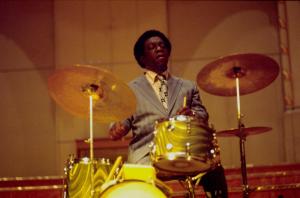
Art Blakey

Here’s another selection of choice quotes taken from various 1980s magazines, TV shows, biographies and anthologies that have drifted through my transom in the last few months.

Check out the first instalment here if you missed it.

‘Morrissey’s a precious, miserable bastard. He sings the same song every time he opens his mouth. At least I’ve got two songs: “Love Cats” and “Faith”.’

Robert Smith of The Cure, 1985


‘I thought: “Hollis Brown? That’s cough medicine, isn’t it?”‘

Ron Wood, on being told by Bob Dylan that they were going to play an unrehearsed ‘The Ballad Of Hollis Brown’ as the opener of their much-derided Live Aid set, 1986


‘When people recognise me, they are generally very pleasant. If they’re not, they call you a w*nker or something like that. But I can deal with that. I’m from Newcastle.’

Sting, 1987


‘I think he sells himself short. Because he’s so brilliant he can’t cope with it. He’s very, very shy and he covers it up his own way. A lot of artists with anything of true worth to offer are frightened of the gift they have. It’s the possibility of it taking over I suppose…’

Kirsty MacColl on Shane MacGowan, 1988


‘He said to me, “You got the kiddies and the grannies with that…”‘

Paddy McAloon relays what Paul McCartney said to him about Prefab Sprout’s ‘The King Of Rock’n’Roll’, 2016


‘It was depressing seeing Chaka Khan on TV. She was, like, spaced-out or something. She was lip-synching and messing up all the words. She’s gained weight. It’s a sign of depression and self-destructive tendencies.’

Wendy Melvoin, 1989


‘I do like New York. Here people learn to play their instruments, learn to read music – things which are not really hip in England where it’s more important to have the right haircut.’

Joe Jackson, 1987


‘He was one of those people you warmed to because he was so screwed up. He’d been frightened by Jean-Paul Sartre at an early age and was sort of a failed existentialist.’

PR to the stars Keith Altham on Scott Walker, 1988


‘Van Morrison turned to me on one occasion and said, What I’m employing you to do is say No, no and no. To which my reply was, Get yourself a f*cking parrot, then.’

Keith Altham, 1988


‘What has happened here is not so much that Lionel Richie has to change, but the people who are reviewing and interpreting, they have to grow up a little bit.’

Lionel Richie, 1987


‘I liked everything I heard by Culture Club. Every one of ’em was great! Springsteen I never quite understood…’

Randy Newman, 1987


‘George Clinton told me how much he liked Around The World In A Day. You know how much more his words mean than those from some mamma-jamma wearing glasses and an alligator shirt behind a typewriter?’

Prince, 1985


‘It would be nice to meet Madonna and squeeze her bum.’

Level 42’s Mark King looks forward to his first US tour, 1986


‘I hope nobody bought houses.’

Slash/Warners executive Bob Biggs upon hearing a preview of Faith No More’s Angel Dust album (OK, this quote is from the early 1990s, but wtf…). The band had bought houses…


‘The musician is like a house, and the music is like a friend that’s always out there knocking on the door, wanting nothing more than to come in. But you’ve got to get your house in order for music to come in. That’s where discipline comes in.’

Robert Fripp, 1984


‘Like the first side. The second side is rubbish. Miles don’t play jazz no more but feels kind of funny about it, so instead of just admitting that his chops aren’t what they used to be, he puts jazz down.’

Branford Marsalis on Miles Davis’s Tutu, 1986


‘Remember the hits? “Labour Of Love” was inspired by Antonio Gramsci, a love song called “Violently” and a tale of kitchen-sink realism about wife battery called “Looking For Linda”. We heard those songs on Radio 1 back to back with Yazz and we’d piss ourselves laughing. We pulled off the trick three times and I always think that lyrically I can pull it off again.’

Hue & Cry’s Pat Kane remembers the good old days, 1995


‘I have to be myself, and if being in rock music forces me to pretend I am an idiot or that I have to wear tight trousers or a wig, then I have to get another job.’

Sting, 1988


‘I heard the title song (‘Storms’) on the radio and the drum sound still makes me want to cry. I love Glyn (Johns, producer) but there were times during that album when I went back to the hotel to cry.’

Nancy Griffith on her 1989 album Storms, 1991


‘I would say that my entire life has been one massive failure. Because I don’t have the tools or wherewithal to accomplish what I want to accomplish.’

Frank Zappa, 1986
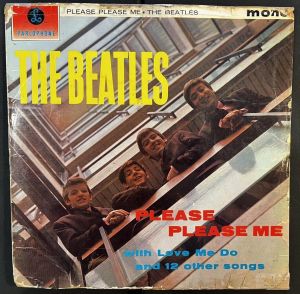
 

‘I went into the old EMI offices many times in the late ’80s and it never occurred to me to look up in reception and see exactly where that iconic photo had been taken. In the ’80s it seemed we had been looking forward.’

David Hepworth on the famous Beatles photo from the cover of Please Please Me


‘I tried the Jesus and Mary Chain but I just couldn’t believe it. It’s awful! It was so sophomoric – like the Velvets without Lou. I just know that they’re kids from Croydon! I just can’t buy it.’

David Bowie, 1987


‘I was surprised how hip it is. There’s a strange thing I don’t understand of people in Boy George outfits dancing to Jimmy McGriff and old Jackie McLean Blue Note records in discos.’

Guitarist John Scofield on the latest English ‘jazz revival’, 1988


‘Songwriting’s a craft, that’s all. I always knew my lyrics were better than anyone else’s anyway. I just edit more than other people, that’s my f***in’ secret. Also I never sleep and that helps too. You’ve got more time that way.’

Shane MacGowan, 1989


‘I hate having my picture taken, I always look like such a dog.’

Kirsty MacColl, 1989


‘I was a patsy. I never made more than $200 a week at the Five Spot.’

Ornette Coleman looks back on his legendary six-month residency during 1959 and 1960, 1985


‘All of us were naive, not just Ornette. We couldn’t even pay our rents. And they were making lots of money off us. That club was jammed every single night we were there.’

Charlie Haden on the same residency, 1985


‘You walk into the record label and they just weren’t as friendly as they used to be. When the record’s not a success, it’s your fault, and so you take on all those feelings. The label doesn’t sit down and talk to you. And they don’t drop you either, because they don’t want to lose you to the competition – just in case you do come up with something good next. And so they just remain sort of not as friendly, no more: “Hey Kevin, how are you?” It’s a head-f*ck, and you just have to work it out yourself.’

Kevin Rowland on the commercial failure of his 1988 solo album The Wanderer


‘Pop stars live the life of Caesar. And we know where the life of Caesar leads: it leads to blankness, it leads to despair. That’s the real message of these rock stars’ lives. To the public, they represent vitality, youth, innocence, joy. But in private life they represent despair and an infatuation with death.’

Albert Goldman, author of ‘The Lives Of John Lennon’ and ‘Elvis’, 1988


‘I remember sitting next to the stage and seeing all those little red lights glowing on the amps while we waited for the guys to come out and give us a real pasting.’

Allan Holdsworth reminisces about early gig-going, 1985


‘I have the best legs in the business. And they’ve got dancing feet at the bottom.’

David Lee Roth, 1982


‘There’s only one woman I have deep respect for in this industry and that’s Chrissie Hynde.’

Annie Lennox, 1986


‘I would have thought that people would be pleased to have a band that could play half decently.’

Francis Dunnery bemoans It Bites’ poor standing with the British music press, 1989


‘Sometimes he would call for Monk out of the clear blue sky. “Thelonious! Come save me from these dumb young motherf*ckers!”‘

Wynton Marsalis on playing with Art Blakey in the early 1980s


‘Prince really wants to be white. I know what that’s like. I tried hard to be white too.’

Daryl Hall, 1985


‘What we do is an alternative to Elton John and Chris Rea and all those old bastards who were there and still are. It’s embarrassing to see these old people like Dire Straits doddering about, they’re hideous.’

Robert Smith, 1989


‘I’ll tell you what I dig. In the Sting movie “Bring On The Night”, Omar Hakim taking off on that tune. Like Tony Williams, Jack DeJohnette. That’s being real free and comfortable. I don’t take my drums seriously, and they do.’

Drummer for the stars Jeff Porcaro, 1989


‘I believe that Bill (Bruford) and Adrian (Belew) thought that Beat was a better album than Discipline. I have no idea how anyone could come to that conclusion.’

Robert Fripp of King Crimson, 2022


‘Thanks for letting me drop by, guys. Hope I didn’t ruin your album.’

Herbie Hancock bids farewell to Simple Minds after playing a synth solo on their 1982 song ‘Hunter And The Hunted’


‘You should have seen us trying to sound like Windham Hill. We’d fall on our butts, man. I learned that you can’t fake it.’

’70s jazz/rock pioneer Larry Coryell on his mid-’80s collaboration with violinist Michal Urbaniak, 1985


‘We weren’t asked but we wouldn’t have done it anyway.’

Robert Smith on Live Aid, 1985


‘The band is getting back together and playing, maybe every six months or every year. If I can do so without it being public knowledge, that would be great. But I can’t do it, obviously. It would be nice to play together just as friends.’

Jimmy Page on Led Zeppelin reunions, 1986


‘I really, really would like to be in Led Zeppelin again. Whether or not time allows that to happen, I don’t know.’

Robert Plant on Led Zeppelin reunions, 1988


‘I’m a Catholic, and I would just ask God to to please help me find my own style. It’s not going to be like Tony or Elvin, so that when you hear me on a record, you know it’s Al Foster on the drums.’

Al Foster on his ‘stomping’ hi-hat technique, 1989


‘I feel I’ve created a field in which other people can discover themselves. I’m disappointed that they don’t create the room for me to discover myself.’

Robert Fripp on his King Crimson bandmates, 1984


‘I find therapy enormously valuable. It’s like car maintenance, send yourself in to be serviced every few thousand miles and, with any luck, it stops major problems developing.’

Peter Gabriel, 1989


‘I went to see this band INXS from Australia. They were on OK band, very much like a version of the Rolling Stones, but not as good. The singer is good and he looks great, but he doesn’t really move. He can’t be expending much energy.’

Mick Jagger, 1988


‘The band was like a fake democracy. Henley and I were making the decisions while at the same time trying to pacify and cajole the others.’

Glenn Frey looks back on The Eagles, 1988


‘(Jeff) Beck’s was a miserable f***ing band, horrible. Beck is a miserable old sod, but I do love him as a guitar player.’

Rod Stewart, 1988


‘I’ve always found it easier to write for other people. I feel terrible inhibited about writing for me. It’s only in the last few years that I’ve resigned myself into believing that I’m a moderately good singer.’

David Bowie, 1988


‘Of my writing partners since John (Lennon), Denny Laine was obviously nowhere near as good. Stevie Wonder is very good, but he’s not a lyricist. Michael Jackson is not as good of a writer as he is a performer. And Eric Stewart was good, but again, not as good as John.’

Paul McCartney, 1988


‘This new Clash compilation, which is meant to have sold a million copies, should be making me a rich man, but someone told me you only get quarter royalties for compilations. The CD wasn’t invented then so that wasn’t in the contract either. So I think I don’t get them royalties either. To tell the truth, I think we’re all a bit skint really.’

Joe Strummer on the legacy of The Clash, 1988


‘Those weird people on the street – every hundreth weirdest one has a Steely Dan record at home. That guy who hijacked a bus today probably has 47 copies of The Royal Scam.’

Walter Becker on Steely Dan’s audience, 1981


‘In 1981, something happened which changed my way of working with music. I woke up on a friend’s sofa in New York and simply understood something I’d known for a while: music was always present, completely with a life of its own, as a friend.’

Robert Fripp, 1984


‘The price of a ticket goes from two dollars to 20 dollars, the act doesn’t do an encore, someone has to stand in a long line, and it’s all my fault.’

Bill Graham on stadium rock, 1988


‘There are a lot of people who didn’t make a commitment and now they’re no longer with us. We lost Otis Redding, Sam Cooke, Jackie Wilson, Jimi Hendrix. I think maybe some of them didn’t know where or when to get off. The important thing is to be here.’

Al Green, 1988


‘Hell, we steal. We’re the robber barons of rock’n’roll.’

Donald Fagen of Steely Dan, 1981


‘After recording it, I flew off to see my manager and I said to him, “You’d better watch who you’re talking to. I’m the guy who wrote “Addicted To Love!”‘

Robert Palmer, 1988


‘I get the fans who write poetry. I have a slight David Sylvian audience, whereas Chris (Lowe) gets the sex audience, the ones who write obscene letters! It’s quite thrilling, actually!’

Neil Tennant of The Pet Shop Boys, 1988


‘It was the Enniskillen bombing that did it. The man whose daughter died beside him under the rubble; he was burning inside but he was so forgiving, so gracious. I thought, Christ, this is what courage is all about – Elton, just shut up and get back to work. After all, once you’ve been exposed naked on the cover of The Sun you ought to be able to face anything…’

Elton John on his 1988 comeback


‘It’s a better product than some others I could mention.’

David Bowie defends the Glass Spider Tour, 1987


‘Back then I thought I’d lost it and I did a bunch of things I was really unhappy with – all in public and on record. But it turned out not to be true. My ability hadn’t deserted me. And it won’t go away. Ever.’

Lou Reed, 1988


‘Michael Jackson’s just trying to cop my sh*t. I was insane years ago…’

Neil Young, 1988


‘I’ve said a lot of things in my time and 90 percent of them are bollocks.’

Paul Weller, 1988


‘We were excellent. Some of the best records of the ’80s are there. For the last six months of Wham!, it was OK to like us, we got a little hip. I cannot think of another band who got it together so much between the first and second albums. On Fantastic, you can tell I don’t think I’m a singer but some vocals on Make It Big are the best I’ve done. Even if we were wankers, you still had to listen.’

George Michael reassesses Wham!, 1998


‘The gig I have as the drummer in King Crimson is one of the few gigs in rock’n’roll where it’s even remotely possible to play anything in 17/16 and stay in a decent hotel.’

Bill Bruford, 1983


‘When I toured with The Rolling Stones, the audience would come up to me after the show and say, “Man, you’re really good, you ought to record.” How do you think that makes me feel after 25 years in the business?’

Bobby Womack, 1984


‘I find politics ruins everything. Music, films, it gets into everything and f*cks it all up. People need more sense of humour. If I ran for President, I’d give everybody Ecstasy.’

Grace Jones, 1985


‘I’m not the most gifted person in the world. When God handed out throats, I got locked out of the room.’

Joe Elliott of Def Leppard, 1988


‘I’m lazy and I don’t practice guitar and piano because I’ve gotten involved with so many other things in my life and I just had to make a sacrifice. Stephen Sondheim encourages me to start playing the piano again. Maybe I will.’

Madonna, 1989


‘Nile (Rodgers) couldn’t afford to spend much time with me. I was slotted in between two Madonna singles! She kept coming in, saying “How’s it going with Nile? When’s he gonna be free?” I said, “He ain’t gonna be free until I’m finished! Piss off!”’

Jeff Beck, 1989


‘I’ve never really understood Madonna’s popularity. But I’ve talked to my brothers and they all want to sleep with her, so she must have something.’

Nick Kamen, 1987


‘Madonna is intelligent, caring and sensitive. It wouldn’t surprise me if she was the next President.’

Chrissie Hynde, 1987


‘Her image teaches some very bad moral codes. Her song lyrics teach children that they’ll get what they want if they’re devious and they’re sexual and they’re whores.’

Rickie Lee Jones on Madonna, 1987


‘They ask you about being a Woman In Rock. The more you think about, the more you have to prove that you’re a Woman In Rock. But if you’re honest, it doesn’t matter whether you’re male or female. That’s the way we work.’

Wendy Melvoin, 1989


‘In Japan, someone told me I was playing punk saxophone. I said, “Call me what you want, just pay me”.’

George Adams, 1985


‘In the past, we’d bump into other musicians and it would be, “Oh, yes, haven’t I heard of you lot? Aren’t you the bass player that does that stuff with your thumb?” But once you’ve knocked them off the number 1 spot in Germany, they’re ringing you up in your hotel and saying, “Hey, howyadoin’? We must get together…”‘

Mark King of Level 42, 1987


‘We played London, we played Ronnie Scott’s, and I noticed that there were a lot punk-rock kids in the audience. After we finished playing, we had to go to the disco and sign autographs, because “Ping Pong”, the thing we made about 30 years ago, is a big hit over there.’

Art Blakey, 1985


‘I believe music – just about everything – sounds better these days. Even a car crash sounds better!’

Miles Davis, 1986


‘It’s a dangerous time for songwriters in that a monkey can make a thing sound good now.’

Randy Newman, 1988
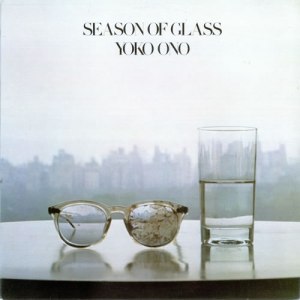
Yoko+Ono+Season+Of+Glass+522787


‘To have those glasses on the cover was important because it was a statement and you have to understand that it was like John wanted you guys to see those glasses.’

Yoko Ono, 1989


‘I’ll f*cking… I’ll go and take on anyone, any white singer who wants to give me a go.’

Matt Goss of Bros, 1989


‘I’ve never said this before but my drums is so professional, man, know what I mean?’

Luke Goss of Bros, 1989


‘I hate parts of my own albums because I know I’m hearing something that doesn’t translate to piano. In fact, I’m being dishonest by playing piano at all.’

Keith Jarrett, 1987


‘When I began to see how Elvis lived, I got such a strong take off of it. It was all so revolting!’

Albert Goldman, 1988


‘The best way to make great art is to have it trivialised by other people as much as possible. That way, you fight and fight and fight.’

Julian Cope, 1989


‘Whatever you’re tops in, people is trying to bring you down, and that’s my philosophy.’

Samantha Fox, 1987


‘Call me fat and I’ll rip your spine out.’

Ian Gillan, 1983


‘Sure I care about my fans. Because fans is money, hahaha. Muh-neee! And who does not care about money? Me, I like muh-neee, haha.’

Chuck Berry, 1988


‘I have this long chain with a ball of middle-classness at the end of it which keeps holding me back and that I keep sort of trying to fight through. I keep trying to find the Duchamp in me.’

David Bowie, 1980


‘People who say, Oh, I don’t know anything about music – they’re the people who really do know about music because it’s only really what it does to you.’

Steve Winwood, 1988


‘I notice that critics and others don’t credit black people with the ability to write ingenious, creative lyrics.’

Nile Rodgers, 1981


‘I’m below the poverty line – I’m on £16 a week. We needed some clothes and our manager said, “I don’t know what you do with your money. I mean, 16 quid!”’

Gary Daly of China Crisis, 1984


‘You take four or five of those rattlesnakes, dry ’em out and put them inside your hollow-box guitar. Lightnin’ Hopkins taught me that trick.’

Albert Collins on his guitar tone, 1988


‘People are bored with Lionel Richie going “I love everybody, peace on earth, we are the world…” F*ck that! People love bastards.’

Terence Trent D’Arby, 1987


‘Epstein dressed The Beatles up as much as he could but you couldn’t take away the fact that they were working-class guys. And they were smart-arses. You took one look at Lennon and you knew he thought the whole thing was a joke.’

Billy Joel, 1987


‘I remember when the guy from Echo & The Bunnymen said I should be given National Service. F*** him...’

Boy George, 1987


‘No-one should care if the Rolling Stones have broken up, should they? People seem to demand that I keep their youthful memories intact in a glass case specifically for them and damn the sacrifices I have to make. Why should I live in the past just for their petty satisfaction?’

Mick Jagger, 1987


‘The industry is just rife with with jealousy and hatred. Everybody in it is a failed bassist.’

Morrissey, 1985


‘I couldn’t stand it – all that exploitation and posturing, the gasping at the mention of your name, the pursuit by photographers and phenomenon-seekers. You get that shot of adrenalin and it’s fight or flight. I chose flight many a time.’

Joni Mitchell, 1988


‘I’m strongly anti-war but defence of hearth and home? Sure, I’ll stick up for that… I’m not a total pacifist, you know? I’ve shot at people. I missed, but I shot at them. I’m sort of glad I missed…’

David Crosby, 1989

13 Memorable B-Sides Of The 1980s

princeThere was definitely a thing about B-sides in the 1980s.

You never quite knew what you would find on the reverse of your favourite 7” or 12″ – maybe a new direction, bold experiment, engaging curio, self-produced shocker or even the drummer’s long-awaited-by-nobody songwriting debut.

Sometimes a single track encapsulated all of the above…

This writer was never the biggest singles collector in the world, but had to try and hear everything by Prince, Level 42 and It Bites during their peak years. Some B-sides took on a kind of mythic stature and weren’t easy to access: you’d have to cadge from your mates, record things from the radio or trawl the Record & Tape Exchange.

Here’s a motley parade of ’80s backsides, some long-sought-after, some intriguing, some exciting, some fairly random but all inexplicably etched upon my memory.

13. David Bowie: ‘Crystal Japan’ (1981)

Though originally released as an A-side for the Japanese market, this charming instrumental later turned up as the B-side to the ‘Up The Hill Backwards’ single of March 1981.

12. Peter Gabriel: ‘Curtains’ (1987)

Almost every time this ‘Big Time’ B-side rolls around, it produces a slight chill and sense of wonder. One of PG’s most disquieting pieces but with a lovely melody and ambience.

11. Danny Wilson: ‘Monkey’s Shiny Day’ (1987)

The Dundonians are at their most sublimely Steely-ish on this ‘Mary’s Prayer’ B-side. The track’s lo-fi production and slightly low-budget horn section/backing vocals hinder it not one jot.

10. Prince: ‘Alexa De Paris’ (1986)

Prince had always threatened a full-on guitar instrumental and this ‘Mountains’ B-side delivered it. And boy was it worth the wait. Sheila E plays some fantastically unhinged drums (check out how she reacts to Prince’s guitar throughout) and Clare Fischer weighs in with a widescreen orchestral arrangement. The composition is reimagined as a solo piano piece in the movie ‘Under The Cherry Moon’.

9. It Bites: ‘Vampires’ (1989)

The B-side of ‘Still Too Young To Remember’, this glam-prog classic is notable for its crunching riff, catchiness and Francis Dunnery’s most extreme It Bites guitar solo (stitched together from multiple takes?). Pet Shop Boys were definitely listening – this is even in the same key.

8. David Sylvian: ‘A Brief Conversation Ending In Divorce’ (1989)

The accompanying track to one-off 12” single ‘Pop Song’, you get the feeling this microtonal, improvised miniature featuring late great pianist John Taylor was far more up Sylvian’s street than the hits requested by Virgin Records.

7. Donna Summer: ‘Sometimes Like Butterflies’ (1982)

This B-side to ‘Love Is In Control (Finger On The Trigger)’ is a bit of a guilty pleasure. But Summer’s exceptional performance transcends the schmaltz, as does a superb drum performance by…someone (Steve Gadd? Rick Marotta? Ed). Intriguingly, Dusty Springfield covered it in 1985.

6. Level 42: ‘The Return Of The Handsome Rugged Man’ (1982)

This irresistible B-side from the ‘Are You Hearing What I’m Hear’ 12” shows the lads in full-on Weather-Report-meets-Jeff-Beck mode. Drummer Phil Gould even gives Harvey Mason and Billy Cobham a run for their money.

5. Roxy Music: ‘Always Unknowing’ (1982)

This shimmering, beguiling Avalon outtake from the US single version of ‘More Than This’ was surely in competition with ‘While My Heart Is Still Beating’ and ‘Tara’ for an album spot. Beautiful playing from guitarist Neil Hubbard.

4. Donald Fagen: ‘Shanghai Confidential’ (1988)

This ‘Century’s End’ B-side is an intriguing slice of fuzak with lovely chord changes, some tasty Marcus Miller bass and a fine Steve Khan guitar solo. You can even feel Donald smirking slightly when he plays his synth motif.

3. Scritti Politti: ‘World Come Back To Life’ (1988)

The B-side of the ‘Boom There She Was’ 12-inch showcases all the charms of the Provision sound: intricate arrangements, pristine production, bittersweet lyrics and punchy vocals. For many fans, it’s better than a lot of stuff on the album.

2. China Crisis: ‘Animalistic’ (1985)

The Liverpudlians detour into minimalist jazz/funk with some success on this ‘Black Man Ray’ B-side. Gary Daly’s vocals have never been so wryly Lloyd Cole-esque and drummer Kevin Wilkinson is in his element.

1. Willy Finlayson: ‘After The Fall’ (1984)

The A-side, ‘On The Air Tonight’, was recently covered by The Zombies’ Colin Blunstone, but I’ve always had a soft spot for this B-side. Both tracks were written and produced by ex-Camel keyboardist Pete Bardens.

Three Angry 1980s Songs About Managers

Grey_Double-Buttoned_Suit_JacketManagers, eh? In 1997, David Bowie said, ‘They’re a species I really have nothing to do with’, an unsurprising position considering his disastrous earlier experiences.
But, in the rock and pop world, it’s almost a rite of passage to be ripped off by a manager. As the old music biz saying goes: where there’s a hit, there’s a writ.

There were certainly a number of dodgy characters hanging around in the 1980s, generally wearing cheap suits and deafening aftershave. Japan/Wham! manager Simon Napier-Bell knows where all the bodies are buried: he told all in ‘Ta-Ra-Ra-Boom-De-Ay’, his jaw-dropping account of record business skulduggery.

And Giles Smith’s hilarious ’80s memoir ‘Lost In Music’ outlined his doomed-to-fail attempts at pop stardom whilst being hamstrung every step of the way by chronically-inept ‘career adviser’ Pete The Bastard.

Basically, for every Bruce Findlay (Simple Minds), Ed Bicknell (Dire Straits) or Paul McGuinness (U2) – the nominal ‘fifth member of the band’ – there’s probably a Colonel Tom Parker or Defries in the wings. Here are three prime 1980s acts who turned on their ex-managers in the best way they knew how.

3. XTC: ‘I Bought Myself A Liarbird’ (1984)
For many years, songwriter Andy Partridge was unable to discuss this song due to ‘legal issues’ with the band’s former manager Ian Reid (the sticking points seemed to be a huge unpaid VAT bill and also work/life balance, or lack of it…). Partridge delivers a pretty caustic portrait of the ‘starmaker machinery behind the popular song’, as Joni Mitchell called it. XTC settled out of court with Reid in 1989.

I bought myself a liarbird
He came with free drinks
Just to blur the lies falling out like rain
On an average English summer’s afternoon

I bought myself a new notebook
Sharpened my guitar and went to look
If this biz was just as bongo as the liarbird made out

All he would say is ‘I can make you famous’
All we would say: ‘Just like a household name’
Is all he would say

Methinks world is for you
Made of what you believe
If it’s false or it’s true
You can read it in your bible
Or on the back of this record sleeve

I bought myself a liarbird
Things got more and more absurd
It changed to a cuckoo
And expanded, filling up with all I gave

I bought myself a big mistake
He grew too greedy, bough will break
And then we will find that liarbirds
Are really flightless on their own

Methinks world is for you
There’s no handing it back
If it’s false or it’s true
You can read it in your prayer book
Or on the side of a cornflake pack

I gave away a liarbird
A couple less drinks
And now I’ve heard the truth shining out like sun
On an average English winter’s afternoon

2. John Martyn: ‘John Wayne’ (1986)
This Eastern-tinged, dramatic doom-ballad was initially written as a diatribe against Martyn’s early-’80s manager Sandy Roberton. The main problem seemed to be ‘cashflow’, judging from the lyric below… After a rewrite and the adding of a soupçon of humour (as well as some of John’s ‘strangled duck’ vocals, as he called them), it also became a cheeky portrait of the type of ball-busting, all-American bullyboy represented by Duke Wayne and Martyn’s old favourite Ronald Reagan. He even managed to include the Pinteresque euphemism: ‘I’ll measure you – fit you up!’

You know you’ve got it coming
I’ll tell it to you straight
I’m coming for you very soon
I’ll never hesitate
I’ll measure you
And fit you up

I am John Wayne
I do believe I’m John Wayne
I am John Wayne
Drink your milk!

Don’t you dare look behind you
You know I will be there
You’ll feel my breath on your neck
Turn, face me if you dare

I am John Wayne
I believe I’m John Wayne
Get on your horse!

You felt the money flowing
You watched the beast arrive
Watch the money going away
Time to skin the lamb alive

1. Prince: ‘Bob George’ (1987)
Black Album curio ‘Bob George’ was recorded at LA’s Sunset Sound as a present for Sheila E, and premièred at her Vertigo club birthday bash on 11 December 1986. Engineer Susan Rogers explained the genesis of this bizarre, self-mocking, X-rated piece: ‘Prince felt (Billboard music critic) Nelson George had become very critical of him all of a sudden, at a stage in his career where he needed all the help he could get. (Manager) Bob Cavallo also ticked him off.’ Roots of this discord may have lain in Prince’s wish to release the triple-album Crystal Ball as the follow-up to Parade, a wish that fell on deaf ears during negotiations with Prince’s record company Warner Bros. Maybe Prince felt that Cavallo hadn’t pushed hard enough on his behalf, terminally affecting their working relationship – Cavallo was given the push just after the release of the Batman album 18 months later. (Is ‘Bob George’ also a homage to/pastiche of Miles Davis? Ed.)

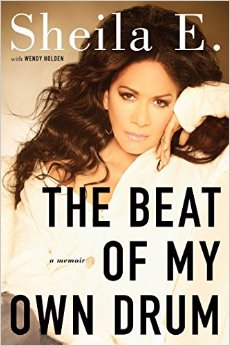
Book Review: Sheila E’s The Beat Of My Own Drum

sheila eConsidering he was such a huge star and cultural icon, it’s surprising that Prince’s eventful life and sad death has yet spawned so few ‘kiss and tell’ memoirs.

Let’s hope it stays that way. But while his long-time musical partner and one-time fiancée Sheila E certainly doesn’t shy away from sharing her memories of him in her fine autobiography ‘The Beat Of My Own Drum’ (co-written with Wendy Holden), those recollections form only a small part of a very rich, diverse collection of portraits.

After all, Sheila has played percussion and/or drums with some of the all-time greats: Carlos Santana, Herbie Hancock, Marvin Gaye, George Duke, Lionel Richie, Tito Puente, Diana Ross and Billy Cobham, not forgetting her father Pete Escovedo.

But while there are plenty of tasty music biz anecdotes, the book also provides a fascinating portrait of growing up in a mixed-race family (her mother is African-American and father Mexican) in a less-than-salubrious section of Oakland, California.

Sheila paints a rich picture of a seemingly happy childhood based around music, dancing, sports (she is apparently a pretty useful football player), charity and community, with shared cultural references such as The Carpenters (Sheila was hugely inspired by seeing Karen on the TV), Sly and the Family Stone and The Jackson 5, though there also some racial tensions around too.

But then the book goes in a completely different, unexpectedly harrowing direction when she chronicles the sexual abuse suffered as a young girl at the hands of several cousins. The section rivals James Rhodes’ recent book ‘Instrumental’ in its shocking candour.

Thankfully, if anything, the abuse drives her ambition rather than beats her down, though she admits to seeing it as a dark secret that clouds the rest of her life.

There are fascinating anecdotes about travelling to Colombia at the age of just 15 to play percussion with the Latin/fusion supergroup Azteca. Cobham, Duke and Gaye are mainly described in glowing terms, almost as father figures, and she is unexpectedly candid about her romantic and musical infatuations with Santana. There’s also a hilariously mismanaged backstage ‘meeting’ with Diana Ross.

But it’s easy to forget just how unique Sheila’s talent was in the 1980s when she made it as a ‘pop star’. We had never seen a percussionist/singer/dancer triple-threat before, as she herself points out, and Latin celebrities were very rare.

This pop period is grippingly covered in the book, with tales of disastrous video shoots, crazy tour schedules and much celebrity hobnobbing. Escovedo also very nicely juggles the spicy anecdotes with some genuine, intelligent advice for the modern musician, and just enough technical stuff about playing drums and percussion too.

Sheila also discusses her project Elevate Hope Foundation which focuses on music therapy for victims of child abuse, a noble and important program which continues to go from strength to strength.

So if the last quarter of ‘The Beat Of My Drum’ reads more like a self-help book than a famous musician’s autobiography, we can surely cut her some slack. Highly recommended.

Prince: An Appreciation And Farewell

Prince_logo.svgIt’s never easy describing why a personal hero meant a lot to you – heaven knows I still haven’t been able to set down anything cogent about David Bowie’s life and work.

But I may be coming nearer to working out why Prince Rogers Nelson had such an effect on the way I heard – and still hear – music.

Before the release of  1986’s Parade, I was a confirmed chart-pop fan, but also into the weird rock of Frank Zappa, fusion of Weather Report and straight jazz of Courtney Pine, Miles Davis and Herbie Hancock.

Parade seemed to offer a perfect synthesis of all these forms. And, quite incredibly, one guy was pretty much responsible for all of it – and he was a brilliant singer and dancer too. Put simply, for fans and musicians of my age, Prince was the nearest thing to a Bowie/Ziggy figure.

His extravagantly-flamboyant stage persona also sometimes blinded people to the brilliance of his musicianship. Pre-Parade, that might have put me off initially too. But has there ever been a better keyboard/guitar double threat? (Steve Winwood, Johnny Guitar Watson and Lewis Taylor are decent competition but he surely outstrips all three.)

He obviously had natural talent but he worked extremely hard too – in his teenage years, he was living Malcolm Gladwell’s 10,000-hour rule. Influenced by Sly Stone, Graham Central Station, Funkadelic, Tower Of Power, Carlos Santana and Joni Mitchell, he was busy getting his chops together in his home music room and during various high-school battle-of-the-band competitions in Minneapolis’s North Side.

As he told Rolling Stone magazine in 1990: ‘Anyone who was around back then knew what was happening. I was working. When they were sleeping, I was jamming. When they woke up, I had another groove.’

On the bass, he took care of business. Along with a few other of his contemporaries (he credited future New Power Generation member Sonny Thompson as being a key early influence), he patented the Minneapolis bass sound, a rumbling, busy style, heavily influenced by Sly and the Family Stone’s Larry Graham.

But he also had a much more effervescent, Stanley Clarke-flavoured side as well, a good example being the incredible ‘I’m Yours’ from 1978’s For You.

On guitar, his sweet, creamy, heavily-distorted lead lines, usually injected with a healthy dose of delay, were coming out of the Carlos Santana and Ernie Isley school, but he also had many licks all of his own. For me, his lead guitar peak was 1985-1989; what an incredible tone, beautiful phrasing and a very ‘vocal’, human sound.

But he also had a funky ensemble rhythm guitar style out of Steve Cropper and Jimmy Nolan school. My favourite examples of Prince guitar would have to include ‘Lady Cab Driver’, ‘Bambi’, ‘My Love Is Forever’, ‘Alexa De Paris’, ‘The Question Of U’, ‘Temptation’, ‘Get Some Solo’, ‘One Of Us’, ‘Joy In Repetition’, ‘Batdance’, but there are many more. His playing throughout the ‘Sign O’ The Times’ and  ‘Lovesexy Live’ concert films is sublime.

On keyboards, he was equally proficient. As NPG drummer Michael Bland pointed out, his piano playing had a touch and rhythmic approach similar to Thelonious Monk. He also patented the Minneapolis synth sound (alongside other influential players such as Ricky Peterson and Jimmy Jam), exemplified by his work between 1980 and 1983 on solo albums and releases by The Time, Vanity 6 and Sheila E.

And he loved playing hot, churchy, gospel-flavoured organ too – check out ‘Hot Thing’ from the ‘Sign O’ The Times’ film or his superb Hammond playing on the Parade tour.

On drums, he was, by contrast, a late developer. Before discovering the Linn LM-1 drum machine in 1981, his playing was functional rather than spectacular. Purple Rain engineer Susan Rogers has talked about how much Prince’s drumming improved once Sheila E came into his life around 1983 – he very much wanted to impress her, and she taught him a few licks too.

But he definitely had his own touch on the drums: check out the 12” version of ‘Mountains’, ‘Tambourine’, ‘Lady Cab Driver’ and ‘Sexual Suicide’ for some good examples. He was also very influenced by The Time mainman Morris Day’s playing – ‘Cloreen Bacon Skin’ on Crystal Ball is quite illuminating.

Of course, it’s all very well playing lots of instruments, but it’s a question of arrangement. Good ingredients are important but you’ve got to know how to mix them up. Prince was a master.

A lot of his ‘producing’ decisions (ie. what to put in and what to leave out) came about because he very, very rarely left a song unfinished – he would work very long hours without a break to achieve exactly the sound he had originally heard in his head. This is why his best stuff sounds so fresh today – it has enough melody and groove for the casual listener but also retains a precious, ‘unfinished’ quality.

As a young musician in the ‘70s, Prince was very much a student of funk, soul and rock, but he came to jazz too later in life, inspired by his work with Eddie Minfield, Sheila E, Miles Davis, Eric Leeds and Matt Blistan in the mid-‘80s.

He tried a ‘one-man-band’ approach to jazz/rock/funk with his Madhouse project, and worked successfully with Leeds on his two Paisley Park solo albums, but was more successful when he integrated the jazz influences into his own ‘pop’ albums and gigs.

My ultimate was the Lovesexy tour, when the band could turn on a dime, going from cool Duke Ellington and Charlie Parker licks to blazing hard rock.

For every great single that came out in the mid-to-late-’80s, there was a great B-side. We fans had to hear as much as possible. My friend Marlon Celestine was our source for amazing bootlegs; the brilliant original demos for The Family album, ‘Others Here With Us’, ‘A Place In Heaven’, ‘Movie Star’.

What will happen to all these tracks now? Was Prince planning to let us hear everything? There was talk of opening the vaults and adding the outtakes to the ‘special edition’ re-releases of the Warner Bros studio albums. I wonder who owns these masters now.

Another important aspect of Prince was his sense of humour. Friends, collaborators and lovers have reported how hilarious he could be away from the media glare. He didn’t let it out very often on his own official albums, but you can hear it loud and clear on ‘Cloreen Bacon Skin’, ‘Mutiny’, ‘High Fashion’, ‘Movie Star’, ‘Housequake’, ‘Jerk Out’, ‘Chocolate’ and Sheila E’s Romance 1600 album.

There are apparently many other ‘comedy’ tracks in the vaults. His cheekiness came out often on stage too – check out ‘Blues In C/If I Had A Harem’ from ‘Lovesexy Live’, and there are plenty of other examples.

He was also a true Gemini, and as such it’s important to note how vitally important many women were to his career, and how often he sought their musical and personal company: Susan Rogers, Peggy McCreary, Wendy & Lisa, Susannah Melvoin, Jill Jones, Mavis Staples, Sheena Easton, Ingrid Chavez, Sheila E, Cat Glover, Boni Boyer, Rhonda Smith, Mayte, Rosie Gaines, Candy Dulfer, Marva King, 3rdeyegirl – just a partial list.

Yes, one might question some of his attitudes towards women when he put together the bands Apollonia 6 and Vanity 6 (and there’s some strange stuff in ‘Purple Rain’) but he was a very young man then. His ‘Camille’ songs (‘If I Was Your Girlfriend’, ‘Good Love’, ‘When 2 R In Love’, ‘Rockhard In A Funky Place’ etc.) present a perfect fusion of his male and female sides, and of course the design of his ‘90s Symbol heavily emphasised both genders.

Prince went out of his way to promote musicians who were important to him, figures such as Larry Graham, Joni Mitchell, Mavis Staples, Bonnie Raitt, Miles Davis and Chaka Khan. He came to George Clinton’s rescue in the late 1980s when George had a huge tax bill to pay – Prince signed him to Paisley Park for one album (The Cinderella Theory) and the sizeable advance took care of his debt.

He later enlarged on his feelings about George Clinton and Parliament/Funkadelic during this elegant speech inducting them into the Rock’n’Roll Hall Of Fame. Prince was also a musical philanthropist – he gave away instruments to schools and encouraged real playing in an age of samples and loops. He also played many, many charity shows throughout his career, donating hundreds of thousands of dollars.

Then there was the spiritual element to Prince’s music, increasingly visible as the ‘80s progressed. He was a living embodiment of the sacred/profane dichotomy. The man who wrote ‘Sister’ and ‘Lady Cab Driver’ ended the decade by telling us: ‘Look to the light’. He could write ‘I Love U In Me’ one day but then follow it up the next with ‘God’.

The entire Lovesexy live show (and album) was designed as a battle between good and evil. I wasn’t sure if I liked or understood the spiritual stuff back in 1988, but I loved the way he provoked questions. Still do.

In December 1987, when he had a change of heart and pulled The Black Album from release at the eleventh hour, believing it to be too angry, too dark, and an unrepresentative piece of work, he rush-released Lovesexy instead. Here was an artist of integrity.

(Apparently one frame in the ‘Alphabet Street’ video features the words: “Don’t buy The Black Album. I’m sorry.” Or does it? I could never find it back then… Maybe it was a great bit of Warner Bros PR.)

I never saw Prince play live, to my great regret. I passed up a ticket for the famous London O2 run in 2007. It just didn’t sit right. The nearest I got to seeing him perform was a signing session at HMV in Oxford Street with the NPG in 1995.

Around that time, he was way more visible on British TV than he had ever been before, memorably appearing on ‘The White Room’ and also being interviewed on the BBC’s ‘Sunday Show’. He seemed quite happy subsuming himself into a group ethos – there are shades of Bowie and Tin Machine.

Over the last few weeks, the press has frequently reported that the essential book about Prince is Matt Thorne’s biography. It’s good, but the killer is surely ‘Prince: The First Decade’ by Per Nilsen. There you will read about the recording of every single one of his albums from 1978 to 1988, find out what was happening in his private life throughout that time and also hear from all his key collaborators. Nilsen’s ‘Prince: The Documentary’ is also superb.

Though I struggled with a lot of Prince’s music in the ’90s and beyond, he seemed to live a pretty ‘noble’ life in a period when many musicians of his generation and popularity kind of lost their way.

There was certainly a conscious retreat towards the end of the ’90s, but then look at what was happening in the wider world around that time – the Disneyfication of the music business, the dumbing down of culture generally.

He chose not to play the whole global branding game (he never launched a clothes line or fragrance, for example), he took on his record company, temporarily withdrew the name ‘Prince’, resolutely promoted himself as a musician and spoke up about many of the things that troubled him.

That may explain a lot. We shall see, though I’m not looking for any ‘theories’ or ‘explanations’ concerning his death and trying not to hear news reports.

In 1990, Prince told Rolling Stone magazine, ‘When I pray to God, I say, “It’s your call – when it’s time to go, it’s time to go. But as long as you’re going to leave me here, I’m going to cause much ruckus!”’

He did it. C-ya.

Tony LeMans (1989)

download

This is an intriguing, very promising, almost completely forgotten (currently not on any streaming platforms) debut album by a young American singer and songwriter who sadly died in a motorcycle crash only three years after its release (and reportedly the day before he was due to marry Vanity’s sister).

I came across Tony LeMans completely by chance at a now defunkt shop called Mr CD on Berwick Street, Soho, circa 1991. It had piles and piles of CDs at five quid a pop, quite a steal by 1990s standards.

You just never knew what you would find, in the days when you would take a chance on an album just on the strength of the label, cover, musicians and/or producer. I saw the words ‘Sylvester Stewart’, ‘David Gamson’ and ‘Paisley Park’ on the back and had to have it.


Gamson plays keyboards and produces beautifully, fresh from Scritti Politti’s Provision. Tony LeMans was released on Prince’s Paisley Park Records – rumours were abound of the Purple One’s involvement, but he doesn’t appear.

But other ’80s funk masters do: Bernard Wright supplies some cracking wah-wah clavinet to a few tunes, though bassist Marcus Miller and guitarist Paul Jackson Jr. are fairly nondescript.

Prince cohort Boni Boyer adds occasional back-up vocals alongside Michael Jackson collaborator Siedah Garrett (phenomenal on the opening ‘Higher Than High’).

The sonic clarity and mastering of Tony LeMans are outstanding; it’s a brilliant CD for auditioning a hi-fi. It’s also a real relief from the over-loud, over-compressed music of today.

Musically and lyrically, it initially comes on like a ‘standard’ late-’80s pop/soul/funk album, but closer inspection reveals a strong psychedelic flavour. Mainly though, due to Gamson’s total involvement, the album sounds like Provision-era Scritti fronted by Sly Stone.

The opener ‘Highest High’ fuses the synth hook from Prince’s ‘Lovesexy’ with Sly’s ‘The Same Thing’ (though neither get a songwriting credit) to great effect.

The single ‘Forever More’ is a winning ballad with a fine falsetto vocal from LeMans and some classic Gamson chord changes, while ‘Good For You’ is an infectious, catchy slice of doo-wop-influenced pop.

There’s a bit too much filler on side two, but the closing ‘Different Kind Of Thing’ is possibly the stand-out and the nearest thing to a Prince song (very much influenced by ‘Erotic City’), though it was only an extra track on the original CD release.

LeMans toured the album in the States, sometimes supporting MC Hammer (!), and was recording his second Paisley Park album at the time of his death. It was due to feature a Prince composition called ‘Fuschia Light’.

Prince Rogers Nelson (7 June 1958 – 21 April 2016)

Prince_at_Coachella‘He’s got it all! As a drummer, he can hold it down, you know what I’m sayin’? As a guitar player, he puts out! Plus he’s a great piano player. Matter of fact, he’s about as good as they get, and I’ve worked with the best, I should know! Do you know who he reminds me of? Duke Ellington. Yeah, he’s the Duke Ellington of the ’80s to my way of thinking.
MILES DAVIS

‘Music is made out of necessity. You’re not even its maker, you’re just there to bring it forth. It’s a fact of life, just like breathing.’

PRINCE

‘I’ve got people to feed. They depend on me to put bread on the table. I can’t just go away.’

PRINCE

‘I crave the experience of writing and sharing with others. It is what I do as an artist; as a human being.’

PRINCE

‘He seems to have his own voice on every instrument, really. What’s funny is that he reminds me of Thelonious Monk on all of them. His feel’s instantly recognisable.’

MICHAEL BLAND

‘I took my Black Album into a nightclub to see what people’s reactions were to it. And this girl said to me, “If you smiled, you’d be a really nice person.” I looked at my Black Album and I saw the reflection in it and I realised that if I released this album and died, that’s what people would remember me for. I could feel this wind and I knew I was doing the wrong thing…’

PRINCE

‘For You’
‘My Love Is Forever’
‘Bambi’
‘Dirty Mind’
‘Annie Christian’
‘All The Critics Love U In New York’
‘Automatic’
‘The Beautiful Ones’
‘Erotic City’
‘Purple Rain’
’17 Days’
‘The Ladder’
‘Pop Life’
‘Condition Of The Heart’
‘Kiss’
‘Alexa De Paris’
‘Crucial’
‘Movie Star’
‘Crystal Ball’
‘Sexual Suicide’
‘Bedtime Story’
‘Susannah’s Pyjamas’
‘Nothing Compares 2 U’
‘The Question Of U’
‘Violet Blue’
‘A Love Bizarre’
‘The Ballad Of Dorothy Parker’
‘Forever In My Life’
‘If I Was Your Girlfriend’
‘Sign O’ The Times’
‘Alphabet Street’
‘When 2 R In Love’
‘Vicki Waiting’
‘Scandalous’
‘Still Would Stand All Time’

Wish U Heaven.

Prince Rogers Nelson, born 7 June 1958, died 21 April 2016

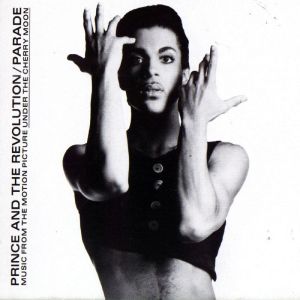
Prince: Parade @ 30

princeOn 17 April 1985, just ten days after the end of the Purple Rain tour, Prince walked into LA’s Sunset Sound studios, sat at the drums, taped the lyrics of four new songs onto a music stand, picked up his sticks and instructed engineer Susan Rogers: ‘Don’t stop the tape when I stop playing. Just keep rolling.’

He then played through ‘Christopher Tracy’s Parade’, ‘New Position’, ‘I Wonder U’ and ‘Under The Cherry Moon’ without pausing. This guy worked fast. The recording sessions for Parade had begun.

The album would see Prince continue his extraordinary mid-’80s run of form, surely comparable to Stevie Wonder’s fabled 1972–1976 period. He couldn’t release albums fast enough and the wider world was waking up to just how prolific he really was.

His striking new horns-and-orchestra-driven sound, by turns jazzy, funky and psychedelic, lost him some fans in the States but made him a huge star in Europe.

Parade showed off the amazing versatility of Prince (drums, bass, guitar and keyboards) and his main collaborators Wendy (guitar) & Lisa (keyboards).

It’s an anti-boredom album full of glorious contradictions – it features his first instrumental track but still contains four classic dancefloor singles; it’s his densest, most ‘produced’ ’80s album (alongside Lovesexy) and yet features his first all-acoustic track, recorded completely live in the studio; Clare Fischer’s orchestral arrangements are always high in the mix but rub shoulders with the Sunset Sound’s ancient sound effects library; Prince utilises ultramodern tech like a guitar synth and a Fairlight sampler, but the main solo instruments are Eric Leeds’ tenor and baritone sax.

And there is zero electric lead guitar, barely 18 months after Purple Rain.

References this time around were The Beatles, ’80s Miles Davis, show tunes and funk-era James Brown.

The biggest influence though is late-’70s Joni Mitchell. Parade is the nearest Prince ever got to the kaleidoscope range of her classic albums Don Juan’s Reckless Daughter and Hissing Of The Summer Lawns.

There were also more vocals in Prince’s music than ever before: Wendy, Lisa, Susannah (Wendy’s sister and Prince’s fiancée) and Sheila E all contributed massively to the occasional West Coast/Bangles sound.

By 2 June 1985, nine songs for Parade were in the can, though three would later be left off the final album – the spooky ‘Others Here With Us’, fantastic ‘All My Dreams’ and superfunky ‘Sexual Suicide’.

Prince was also now working on not one but two other albums, Jill Jones and Mazarati’s debuts. By late June, he was also scouting locations in the south of France for the upcoming ‘Under The Cherry Moon’ movie. But, true to form, he couldn’t stop recording – he set up a makeshift recording studio in his Antibes hotel suite.

Parade‘s first three tracks – ‘Christopher Tracy’s Parade’, ‘New Position’ and ‘I Wonder U’ – pass by in the blink of an eye, gloriously odd, genuinely psychedelic funk miniatures.

Very few have taken on the mantle of this style of music since 1986, though D’Angelo had a good go on the superb Voodoo album.

utcm-1

‘Under The Cherry Moon’ is almost a ’30s-style jazz number featuring asthmatic synths, fantastic piano playing and a daring melody line. I’d like to hear Tom Waits’ cover.

If you listen very closely, you can hear the rattle of Prince’s necklace as he lays down the drum track.

‘Girls And Boys’ is a classic one-chord funk tune whose blaring guitar synth adds an engaging weirdness. Saxophonist Eric Leeds makes his mark on Prince’s music for the first time (though had already featured prominently on The Family’s album).

‘Life Can Be So Nice’ features fake harpsichord, sampled flute, piercing cowbell, some intricate acoustic guitar and a heavily-treated kick drum. It’s discordant and thrilling with an envelope-pushing vocal arrangement and some bizarre lyrics. The last minute of the song is a Latin/fusion jam in the Santana or Weather Report vein.

‘Venus De Milo’ is a sumptuous piece of symphonic muzak with some gorgeous trumpet from Matt Blistan (renamed Atlanta Bliss by Prince) while ‘Mountains’ is another classic single, largely penned by Wendy & Lisa. The 12” mix has to be heard.

‘Do U Lie’ is an intoxicating little slice of soft jazz with cocktail guitar, spoken word, strings and accordion.

‘Kiss’ is another effortless classic. It was the first single to be released from Parade, hitting US number one in April ’86, though apparently loathed by the Warner Bros suits.

Initially given to the band Mazarati for their debut album, it was reclaimed by Prince when he realised the potential of the track. He kept their backing vocals and gave them some money.

‘Anotherloverholenyohead’, recorded on 16 December 1985, was the last track recorded for Parade. Lisa’s crystalline, densely-voiced piano sounds like it was recorded in a school assembly hall, and there’s more peculiar guitar synth and a few incredible bass runs from Prince. The full-length version made for another classic 12” single.

Album-closer ‘Sometimes It Snows In April’ – recorded live at Sunset Sound complete with out-of-tune Wendy vocals – is Joni all the way. Its improvised, rubato prologue is very reminiscent of the opening to Mitchell’s ‘Cotton Avenue’.

Prince delivers an amazing lead vocal but the song needs a stronger chorus (‘Sometimes I feel so bad’) and Wendy & Lisa’s backing vox are extremely rough. The track divides opinion but it was a pretty brave choice to close such an important album.

The Parade sessions also spawned some fantastic B-sides: ‘Alexa De Paris’, ‘Sexual Suicide’, ‘Power Fantastic’, ‘4 The Tears In Your Eyes’, ‘Love Or Money’, ‘All My Dreams’ and the notorious ‘Old Friends 4 Sale’. All are well worth seeking out.

Despite the success of ‘Kiss’ in the States, three follow-up singles peaked outside the top 50. Prince believed that Warner Bros’ choice of second single (‘Mountains’) was wrong – it should have been ‘Girls And Boys’.

Parade sold considerably less (1.8 million) in the States than Purple Rain (10 million) and Around The World In A Day (4 million). But in Europe, it was a huge hit.

Then came the European tour. A funk revue. Horns, dance routines, backing vocals. Again, virtually no lead guitar. Europe loved him – there were riots in Holland – but the tour didn’t even make the States, which many insiders believe was a big mistake. Instead, there were several separate shows under the banner of the Hit & Run Tour.

But then it was all change: Wendy & Lisa were out of the band, Prince and Susannah had broken off their engagement and ‘Under The Cherry Moon’ had stiffed. But there were still a couple of amazing albums left in the tank before Prince’s ’80s were out.

Crap Lyrics Of The 1980s (Part One)

dynasty_wallpaper_by_mabmeddowsmercuryDuring a 1981 interview, Peter Gabriel said: ‘Many great songs have really appalling lyrics, but no great songs have had appalling music. If you’re going to write lyrics, you might as well make them try and communicate something.’

Sadly, it was a maxim ignored by many of his contemporaries in the ’80s pop pantheon… But these sad wretches have our sympathies; anyone who’s ever tried to pen a song knows the potential pitfalls.

Got a good melody? Great, but you’ve got to sustain the lyrical narrative across the whole song in a cogent way (got that, Coldplay and Keane?). Got some words? Handy, but it can be very tricky to fit a melody to ‘poetic’ ramblings. Basically, for every ‘Talking Scarlet‘, there’s a ‘With Or Without You’.

So join us as we take a trip through a collection of the sometimes inane, occasionally coarse, often totally meaningless ramblings of the 1980s. And don’t forget – sometimes these lexical disaster-areas didn’t detract from the quality of the song at all. But sometimes they did…

Sittin’ on a mountain, looking at the sun/Plastic fantastic lobster telephone’.
THE CULT: ‘Electric’

‘Heart of mine, sewing frenzies of steel to the sky/By night, a child in a harvest of virginal mines’.
IT BITES: ‘Midnight’

‘This morning there was joy in my heart cos I know that I loved you so/Scrambled eggs are so boring, for you’re all, all that I want to know’.
PRINCE: ‘Life Can Be So Nice’

She’s got eyes like saucers, oh you think she’s a dish/She is the blue chip that belongs to the big fish’.
ELVIS COSTELLO: ‘Big Sister’s Clothes’

‘I know that I must do what’s right/As sure as Kilimanjaro rises like Olympus above the Serengeti’.
TOTO: ‘Africa’

‘Only time will tell if we can stand the test of time’.
VAN HALEN: ‘Why Can’t This Be Love’

‘I’m so bad I can suck my own d*ck’.
LL COOL J: ‘Clap Your Hands’

‘Late spring and you’re drifting off to sleep/With your teeth in your mouth’.
REM: ‘You Are The Everything’

‘Let’s go crazy, let’s get nuts/Look for the purple banana til they put us in the truck’.
PRINCE: ‘Let’s Go Crazy’

‘You set my teeth on edge/You think you’re a vegetable, never come out of the fridge/C-c-c-cucumber/ C-c-c-cabbage/C-c-c-cauliflower!’
ECHO & THE BUNNYMEN: ‘Thorn Of Crowns’

‘Where does it go from here/Is it down to the lake I fear/Ay-ya-ya-ya-ya-ya/Ah-ya/Ah-ya-ya-ya-ya-ya’
HAIRCUT ONE HUNDRED: ‘Love Plus One’

‘Oh babe/I wanna put my log in your fireplace’.
KISS: ‘Burn Bitch Burn’

‘A stripping puppet on a liquid stick gets into it pretty thick/A butterfly drinks a turtle’s tears/But how do you know he really needs it?’
ELVIS COSTELLO: ‘Deep Dark Truthful Mirror’

Every second counts when I am with you/I think you are a pig, you should be in a zoo’.
NEW ORDER: ‘Every Second Counts’